OK. I am finally getting to the Barcelona part of our trip. I shared our Mallorcan and Andorra parts of the trip, which were beautiful and amazing. Now it’s time for Barcelona. WOW! What a city. It is so rich with history and culture and PASSION!
We rented a car while in Mallorca, but while in Barcelona, we got around like everyone else does; by the Metro of course. It doesn’t take long to work out the schedules and we got some unlimited passes that allowed us to roam freely all over the place. And roam freely we did too. We saw pretty much ALL of Barcelona. We certainly hit all of the highlights and then some. We did take the Metro a lot, but we also walked a lot too. Larry and I disagree on the distances we walked. I am convinced, beyond a shadow of a doubt, that we walked somewhere between 50-80 miles, at a minimum, whereas Larry doesn’t think we walked that far. Well, I still have the blisters on my feet to prove him wrong.

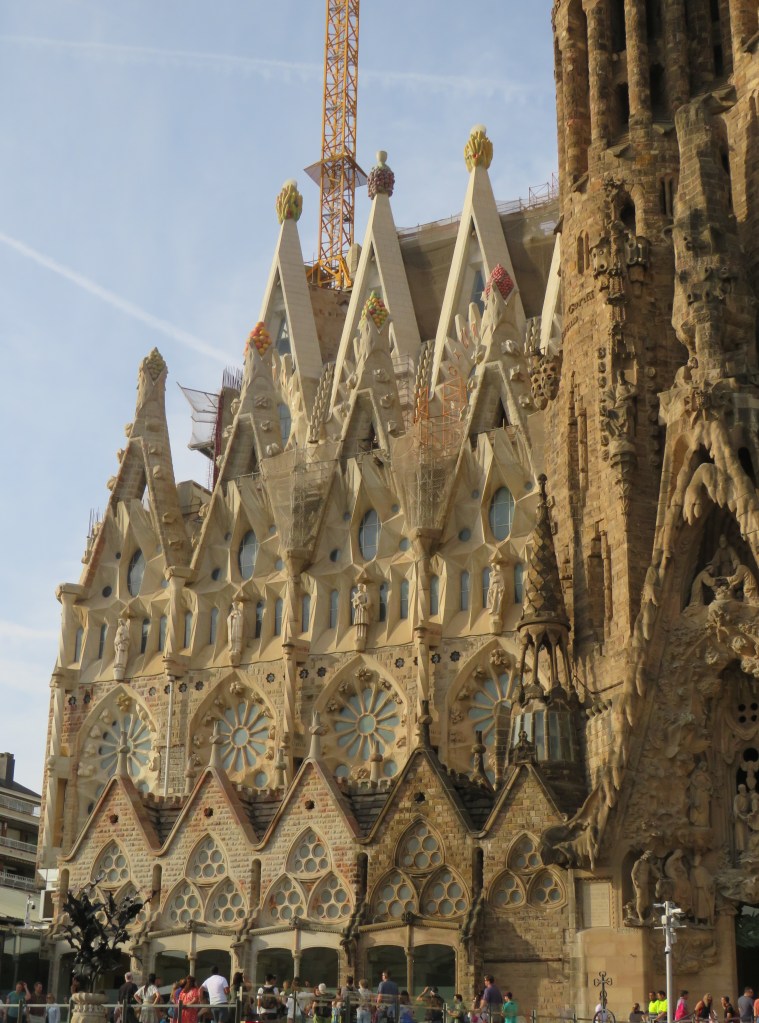
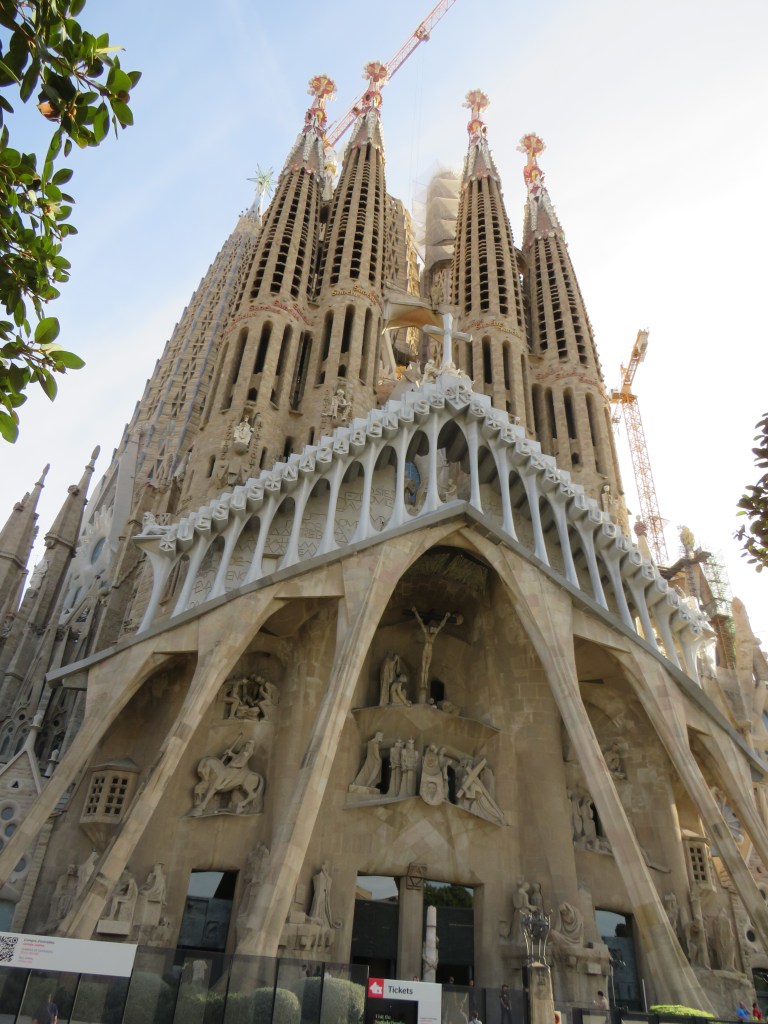
The first thing we did on our first day in Barcelona was head out to Sagrada Familia, or Sacred Family, the huge basilica that is still a work in progress, made famous by Antoni Gaudi. Sagrada Familia is located in the Gothic part of Barcelona. Gaudi devoted 43 years to Sagrada Familia, which was his passion. It has been a work in progress for over 100 years, and counting. It is still not complete, and who knows when, or if, it ever will be. It is something to see, and I am very glad we did see it and tour all around too, but it is not for everyone.
The construction of Sagrada Familia began on March 19, 1892, under the architect Francisco de Paula del Villar, but in 1883 it was taken over by Antoni Gaudi, and he continued to work on it until his death, 43 years later. At first, Gaudi was working on other projects as well, such as the Cathedral de Santa Maria de Palma in Mallorca, Back From Barcelona – Mallorca #5 – The Palma Cathedral and his projects in Parc Quell. He experimented with ideas and concepts in Palma and then brought things over to Barcelona and Sagrada Familia.
It was to be Gaudí’s Expressionist vision of a 20th-century cathedral, where he would use visual symbolism to express the many mysteries of the Christian faith. He became increasingly pious while working on the church; after 1910 he abandoned virtually all other work, and he eventually secluded himself on its site and resided in its workshop. In addition to being devoted to Christianity, Gaudí was an important participant in the Renaixensa, (Renaissance) an artistic revival of the arts and crafts combined with a political revival in the form of fervent anti-Castilian “Catalanism.” Both revivals sought to reinvigorate the way of life in Catalonia that had long been suppressed by the Castilian-dominated and Madrid-centered government in Spain, and the Sagrada Família became the religious symbol of the Renaixensa in Barcelona.
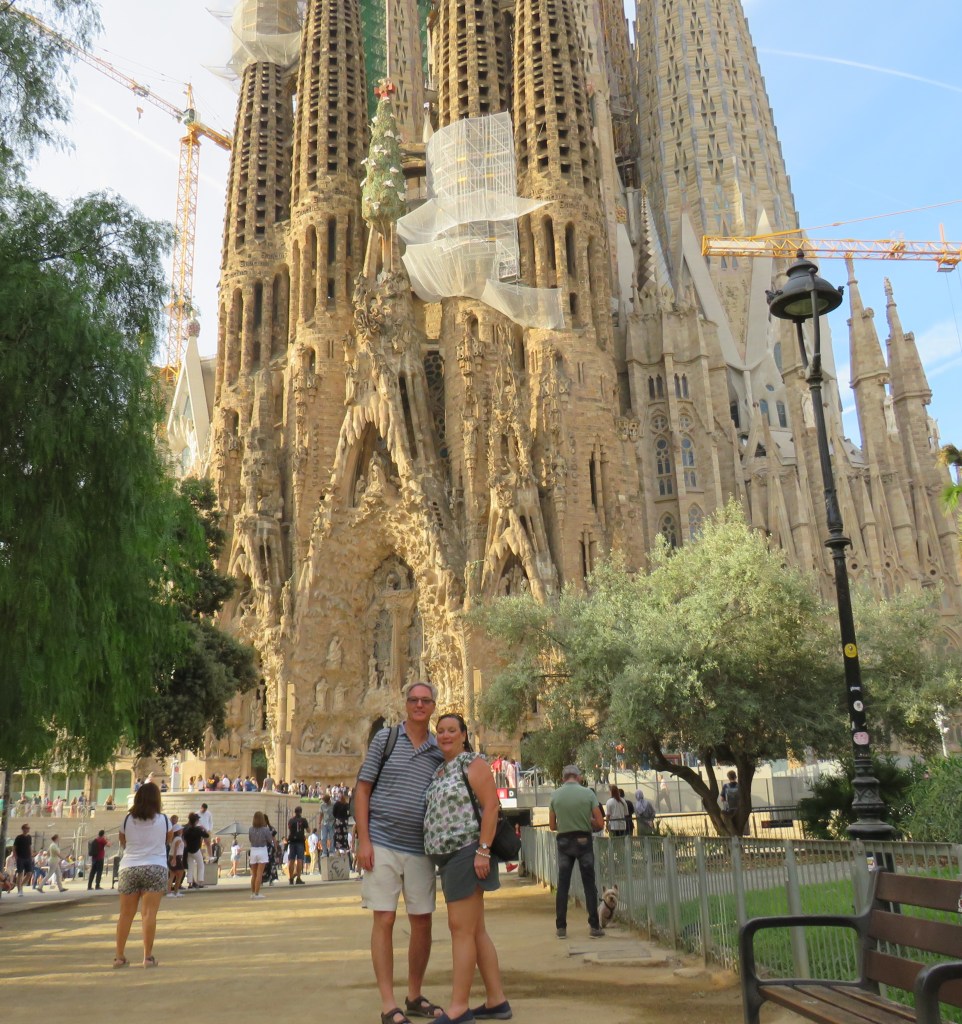
The outside of the front of Sagrada Familia.
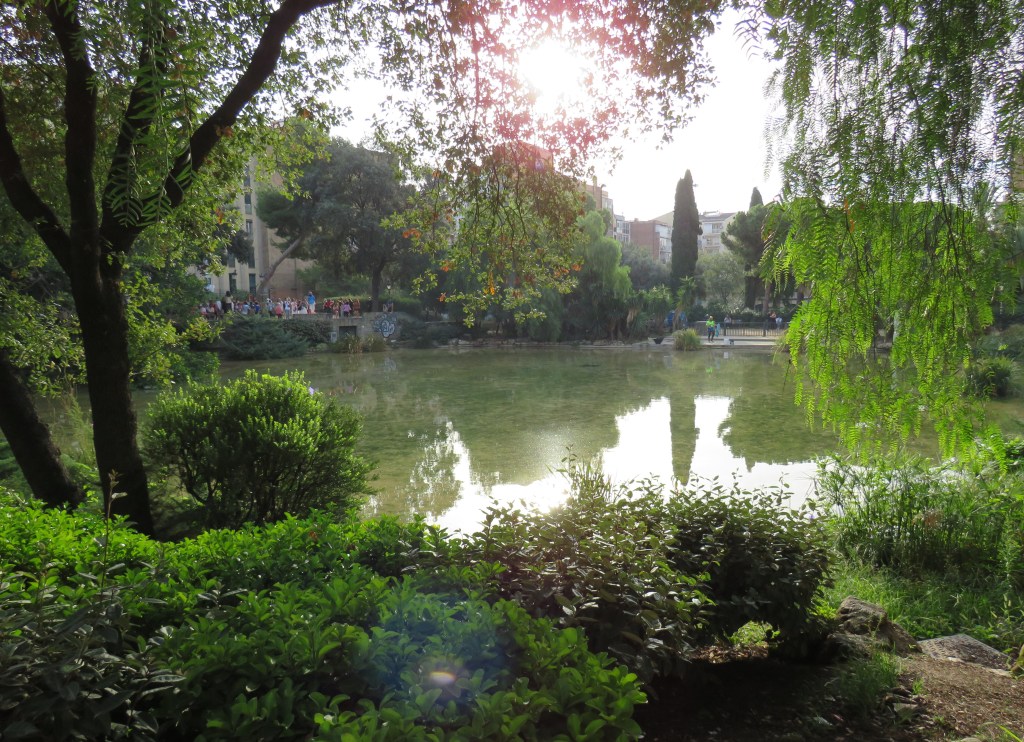
The park across the street as we were waiting to get in for our tour.
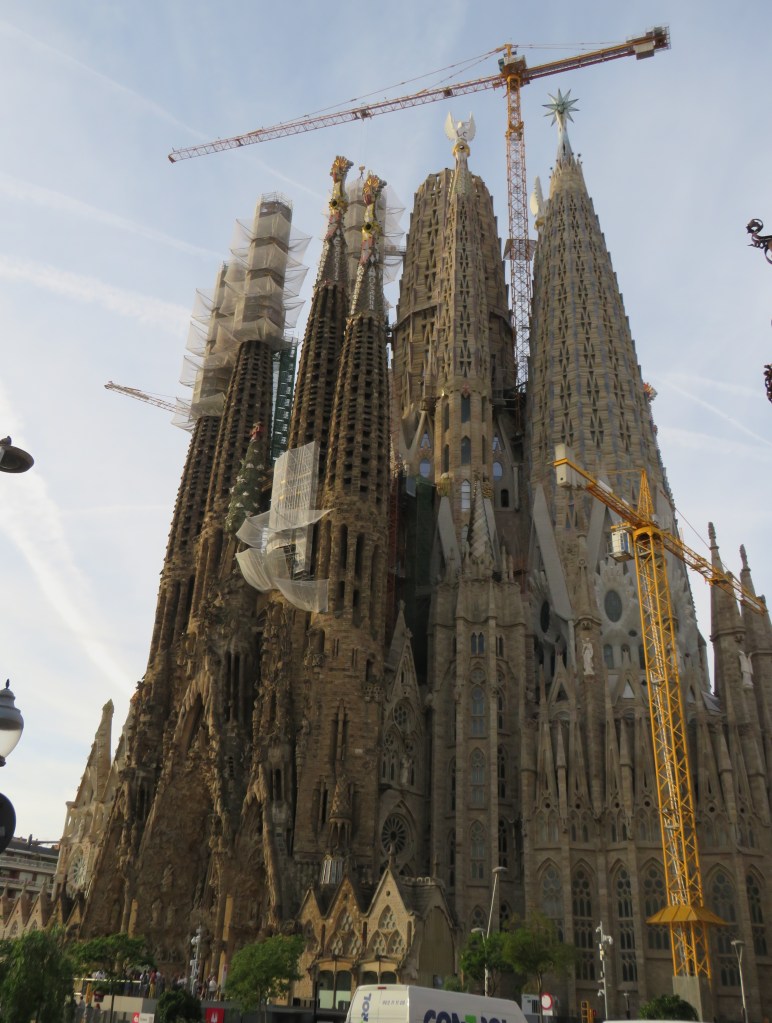
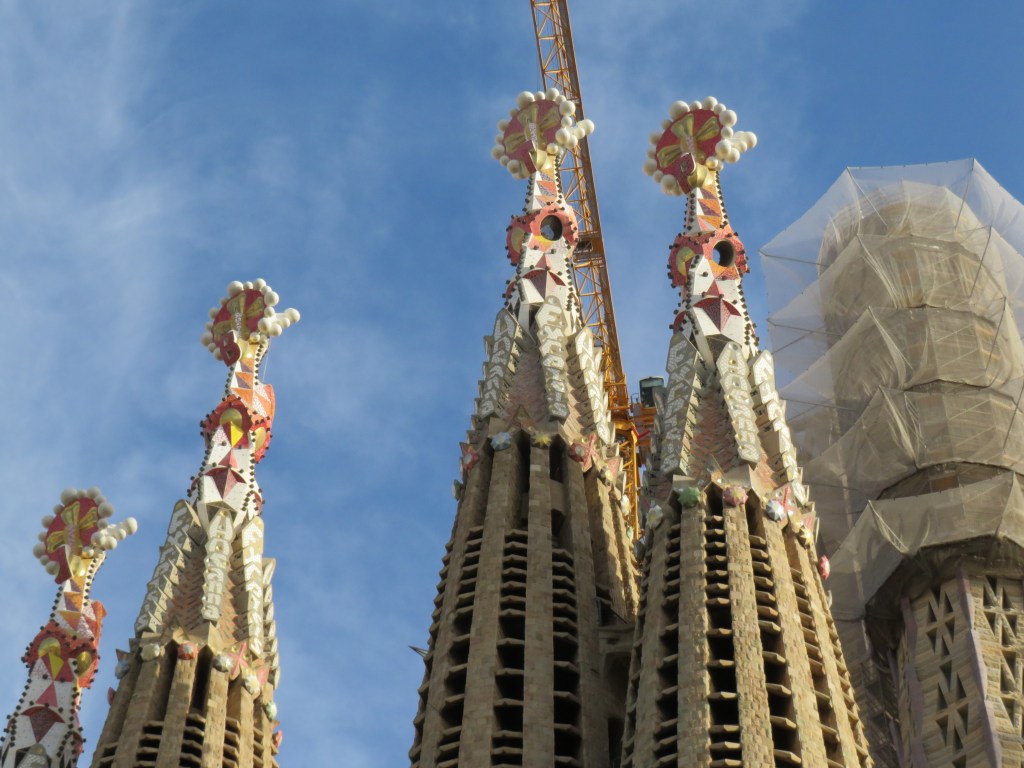
Cranes and construction are an everyday part of the basilica and have been since its not so humble beginnings.
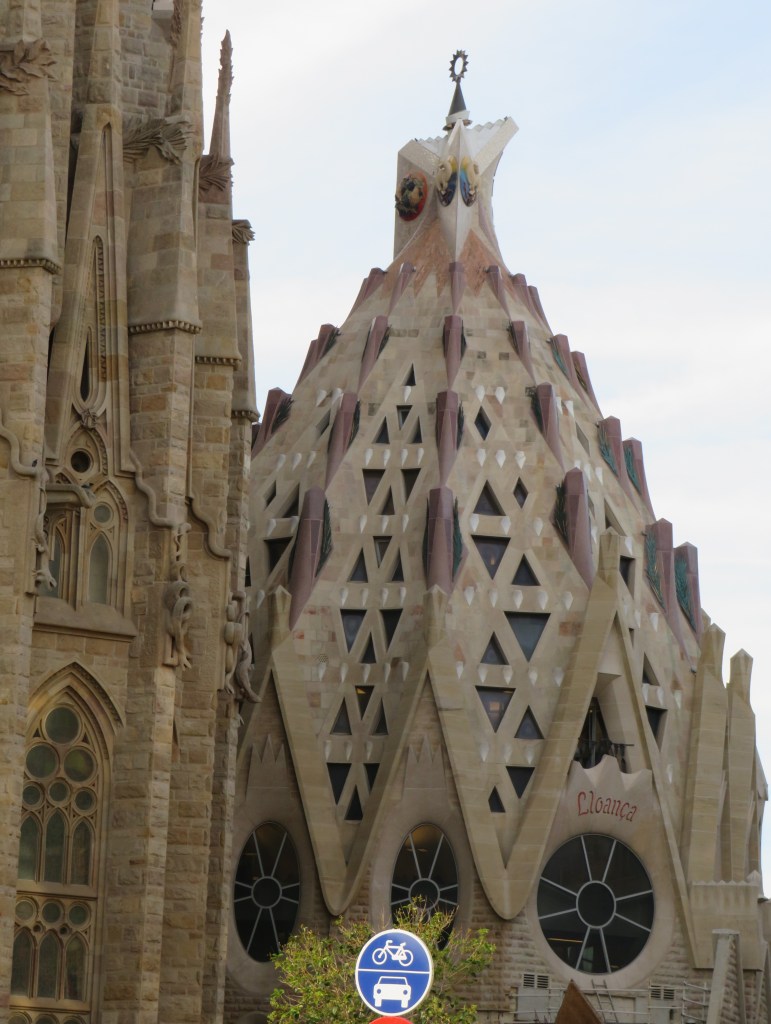
Is Sagrada Familia considered a basilica or a cathedral? I always get confused if something is a cathedral or a basilica, but this definition helped me, and should help you too. A church where the bishop’s throne (cathedra) is located is called a cathedral, while basilica refers to a class of Roman public buildings predating Christianity, particularly those with royal association. A cathedral is any church that is the “seat” of a bishop. There is one cathedral per diocese. A basilica, Roman Catholic or Greek Orthodox, is any church named highly important by the pope based on its historical or cultural importance, its art or beauty, its significance in the liturgical life of the Church or a variety of these attributes. Basilica is the highest permanent designation for a church building, and once a church is named a basilica, it cannot lose its basilica status. Many basilicas also serve as the cathedral for their diocese, but not all basilicas are cathedrals.
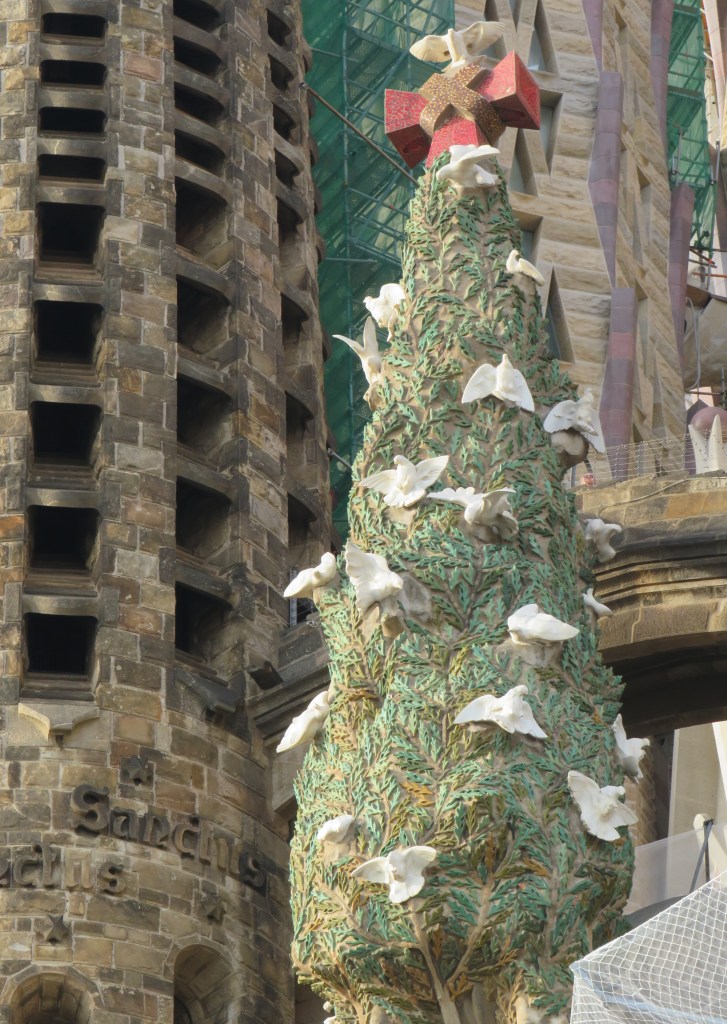
We took so many pictures of Sagrada Familia, and of course, the pictures don’t do the basilica justice. I won’t share ALL of the photos, but I will give you the highlights.
Gaudi was inspired by both nature and light and these influences are expressed in every detail of Sagrada Familia. All the stained glass windows are just absolutely amazing. They are designed to represent and capture the light from both sun rise and sunset.


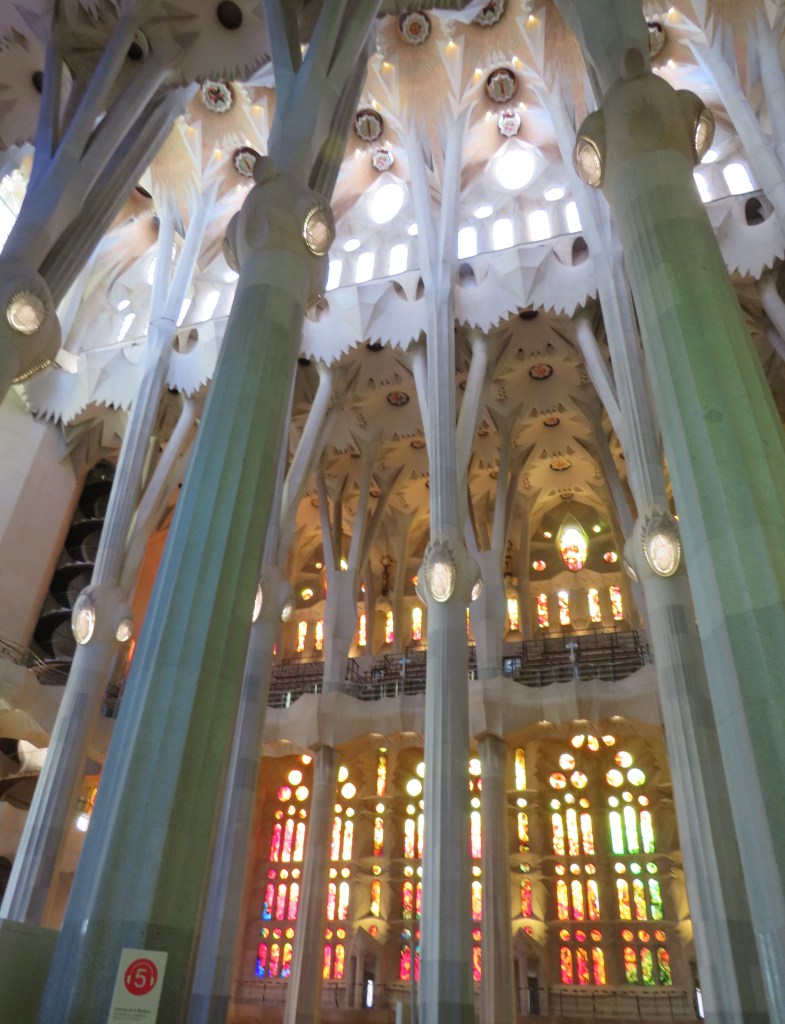
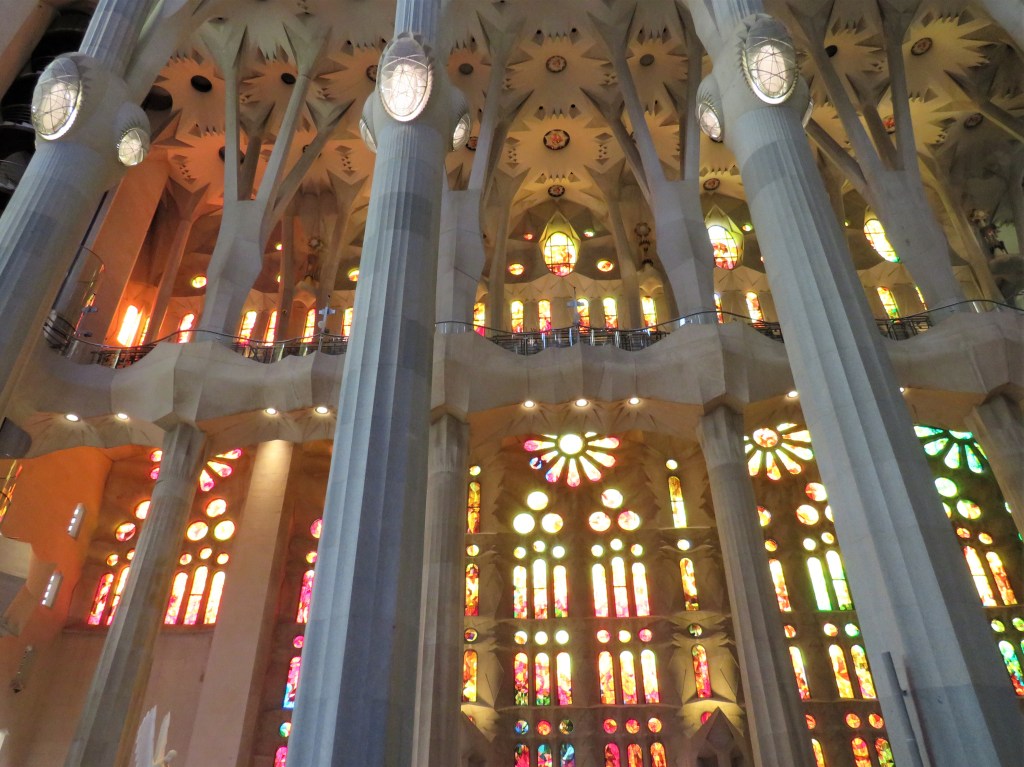


There are 56 columns within the structure of the basilica. They represent every week of the year plus the four Gospels of Matthew, Mark, Luke, and John.


These are the Eucharist Doors, and have only been opened once, when the Pope consecrated the basilica. On 7 November 2010, Pope Benedict XVI consecrated the church and proclaimed it a minor basilica. They have The Lord’s Prayer on them in Catalan, while the rest of the door is filled with the phrase “Give us this day our daily bread” in fifty different languages. The letters AG (Antoni Gaudi) just happened to fall in the middle, where the handles are, and it is said that this was Antoni Gaudi’s autograph and signature for the basilica.


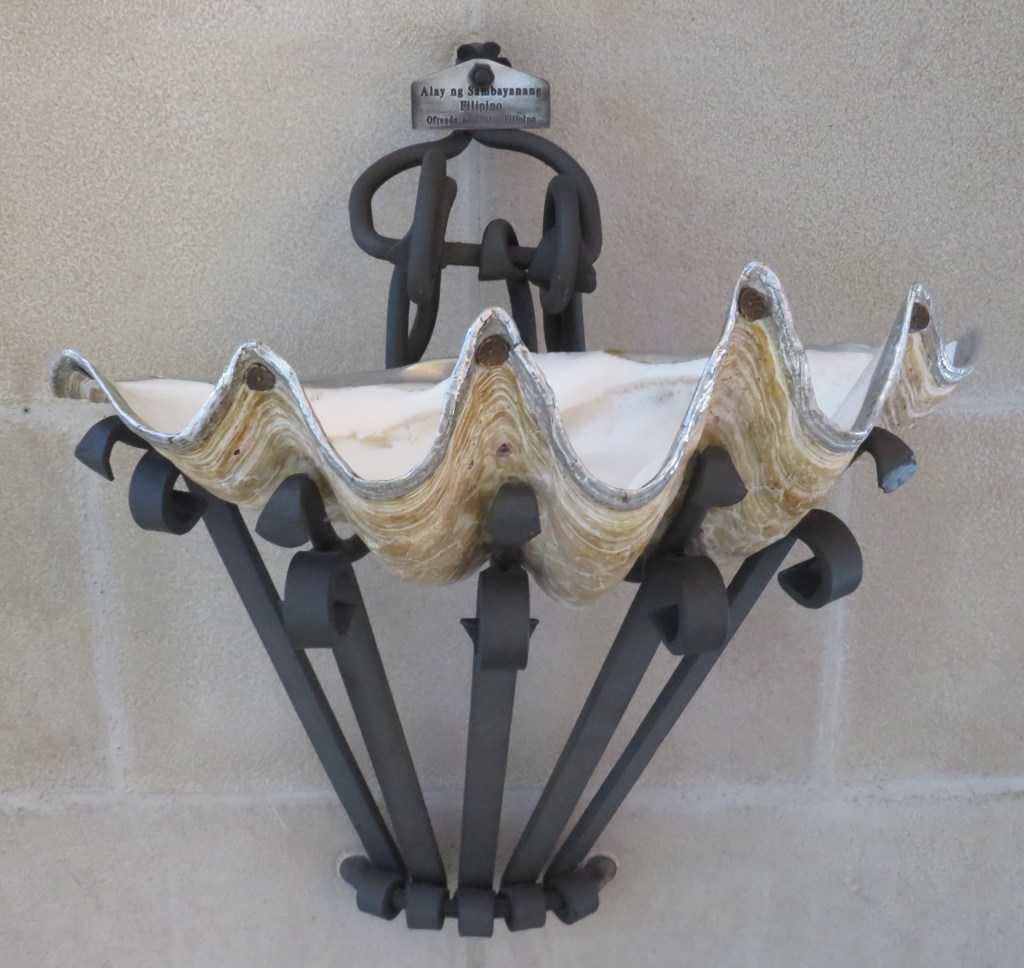
For the sprinkling of Holy Water.
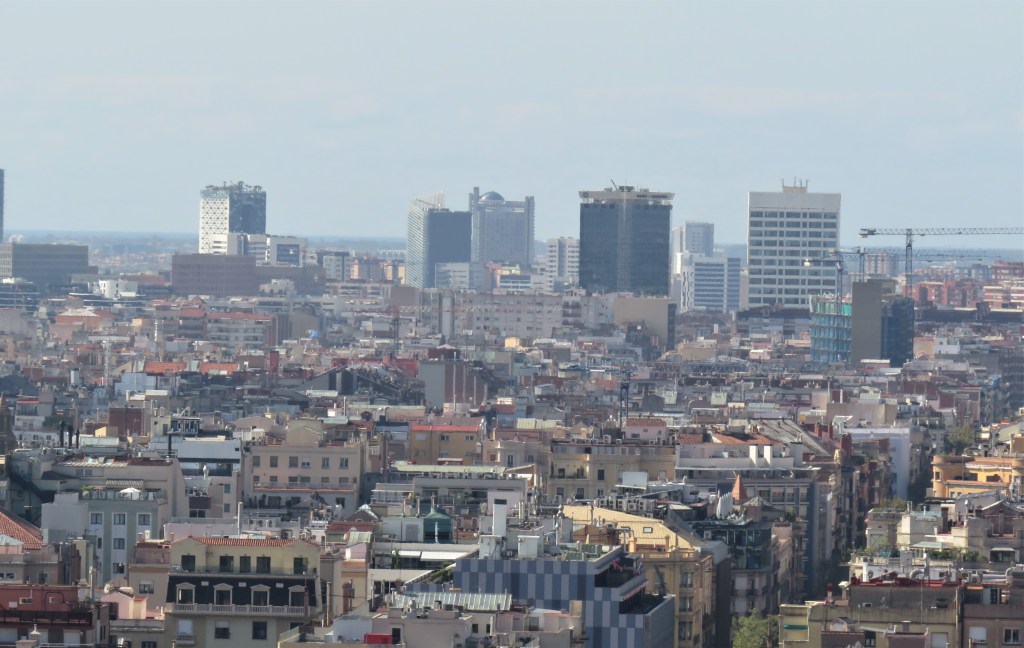
We went up to the bell tower where we had an expansive view of all of Barcelona.

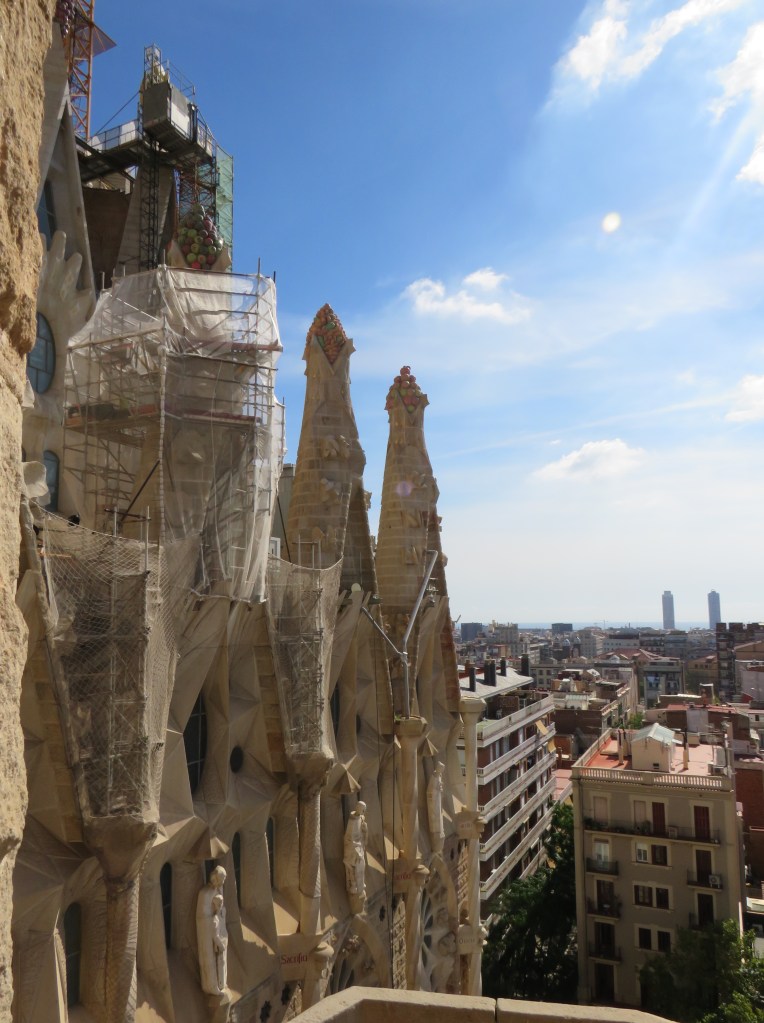
Inside the bell tower.
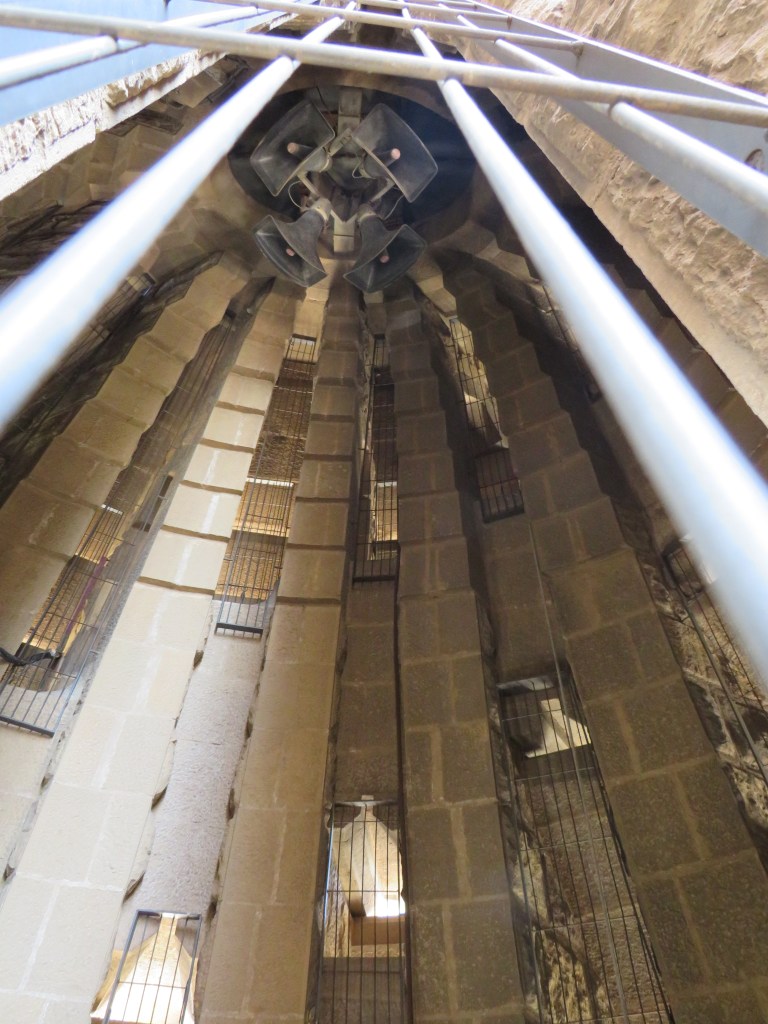
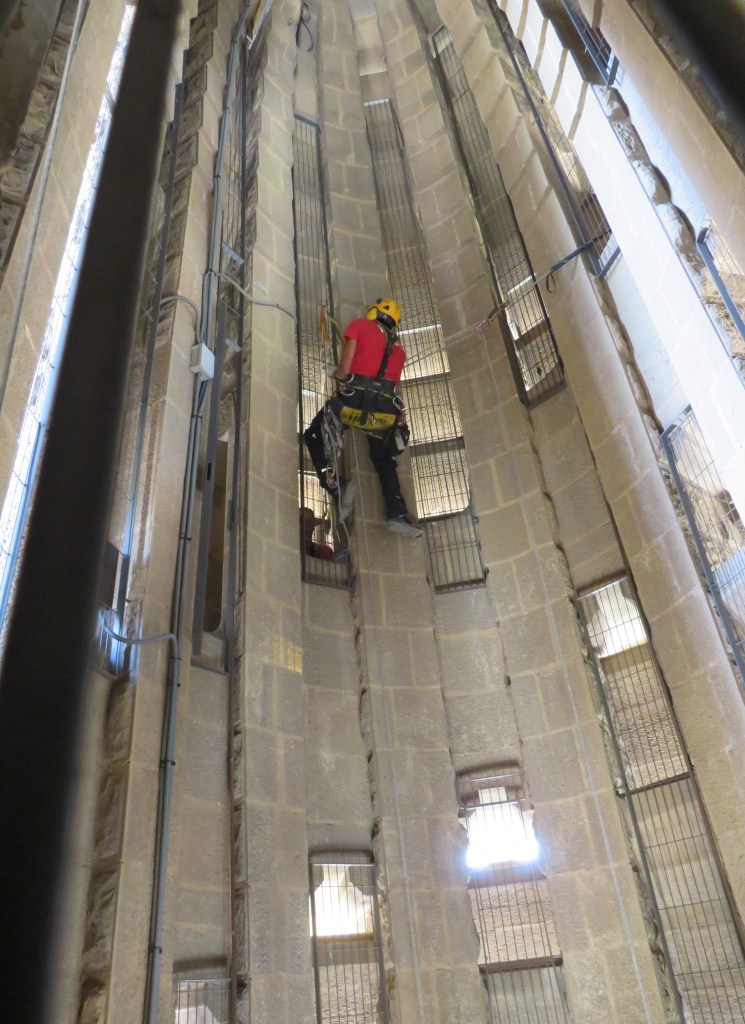
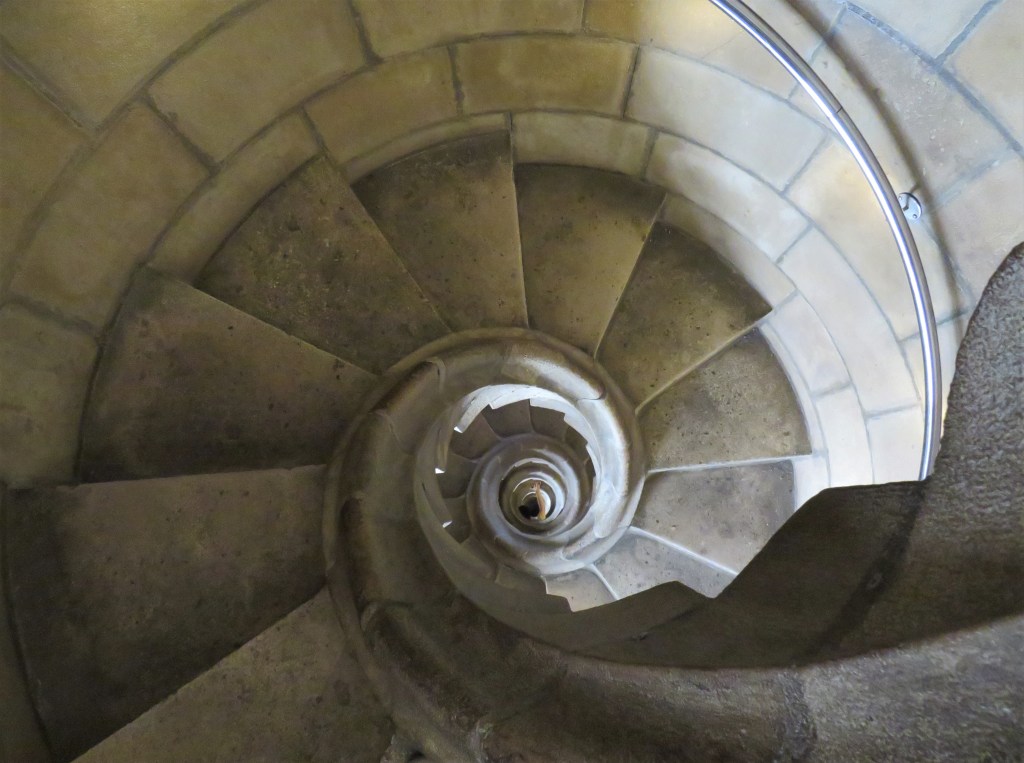
The spiral staircase to the bell tower is shaped like a conical shell of the Nautilus sea shell. It is over 400 steps, and the stairway is very narrow and very winding. I was getting dizzy on the way down, but fortunately we made it down without incident.
The Cross hangs from the ceiling in the center of the basilica for everyone to see. The huge organ is behind the Cross. They are both highlighted by the magnificent show of lights from the windows.

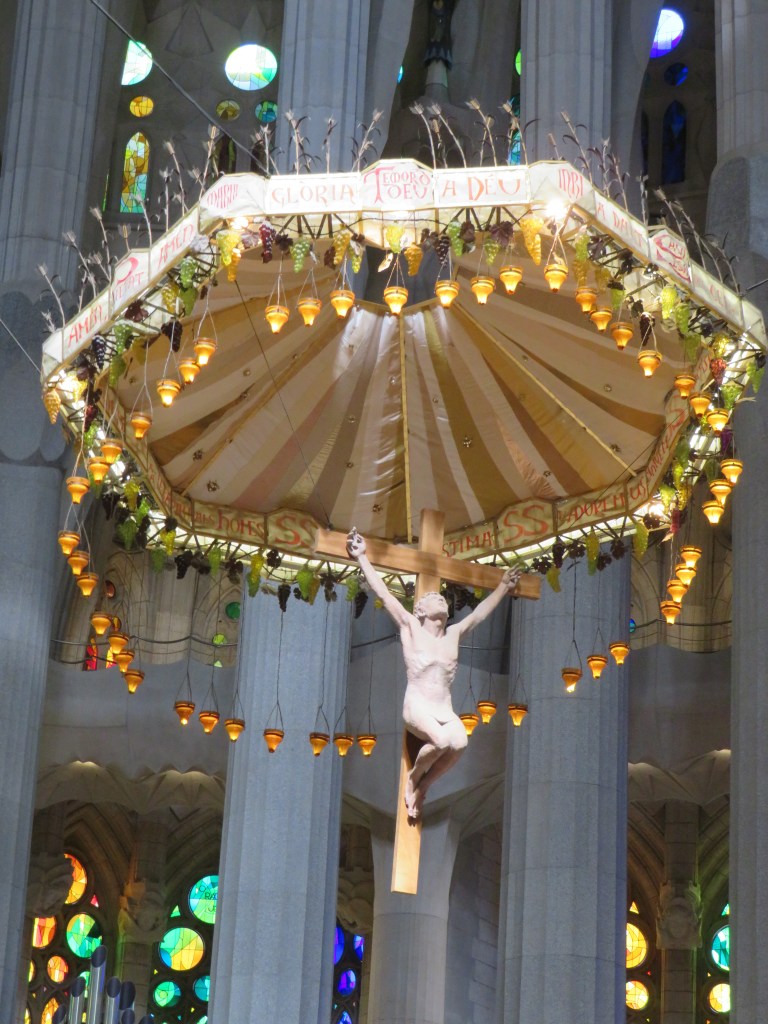
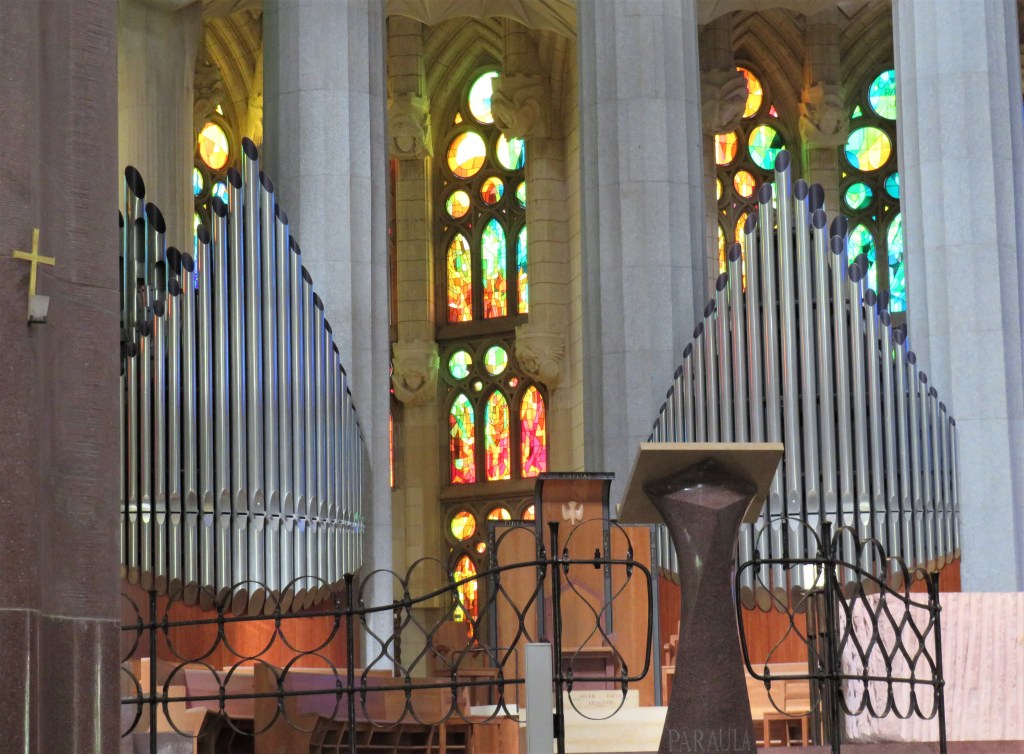
They still hold mass in the basilica on a regular basis, and we seriously thought about attending. But in order to do so, for a 9:00 AM mass, we would have had to be there no later than about 7:00 AM, and there was no guarantee we would have made it in. They only have seating for 900 people. Though Larry was raised Catholic, and my mother was Catholic, neither of us are Catholic, and there would be no guarantee we could get in to hear a service in Latin or Spanish that neither one of us would understand. We decided to sleep in a bit instead. But it’s the thought that counts, right?!
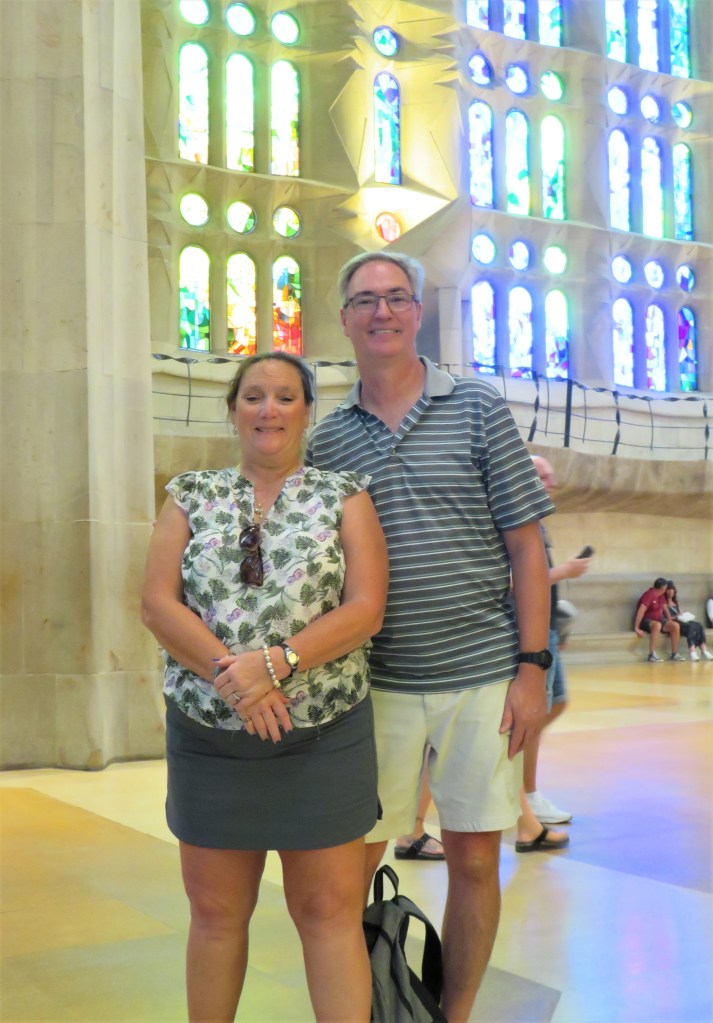
The outside from the back of the basilica. The back represented Christ’s Crucifixion and ascension into Heaven.
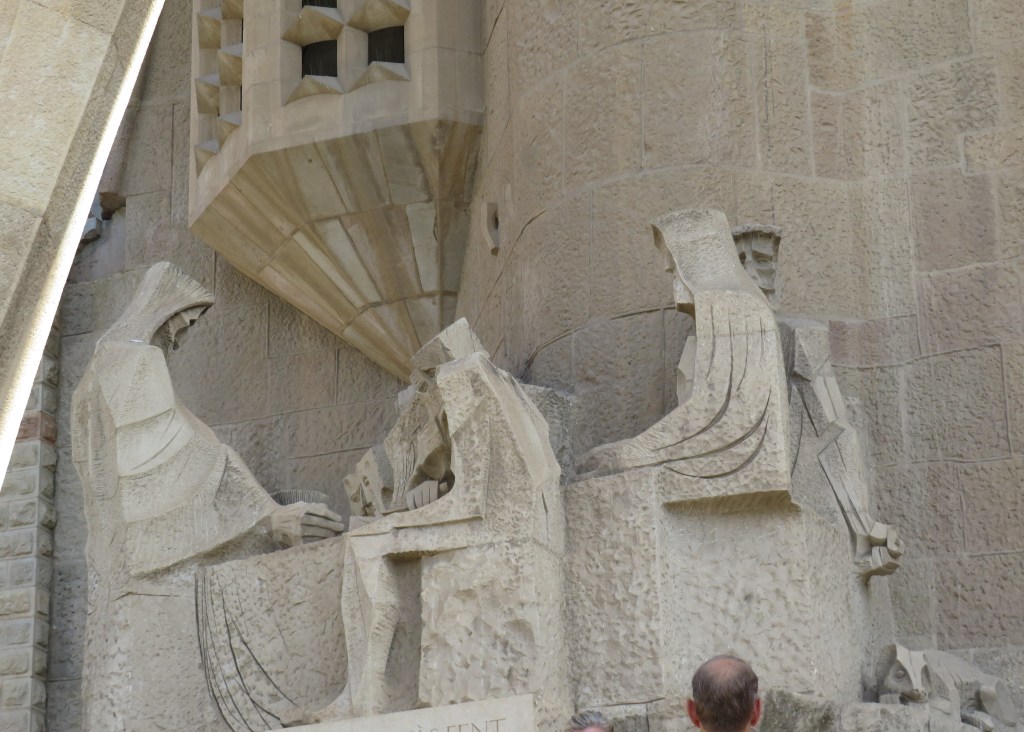

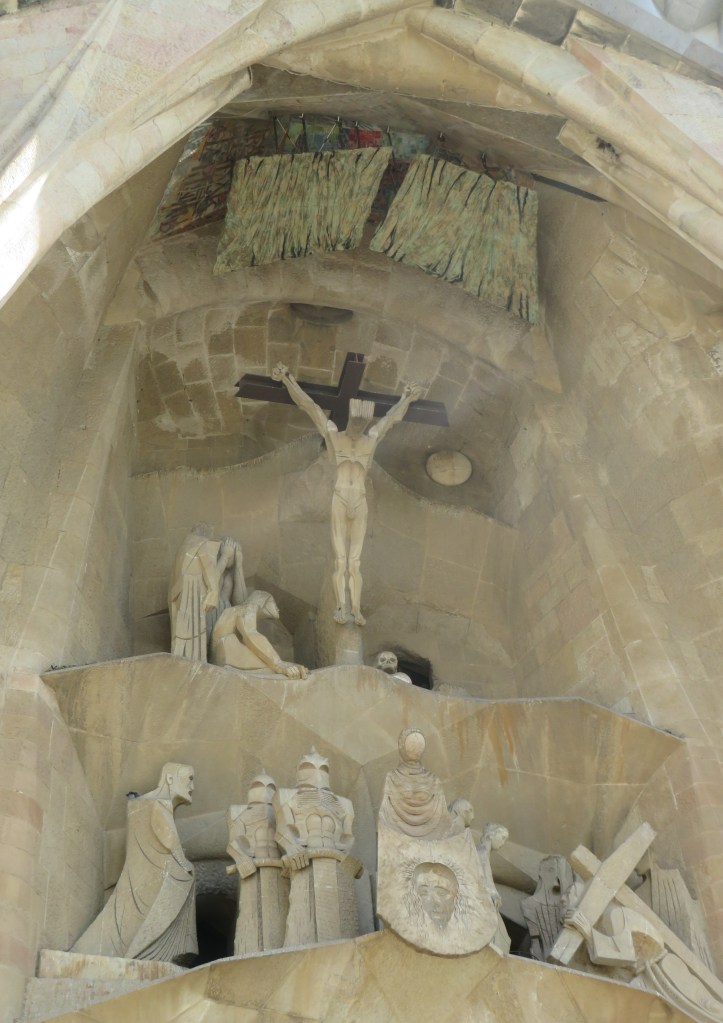

Gaudi’s workshop, where he later resided. The whole Basilica of Sagrada Familia is the story of Christ, from start to finish.
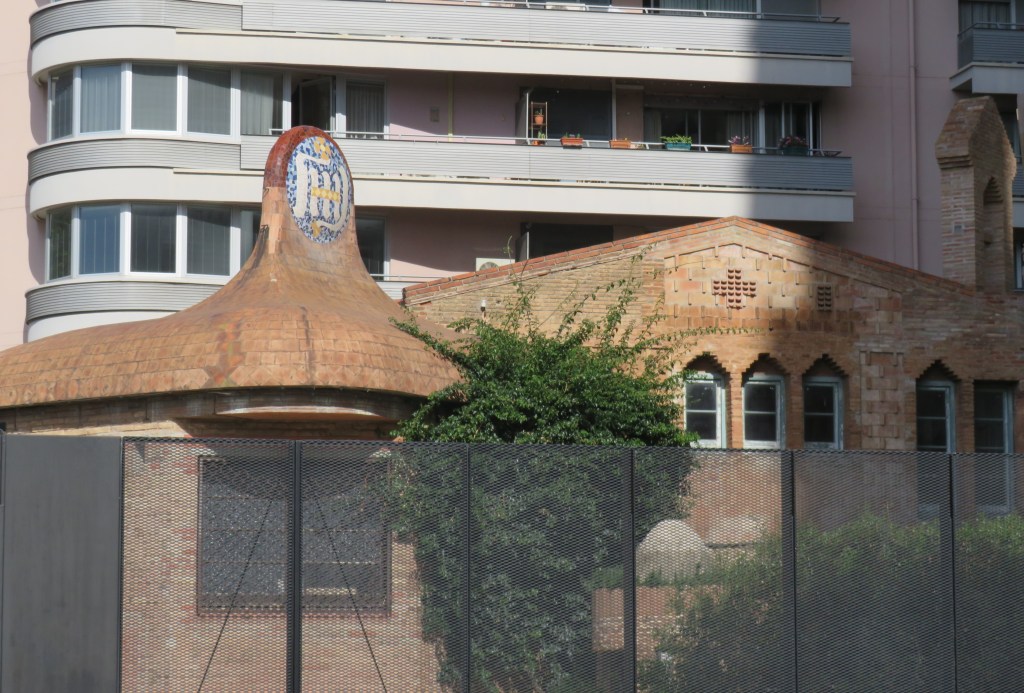
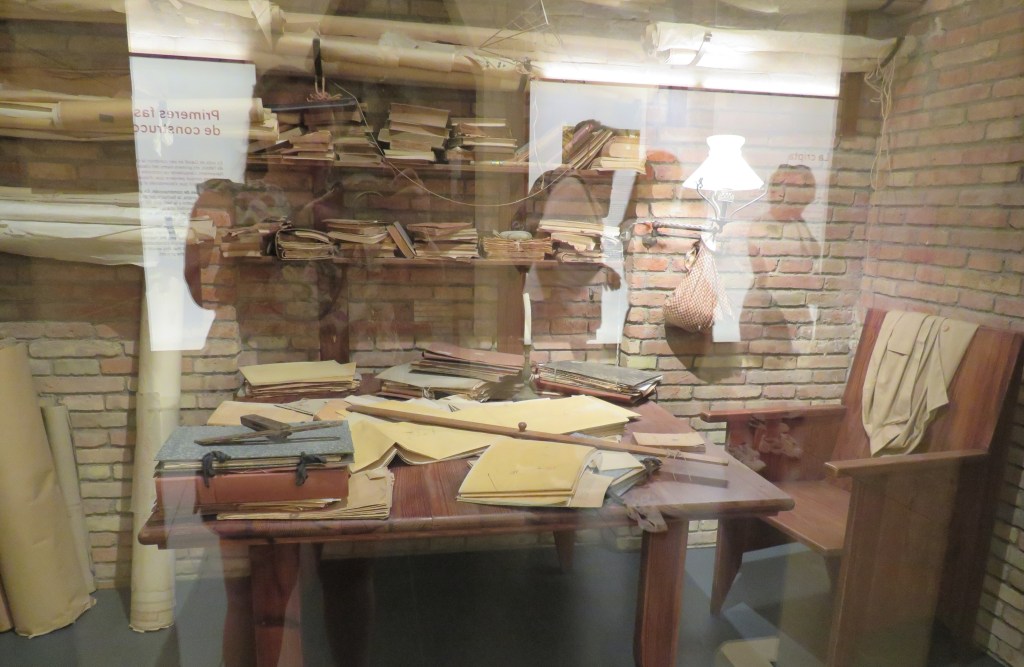
After touring through the basilica, we went into the museum that explained how everything was made and gave the history of Gaudi’s passionate project that he devoted his whole life to. The whole tour was very interesting. I highly recommend seeing Sagrada Familia at least once. It is truly a magnificent work of art, though as I mentioned above, it is not for everyone. Our pastor wanted something from Sagrada Familia, so we bought him a book. After looking through the book, even he said that Gaudi’s creations were like something from an alien planet. :0
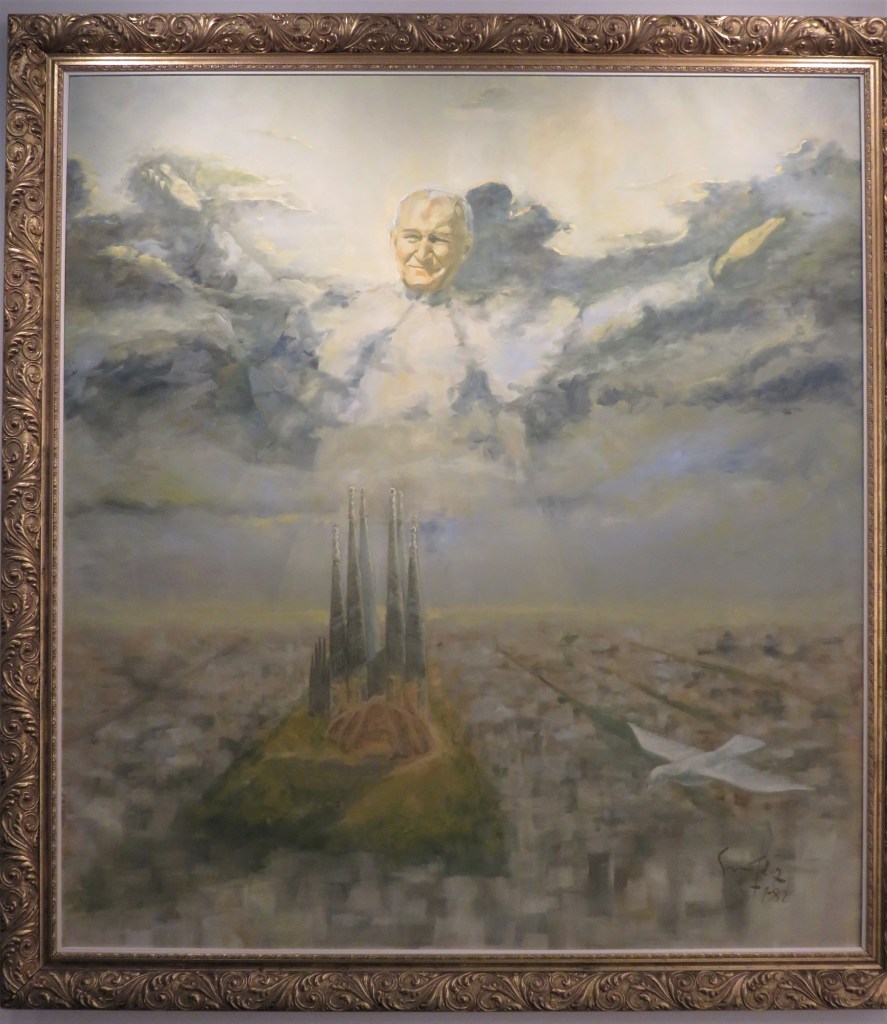
I love this picture depicting God watching over Barcelona.
Sagrada Familia was just the first of many, many fabulous adventures we experienced while in Barcelona. Trust me, I have oh so much more to share. Don’t go anywhere or you’ll miss out.
Have a great day and make everyday great. Stay safe and stay well. ‘Til next time.

 A Jeanne in the Kitchen
Love the pictures and sharing from Spain. We were just there in April and it was beautiful!! The Sagrada is due to be completed in 2026
LikeLiked by 1 person
Thank you. Tat’s what they say, but I don’t know. There is still a lot of work left to be done on it.
LikeLike
It’s the must see place in Barcelona along with the Nou Camp. Fab photos btw Jeanne.
LikeLiked by 1 person
Merci. What’s Nou Camp? We didn’t see that.
LikeLike
OMG! It’s the home of Barcelona FC
LikeLiked by 1 person
OH. Ok. 🙂
LikeLiked by 1 person
Stunning!! Thank you so much for sharing your experience!
That painting, though… that looks like Pope St. John Paul II to me!
LikeLiked by 1 person
Thank you. My pleasure. You might be right. 🙂
LikeLiked by 1 person
Loved Barcelona and Gaudi is truly fascinating. Thanks for the tour back.
LikeLiked by 2 people
My pleasure. I have a lot more coming your way too. 🙂
LikeLike