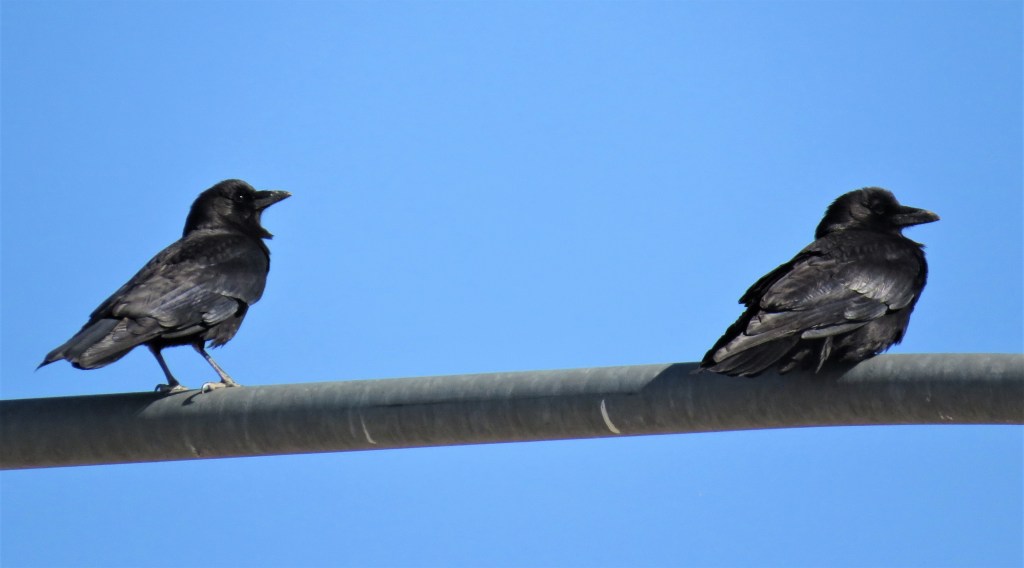
I have been seeing a lot of Ravens lately. Much more so than usual. We really saw a lot on our trip too.
Ravens have a lot of symbolic and spiritual meaning. Sometimes, Ravens are associated with loss and ill omens. But they are also a sign of prophecy, insight, transformation and intelligence . They also represent long-term success in love and finding devoted, faithful partners. In some parts of the world, the raven is a sign of death or misfortune; to others its presence indicates good fortune. They connect the material world with the spiritual world.
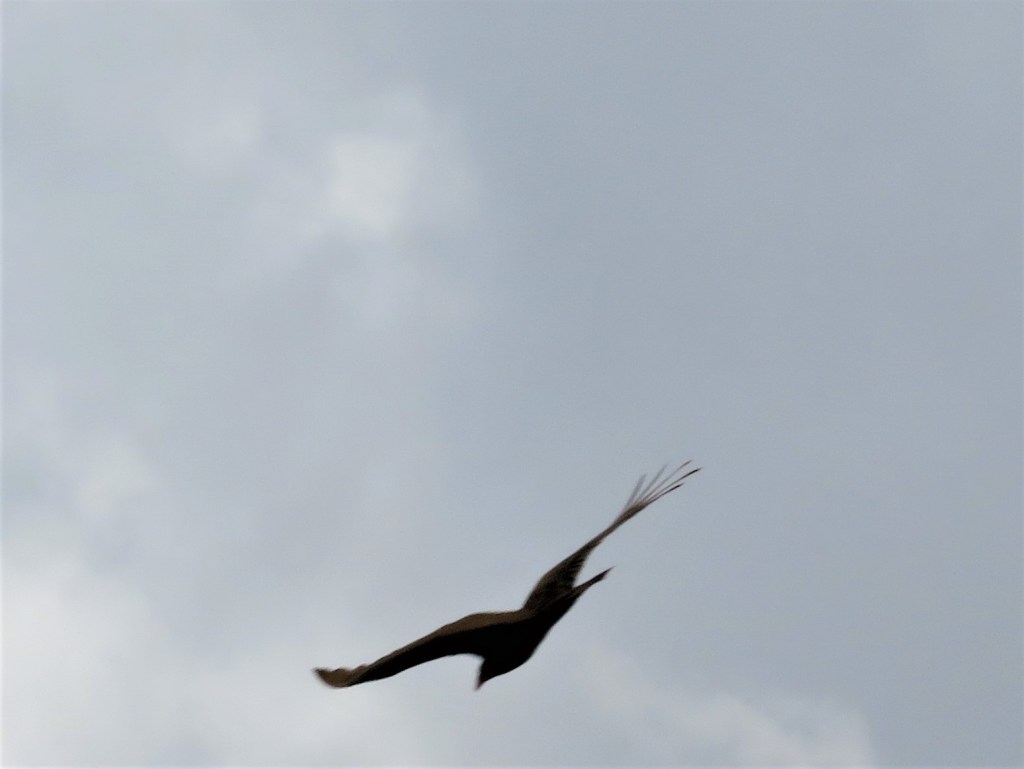
Some fun facts about the Raven, just in case you were curious.
- They are highly intelligent birds.
- They are excellent hunters
- They can mimic human voices
- They gesture with their beaks to communicate.
- They remember faces.
- They can live anywhere.
- They have both friends and enemies
- A group of Ravens is call an “unkindness”, “treachery” or a “conspiracy”.
- They travel in gangs before pairing off.
- Because Ravens terrified famous Poet, Edgar Allen Poe, he was inspired to write his famous poem dedicated to the terrors they bought to him.
- They have been powerful symbols in folklore throughoput the ages.
- They are not all black. They also come in white. These light-feathered birds are actually ravens with a rare pigment condition called leucism, which gives them their fair feathers and, oftentimes, blue eyes.
- Over the past decade, there has been a steady and dramatic increase of ravens in North America. Of particular note is the Mojave Desert, which has reported a staggering 700 percent increase of the black birds over the past 40 years! While this is good news in the midst of a “bird crisis” in North America and Canada, which have collectively lost nearly three billion birds since 1970, this raven boom could spell trouble for the US population of desert tortoises, which are a favorite raven delicacy.
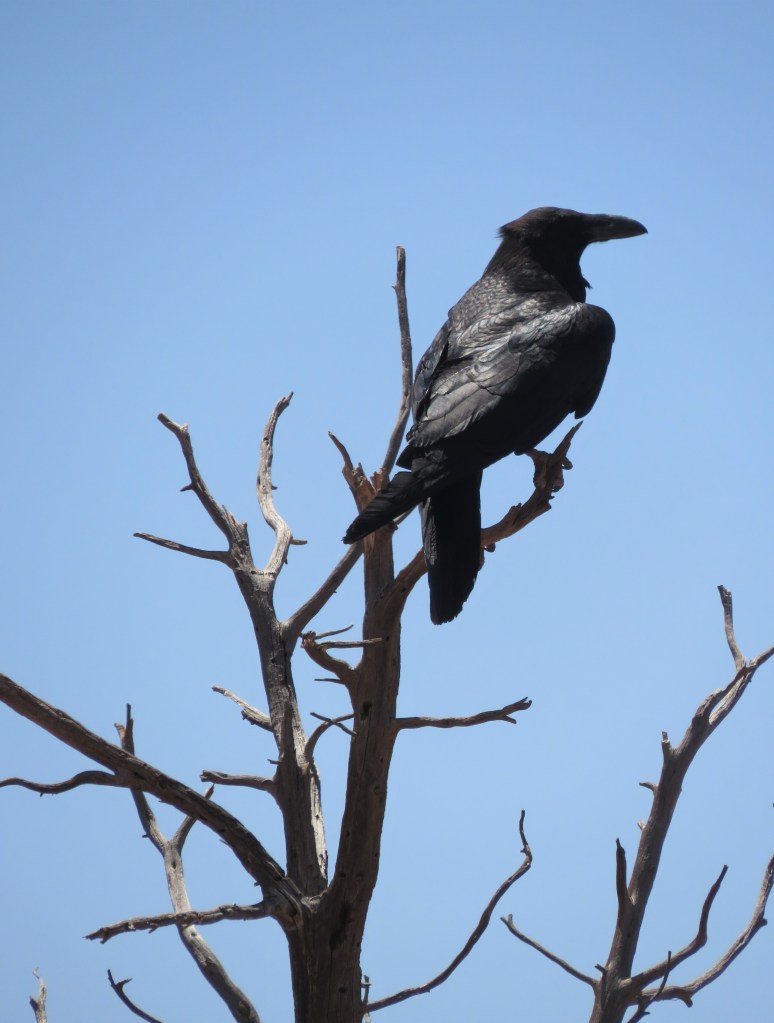

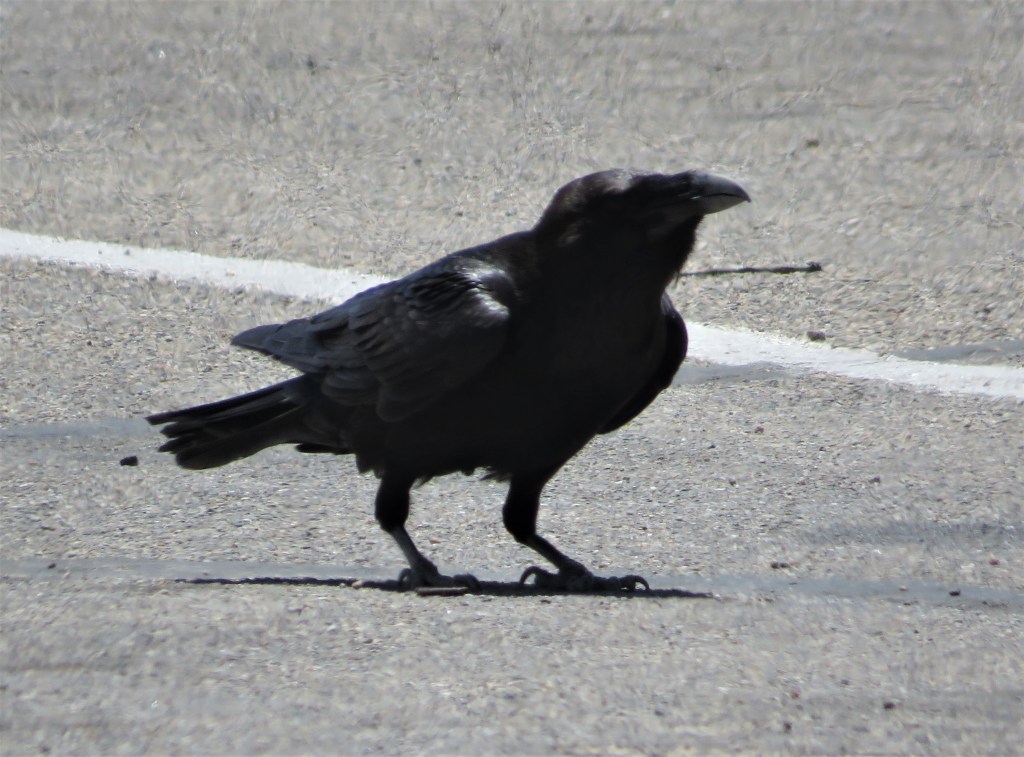
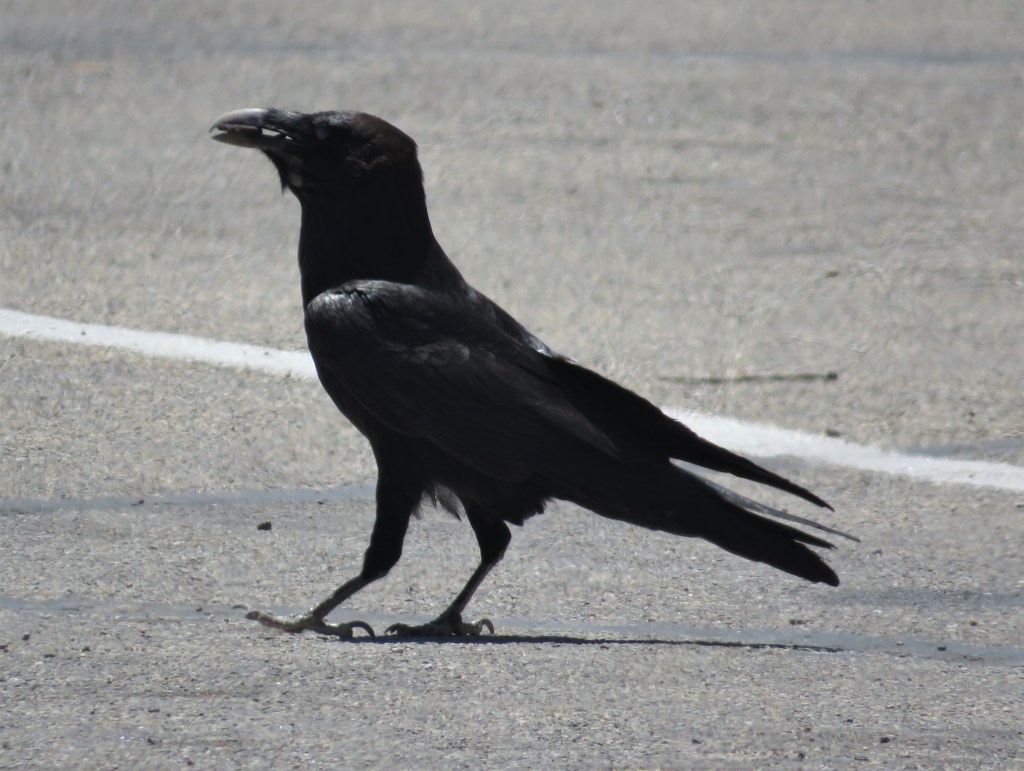
Have a great day and make everyday great. ‘Til next time.


Reminds me of the poem!
LikeLiked by 1 person
Me too. 🙂
LikeLiked by 1 person
I’ve never been a fan of ravens. The first time I encountered them was while living on the west coast. Very aggressive birds. They’re huge, though! We have them here, now, and we never saw them when I was a kid growing up here. Just crows. It’s always a shock to see a raven and a crow at the same time. The size difference is amazing!
In fact, we are seeing a lot of birds now that I never saw as a child, which had me curious about the bird decline claim. I looked it up, and found a lot of alarming headlines about this huge decline in the US and Canada, since 1970. The articles are basically just repeating the same thing, but I wasn’t finding more than reports on a study. Also, why 1970? It seemed odd to me. I’m way to familiar with how the media selectively reports information to suit a narrative. So I kept looking and finally found some official 100 year data for Canada. Turns out that, over 100 years, we have actually seen an increase in bird populations, not a decrease.
So why do all these articles talk about a decrease from 1970?
I’m old enough to remember the 70’s. That was a cold decade, when we were being taught in school to prepare for the next ice age. Then the 80’s hit and things got hot, and they switched to telling us the world was going to fry, instead of freeze, reminiscent of what we were being told back in the 1920s.
My guess is, by the end of the 60’s, there was a spike in bird populations. So the 70’s would have started at a high, with bird populations dropping during a dramatically colder decade. That would make it appear that we’ve had a drop in overall populations over the past 50 years, even though we’ve actually had a overall increase in population over the past 100 years.
It’s much like when they talk about the decline in bee populations, because of things like colony collapse disorder, with honey bees. In reality, there is a worldwide increase in honeybees. The real problem is the decline in native bee populations, because humans have been relying on the non-native honeybee for pollination. Personally, I’ve been absolutely thrilled to see so many bumble bees this spring. I’ve hardly seen any over the past 2 years, due to weather anomalies either destroying the flowers they would have fed on, or flooding out their underground nests. Even our mason bee house is half full of larval nests this year – the first time we’ve seen that in the 3 years it’s been up!
We’ve stopped putting up bird feeders, because the racoons kept destroying them. We’re still getting flocks of goldfinches outside our dining room window right now, though, much to the entertainment of the cats!
LikeLiked by 1 person
Well, it’s just like EVERYTHING. The media is very selective on what they tell us. They don’t want us to know the truth because it doesn’t align with their narratives.
LikeLiked by 1 person
I did not know ravens could be white. Interesting facts.
LikeLiked by 1 person
You just never what new things are out there for us to learn. 🙂
LikeLike
Stunning photo of a flying raven. I didn’t know they come in a white variety, and I wonder if all the negative symbolism would relate to those as well.
LikeLiked by 1 person
I didn’t know either until I started doing some research. I would think so.
LikeLiked by 1 person
Fascinating!
LikeLiked by 1 person
I just love to learn. I love to learn all kinds of things. 🙂
LikeLiked by 1 person
Same here. 😻
LikeLiked by 1 person
Why does this NOT surprise me? 🙂 🙂 🙂
LikeLiked by 1 person