Greetings Everyone! I’m back. Did you miss me? I hope so. I am still getting used to my land legs again, and the kitchen will be open and back in business again tomorrow. In the meantime, I thought I would share more of my dive experiences from Grand Cayman with you. I hope you don’t mind too much.
Grand Cayman is the largest by far and most popular island of three islands known as the Cayman Islands. The islands are located southwest of Cuba and east of what is known as the Mexican Riviera, in the Caribbean Ocean. The other islands in this group are Little Cayman and Cayman Brac. I have never been to either of those islands yet, but this is my third trip to Grand Cayman. I hear the diving on the other two islands is phenomenal, so I hope to make it to those other islands one day soon as well. The Cayman Islands are the tops of pinnacles that reach down from the Cayman Trench, which is one of the deepest sections of the ocean on Earth. The Cayman Trench goes down about 25,000 feet. Because the Cayman Islands are basically right on the equator, the weather is pretty temperate, and ranges from about 72-88* F all year round, with July and August being the hottest months. Unfortunately, the Cayman Islands are also in the hurricane belt, and hurricane season is from June-November. On our first trip to Grand Cayman 10 years ago, we were actually evacuated off the island because of Hurricane Gustav.
Christopher Columbus discovered the Cayman Islands on his fourth voyage to the New World in 1503. In the days of the pirates, these islands were known as the Tortugas because of the abundance of turtles in the area. The islands were primarily a base for the pirates, used to restock on fresh turtle meat and water, to make repairs to their ships, and mostly to lie in wait to attack the European galleons loaded with bounty. Other than pirates, the islands were mostly uninhabited by humans until the 1660’s. The only residents before that were turtles, alligators or the Caimans (where the name Cayman comes from), lizards, AND mosquitoes. The mosquitoes were so bad that that people could rarely venture outside after dark. There are also accounts of the mosquitoes being so numerous and thick that they would swarm in the nostrils of cattle and suffocate them. Fortunately today, the mosquito population has been greatly controlled, and there is not nearly the problem as in the days if old. I am a mosquito magnet though, and they will always find me and attack me viciously, no matter what controls they have in place.
During the 18th century, some of the most infamous pirates roamed these islands and the surrounding seas, including Blackbeard, Lowther and Henry Morgan. The Treaty of Madrid, in 1607, officially decreed the Cayman Islands a British possession, but they were not permanently settled until the 1730’s. The Cayman Islands are still a British Overseas Territory today, and there is still a lot of British influence throughout the islands. They have a local governor who is responsible for the daily administration of the country and the creation of laws, but there is also a governor appointed by Britain who is in charge of internal security, external affairs, defense, police and the civil service. Tourism is the largest industry in the Caymans today, with a strong focus on scuba diving. It is a very good place to dive, but it is not our favorite place.
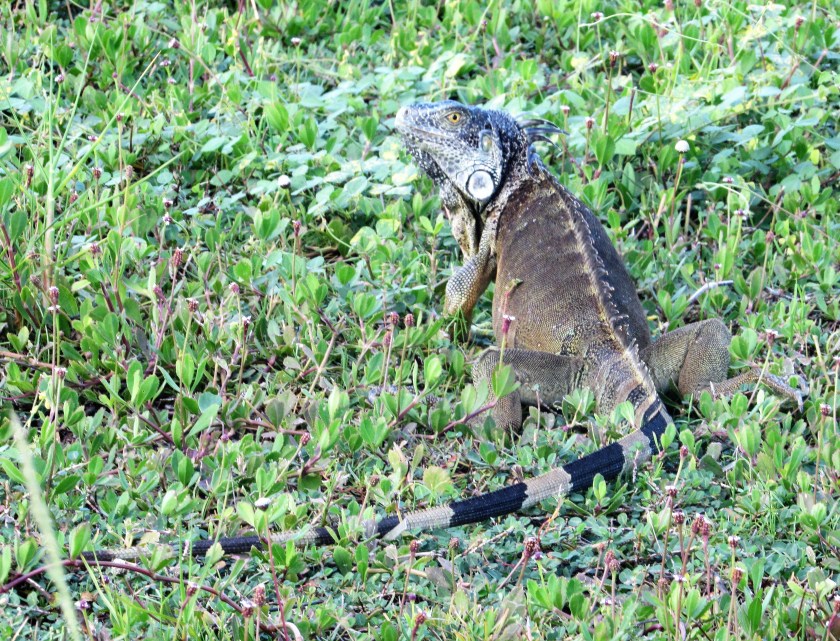
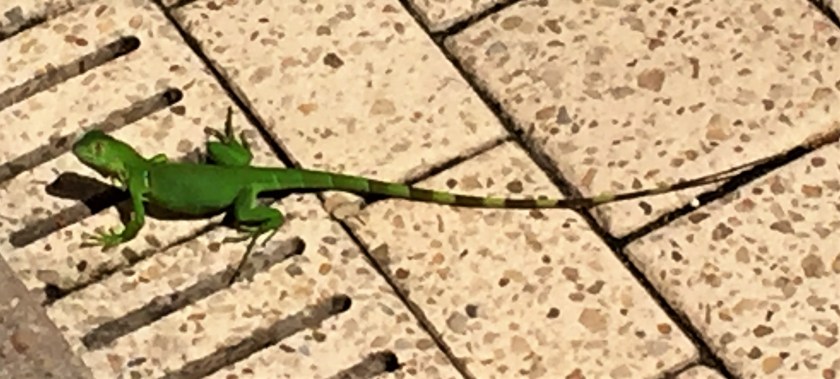
Most of these animals are still eaten as food today. BBQ’d Iguana is supposed to be great, I haven’t tried it yet, but will some day. The locals still eat turtle meat too, although what they eat today, comes from the turtle farm, located on the North Western part of the island. It’s very tasty.
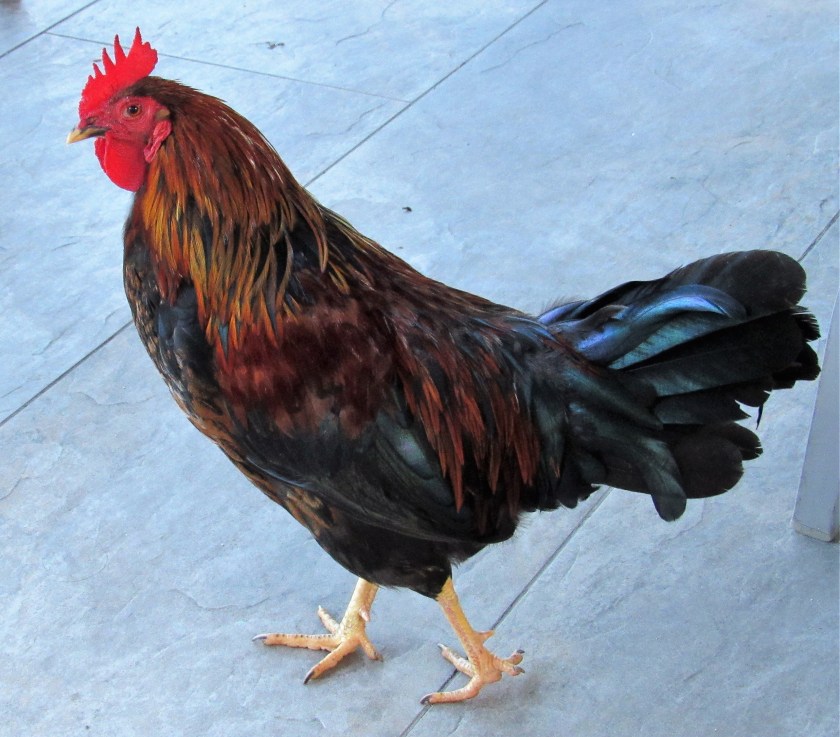
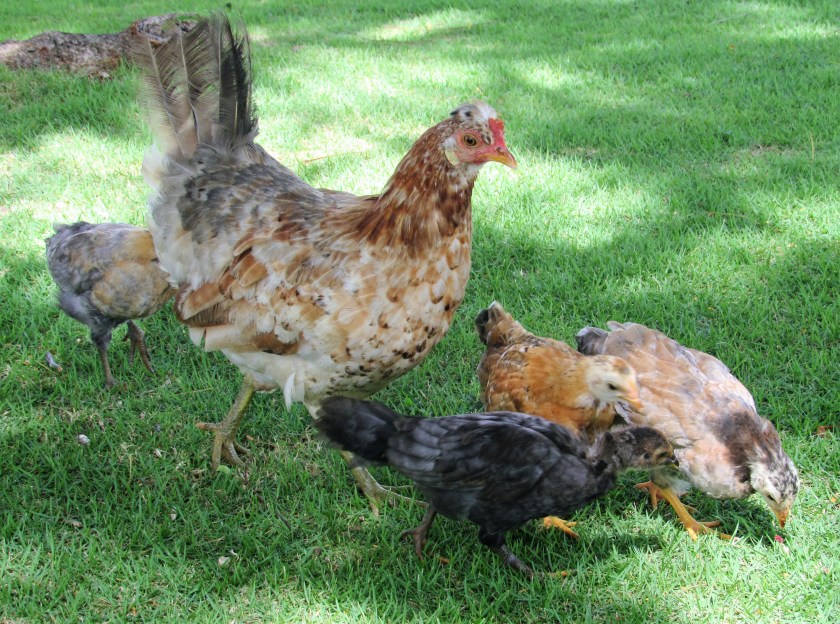
The locals who live above the sea.
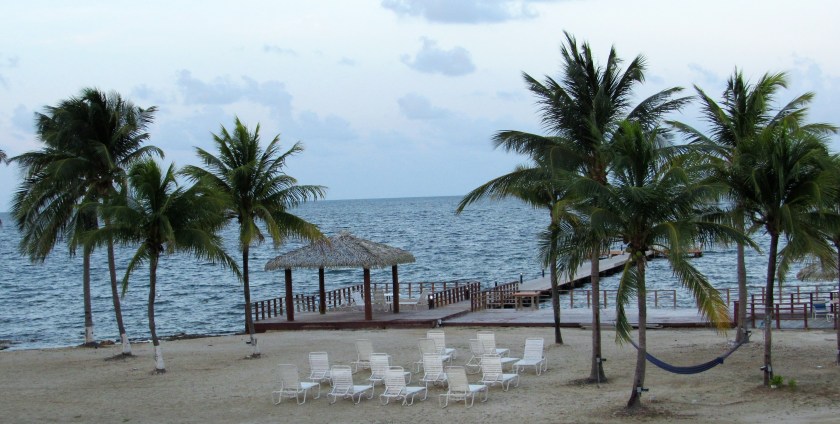
The view from our room.
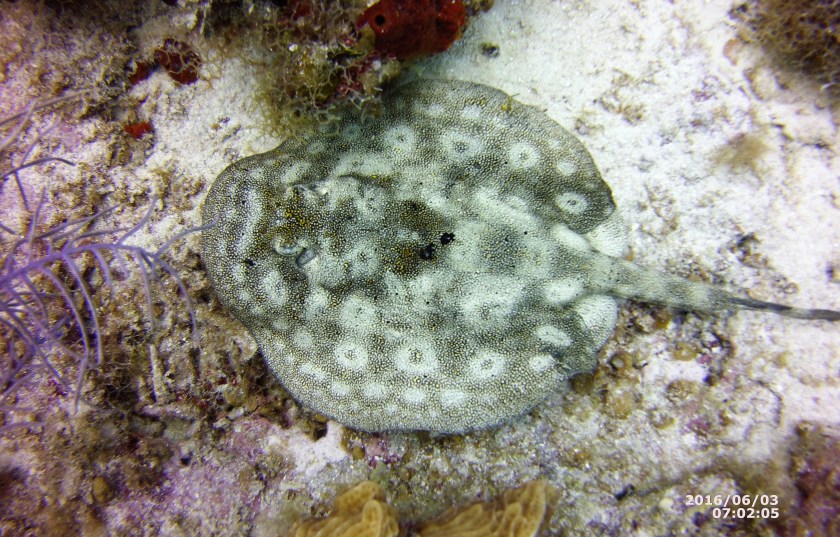
A lemon ray.
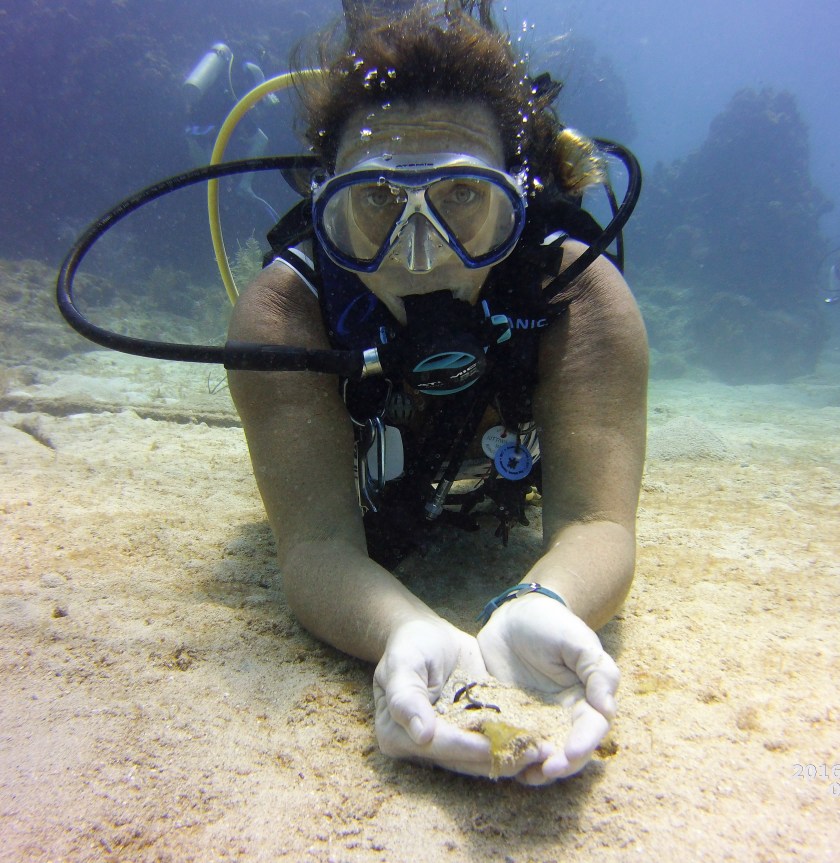
Me holding a tiny garden eel. Considering I am deathly afraid of snakes, this is a big huge step for me. My husband does not get it, and I really don’t either, but I know eels are fish, not snakes, even though they look just like snakes, which I guess makes it OK. Strange, I know, but it is what it is.
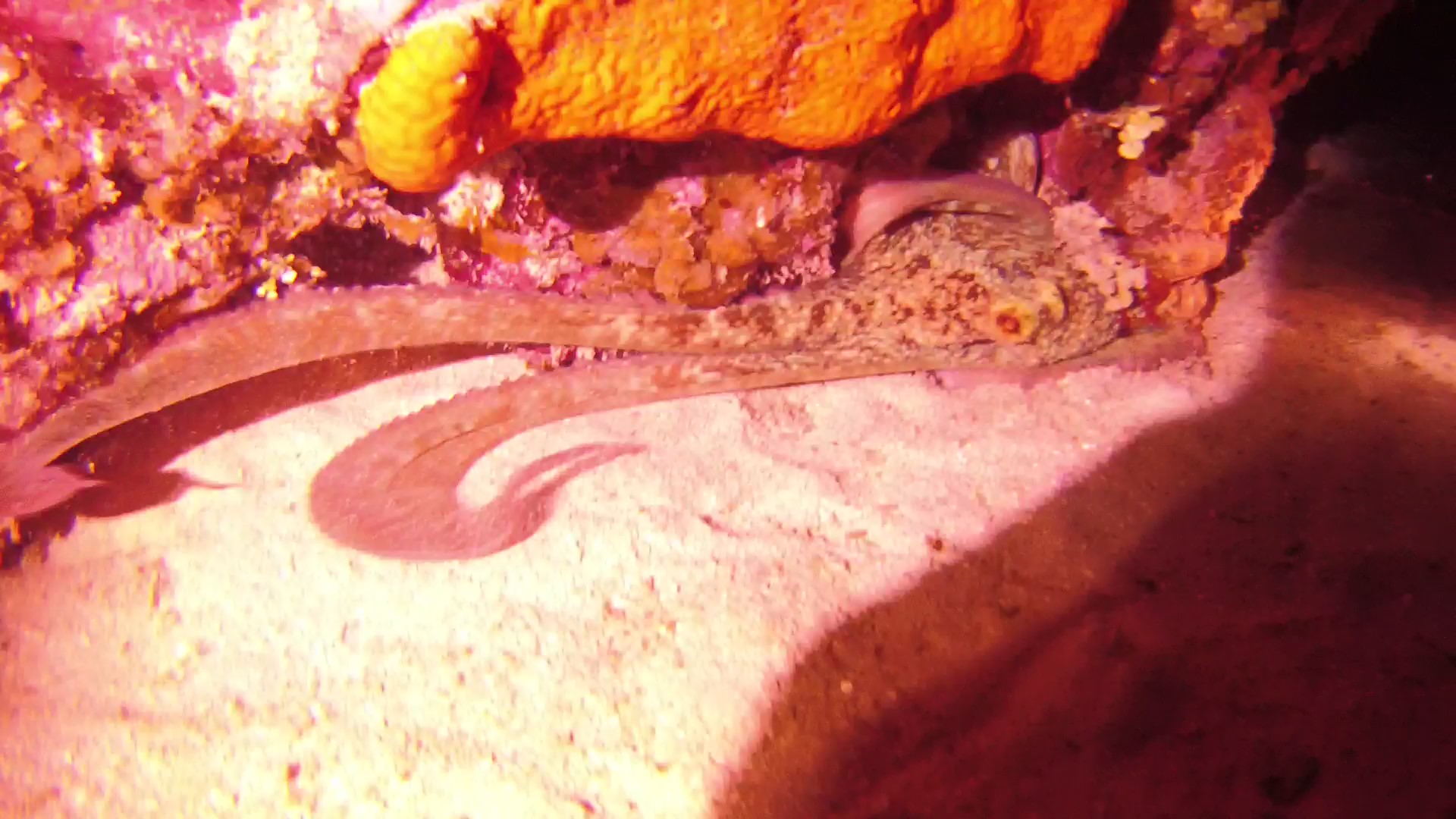
One of four octopuses we found on one of our night dives.
A Southern stingray.

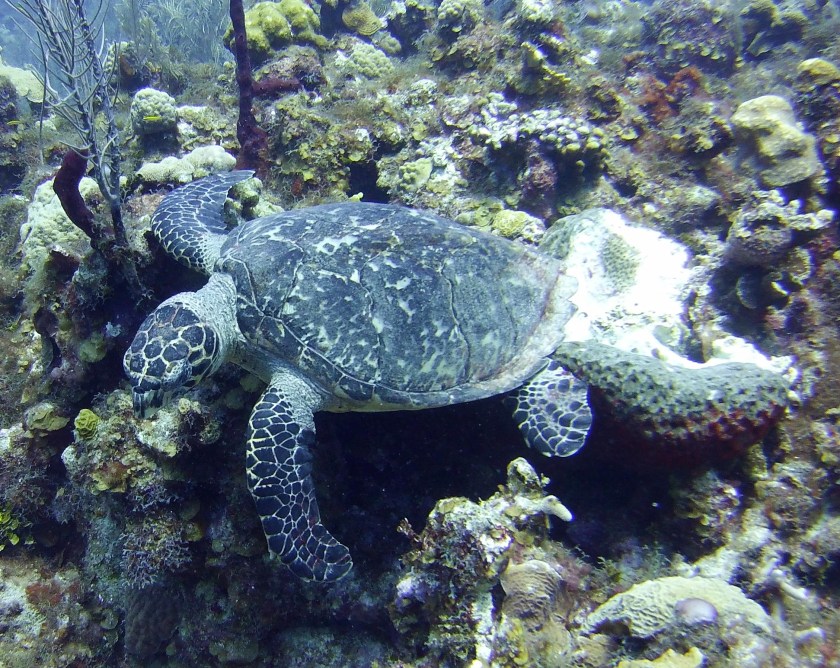
A green leatherback turtle.
I hope you enjoy this little preview of Grand Cayman and some of it’s local residents on this special diving edition of my blog. Tomorrow, we will be back in the kitchen with some more good eats.

 A Jeanne in the Kitchen
Hey! Found you on Goldie’s blog.
It was an interesting read. Love the photos! 🙂
LikeLiked by 4 people
Thank you so much. I like to put a little history into my blogs if I can. 😉
LikeLiked by 1 person
Lots of history behind this amazing island. Eels…you’ll be okay w/this creature since your so daring! Missed you and waiting for the Friday morning class.
LikeLiked by 2 people
I’ll be there. I’ve missed everyone too.
LikeLike
Very interesting to see Caymans through your eyes. Thank you.
LikeLiked by 1 person
My pleasure. I am glad you enjoyed it.
LikeLiked by 1 person
Such an incredible history of the Caymans. Thank you for that! And the pictures are incredible! Hope you had a phenomenal time. 😊🙏🏽
LikeLiked by 1 person
Thank you. I did. Anytime i am diving, I am one HAPPY camper. 🙂
LikeLiked by 1 person
Haha! That’s great! 😊🙌🏽
LikeLiked by 1 person
Welcome Back, I missed you!, love the vacation pictures, my turn on 20 September, can’t wait, Canary Islands, Spain, here we come!
LikeLiked by 1 person
OOOOOOH! Have a great time. Those are both on my one-day list. 🙂
LikeLiked by 1 person
Stupid mosquitos!
I always imagined turtle meat to be chewy. It isn’t? I heard that turtle stews are great. In what form did you have the meat it?
LikeLiked by 1 person
I know, right?! I had a turtle burger, which to me was like eating a crab cake. There are a lot of different ways you can make it. I love the turtles, so it is not something i would ever eat on a regular basis, but it was very good to try.
LikeLike