I have created this site to help people have fun in the kitchen. I write about enjoying life both in and out of my kitchen. Life is short! Make the most of it and enjoy!
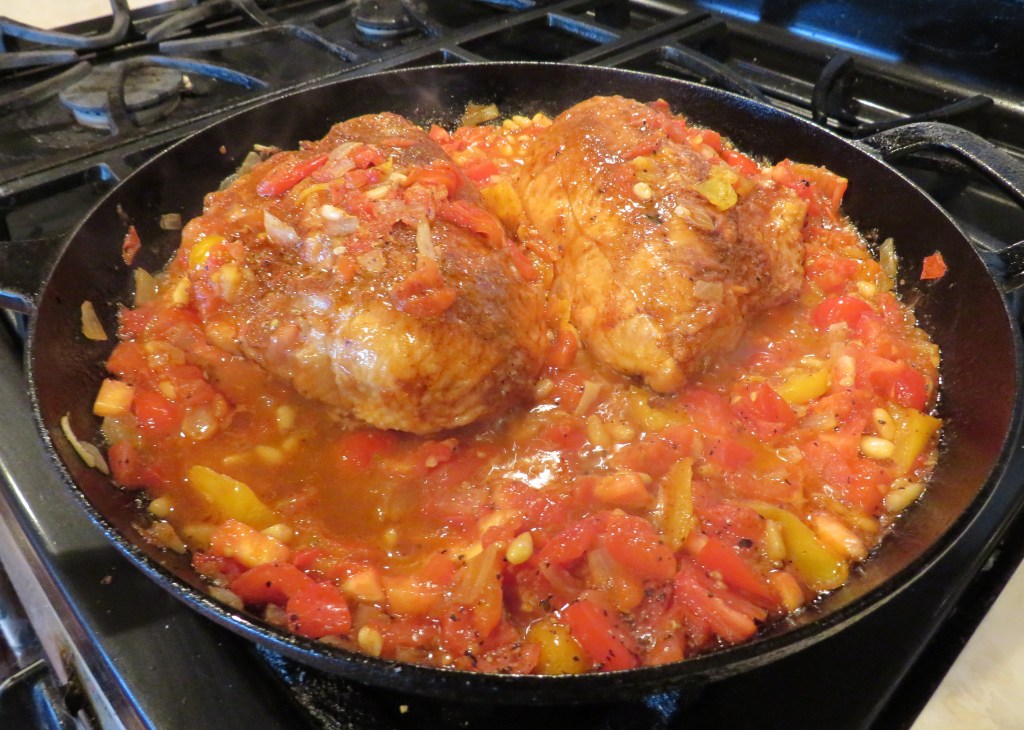
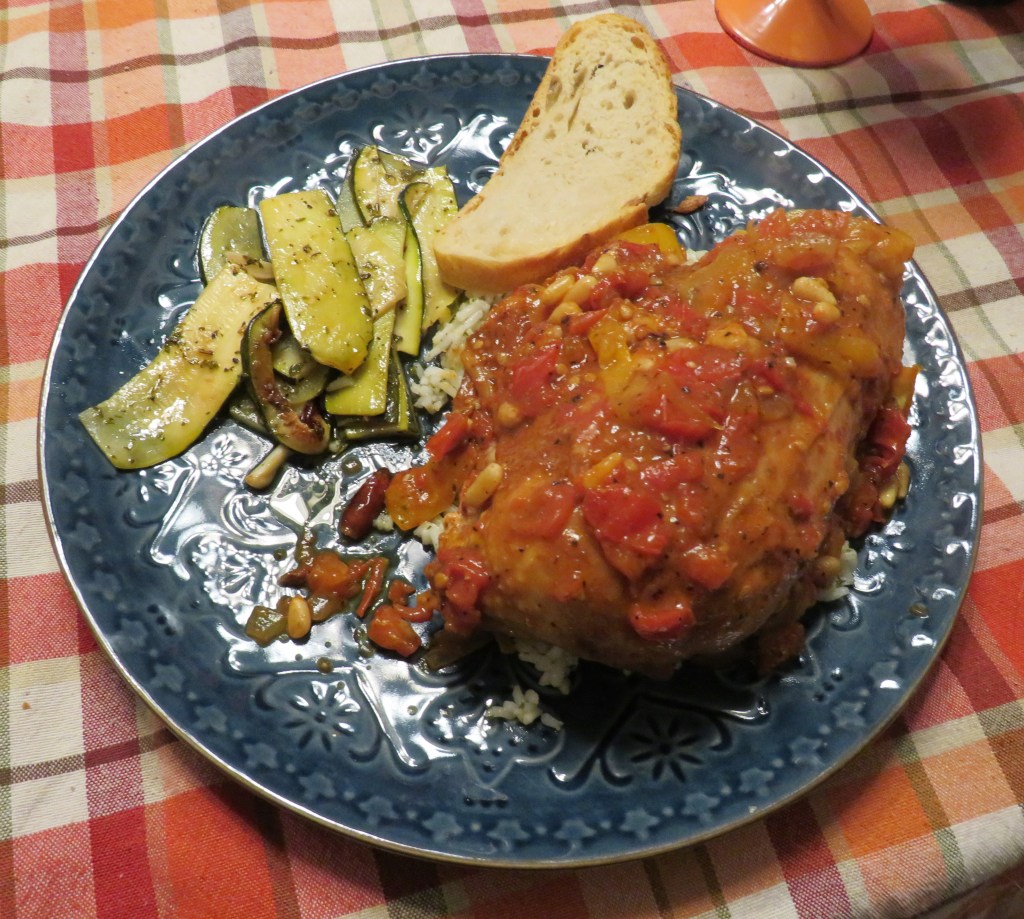
We are still working our way through the chicken Larry smoked on the smoker. Larry said he wanted it made into something Middle Eastern to go with the Middle Eastern meze that our neighbors Hanaa and Aziz brought over to us. No problem. I made a Middle Eastern tomato sauce to go with the chicken.
The sauce I made was created for meatballs, but it goes very nicely with chicken too. The original recipe with the meatballs is rumored to have been a favorite for the first governor of Mount Lebanon when he was appointed by the Ottoman’s in 1860.
Middle Eastern Chicken with Tomato Sauce
My chicken was already cooked, but if you are cooking it for this dish, season it generously with salt, pepper, and a little cinnamon, then brown it in a large skillet with oil and butter, or ghee.
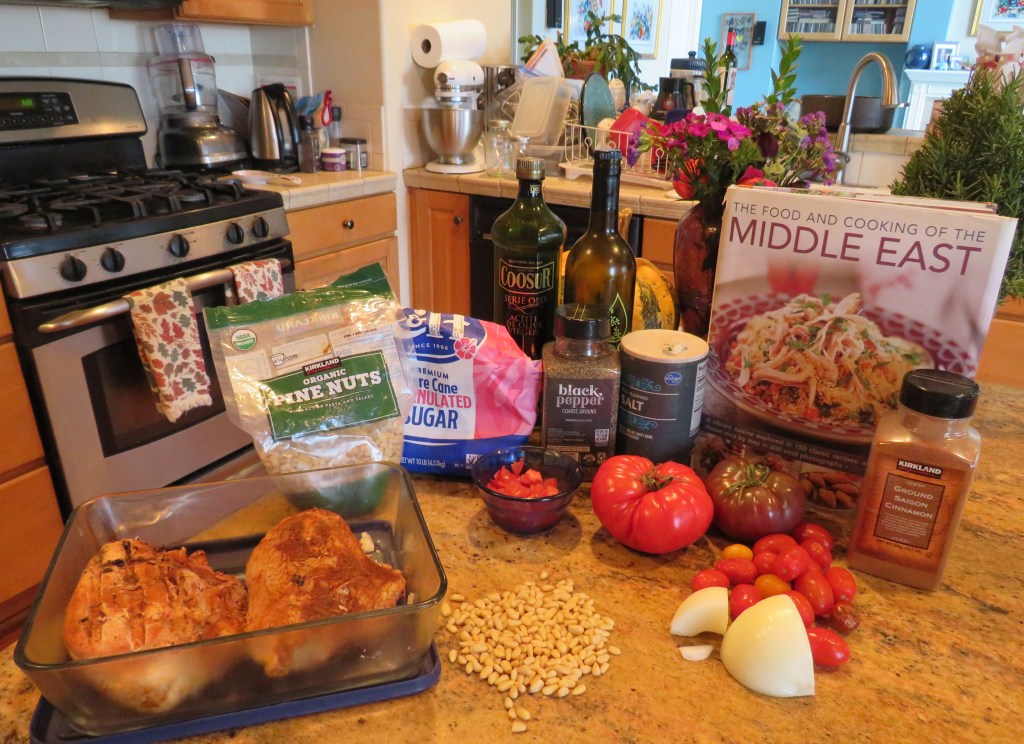
2 lbs chicken, seasoned and browned
1 onion, diced
1 bell pepper, any color, sliced into thin matchsticks
4-5 tomatoes, diced medium – I used a variety of tomatoes
1-2 tsp cinnamon
1 TBSP cooked lemon peel
1 tsp sugar
2-3 TBSP pine nuts
salt & pepper to taste
oil for cooking
lemon olive oil, optional
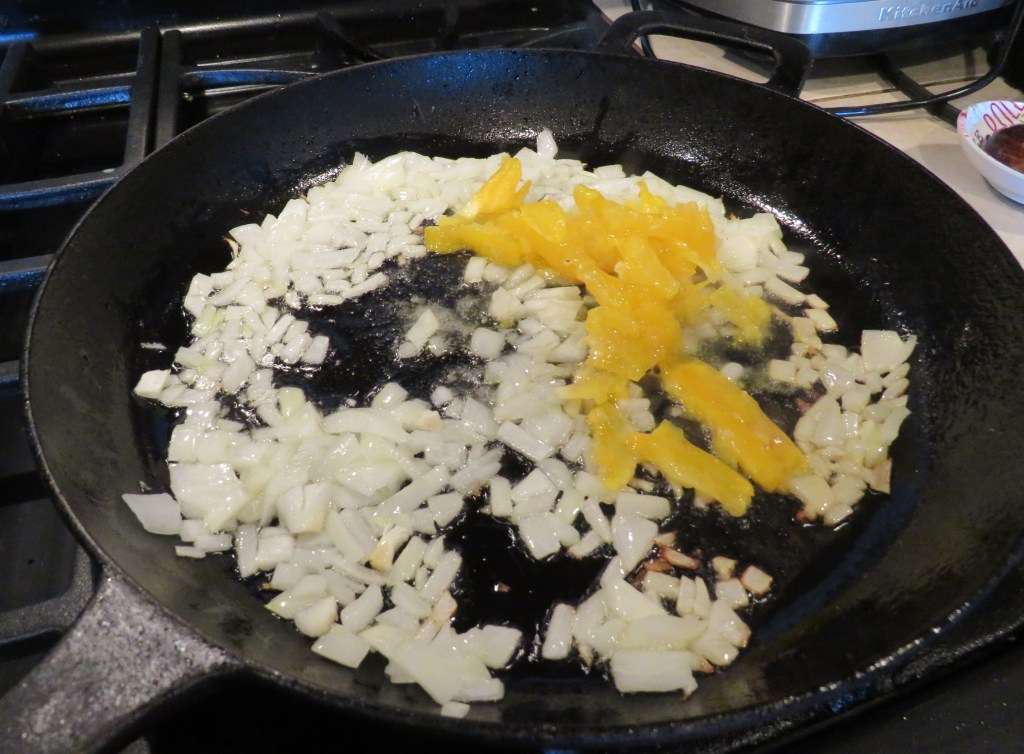
Get a large skillet very hot and add the oil(s). If cooking your chicken, brown it completely then remove and set aside to keep warm. Add the onions and peppers, and cook for about 3-5 minutes, or until they soften and the onions are translucent.
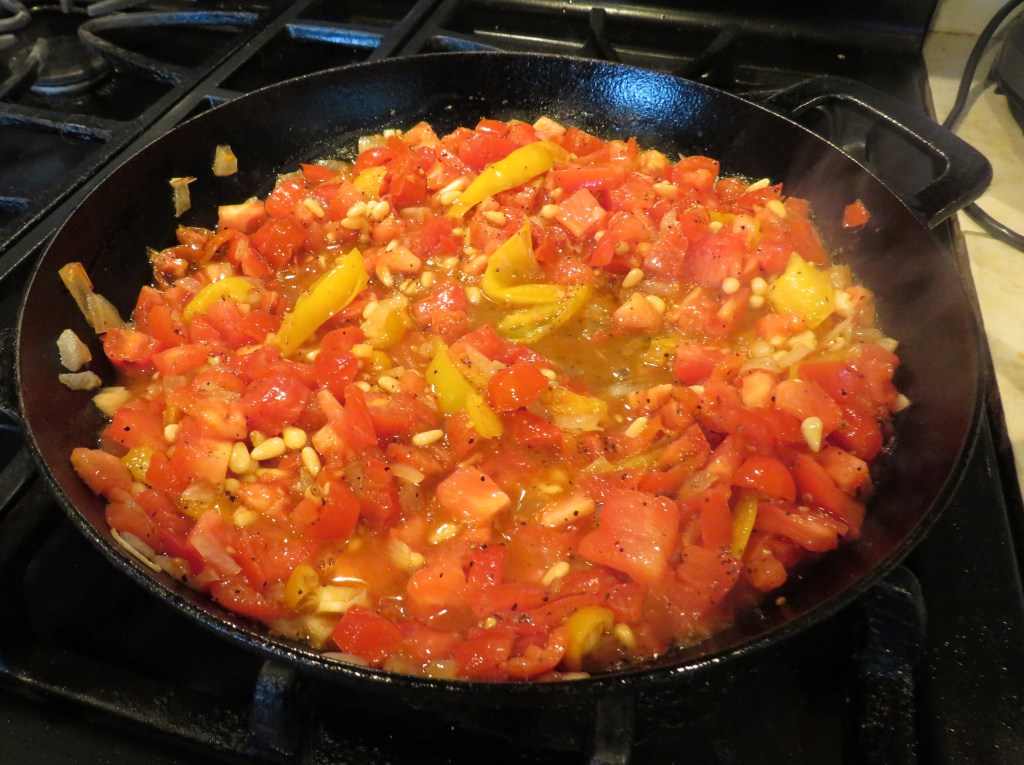
Add the tomatoes and seasonings.
Add the pine nuts and combine thoroughly. Add the chicken. Bring to a boil, then reduce the heat to a simmer, and cook for about 20 minutes, stirring frequently.
I served it over lemon rice with mint, with some Middle Eastern zucchini on the side. Because it is a red tomato sauce, I served it with a red blend on the side to complete the meal. The little hint of cinnamon is a nice exotic touch. It is only a hint, but it really makes the flavors of the sauce come to life.
Have a great day and make everyday great. Stay safe and stay well. ‘Til next time.
I haven’t seen as many of my colorful male Northern Shovelers lately, but I have seen quite a few females. Maybe the males just haven’t flown in yet. Maybe the ladies are checking out the neighborhoods while the males are still flying all around.
You can always identify the Northern Shovelers, male or female, by their distinct “shoveled” beaks. This helps them dig for food in the muddy waters. Here she is swimming next to a Canadian Goose.
Look. She’s smiling for the camera. 🙂
She was swimming fast here. But I got her. 🙂
Have a great day and make everyday great. Stay safe and stay well. ‘Til next time.
As you know, every now and then I like to present you with thoughts about how and what we really think in professional kitchens. Sometimes, the words are words of wisdom, sometimes they are funny, and sometimes both. Sometimes, they are just hard truths. But they are always words we follow. Here are some tried and true kitchen philosophies we swear by.
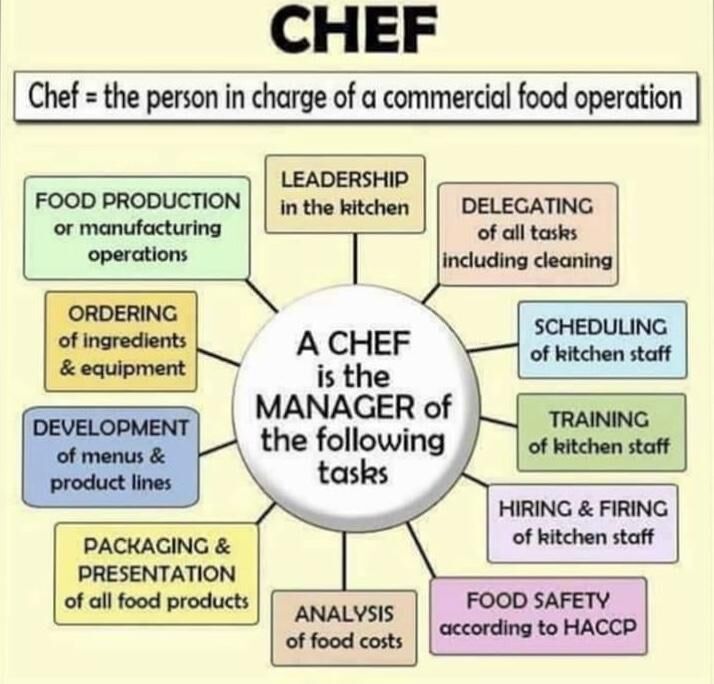
The Chef is THE BOSS. Period! No ifs ands or buts. What the Chef says goes! If you argue with the Chef, good luck! You are living very dangerously if you cross the Chef.
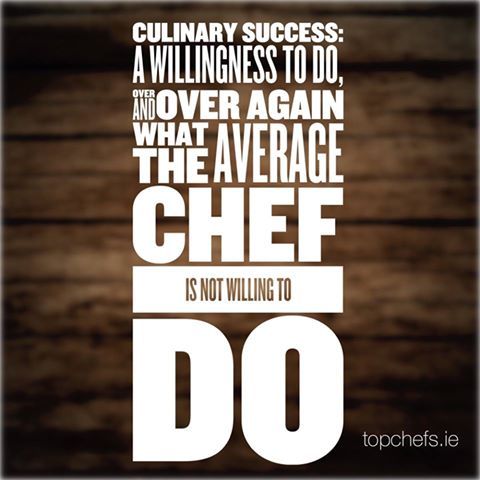
So many people think being a chef is glamorous and easy. They don’t realize ALL the hard work, blood, sweat and lots and lots of tears it takes to make it to the top. They don’t realize that becoming a chef does NOT happen overnight. It takes years and years of hard work, and even then, most people do not make it. Only the very strong will survive.
So if you are thinking about becoming a chef, really think long and hard. There is no room for weakness in a professional kitchen. You’ve got to be tough as nails. Cooking professionally is a calling, not a job. It’s either in your blood or it isn’t.
Have a great day and make everyday great. Stay safe, stay strong and stay well. ‘Til next time.
I love mushrooms. I eat them all the time, with everything, cooked or raw. Call me crazy (trust me, it won’t be the first time), but I love these delicious fungi. Mushrooms are so versatile and can be cooked, eaten and prepared in countless ways. They are not meats, or fruits or vegetables. They have their own unique category. They are fungi, though surprisingly, they are actually more closely related to humans and animals than they are to plants, according to their DNA make-up. Animals and fungi separated from plants about 1.5 billion years ago.
People have been eating mushrooms for millennia. Evidence of humans eating edible mushrooms dates back 100’s of thousands of years, including the discovery of edible mushrooms in 13,000-year-old archaeological sites in Chile and the discovery of two types of mushrooms with the mummy of Ötzi, who lived in Europe between 3400 and 3100 BCE and much earlier as well. Even the stone-age people were eating mushrooms. The “stoned ape theory” claims that the addition of psilocybin mushrooms to the human diet around 100,000 years ago caused the cognitive revolution and the transition from Homo erectus to Homo sapiens. In the early 21st century, research in the United States began to test psilocybin mushrooms (magic mushrooms) for their potential to treat anxiety, mood disorders, and drug dependence. In 2018–19, the FDA granted Breakthrough Therapy Designation for studies of psilocybin in depressive disorders. It is believed mushrooms have been around for about 810 million years.
Part of the appeal of mushrooms is that the early civilizations believed they had magical powers that promoted longevity. These magical powers were also in the form of hallucinogenics. For the Egyptians, mushrooms were the “food of the gods.” They believed that eating them could help them live longer — or even make them immortal. The Greeks drank ergot mushrooms during certain ceremonies and reported seeing visions and ghostly apparitions. The Maya and Aztecs also consumed hallucinogenic mushrooms. They were used for medicinal, spiritual, and recreational purposes. In some areas they were held sacred and believed to bring one closer to the divine. Ancient cultures such as the Aztecs and Mayans have used mushrooms containing psilocybin in religious ceremonies for centuries.
There are roughly 300 species of edible mushrooms around the world, yet only about 30 varieties have been domesticated, and only about 10 varieties that are commercially grown, according to a Colorado State university study. The most popular varieties of mushrooms, at least in the United States, are white button or cremini, baby portabella, portabella, enoki, oyster, maitake and shiitake. They are loaded with Vitamins B and D, and are one of the highest sources of selenium. Mushrooms contain macronutrients that support a healthy immune system. According to the Mushroom Council, your immune system will benefit from mushrooms whose nutrients include: Selenium, which helps your body make antioxidant enzymes to prevent cell damage. Mushrooms are low in calories, have virtually no fat and no cholesterol, and are very low in sodium. Three ounces of raw mushrooms, about 1 cup, provide 1 to 2 grams of protein. Mushrooms contain an indigestible carbohydrate called chitin that contributes “bulk” to our diet.
Mushrooms are eaten all over the world, but it seems that the Russians and Chinese consume the most per capita.
Mushrooms are found all over the world. In the United States, Pennsylvania and California are the leaders in production. Though there are still many varieties that are grown in the wild, the commercially grown mushrooms can be grown indoors, with no lights necessary. They metabolize dead or decaying matter and propagate by producing spores rather than seeds.
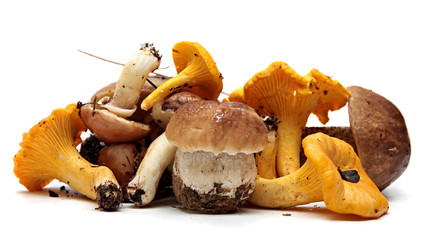
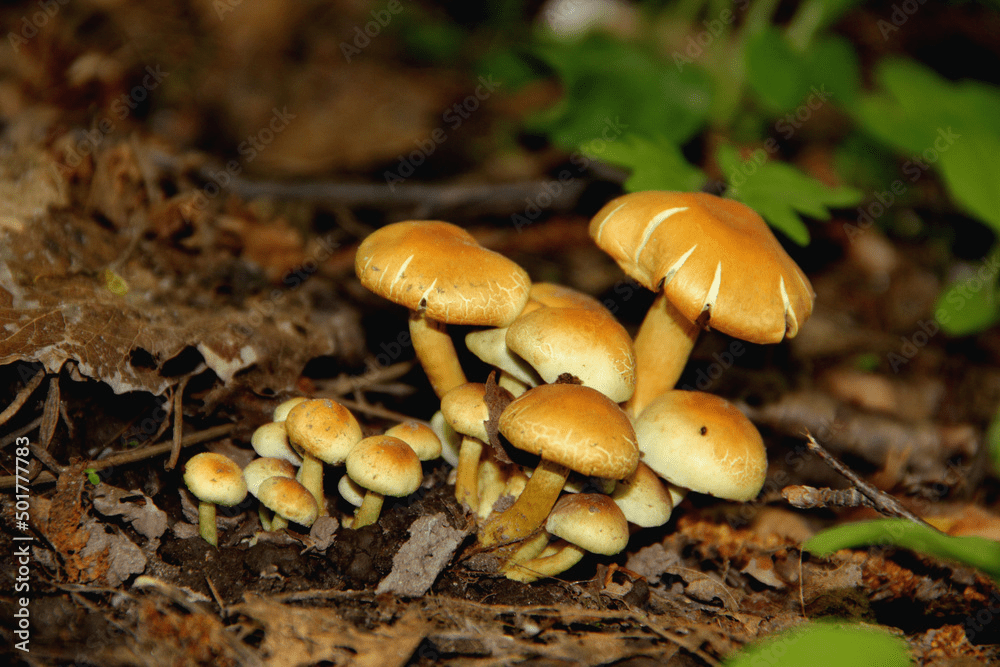
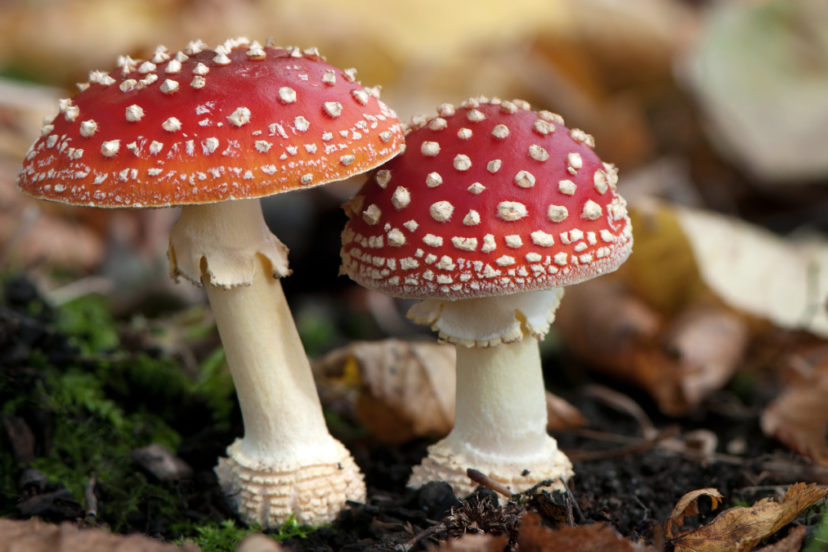
Though there are roughly 300 types of edible mushrooms, there are also many more varieties that are NOT edible and are actually poisonous. The most common toxin that causes severe poisoning is amatoxin, found in various mushroom species that cause the most fatalities every year. Amanita, or “ the death cap”, is a type of mushroom named for its substantial amount of amatoxin, which has about 10 mg per mushroom, which is the lethal dose. Avoid mushrooms with white gills, a skirt or ring on the stem and a bulbous or sack like base called a volva, as well as mushrooms with red on the cap or stem. Here are some poisonous varieties to avoid. When in doubt, leave them alone and leave the mushroom gathering to the pros.
So, my fellow fungi eaters, I hope you all learned some new information and insights on mushrooms. I know I did. I love to learn new things, and I love to share what I learn with all of you too.
Have a great day and make everyday great. Stay safe, avoid those poisonous mushrooms, and stay well. ‘Til next time.
I have been seeing a lot of American Wigeons lately. Much more so than usual. That’s perfectly OK by me too. I love seeing them. There are jokingly referred to as our golf course ducks since they like to frequent the grassy fields on and near our local golf courses, particularly in the warmer summer months. In the cooler months, they prefer to be a little more in the wilds, away from people. I guess our lakes are a good blend of both, because I am sure seeing a lot on our lakes lately.
Have a great day and make everyday great. Stay safe and stay well. ‘Til next time.
You all know I love history and I love to travel. I also love food. Combining all three of these loves is just magic for me. My preference is to travel and eat in person, but I can’t travel all the time. The next best thing is to travel and to learn about the history of our foods through books, and then to cook up these delicacies in the comfort of my own kitchen.
Be prepared. We have lots and lots of fun culinary adventures ahead. I hope you join me for these delicious food tours.
Have a great day and make everyday great. Stay safe, stay adventurous and stay well. ‘Til next time.
Confit, pronounced cone-fee. What is it? Anyone who has ever worked in an upscale kitchen or has been professionally trained knows what it is. But most people haven’t had that kind of training. So what is a confit?
The practice of confit first came to modern consciousness in France in 1859 with the publication of Henriette Davidis’ “Practical Cookbook” (via Mon Panier Latin),but has been around since the 13th century. It is often associated with the southwest region of France known as Gascony, which is also recognized for its traditions around foie gras, rendered duck and goose fat, and other duck and goose-derived consumable goods.
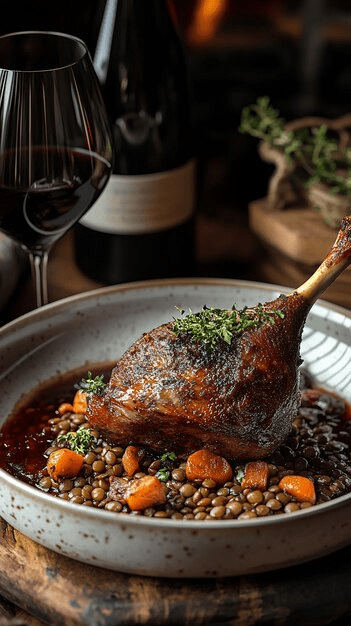
Confit is a French cooking technique that involves slowly cooking food in fat at a low temperature to preserve it. The word confit comes from the French word confire meaning to preserve and the Latin word (conficere), meaning “to do, to produce, to make, to prepare. It is used for meat, vegetables and fruit. It is a method of cooking foods in fat. Today, we use oils and grease most often, but it used to be that cooked foods, or foods preserved in salt, were stored in air-tight containers of fat, kept in cool, dry places. Some of the more popular early methods were to preserve foods in either duck fat or goose fat. In French culinary traditions, duck confit represents a balance between rustic simplicity and refined taste, showcasing the French appreciation for both high-quality ingredients and traditional cooking techniques.
Confits are perfect for storing and preserving red meats or wild game, though any kind of meat can be used. Duck confit can be stored in the refrigerator for about a month, and can be reused, once it has been strained and placed in a clean container. It will be fine to reuse so long as you filter out any chunks of food introduced in the cooking process.
Serious Eats informs us that traditional confit relies on both an ample amount of salt to preserve the ingredients as well as a thick layer of oil to create a temperature-stable, anaerobic environment where bad bacteria cannot survive. So, what is the confit process, and how does it work?
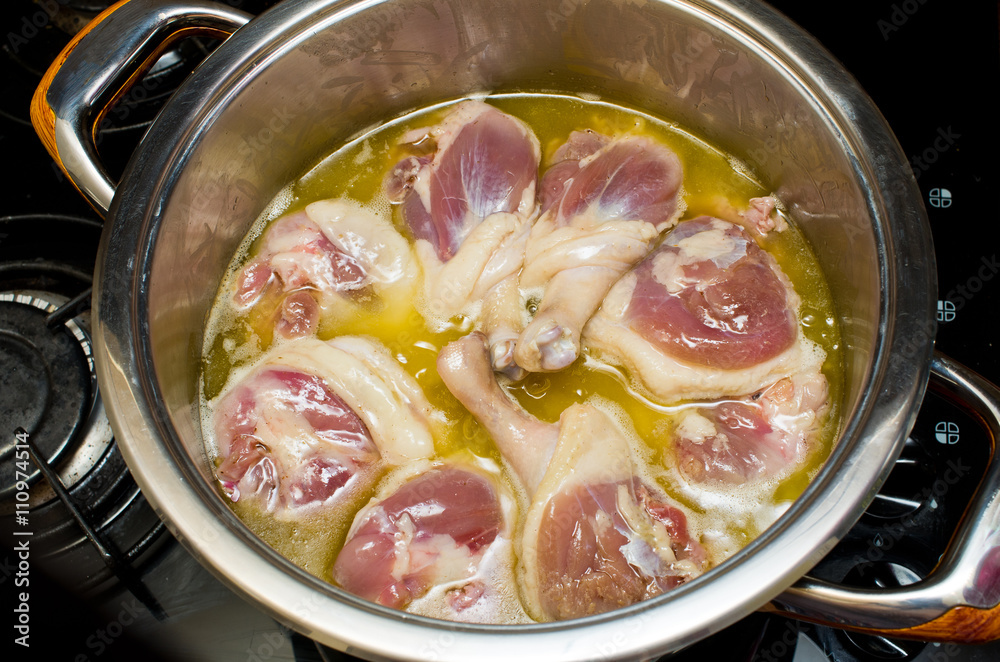
The first step in the process is rubbing salt into the protein of choice, and usually spices, herbs, minced garlic, or other flavor-enhancing ingredients. This is usually allowed to marinate for 24 hours or more, or until the meat adopts its flavor (via Serious Eats). The spices are then rinsed from the meat and submerged in oil. According to Force Meat Academy, if you cook your confit at 200 degrees Fahrenheit it will be done in four to six hours, but if you cook it at 300 degrees Fahrenheit, it will be done in two hours.
Confit used to be used primarily as a way of preserving foods. Today, it is not so much about the food preservation as it is about the taste and texture of certain foods, like potatoes and other vegetables cooked in confit.
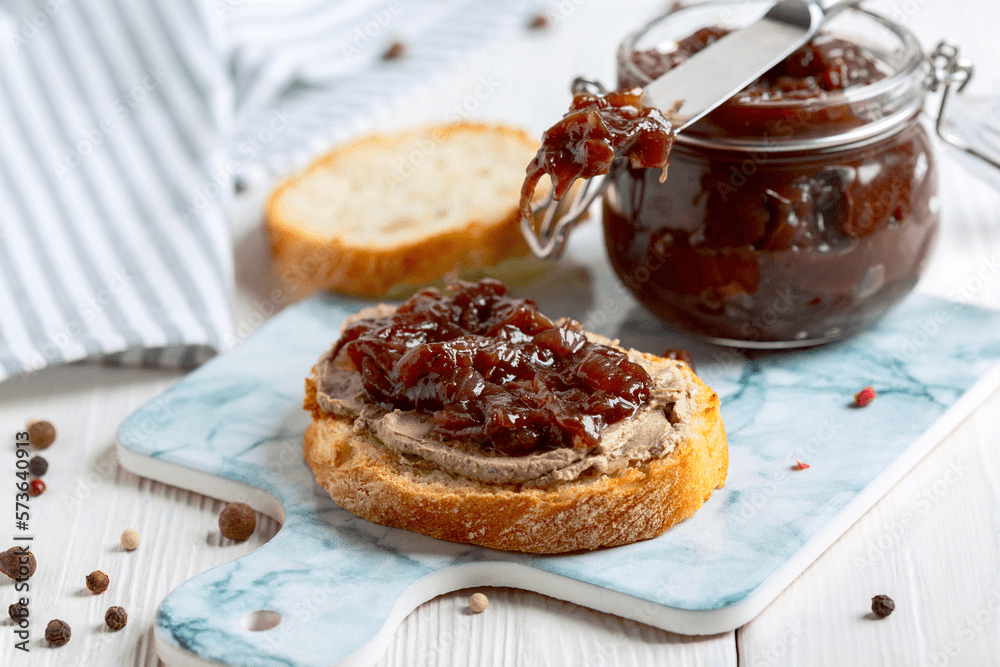
Red onion confit.
The only times I have really used confits was back in my culinary school days. So, yes, I too am very rusty in the art of cooking with confit. Though I do cook things in olive oil on a daily basis. This is a trip back through the early days of culinary history. I do love my history. I hope you do too.
Have a great day and make everyday great. Stay safe and stay well. ‘Til next time.
Supposedly Gadwalls are pretty popular all throughout Colorado, year round. But I only see them on rare occasions. They like the colder weather and temperatures, so when the mercury drops, they tend to stop by and say hi. They are cousins to the Mallards, but not nearly as colorful.
I just love all the wildlife variety we have here on our lakes. Although I can easily NOT see the unwelcomed guests like the one I saw in my garage yesterday, and I would be very happy. http://A VERY Unwelcomed Guest
I could easily live on bread and butter alone. It doesn’t even matter what kind of bread. I LOVE breads of all kinds. I love baking breads of all kinds too.
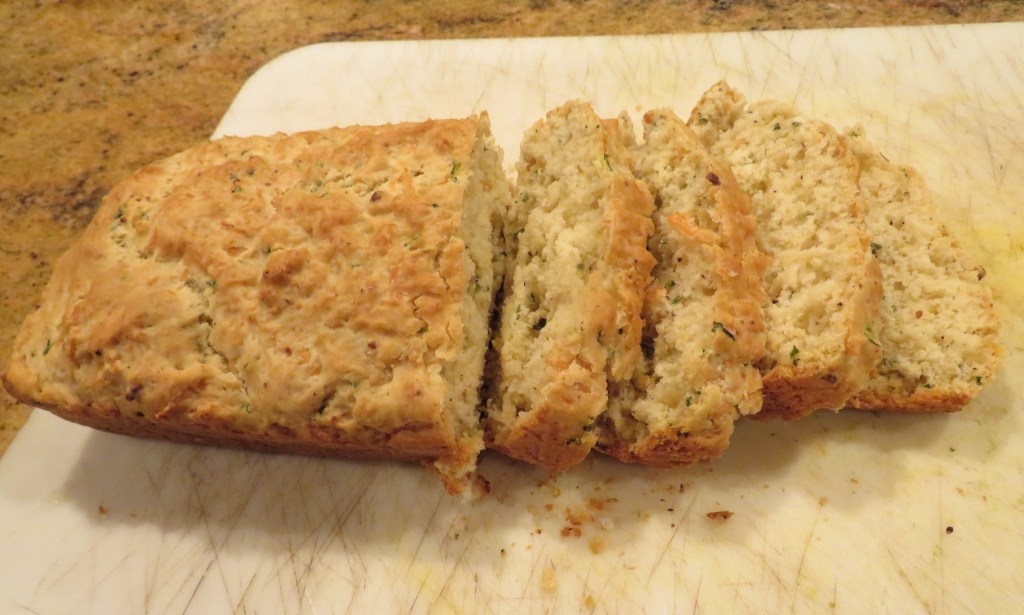
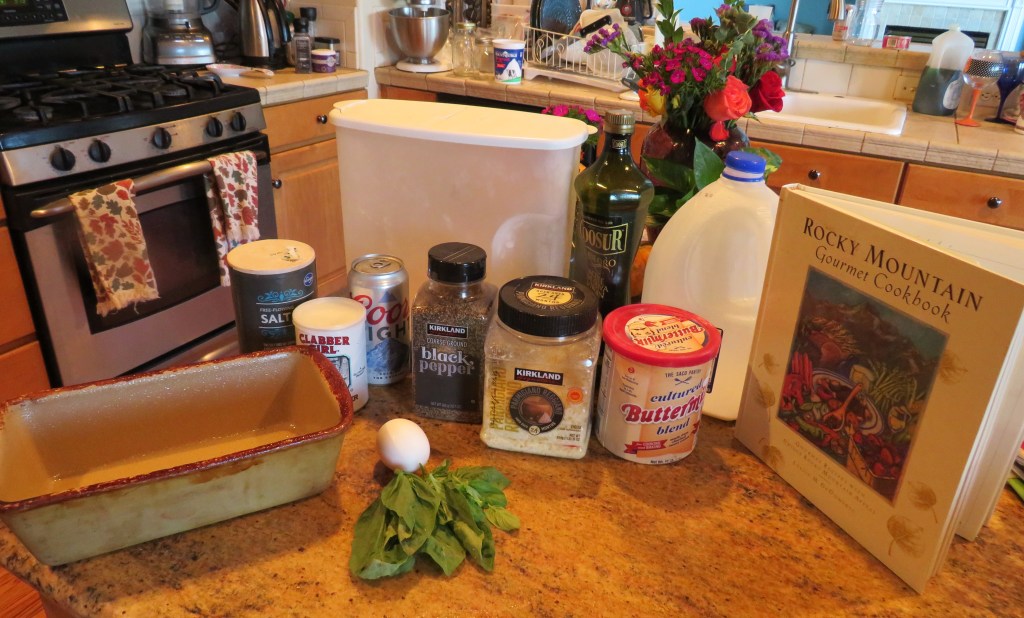
When I made my short ribs with winter vegetables Short Ribs with Root Vegetables, I also baked some bread to go with it. I made a quick bread with beer, basil and Parmigiano cheese. I am not a beer person at all, but I do cook with it on occasion.
This bread is similar to a biscuit, but it is a loaf bread instead. It was very light and moist and full of flavor. It is also very easy to make too.
Beer Bread with Basil & Parmigiano Cheese
This delicious, quick and easy bread only takes a few basic ingredients to make. I always use the dried buttermilk, that I mix with regular milk, when a recipe calls for buttermilk.
You can use any kind of beer. Neither Larry nor I are beer drinkers, but we usually have some on hand for guests. I just picked up the first beer I saw in the fridge. Changing the beers will give more variety to the bread as well, so every time you make it, it will have a slightly different flavor.
2 cups flour
3 tsp baking powder
3/4 tsp salt
1-2 tsp fresh basil, chiffonade or 1 tsp dried basil
black pepper to taste
1/2 cup grated or shredded Parmigiano cheese
1/4 cup olive oil
3/4 cup beer
1 egg, lightly beaten
1/4 cup buttermilk
Preheat the oven to 400*F or 200*C.
Spray a loaf pan with cooking spray.
Combine the flour, salt, pepper, baking powder, basil and Parmigiano cheese together, and mix well. Make a well in the center of the mixture.
Combine the buttermilk, egg and olive oil together and mix well. Pour the egg mixture into the center of the well. Then add the beer as well. Start mixing from the inside out until all the ingredients are just mixed together. DO NOT overmix or the bread will be tough. Pour the batter into the prepared loaf pan and evenly spread out in the pan.
Bake for about 45 minutes, or until the bread is golden brown and firm to the touch. Allow the bread to cool for a few minutes before removing from the pan and slicing. This bread is best when served warm, smeared with butter.
Have a great day and make everyday great. Stay safe and stay well. ‘Til next time.
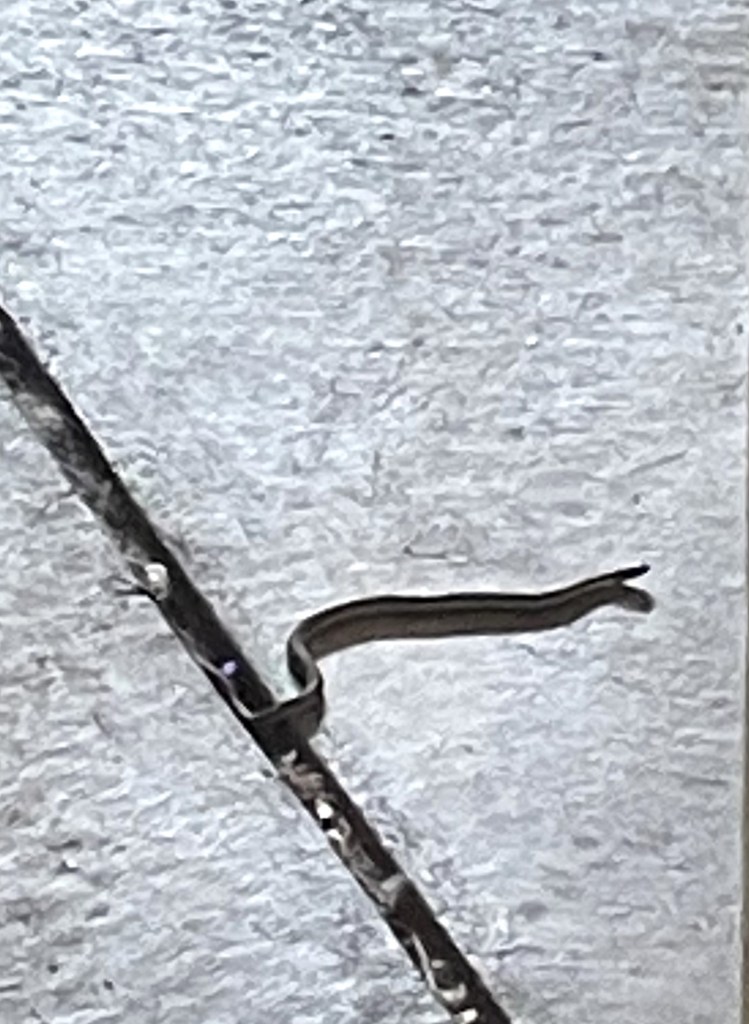
I HATE snakes! I am VERY phobic of them; always have been. Earlier today, I was going into my garage for something, and this is what I saw. I had a VERY unwelcomed guest right by my car, in my garage. Needless to say, I turned right around and went right back into the house ASAP! I think it is a garter snake. I don’t really care what it is though; it is NOT welcome! I have not, and will NOT step back in my garage until Larry comes home and gets rid of it. The really odd things are, 1) it is very late in the season, and 2) this is the first snake I’ve seen all season. But WHY does it have to be in my garage??????

































 A Jeanne in the Kitchen