I have created this site to help people have fun in the kitchen. I write about enjoying life both in and out of my kitchen. Life is short! Make the most of it and enjoy!
I am so lucky to live where I live. I love our lakes. I love seeing the wide variety of wildlife my lakes have to offer too. I never get tired of seeing all the wildlife on our lakes. But this time I saw something that just melted my heart. I see people fishing on our lakes all the time, which always brings a smile. But this was just precious.
Dad was teaching his son how to fish. I did get dad’s permission to post this picture. Both dad and son were having a great time together. They didn’t care if they caught anything or not. They just loved hanging out together. You can see it in the little boy’s eyes. His expression says it all. 🙂
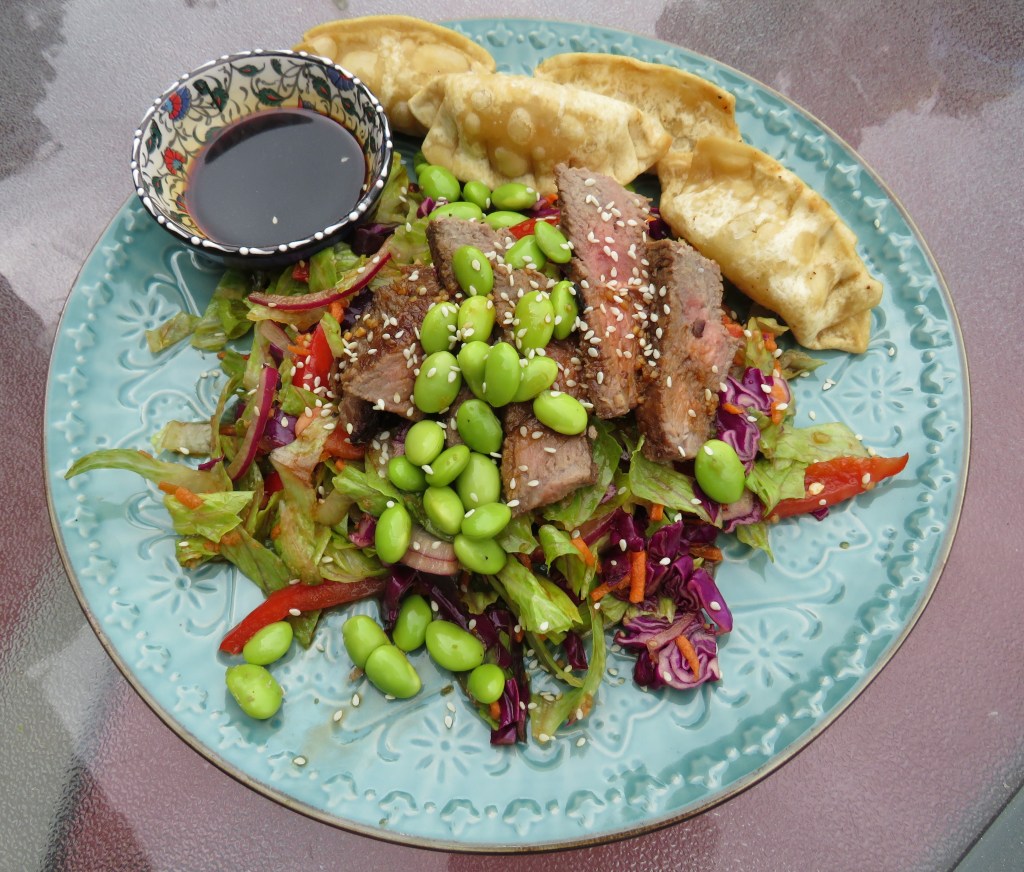
The mercury is still rising and it is still HOT, HOT, HOT. And since I wrote about lettuce yesterday Lettuce Be, it was only fitting that I made a salad for dinner. This time it was an Asian steak salad.
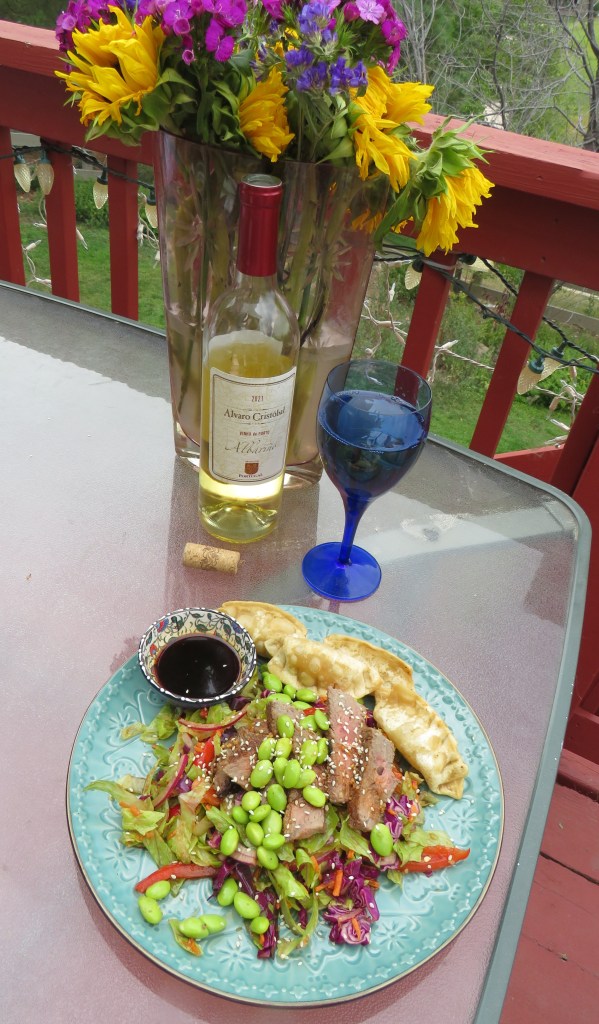
This colorful salad was a perfect way to cool down and beat the heat. I served it with potstickers and I went with a cool, crisp Albarino on the side. (Albarinos are some of my favorite white wines. This one was a Portuguese Albarino. Most are Spanish.) I went with a white wine because it was a salad, though a light-medium bodied red would have paired nicely too since it was steak.
Asian Steak Salad
As with anything, there are always many different and almost endless possibilities. this is just but one of many. But it was a very, very good option. Plus, I got to use up my leftover steak. WHOOOOO HOOOOOOO! 🙂
The Salad
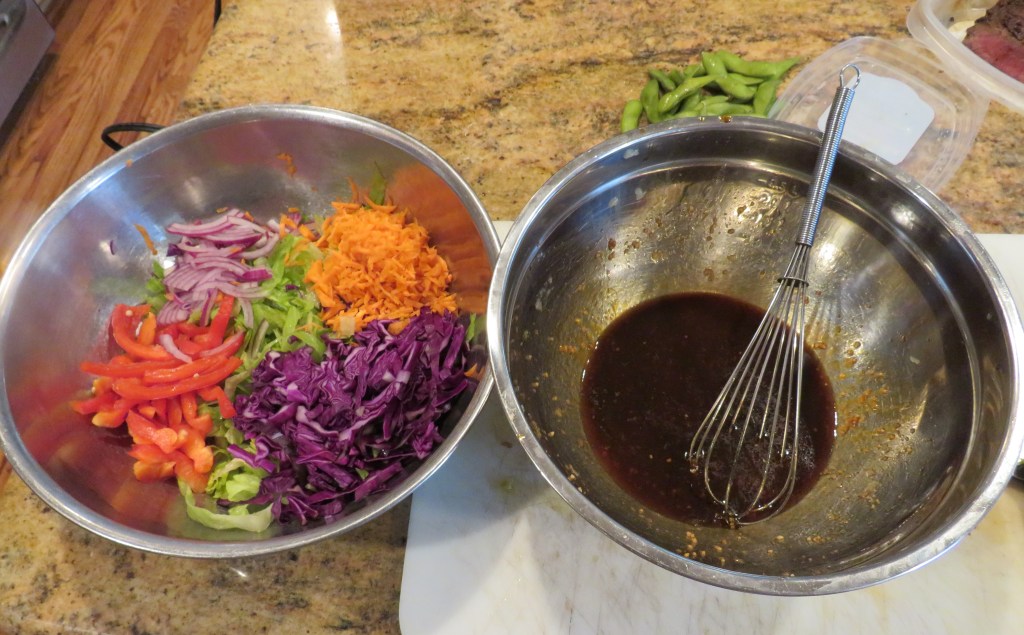
1 medium head Romaine lettuce, shredded
1-1 1/2 cups shredded red cabbage
1 carrot, peeled and shredded
1/2 red bell pepper, cut into thin matchsticks
1/4 red onion, sliced very thin
1 cup cooked edamame beans, shelled
6-8 oz cooked steak, cut into thin strips
sesame seeds for topping
The Dressing
1/4 cup lime juice
3 TBSP sesame oil
3 TBSP soy sauce
1-2 TBSP honey
1-2 TBSP honey ginger vinegar, optional
1 TBSP ginger
1 TBSP garlic
Whisk everything together well and set aside until ready to use.
Toss all the salad ingredients and enough dressing to flavor the salad well, except the steak, edamame beans and sesame seeds. Add the steak slices to the top of the salad, then add the edamame beans, more dressing and top with the sesame seeds.
This cool, refreshing salad is perfect for anytime, but especially when the mercury rises out of control. It is a very colorful salad, full of both flavor and texture and is something a little different too.
Have a great day and make everyday great. Stay cool, stay safe and stay well. ‘Til next time.
Lettuce is one of the oldest and most popular vegetables, having been around since around 4000 BCE. The first known lettuce was called kos or cos lettuce, named from the Greek physician Hippocrates. He named it kos because it came from the island of Kos, where he was from. It was first cultivated around 6,000 years ago in the Caucasus region of the Middle East, initially for its seeds and the oil it yielded. Over time, it spread to Egypt, Greece, and Rome, evolving from a seed crop to a leafy vegetable prized for its medicinal and culinary uses. Lettuce oils were also used as part of the elixirs used for love potions. As of 1866, there were over 65 lettuces grown and enjoyed all over the world, with China, Spain and The United States being the world’s largest producers of lettuce.
Lettuce gets its name from the Ancient Roman term lactuca sativa, roughly meaning milk producing. Yes, lettuce produces a milky sap-like substance when first cut. Lettuce produces this sap as a natural defense mechanism to heal cuts and deter pests. Lactucarium is a milky white substance found in the stems and leaves of lettuce, especially romaine and wild lettuce. This milky substance is responsible for the bitter taste of lettuce, but was also used for medicinal purposes for a variety of different ailments, including the use as a treatment for sleep disorders and pain relief. While generally safe, some people might experience mild drowsiness or allergic reactions.
By the 16th century, the popularity of lettuces had spread all over Europe, and at the time there were at least 8 different types of lettuce growing in England alone. It is believed England was were salads were first born, when botanist John Gerard “discovered that by mixing these leafy greens with oil, vinegar and a little salt to stimulate the appetite and to calm delicate stomachs” (p. 50 The Story of Food – An Illustrated History of Everything We Eat). The French and the Chinese cook their lettuces in a variety of different ways. The Chinese have been cooking their lettuce since the 7th century. They thought raw was lettuce unsafe to eat.
There are 4 main categories of lettuces – crisphead, butterhead, romaine, and looseleaf.
Iceberg lettuce is a type of crisphead lettuce. Its round head comprises tightly packed, crunchy leaves. Iceberg lettuce is a hardy, crunchy variety of lettuce that was created in the 1940’s. It was created because of its hardy qualities that allowed for it to be refrigerated for periods of time long enough for it to be easily transported and shipped. Iceberg lettuce is the most popular type of lettuce all over the world, accounting for roughly 90% of the lettuce consumption in both in North America and the rest if the world. Iceberg lettuce is a low-calorie, water-rich vegetable and a good source of vitamin K, vitamin C, folate, and potassium. While not as nutrient-dense as darker leafy greens, it’s a versatile and refreshing addition to salads, sandwiches, and wraps.
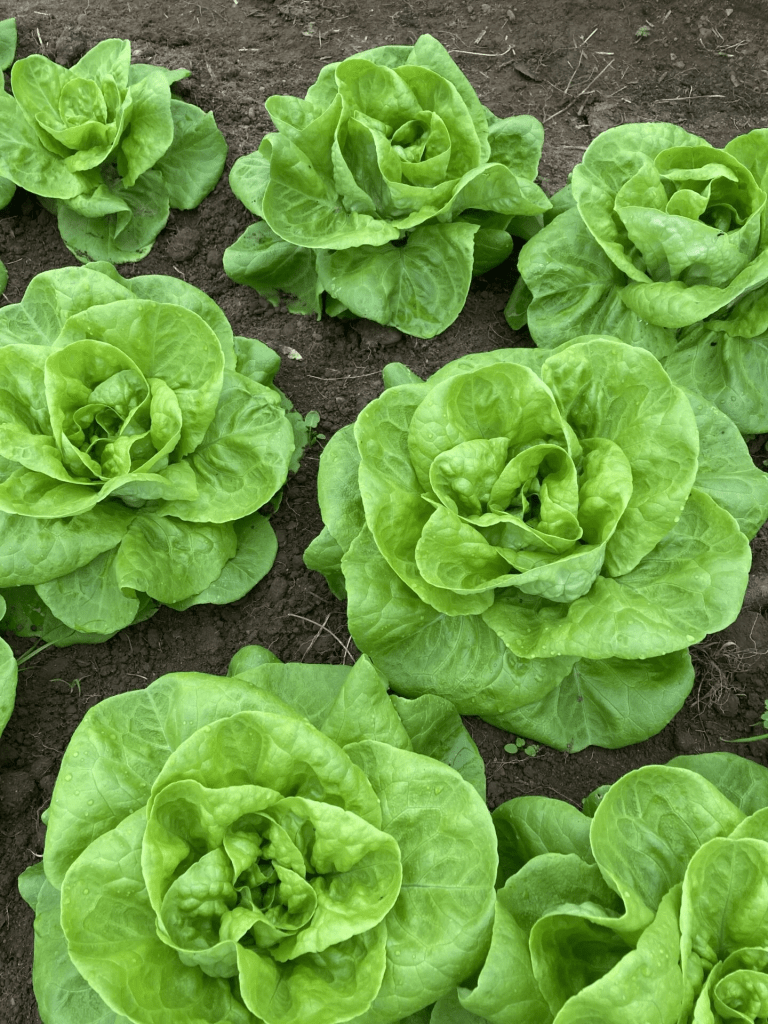
Butterhead lettuces are also round, but their leaves are looser, with a smoother texture. The sweet, tender leaves of butter lettuce make for simple everyday salad greens, but can also be transformed into an edible vessel for low-carb meals—think tacos or Korean grilled beef lettuce wraps using the large outer leaves of the plant. Butter lettuce may be easier for some people to digest because it has a low fiber content.
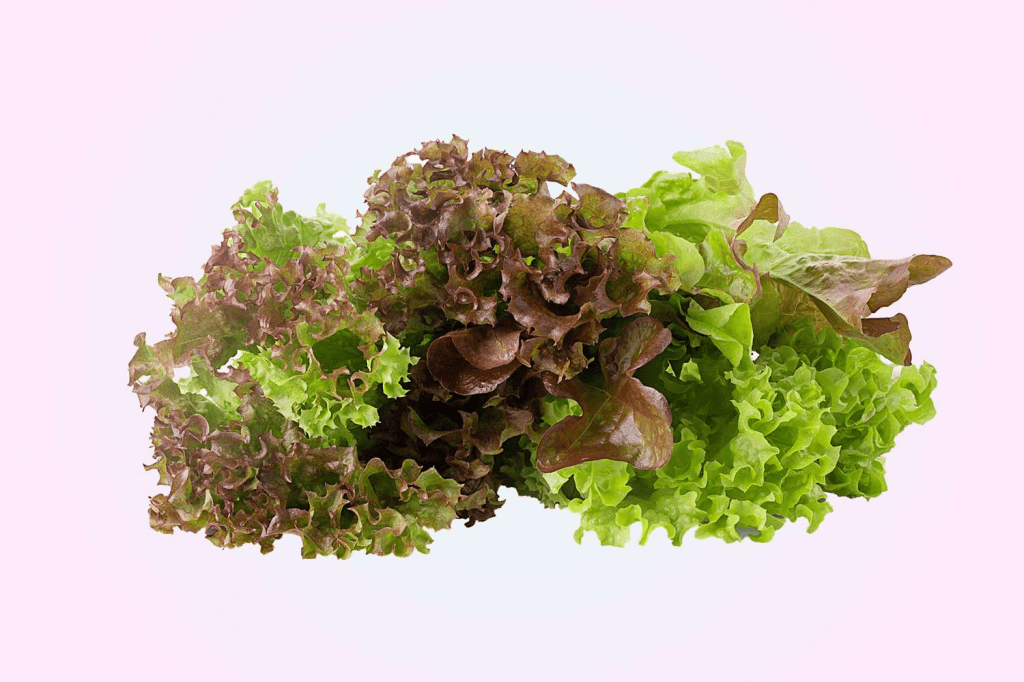
Looseleaf lettuce comes in both green and red leaves. They have loose open heads with ruffly tops and crisp stems. Loose leaf lettuce is one of the simplest lettuces to grow in home gardens and the type grown by most home gardeners. You just plant, water, harvest and eat! Loose leaf lettuce varieties are those lettuces that do not form a compact head. Their flavor tends to be mild and sweet. Looseleaf lettuce (includes romaine, Boston, redleaf, greenleaf, and butter-head varieties) is rich in Vitamin A, folate (folic acid), and potassium. It is moderately rich in Vitamin C and calcium. It is naturally low in calories, fat and sodium.
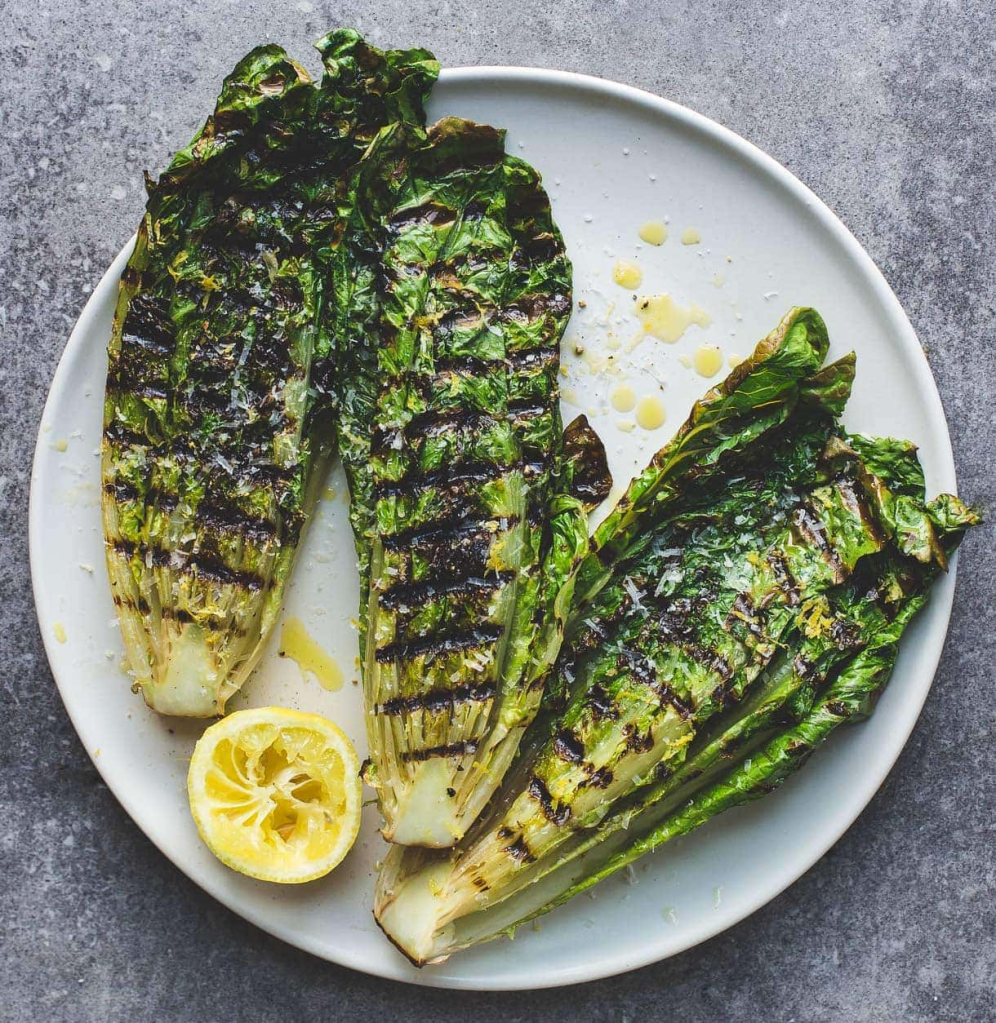
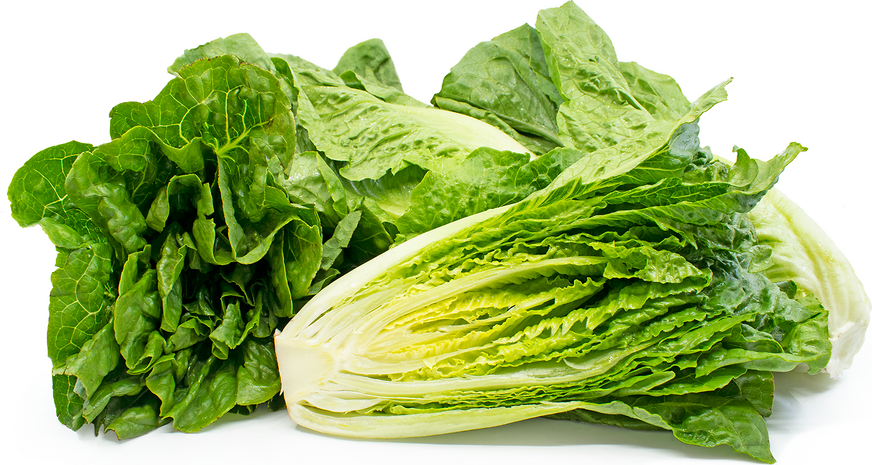
Romaine lettuce is a distant cousin to the ancient kos lettuce. Romaine lettuce, also known as cos lettuce, is a variety of lettuce characterized by its long, sturdy leaves with a firm rib down the center. It’s known for its crisp texture and mild, slightly sweet flavor, making it a popular choice for salads, particularly Caesar salads. Romaine is also versatile in cooking, and can be grilled, sautéed, or used in lettuce wraps. It’s a good source of vitamins A and K, folate, lutein, and zeaxanthin. Romaine lettuce is the healthiest version of lettuce and is jam packed with all kinds of nutrients, minerals and vitamins. It also has the highest fiber content out of all the different types of lettuces available too. Romaine lettuce is one of my favorites, but I enjoy all of the looseleaf lettuces a lot.
I remember many years ago, one of my cousins in Australia and I had a lengthy debate about the nutritional value of different lettuces. She was adamant in her belief that iceberg lettuce was the healthiest, most nutritious type of lettuce. I told her it wasn’t because it is mostly water. If memory serves me correct, I believe she actually consulted with a friend of hers who was a nutritionist before conceding that I was correct. I don’t know everything about food, but I DO know a lot about food, and what I don’t know I learn (this is true about many things really though). My cousin had to eat a little slice of humble pie on that one, and it was a bitter pill for her to swallow. A little lettuce humor, with the “bitter”. 🙂
As usual when I do these deep dives, I hope you learned something new and enjoyed the experience. Have a great day and make everyday great. Stay safe and stay well. ‘Til next time.
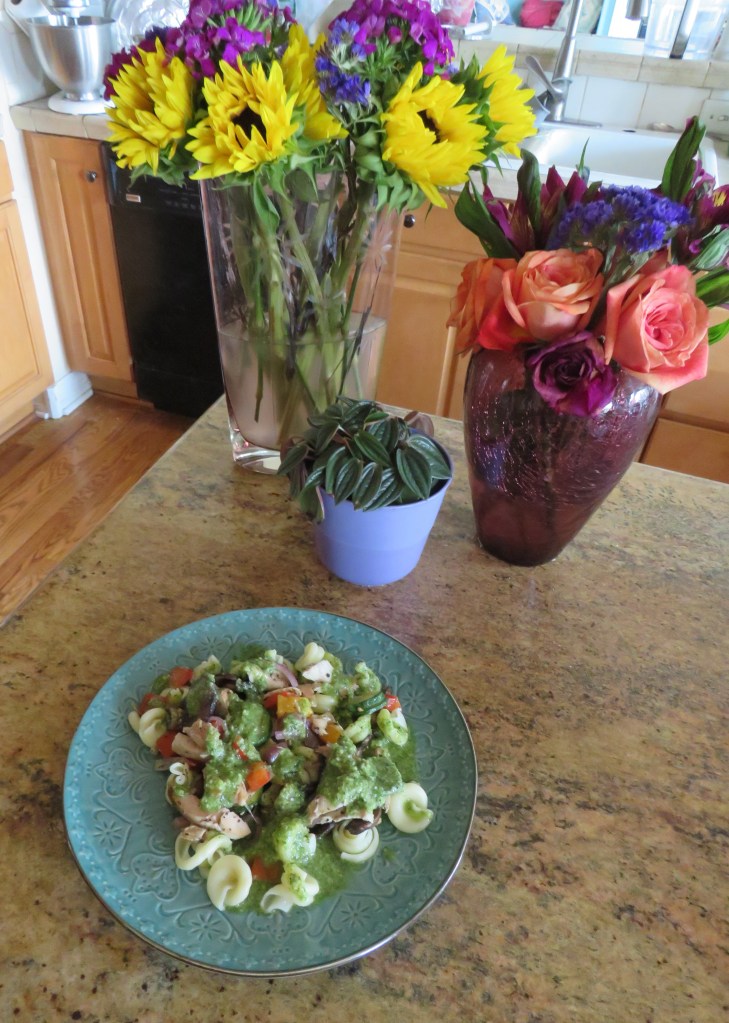
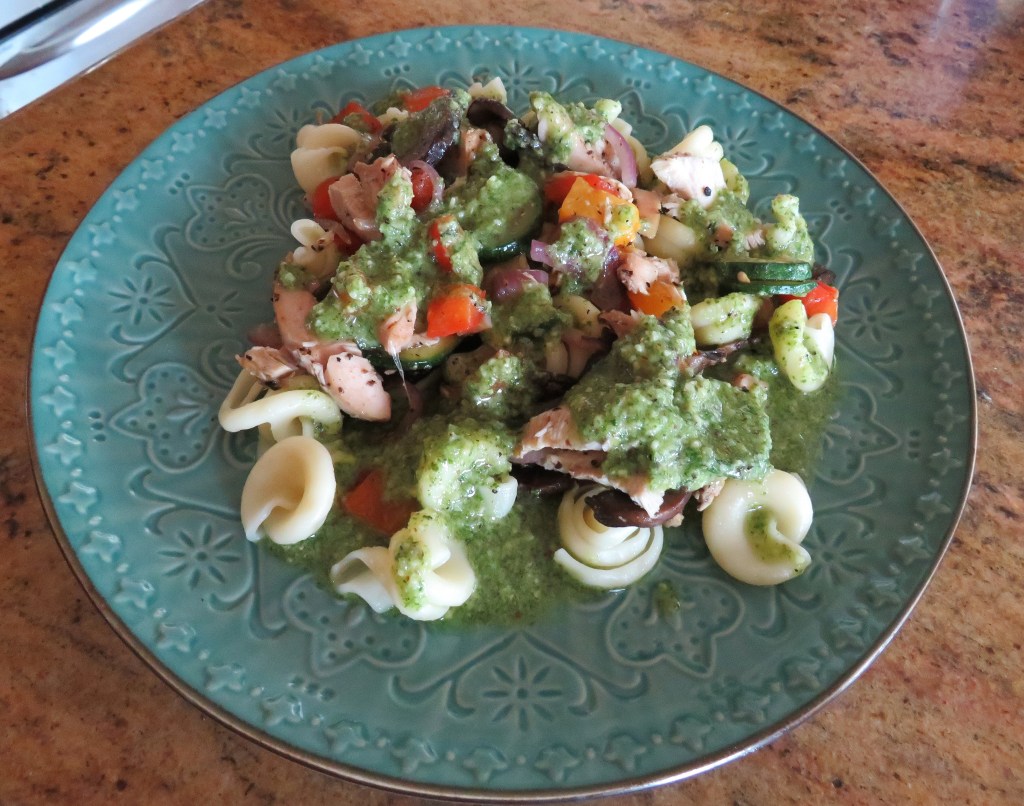
All good things come back around in due time. This time, it was pesto primavera with smoked turkey. It’s been awhile since I last made pesto primavera, and it was long over due. 🙂 Of course it is different every time I make it. I use the vegetables I have on hand at the time, as well as whatever meats I have available at the time too. I also change my pestos around. Sometimes I use pine nuts, sometimes I use macadamia nuts, sometimes I use almonds. Sometimes I use cilantro. Bottom line, this is a very versatile dish and there are no set rules. Just use what you have and have fun.
You would think with a name like pasta primavera that it was originally an Italian dish. Nope. It was actually created in New York City in the 1970’s at Le Cirque Restaurant. It means spring pasta because of all the vegetables used to make the dish. It became a symbol of the 1970s and 80s, representing a shift towards lighter, fresher cuisine. It’s now a common dish, with many variations, but the core concept remains: a celebration of spring’s bounty with pasta and seasonal vegetables.
This time I made my pesto with almonds instead of pine nuts. As much as I LOVE pine nuts, they are getting so expensive, I don’t use them nearly as much as I used to. I look for other alternatives. It’s a shame too, because I love pine nuts. But then I love all kinds of nuts, so it is not a difficult decision to make. It just allows me to be more creative and to play with my food more. 🙂 Pesto sauce is a favorite of mine, and I use it for a lot of different dishes and recipes. Here are a few of my pesto creations. Southwestern Pesto Chicken, Presto Pesto Chicken, Mexican Pesto, Pesto Pasta Salad, Pesto Tomato Focaccia
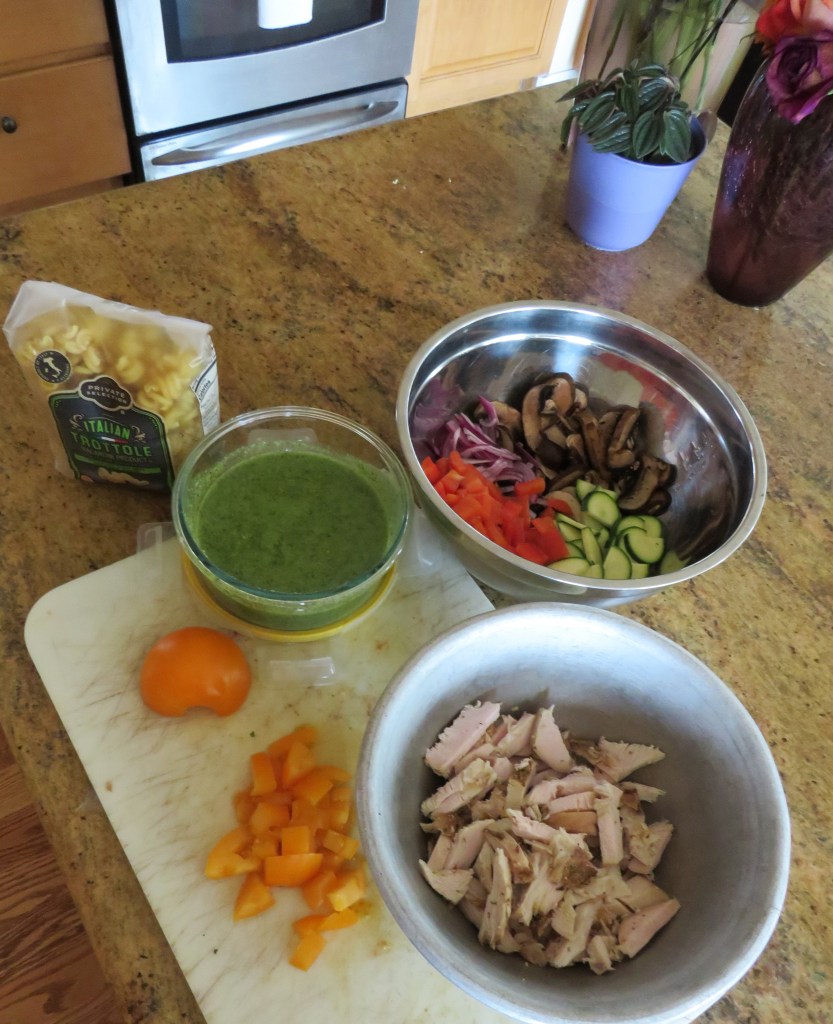
I also switch my vegetables around, though I have my go-to standards that I use most of the time. This time it was mushrooms, yellow heirloom tomatoes, red bell pepper, red onion and zucchini. I like a lot of color and texture, and I like to use as many different vegetables as I can. I mix and match my pastas too. I tried a trottole pasta this time. They were fun and different.
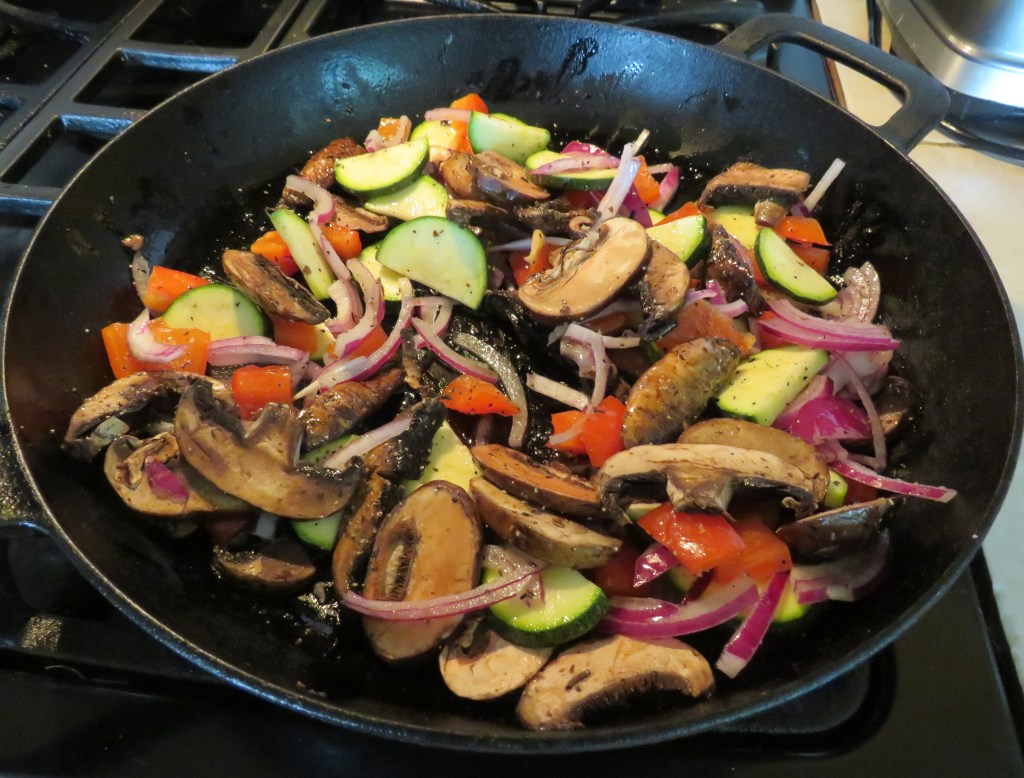
Cook the vegetables , except for the tomato, first in a hot skillet with olive oil, salt & pepper until they are al dente.
Add the turkey slices and mix together thoroughly. Cook for about 5 or so minutes, or until the turkey is heated through. My turkey was already cooked and I was just heating it up. We smoked the turkey awhile ago and froze it until we were ready to use it again. If using raw turkey or chicken, definitely make sure it is fully cooked before serving it.
Add the tomatoes at the end of the cooking process and mix together well. Then plate it all up with the pasta and the pesto. Top with some Parmigiano cheese if you alike and presto, dinner is ready and delicious. Complete the meal with a cool, crisp white wine and garlic bread if you like, and you have the perfect meal.
All good things come back to us, and that definitely includes good meals too.
Have a great day and make everyday great. Stay safe and stay well. ‘Til next time.
This year has been a banner year for my Blue or Grey Herons. I have seen so many. And I am perfectly OK with that too. I love my Herons. They are so beautiful and regal looking. I never get tired of seeing them. 🙂
He’s on the hunt.
I love it when I am lucky enough to catch them in flight.
It is believed that potatoes were first grown in the Andes region of South America, in what is now known as both Peru and Bolivia, between 8000-5000 BC. Evidence is also showing that potatoes may have originally been a hybrid between tomato-like plants and potato relatives in South America that happened between 9-14 million years ago. Needless to say potatoes have been around for a very long time.
The Spanish Conquistadores introduced potatoes to Europe in the 16th century, and from there, potatoes have become a staple food all over the world. Lucky for me, because potatoes are some of my favorite foods. I can eat them any which way they are prepared, and they are endless possibilities on how to prepare them too.
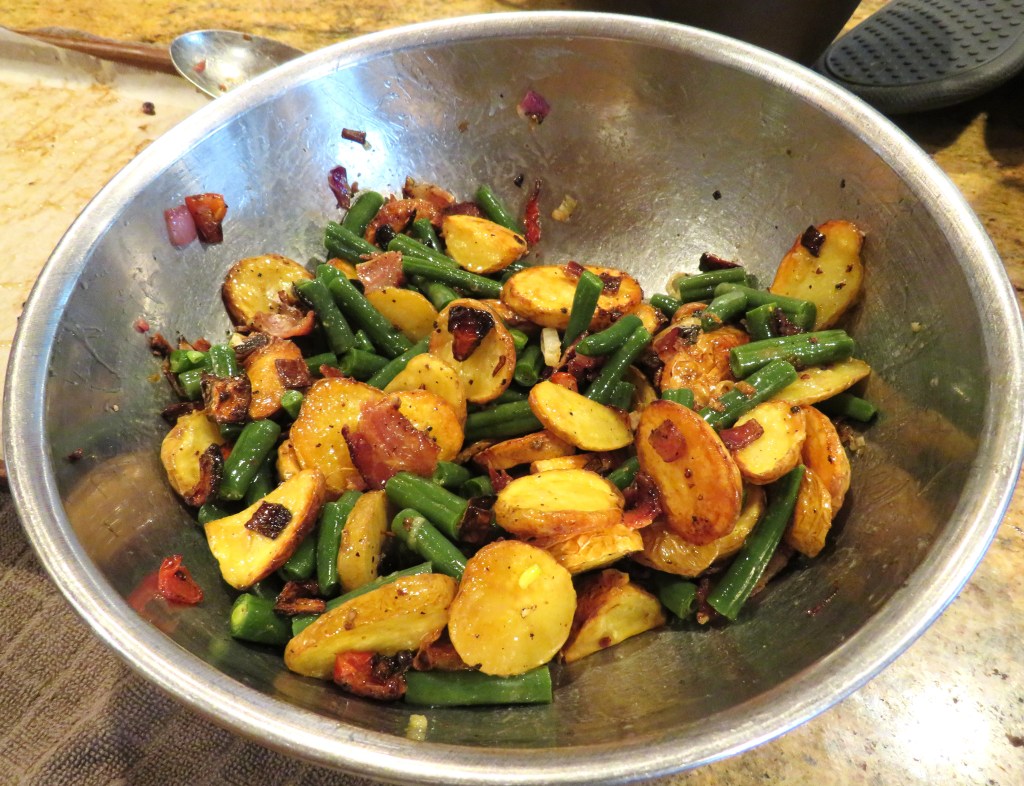
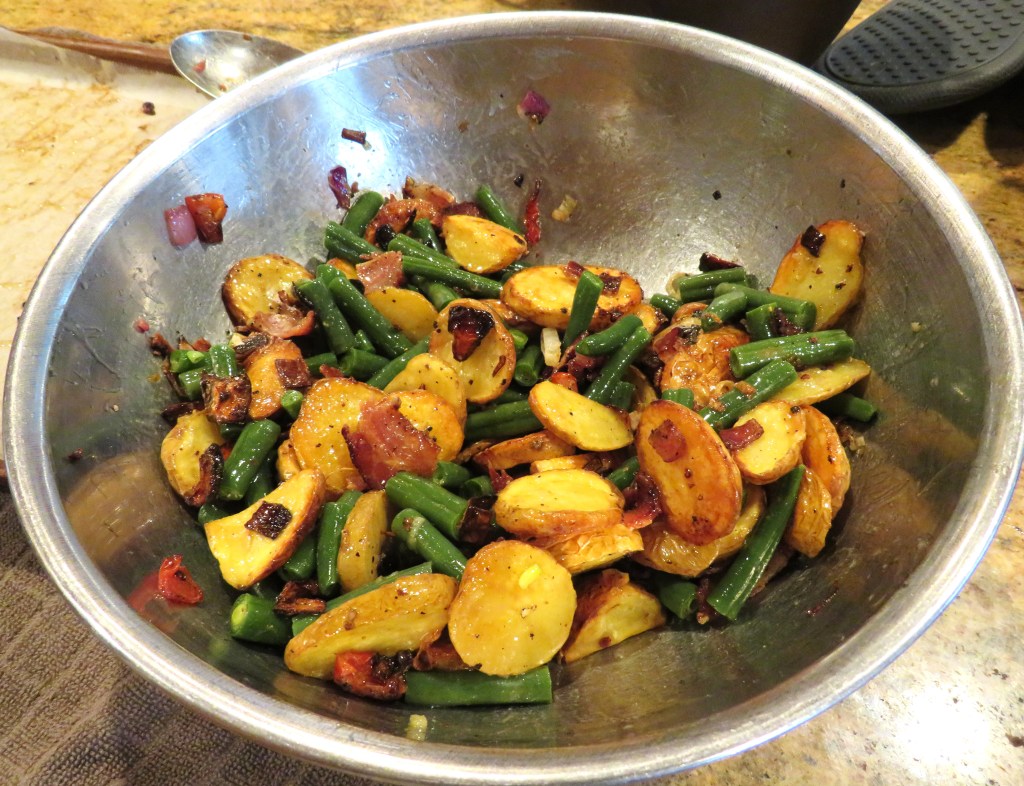
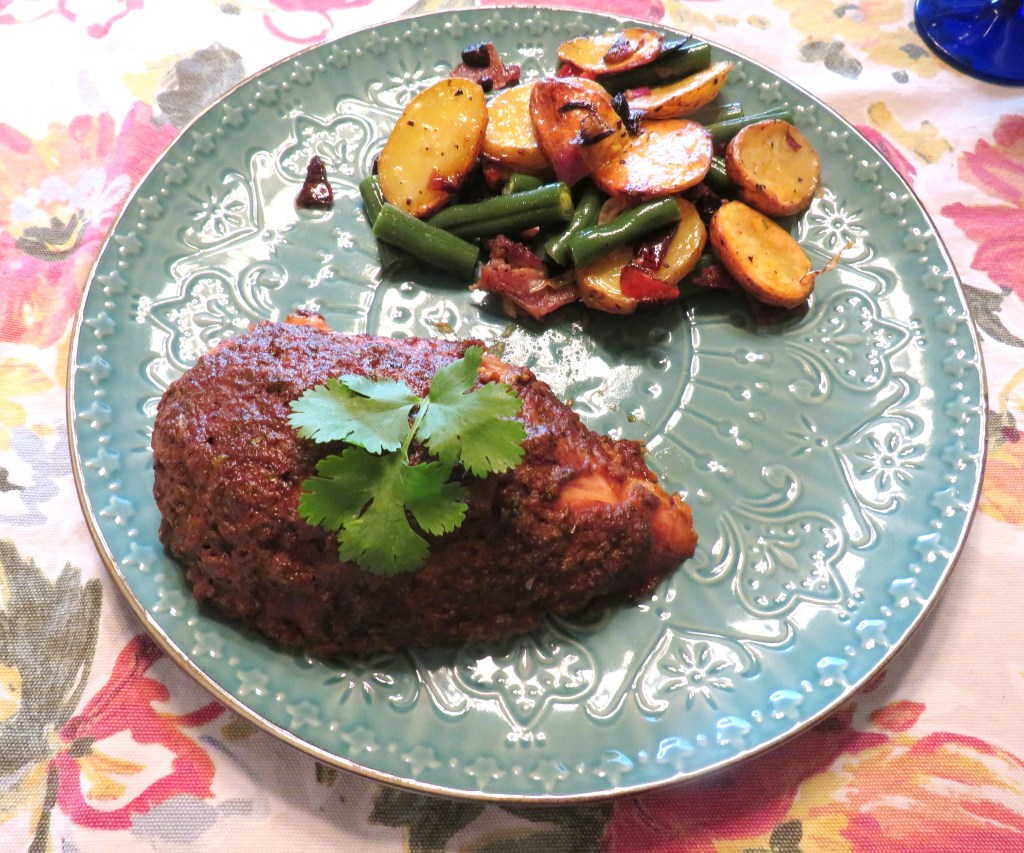
When I made my Peruvian chicken Peruvian Chicken, I served it with some potatoes made with bacon and green beans, sticking with a Peruvian theme.
Dijon Potatoes with Bacon and Green Beans
This recipe is colorful, full of texture and all kinds of goodness.
Preheat the oven to 400*F or 204*C.
Line a baking sheet with parchment paper.
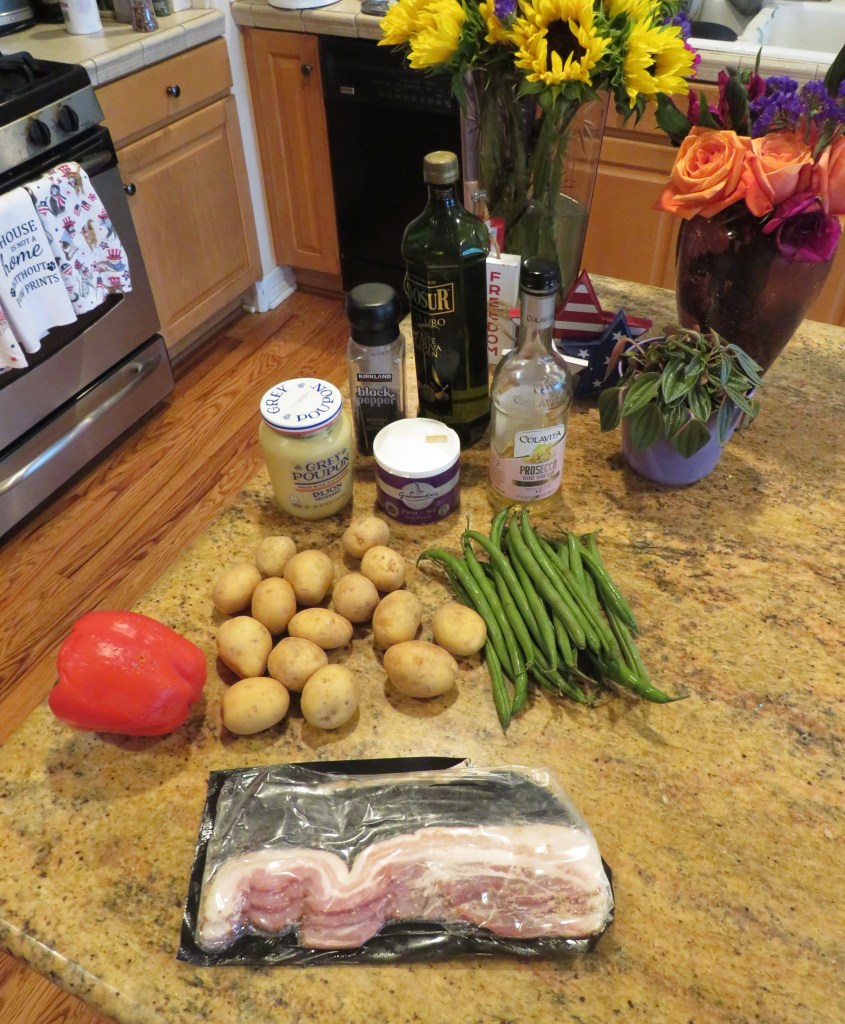
1 1/2 lbs baby potatoes, sliced
1/4 lb bacon, cooked
6 oz green beans, cut into pieces about 1 inch long, cooked
1/2 red bell pepper, medium diced
1/4 red onion, medium diced
5 TBSP olive oil
2-3 TBSP white wine vinegar or Prosecco vinegar – I used Prosecco vinegar
salt & pepper to taste
1 TBSP Dijon mustard
Cook the bacon then cut into pieces and set aside.
Cook the green beans in boiling water for about 5-7 minutes, or until cooked but still al dente. Mix with the bacon.
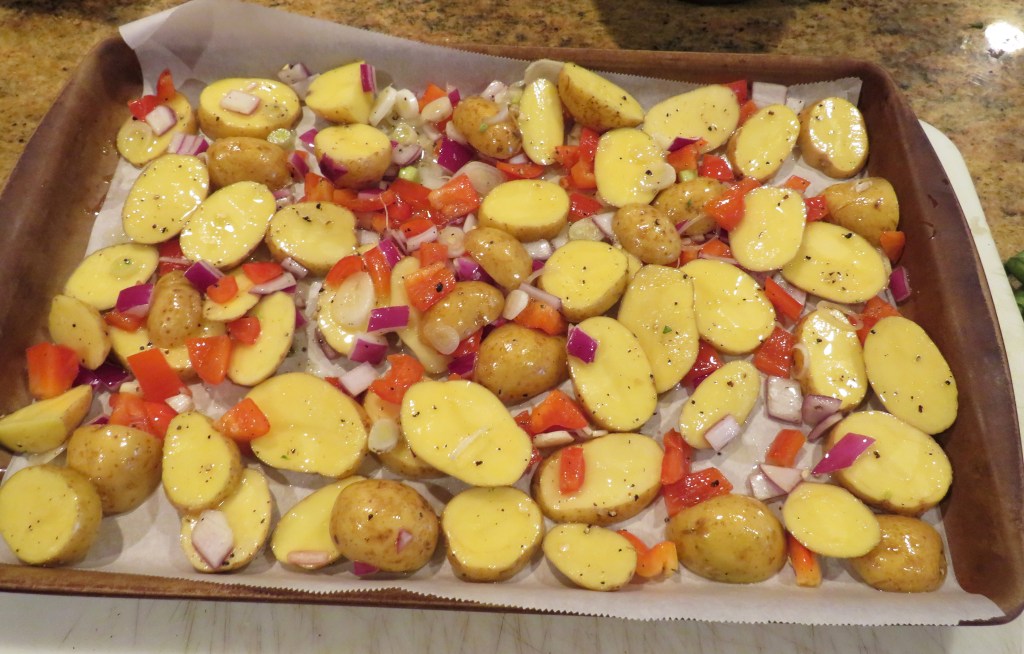
Slice the potatoes and toss with olive oil and salt & pepper. Place in the oven and cook for about 20-25 minutes.
After about 20 or so minutes, add the onions and peppers and toss together thoroughly and place back in the oven to continue cooking for an additional 20-30 minutes, or until the potatoes are completely cooked, checking every so often and turning if needed.
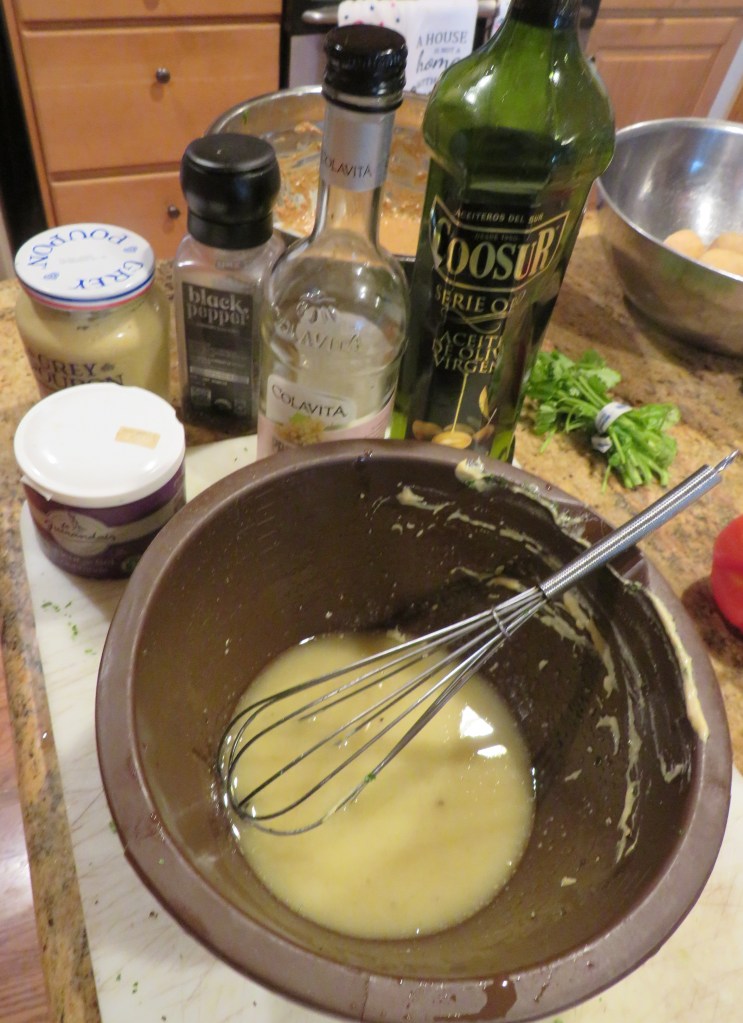
Combine the remaining olive oil, vinegar, Dijon mustard and more salt & pepper to make your vinaigrette.
When the potatoes and vegetables are cooked, toss them together with the green beans, bacon and as much of the vinaigrette as needed to season and flavor everything without drowning them out in dressing. Serve hot.
This is a great way to combine your starches and your vegetables all one dish. They came out so good. The potatoes were smooth and velvety and just melted in our mouths. We loved them, and they went very well with the Peruvian chicken too. Delicious!
Have a great day and make everyday great. Stay safe and stay well. ‘Til next time.
I never know what I am going to see on my walks. Sometimes I see a ton of stuff, and other times, not so much. But my camera is always with me, and always ready for whatever I see.
I was walking around my lakes. At first I didn’t see much. But at the bottom of the 3rd lake, I saw a Spotted Sandpiper having fun along the shore. At first he was being coy, and just as I would get my lens focused, he would hop away. Then he warmed up to me and let me get a few good shots.
I saw another Spotted Sandpiper resting on the trash cans near by too.
Always be ready for the unexpected. It just sneaks up on you and will pass you by it your are not prepared. 🙂
As I have always said, the sauce is what makes the meal. I started off with a Costco rotisserie chicken and added to it. Don’t me wrong. We love those. We eat them all the time. But I turned that good chicken into a great chicken dish, just by adding a delicious sauce.
This time, I went Peruvian. I actually was closer to the original recipe than I thought, since, in Peru they use rotisserie chickens too, or pollo la brasa. Peruvian chicken was first created near Lima, Peru, by a Swiss chicken farmer named Roger Schuler. Roger and his cook created the dish by marinating chickens in salt water and cooking them over coals. Schuler’s goal was to sell the chickens quickly, and he offered an all-you-can-eat deal for a small price. The dish became popular, and later, with the help of Franz Ulrich, a mechanical specialist, they created the “rotombo” oven (also known as “planetario” or “spiedo”) to cook the chickens. We call these rotisseries. The marinade, often including ingredients like garlic, cumin, paprika, soy sauce, and vinegar, is key to the dish’s distinctive flavor. Pollo la brasa has become a favorite Peruvian meal, eaten and enjoyed by all, with roughly 27 million people eating it everyday in Peru, but especially on the 3rd Sunday of July, which has been designated as polla la brasa day.
Peruvian chicken is first marinated in olive oil, lime juice, garlic and spices, and then oven-roasted until tender and juicy with super crispy skin. The accompanying green sauce, which gets its color from cilantro and jalapeño peppers, is spicy, creamy and downright delectable. If you are cooking a raw chicken, this is how your would prepare it Peruvian style. I eliminated this step since my chicken was already cooked.
1 whole chicken, cut into parts, or whatever pieces you like
5 TBSP olive oil
5 TBSP lime vinegar or red wine or sherry vinegar – I used lime balsamic vinegar
3 TBSP cumin
3 TBSP paprika
3 TBSP soy sauce
1 tsp cayenne pepper or to taste
salt & pepper to taste
1/2 cup green onions
1 jalapeno
1/2 cup cilantro
4 TBSP lime juice
1/4 cup mayonnaise
1/3 cup yogurt
1/4 red onion
Mix everything together with the exception of the yogurt in a food processor. I forgot to put the cilantro into my mix at first, but added it later. It’s all good. It all worked out just fine. Add the yogurt separately and fold in so the sauce stays nice and creamy and doesn’t separate.
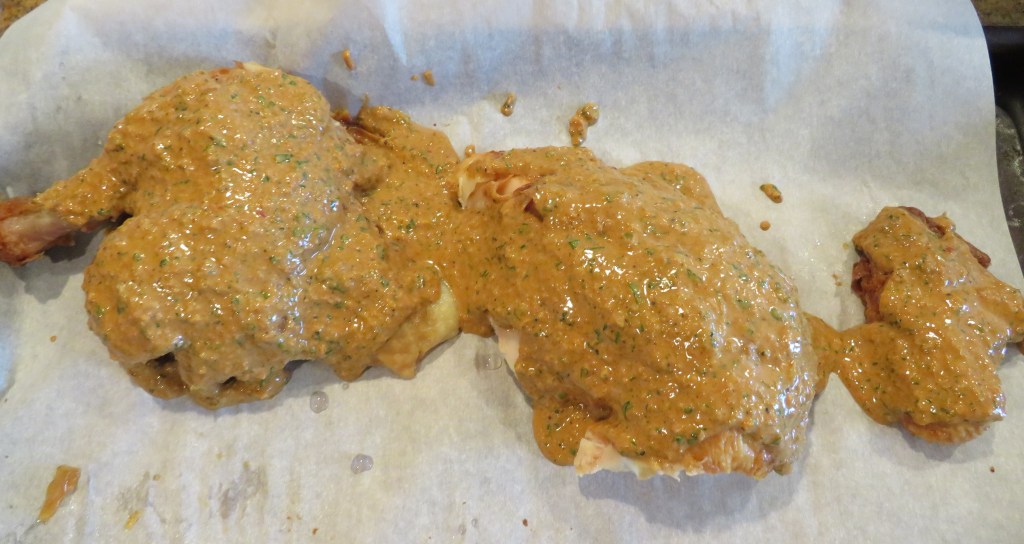
Traditionally the sauce is green, but I followed the recipe and mine came out golden instead of green. Who cares though?! It tasted great, and that’s all that really matters.
Since my chicken was already cooked, I just topped it with sauce and reheated it in the oven, which I already had on for my potatoes. I reheated the chicken for about 20 minutes. When it was heated all throughout, I added more sauce on top right before serving.
I served it with some potatoes mixed with bacon and green beans, since potatoes too are Peruvian. More on the potatoes later though. I have to keep you coming back for more, right?! 🙂
Enjoy this delicious chicken with every bite. I know you will! 🙂
Have a great day and make everyday great. Stay safe and stay well. ‘Til next time.
Larry and I live in Westminster, CO, which is part of Adams County. The annual Adams Country Fair is taking place right now and this is the last weekend for this season. Larry and I decided to go pay a visit. We hadn’t been in years. It was a fun adventure and we both had a good time playing with and petting all the animals. We got there at kind of the in between time – the animal judging was done for the day and the night crowd hadn’t yet arrived. It was starting to get busy right when we left. We think we went at the perfect time.
The fair had all the things you would expect at a county fair – rides, games, music, souvenir kiosks, shows and entertainment, and of course, lots and lots of farm animals.
This was the course they were holding the pig races earlier in the day.
The band, the Velvet Daydreamers, was pretty good. They played a lot of old rock and Southern rock, with influences from The Doors to 38 Special, and many more.
We did NOT eat any of the fair food, but I just had to take some pictures. The portions are HUGE! OMG!!!!
If you wanted to, you could even try your skills on the mechanical bull. It was a hard pass for both of us. 🙂
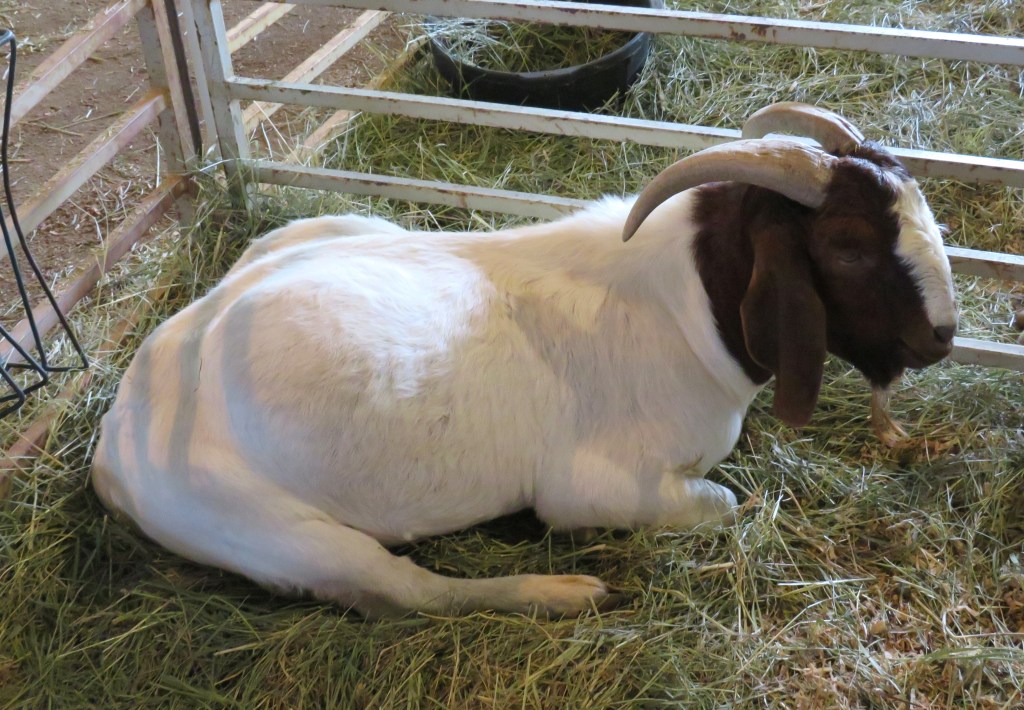
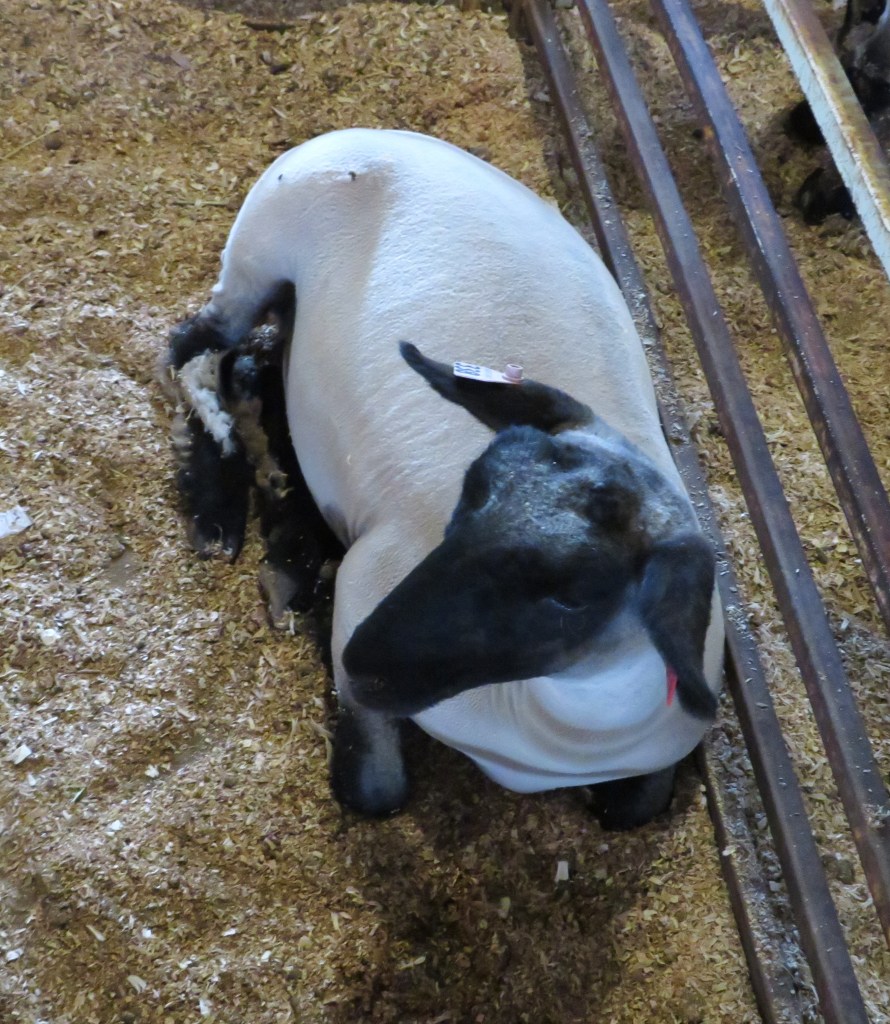
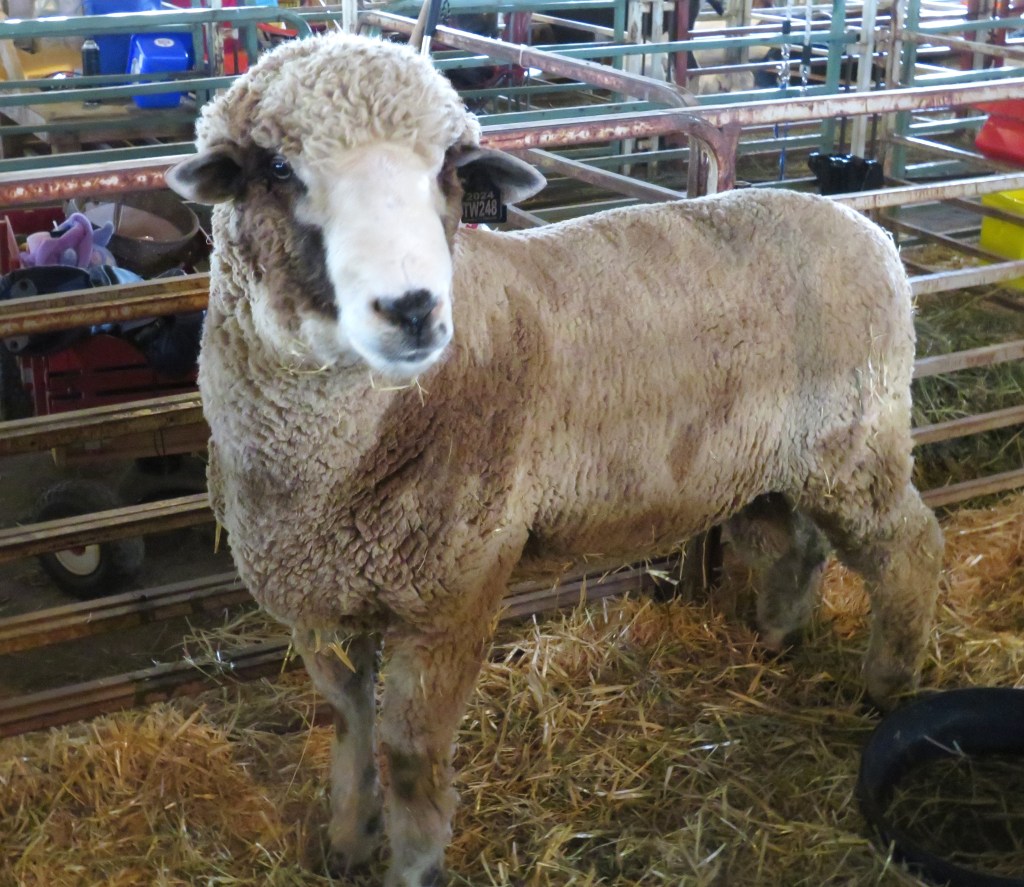
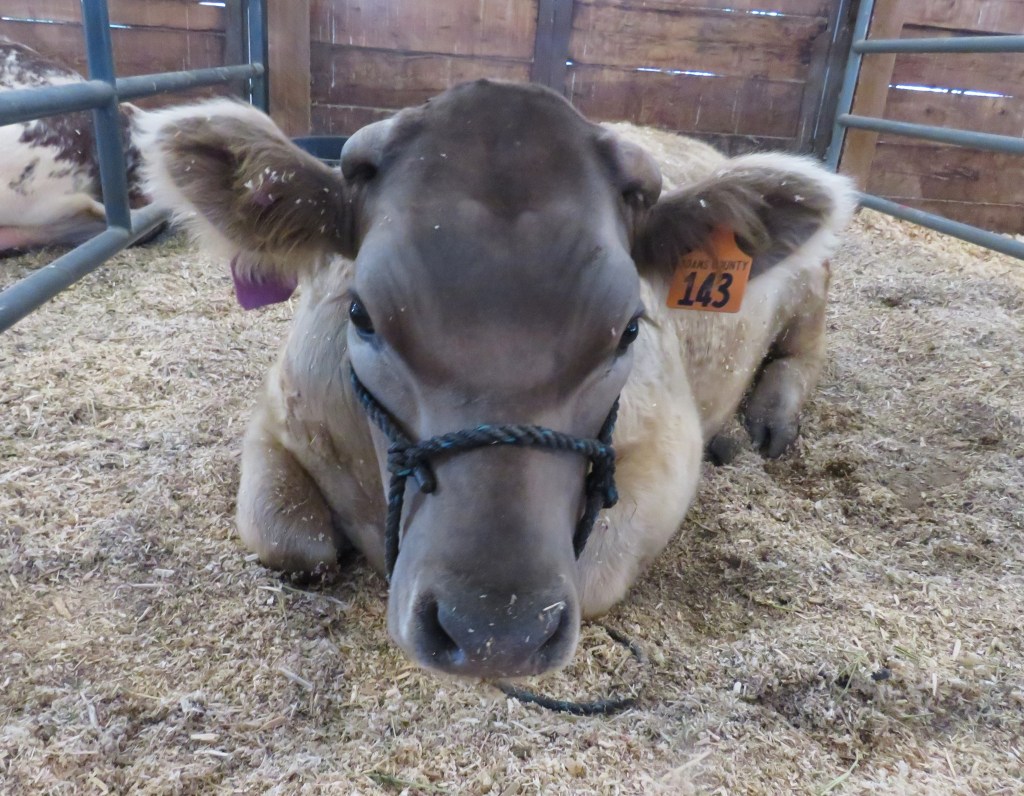
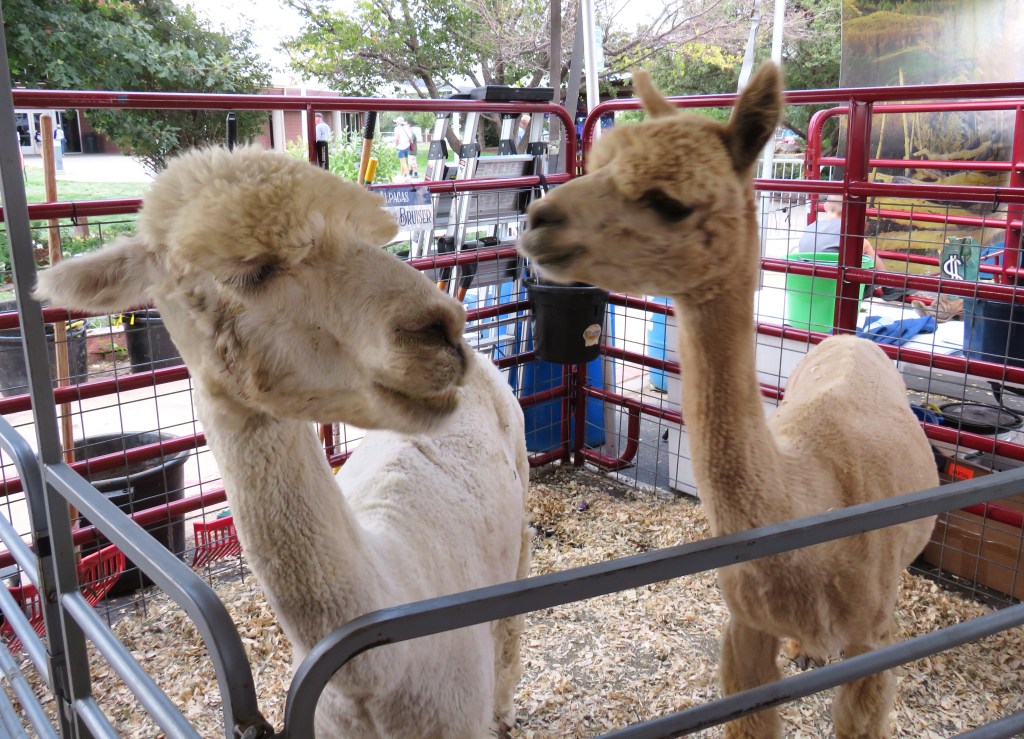
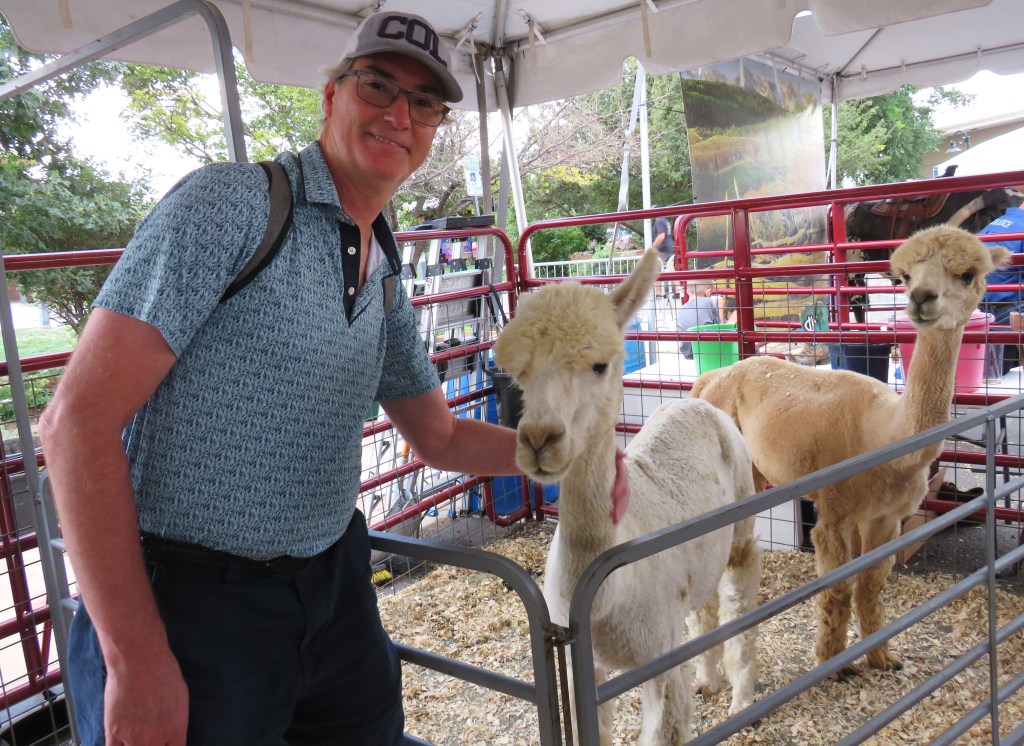
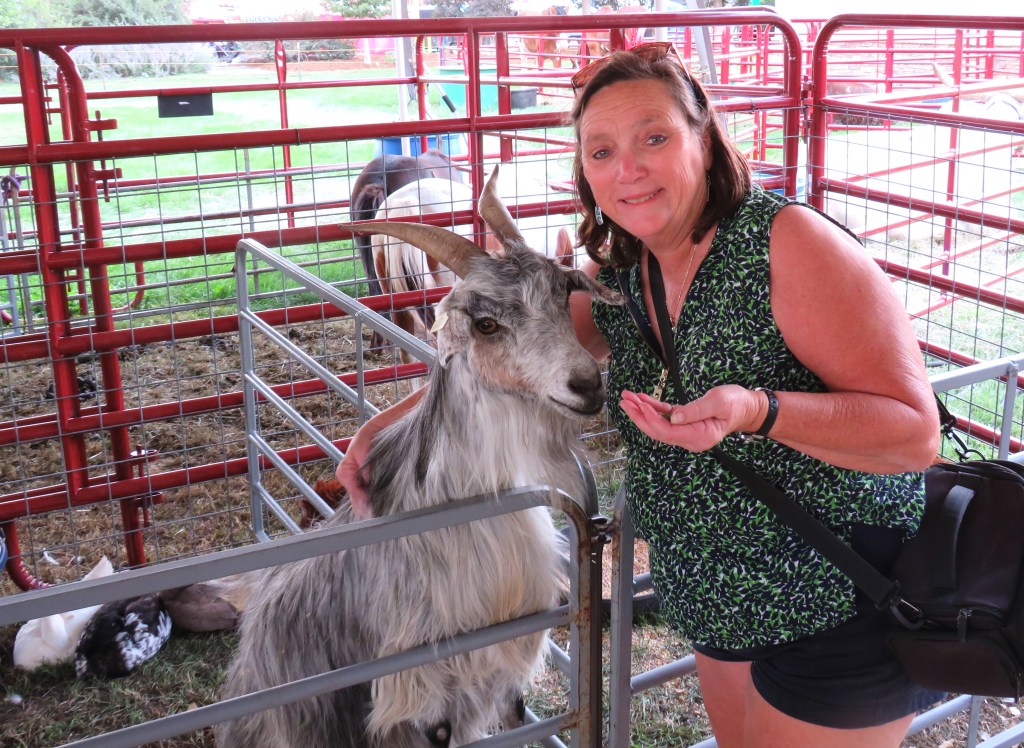
Larry and I walked all around and saw everything, but we were there mostly to visit and play with the animals. There were lots of goats and sheep, as well as cows, bulls, and horses, and even some alpacas too.
This bull was a grand champion winner.
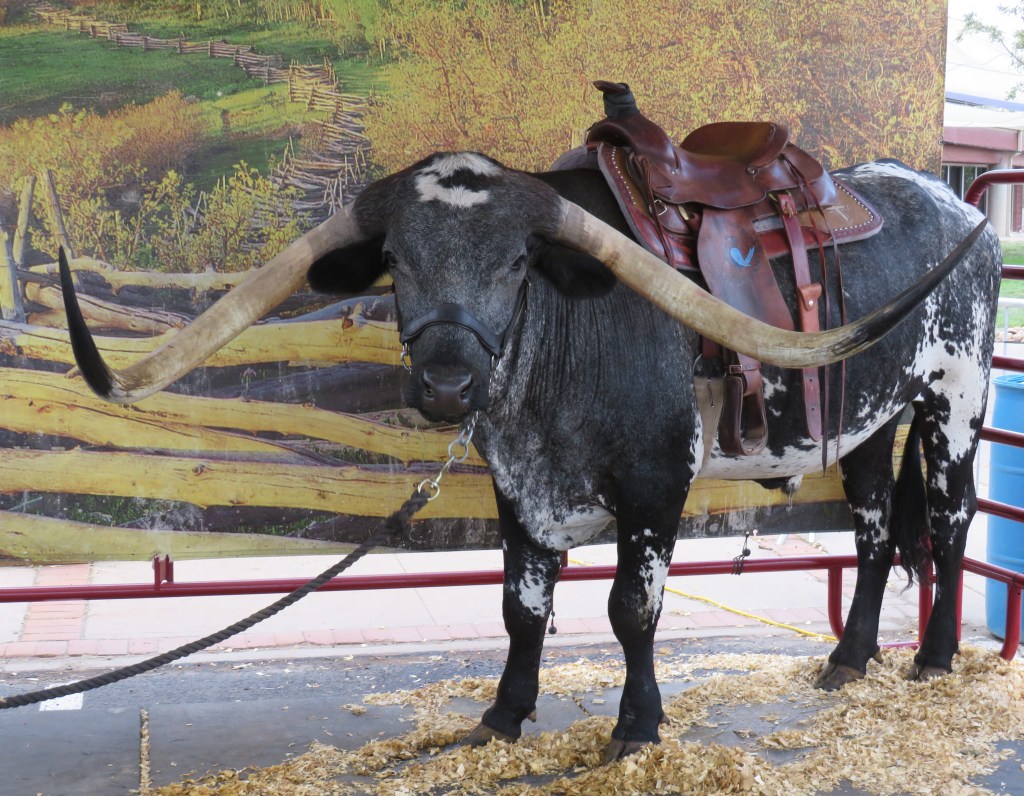
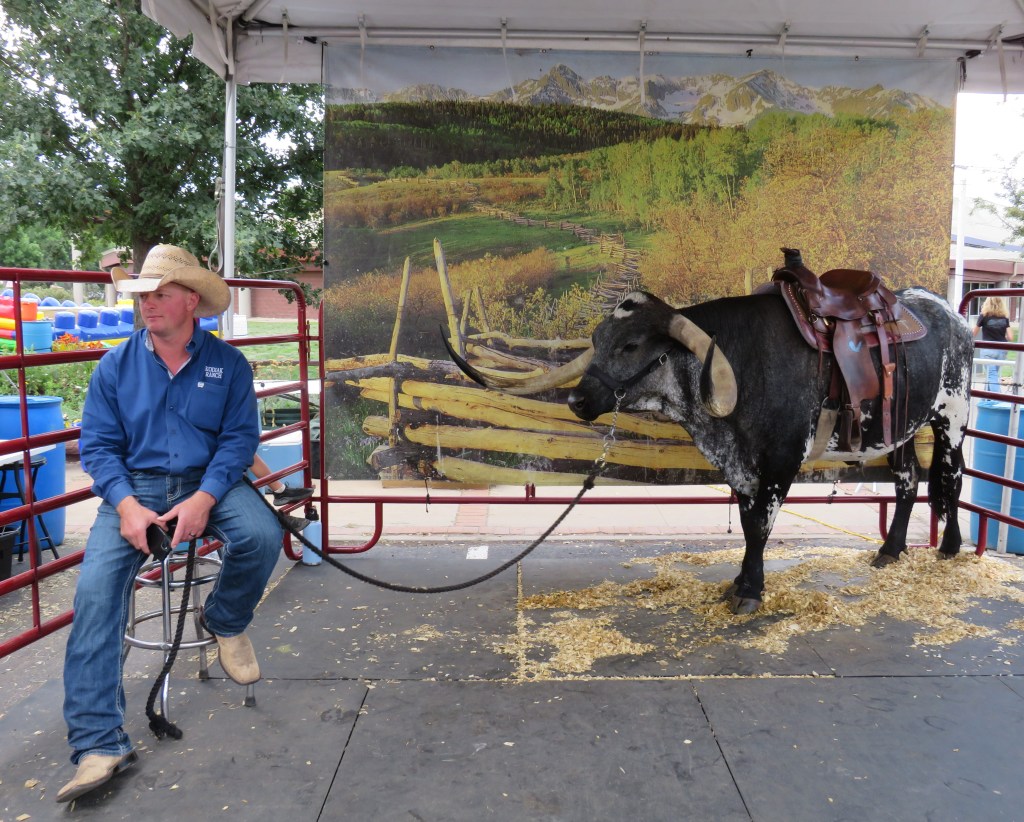
There were even a few Texas Longhorns, and man, their horns were LONG too.
There were horses, Clydesdale horses and ponies too.
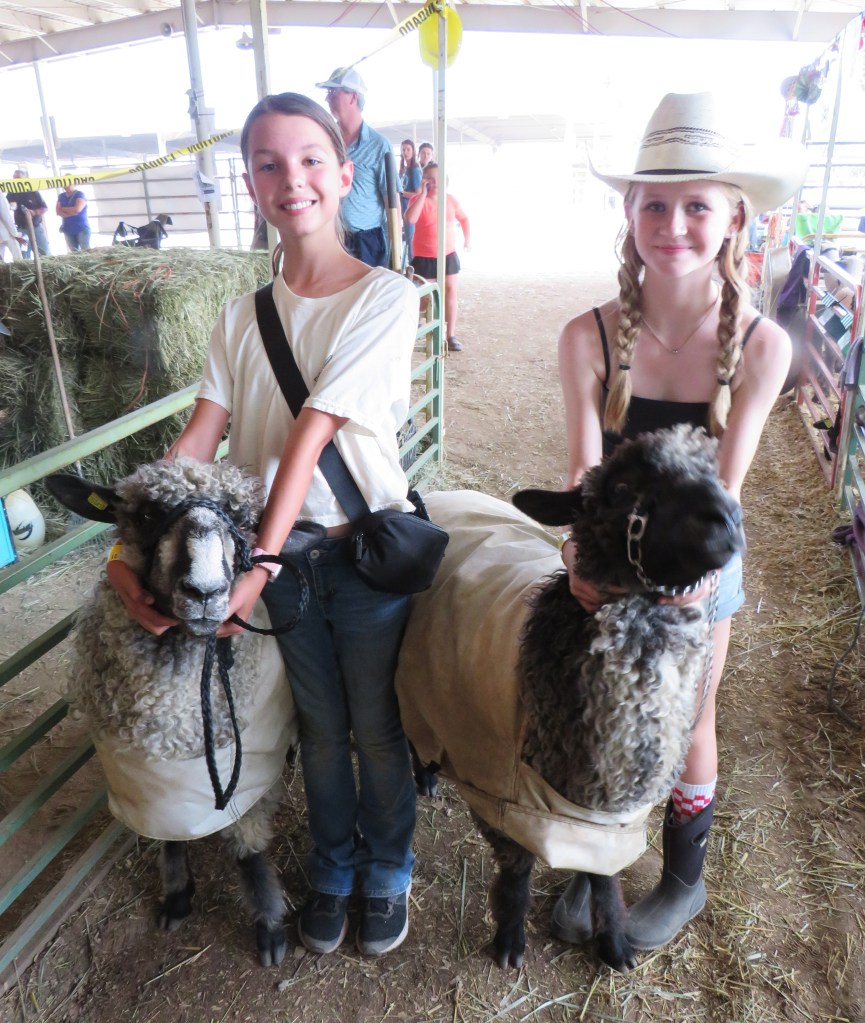
There were a lot of 4H kids there too, and they were proudly showing off their animals. 4-H is a youth development organization with a focus on hands-on learning and leadership, operating as part of the Colorado State University Extension. In Colorado, it reaches over 110,000 youth annually, providing them with opportunities to develop into confident, independent, and compassionate leaders. 4-H’s core principle is “learning by doing,” with programs covering areas like agriculture, science, health, and citizenship.
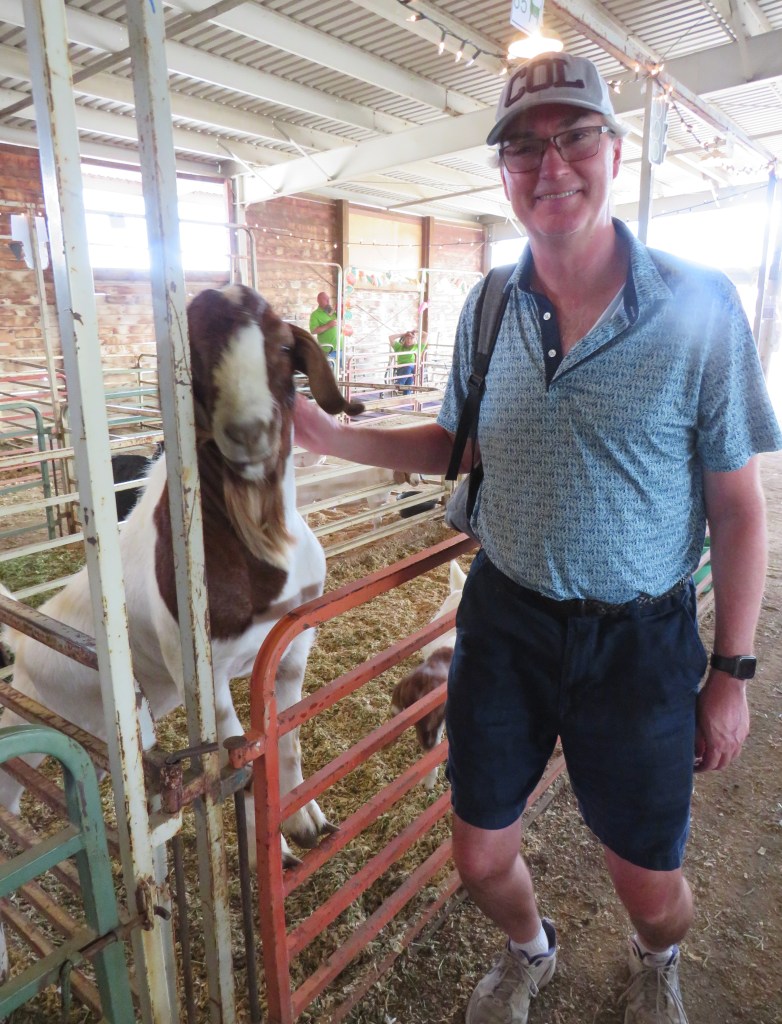
Larry and I had so much fun in the petting pens. We were playing with the goats, sheep and alpacas. They loved anyone and everyone who had food for them.
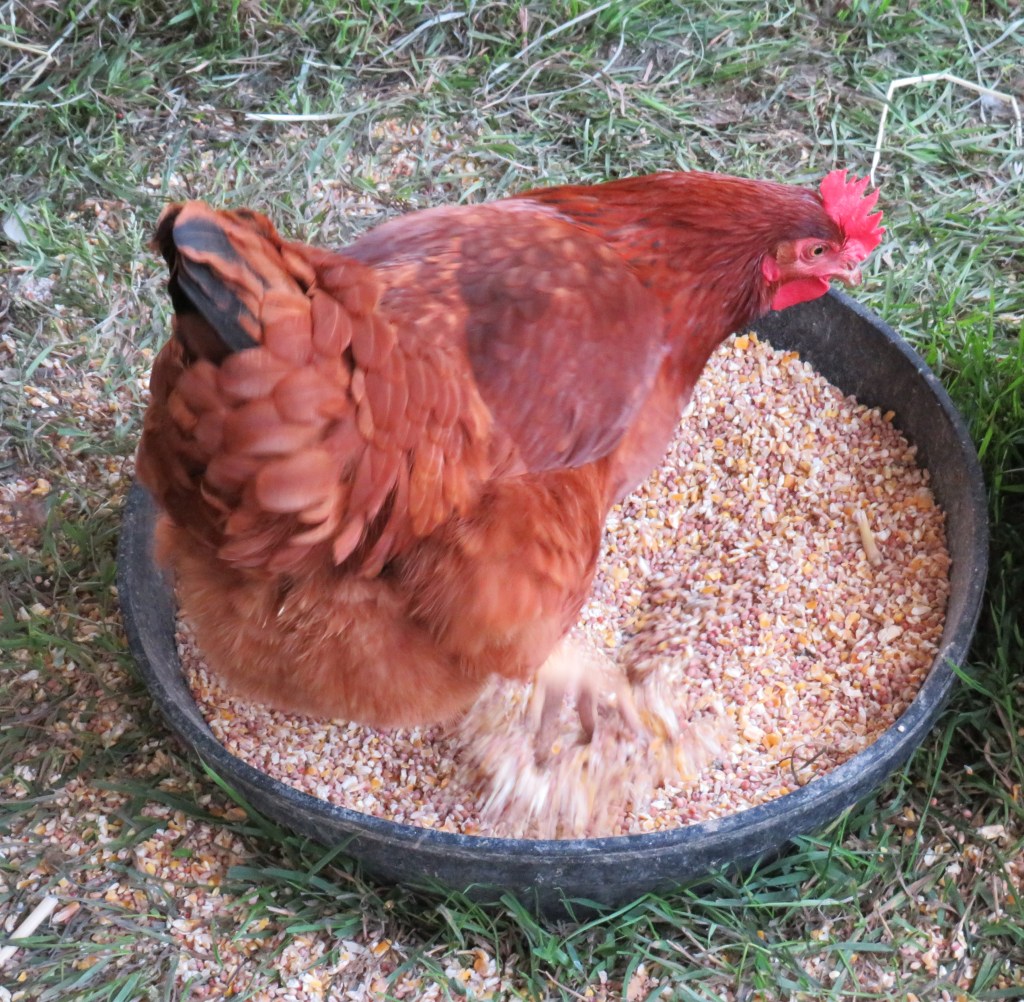
And you can’t have farm animals with out geese and chickens.
It was a fun evening. We had a real good time. It was something different for both of us, since it had been many, many years since we last went to a county fair. We were so glad we did too. After we left the fair, we went out to dinner. It was a fun date night. 🙂
Have fun no matter what you do. Make every event a fun event if you can. Life is short. Enjoy it while you can. 🙂
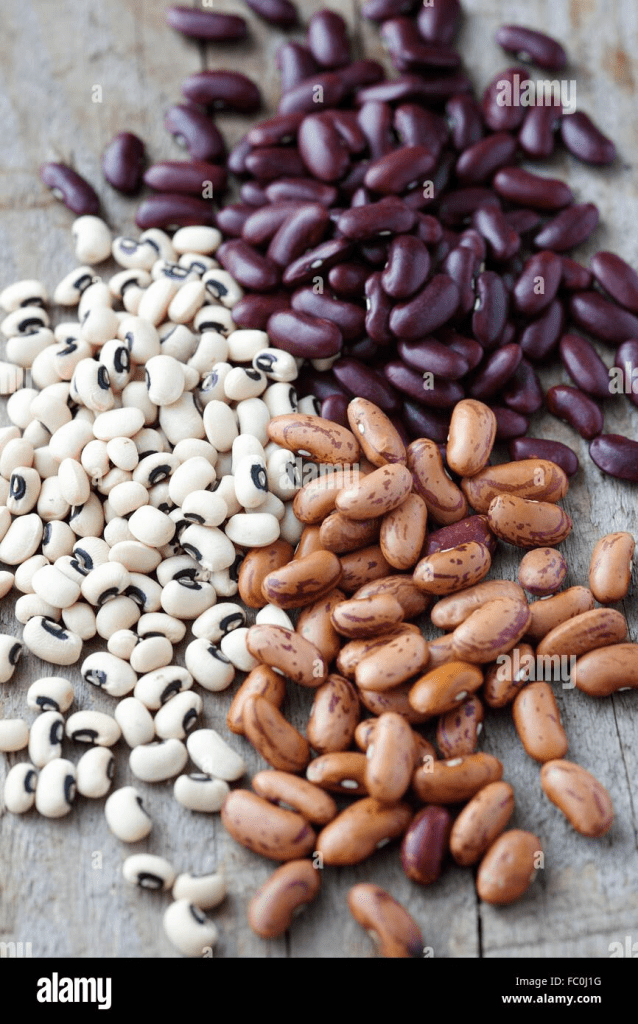
Yesterday, I gave you a teaser about my beans that I served with my Puerco Latino, Puerco Latino. Beans have been a part of the Latino diet for for centuries. Beans are a part of their culture and is a way for many Latinos to connect with their roots and traditions, offering a sense of familiarity and comfort. In many Latin dishes, beans are a central component, often paired with rice, corn, or other grains to create complete proteins. Paired with rice, beans provide all the amino acids a body needs. They are a great, inexpensive source of protein and fiber, and multiple other vitamins and minerals as well.
Beans are eaten in every culture in South and Central America, with each country having their own particular favorite. For instance, the Cubans prefer frijoles negros, or black beans; Mexicans like their pinto beans and Puerto Ricans like their red kidney beans. Though you will find many different types and uses for all kinds of beans all throughout the various Latin communities and countries. I like them all, as well as many other types of beans too.
In the ancient Mesoamerican civilizations, beans were considered to be sacred and associated with fertility, sustenance, and the cycle of life. In Aztec mythology, the god Quetzalcoatl was believed to have stolen beans from the gods to provide nourishment to humans. Beans are an integral ingredient to all Latin American cultures and countries, and they go by different names depending on where you are, like frijoles, legumes, porotos or habichuelas.
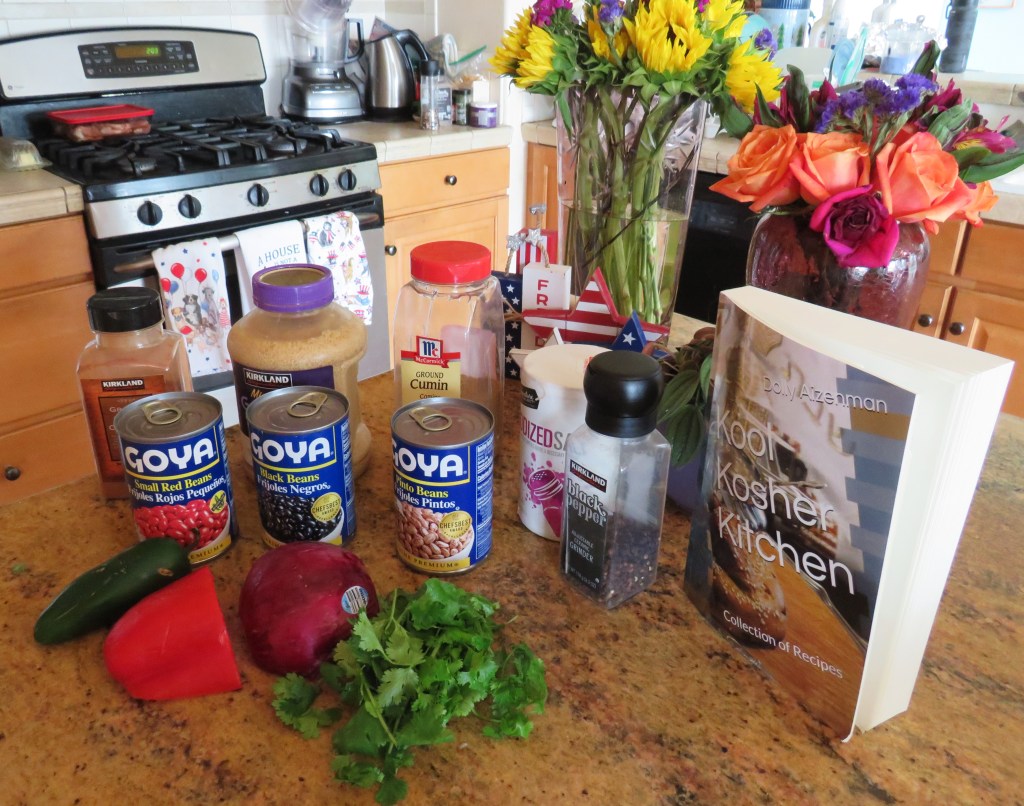
Beans are NOT just important to the Latino diet. They are important and enjoyed all over the world, in almost every culture. Originally, I had something else in mind when making my bean dish. I was originally planning on making them Moroccan style, using the recipe from our very own Dolly, from koolkosherkitchen at https://wordpress.com/reader/users/koolkosherkitchen. Though Dolly and I have never actually met in person, yet, we have become very close friends. We both just know that when we actually do meet in person, it will be magic. But I digress. Back to the recipe. 🙂 I did not have chickpeas or garbanzo beans, like I thought I did, but I did have pinto beans. So instead of making everything Moroccan, I made it Latino instead. But I was definitely inspired by Dolly and her recipe from her cookbook Kool Kosher Kitchen, A Collection of Recipes, and will try her recipe again another time. However, I only made a couple of minor changes, and those minor changes switched the recipe from being Moroccan to Latino in seconds.
Three Beans Latino Style
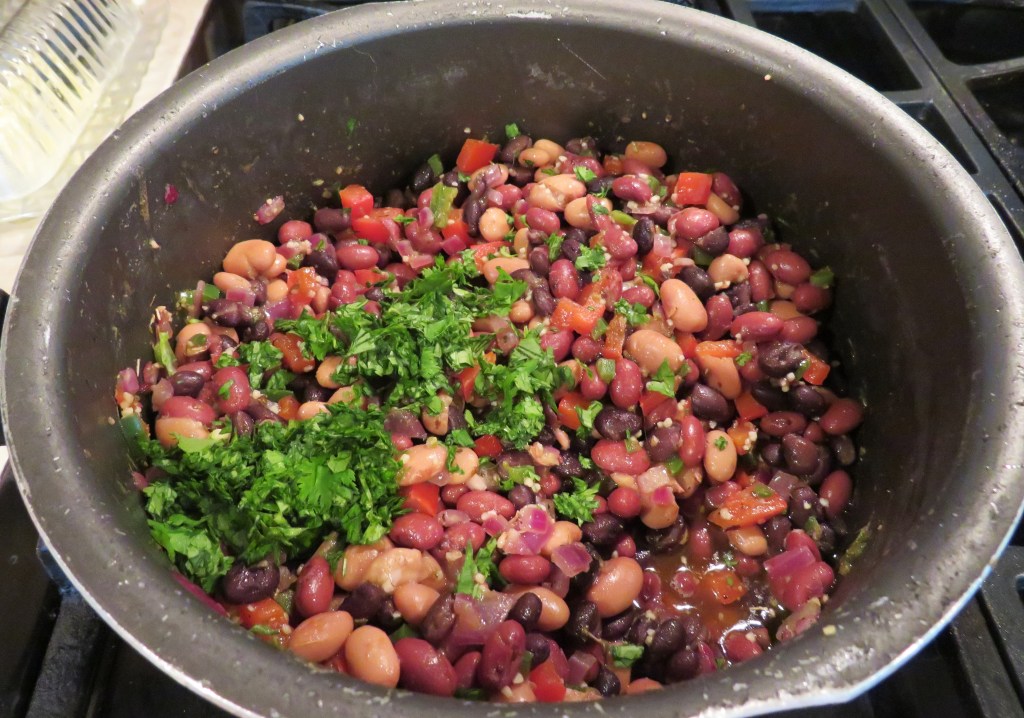
Dolly’s beans used chickpeas or garbanzo beans and curry and were served room temperature. The only changes I made were that I substituted pinto beans for the garbanzo beans, omitted the curry and added some oregano and used red onions instead of white or yellow onion and added some red bell pepper. I also cooked them and served them hot. They were more like Cubano beans instead of Moroccan beans, but they were still delicious.
1 can red kidney beans, drained and rinsed
1 can black beans, drained and rinsed
1 can pinto beans,drained and rinsed
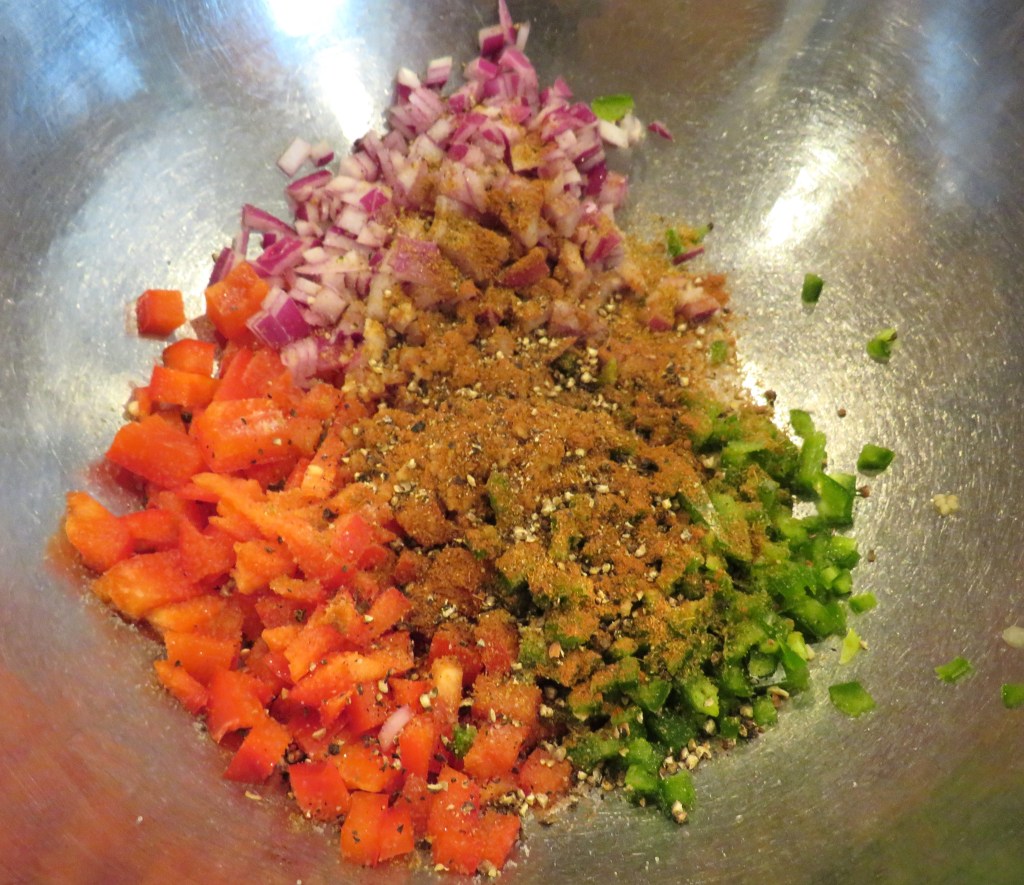
1 jalapeno, diced fine,
1/2 red bell pepper, diced fine
1/2 red onion, diced fine
1 TBSP dried oregano
1 TBSP garlic
salt & pepper to taste
2 tsp cumin
2 tsp cinnamon
olive oil
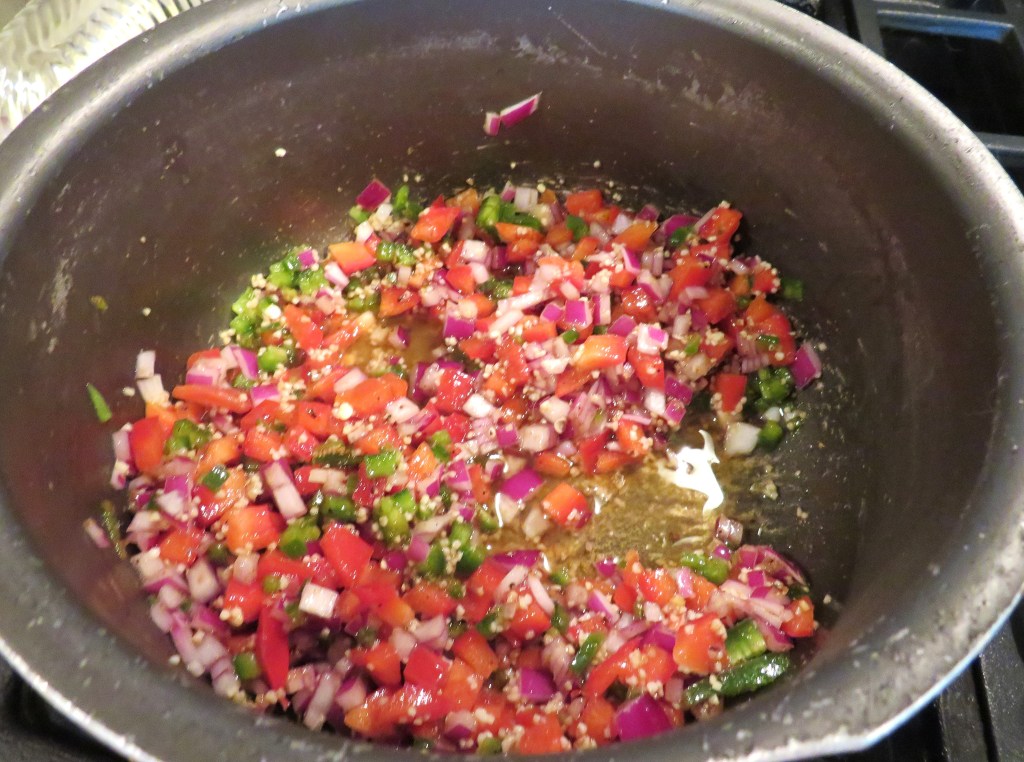
Get a medium sized pot hot and add the olive oil, red peppers, jalapeno, onions, garlic and seasonings. Saute for about 1-2 minutes, or until the onions are translucent.
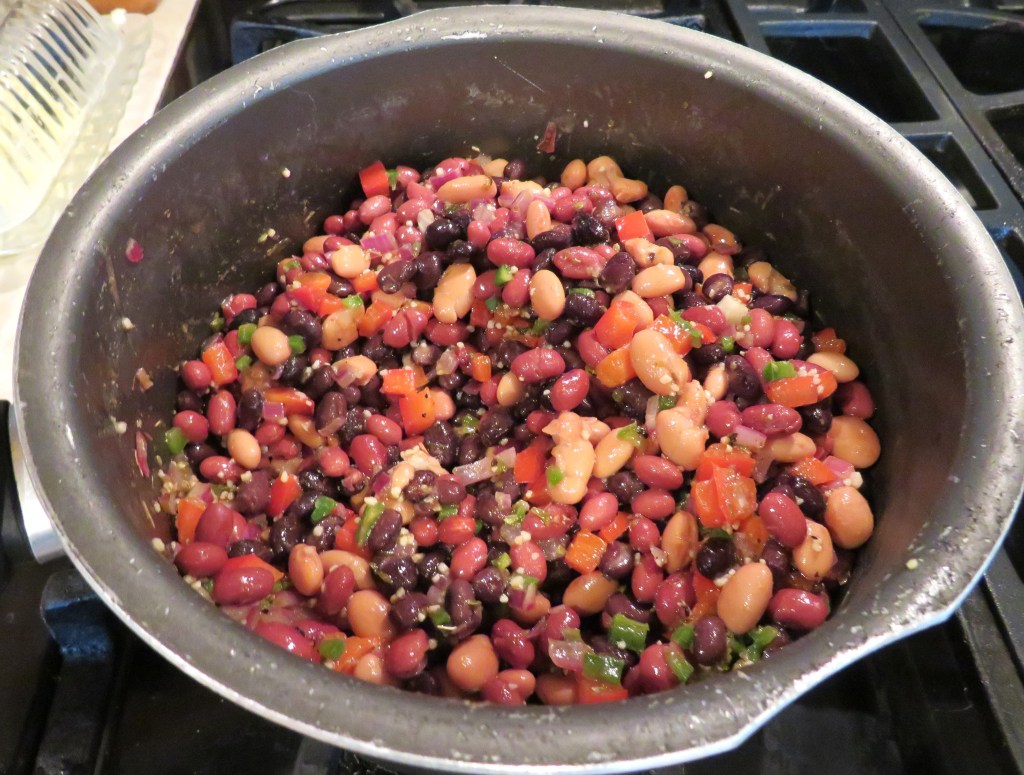
Add the beans and mix in thoroughly. Heat over a medium heat, for about 5 minutes, or until the beans are hot. Add most of the cilantro towards the end of the cooking process and mix together thoroughly once again.
Top with the remaining cilantro right before serving. !Esta mui rico! These colorful beans will dress up any dish you serve them next to. I promise you’re going to love them; either my version, or Dolly’s. 🙂 Thank you Dolly for everything you do and for just being you. 🙂
Have a great day and make everyday great. Stay safe and stay well. ‘Til next time.























































 A Jeanne in the Kitchen