Time for Spaghetti

Larry is real good about eating whatever I make. But sometimes he (we both) just wants good comfort food, and some old favorites. This time he was asking for spaghetti. We both love spaghetti, and of course I obliged.

Spaghetti is the type of pasta used, and it can be used for anything, but in our house, and many others too I suspect, spaghetti means spaghetti bolognese. My version is loaded with meat, both ground hamburger and sausage, usually hot Italian sausage, and a thick, rich tomato sauce with lots of garlic and herbs.

Spaghetti Bolognese is an international comfort food that evolved outside of Italy. While inspired by the slow-cooked meat ragù alla bolognese from Bologna, Italy, the global pairing of the meat sauce with long strands of spaghetti became popular through 20th-century emigration, post-war restaurant culture, and the widespread availability of dried pasta. In Bologna, authentic ragù is traditionally served with broad, flat egg pasta like tagliatelle or used in baked dishes like lasagna—never with round, dried spaghetti. The word ragù comes from the French word ragout (a stewed meat dish), which influenced northern Italian cuisine during the late 18th century.

When Italian immigrants moved en masse to the United State, the UK and Australia, they brought their traditional recipes with them. But as was often the case, they had to improvise and use what was readily available and more economic. They started using spaghetti instead of their traditional tagliatelle. Spaghetti bolognese became popular after WWI, but it’s popularity really exploded and became a global phenomenon after WWII. Post-World War II, the dish exploded in popularity across British and American households. Cooks increased the tomato content relative to the meat, added garlic or herbs uncommon in traditional northern Italian cooking, and cemented “Spaghetti Bolognese” as a global staple. Ironically, most Italians in Italy do not recognize or even acknowledge the standard global version of spaghetti bolognese. It is totally different from what they would serve. The main difference is that Italian ragù alla bolognese is a thick, meat-heavy cream-and-wine braise with very little tomato, whereas American ” Bolognese” is a tomato-forward, quick-simmered meat sauce typically served over spaghetti.

This is the Italian version of spaghetti bolognese.

I love doing deep dives into the foods we eat. I love to learn about their history and origins. I love food and I find food to be so fascinating too.

Have a great day and make everyday great. Life is short. Enjoy every moment and live life to the fullest. ‘Til next time.

Trading Rock Salt for Rocks

Yesterday, Larry and I were two ships passing in the night. He went to play golf right after work, and by the time he came home, I was at my jewelry class. Needless to say, we were on our own for dinner, and I just had leftovers, so no cooking. In a way, at least for yesterday, I traded my rock salt for rocks. No need to worry though, I will always be cooking something up. 🙂

I am still working on birthday gifts for friends and family. I just finished another set. Three down, two to go (for now), but my list keeps growing. 🙂

The stones I used for this set were black and turquoise obsidian with copper veins running through them.

I wanted to highlight the copper, so I used both silver and copper for the settings. I just finished them last night. I am making another identical set of earrings too. Why not, right?! I have the stones, and I want to use them. Besides, I want some too. I love these stones.

I’m just getting warmed up! I have so many more ideas and stones just waiting to be turned into beautiful creations. Being creative isn’t the issue. Time is. I have so many creative ideas, not just jewelry either, and not nearly enough time. 🙂

Life is short. Make the most out of everyday and make everyday great. Live life to the fullest. ‘Til next time.

Szechuan Chicken and Vegetables

Chicken is probably one of the most versatile meats ever. Because it doesn’t have a strong flavor of its own, it lends itself to just about any recipe or dish around, no matter where it is from or what type of spices or sauces you use or how you cook it.

Prior to the 16th century, when chili peppers arrived from the Americas via trade routes, Szechuan, or Sichuan, cooking techniques were not known for being particularly spicy. Their foods were recognized more for the use of ginger, mustard, and native Sichuan peppercorns for flavor.

Szechuan (or Sichuan) food is not a separate category from Chinese food; rather, it is one of the major regional styles of Chinese cuisine. While general Chinese food encompasses many mild, sweet, or seafood-heavy regional styles (like Cantonese), Szechuan food comes from southwestern China and is famous for being bold, hot, and spicy.  There are four major groupings of Chinese food, each with its own unique personality and signature traits. They are Lu cuisine (Shandong), Chuan cuisine (Sichuan), Yue cuisine (Cantonese), and Huaiyang cuisine (representing Jiangsu). These styles historically represent North, West, South, and East China. Szechuan foods are by far the spiciest type of Chinese foods, and can become “addictive” where you want to eat more and more because of the food ma la effect from the Szechuan peppers. They create a tingling, electric numbness due to the sensory combination of the chili heat and burn. This reaction tricks the brain into registering mild pain, which triggers a rush of feel-good endorphins and dopamine, making you crave bite after bite. Szechuan peppercorns contain a molecule called hydroxy-alpha-sanshool, that blocks touch receptors on your tongue, causing a buzzing, vibrating, carbonated sensation like a 9-volt battery.
 

Szechuan Chicken and Vegetables

We had a Costco rotisserie chicken that I sliced and used to make some Szechuan chicken and vegetables. Szechuan cooking is known for its distinctive highly seasoned and peppery flavors. I didn’t have specific Szechuan peppers, and I did not make our chicken nearly as spicy as it would be traditionally, but it still had a nice little kick to it. Costco rotisserie chicken is a miracle in and of itself, but that is a whole other story. Larry thinks I should do an e-cookbook on different recipes using Costco rotisserie chicken. 🙂

Of course I used a recipe as my guide, then went off and did my own thing too, just like I always do. I added a lot more vegetables to mine. The original recipe only called for zucchini.

1-1 1/2 lbs chicken, sliced into strips

1 zucchini, cut into thin strips

1/2 yellow crookneck, slicked into thin strips

1/2 red bell pepper, sliced into thin strips

1 cup mushrooms, sliced

4 green onions, sliced

1/2 cup chicken broth

2 tsp cornstarch

2-3 tsp garlic

2-3 tsp ginger

2 tsp soy sauce

2 tsp rice vinegar

1/4 tsp red pepper flakes

2 tsp sugar

2 tsp white wine vinegar or Prosecco vinegar

1 TBSP crunchy garlic in sauce

toasted sesame seeds

oil for cooking

In a large skillet or wok, cook the chicken in hot oil, unless you are starting with cooked chicken like I did, then skip this step.

Cook the vegetables, garlic and ginger for about 2-3 minutes.

Add the cooked chicken to the vegetables (save some of the sliced green onions) and mix together well, then add the soy sauce, rice vinegar, peppers, sugar and white vinegar. Continue to cook for an additional 1-2 minutes, stirring constantly.

Combine the chicken broth and the cornstarch and mix together well, then add to the chicken and vegetable mixture. Cook for an additional 1-2 minutes again, or just until it starts to thicken. Right before serving, add the crunchy garlic and stir into the mixture.

Serve over cooked rice, then top with the remaining green onions, toasted sesame seeds and a tiny dollop of the crunchy garlic. I also served some gyoza on the side, with a chilled Albarino to complete the meal. Delicious!

Life is short. Enjoy it while you can and make the most out of everyday. Live life to the fullest. Have a great day and make everyday great. ‘Til next time.

Manna From the Sea

Here in the United States, we don’t think about eating seaweed too much unless we are eating Asian foods. But seaweed has been considered to be the “manna of the sea” all over the world for many 1000’s of years. Seaweeds are among the earth’s first plants. Fossils found in China date back to between 580-635 million years ago. Some archeologists even date it back to about 1 Billion years. It is believed the Chinese first started eating seaweed around 2700 BCE.

Seaweed is enjoyed in many different ways, in many different parts of the world from China, Japan, and the rest of Asia to the Nordic countries, to the British Isles and beyond. Seaweed is a global food and is one of the world’s oldest and one of the most diversely located vegetables. Seaweed has been a part of the Asian diet through the millennia, but it has also been a staple in the Nordic and Celtic diets for many centuries as well. People gathered what they found on the shores and cooked it and ate it in many different ways, particularly in times of famine. Dental plaque on ancient European skeletons proves prehistoric humans ate red and brown seaweeds long before modern farming techniques had evolved. Seaweeds have been used as thickeners, sweeteners, spreads like butter and for making breads, just to name a few of its uses. They are used in many different ways, for many different things, by many different people.

There are roughly 10,000-12,000 types of seaweed, found all over the world, in every bit of water, with new species being discovered all the time, but only about 150 different types that are used for food. At first, people ate the wild seaweeds they found washed up on the shores, but today, it is harvested and farmed, just like any other vegetable.

There are three main types of seaweeds -Red, Green and Brown. The brown seaweeds are the youngest of the group but are also the largest in number. The brown seaweeds are the ones that grow into the huge kelp forests in California. If you have never swam through these, they are pretty impressive. I grew up swimming in the Pacific waters of California, and have swam through these gigantic underwater forests many times. They can grow up to a foot a day.

Green algae (Chlorophyta) are a large, diverse group of simple, plant-like organisms that contain chlorophyll a and b. They live in fresh water, marine habitats, and damp land. They form the evolutionary link to land plants, store food as starch, and range from single microscopic cells to large seaweeds like sea lettuce. They prefer more shallow waters than their red and brown cousins. Green seaweeds are the ancient ancestors of terrestrial plants. Just like forests on land, all seaweeds use photosynthesis: they convert sunlight and carbon dioxide into energy, a process that produces oxygen. In a world where scientists estimate every second breath of air we take comes from the ocean, the importance of seaweed and algae to human health can not be overstated. Seaweeds have been used for everything from food to medicine to insulation to many of the indigenous peoples around the world throughout the ages. Now, seaweeds are also being used as plastic alternatives. They are also used in cosmetics too.

Red seaweed is scientifically known as Rhodophyta or red algae. This large group contains over 7,000 species that get their unique pink, purple, or red color from special pigments called phycoerythrin. Red seaweed (Rhodophyta) is found worldwide in marine environments, thriving mostly in coastal rocky areas, tide pools, and deeper ocean waters down to 30 meters or more. They are most diverse in warmer tropical seas, but common edible and local species also grow along colder northern shores in the Atlantic and Pacific oceans. Red seaweeds are mostly eaten in the Asian countries as well as in parts of Europe. Their cell walls yield valuable hydrocolloids like agar and carrageenan, which are used to thicken foods like ice cream, pudding, and jellies, as well as in cosmetics and laboratory science. Many types of red seaweed are used all the time for things like the Nori for sushi or soups; or Irish Moss (Chondrus crispus): A spiny red seaweed used to make natural thickeners; or Dulse (Palmaria palmata): A flat, leafy red seaweed often eaten as a salty snack.

Seaweeds are very healthy for us. They are 9% carbohydrates, and are great sources of iodine, sodium, iron and calcium, as well as fatty-3 omegas and are very low in fat. They also contain Vitamins A, C and E. Seaweeds are recommended for people with thyroid problems, because they are so high in iodine, which the thyroid needs to regulate metabolism and energy. (I guess I need to start eating more seaweed). Seaweed is a complete protein, containing the nine essential amino acids your body needs to build muscle, repair tissue and transport nutrients around your body. But most people (even those who follow plant-based diets) don’t usually eat enough seaweed for it to be considered a major source of dietary protein.

Eating seaweed is generally safe. But there are some potential health risks if you eat too much or have certain health conditions. Seaweed can act like a laxative when you eat too much, causing you to run to the bathroom. This problem is more common in people with digestive issues like irritable bowel syndrome (IBS). Seaweed, especially brown seaweed or kombu, contains a high amount of iodine. Your body needs this mineral for healthy thyroid function. But too much iodine can lower your body’s natural production of thyroid hormones, causing an underactive thyroid (hypothyroidism). Also, depending on where you obtain your seaweeds, some may contain higher levels of metal than others. Some waters are more contaminated and contain higher levels of metals in the water, that is then absorbed into the seaweeds. Most seaweed sold in the U.S. comes from seaweed farms in the ocean or saltwater tank farms. And studies indicate that edible seaweed tends to have low levels of toxic metals. Taking in a small amount of metals from seaweed dishes or supplements shouldn’t pose a health risk. But just like with anything, eating seaweed in moderation is key. Too much of a good thing can easily become a bad thing.

Add a little seaweed, or manna from the sea, to your diet and perk things up a bit. Have a great day and make everyday great. Life is short. Live life to the fullest and enjoy the ride. ‘Til next time.

Three Things Challenge

You know I love to partake in all the little challenges you all throw out. I always think they are a lot of fun and creative. This time the challenge is to use the words Limp, Lock, and Languid together. Thank you https://pensitivity101.wordpress.com/ for this new challenge. Let’s see what I come up with.

The new lovers locked lips together for the first time. They went limp into each other’s arms and were languid in the colors of love for the rest of the day.

Donkeys of Bonaire

Not much has been going on in my kitchen lately. We’ve been busy doing other things. We’ve been busy living life outside of the kitchen a lot lately. We are getting into a Bonaire state of mind again, since we will back there in about 3 weeks. More diving of course. We are long overdue. When we go, we rent a truck and pack up the back of the truck with tanks, and off we go. The whole island is one big dive site. The last time we were in Bonaire was 2022. We will be diving most of the time, but there are other things we like to see and do as well.

There are a whole bunch of both wild donkeys in Bonaire, as well as a donkey sanctuary. Bonaire’s famous wild and rescued donkeys (buriku in Papiamentu) are descendants of animals brought over by Spanish settlers 500 years ago. Hundreds now live protected at the Donkey Sanctuary Bonaire, while others still roam parts of the island’s arid landscape.

These are the real donkeys of Bonaire, but Larry and I created another kind of “donkey” from Bonaire last night. This one was an alcoholic version, made with Cadushy, the local liqueur from the island. It is similar to a Moscow mule and just as cool and refreshing. We made it with Cadushy, ginger beer, lemon “fizzy” water and a splash of rum.

Cadushy of Bonaire Liqueur is a unique green-hued, 20% ABV spirit crafted from local Kadushi cactus and fresh limes. Produced exclusively at The Cadushy Distillery in the historical village of Rincon, Bonaire, it captures the island’s heritage and is often described as having a bright, sunny citrus and herbal taste. The distillery also makes distinct regional liqueurs for Aruba, Statia, and other Dutch Caribbean islands.

We bought this bottle of Cadushy quite awhile ago, and still have some left. This just shows that other than wine, we really don’t drink that much. Every now and then we (more me. Larry doesn’t drink much of anything) imbibe in something other than wine though. We are planning on visiting the Cadushy Liqueur factory on our non-diving day. I have a feeling more will be coming home with us too. It’s time. 🙂

As much as I love to cook, I also love living life in general too. So believe it or not, I am NOT always in the kitchen. 🙂 Have a great day and make everyday great. Live life to the fullest and enjoy the ride. ‘Til next time.

The Cheetah

Instead of staying home and cooking, we went to our favorite place, the Wild Animal Sanctuary. The weather was cooler than it had been recently, and it was a good time to go. Some of the animals were active, others were not, but that is normal. We did meet a new resident at the sanctuary though. We met the new cheetah. She has only been there a couple of months, and they do not know her story. She is a mystery. We didn’t even learn her name. So for now, she is just the Cheetah.

She was posing for me. She looks very comfortable in her new home.

Isn’t she gorgeous? Apparently she has been pretty shy and reserved up until now. A lot of the staff said they hadn’t seen her yet. They told me they were jealous that I had seen her and they hadn’t, and that she was posing so prettily for my camera too. I was very happy to meet her. No complaints here. 🙂
Life is short and unpredictable. Make the most out of everyday and every minute. Live life to the fullest and enjoy the ride. Have a great day and make everyday great. ‘Til next time.

In The Words of Julia Child

I love to share all the fun and fabulous food quotes I find. They are very entertaining, and often quite profound. Here is my most recent batch of famous food quotes. Today, I am only going to feature the one and only Ms. Julia Child. She was, and still is, an inspiration to millions, myself included. Ms. Child didn’t learn how how to cook until she was 32. Then she became one of the most influential chefs in American food culture and to the rest of the world. She is proof that you are never too old. Yes, you can teach an old dog new tricks. Enjoy.

Life is short. Make it fun and interesting and live life to the fullest. Have a great day and make everyday great. ‘Til next time.

Roasted & Grilled Beef Short Ribs

As with many dishes we know and love, beef short ribs started out as poor man’s food. They were considered an affordable butcher’s byproduct from the cow’s lower rib and plate sections, before they were transformed from a working-class economy cut into a global culinary staple. They are cut from the lower 3 to 6 inches of the rib cage (the chuck or short plate). There are two main types of short rib cuts – English cut, sliced parallel to the bone into thick, individual bone-in segments and the Flanken cut, sliced across multiple bones into thin strips. They are almost always slow cooked to make them tender, since they contain high amounts of connective tissue and collagen. When cooked slowly, that tissue melts into rich gelatin, making the meat exceptionally tender and juicy. They are often slow cooked in stews, or smoked or roasted or cooked with wine or vinegar that help in breaking down the proteins to make them more digestible.

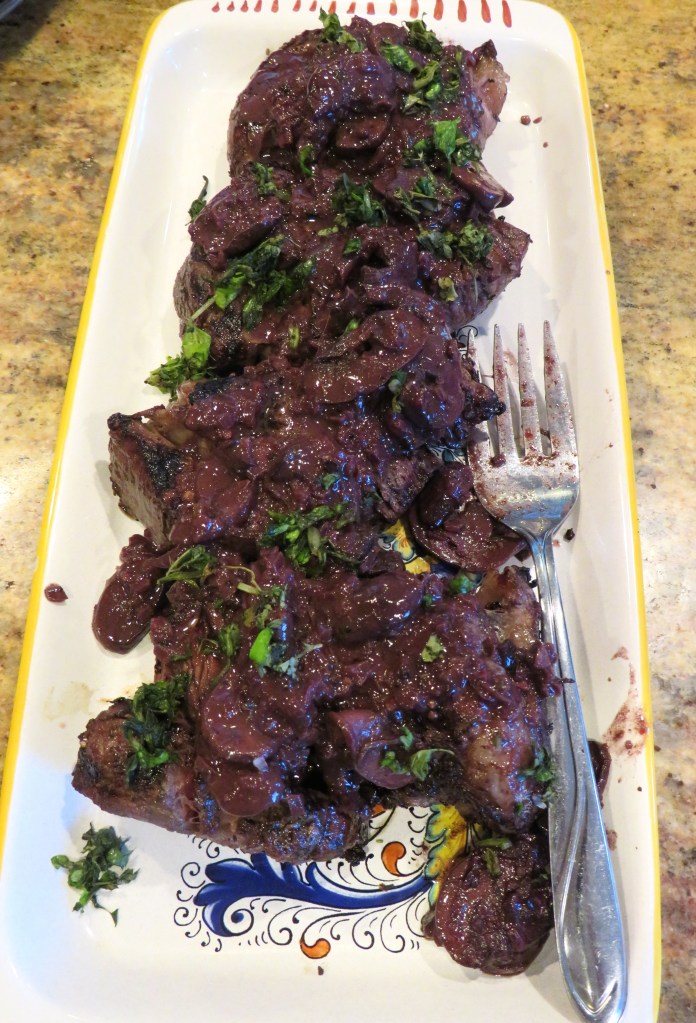
Short ribs are not the healthiest cut of meat, but they are not completely unhealthy either. They have a high fat content but they are also very rich in protein, iron, zinc, and vitamin B12. So not something to eat all the time, but they are good to eat every now and then. Last night was one of those nights to cook some short ribs. Our ribs were the English cut ribs.

Roasted and Grilled Short Ribs

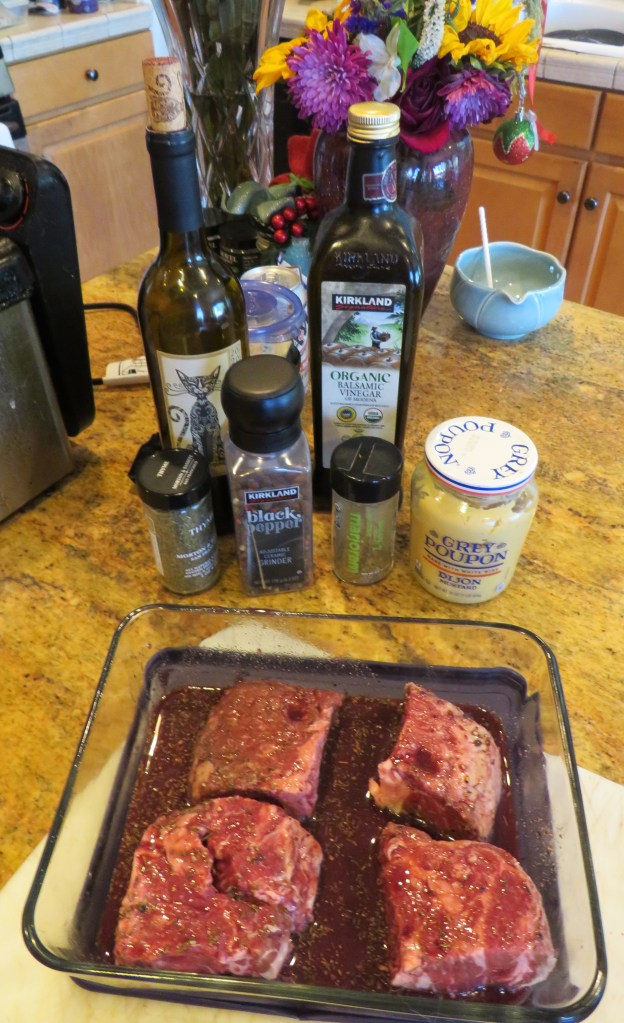
I made a dry rub and coated the ribs with that on both sides then added some red wine vinegar and roasted them for a little over 2 hours at 300* F or 149* C.

Dry Rub

2 TBSP kosher salt

1 TBSP packed brown sugar

1-2 tsp pepper

2 tsp cumin

2 tsp garlic or garlic & rosemary seasoning

1 1/4 tsp paprika

dash cayenne pepper

Mix everything together well, then generously season both sides of the short ribs with the rub and press into the meat. Use about 1 heaping TBSP of the rub and save the rest for the glaze. Once the meat is seasoned, drizzle about 2 TBSP of red wine vinegar over the meat, then cover tightly with aluminum foil and roast in the oven for about 2 hours.

The Glaze

1/2 cup Dijon mustard

1/2 cup red wine vinegar

1/4 cup packed brown sugar

remaining dry rub

the juices of the cooked ribs

Brush the glaze on both sides of the short ribs and grill at a temperature between 275*-300* F until the ribs are done. Brush with more glaze as needed. The rib meat should just fall off the bone and will be very tender and juicy.

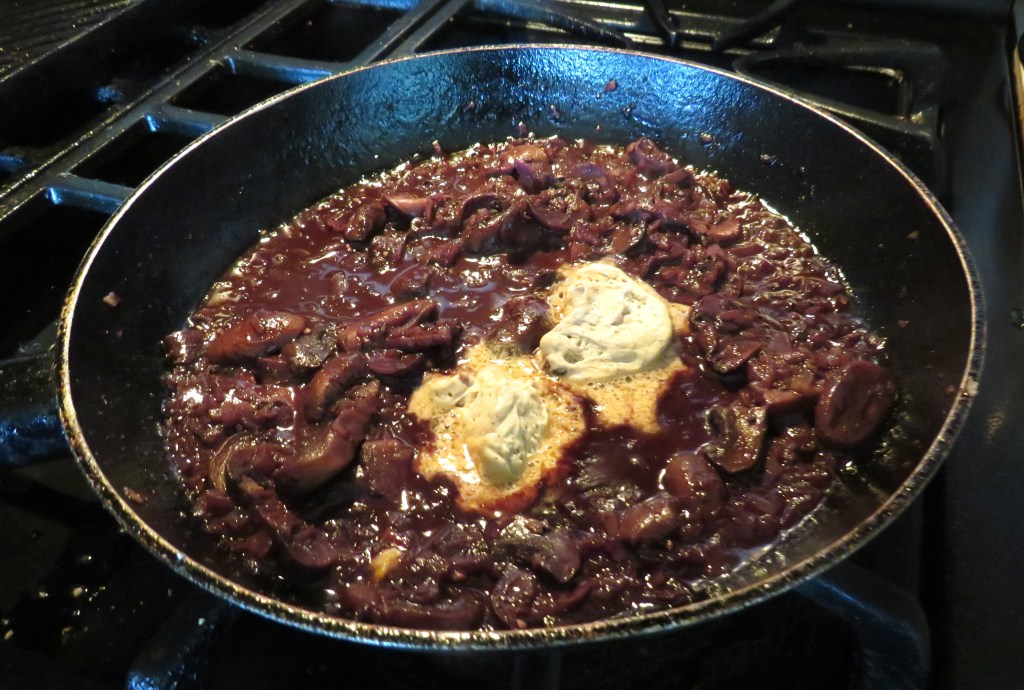
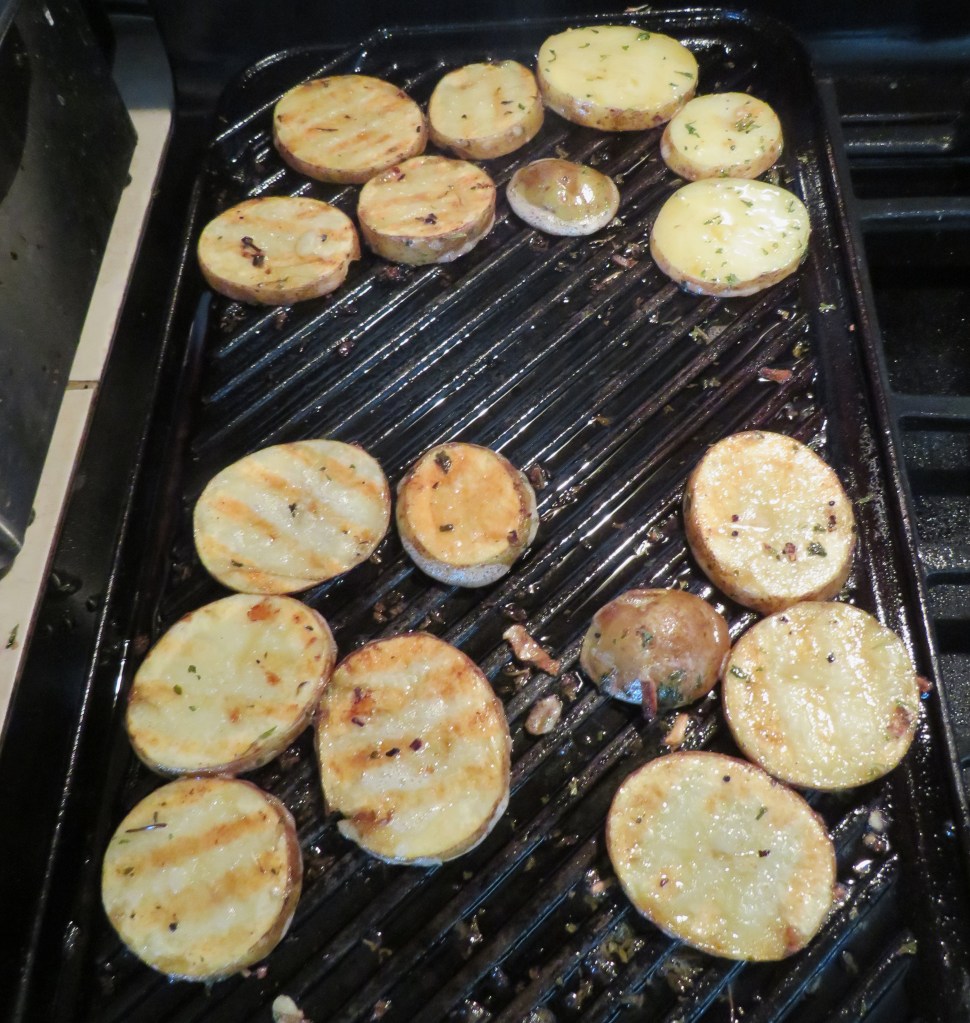
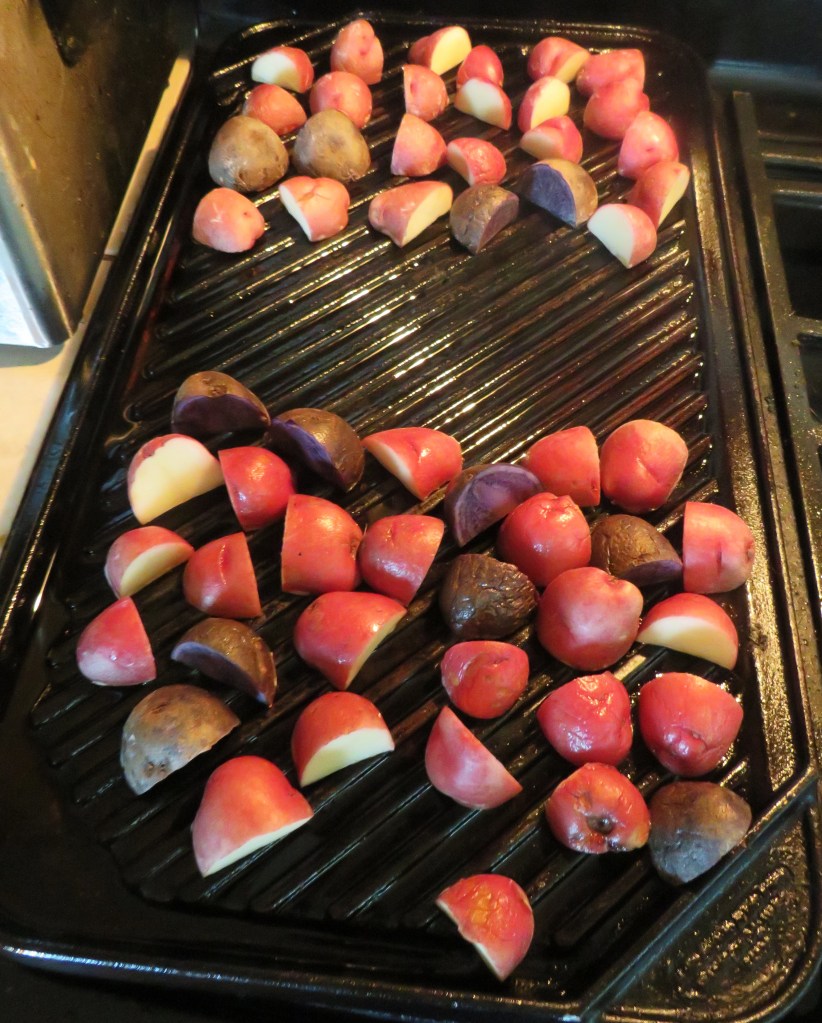
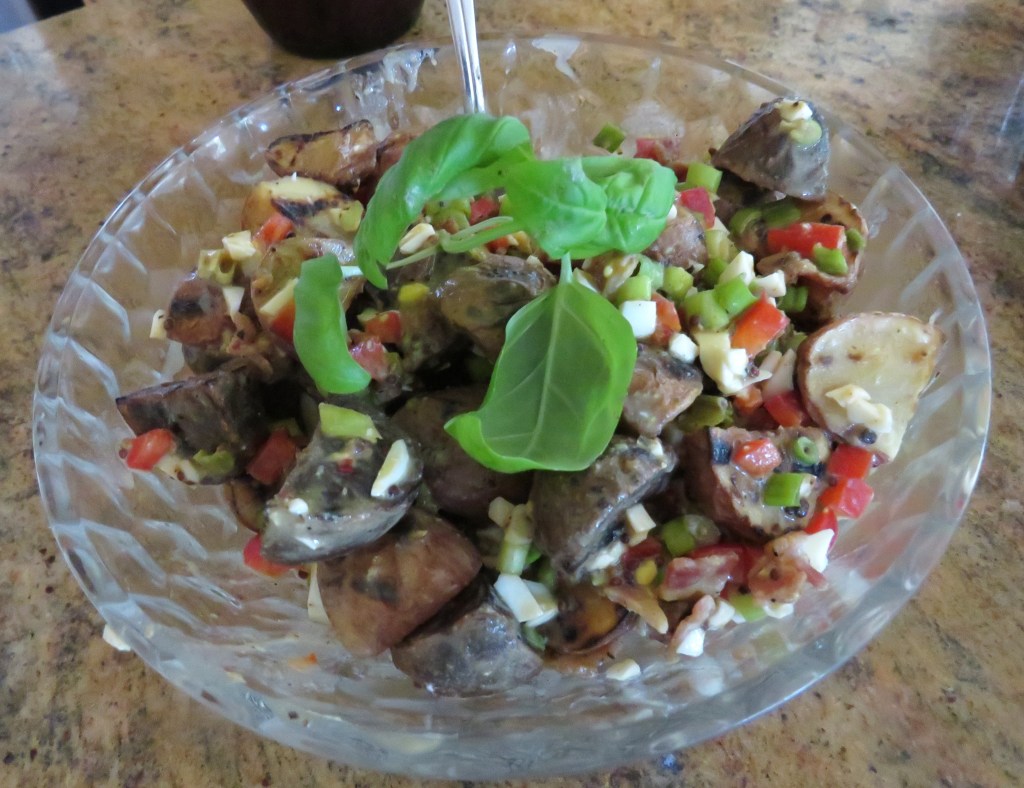
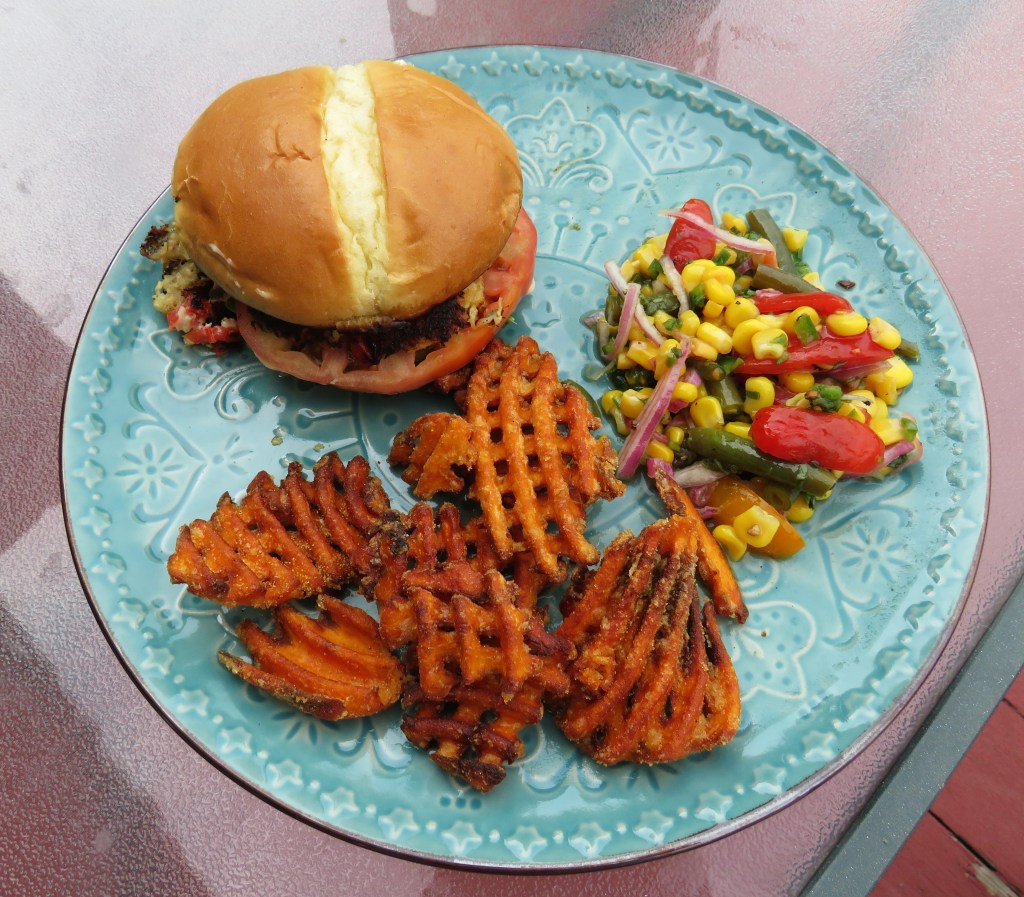
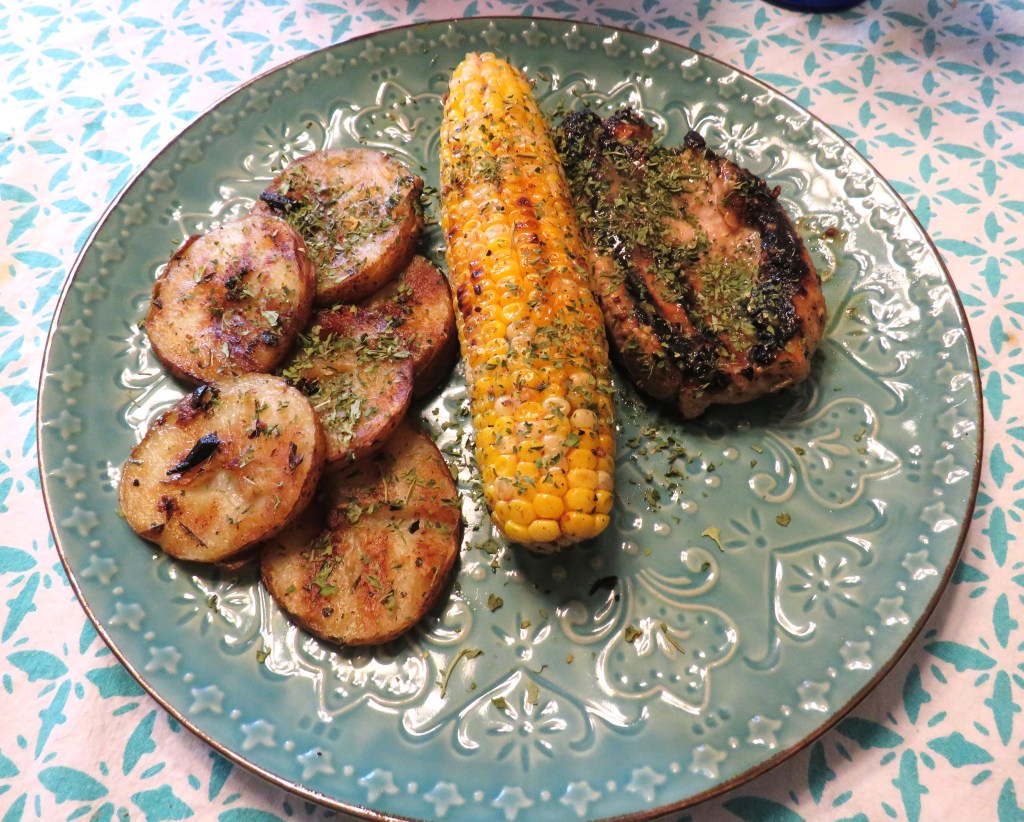
I served the ribs with some of Julia’s potatoes from her garden that I par boiled first in garlic and rosemary water, then pan fried in olive oil with salt & pepper and a quick and easy green bean, tomato, corn and red onion salad. To complete the meal, I added some warmed ciabatta and a light red wine. DELICIOUS!

Life is short. Live life to the fullest and make the most out of everyday. It’s OK to break the rules every now and then and “live dangerously”. It’s OK to eat fatty foods every now and then, just NOT everyday. Have a great day and make everyday great. ‘Til next time.

A World of Raspberries

Raspberries have been a favorite fruit all over the world since the beginning of time. I love raspberries and blackberries, and all their other berry cousins.

Archeologists have found evidence of people eating raspberries for over 20,000 years, since the Paleolithic times. The scientific name Rubus idaeus for the European variety originates from Mount Ida in Greece or Turkey, where ancient peoples gathered them. Formal cultivation began with the Romans in the 4th century. European raspberries, though eaten and grown in the wild for millennia, were not cultivated for mass production until about 400 years ago. Separate red and black varieties grew simultaneously in North America and were widely eaten by the indigenous peoples of North America long before the Europeans arrived. Though they are similar, they are actually 2 separate species. The European red raspberry is derived from the wild red raspberry of Europe, Rubus idaeus and the American red raspberry, was the cultivated form of the American red raspberry, R. idaeus strigosus, which also includes the black raspberry, or blackcap, sometimes called the thimbleberry, also a cultivated native, R. occidentalis and the purple-cane raspberries, which are hybrids between varieties of the two reds and the black raspberry.

Raspberries are members of the rose family, along with apples, pears, almonds, peaches, plums, apricots, cherries, strawberries, blackberries, and of course, roses themselves. The word “berry” is part of their name, but in scientific terms, they are not really a berry at all. They are drupelets. Botanically speaking, berries are fruits that come from a single ovary. Raspberries are an aggregate, coming from a single flower with anywhere from 50 to 150 ovaries, each making a separate small drupelet. These drupelets are clustered together, each with its own seed, to form a raspberry.

Raspberries, and all their drupelet relatives are very healthy and nutritious. They are loaded with Vitamin C, potassium, are low in sugar and calories and high in fiber, as well being full of antioxidants that help support multiple body systems and organs—most notably the heartbraingut, and pancreas. They have been used for medicinal purposes throughout the ages, and were even given to pregnant women to help ease labor pains when giving birth. Raspberries, along with blueberries and strawberries, are the top three healthiest berries. They have been used in tonics and teas to help treat all kinds of ailments through the ages.

The berry juices were also used in Medieval arts to help make the colors used for painting, as well as for the inks used for writing and as a dyes used for fabrics. Raspberries and berries in general appeared in many works of early art. It is said they represented kindness, and “their red color was associated with ideas of energy and nutrition” (p. 109 -The Story of Food, An Illustrated History of Everything We Eat).

There are over 200 different varieties of raspberries, and they come in colors ranging from bright gold to red to black or purple and everything in between. They also come in many different sizes, from tiny to huge. I love them all. We have tiny wild raspberries that grow in our yard. They are super sweet and delicious. Unlike many other “fruits” they do not continue to ripen after they have been picked, so eat them quickly after you pick them, or freeze and preserve them for later use.

Raspberries and their drupelet cousins are grown all over the world, in areas with mild climates. The top producers are Russia, Poland and the United States, specifically Washington, Oregon and California. Washington grows over 90% or 60 million lbs per year for the United States.

Be healthy and berry up. You’ll be “berry” happy you did too, one berry or drupelet at a time. Have a great day and make everyday great. Life is short. Live life to the fullest and enjoy the ride. ‘Til next time.