I have created this site to help people have fun in the kitchen. I write about enjoying life both in and out of my kitchen. Life is short! Make the most of it and enjoy!
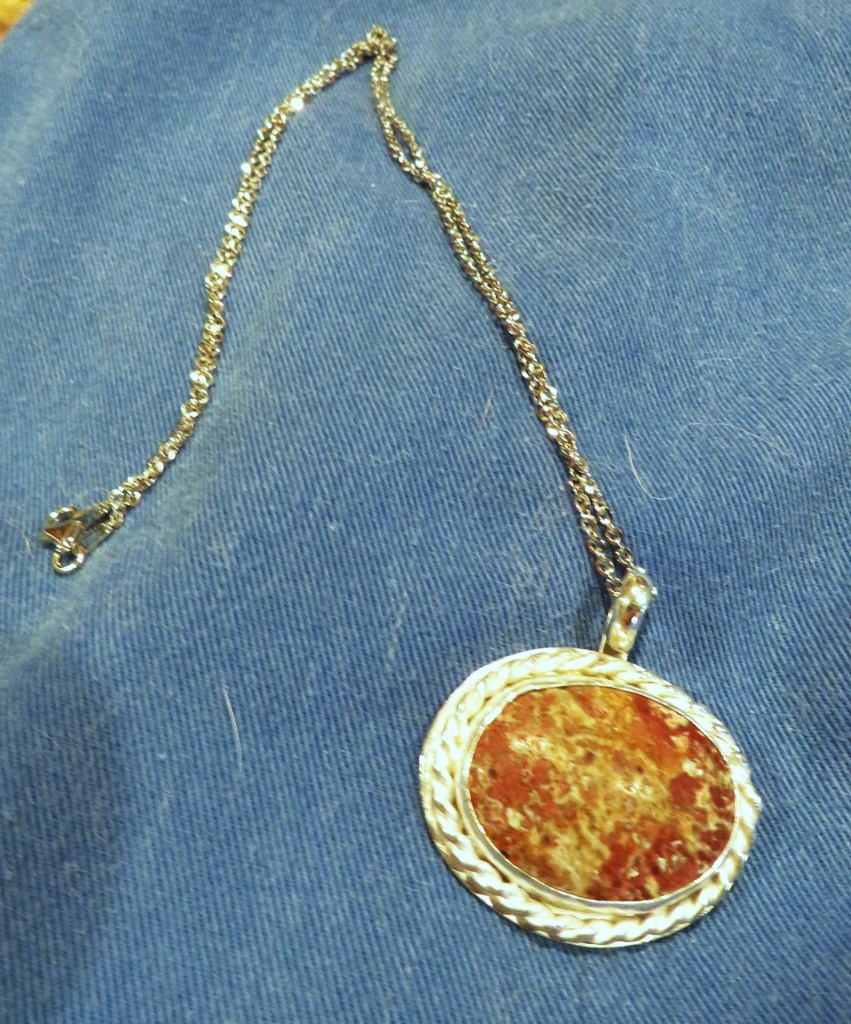
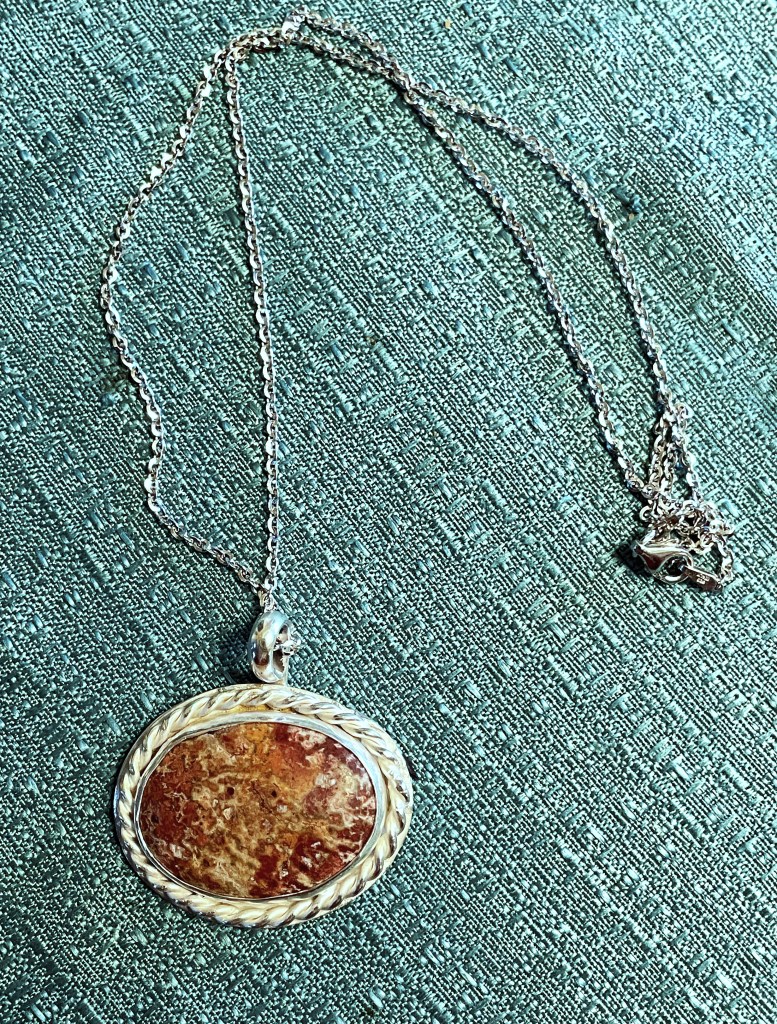
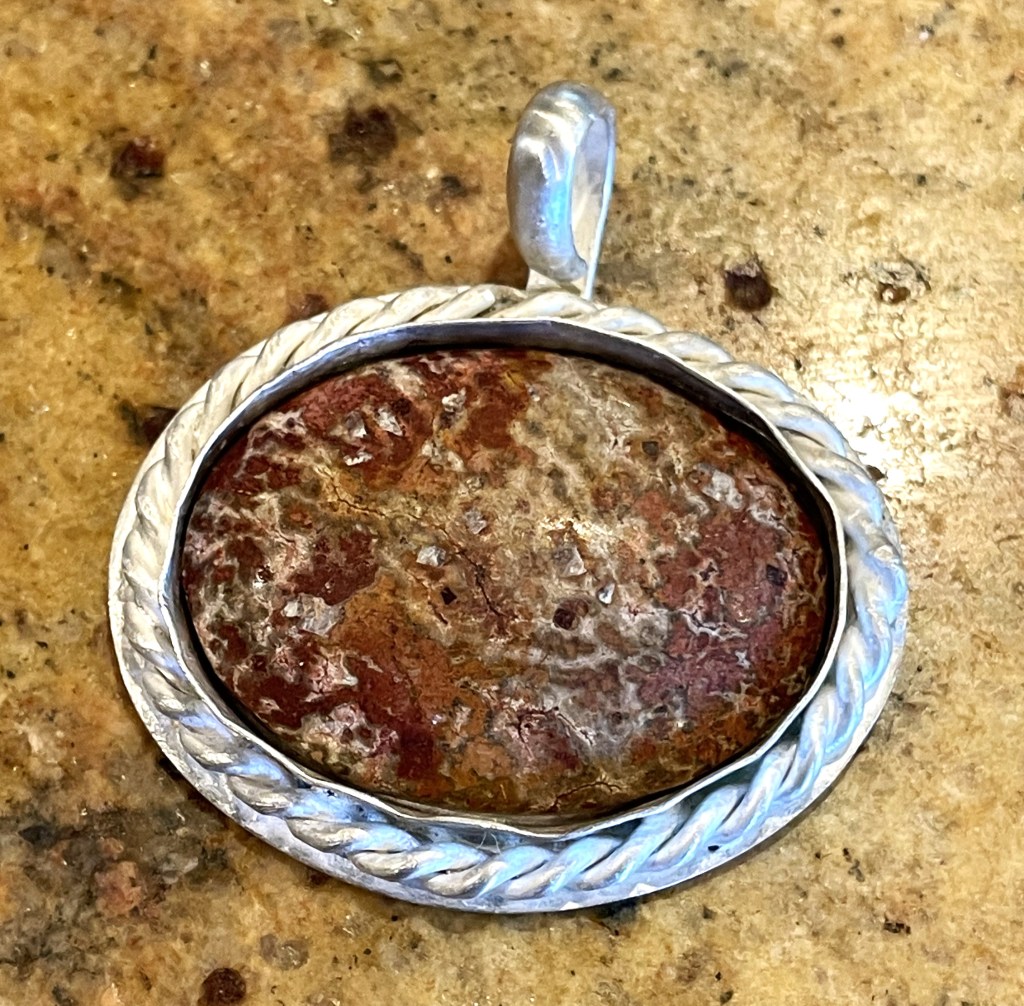
After weeks of working hard on my pendant, it is finally finished. WHOOOOO HOOOOO!!!! I am very pleased with how it turned out. I think it came out very nice, even if I say so myself. I can honestly say I am a budding silver smith now. 🙂
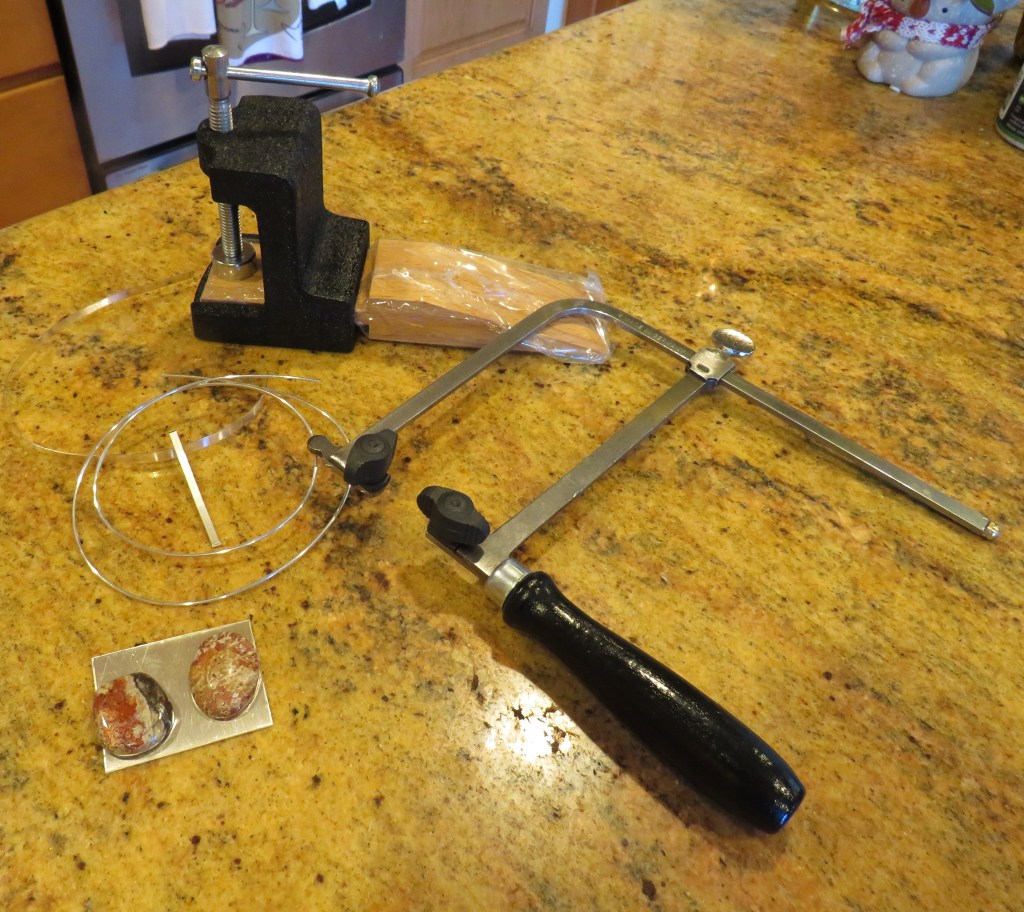
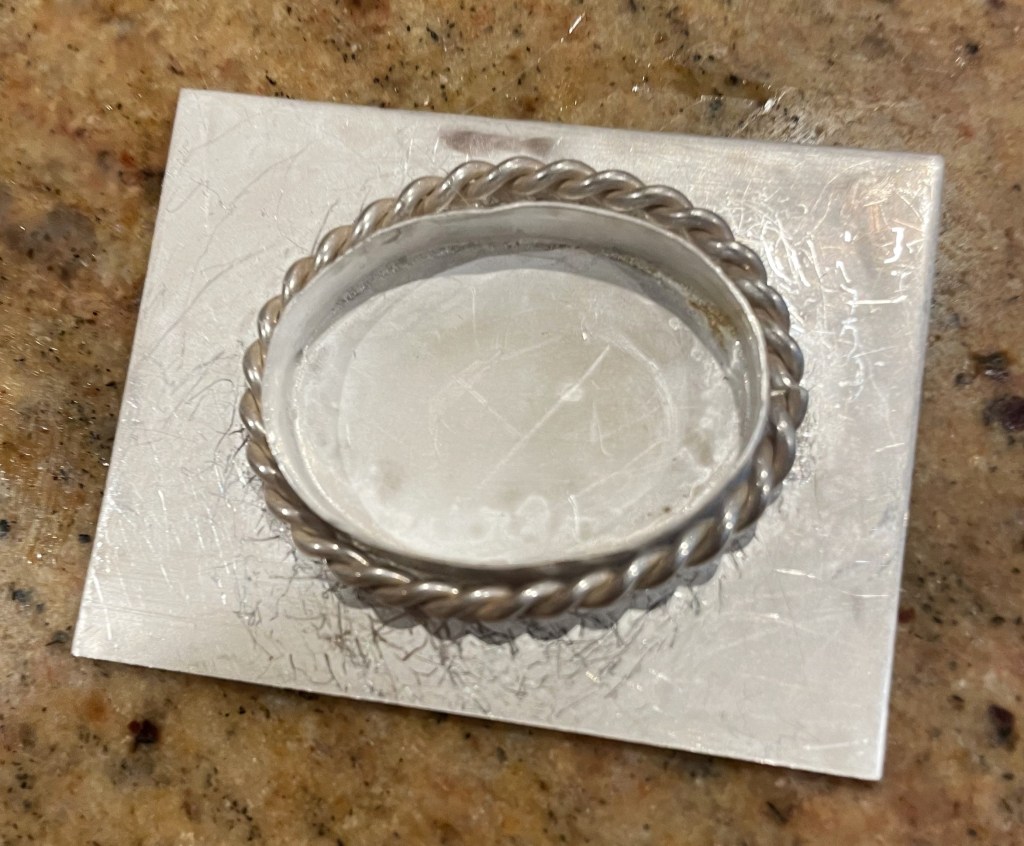
Here is the process once again. And believe me, it was a process, and definitely a labor of love. Everything was hand crafted by me. I did not use any molds or casting. I cut and soldered every piece of silver. The saw is proving to be quite a challenge, particularly for my bracelet, but more on that in a bit. The tools, the silver, and the stones.
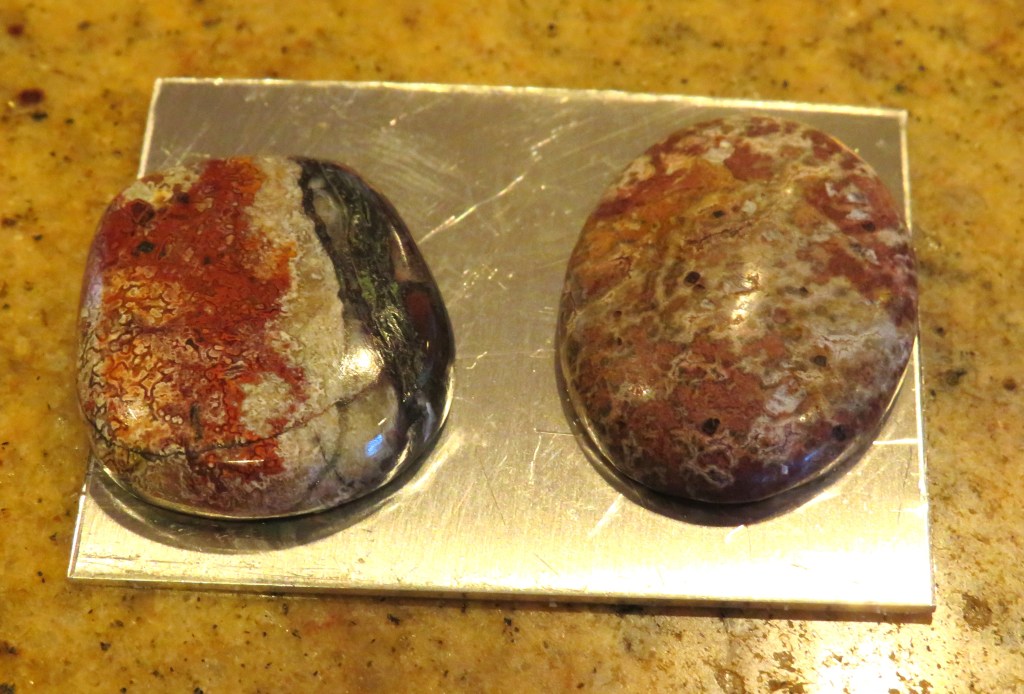
I chose the stone on the right for this first project because it was easier to work with for a newbie like myself. It is some kind of a jasper, with copper veins running through it. The stones are sitting on the silver that will be the back of the bezel.
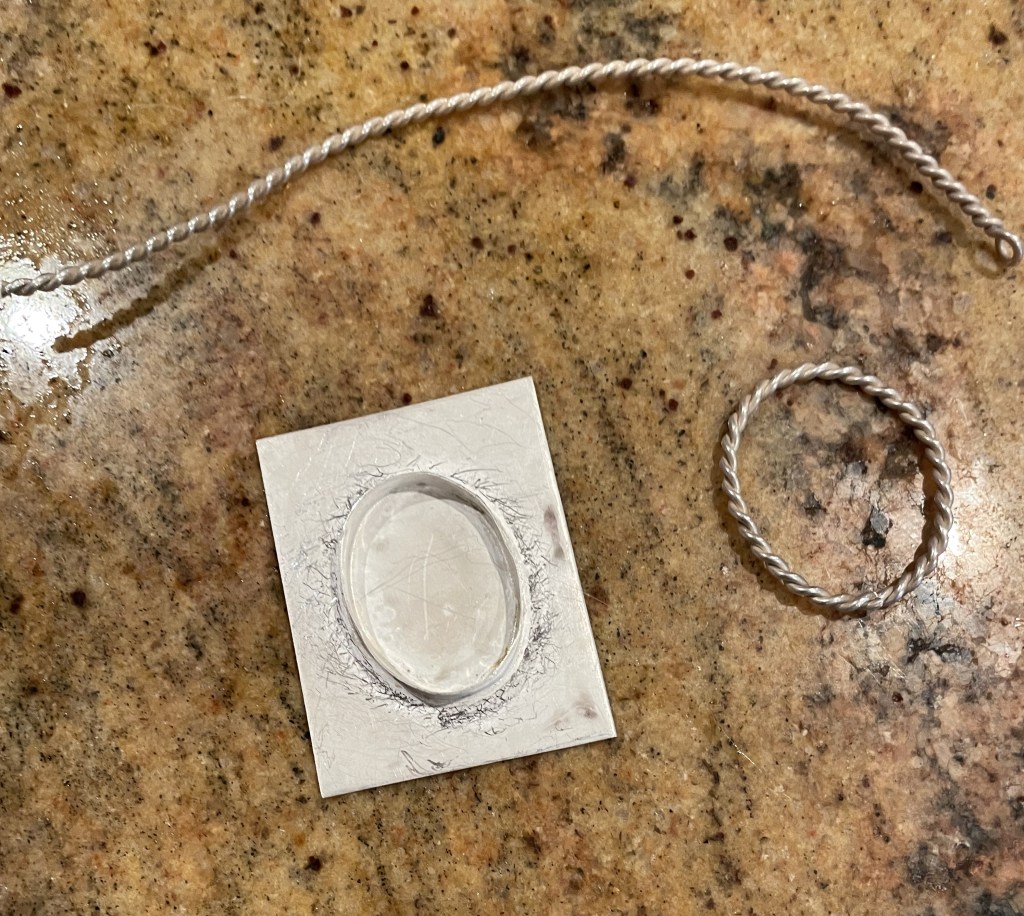
The rope and bezel.
After everything was completed, before setting the stone, it was polish, polish, polish, and polish again until it was all bright and shiny. Then I got to set the stone and another quick polish on the polishing machine. A quick clean up, and it was finally done. 🙂
I am proof that you CAN actually teach an old dog new tricks. Now if I could just get the hang of using the saw for all my zigzags on my bracelet, I would be a very happy camper, or in this case, silver smith, indeed. 🙂 I am going in for another workshop today to work on my bracelet. I have a lot to do on it still.
It’s never too late to learn new things. Learning new things keeps us young, or at the very least, young at heart. Have a great day and make everyday great. Life is what you make it, and sometimes, you make bright, shiny bling. 🙂 May 2026 be filled with happiness, new adventures, good health and prosperity for all. ‘Til next time.
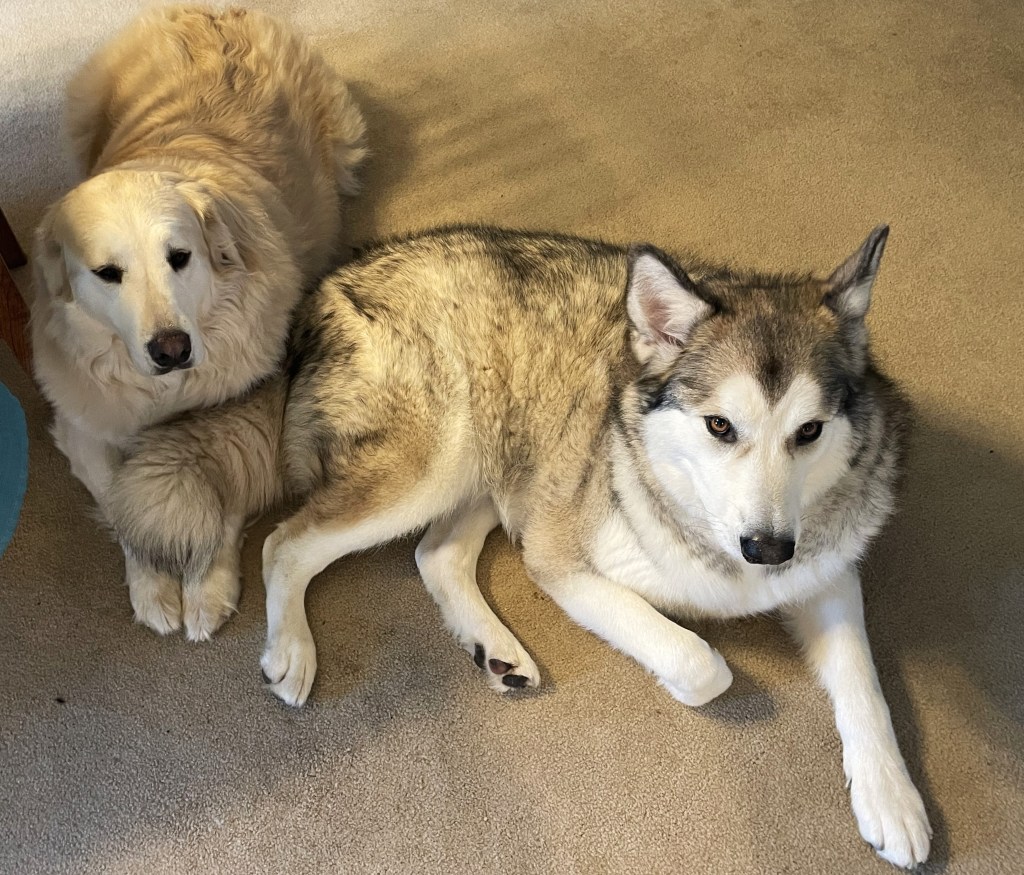
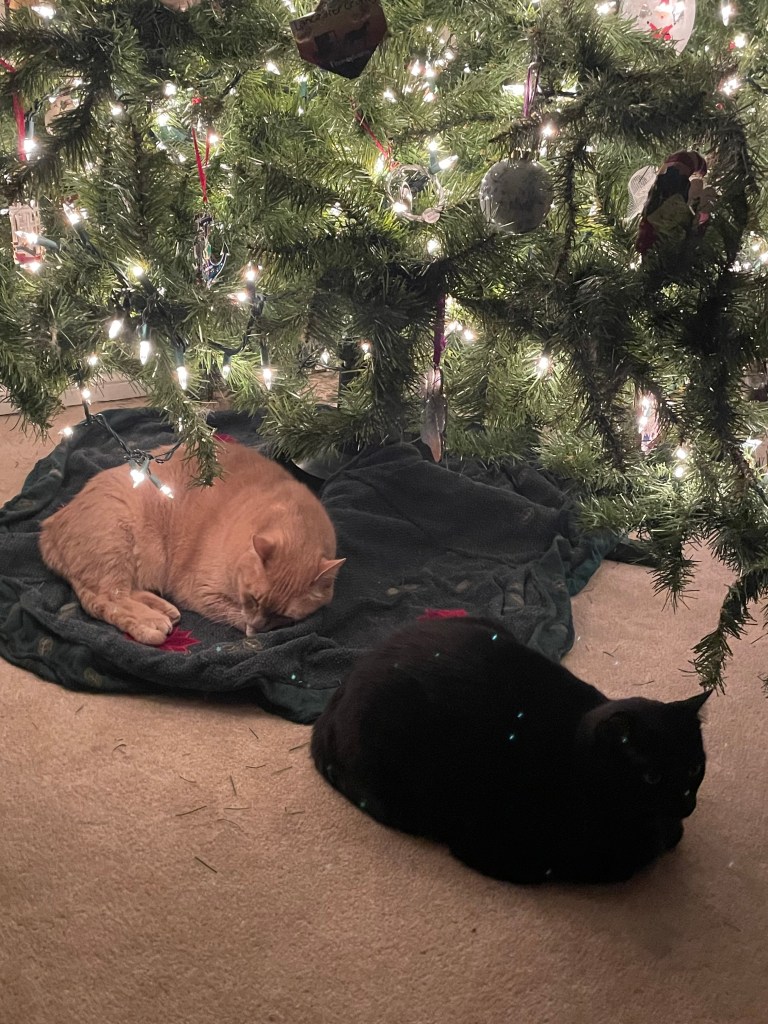
My I have a lot of photos of animals being gregarious. Both our dogs, Dorrie and Juneau are ALWAYS together, whether they are getting into trouble together or just hanging out, looking for love.
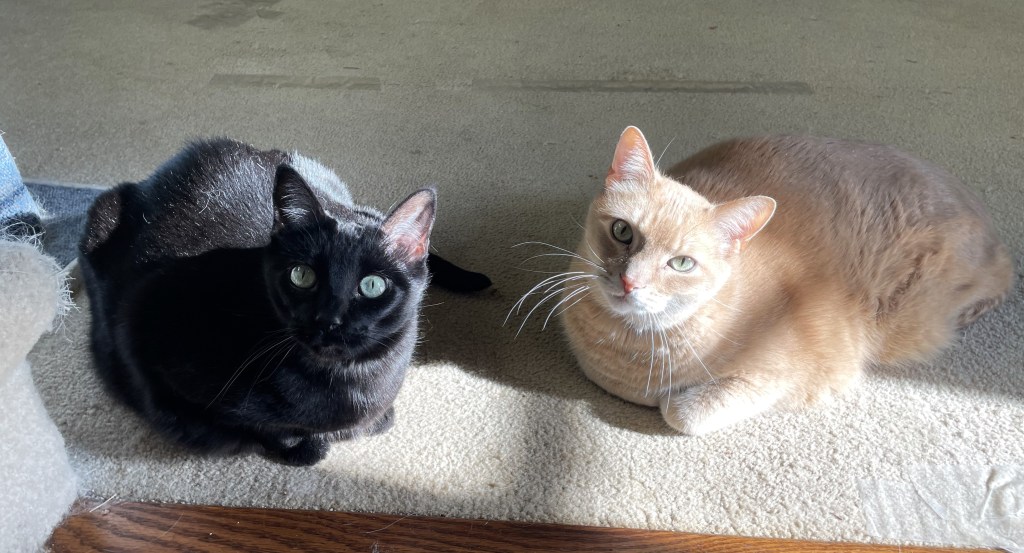
Our two cats, Otis and Nicodemus (Nicky) are the same.
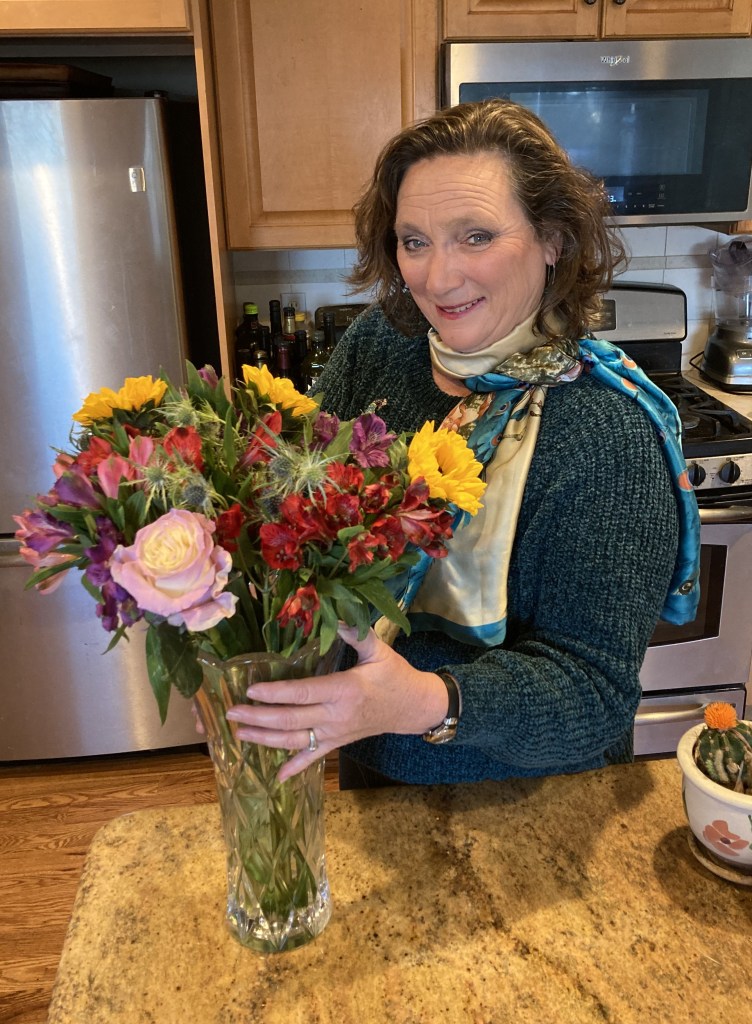
But I also see others being gregarious all the time too.
Maybe we can all learn more about being gregarious from the animal kingdom and our beloved fur babies. 🙂
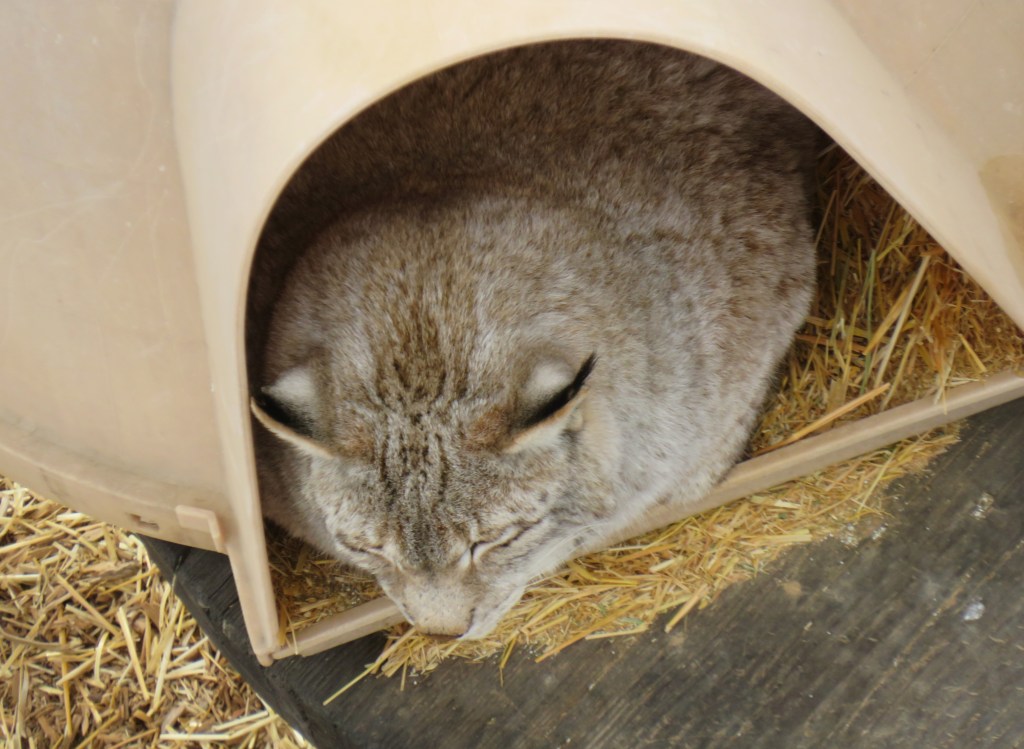
When Larry and I were at the Wild Animal Sanctuary, I was able to get some good shots of the Serval too. Usually they are hidden. We did see one Serva who was out, but he couldn’t be bothered with the paparazzi. His naptime was far more important than anything else, except for maybe …. dinner.
He just looks like our cats, looking for love, cuddles and tummy rubs.
He is so content and happy. He just looks like a big, happy house cat. I wish I could just cuddle with him and give him lots of love. 🙂
Have a great day and make everyday great. Life is what you make it, so make it fantastic. May 2026 be filled with happiness, good health and prosperity for all. ‘Til next time.
Once again, I am hosting another article from Jessica Brody. Her article is called Turn Your Home Cooking Passion into a Profitable Business Step by Step. Here is Jessica’s article. My thoughts are at the end.
Turn Your Home Cooking Passion into a Profitable Business Step by Step
For home cooks who love feeding friends and sharing recipes, home cooking entrepreneurship can feel like the natural next step. The tension hits fast: starting a cooking business asks for consistency, pricing confidence, and clear boundaries long before the first steady sale. Add the real challenges for new food entrepreneurs, rules, time, and the fear of charging for something that once felt like a gift, and the leap from passion to profit in cooking can stall. With the right expectations, home cooks as business owners can build something sustainable.
Quick Summary: From Home Cook to Business Owner
Start by deciding what you will sell and who you want to serve.
Start small by choosing a simple, manageable way to launch and grow.
Build your foundation by setting up the basics you need to operate.
Move step by step by deciding first, then building next with a clear path.
Understanding the Business-Owner Mindset
A home cooking business is not just great recipes. It is choosing a setup that fits how you sell and how much risk you want to carry, using a legal structure like a sole proprietorship, LLC, or corporation. Then you commit to the basic paperwork and ongoing check-ins that keep you operating legally.
This matters because clear structure reduces stress when orders pick up. It also helps you price with confidence, open the right accounts, and avoid last-minute scrambles that pull you away from cooking.
Picture a busy Sunday prep day with three new requests. With common business structures decided and a simple compliance routine, you can accept orders calmly and keep your kitchen flow, with ZenBusiness as one option for organizing the setup. With that clarity, a step-by-step startup guide can turn your recipes into a launch plan this week.
Launch Your Home-Based Food Business This Week
This step-by-step startup guide helps you go from “I make great food” to “I can take my first paid order” without getting overwhelmed. It keeps the process practical for home cooks who want approachable recipes, steady kitchen inspiration, and a business plan that fits real life.
Pick one signature product and test it Start with a single sellable item you can make consistently, like a cookie box, weekly. soup, or a small batch sauce. Cook it 2 to 3 times this week and write down exact weights, bake times, portion sizes, and how long it stays delicious. This becomes your “standard recipe,” which protects quality as you scale.
Define your customer and your pickup-friendly offer Choose one clear audience you already know how to feed, such as busy parents, coworkers, or neighbors who like comfort food. Decide how people will receive it, like porch pickup windows, weekend preorder drops, or local delivery days. A tight offer makes ordering feel easy and keeps your cooking schedule sane.
Price it for ingredients, time, and packaging Calculate your cost per batch, then cost per portion, including containers, labels, and delivery fuel if needed. Add a simple hourly rate for your labor and a little buffer for waste or “oops” batches. Pricing is not just math, it is your permission slip to keep going.
Handle safety basics and register before selling Take a basic safety class so you know how to cool, store, and label food confidently, and many places require a food safety course. Then complete your local business notification or registration early because register with your local authority can be time-sensitive and it helps you avoid last-minute delays.
Run a tiny pre-launch and market it simply Invite 10 to 20 people to a “founding customers” preorder with a clear deadline, pickup time, and limited quantities. Post one great photo, your menu, and your ordering instructions in the same place every time, like a single pinned post or simple order form. After pickup, ask for one sentence of feedback and one photo you can share to build trust fast.
Pre-Launch Home Food Business Checklist
This checklist keeps your first sales calm and repeatable, so you can focus on approachable recipes and fresh kitchen inspiration instead of scrambling. Food safety matters because 48 million Americans annually are affected by foodborne illnesses.
✔ Choose one signature item and document exact weights, times, and yield
✔ Define one buyer group and one ordering method people can follow
✔ Calculate per-portion cost including packaging, labels, and your hourly labor
✔ Confirm local registration, labeling rules, and any required permits before taking money
✔ Set sanitation and storage routines that comply with health standards
✔ Create one ordering link or message template with cutoff and pickup details
✔ Track feedback, repeat orders, and one photo testimonial after every batch
Check these off once, then repeat your best week on purpose.
Turn Your Cooking Skills Into Real Income This Week
It’s easy to feel stuck between loving to cook and worrying about rules, costs, and whether anyone will actually buy. The way forward is the steady, community-first approach: reflect on business goals, use the checklist to stay compliant and organized, and let entrepreneur motivation come from progress, not pressure. When those next steps for food startups become routine, confidence in a cooking business grows and the work starts to feel like ownership. Small, compliant steps turn a home cook into a business owner. Choose one 48-hour action, finish one permit form, write a simple menu draft, or schedule one test batch, and do it. That’s how inspiring home food entrepreneurs build resilience, stable income, and deeper connection through food.
Thank you Jessica for your contribution. I have added my own, professional ideas and thoughts as well.
And now for my take on this:
All of these are great ideas, but there is a lot more to it than what this article suggests. One thing to consider are all the legal issues. This is a BIG one too. I would love to turn my kitchen into a professional kitchen, but there are a lot more headaches than what it is worth in order for me to do so.
I have pets. I have 2 large dogs and 2 cats. This is their home. Period. No ifs ands or buts about it. In order for me to sell foods from my kitchen, I would have to completely shut my kitchen off to my animals, which there is NO WAY I can do, even if I wanted to, just because of the open free-flowing design of my house. This is just for sanitation purposes. But for legal purposes, if someone found 1 dog or cat hair in their food, I could be sued and/or fined quite heavily. Unfortunately we live in very litigious society, and everyone today wants to sue someone else over minor things.
2. You have to label EVERYTHING, listing ALL the ingredients, just in case someone is allergic to any of the ingredients used. Once again, people will sue for anything these days. This could be costly and time consuming.
3. Another thing to consider before turning your kitchen into a professional kitchen is the impact it would have on your home and family life. It will affect everyone. And it would be very time consuming. Your home and your kitchen would no longer be a warm, welcoming place where friends like to gather, but would instead be turned into a professional place of business and operation. Just like any business, you would have to adhere to all safety and sanitation standards and would be open to inspections from health and safety inspectors.
There are more things to think about as well, but these are all big issues. You can certainly turn your home kitchen into a professional kitchen, but you have to really consider all angles and decide if these necessary steps are really worth it to you. Instead of turning your home into a professional kitchen, if you are serious about selling a homemade product, I would seriously consider renting a kitchen instead of turning your home into a business.
There is a lot to think about in this article, just as there is in starting any new business venture. Often times people fail because they only think of the fun and positive aspects and forget to consider the realities of the business world we live in. There are a lot of harsh realities that often get overlooked, and unfortunately a lot of businesses fail because these factors were not considered and taken into account. In order to be successful, you have to think of everything, even the things you don’t want to think about. You have to be at least 2-3 steps ahead of everyone else, at all times. And good luck to anyone who has done all their homework and chooses this path.
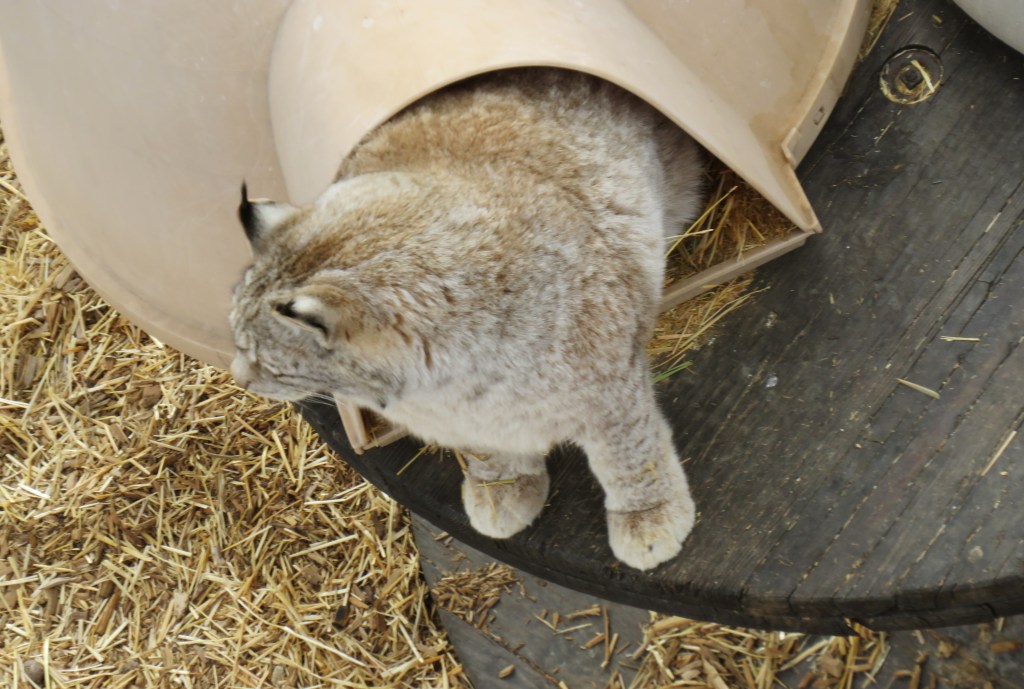
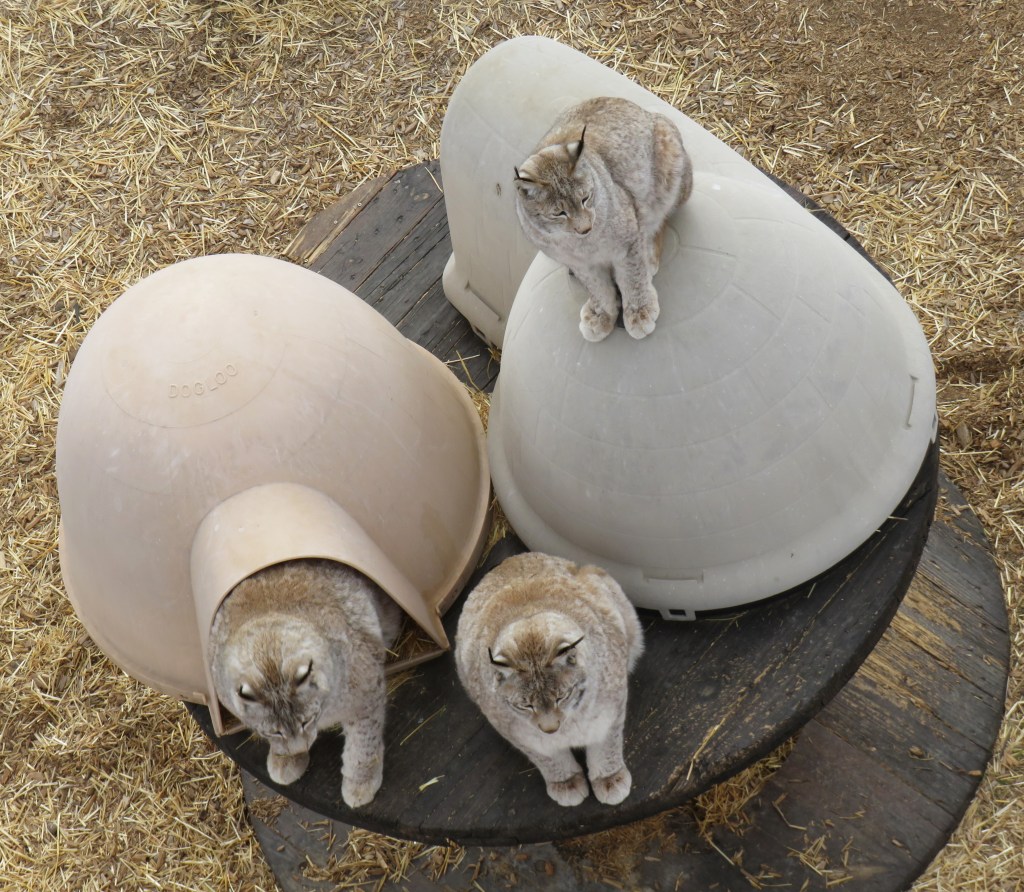
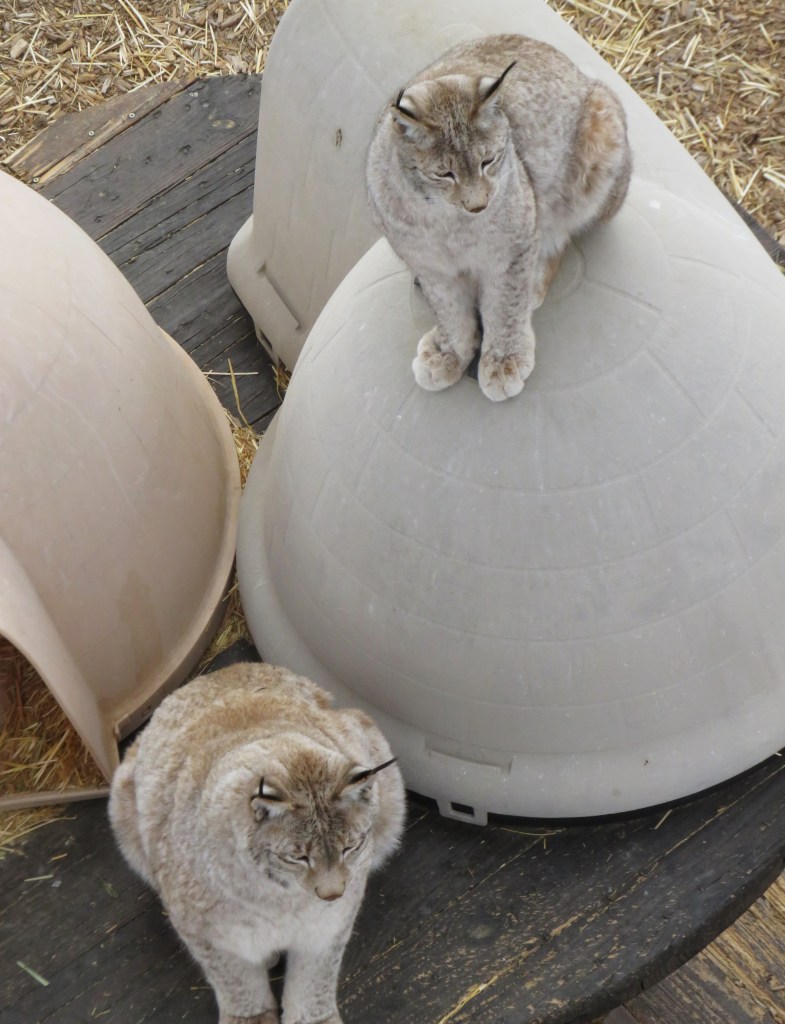
Usually when we visit the Wild Animals Sanctuary, the lynxes are lying around, just being lazy. But this time, they were full of life, especially when they heard the food truck passing by. They all perked up and were showing all kinds of enthusiasm.
At first, they were as they normally are when we see them. Very chill and relaxed.
But then ….. They heard the food truck passing by, and they were all wide awake and ready for dinner.
They are just like big house cats. Our cats react the exact same way. 🙂
Have a great day and act like the dinner truck is driving by. Live life to the fullest and enjoy. 🙂
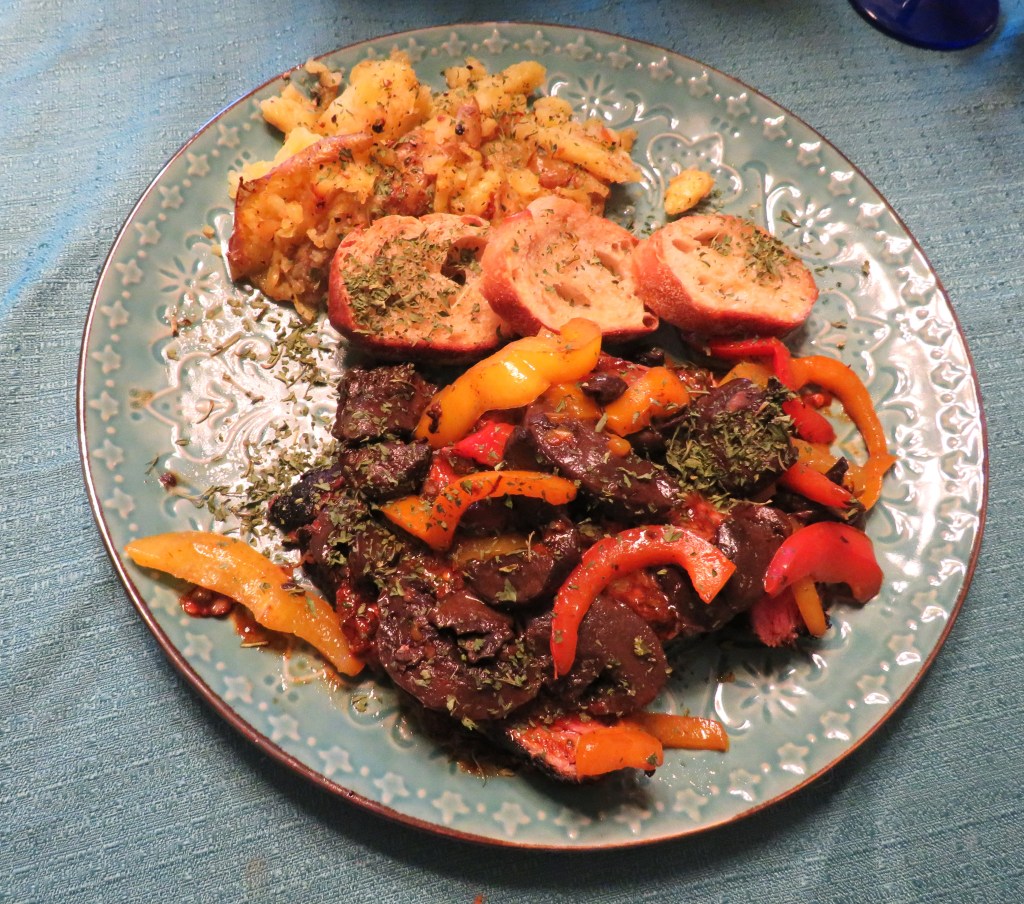
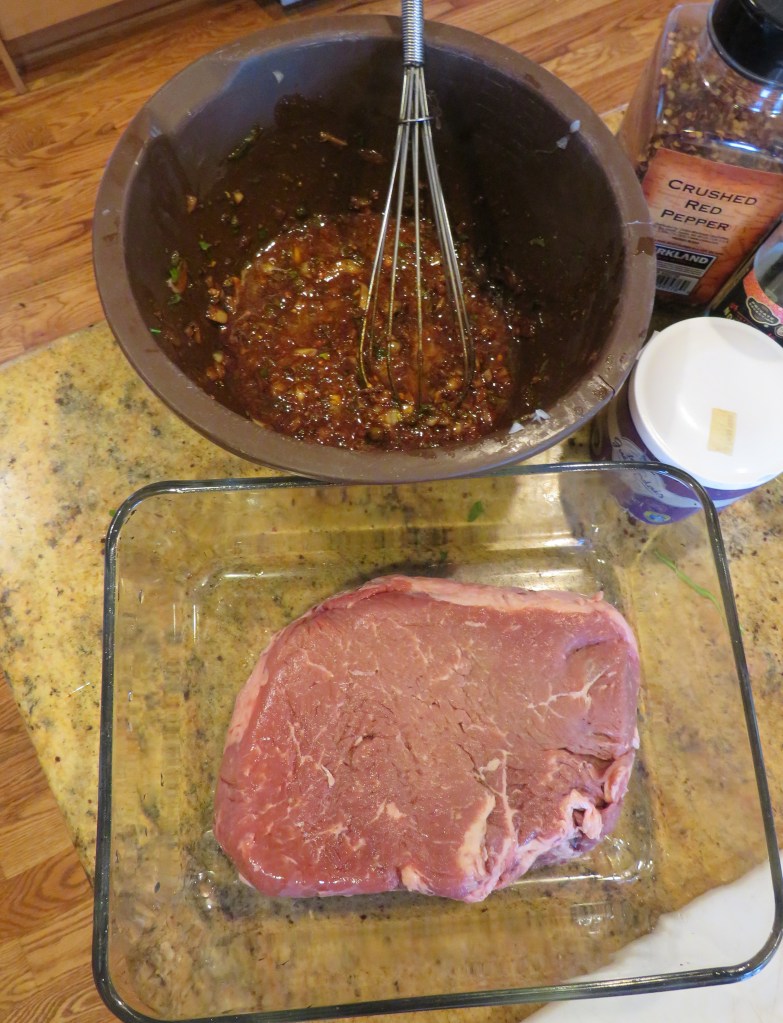
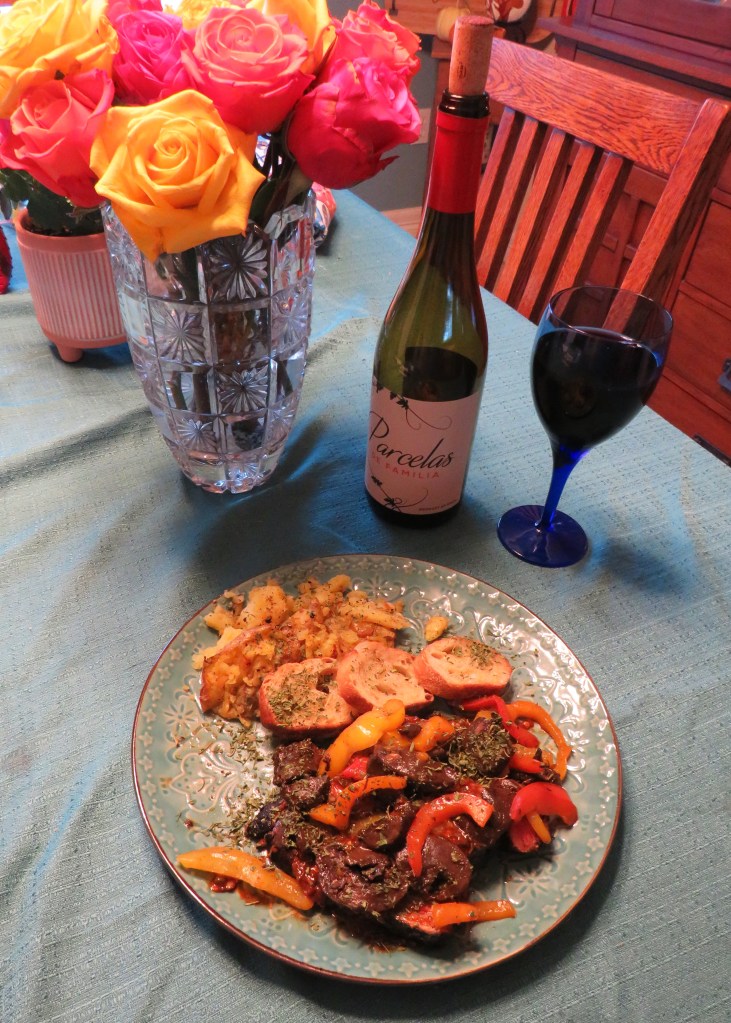
A big piece of ribeye steak was down for this week’s meat rotation. What was I going to do with it? It was such a big, beautiful piece of steak, I knew I needed to make something impressive with it. I made what I am calling a gypsy steak.
Romani (Gypsy) cuisine is a rustic, resourceful, and traditionally nomadic diet, relying on hearty soups, stews, and roasted meats (chicken, lamb, pork) cooked over open fires. Key ingredients include paprika, garlic, potatoes, peppers, cabbage, and foraged foods. Their foods are bold, spicy and strong, with lots of garlic, onions and paprika. My steak had all those big bold flavors and more. A gypsy steak is a very appropriate name for it.
Gypsy Steak
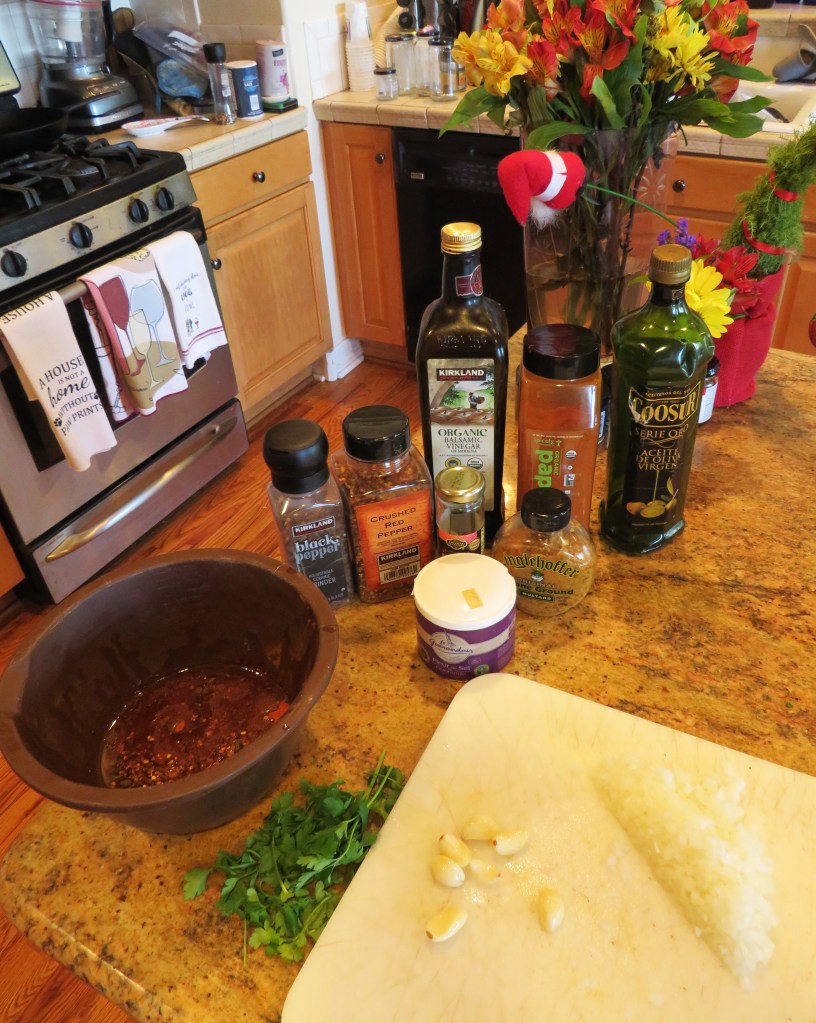
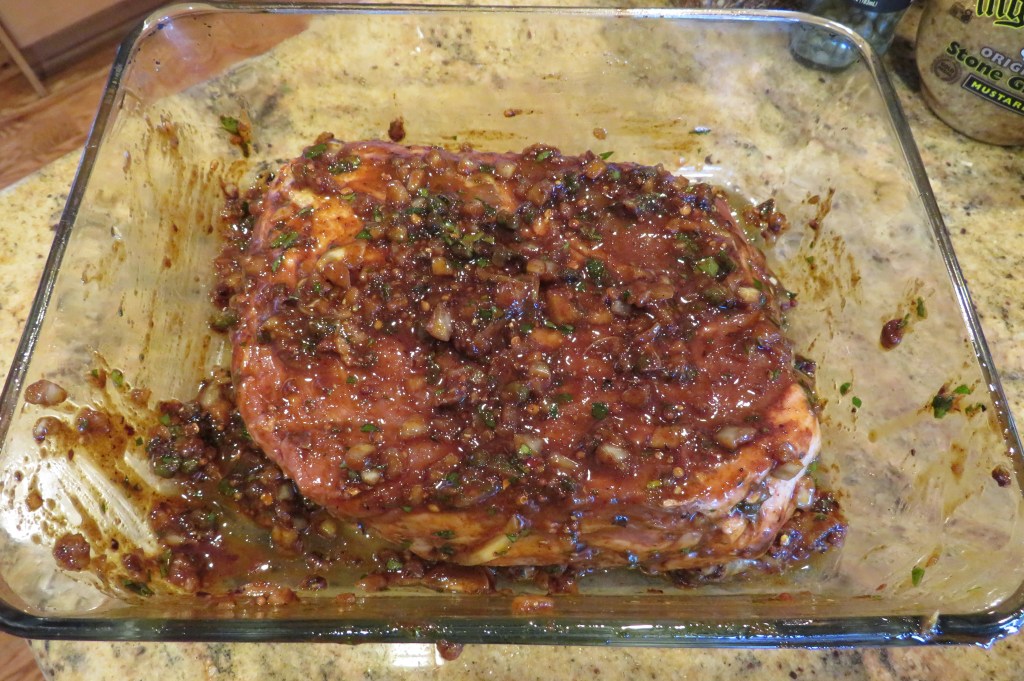
I marinated the steak in a big, bold paprika vinaigrette for about 4-5 hours before searing it to perfection.
Bold Paprika Vinaigrette
1/2 cup olive oil
2 TBSP paprika
1/2 onion, diced fine
7-8 cloves of garlic, sliced very thin
2 TBSP capers
2 TBSP balsamic vinegar
1/4 cup fresh parsley, chopped
1 TBSP red pepper flakes
1 TBSP Dijon mustard
salt & pepper to taste
Mix everything together well. Generously cover the steak with the marinade, cover and refrigerate for at least 2-3 hours before cooking.
Reserve some of the sauce before adding it to the meat for later.
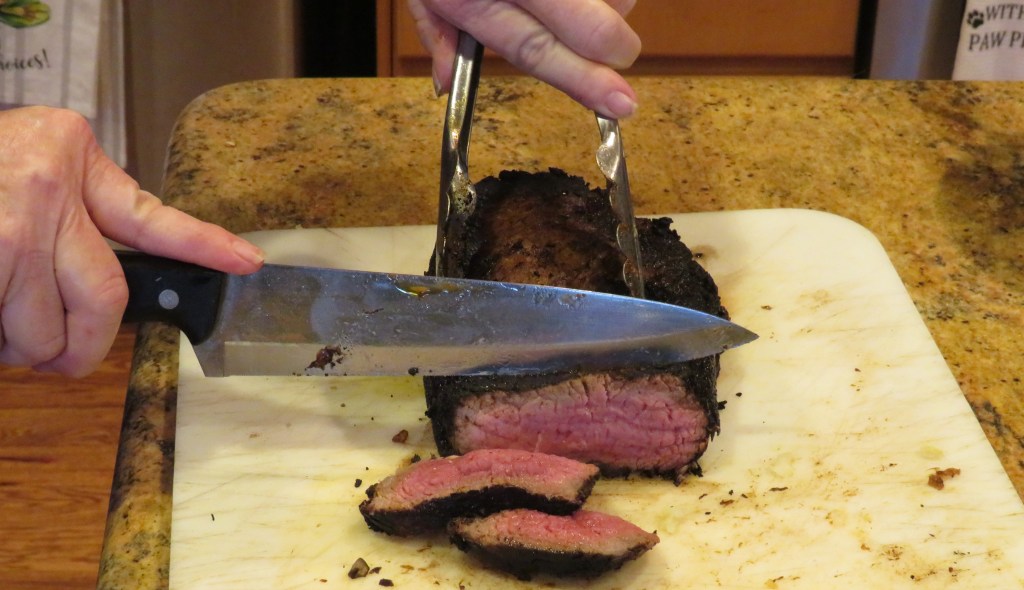
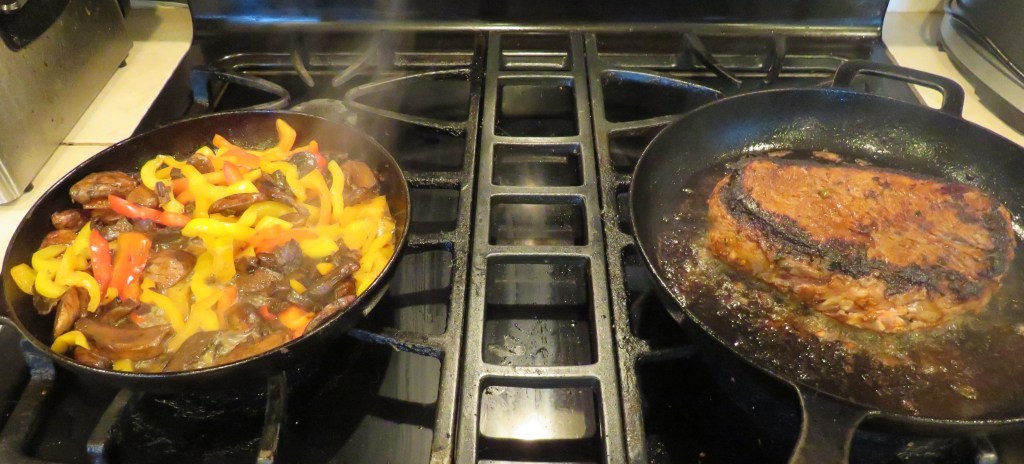
When you are ready to cook the steak, I recommend searing it first to give it a nice crust. Cook it to a juicy and delicious medium rare for best results, or when the internal temperature reaches between 125-130* F or 54-57*C.
I added some sauteed red, yellow, orange bell peppers and mushrooms to top the streak when it was done. Top the cooked steak with more of the sauce, then add the sauteed peppers and mushrooms. Serve with a bold, big red wine on the side, along with some kind of potatoes that are big enough and bold enough to handle the big, bold flavors of the steak. To make it a romantic dinner, add some gypsy music, maybe something from the Gypsy Kings, and voila! Romance is in the air.
Have a great day and make everyday great. Life is what you make it, so make it fantastic. May 2026 be filled with happiness, good health and prosperity for all. ‘Til next time.
We joined the Birthday Club at Lazy Dog, and we got a coupon for buy 1 get 1 free. After spending a very pleasant and enjoyable afternoon at the WAS Date Day – Part 1- Seeing Spots we decided to go To Lazy Dog Lazy Dog Dinner to take advantage of the coupon. You only have so long after your birthday to be able to use the coupon and Larry loves coupons.
I started off with a hibiscus margarita, which was very cool and refreshing.
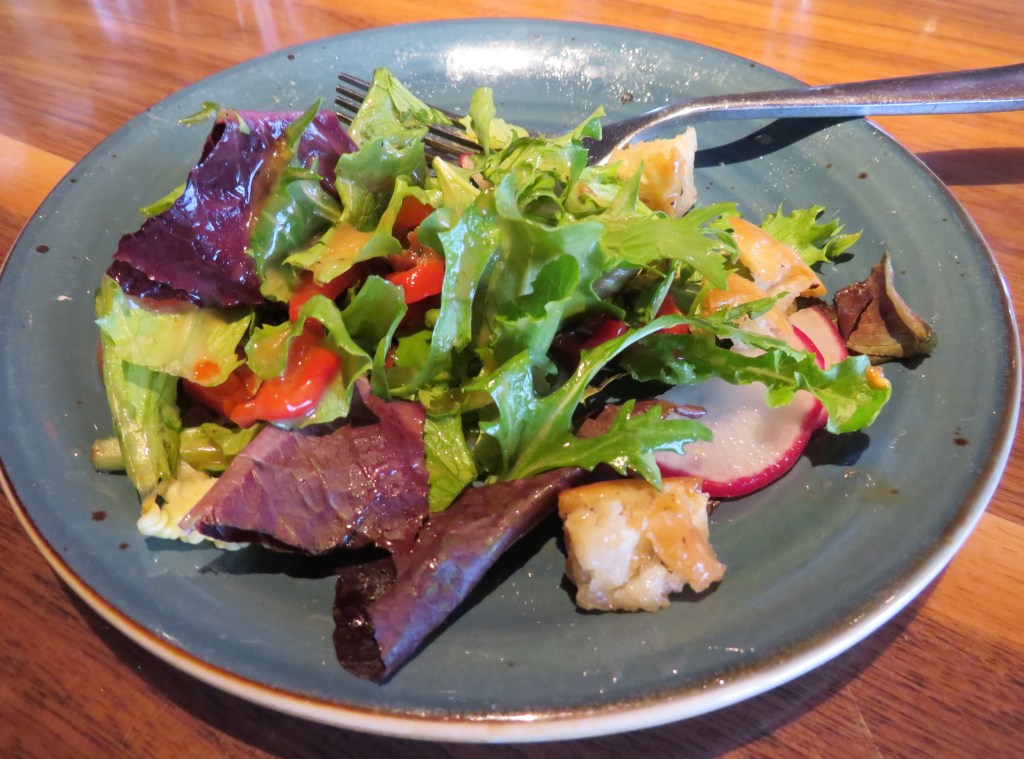
Then we ordered some tikka masala meatballs and a house salad to share.
For our entres, we both went with fish. Larry order fish & chips.
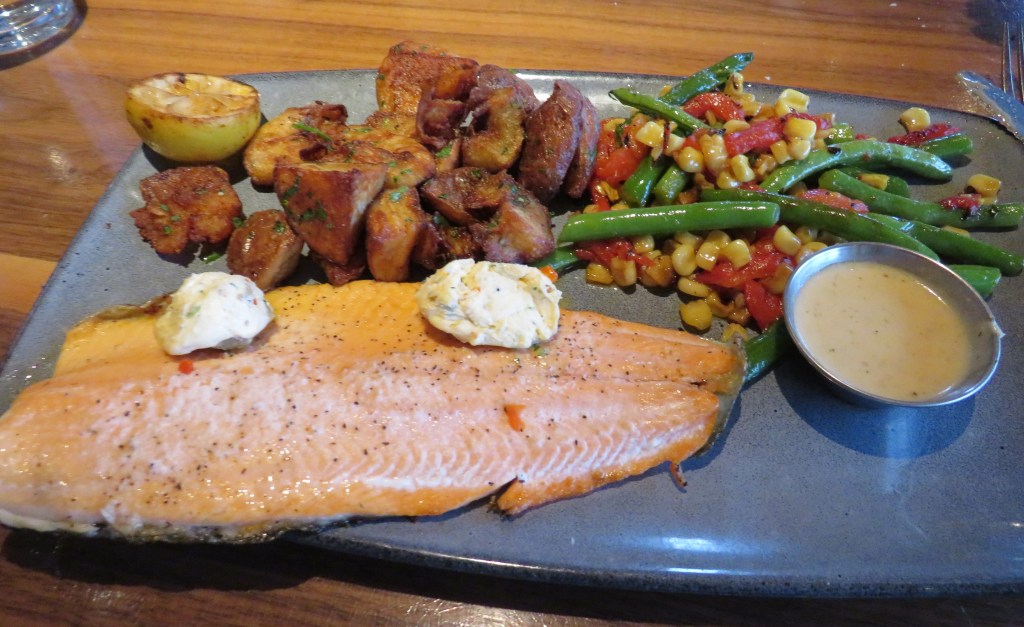
I ordered the trout.
As expected, everything was delicious, but as usual, there was WAY TOO MUCH FOOD. Thank goodness for doggie boxes. We took half of our dinner home to enjoy again on another day. 🙂 Lazy Dog does a good job on everything. We have never been disappointed. We don’t go out to eat too often, so when we do, we like to really enjoy the experience.
Have a great day and make everyday great. Life is what you make it, so make it fantastic. May 2026 be filled with happiness, good health and prosperity for all. ‘Til next time.
Because it was President’s Day and a holiday, Larry had the day off from work, though he did go in for a half day. When he got home, we headed to one of our favorite places, the Wild Animal Sanctuary. It was a beautiful day. Most of the animals were out enjoying the day too. The bears were the only ones not out. They are still hibernating, though a couple did come out of hibernation for a bit. But all the big cats were out and were thoroughly enjoying themselves.
It was fun to see the leopards and the jaguars out and about for a change. Usually they are kind of shy and don’t like all the attention, but that wasn’t the case this time.
First, the leopards. The black leopard didn’t come out too much, but this leopard was definitely liking the camera and the attention.
This is the best I could get of both leopards together.
Once again, sorry for the bad picture. Sometimes you just get what you can get.
The WAS got in a new black leopard who was still isolated from the others. He was just enjoying life in his new forever home. He couldn’t be bothered with all the paparazzi.
We also saw some jaguars, both black and spotted.
After seeing all kinds of spots and stripes, it was time to leave for the day and get something to eat.
Have a great day and make everyday great. Life is what you make it, so make it fantastic. May 2026 be filled with happiness, good health and prosperity for all. ‘Til next time.
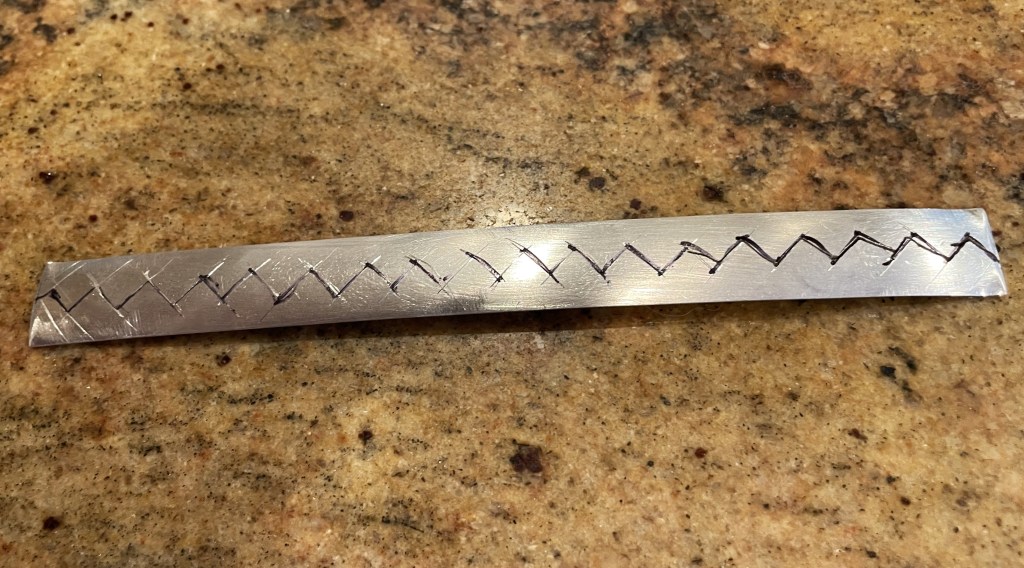
My “silversmithing” education continues. My new project is a silver bracelet. I just started it, and have a lot more to do on it. Until you actually start making jewelry, you don’t realize just how much work goes into each piece. I’ve always loved jewelry and appreciated it, but I have much greater appreciation for it now that I am actually learning how to make it! There is A LOT of work that goes into each piece. Each piece is definitely a labor of love.
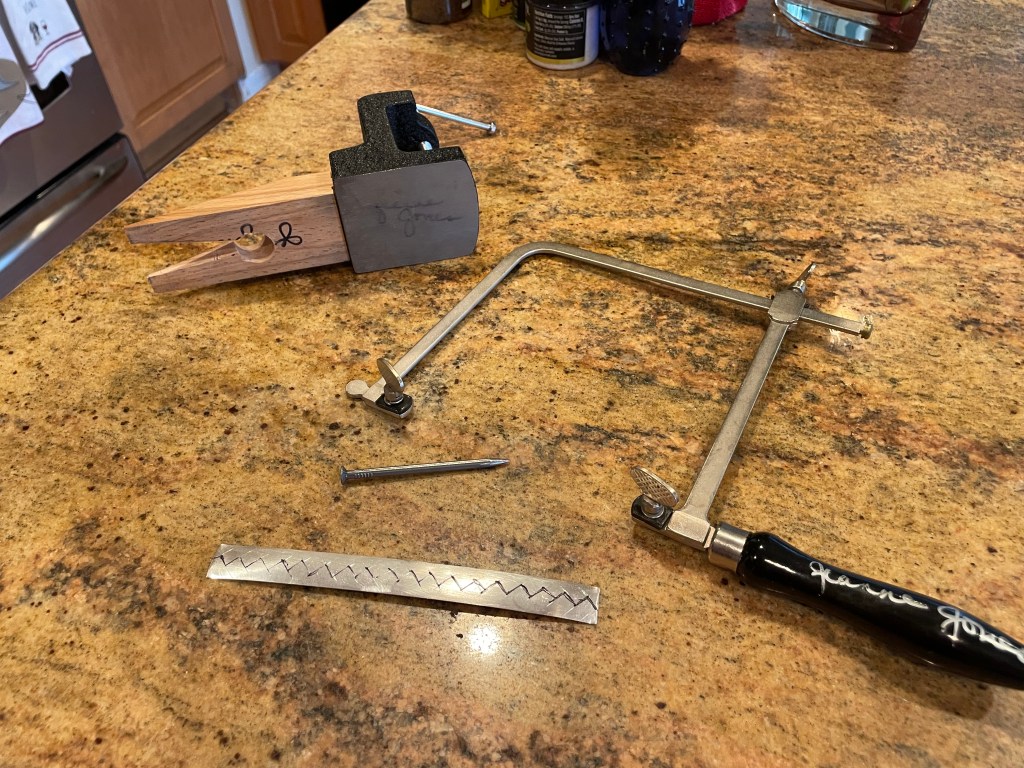
I had to scribe the markings onto the silver piece, then go over them with a marker, but before I was able to cut, I had messed up on the scribing effort and had to polish them all out and start again. Now I have to carefully cut each line with a VERY fine and delicate saw blade. I only got about 1/4 of the way through my cuts, and broke 2 saw blades in the process. This is a very tedious process, but necessary. Once it is finished, it will be beautiful, but it is definitely much harder than it looks.
I am still working on my pendant too. I am doing extra workshop days to get everything done. I have polished, polished, polished, and polished it again and again, both with various grades of sandpaper and the polishing machine. Every time I thought I was done, the instructors would have me do it again, and again, until it was just right. Now, is is very bright and shiny, and almost done. When doing the extra workshop days, the instructors will not let us get ahead of the rest of the class, so I did all they would let me do until the rest of the class catches up. All that is left to do now is to set my stone and get a nice rope chain, and then my pendant will be done. Hopefully that will be finished tomorrow night. When I show people what I’ve done, they all ask “you made that from scratch?” Yes, I did! Every bit of it. 🙂 🙂 🙂
I knew going into this that it would be challenging, but I guess I just didn’t realize HOW challenging it was going to be. But, once finished, I think my pieces will be beautiful. 🙂
We all need to challenge ourselves in order to grow. Life is full of challenges. If we don’t grow we will stagnate. NOT an option for me!!!!! I will always continue to challenge myself and hopefully will be able to rise to every challenge that comes my way and come out on top. 🙂
Have a great day and take on all those challenges with gusto. 🙂
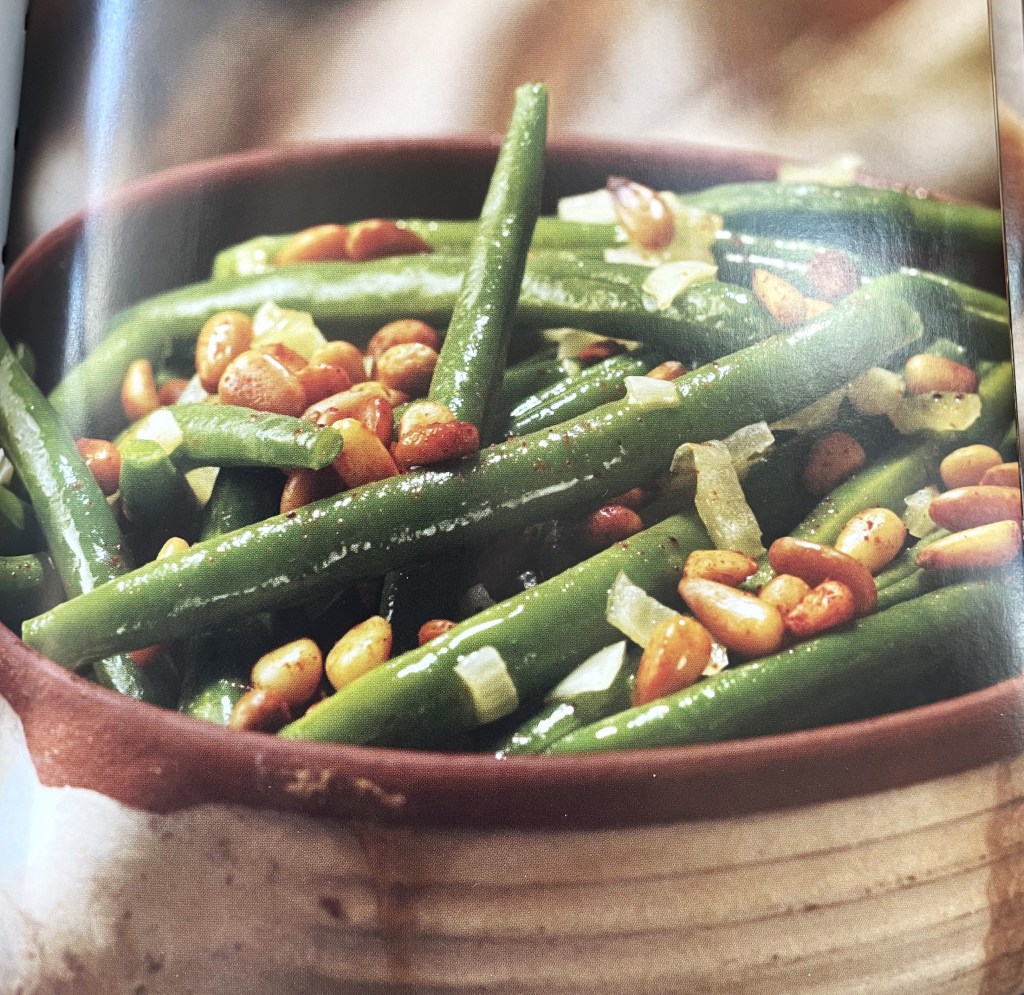
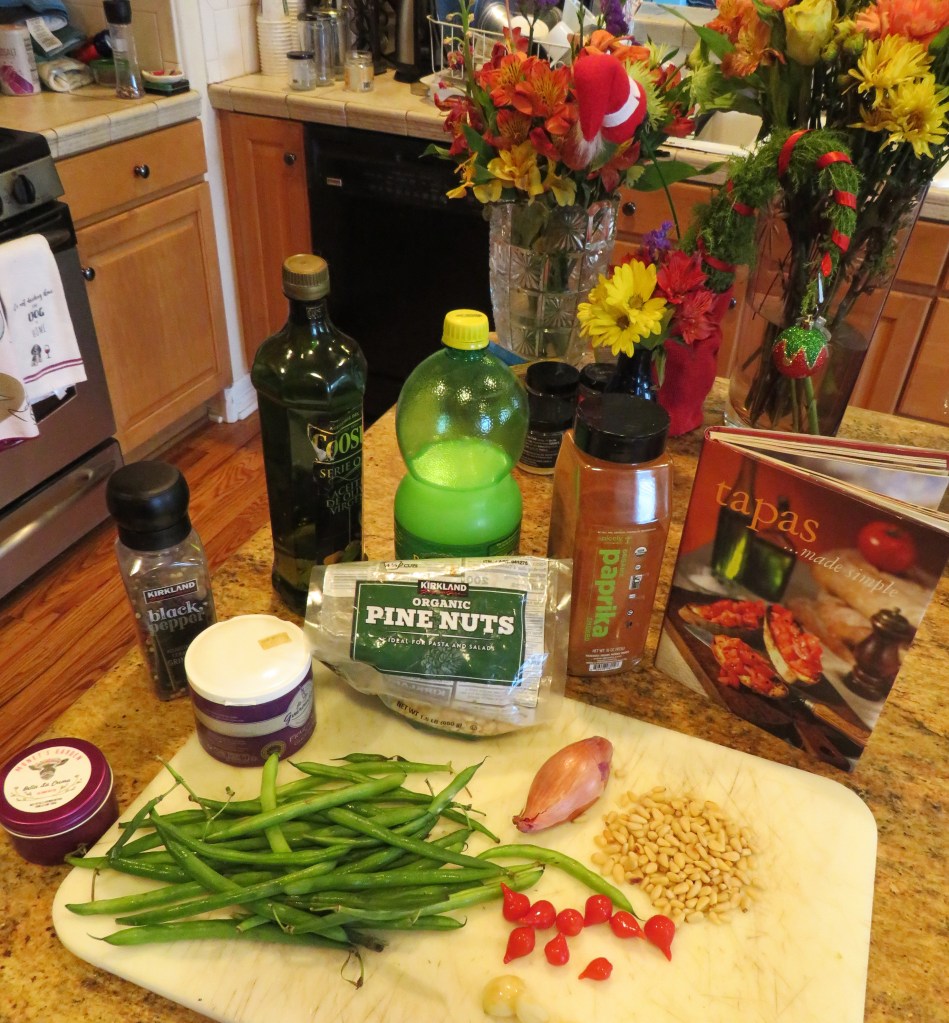
I know you probably think we eat only meat. Definitely NOT true. We eat balanced meals all the time. We eat a ton of vegetables, with almost every meal too. This time I am giving you another recipe from my new tapas cook book. It’s for green beans with pine nuts and shallots. Once again, unknowingly, I’ve been cooking a Spanish recipe for years without recognizing them as being Spanish. 🙂
2 TBSP olive oil
1/2 cup toasted pine nuts
1 tsp paprika
1 lb green beans, ends trimmed
1 onion or shallot, sliced very thin or chopped
1 garlic clove, minced
1-2 tsp lemon juice
salt & pepper to taste
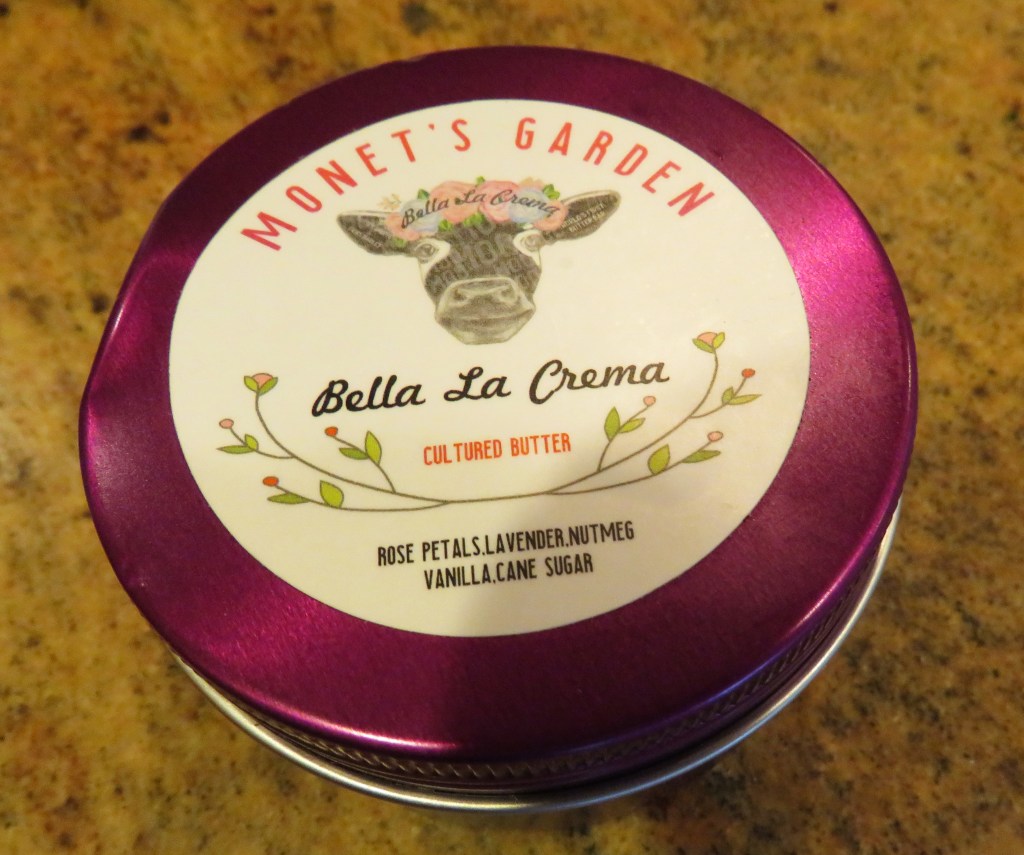
1 TBSP butter for finish – I added my Bella La Crema Monet’s Garden Butter
1-2 TBSP Peruvian peppers, optional
Toast the pine nuts until golden brown. Once they are browned, remove from the heat and set aside.
Boil the green beans for about 5 minutes or until they are al dente. Drain.
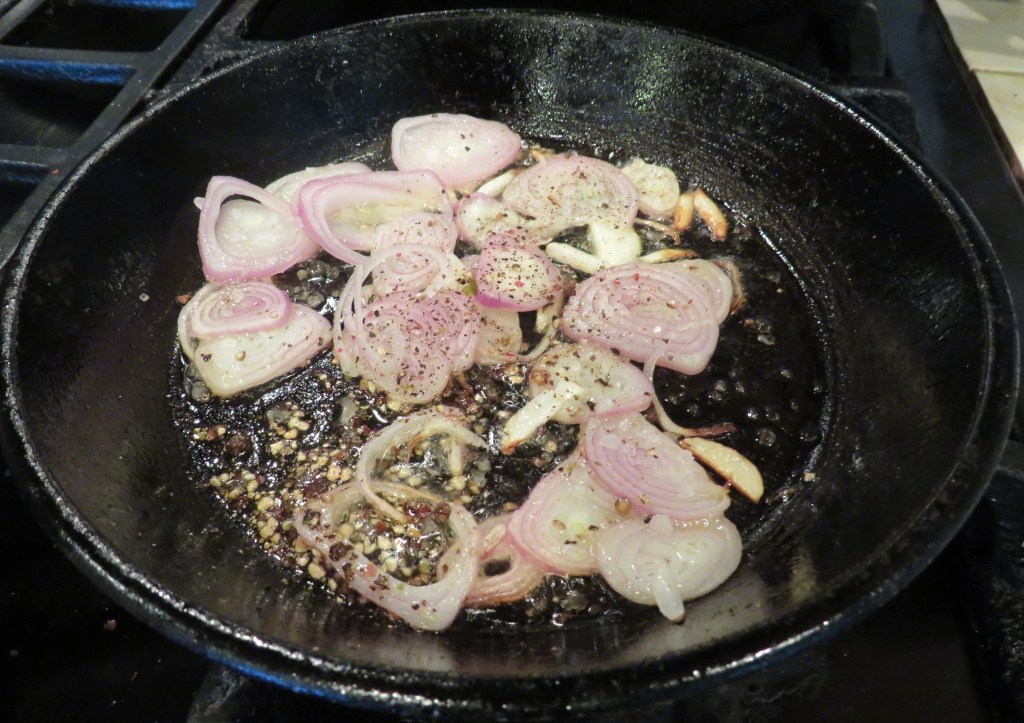
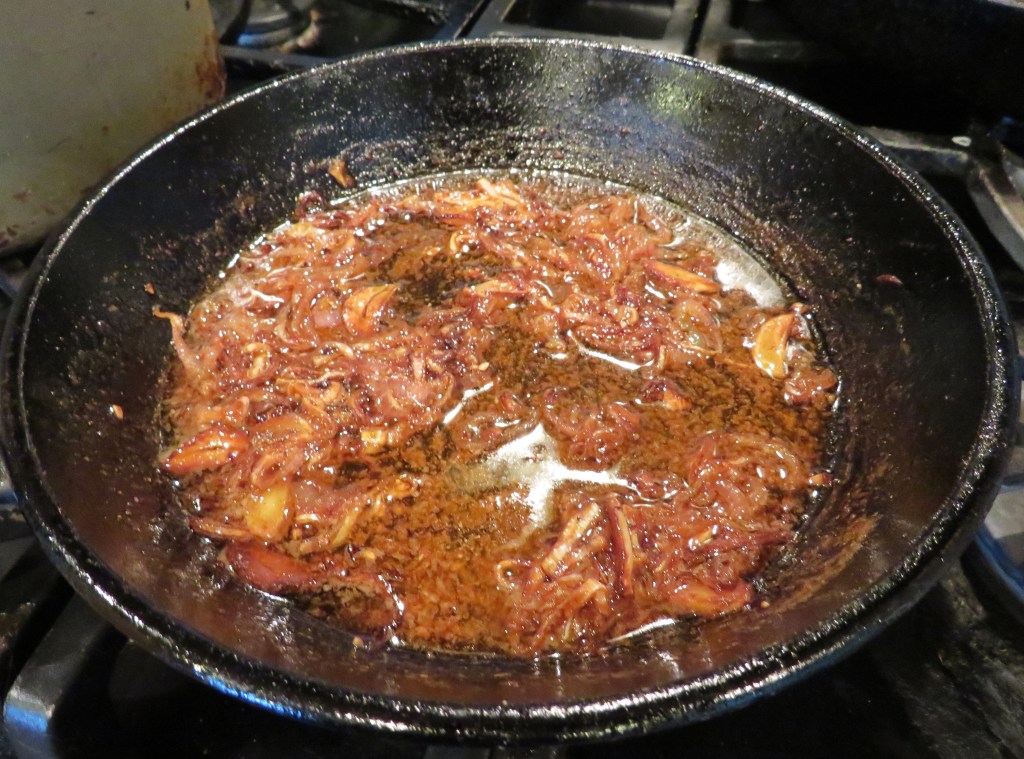
Heat the olive oil and cook the onion for about 5-10 minutes or until softened and start to caramelize. Add the garlic and continue to cook for an additional 30 seconds or so.
I added my Bella La Crema Monet’s Garden Butter before tossing in the green beans. Add the lemon juice. Season with salt, pepper and paprika, then toss in the green beans.
Top with the toasted pine nuts and the Peruvian peppers if using right before serving. It’s deliciously simple yet looks very elegant and festive.
Have a great day and make everyday great. Life is what you make it, so make it fantastic. May 2026 be filled with happiness, good health and prosperity for all. ‘Til next time.









































 A Jeanne in the Kitchen