Cilantro Lime Tartar Sauce

As you all know by now, I am home from our fabulous trip to the Eastern provinces of Canada. We had a great time, and saw and did so much. Now, they are just very happy memories.

I hit the ground running as soon as we got back. I have been busy with all kinds of things, including cooking up a storm, as usual. I have lots of good things to share. All in goo time. 🙂

Even though we ate a lot of fish while in Canada and Maine, we are still in our fishy kind of food mood, and we had fish ‘n chips once again last night. I served it with a new twist on tartar sauce, that we really liked a lot. It was so easy to make and very good. I was inspired by a recipe I saw from Marissa Bolden, from Two & A Knife at https://twoandaknife.com/2025/10/28/cilantro-tartar-sauce/. Thank you Marissa for this delicious idea. Of course I changed it and made it my own, but as you know, that’s just what I do. 🙂

Tartar sauce originated in 19th-century France as sauce tartare, a name believed to come from the Tatars, a nomadic Central Asian group known for eating raw meat. Initially served with a raw meat dish called steak tartare, the recipe evolved from earlier pungent, cold dressings into a mayonnaise-based sauce with ingredients like pickles, capers, and herbs.  The accompanying “tartar” sauce in these early sources was an oil and acid emulsion or dressing sharpened with mustard and chopped aromatics, such as shallot or onion, anchovy, pickles and parsley, rather than a true mayonnaise. The modern, jarred version became popular after Hellmann’s introduced it in the 1920s. The sauce was originally intended for steak tartare, but its use expanded to other dishes. By the early 20th century, it was increasingly paired with fried fish. Tartar sauce is served with fish because its creamy, tangy, and acidic flavor profile provides a pleasant contrast to the richness of fried or grilled fish. The acidity helps cut through the natural oils and richness, while the coolness can offset the heat of fried dishes. The creamy texture also adds a contrasting mouthfeel to the flaky fish. A cousin to the French condiment rĂ©moulade, tartar sauce is a popular accompaniment to fish of any kind, but most commonly, fried fish.

Marissa’s recipe called for pickle relish. I am not a big fan of pickles, tough Larry loves pickles, so I left those out. Instead, I added some Peruvian peppers and Sambal sauce in lieu of hot sauce. DELICIOUS!

Cilantro Lime Tartar Sauce

1/2-3/4 cup mayonnaise

dash of salt

1-2 tsp lime juice

1-2 tsp Sambal sauce

dash of red pepper flakes

1-2 TBSP fresh cilantro, chopped fine

Mix everything together well and refrigerate until ready to use. Quick and easy-peasy. Serve it with fish and anything else you would use tartar sauce or a remoulade for.

Life is hard enough. Sometimes we all need a break, especially in the kitchen. Simple is often best. Keep it simple (K.I.S.S.) and make it easy. Have a great day and make everyday great. Stay safe and stay well. ‘Til next time.

Great Eats In the Great North – Part 12 – Maine Lobster

We had to have lobster while in Maine. It just wouldn’t be a trip to Maine without lobster, right?! We asked around and we were told The Lobster Shack was the place to go. It’s a local legend in Maine.

Maine lobster prices are lower when there is an abundant supply, usually between June and December. During these months, lobsters migrate closer to the shore, making it easier for fishermen to catch more, leading to lower prices. On Saturdays, traps can be hauled after 4 pm, but on Sundays, they cannot be hauled at any time. These regulations ensure that the lobster population remains sustainable, preventing overfishing and providing ample time for lobsters to grow and replenish their stocks.

The Lobster Shack is seasonal, and is open from April 1 -October 25. So we got there in the nick and time. The Lobster Shack is an award-winning restaurant that has been a local landmark since the 1920s. There are good places to eat in Southern Maine. Other restaurants have nice views…But nothing compares with The Lobster Shack at Two Lights.

This was definitely a good choice. We got to pick our own lobster.

We ordered other seafood dishes as well, like clam chowder and fish ‘n chips. We shared everything.

It was a bit breezy and chilly, but we chose to dine outside, right at the beach. So glad we did too. Look at our view.

Seize the day and seize all the moments of the day. Make everyday special. Stay safe and stay well. ‘Til next time.

Touring The Great North – Part 17 – Maine, Tip To Tip

We had one last big driving day for our Canadian trip. We drove through Maine, tip to tip. Maine is beautiful, particularly at this time of year. We literally drove all the way down through Maine, and we did it all in one day. We were on a time crunch now. We had to be back in Boston for our flight the next day, so we didn’t have much time to stop or dilly dally around. I would have preferred to stop and take in the sights more, rather than just driving straight through, but it is what it is. We did take a few short stops to stretch our legs a bit, but no real long stops.

We tried to go to the Chocolate Museum, but it was closed. This is right at the Maine/Canadian border.

Across the river was Canada. I took these shots of the pigeons on the Maine side.

The fall colors were still spectacular.

American flags lined both sides of this stretch of the road.

Again, no real moose, just the man made ones.

We did see a momma dear and her fawn though on the side of the road. It was already getting dark, and momma was not staying still too long. She wanted to get her fawn to safety as quickly as she could, so this picture was the best shot I could get before momma and baby were on the move once again.

We also saw some wild turkeys. They too had to run, and were on the move. This is turkey time of year after all. If they stay still for too long, they will turn out to be someone’s Thanksgiving dinner.

Our Northern adventure was winding down fast. It was quickly coming to an end. But we had a lot of fun and many great adventures along the way. We will always have many happy memories from this fantastic fall trip.

Have a great day and make everyday great. Live those adventures and make those memories. They will stay with you forever. Stay safe and stay well. ‘Til next time.
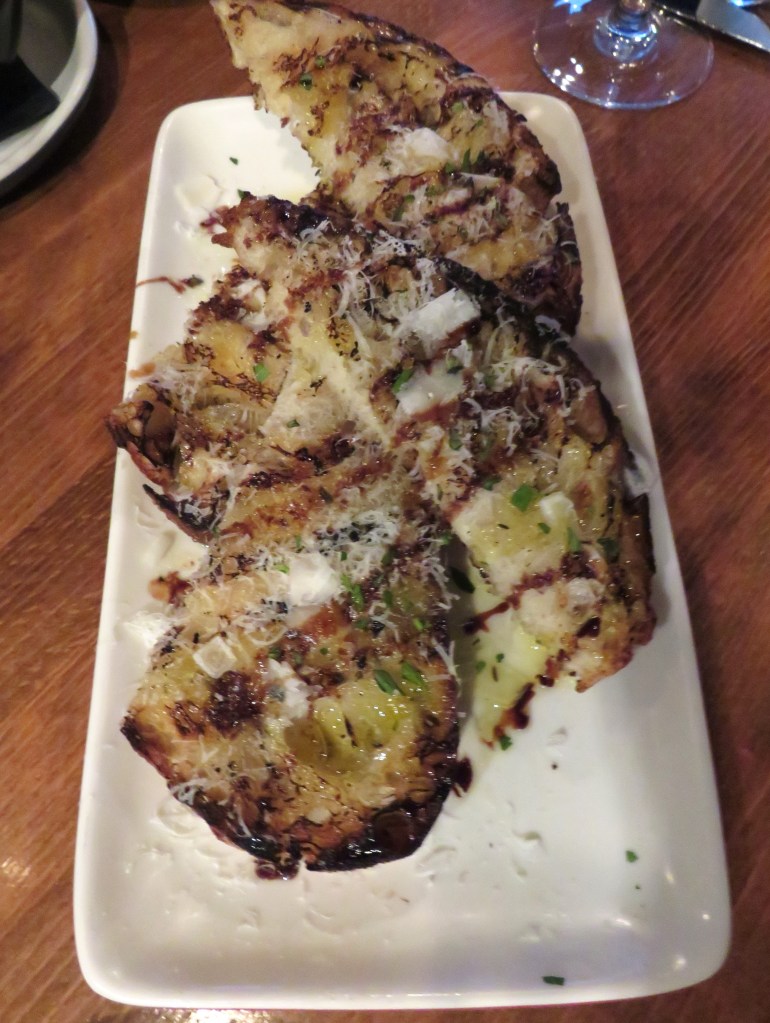
Touring The Great North – Part 16 -Sailing The Tall Ship

It is out last day in Canada, and our last day with Maureen and Milos before we head in different directions to go back home. We made our last day a very good day indeed by sailing on the tall ship around the Halifax Harbor. It was a beautiful sunny day; just perfect for a sailing trip. We got to see all the mansions on the Harbor too. It was fun to see how the other half lives. 🙂

As we were sailing around the Harbor, we were entertained by a solo guitar player and singer. He was very good and entertaining. By the end of the cruise he had a bunch of us up dancing too. It’s a good thing the water was smooth. 🙂

Of course I was up dancing too.

I can’t even imagine how much $$$$$$ it would take to own and run these mansions. Maybe in another life, but definitely NOT this one.

I might be able to afford this tree house and boat. This is definitely more my style anyway.

I wouldn’t mind this life either though.

When it was time to hoist the sails, Larry and I jumped right up to volunteer.

It was a beautiful day and a great way to end our fantastic vacation. It was sad to say goodbye to Maureen and Milos, but alas, we all have homes and lives to go back to. We know we have lots more time for more fun adventures in the future. So it wasn’t really goodbye, but more like until we meet again. After leaving the tall ship Larry and I headed down to Maine, for one more day of adventure before heading back to Boston to catch our flight home. Maureen and Milos stayed in Halifax a little longer and met up with some of their friends who live in the Halifax area.

Good bye and au revoir Canada. Thank you for allowing us to get to know you better. Thank you for all the wonderful adventures. 🙂

Touring The Great North – Part 15 – Peggy’s Cove

Peggy’s Cove was our next stop in Nova Scotia. It is only 27 miles or 43 km from downtown Halifax. The first recorded name of the cove was Eastern Point Harbour or Peggs Harbour in 1766. The village is likely named after Saint Margaret’s Bay (Peggy being a nickname for Margaret), which Samuel de Champlain named after his mother Marguerite Le Roy.[1] There has been much folklore created to explain the name. The village was founded in 1811 when the province of Nova Scotia issued a land grant of more than 800 acres (320 ha) to six families of German descent. The settlers relied on fishing as the mainstay of their economy but also farmed where the soil was fertile. They used surrounding lands to pasture cattle. In the early 1900s the population peaked at about 300. The community supported a schoolhouse, church, general store, lobster cannery and boats of all sizes that were nestled in the cove.

Peggy’s Cove is known for it’s famous lighthouse and its rugged, rocky landscape. It is also known as Mother Nature’s playground, with glaciers having shaped the land thousands of years ago, leaving behind large boulders that are a key part of its unique character. It is yet another seafaring town, where most of the industry revolves around fishing and lobsters. The sailors who sail these rough, cold waters are indeed very brave souls.

We found Peggy’s Cove to be very cute, quaint and charming. The seascapes were amazing.

The seascapes were definitely a site to behold, but the rest of the town was very charming too. The whole town looks like scenes found on postcards.

Doesn’t this just look idyllic?

After walking through town, we made it to the rocks and to the famous lighthouse at the water’s edge.

It was a beautiful day, albeit a bit breezy, so there were a lot of people walking around, being tourists just like we were.

We saw a man blowing his long Swiss horn. He even had some miniature toy farm animals around it too, like he was playing to his animals. He was having fun and enjoying himself. We did too.

As we were leaving Peggy’s Cove, we saw the dedication and tribute to all the sailors and fishermen lost at sea.

There was a little artists’ shop at the edge of town called The Hags On The Hill that Maureen and I just couldn’t resist. They had some very cute, creative pieces in there too, all from local artists. We looked and liked a lot of the things they were selling, but we were good. All we did was look.

The rain was coming and we left just in the nick of time. But as we were leaving, we saw a beautiful rainbow. It was the perfect way to say goodbye to Peggy’s Cove.

Touring The Great North – Part 14 – The Citadel In Halifax

Still in Halifax, Nova Scotia. While passing the citadel on our duck tour, we all decided it was place we wanted to visit. Once again, Milos’ military card helped us out and got us all in for free. And again, thank you Milos for both your service to your country and for the benefits extended to all of us.

The citadel is historic. It is a museum, but it is also still active today for certain military events and military personnel.

The clock tower sits at the bottom of the hill to the entrance. The citadel itself sits atop a high hill so it can overlook the the surrounding areas from all angles.

During World War I, The Halifax Citadel served as soldier barracks and a command center for Halifax Harbor defenses. It remained a temporary barracks for troops in World War II, and was their last glimpse of Canada before heading overseas. Today, the Halifax Citadel is among the nation’s most significant and beloved historic sites. The Citadel was occupied by British forces until 1906, then by the Canadian military as a detention camp during World War I, and as Halifax headquarters for anti-aircraft defenses during World War II. While never attacked, the Citadel was long the keystone to defense of the strategically important Halifax Harbor and its Royal Navy Dockyard.

Both Maureen and I have Scottish heritage, so we took pictures with the Highlanders. Maureen’s grandfather was in this unit during WWII.

We learned a lot by touring the citadel. Before going into the museum, we watched the ceremony of the changing of the guards and listened to the bagpipe and drum session.

After watching the outside events, we toured the grounds. We didn’t stay outside too long because it was starting to rain pretty heavily, so we went inside quickly. It didn’t rain for too long, but long enough to get us wet.

This flag pole was designed as a high mast for the British soldiers to recognize the fort from the sea.

Then we toured through the museum to learn even more. The presentation was very well done, and gave a thorough look into Canada’s long history of preserving peace and freedom through the world’s battles. Again, I took so many pictures, and pictures don’t really do the museum justice. But it is a must see whenever you are in the area.

This is a replica a steel door after being blasted by a bomb.

This is a model of the Canadian Veterans Monument.

Once again, we got a picture of Milos standing by a representation of someone from his time in Afghanistan.

Thank you Milos, and to everyone who served and who sacrificed to defend our freedoms. You will always be remembered and honored.

Next stop, Peggy’s Cove. I am nearing the end of our our fabulous Canadian adventures, but I do still have a little bit more to share. I hope you have been enjoying my Canadian adventure series as much as I have enjoyed sharing it with you.

Have a great day and make everyday great. Stay safe and stay well. ‘Til next time.

Touring The Great North – Part 13- Heading To Halifax – The Wharf

Halifax is the capital and most populous municipality of the Canadian province of Nova Scotia, and the most populous municipality in Atlantic Canada. Halifax is a navy creation. It owes its existence largely to its location on one of the largest and deepest ice-free natural harbors in the world, which, over time, made Halifax one of the most important Canadian commercial ports on the Atlantic seaboard. Halifax, like a lot of the Eastern part of Canada, has a lot of Scottish influences, with a lot of the population being of Scottish and Celtic descent. I too have a lot of Scottish and Welsh in me. My great grandmother on my dad’s side immigrated to Australia from Scotland, and my great grandfather from Wales.

Halifax was the next stop on our Canadian adventure. As our norm, we walked and toured around, taking in as many sights as we could. One of the things we did was take a duck tour on of the old WWII amphibians. It took us on a tour around Halifax both in and out of the water. It was called the Harbor Hopper.

While Larry and Maureen were in line to get the tickets, Milos and I were off exploring with our cameras. We got there just in time to catch the next tour, so we didn’t have a lot of time to explore then, but we did later, after the tour. We got a screaming deal on the tour package. We got both the Harbor Hopper tour AND a cruise on the tall ship, but we had to schedule the tall ship for the next day because they didn’t have any openings on the same day. Bummer. We just had to spend another day in beautiful Halifax. 🙂 🙂 🙂

I was entertained by this playful European Starling.

The citadel was one the spots the tour pointed out. We went back later to explore it on our own. This is the clocktower on the citadel grounds.

These gates lead into the Royal Park. The smaller entrance, with the open gate, is for everyone else. The closed gates are ONLY opened when Royalty comes to visit.

It was hard to take a lot of pictures while on land, but much easier while on the water. We were passing both a cruise ship that was docked and another Harbor Hopper amphibian.

Halifax, like so much of Eastern Canada, is a blend of both old and new, modern and traditional.

One of the docked naval ships.

None of us had even been on a duck boat tour before, but it was definitely well worth it.

Back on dry land again, touring around the wharf.

Larry playing around like the big kid that he is. 🙂

Halifax is very colorful and creative.

As were were strolling along, we were entertained by this fiddle player. He was very good and was tapping his toes, having a great time.

Sitting across from the fiddle player was a lady weaving her yarns.

The street art and murals on the walls. This mural is a brief history of Halifax.

These are just creatively fun.

One of our moose sightings.

You can’t see us too well, but we are all framed within the picture, with Larry lying inside the frame.

It was another beautiful, sunny and fun day. We knew we would be coming back again the next day, so from here we headed up to Peggy’s Cove.

Stay tuned. I’ve got more coming your way. Have a great day and make everyday great. ‘Til next time.

Great Eats In the Great North – Part 11 – Dinner In Lunenberg

It was time for dinner. We checked out a few different menus, and decided to dine right at the end of the wharf, adjacent to the Maritime and Fishing Museum. Silly me, I was busy taking pictures and talking to people, and didn’t catch the name of the restaurant. I think it was called Black Harbor, but I am honestly not sure.

Maureen started the table off with a cheese and tomato flat bread.

Milos enjoyed some clam chowder to start.

Larry and I enjoyed a bowl of mussels.

After appetizers, we ordered our entrees. needless to say, we had a lot of food, but it was all delicious. I ordered a spicy seafood bowl.

Larry ordered fish tacos.

Maureen went with soup and salad.

Have a great day, and explore whatever area you find yourself in to the fullest. There is always so much to see and do, no matter, where you are. Have a great day and make everyday great. Stay safe and stay well. ‘Til next time.

Touring The Great North – Part 12 – Headed To Lunenberg

Still continuing with our Canadian travels, we went from PEI to Lunenberg, still traveling along the Trans-Canada Highway. It was about a 4 1/2 hour drive and about 400 km or 250 miles away, but again, definitely well worth it. Lunenberg is part of the province of Nova Scotia.

We still had magnificent scenery all along the way. I could see all these beautiful fall colors everyday and would never tire of them.

Of course we had to make a necessity stop. This sign shows how we were feeling at the time too. Maureen and I both got a kick out of it. 🙂

This sculpture told us we were near the sea.

At last, we are in Nova Scotia.

Before heading into Lunenberg, we stopped at our hotel in Halifax to drop off our luggage. Can you believe this was our view from our hotel????? WOW!!!

This is the owner’s backyard, that is adjacent to the hotel. She allows the guests to enjoy her yard as well.

Once we pulled into Lunenberg, we were awed by the charm of the town. Lunenburg is the best surviving example of a planned British colonial settlement in North America. Established in 1753, it has retained its original layout and overall appearance, based on a rectangular grid pattern drawn up in the home country. The inhabitants have managed to safeguard the city’s identity throughout the centuries by preserving the wooden architecture of the houses, some of which date from the 18th century. Lunenberg is an 18th century fishing village off the Canadian Atlantic coastline. Founded in 1753, the town was one of the first British attempts to settle Protestants in Nova Scotia. Historically, Lunenburg’s economy relied on the offshore fishery, and today it hosts Canada’s largest secondary fish-processing plant. Old Town Lunenburg is one of only two urban communities in North America designated as a UNESCO World Heritage site.

Lunenberg is a cute, quaint fishing village, with a strong, proud history of their fishing industry. We strolled around town first, taking in the sights. It is heavily influenced by life on the sea.

I love these street signs. Yes, I live on Mako Way.

Or Snapper Circle.

I could use one of these crab door knockers.

Just like so much of the east coast, Lunenberg was definitely in the fall spirit and ready for Halloween.

One of the main attractions of Lunenberg is the Blue Nose II, a replica of an old 18th century tall ship. Bluenose II is a replica of the fishing and racing schooner Bluenose, commissioned by Sidney Culverwell Oland and built in 1963 as a promotional yacht for Oland Brewery. Sidney Oland donated the schooner to Nova Scotia in 1971 and it has since operated as a sailing ambassador and promotional device for Nova Scotia tourism. She just happened to be in town, for her last day of the season on the day we were there too. Her home port is Lunenberg, and she will be docked here until she sets sail once again next season. We were lucky to catch her out on the waters, with her sails up before she docked for the season.

Here she is pulling into her final resting spot after ending her final voyage of the season.

We saw a replica of another tall ship in port too, as well as many other boats. Lunenberg is a coastal town, after all. 🙂

Larry made a new friend.

Because it was the end of the season for the Blue Nose II, the local museum had free admission. I wish we could have spent more time in the museum. It was dedicated to life on the sea and to all those who lost their lives at sea. It was a very nice museum, and very well done. I got to meet and talk to the Master Model maker who crafted most of the boats in the museum too. His name was Ben. Ben was a sweetheart. He was proudly showing me how he makes all his models.

Some of Ben’s handiwork.

Other exhibits at the museum.

These waters are filled with all kinds of sharks, and marine life.

The largest Great White found in the area. They were actually holding an eco class at one of the nearby islands, talking about the sharks and how vital they are to a healthy ecosystem. Had I known, I would have loved to attend. As you all know, I LOVE my sharks.

And a dedication to all the lobster fishermen. Lobster and fishing are still very prominent industries in the area.

The largest lobster ever caught in the area. He was preserved because he would NOT be good eating at all.

Sadly, because these are rough, rough waters, there have been many tragedies and many losses at sea.

As we were leaving Lunenberg, we saw a few old historic buildings and curiosities that needed to be highlihted as well.

Historic church building with ornate architecture, featuring pointed towers and large stained glass windows, set against a clear blue sky.

The weather vane on top of this church steeple is a fish. Considering that Lunenberg has such a history with the sea, it is only fitting.

We asked some of the locals what this castle on the hill was and they told us it was on old school.

We all fell in love with Lunenberg. As with all the other places we visited, too much to see and not nearly enough time to see it all.

And of course, we worked up an appetite as well. it was time for dinner.

Great Eats In the Great North – Part 10 – Lobster Wharf

After touring the island and taking in the sights, we also worked up an appetite. We found this cute restaurant called Lobster Wharf, right on the wharf, with a spectacular view of the coast. We were hooked. 🙂

The Lobster Wharf was participating in the scarecrow festival as well, with their theme being Gilligan’s Island. The Gilligan’s crew had a few extra crew members this time.
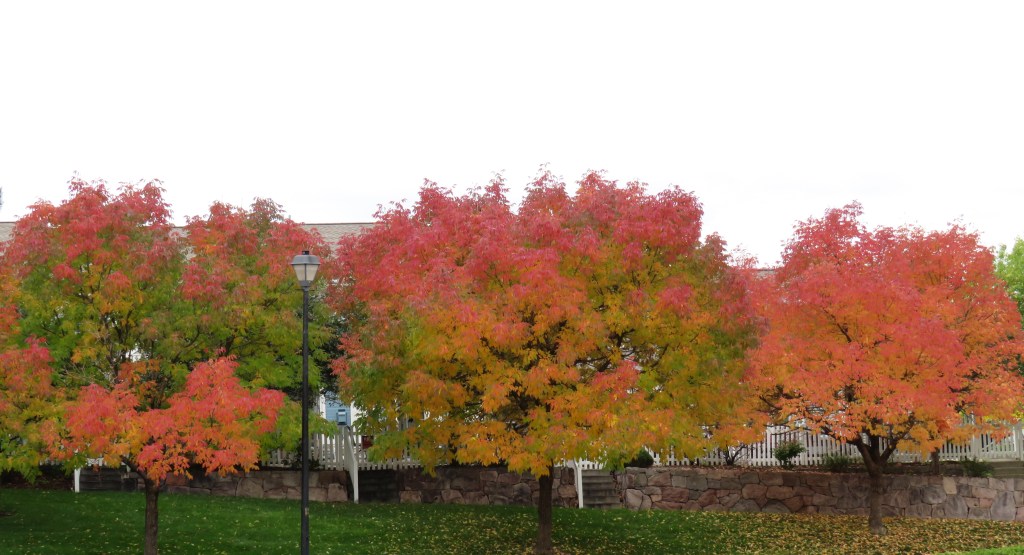
We sat outside, and this was our view. I could definitely get used to dining with views like this. 🙂

Every time I see tanker ships, no matter where they are, I always wave and say “hi” to my daddy. He was in the Merchant Marines, and was always on tanker ships, bringing oil and other goods to the States from all over the world.

We all ordered different things once again, and we all enjoyed our orders. Some of our meals came with a delicious bread roll.

The portions were HUGE and very tasty. I ordered the crab cakes meal.

Larry had a lobster roll.

Maureen ordered the roasted chicken.

And a burger for Milos. As you can see, all of our meals included some form of the famous PEI potatoes too. 🙂

What a beautiful, sunny day. Afterwards we headed back to our little cottage and more games.

Have a great day and make everyday great. Stay safe and stay well. ‘Til next time.