I have created this site to help people have fun in the kitchen. I write about enjoying life both in and out of my kitchen. Life is short! Make the most of it and enjoy!
Southern tradition says it is good luck to eat black-eyed peas on New Year’s Day. But you can eat them any way you like. The how is up to you. Eating black-eyed peas for the holiday is said to bringgood luck, health and abundance. If you don’t eat your black-eyed peas you could be tempting fate for the rest of the year. I am not going to tempt fate for the rest of the year. Are you?
I guess Dorrie wants some good luck too. I was doubling up on my chances for good luck with my black-eyed pea soup AND my pretzels. Some German Holiday Traditions
There are a few theories as to how eating black-eyed peas on New Year’s Day came about. One variation of the superstition says that black-eyed peas were all the enslaved people in the South had to celebrate with on the first day of January. Others say it started during the Civil War in Vicksburg, Virginia, when the town ran out of food while under siege and the inhabitants were lucky enough to discover cow peas (a.k.a., black-eyed peas). Another legend holds that slaves ate black-eyed peas on January 1, 1863, the day the Emancipation Proclamation went into effect because they were all they had. These are only some of the reasons why black-eyed peas have been eaten in the South on every New Year’s Day since.
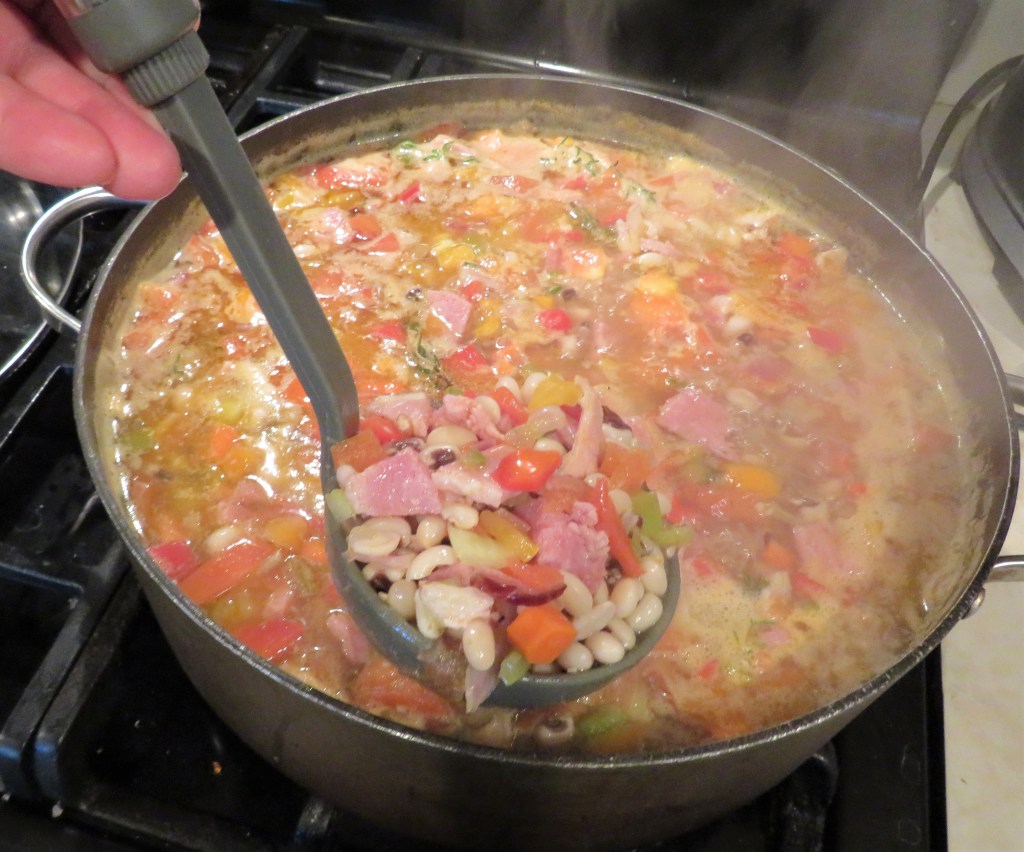
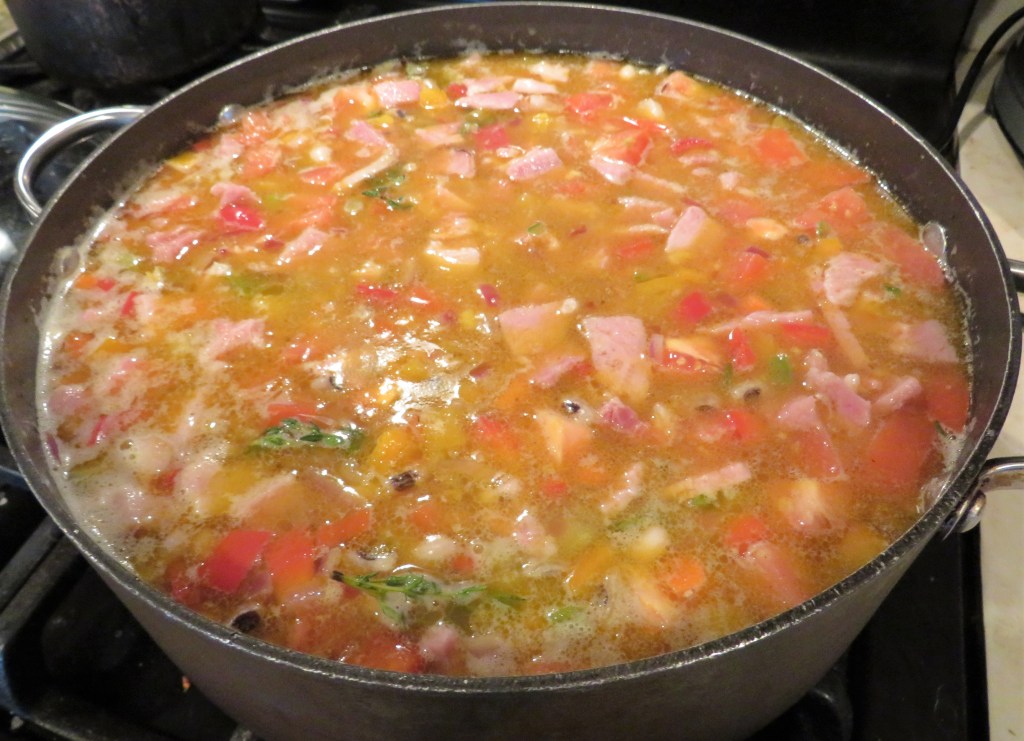
I play around with different ways of serving my black-eyed peas on New Year’s Day. This year it was soup. I loaded it with ham, peppers and tomatoes. It was full of rich flavors and goodness, and hopefully good luck.
Black-Eyed Pea Soup With Ham and Peppers
It’s a good thing we like this soup, and soups in general, because I NEVER make just a little bit of soup. I always make a big pot, no matter what kind of soup I make. :)
1 bag dried black-eyed peas, soaked, drained and rinsed, according to the package directions
1/2 each, green, yellow, orange and red bell peppers, diced medium
3-5 carrots, peeled, diced medium
1 red onion, diced medium
1-2 jalapenos, diced fine
3-4 celery stalks, diced medium
2-3 lbs diced, cooked ham
1-2 TBSP garlic
2-3 tomatoes, diced
6-8 cups chicken broth
salt & pepper to taste
3-5 sprigs of fresh thyme
olive oil and butter for cooking
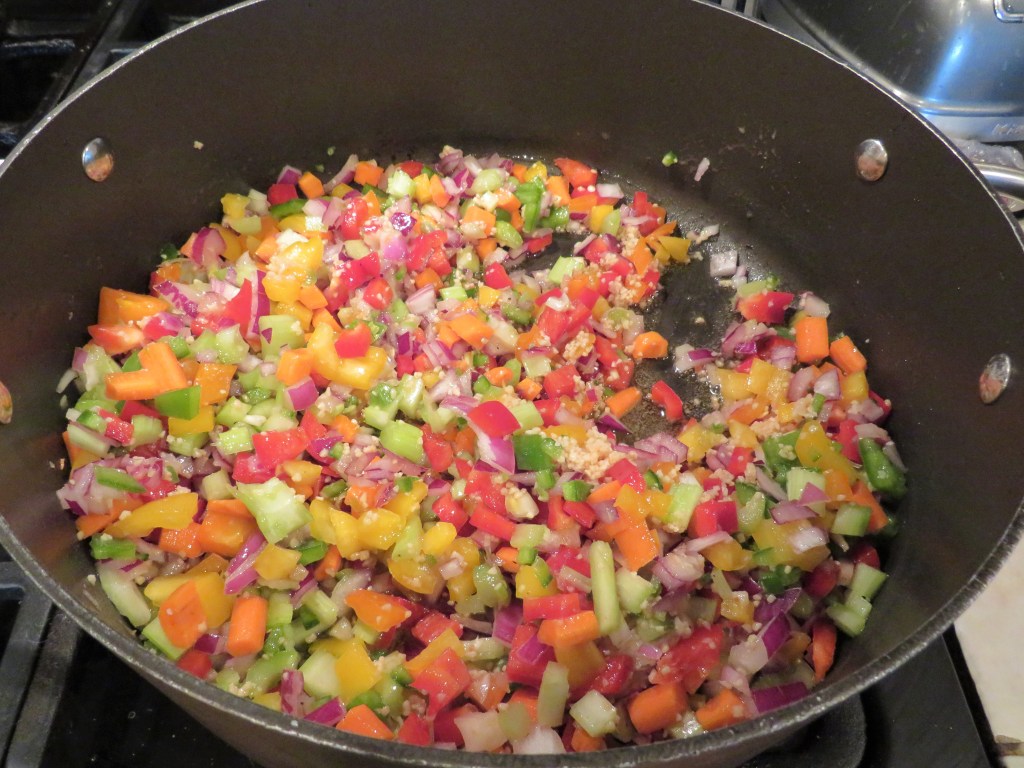
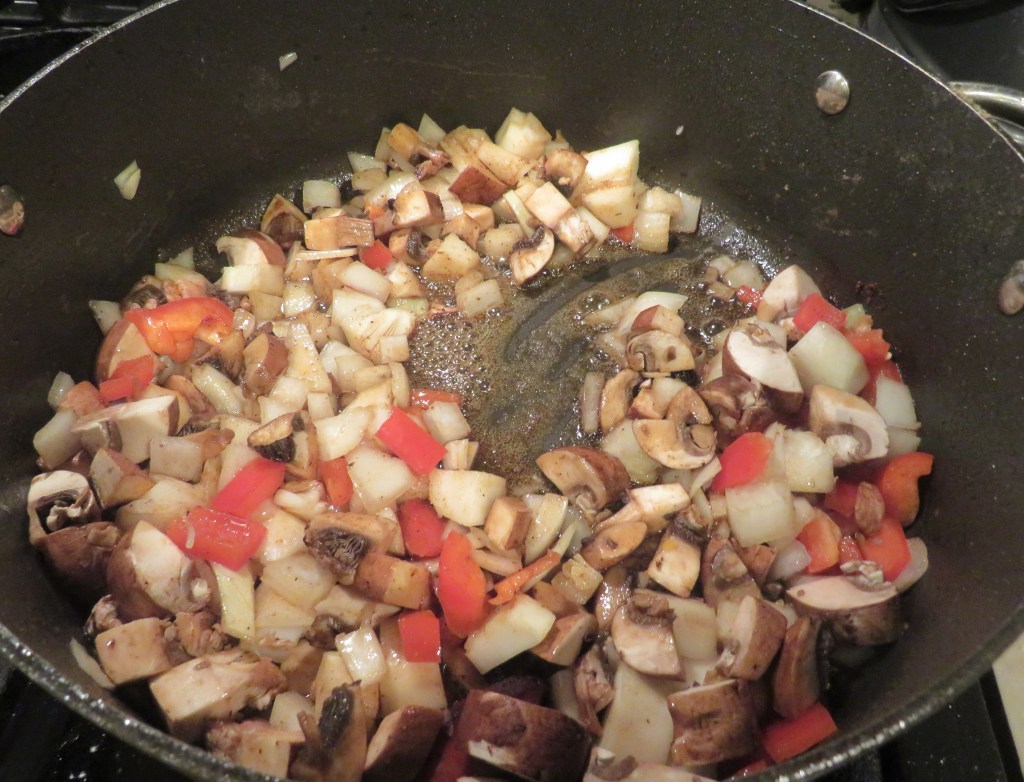
Get a large soup pot hot, add the oil and/or butter and vegetables. Saute for about 3-5 minutes, or until the vegetables and onions begin to soften.
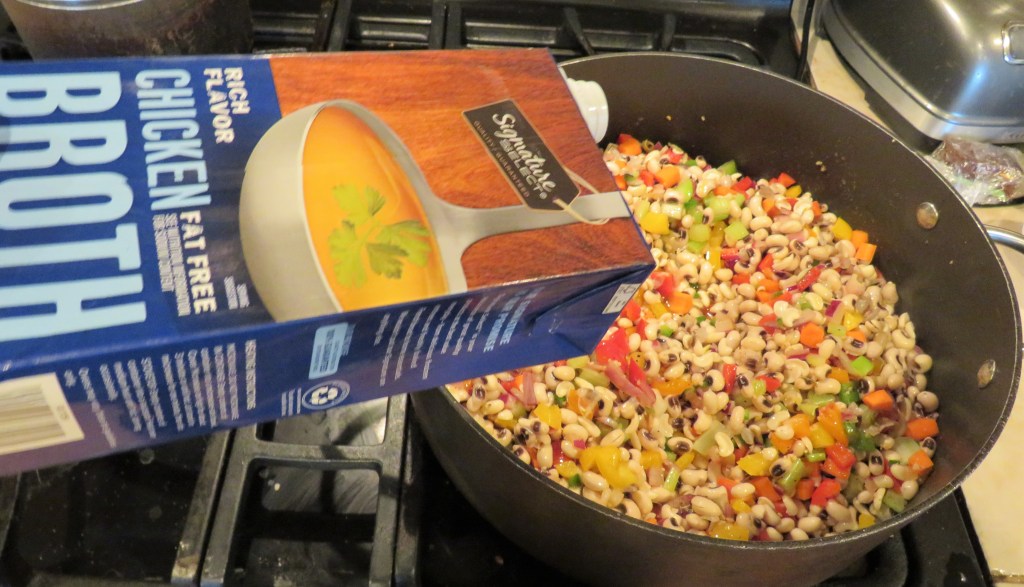
Add the black-eyed peas and broth. Bring to a full rapid boil, then reduce the heat to a simmer, and simmer for about 30 minutes, stirring occasionally.
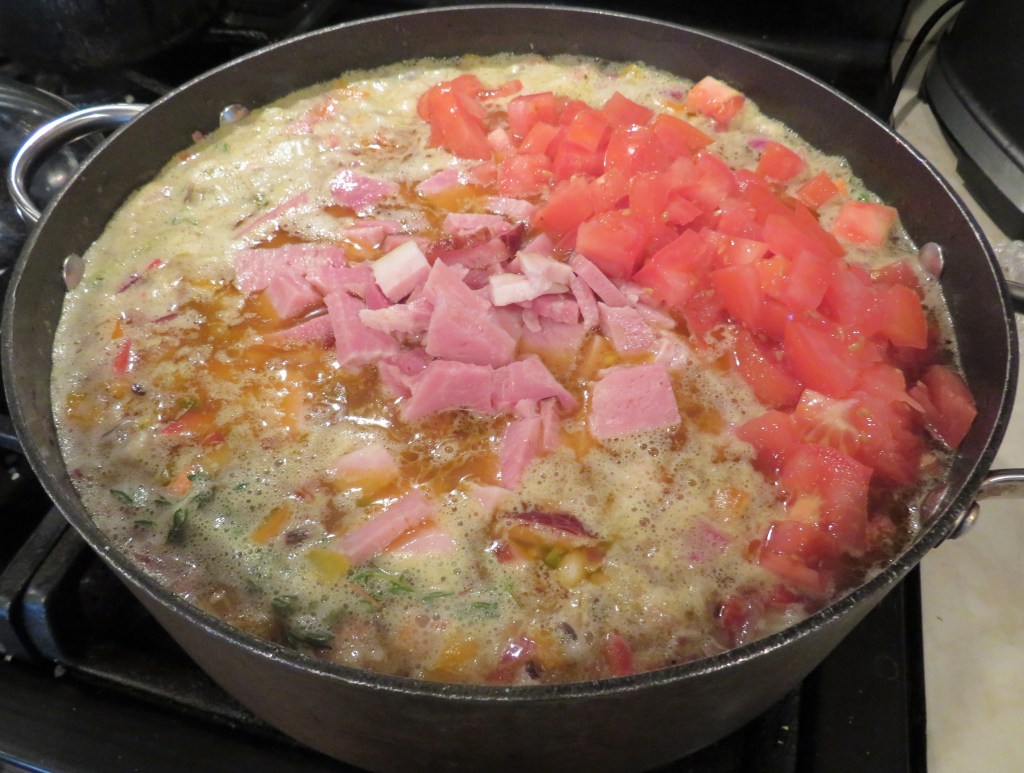
Add the ham, fresh thyme and seasonings and tomatoes, and continue to cook at a simmer for about 30-45 minutes, or until everything is hot and the beans are tender, stirring occasionally.
When everything is ready, serve it up by the bowlful and enjoy. You can enjoy this delicious, healthy soup anytime, but you are in for good luck for the year if you enjoy it on New Year’s Day, or so the legend says. :)
Happy New Year Everyone. Happy 2024. May it be safe, healthy and prosperous for all. ’Til next time.
Happy New Year Everyone. WOW! Can you believe it’s now 2024?
As I have mentioned many times in the past, Larry is almost 100% German. We don’t have a lot of traditions that we keep, German or otherwise, though I am trying to get some established. They’re fun and they represent a bit of our ancestry and past. This year, we have a couple of German holiday traditions going on. Oddly enough though, as German as Larry is, none of his family have ever heard of these traditions.
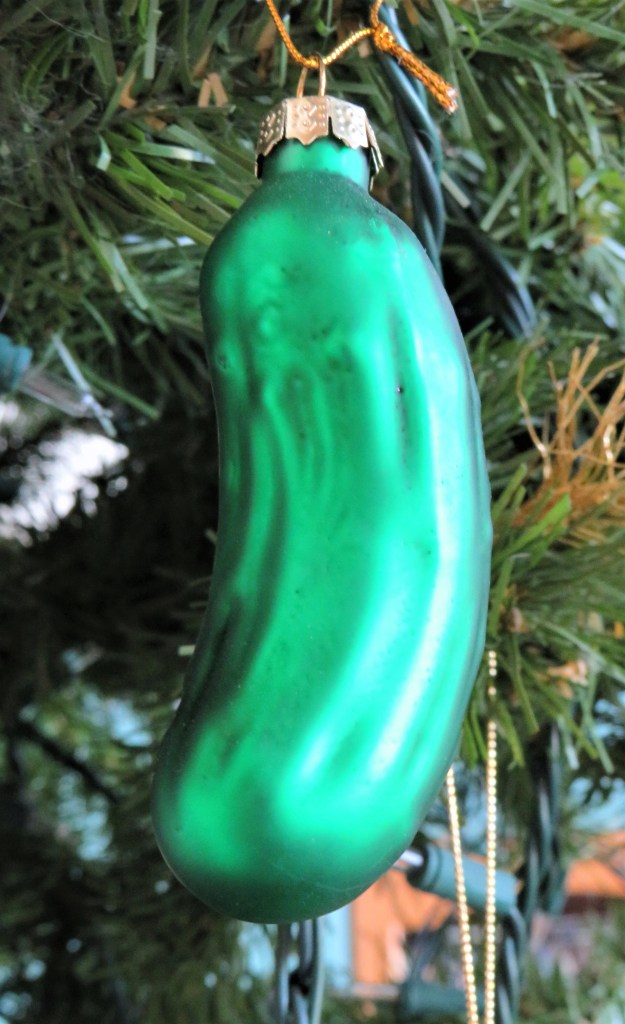
The first is the German pickle on the tree. Neither Larry nor I had ever heard of this until our friends Milos and Maureen brought it to our attention by giving us a pickle for our tree.
The history behind the German pickle on the tree comes from a German-American soldier who was taken prisoner during the Civil War. Starving, he begged a guard to give him one last pickle before he died. The pity pickle gave him the mental and physical strength to live on. It has been a German tradition ever since. The tradition is an ornamental pickle is the last ornament placed on a Christmas tree as one of the Christmas decorations. On Christmas morning, the first person to find the pickle on the tree would receive an extra present from Santa Claus or would be said to have a year of good fortune. As the Weihnachtsgurke tradition goes, the first child to find the pickle ornament on the Christmas tree is assured of good luck in the coming year and a special gift. The pickle is seen as a symbol of hope, reminding people that even in the darkest of times, there is always a glimmer of light. So, from here on out, we will have a Christmas pickle on out tree too.
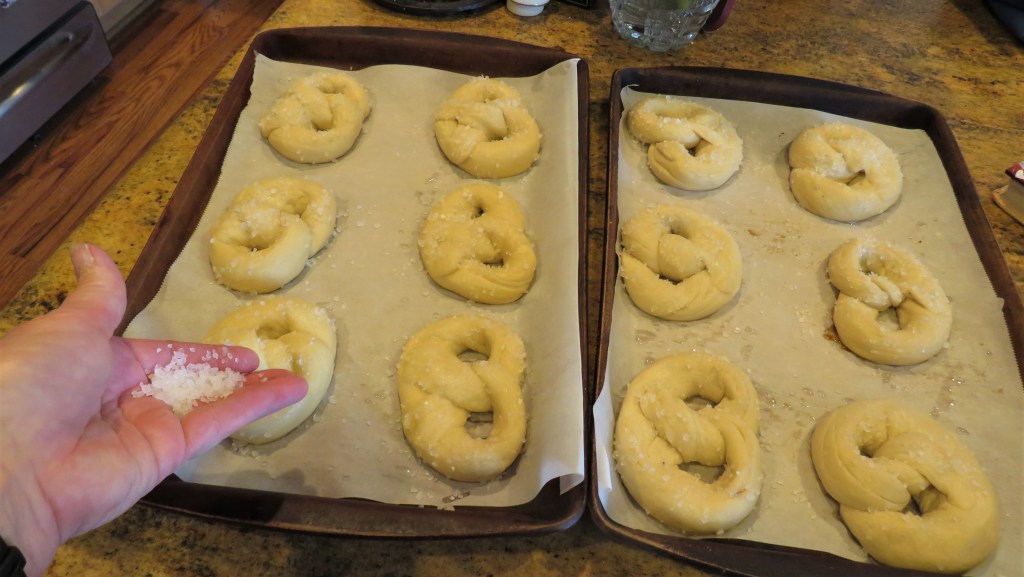
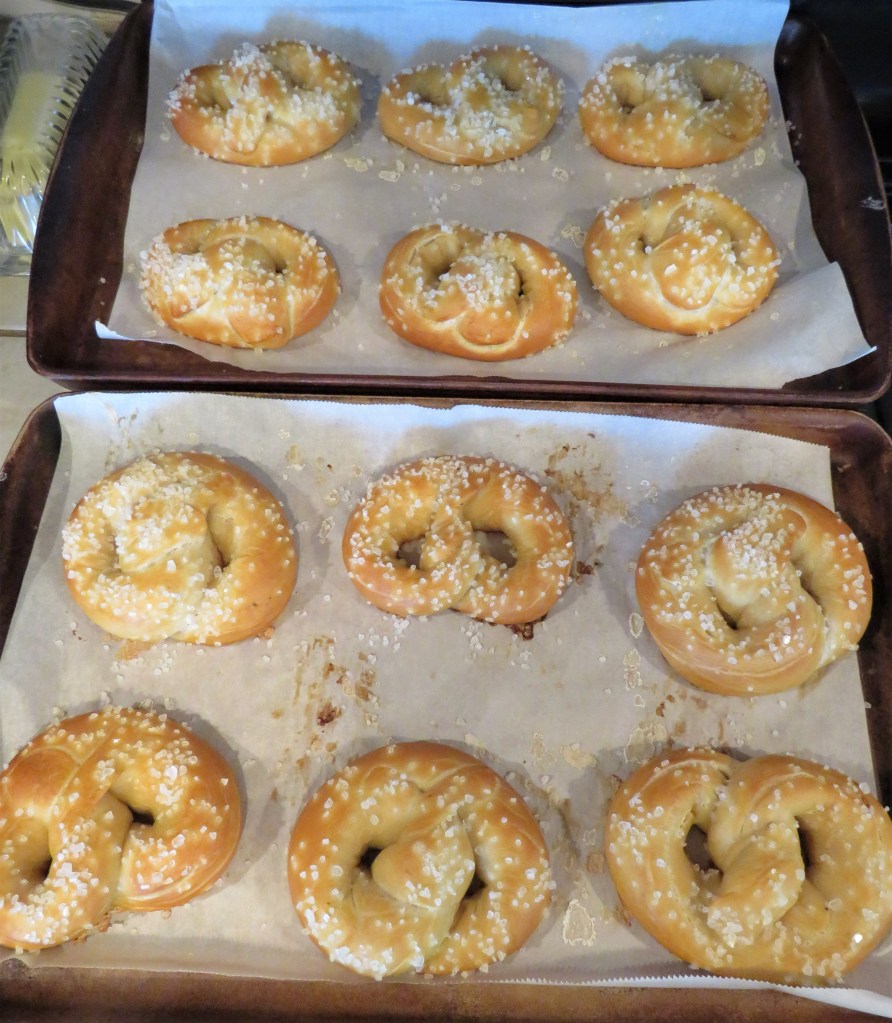
The second German holiday tradition we are holding is to eat soft pretzels on New Year’s Day. We have been honoring this tradition ever since I learned about it a few years ago. Yesterday, I made my pretzels. We ate some last night, and will enjoy them again today. Hopefully we will have an abundant year, filled with good luck, good health and prosperity.
Pretzels were often distributed to the poor as symbols of good luck for both physical and spiritual sustenance. By the seventeenth century, loops became symbols of undying love too. German children would wear pretzel necklaces on New Year’s to symbolize good luck and prosperity in the next year as well. The breaking of a “Good-Luck” New Year’s Pretzel (Grosse Neujahrsbrezel) is a long time German tradition, thought to bring good luck and prosperity in the New Year when eaten at midnight or by breakfast on New Year’s Day.
Sourdough Pretzels
These delicious pretzels are definitely a labor of love and require a lot of time to make them. Don’t even start if you are in a hurry for them. You need to start with a sourdough starter or mother culture first. There is NO yeast in these pretzels at all. They rise by time and fermentation alone.
Theoretically, once you start a sourdough starter or “mother culture” you only have to start it once, and then it becomes the gift that just keeps on giving. Believe it or not, some mother cultures are over 150 years old and are still thriving. Maureen brought her starter for me from Canada when they came to visit.
The Starter or Mother Culture
Day 1 : 1/4 cup organic whole wheat flour, 2 tsp rye flour, 3 TBSP non-chlorinated water. Mix and loosely cover and set in a warm location.
Day 2: Mix another 1/4 cup of organic whole wheat flour, 2 tsp organic rye flour and 3 TBSP non-chlorinated water to the mix, and once again, loosely cover and keep in a warm location.
Day 3: Mix another 1/2 cup organic wheat flour and 1/3 cup non-chlorinated water to the mix, and again, loosely cover and keep in a warm location.
Day 4: Your starter should be ready to go from this day forward. You can cover it and place it in a container and store it in the refrigerator for about 1 week before needing to refresh it again. You can keep refreshing your starter indefinitely, with each refresher taking about 12-16 hours to mature to the point when it is ready to leaven your bread.
About 12 hours before you want to start baking, remove the mother culture from the fridge. Mix in about 3/4 cup +2 TBSP of water, 1/4 cup mature mother culture and 1 2/3 cups bread flour. Tap water is fine from this point on. Let it ferment for an additional 12-16 hours. You can use this same starter for pancakes, pretzels, waffles, bread or crackers. As you can see, I chose to make pretzels.
The Pretzels
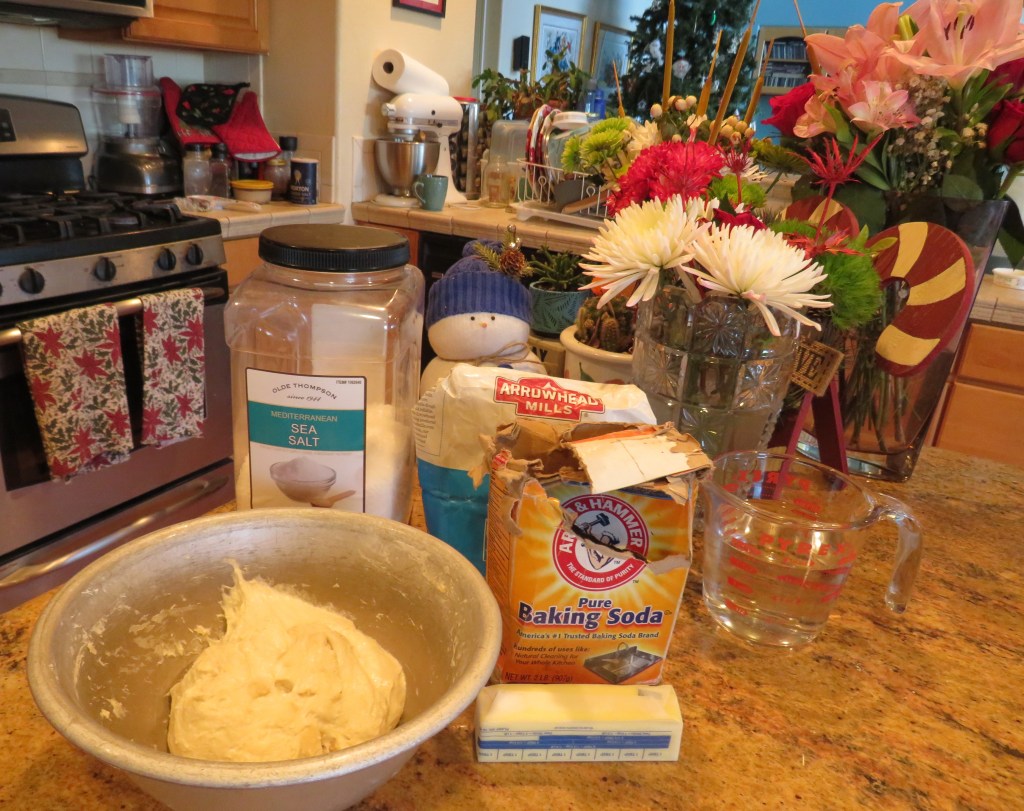
5 cups bread flour
1 2/3 cups water at about 75*F
1 1/3 cups mature sourdough starter – save the rest for something else later
1 TBSP sea salt
1/3 cup softened butter
1/2 cup baking soda
kosher salt for sprinkling on top
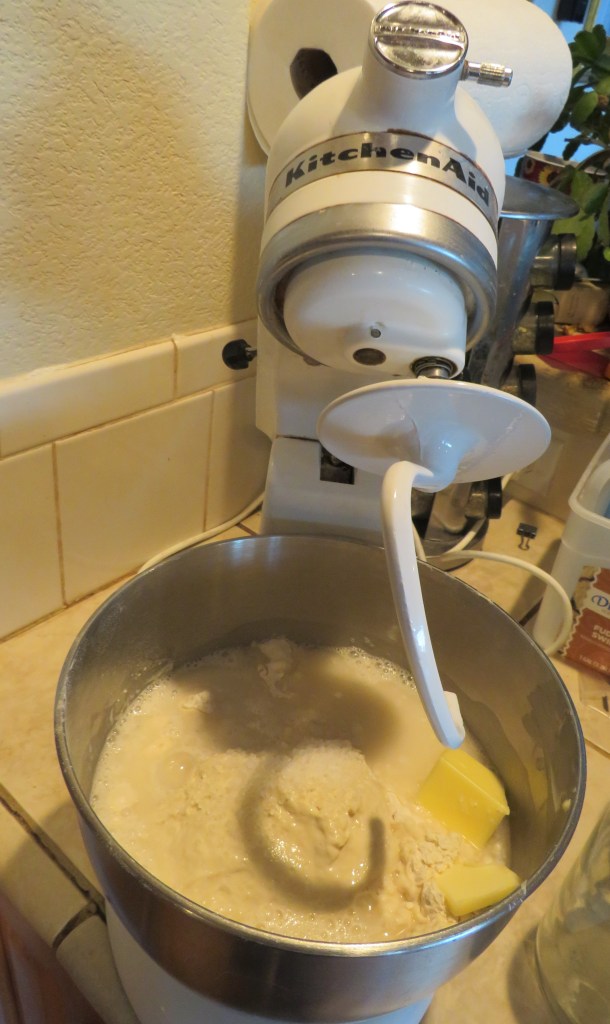
Mix everything together with a dough hook on the first speed for about 3 minutes, then increase the speed to the second speed and mix again for about 6 minutes.
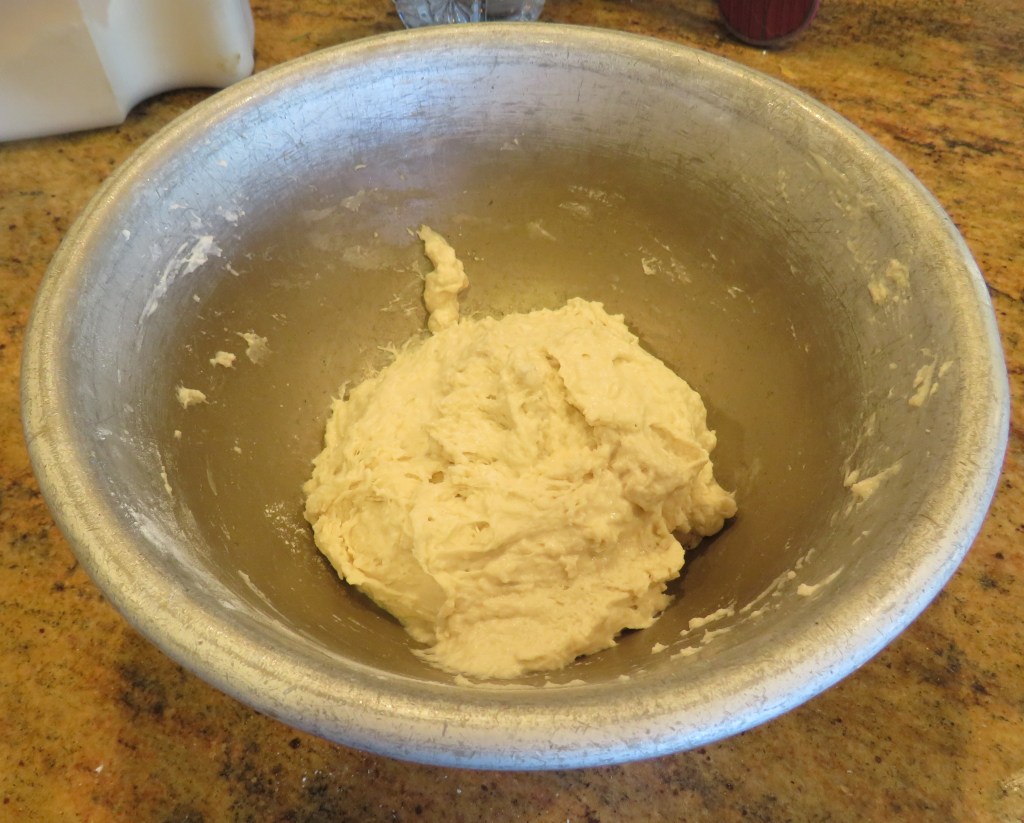
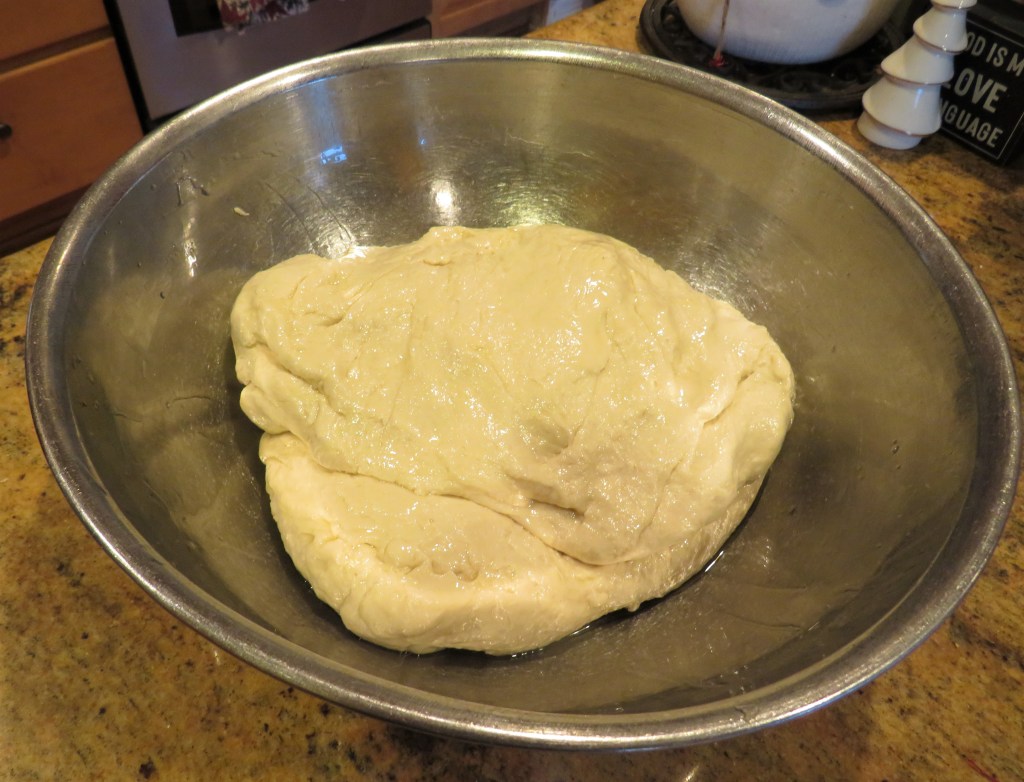
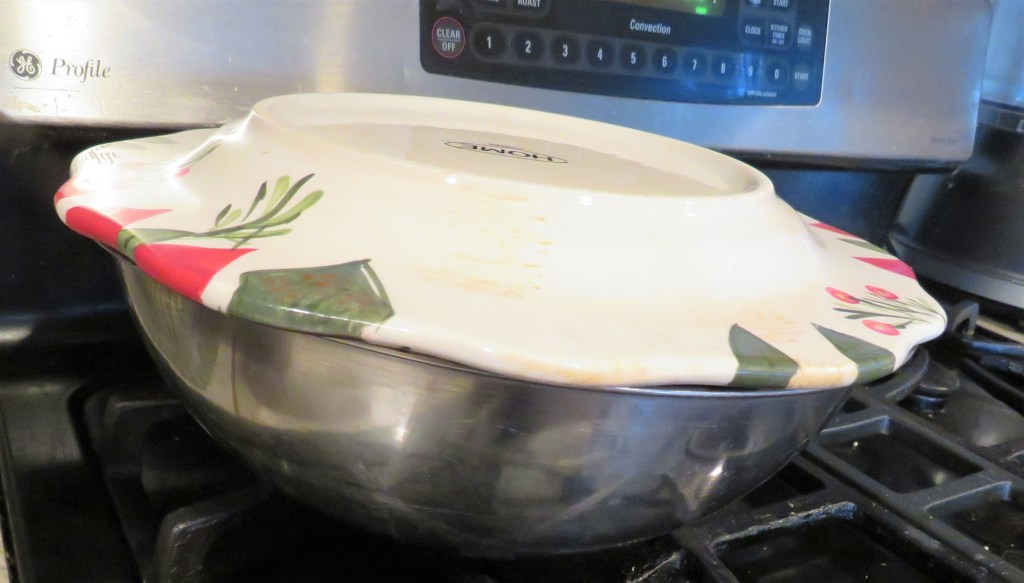
Once the dough has formed into a soft dough, lightly oil a large bowl, place the dough in the bowl and cover loosely with a plate.
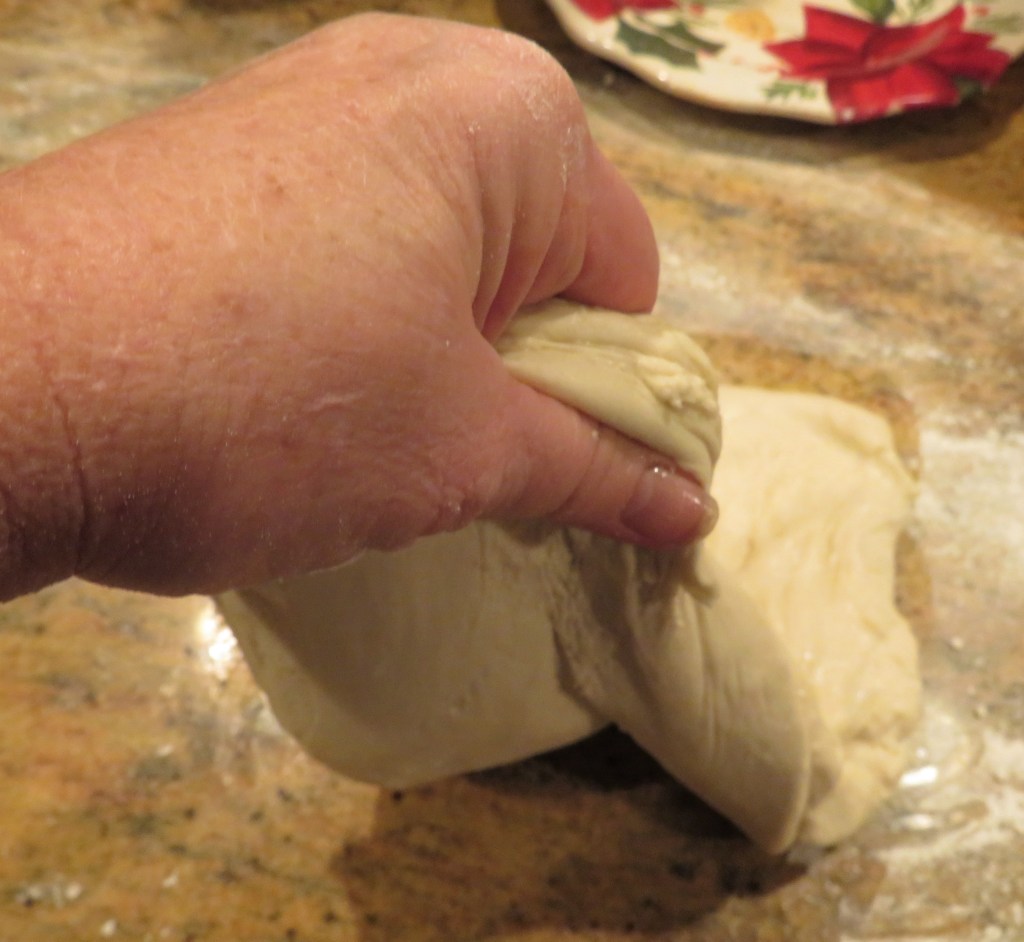
Let the dough ferment for an hour, then stretch it by pulling one corner just until you feel the gluten tighten, before it tears. Rotate the dough and repeat on all the corners of the dough.
Cover with the plate once again, and let it continue to ferment for another 2 1/2 hours. Once the dough is ready, cut it into 10-12 equal portions.
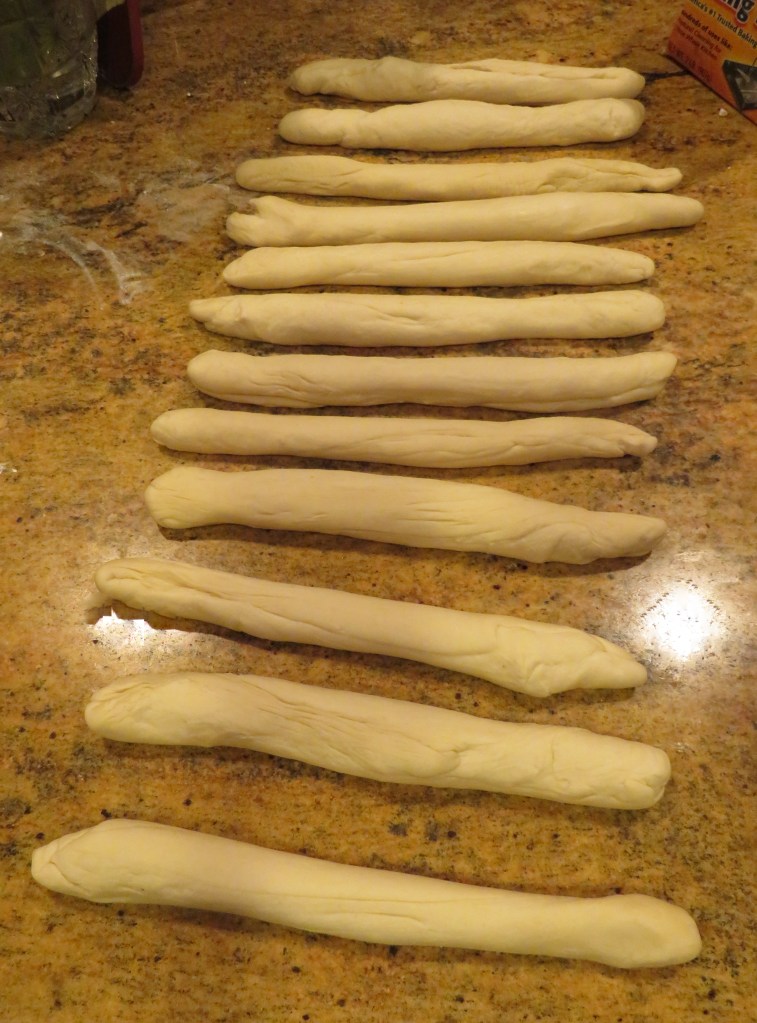
On a lightly floured surface, roll these out to logs that are bout 10-12 inches long. Cover them once more and let them rest for about 20 minutes.
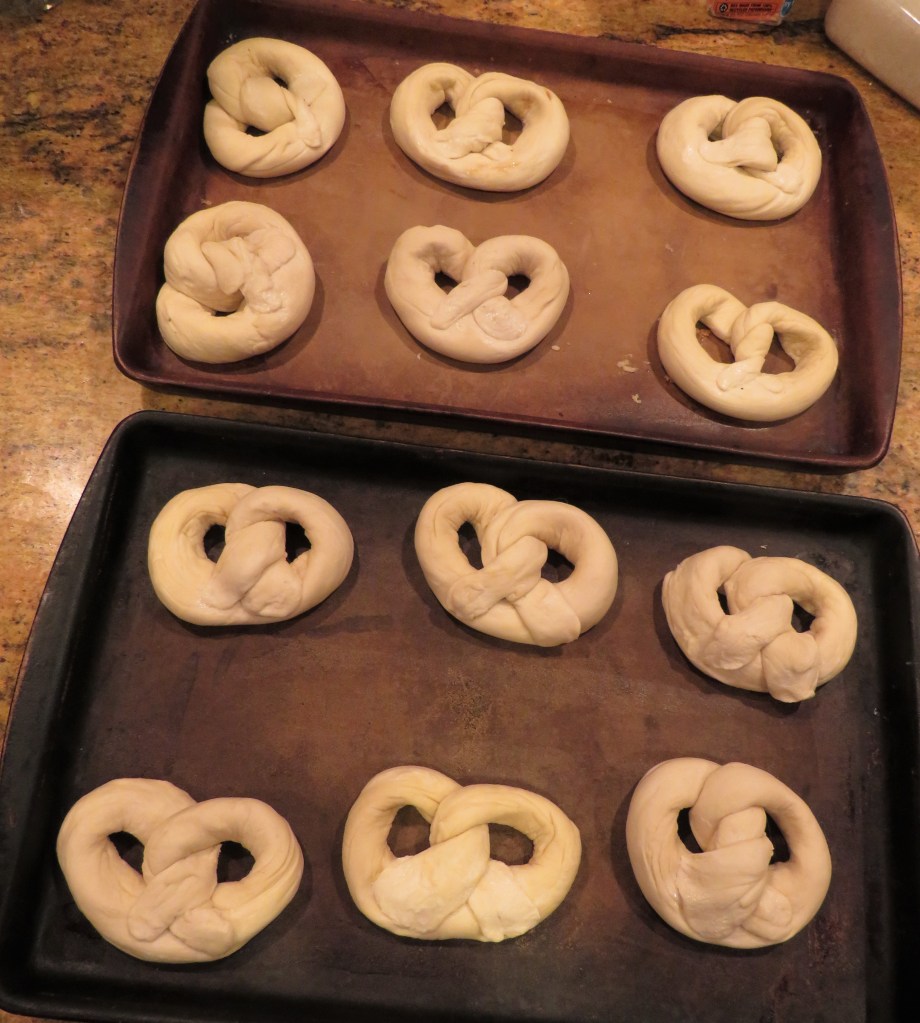
When they are ready, roll them out again, stretching them out to about 16 inches long. Take the 2 ends of the dough and shape them into a round and twist the ends two times, then attach the ends to the base. You may have to dab a little water on the dough to help them stick.
Cover loosely and refrigerate for 12-16 hours to slow the fermentation process.
When the dough is ready, preheat the oven to 350*F or 180*C.
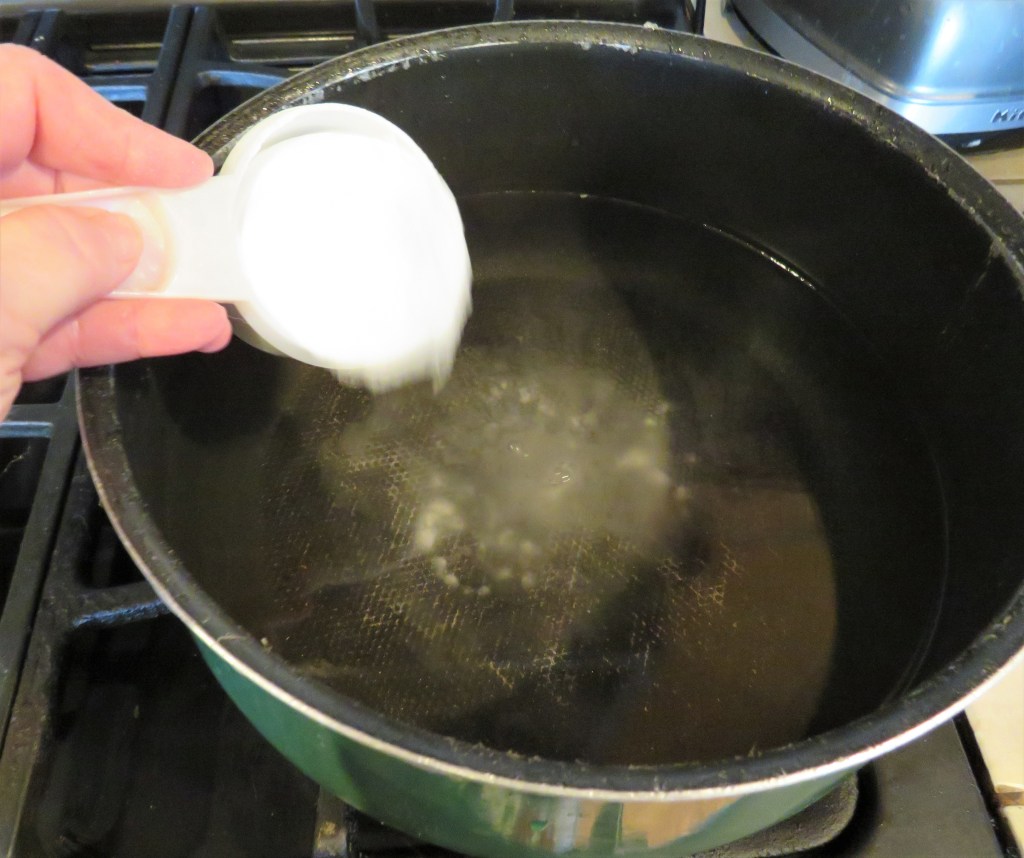
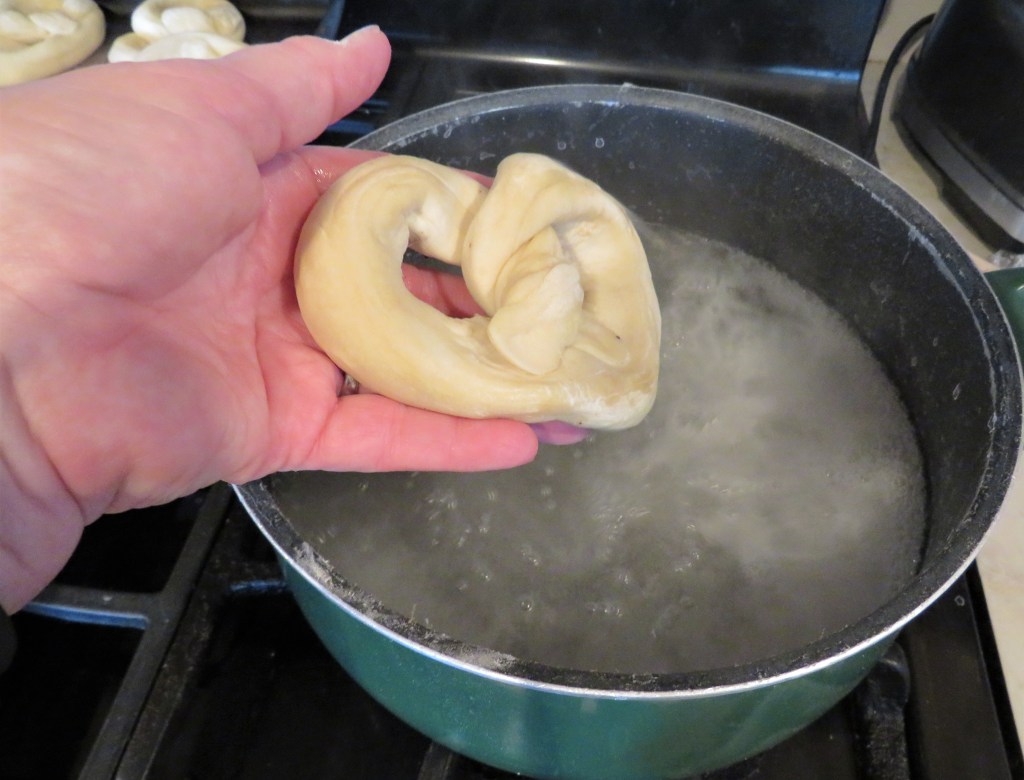
Bring a large pot with 2 qts of water and 1/2 cup of baking soda to a boil. Place one pretzel at a time in the mixture and boil at a medium boil for about 20 seconds. Remove the pretzel and place it on baking sheet lined with parchment paper. Repeat until all the pretzels are done.
Sprinkle the kosher salt on top of the pretzels.
Then bake for about 30 minutes, or until golden brown. Allow the pretzels to cool a bit before eating.
You can eat them as is, or with a little Dijon mustard, or with a little melted cheese on top. You can enjoy these delicious soft pretzels anytime you like, but you definitely want to make sure you enjoy them on New Year’s Day in order to have good luck throughout the year. :)
Happy New Year Everyone. I hope 2024 is a good year for all. Stay safe and stay well. ’Til next time.
HAPPY New Year Everyone! Good-bye 2023 and hello 2024. Let’s hope 2024 brings happiness, health and prosperity to all. Tonight, at least in the United States, it is New Year’s Eve. But many other parts of the world have already celebrated the coming of the new year. For instance, I called some of my Australian cousins last night, and they were already celebrating the coming of the new year.
Although much of the world festively rings in the new year each December 31, we don’t all celebrate the same way. In the United States, we all know the traditions: the ball drop at Times Square, sharing a kiss with a loved one at the stroke of midnight, and countless amounts of fireworks. But elsewhere around the globe, traditions can include everything from giving your house a thorough cleaning to cracking open a fresh pomegranate.
Here a few New year’s celebrations from around the world.
1. Various countries: Eating lucky foods
Throughout the world, New Year’s Eve is celebrated with a meal in the company of friends and family. In some places, this means eating specific “lucky” foods. In Spain, Portugal, and much of Latin America (such as Colombia), for example, it’s 12 grapes or raisins and in Italy, 12 spoonfuls of lentils—one with each of the 12 chimes of the clock at midnight.
The French usher in the best New Year with a stack of pancakes. Germans prefer marzipan shaped into a pig for luck, whereas in the Netherlands, people eat doughnuts and ring-shaped foods.
Estonians feast as many as 7, 9, or even 12 times on New Year’s Eve, as they believe for each meal consumed, the person gains the strength of that many men the following year.
We have our lucky foods here too. I am in the process of making some German pretzels for good luck, as well as some black eyed-pea soup with ham, which is a Southern thing. I grew up eating black-eyed peas on New Year’s Day. In fact, I spoke to a couple of my cousins in Texas last night as well, and both of them had their black-eyed peas and ham for the new year too. Larry is almost 100% German, and I have a lot of German in me as well, and my mother was from Southeast Texas. So we have our bases covered. :)
It’s a simple German tradition where you eat a pretzel, usually made of sweet dough, on New Year’s Day to bring good luck to the year.
For the best chance of luck every dayin the yearahead, one must eat at least 365 black-eyed peas on New Year’s Day. Black-eyed peaseaten with stewed tomatoes represent wealth and health.
2. Philippines: Wearing polka dots and eating round fruits
To ensure a happy new year, the Filipino community believes that wearing round shapes (such as polka dots!) promotes prosperity and good luck. Additionally, it’s common eating round fruits—like oranges, watermelon, longan, grapes, and pomelos—are considered fortuitous as well. Another fun one for kids? Jump as high as you can as soon as midnight hits. Some people believe that it will help them grow taller in the New Year.
3. Brazil: Wearing white while jumping into the ocean
Wearing white on New Year’s Eve has long been a tradition with roots in Africa. In Brazil, the Festa de Lemanjá takes place on this night to celebrate the goddess of the sea (Lemanjá). The culmination of the event is when everyone—dressed in white—runs into the water right at midnight to jump over seven waves. Each wave and jump signifies a different request the swimmer is making to a different orixá, or god. Consider them New Year’s resolutions or hopes, of sorts.
4. Cuba: Throwing a bucket of water out the front door
In Cuba, people symbolically gather all of the bad spirits and negative energy from the past 365 days and toss them right out the front door. It’s not uncommon to see buckets full of dirty water flying out of homes during the countdown to midnight. Watch out if you find yourself strolling through a Cuban neighborhood on New Year’s Eve. All of Latin America also likes to travel around with an empty suitcase as well, in hopes of a year filled with travel and new experiences. They also eat 12 grapes at the stroke of midnight.
5. Ireland: Setting an extra place at the table
The Irish have several New Year’s traditions, such as banging the outside walls of their houses with bread to keep away bad luck and evil spirits and starting the year with a spotless, freshly cleaned home. But one of the most well-known is setting an additional plate at the dinner table for any loved ones lost in the prior year.
However you choose to ring in the new year, Happy New Year to one and to all. May the new year be filled with love, joy, prosperity and health for everyone. Stay safe and stay well. ’Til next time. See you next year. :)
One of the things I have always done with little bits and pieces is to turn them all into a soup or a stew. It’s a deliciously creative way of using everything up and extending it to feed more people. We used to do that all the time in my restaurant management days, and I still do it today.
We had a a little bit of chicken, a little bit of sausage, a little bit of spinach so I mixed them all together, with a few other goodies and made a delicious Mediterranean stew. I made it even more Mediterranean by adding some stuffed grape leaves and pita bread on the side, with a glass or two of wine.
Mediterranean Stew
1 1/2-2 lbs chicken
flour, salt & pepper for coating the chicken
1 lb sausage, sliced
1 can of artichoke hearts, drained and quartered
1-2 cups mushrooms, sliced
1 TBSP garlic
1 onion, diced
2 cans cannellini beans, drained and rinsed
8 oz spinach, chopped
3-4 tomatoes, diced
2 cups chicken broth
1 -2 tsp oregano
1-2 tsp basil
1 tsp marjoram
salt & pepper to taste
Peruvian peppers, optional
olive oil and butter for cooking
lemon olive oil, optional
Mix the flour, salt and pepper together and coat the chicken. Get a skillet hot and add the olive oil and butter. Cook the chicken for about 3-4 minutes per side, or until golden brown. Once the chicken is browned, removed it from the heat and keep warm.
Let the chicken cool enough to cut into large chunks. Then cook the sausage. Once the sausage is cooked, remove it and add to the chicken,
Add more oil if needed and saute the onions, garlic and mushrooms for about 3 minutes.
When the onions are softened, re-add the chicken and sausage to the mix. Then add the chicken broth, spinach, tomatoes, artichoke hearts, beans and seasonings. Bring to a boil, then reduce the heat to a simmer and continue to cook for about 10-15 minutes, stirring occasionally.
Add the very end of the cooking process, top the stew off with a dash of either lemon juice or lemon olive oil and the Peruvian peppers, if using. Then serve. You can serve it as is, or on top of pasta or rice or potatoes. Buon Appetito!
Happy New Year. Out with the old and in with the new. Stay safe and stay well. I hope 2024 is a good, happy, healthy, prosperous year for all. ’Til next time.
Popcorn is my absolute favorite snack, and possibly my favorite food, in the whole world. I think I could live on popcorn with nothing more than butter and salt if I needed to.
Though popcorn is a very popular American snack, it actually started off as a a breakfast food. Ahead of its time and very likely a role model for breakfast cereals to come, during the late nineteenth and early twentieth centuries, popcorn was eaten just as we eat cereal today.
Discovered in the Americas thousands of years ago, popcorn has captivated people for centuries with its mythical, magical charm.
At the heart of this endearing little kernel is a healthful whole-grain, naturally low in fat and calories, gluten-free, and non-GMO, which makes it a great fit for today’s health conscious consumer. It’s easy to understand why popcorn has remained so popular over time.
Corn today is completely different than what “corn ” meant in the ancient times, in different parts of the world. Biblical accounts of “corn” stored in the pyramids of Egypt are misunderstood. The “corn” from the Bible was probably barley. The mistake comes from a changed use of the word “corn,” which used to signify the most-used grain of a specific place. In England, “corn” was wheat, and in Scotland and Ireland the word referred to oats. Since maize was the common American “corn,” it took that name – and keeps it today. The earliest record of actual corn as we know it today, was from about 4000 years ago in the Americas.
Popcorn in the New World
Popcorn was integral to early 16th century Aztec Indian ceremonies. Bernardino de Sahagun writes: “And also a number of young women danced, having so vowed, a popcorn dance. As thick as tassels of maize were their popcorn garlands. And these they placed upon (the girls’) heads.” In 1519, Cortes got his first sight of popcorn when he invaded Mexico and came into contact with the Aztecs. Popcorn was an important food for the Aztec Indians, who also used popcorn as decoration for ceremonial headdresses, necklaces and ornaments on statues of their gods, including Tlaloc, the god of rain and fertility.
An early Spanish account of a ceremony honoring the Aztec gods who watched over fishermen reads: “They scattered before him parched corn, called momochitl, a kind of corn which bursts when parched and discloses its contents and makes itself look like a very white flower; they said these were hailstones given to the god of water.”
Writing of Peruvian Indians in 1650, the Spaniard Cobo says, “They toast a certain kind of corn until it bursts. They call it pisancalla, and they use it as a confection.”
In South America, kernels of popcorn found in burial grounds in the coastal deserts of North Chile were so well preserved they would still pop even though they were 1,000 years old.
Anyone who knows me knows how much I LOVE popcorn. There were two popcorn related gifts this Christmas, though the new popcorn popper was really to replace the old one that died. I guess it had just popped to much corn and gave out.
My friend Lauren knows my love for popcorn, and gave me this big tube of gourmet popcorn as part of my Christmas gift. :) I guarantee it won’t take too long for me to get through it either, but I don’t eat it all by myself. I have help from our roommate at the moment, and of course Juneau and Dorrie like to nibble on mommy’s popcorn too. Larry eats a little, but his snack of choice is ice cream.
This tube has 3 different kinds and colors of gourmet popcorn. We are just working on the purple corn now. The different styles and colors of popcorns all have a slightly different taste and texture as well. Play with them all and see what you like best. Or better yet, mix and match and create your own style of popcorn.
Not only is popcorn my favorite snack, but it has been dinner on many occasions as well. Last night was one such night. We had a big lunch and weren’t hungry for dinner, but there was definitely room for … POPCORN.
The popcorn itself is a very healthy snack. It is ALL the other things we add to the popcorn that make it fattening and not so healthy. I LOVE butter, and butter makes everything better, and a dash of salt. I am also a popcorn purist, and butter and salt are the ONLY things I want on my popcorn, though today, there are many different options. Larry says I like popcorn because it is a butter delivery system. I think he is on to something. :)
Pop, pop, pop away and have a great time with it. Enjoy this ancient snack, however you like it. Happy New Year. I hope 2024 is full of great things for all of us. Stay safe and stay well. ’Til next time.
This Christmas I received a lot of fun food related goodies as gifts. HMMMMM!!!! Imagine that. :) I was lucky enough to get some fabulously delicious cookbooks, spices, gourmet coffee and even some gourmet popcorn as gifts this season. I feel so special and so blessed. You all know me so well. You definitely know that food is the way to my heart. :)
One of the cookbooks I was gifted was a beautiful Lebanese cookbook called Rose Water & Orange Blossoms by Maureen Abood. This came with a jar of za’atar seasoning and a bag of ground sumac seasoning as well, all wrapped in beautiful silver and purple individual gift bags. That you my dear friend Julia, our very own from Julia from Retirement RV Dream at https://retirementrvdream.com/.
All the recipes in this book sound fabulous, but alas, I can’t cook everything all at once. Everything has to be tried one recipe, maybe two or three, if I am lucky, at a time.
We had some leftover Christmas lamb, so making something Middle Eastern was a perfect idea to re-use and repurpose my lamb. I made the Lebanese tomato salad from this book, as well as the cover picture, to go with my lamb.
This salad is beautifully delicious, and so simple to make too.
Lebanese Tomato Salad
As you all know, I love tomatoes, and I love to mix and match them. I wanted to use heirloom tomatoes, but none were available this time of year. No problem. There are plenty of other tomato varieties available right now that work almost as well. Of course, I changed the recipe slightly and as my friend Gabe would say, I “Jeannified” it.
2 lbs tomatoes, any kind and any variety, diced in large pieces
1 medium sized sweet onion, sliced very thin
1 TBSP lemon juice
2 TBSP olive oil
1 TBSP lemon olive oil, optional
1/2 tsp garlic
kosher or sea salt and fresh ground black pepper to taste
1-2 tsp za’atar seasoning
parsley
Mix everything together and toss gently. Refrigerate until ready to use. That’s it. Easy-peasy, beautiful and super delicious! It doesn’t get much better than that.
I served this fabulous salad alongside some lamb atop a pita spread with hummus, and a glass or two of Malbec to complete the meal. This is another recipe in the book, but I already had the lamb so I just heated it up. I did however present it like it was featured in the book.
Both Julia and Dolly are dear friends of mine. We all met from our WordPress family, through our shared passion for cooking and living life to the fullest. Thank you both, not just for these fabulous gifts from the heart, but mostly for your treasured friendships. We have lots of fun and delicious times still yet to come and to share.
Have a great day and make everyday great. Stay safe and stay well. Happy New Year. I hope 2024 brings peace, love and prosperity to everyone. ’Til next time.
There are many ways to cook a turkey. I have cooked and eaten turkey cooked many ways. In fact, the possibilities are endless, just like with chicken. But we all have our favorites. My favorite way to cook and to eat a turkey is the old fashioned way. I like to brine it overnight then roast it in the oven for about 4-5 hours. That’s how I cooked it for Christmas dinner too. I did, however, try a new brining recipe and a new flavor of gravy to serve with the turkey. They both were very popular.
This year I brined my turkey in an apple cider brine.
Apple Cider Brine
8 cups apple cider
2/3 cup sea salt or kosher salt
2/3 cup sugar
2-4 bay leaves
2 tsp peppercorns, crushed
6-8 whole cloves or about 1 tsp of ground cloves
1 tsp juniper berries, crushed
1-2 tsp ginger
cups ice water
Combine everything together except the ice water. Bring to a boil, then reduce the heat to a simmer and continue to cook for about 10 minutes.
Clean the neck and giblets from the turkey cavity. Place the turkey in a large oven bag and place in a large roasting pan.
Once the brine is ready, cool it down with the ice water and stir to make sure all the ice melts. Then pour it in the turkey cavity and all around the turkey in the bag. Seal tightly, place the turkey breast side down and let set in the refrigerator overnight.
When you are ready to cook the turkey, discard the brine and pat the turkey down with a paper towel.
Wrap your roasting pan with aluminum foil. This will make clean up so much easier. Lay a layer of apple slices, celery and shallots on the bottom of the pan. Place a wire rack on top of the apple mixture. Add a little water and/or broth on top of the apple mixture. This will help keep the turkey moist.
The Brown Sugar Rub for the Turkey
1/4 cup firmly packed brown sugar
4 tsp kosher salt
1 TBSP parprika
1/2 tsp cayenne pepper or to taste
1 stick softened butter
olive oil
Preheat the oven to 350-375* F or 180-191*C.
Combine everything together excluding the olive oil to make the rub. You want the consistency of coarse sand. Get a boning knife or a small-medium sized knife with a serrated edge. Carefully lift the skin from the meat all over the bird. Add the brown sugar mixture to the meat, under the skin of the turkey, and cover as much as the meat as you can, packing it down as firmly as you can.
When the turkey is coated with the rub, place it breast down on the wire rack, coat with olive oil and roast for about 40-60 minutes. The carefully flip the turkey over. You can cover it with aluminum foil so it doesn’t brown to fast and/or burn and cook for about 2-3 hours. Then remove the foil and continue cooking until the internal temperature reaches 160* F or 71*C. Once the foil is removed, once again coat with the olive oil. The oil helps crisp up the skin.
When the turkey has reached the desired internal temperature, cover it once again with foil and let it rest for about 10-15 minutes before slicing. The turkey will continue to cook. You want the internal temperature to be about 165* F at a minimum.
Then slice it and enjoy. Tehvia is helping Larry with the turkey.
I made an apple bourbon gravy to top both the turkey and the mashed potatoes for anyone who wanted gravy. I am not a gravy fan, so mine was without.
Apple Bourbon Gravy
2 cups chicken or turkey broth
1 TBSP flour
2 TBSP butter
1 TBSP apple cider vinegar
2/3 cup bourbon
1/2 tsp black pepper or to taste
Combine everything together except the bourbon. Bring to a boil, whisking constantly. Then reduce the heat to a simmer and carefully add the bourbon. Whisk until the gravy begins to thicken. The serve over the turkey and/or the potatoes, and anything else you like gravy served upon. Slice the turkey and enjoy the festivities and the feast.
It doesn’t matter what type of rub you use for the turkey. The method is the same.
Have a great day and make everyday great. Stay safe and stay well. ’Til next time.
We had a small little group for Christmas Eve dinner, but we had a simple feast complete with lots of fun, laughter and presents after. I literally kept things very simple this year. I made a turkey with gravy, mashed potatoes, macaroni and cheese, rolls and asparagus, with some cookies and a Black Forest cake for dessert. Black Forest Cake None of my menu items are new to you, but sometimes, you just have to stick with the basics and keep it simple (K.I.S.S). Lauren made some delicious lamb that we added to our feast as well. Though it was a simple meal, we had all that matters – a lot of LOVE and good cheer, and of course, plenty of food. We kept waiting for the second shift to come in and help us, but they never showed. I guess that means there will be a few few leftovers. Oh darn! :)
I hope you all enjoyed your Christmas festivities. Happy New Year to one and to all. Stay safe and stay well. ’Til next time.
One of the most beloved Christmas stories is ‘Twas the Night Before Christmas. While almost everyone is familiar with the sweet holiday rhyming tale, the story behind the story is one that is largely untold and unknown.
The poem, originally titled A Visit or A Visit From St. Nicholas, was first published anonymously on Dec. 23, 1823, in a Troy, New York newspaper called The Sentinel.
It wasn’t until 1837 that Clement Clarke Moore accepted credit for writing A Visit. He reportedly wanted to keep his authorship secret initially because he was a professor and the piece wasn’t considered a scholarly work at the time of its initial writing. Moore is said to have based his vision of Santa Claus on both St. Nicholas and a local Dutch handyman where he lived in New York. Legend has it that the handyman operated the sleigh that took Moore home.
‘Twas the night before Christmas, when all through the house not a creature was stirring, not even a mouse.
The stockings were hung by the chimney with care, in hopes that St. Nicholas soon would be there.
The children were nestled all snug in their beds, while visions of sugar plums danced in their heads.
And Mama in her ‘kerchief, and I in my cap, had just settled our brains for a long winter’s nap.
When out on the roof there arose such a clatter, I sprang from my bed to see what was the matter.
Away to the window I flew like a flash, tore open the shutter, and threw up the sash.
The moon on the breast of the new-fallen snow gave the lustre of midday to objects below,
when, what to my wondering eyes should appear, but a miniature sleigh and eight tiny reindeer.
With a little old driver, so lively and quick, I knew in a moment it must be St. Nick.
More rapid than eagles, his coursers they came, and he whistled and shouted and called them by name: “Now Dasher! Now Dancer! Now, Prancer and Vixen! On, Comet! On, Cupid! On, Donner and Blitzen! To the top of the porch! To the top of the wall! Now dash away! Dash away! Dash away all!”
As dry leaves that before the wild hurricane fly, when they meet with an obstacle, mount to the sky so up to the house-top the coursers they flew, with the sleigh full of toys, and St. Nicholas too.
And then, in a twinkling, I heard on the roof the prancing and pawing of each little hoof.
As I drew in my head and was turning around, down the chimney St. Nicholas came with a bound.
He was dressed all in fur, from his head to his foot, and his clothes were all tarnished with ashes and soot.
A bundle of toys he had flung on his back, and he looked like a peddler just opening his pack.
His eyes–how they twinkled! His dimples, how merry! His cheeks were like roses, his nose like a cherry!
His droll little mouth was drawn up like a bow, and the beard on his chin was as white as the snow.
The stump of a pipe he held tight in his teeth, and the smoke it encircled his head like a wreath.
He had a broad face and a little round belly, that shook when he laughed, like a bowl full of jelly.
He was chubby and plump, a right jolly old elf, and I laughed when I saw him, in spite of myself.
A wink of his eye and a twist of his head soon gave me to know I had nothing to dread.
He spoke not a word, but went straight to his work, and filled all the stockings, then turned with a jerk.
And laying his finger aside of his nose, and giving a nod, up the chimney he rose.
He sprang to his sleigh, to his team gave a whistle, And away they all flew like the down of a thistle.
But I heard him exclaim, ‘ere he drove out of sight, “Happy Christmas to all, and to all a good night!”
From my house to yours, Merry Christmas and Happy Holidays.