I have created this site to help people have fun in the kitchen. I write about enjoying life both in and out of my kitchen. Life is short! Make the most of it and enjoy!
Author: ajeanneinthekitchen
I have worked in the restaurant and catering industry for over 35 years. I attended 2 culinary schools in Southern California, and have a degree in culinary arts from the Southern California School of Culinary Arts, as well as a few other degrees in other areas. I love to cook and I love to feed people.
Open spaces are big here in Colorado. We have them everywhere. They are like parks, but have lots of connecting trails for walkers, runners, and bicyclists and are always connected with nature. My favorite one is literally right behind my house, adjacent to my back yard, and that is our lakes. But I like to vary them too, and try different places. The Westminster City Park has some very nice trails as well. There is abundant wildlife, both in flora and fauna all around. You are right in the city, but you would never know. These open spaces allow you to connect with nature and offer a little escape from the reality that is just a heart beat away.
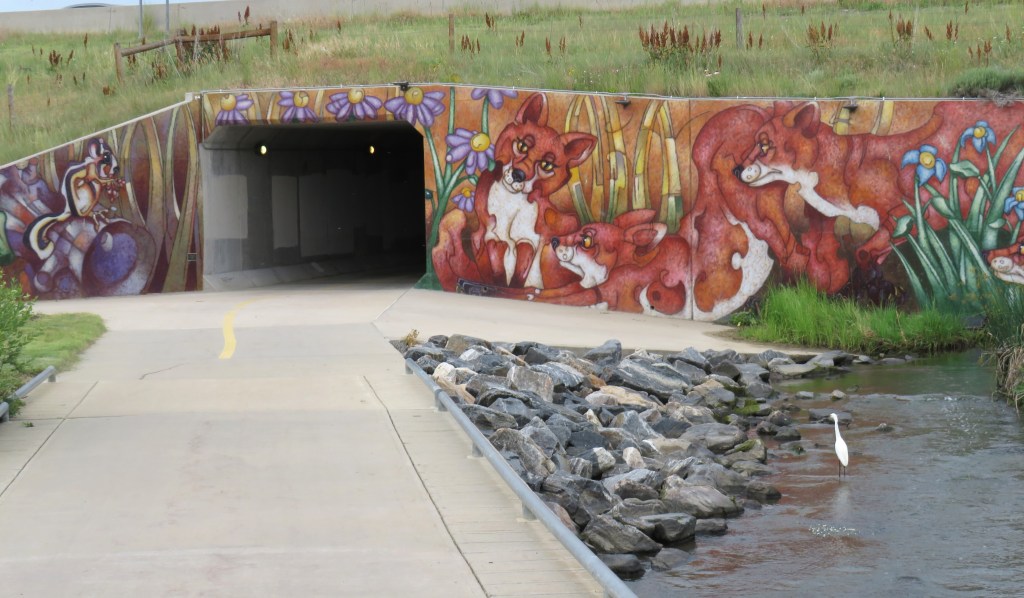
Can you believe this is right in the middle of our city?
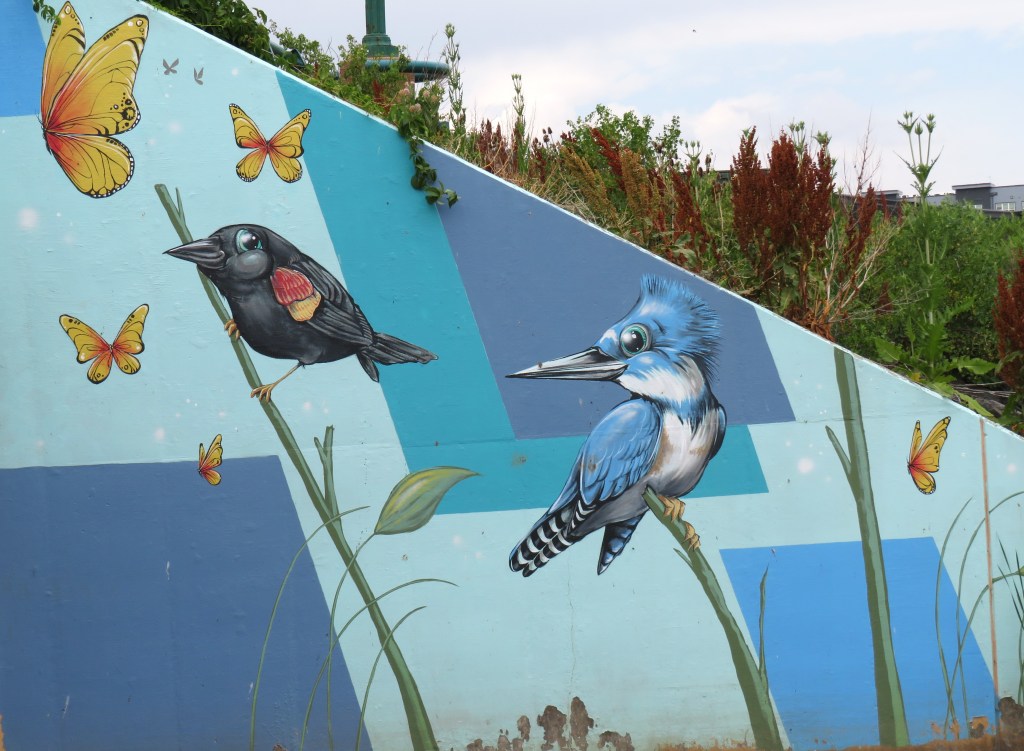
The bridges are colorfully decorated too, depicting life in our area, and Nature’s beautiful gifts right here in our own backyard.
Often times, the open spaces lead into different trails and pathways too. Yesterday, I took a trail that had old fashioned farm equipment scattered throughout the trails.
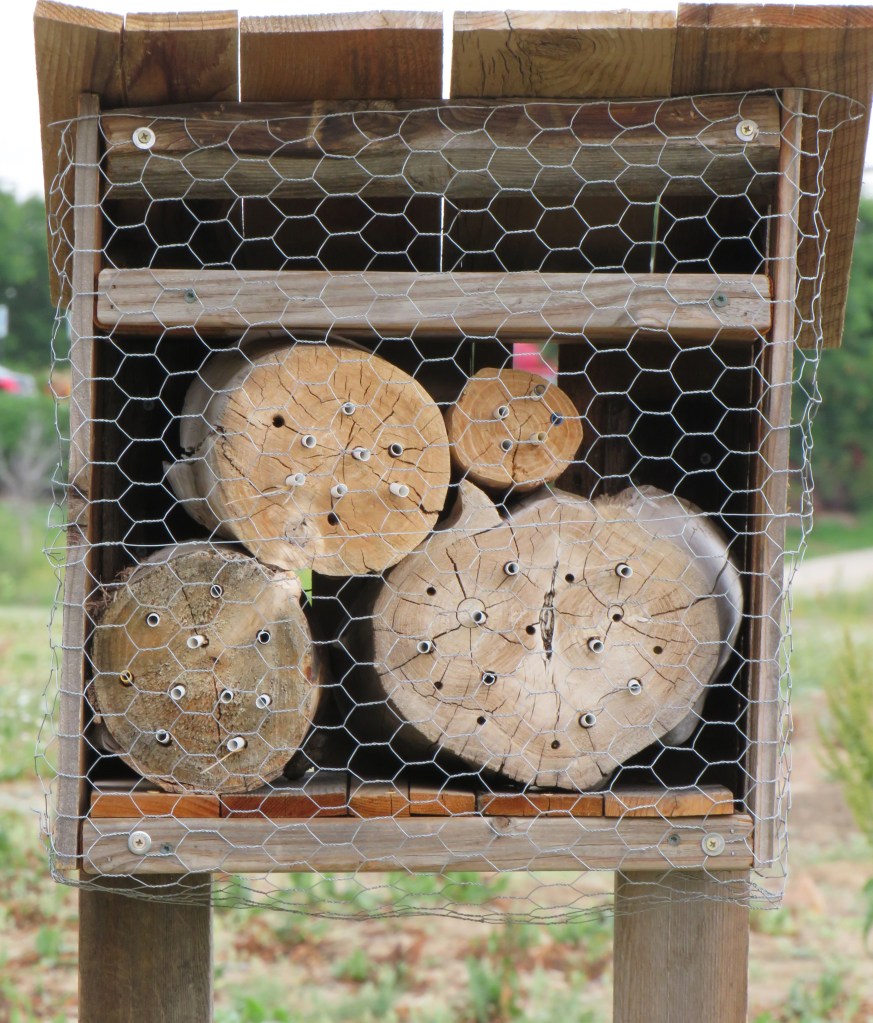
We even have have nesting areas for our own honey bees nestled into the park.
You just never know what you will find, even in your backyard. You just have to open to new experiences and open your eyes and your heart to new experiences. They are all around.
Corn is one of those vegetables that is good anytime of year. You can eat it cold or hot and it will always be good. When I made my Mole Poblano Mole Poblano Chicken With Corn Salsa I also made some corn salsa to go with it. It was a perfect combination.
Corn salsa is a relatively new culinary creation, but it was inspired from its ancient Mesoamerican roots and traditions. Its roots lie in the domestication of corn by the Aztecs and other indigenous peoples, who used it in various dishes, including sauces. The concept of salsa, a flavorful sauce made with chilies, tomatoes, and other ingredients, also originates from this period. While corn salsa as we know it is a more recent development, it builds upon these historical foundations. Corn (maize) was a staple crop, and the Aztecs, Mayans, and Incas cultivated it extensively. These ancient civilizations also developed early forms of salsa, using ingredients like tomatoes, chilies, and squash seeds. These were used to enhance the flavor of meats and other dishes. The Spanish conquistadors encountered these salsas after their arrival in Mexico, and the term “salsa” (meaning “sauce” in Spanish) was eventually applied to these flavorful concoctions. Today, there are no limits to making salsas. Use your imagination and see what happens. 🙂
Corn Salsa
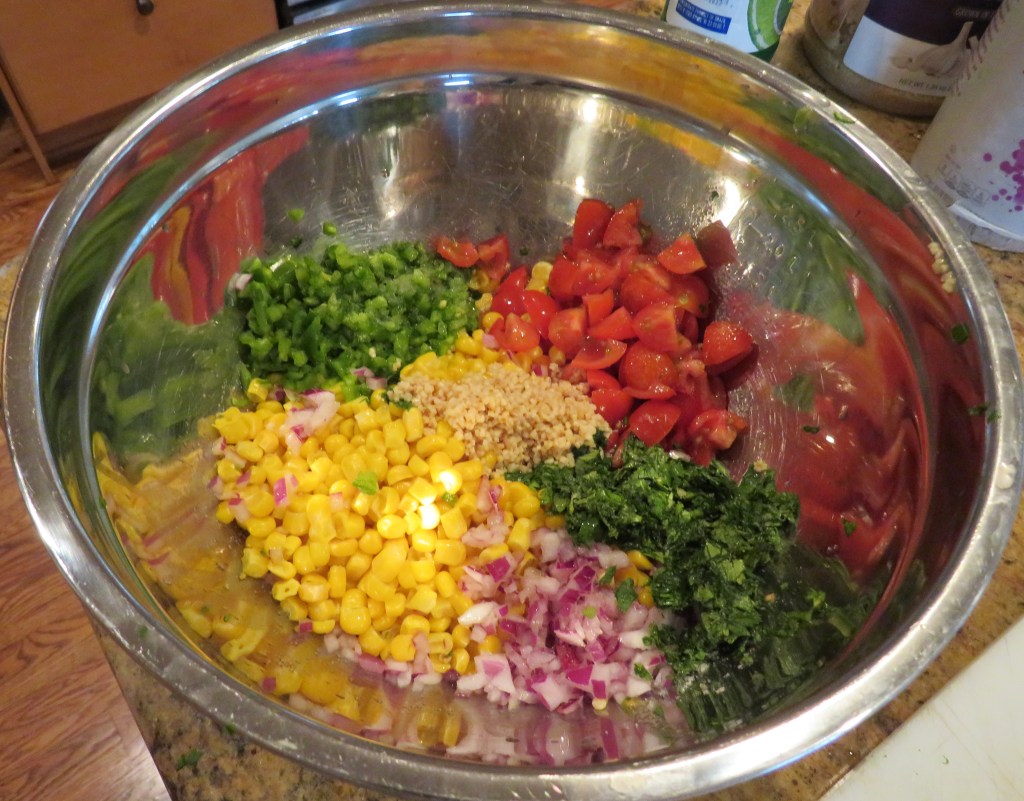
One of my favorite summer salads is a simple corn and tomato salad. I make it all the time, though, this new corn salsa may take it’s place as one of my favorites. 🙂 This corn salsa is very similar to my corn and tomato salad, with only a few minor changes.
3 cups corn, thawed if using frozed
1/4 red onion, diced fine
1 jalapeno, diced fine
12 oz cherry tomatoes, quartered
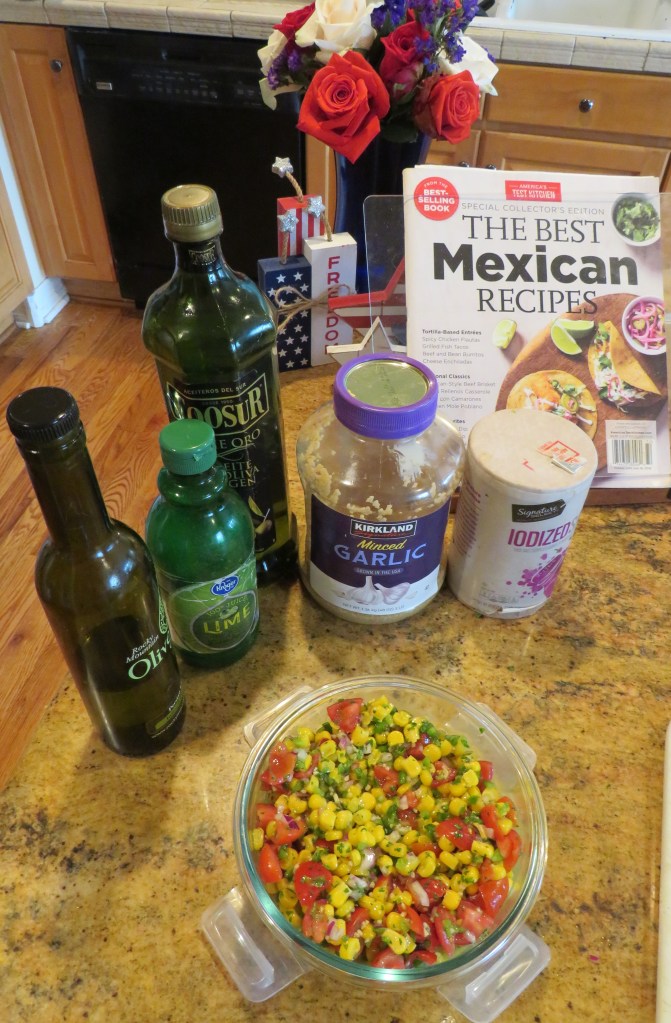
2 tsp garlic
3 TBSP olive oil
2 TBSP lime juice
salt to taste
1/4 cup fresh cilantro, chopped
Mix everything together well and chill until ready to use. It goes well with anything you want to serve it next to.
This cool, refreshing, colorful salad or salsa is perfect for a hot summer’s day. It will definitely help you beat the heat. 🙂
Have a great day and make everyday great. Stay cool, stay safe and stay well. ‘Til next time.
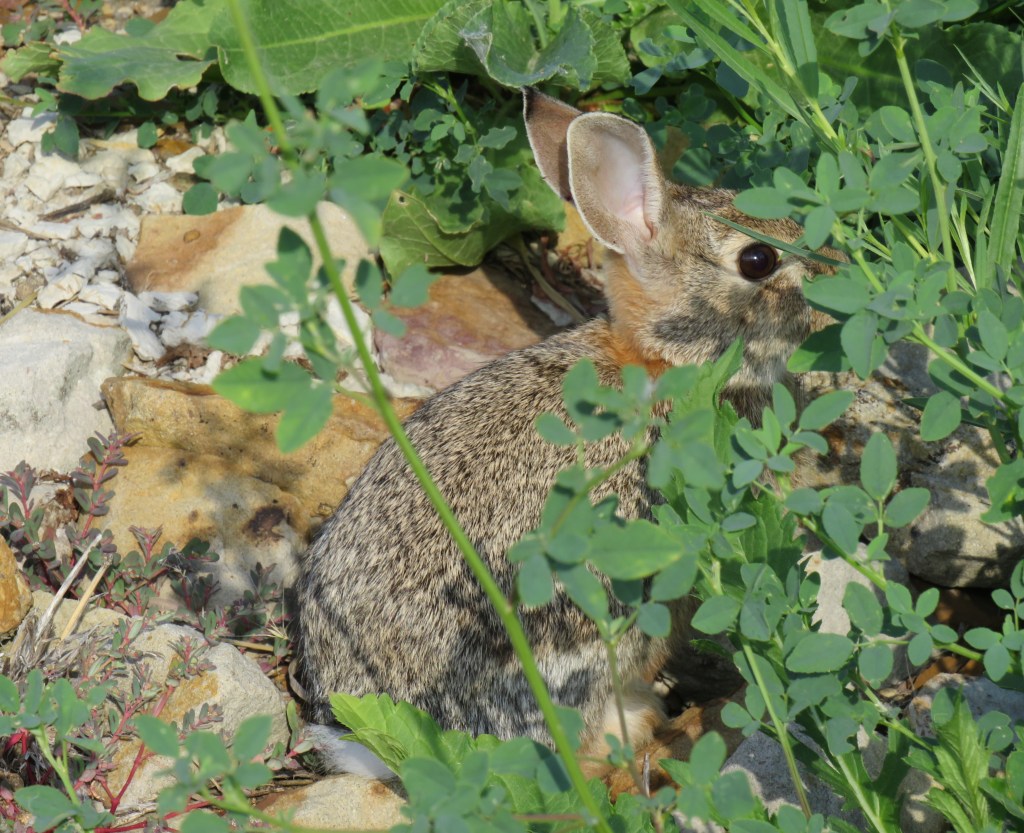
Again, it is supposed to be HOT, HOT, HOT, so I took my walk early in the morning. I changed it up and walked the trails in Westminster City Park. Yesterday, I saw lots of Herons Nature Walks – Early Morning Herons. Today, I saw lots of bunnies hopping all around. Some of them thought if they hid themselves in the grass or bushes I wouldn’t see them. 🙂
One tried to just lie down as low as possible, hoping I wouldn’t see him or her.
Mole sauce is a cornerstone of Mexican cuisine. It boasts of a rich history with roots in pre-Columbian civilizations. The word “mole” itself comes from the Nahuatl word “molli,” meaning sauce or concoction. It literally means “a bunch of ingredients ground up. It is simply a mixture of ingredients that typically include some combination of chilies, spices or herbs, tomatoes or tomatillos, sometimes, seeds or nuts. If the mixture is made mostly of nuts or seeds, it is called a pipiane”. (p. 150 Truly Mexican by Roberto Santibanez). There are so many different varieties of moles. They can be red or green or dark brown or even black, thick or thin and brothy. The ingredients in moles “combine in such a way that they give up their individual identities and create one entirely new flavor”. (p. 151 Truly Mexican). Mole’s story begins with the indigenous peoples of Mexico, including the Aztecs and Maya, who crafted intricate sauces using ingredients like chili peppers, chocolate, and spices together.
The most popular type of mole sauce, at least in the United States, is the thick, dark, velvety chocolate brown mole, or Mole Poblano. It is most often served with chicken or pork. Moles are always served with other things, from vegetables to meats to grains. A couple of years ago, I made an apple mole sauce, Pollo con Mole de Manzana con Pasilla and gave some to an acquaintance of mine who is Mexican. She had no idea that there was any other kind of mole sauce other than Mole Poblano. We can all learn and try new things. 🙂
In the early years, peppers, seeds, nuts and chocolate were the main ingredients to moles. But when the Spanish came, they added other ingredients like almonds, cinnamon and sugar to the mix. This cultural exchange led to the development of the diverse mole varieties found today, with each region and family often having its own unique recipe. Today, mole is considered to be one of Mexico’s national dishes.
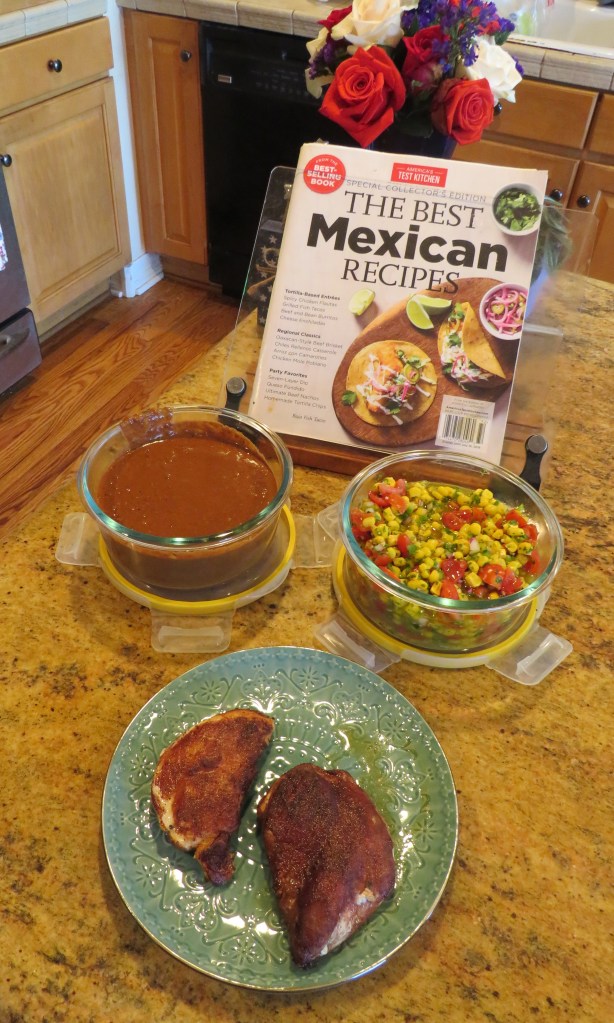
Yesterday, when I did my deep dive into chocolate Chocolate Lovers Unite, I told you something chocolate would be on the dinner menu. And sure enough it was. I made Mole Poblano chicken, that I served over arroz verde with a corn salsa on top. More on the corn salsa later though.
Mole Poblano Chicken with Corn Salsa
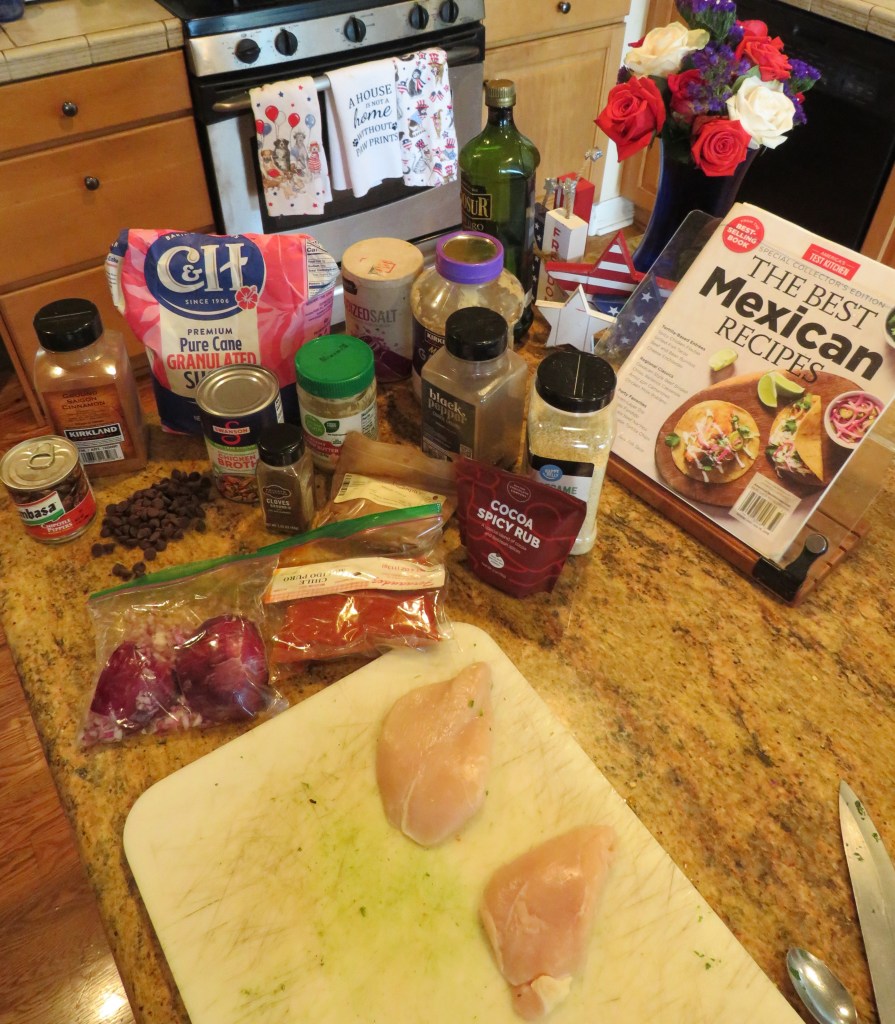
I only had two small chicken breasts, so I coated them in my spicy chocolate rub that we brought back from Belize and pan-fried them instead of a slow cooked them in the sauce. If you are using bone-in chicken pieces, brown them first on all sides, then you can add them to the sauce to cook slowly if you like.
Of course, I had a recipe that I used as a base, but then I personalized it, as I always do. 🙂 Years ago, when still back in California, one of my chefs used to tell me all the time that ” Yo no estes americana. Tu corazón esta mexicano“, or that I was not a gringo. My heart was Mexican. When it comes to food, he may have been right on the money. 🙂
2 lbs chicken
spicy chocolate rub, optional
1/4 red onion, diced fine
2 TBSP olive oil
1 TBSP garlic
1/4 cup peanut, almond or cashew butter – This time I used cashew butter.
1-2 tsp cinnamon
salt & pepper to taste
1 chipotle pepper, with sauce, diced fine
1/4-1/3 cup semi sweet chocolate chips
1/4 cup cocoa powder or Mexican cocoa powder
1/4 tsp cloves
1 TBSP sugar
2 tomatoes, diced fine
1-2 tsp ground achiote peppers
1 can chicken broth
1 TBSP toasted sesame seeds, for topping
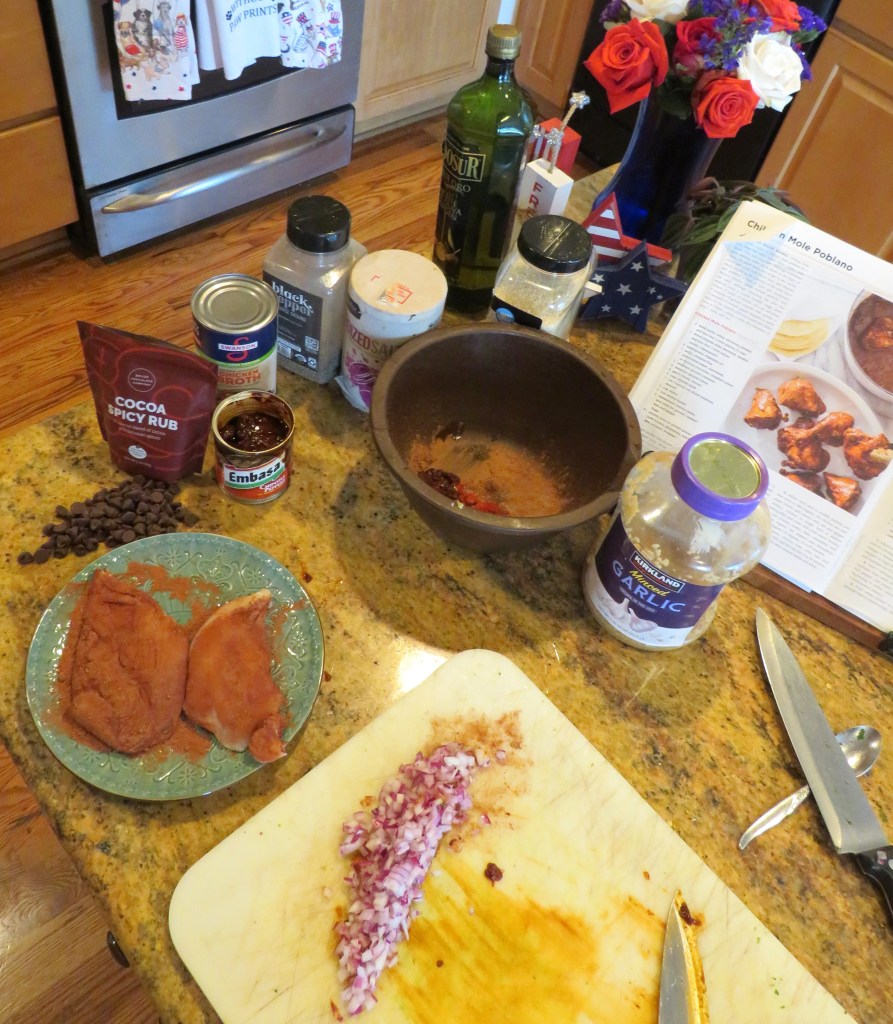
Generously coat the chicken with the spicy chocolate rub on both sides. Cook in a hot skillet with olive oil, for about 3 minutes per side, or until the chicken is cooked. Remove from the heat and set aside and keep warm.
Combine all the seasonings, chipotle pepper and garlic together with the cashew butter and chocolate and mix together well.
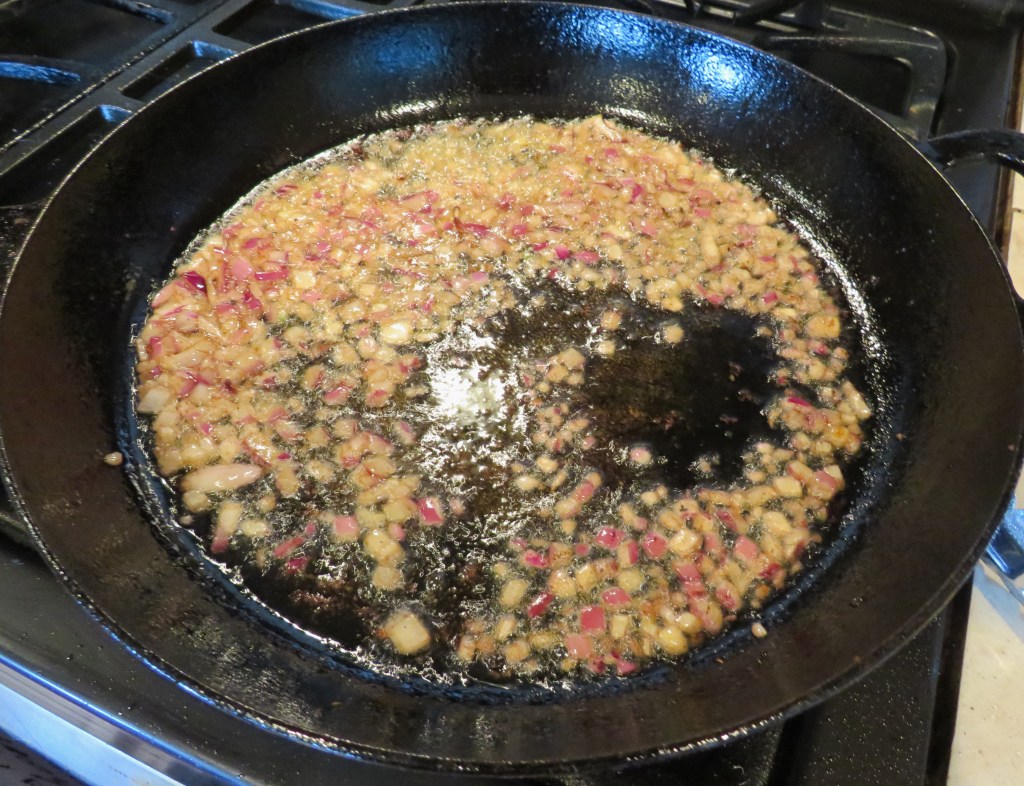
Cook the onions in the oil for about 2 minutes, stirring frequently.
Add the chocolate spice mixture and mix together throughly.
Add the chicken broth and tomatoes. Bring to a boil, then reduce the heat to a simmer and continue to cook for an additional 20-30 minutes, stirring often. This is the time to add the chicken pieces, if using.
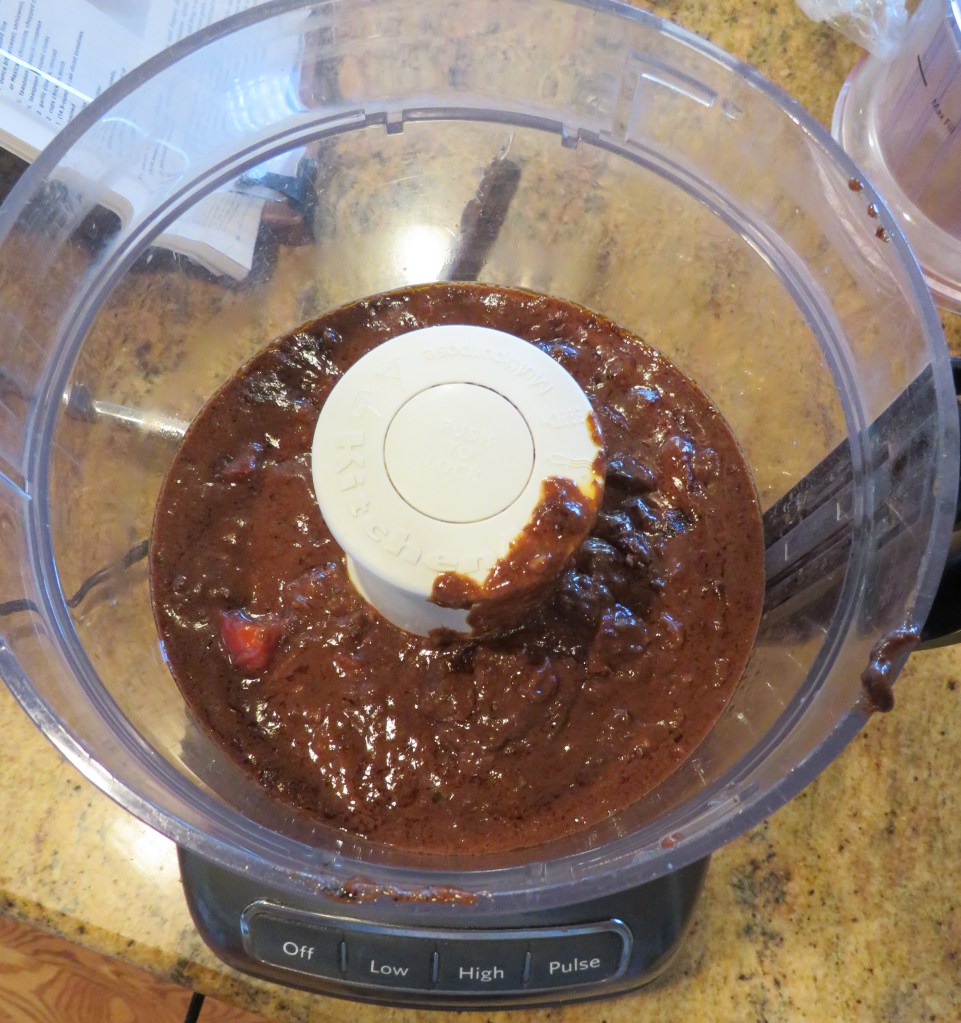
When everything is cooked down, and the sauce is thick, place it all in a blender or food processor, and blend until smooth.
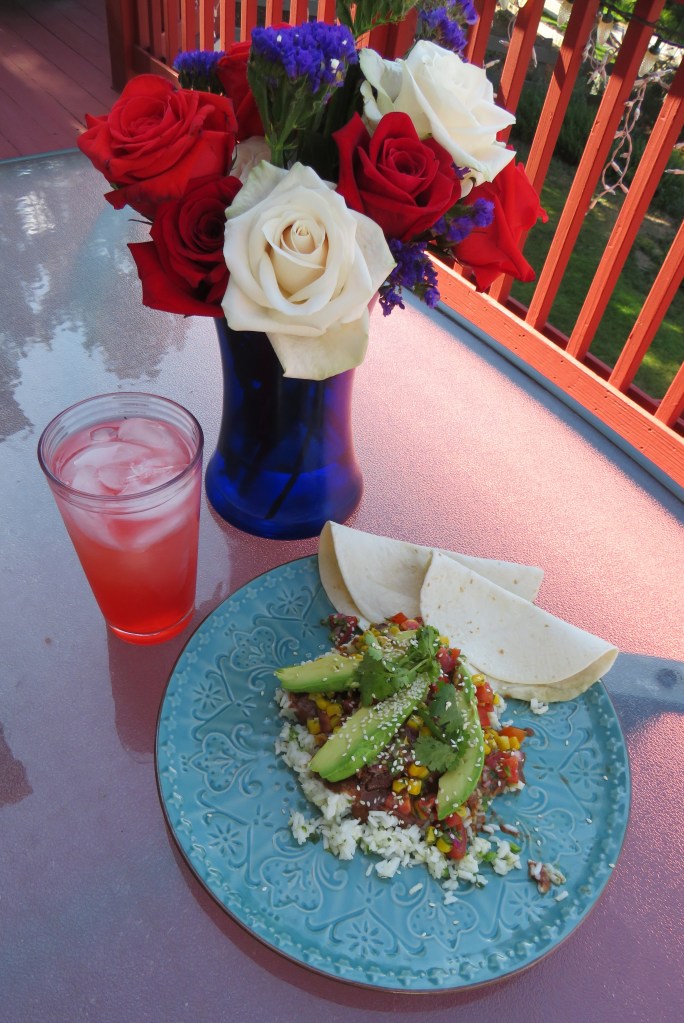
Once everything is cooked, serve it up. I served it all over a layer of arroz verde topped with a little mole sauce, then more sauce on top of the chicken, and finished with the corn salsa, avocado slices and toasted sesame seeds.
Instead of wine this time, I made an adult version of a cherry lemonade to serve on the side. !Esta mui delicioso! Disfruitar! It was so cool and refreshing.
Have a great day and make everyday great o que tengas un gran dia y haz que casa sea grandioso. Stay cool, stay safe and stay well. Mantén la calma, mantente seguro y mantente bien. ‘Til next time.
I went walk-about early this morning to avoid the heat once again. I saw so many Grey Herons out today. I think I saw about 16 or so. They were definitely the stars of today’s walk.
I was even lucky enough to get some good shots of them in flight too. 🙂
Every day is different. I just never know what to expect. I like it that way too. It keeps me on my toes and keeps me alert, with eyes wide open.
I am a little late, but yesterday was World Chocolate Day. I had no idea. So since, I didn’t know, but I do now, tonight’s dinner will have something chocolaty. You’ll just have to wait and see what I come up with. 🙂
World Chocolate Day, or just Chocolate Day, is an annual celebration of chocolate, occurring globally on July 7, which some suggest to be the anniversary of the introduction of chocolate to Europe in 1550. The world has been celebrating World Chocolate day since 2009, but here in the United States, we also celebrate on September 13, with International Chocolate Day, and there is also Chocolate Day, celebrated on February 9th too. Really, any day is a chocolate day though. 🙂
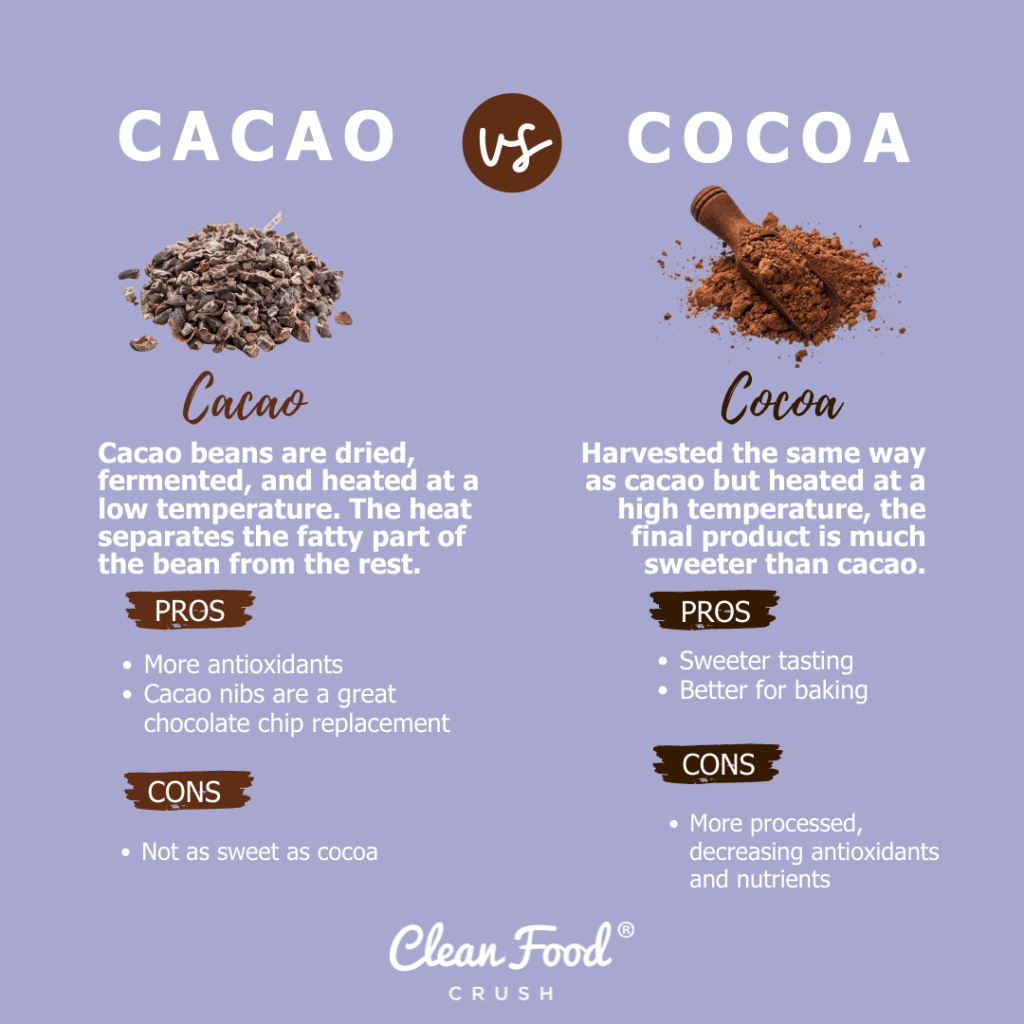
All chocolate starts from the cacao beans, grown in tropical areas of the world. Cacao and cocoa are two different phases of the chocolate making process. The key difference between cacao and cocoa lies in the processing: cacao refers to the raw, unprocessed beans or products derived from them, while cocoa is the term for roasted cacao beans and their processed products. Cacao is generally considered more nutritious due to its minimal processing, while cocoa is often associated with a more familiar chocolate flavor and is commonly used in baking and confectionery. In essence, “cacao” is the raw, minimally processed form, while “cocoa” is the processed, often roasted, form.
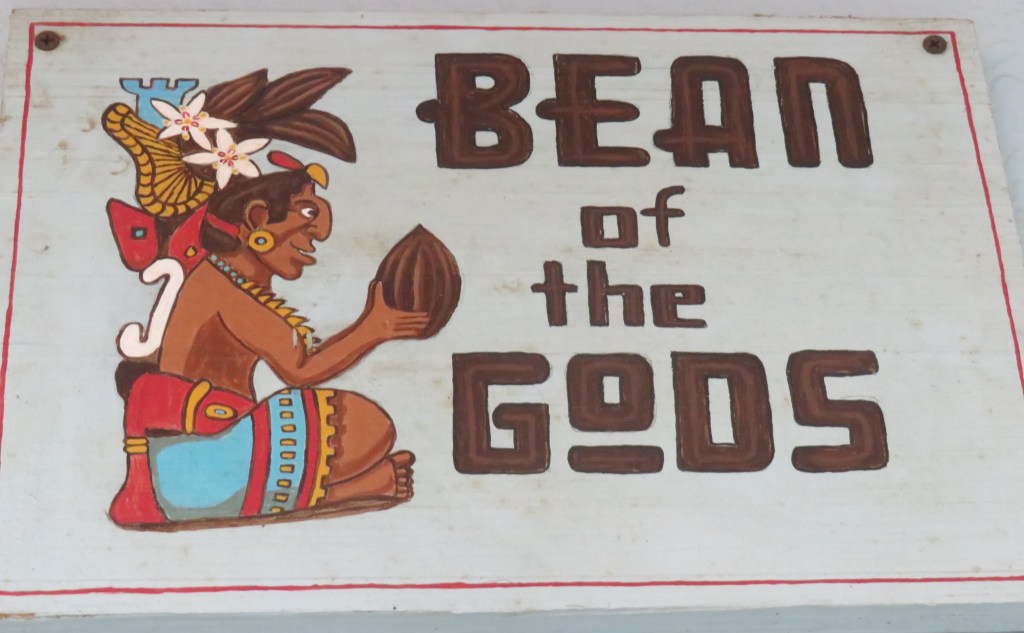
While it’s difficult to pinpoint one single inventor of chocolate, the practice of consuming chocolate-like beverages can be traced back to ancient Mesoamerican civilizations, particularly the Olmecs, Mayans, and Aztecs. Early evidence for chocolate consumption is found among the Maya, in 600 BC. These cultures fermented, roasted, and ground cacao beans into a bitter, frothy drink, sometimes adding spices, chilies, or cornmeal.
The modern concept of solid chocolate, made by adding cocoa butter and sugar, is a later development, with J.S.Fry and Sons being among the first to produce it. Chocolate, as we know it today, largely came into being with the invention of the cocoa press in 1828 by Coenraad van Houten, which allowed for the mass production of affordable chocolate. Prior to this, chocolate was primarily a bitter, aristocratic beverage. The cocoa press separated cocoa butter from the solids, making it easier to create a powder that could be mixed with other ingredients and molded. Later innovations, like J.S.Fry & Sons‘ first chocolate bar in 1847 and Daniel Peter‘s milk chocolate in 1875, further shaped chocolate into its modern form. That century saw the rise of Swiss and British chocolate makers, and production was industrialized.
Today, chocolate is one the most popular treats, with over 1 Billion people eating chocolate everyday. Nine out ten people are chocolate lovers around the world. But we mostly eat the sweetened and refined version that was created in Europe, not the raw or bitter cacao preferred by the Mayan and Aztec cultures.
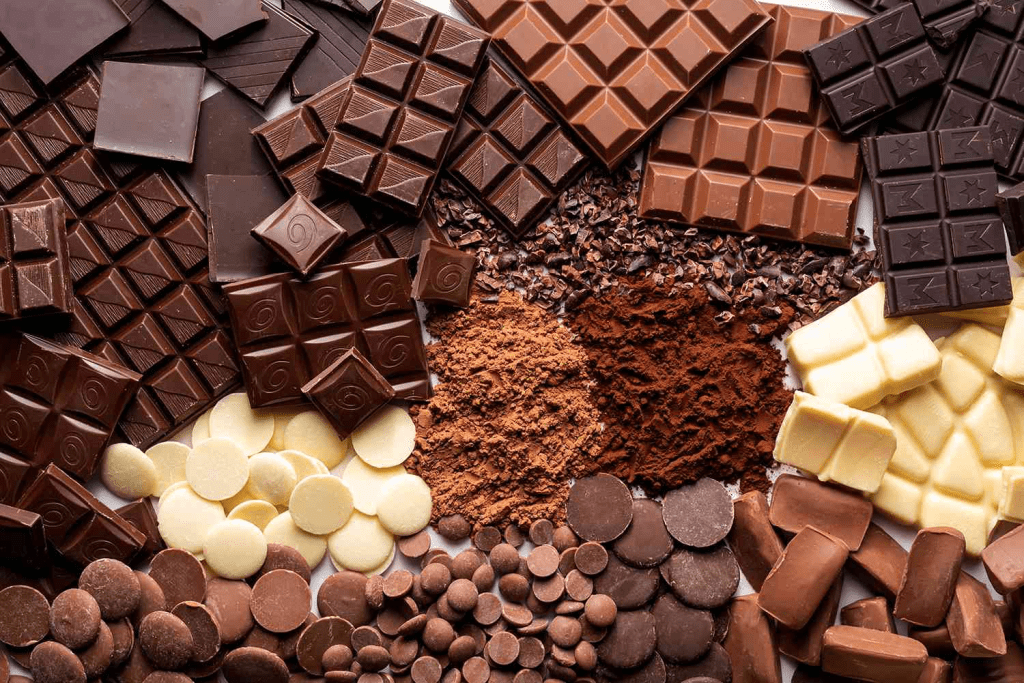
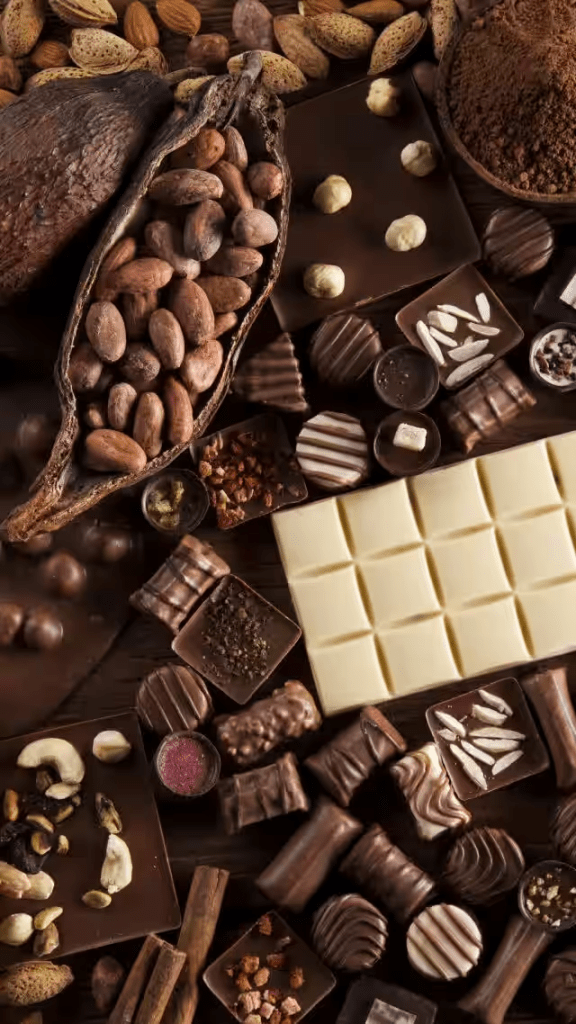
There are different types of chocolate and every country known for producing chocolates has their own unique style as well. Milk chocolate is the most popular type of chocolate, and it is made by adding milk powder or condensed milk to chocolate liquor. Dark chocolate is made with a higher percentage of cocoa solids and has a more intense flavor. Semi-sweet chocolate is a type of dark chocolate that is commonly used in baking.
There are many other types of chocolate available, including white chocolate, vegan chocolate, and chocolate with added flavors like nuts, fruit, or spices.
There isn’t a single “best” chocolate country, as taste is subjective and depends on individual preferences. However, Belgium, Switzerland, and France are consistently cited as leading chocolate producers with distinct styles and strong reputations. Other countries like Italy, Norway, Denmark and even some in Latin America are also gaining recognition for their high-quality chocolate.
Has some of the highest-rated dark chocolate bars, with brands like Vigdis, Freija, Melkesjokolade and Rosenkilde gaining recognition.
Denmark:
Denmark is way ahead of everyone else in chocolate quality due to a single maker (Friis-Holm) having won more medals on his own than the makers in most other countries have manage to get combined, having 16 prizes, including 7 silvers and 9 bronzes to its brand.
Latin America:
Countries like Ecuador are known for their high-quality cacao beans and are gaining recognition for their chocolate production.
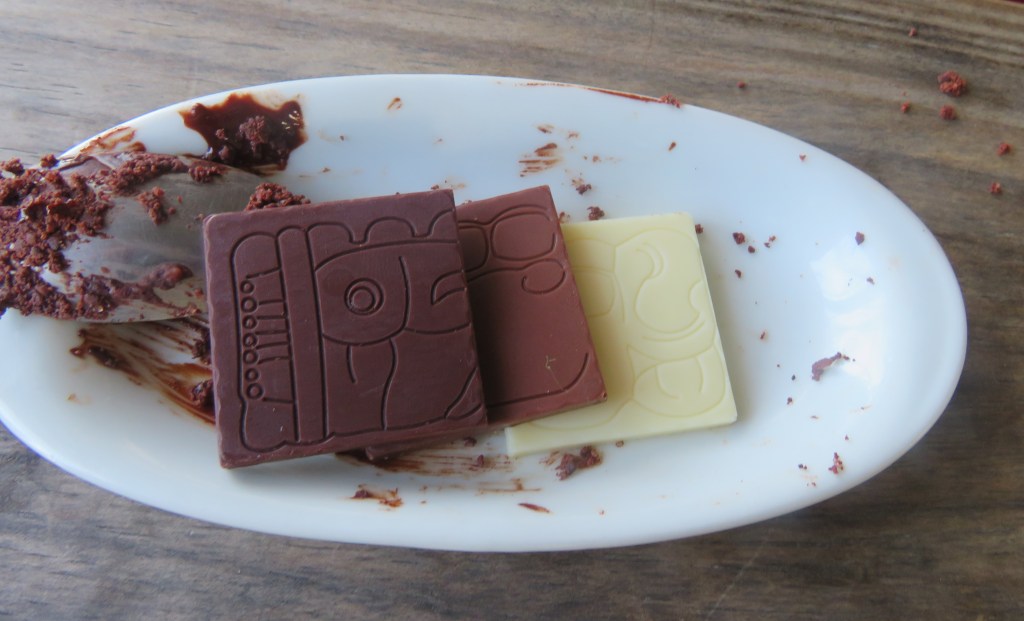
Mexican/Belizan/Mayan Chocolate from our recent trips.
I don’t think we have to only celebrate the goodness of chocolate on specific days of the year. I think we should celebrate with chocolate EVERYDAY of the year. 🙂
Have a great day and make everyday great. You can start by adding a little chocolate to your day. Stay cool, stay safe and stay well. ‘Til next time.
The tiny, little Black-Chinned Hummingbirds love our dead trees in our backyard. Why they prefer the dead trees to live trees is beyond me, but whatever their reasons, I love seeing them in our dead trees as we dine al fresco on the deck. They are always welcome, anytime. 🙂
Usually they are hard for me to capture, but this time, he allowed me to get a few good shots before flitting away. These are very tiny little birds, maybe 3 inches long, and were pretty far away. So take those into consideration when I say these ” are good shots”.
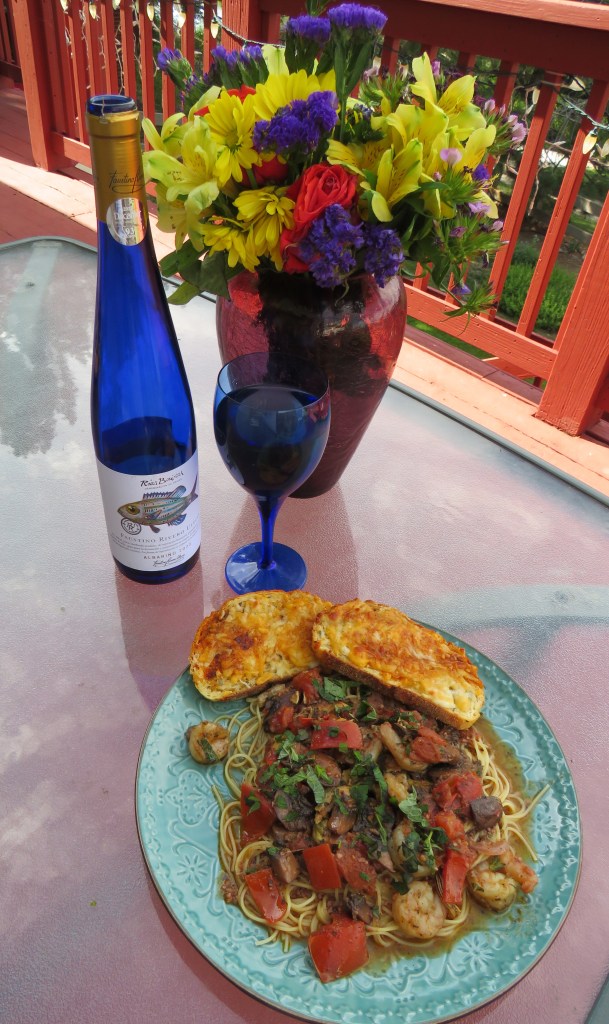
I was cooking with my Cole’s Tinned Fish again. This time I made mussels and shrimp marinara using the smoked mussels. I added shrimp to the dish as well to load it up with goodness from the sea. I served it over angel hair pasta with some garlic and herb cheese bread and a delicious Spanish Albarino on the side. YUMMY!
Mussels and Shrimp Marinara
Marinara sauce originated in Naples, Italy, in the 16th century, likely developed by sailors using simple ingredients like tomatoes, garlic, and olive oil. The sauce’s name, “marinara,” which means “of the mariner,” reflects its connection to sailors and their voyages. Over time, it became a staple in Italian cuisine, known for its versatility and ability to be adapted for various dishes. The quick and simple preparation of marinara made it ideal for sailors and their families, who needed convenient meals while at sea. The core ingredients of marinara – tomatoes, garlic, basil, olive oil – create a flavorful and balanced sauce. I followed the Napolian tradition, though I made it my own and also added mushrooms and onions to my sauce, a dash of red pepper flakes and a little lemon juice right at the very end, as well as some lemon verbena from my backyard.
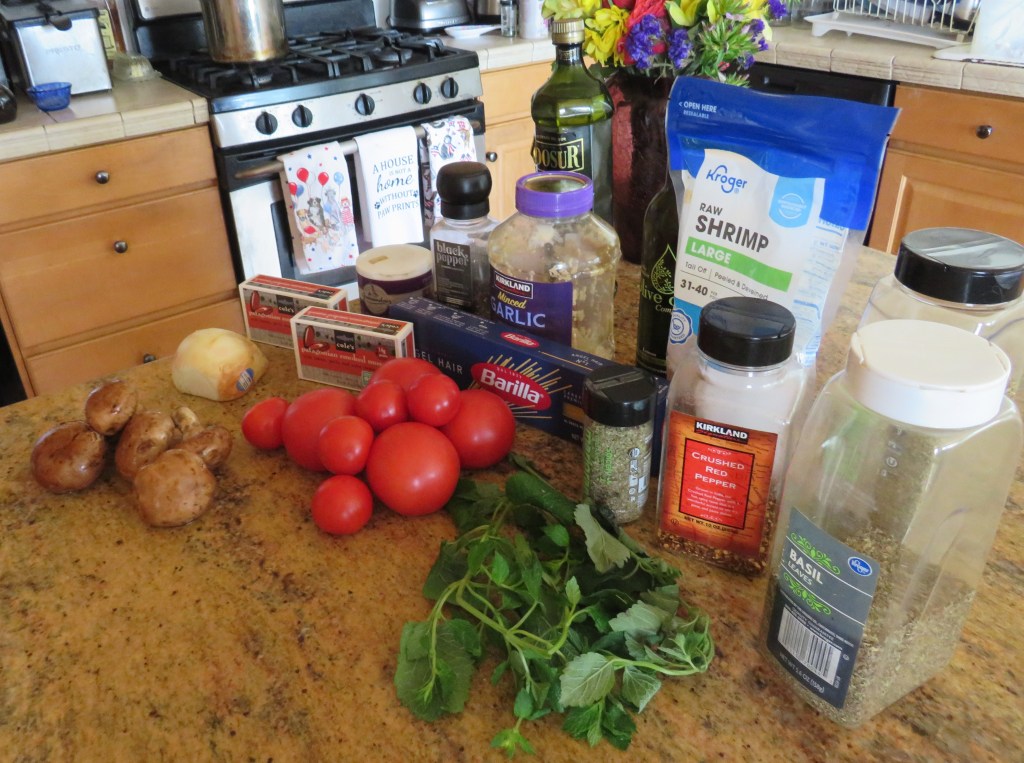
2 tins of Cole’s Tinned Smoked Mussels
1-1 1/2 lbs shrimp, peeled and deveined
2-3 lbs tomatoes, diced – I like to mix and match my tomatoes. I used some vine ripened tomatoes as well as some Campari tomatoes.
5-6 mushrooms, sliced
1/2 onion, sliced very thin
1 TBSP garlic
1/2 cup red wine
3-4 TBSP olive oil
salt & pepper to taste
1 TBSP dried basil or 3-4 TBSP fresh basil, chiffonade
1-2 tsp dried oregano or 1 TBSP fresh oregano, chopped
1-2 tsp dried marjoram or 1 TBSP fresh marjoram, chopped
1 tsp red pepper flakes, or to taste
dash of lemon juice
2 TBSP fresh lemon verbena, chiffonade, optional
Cook the shrimp first and set aside to keep warm.
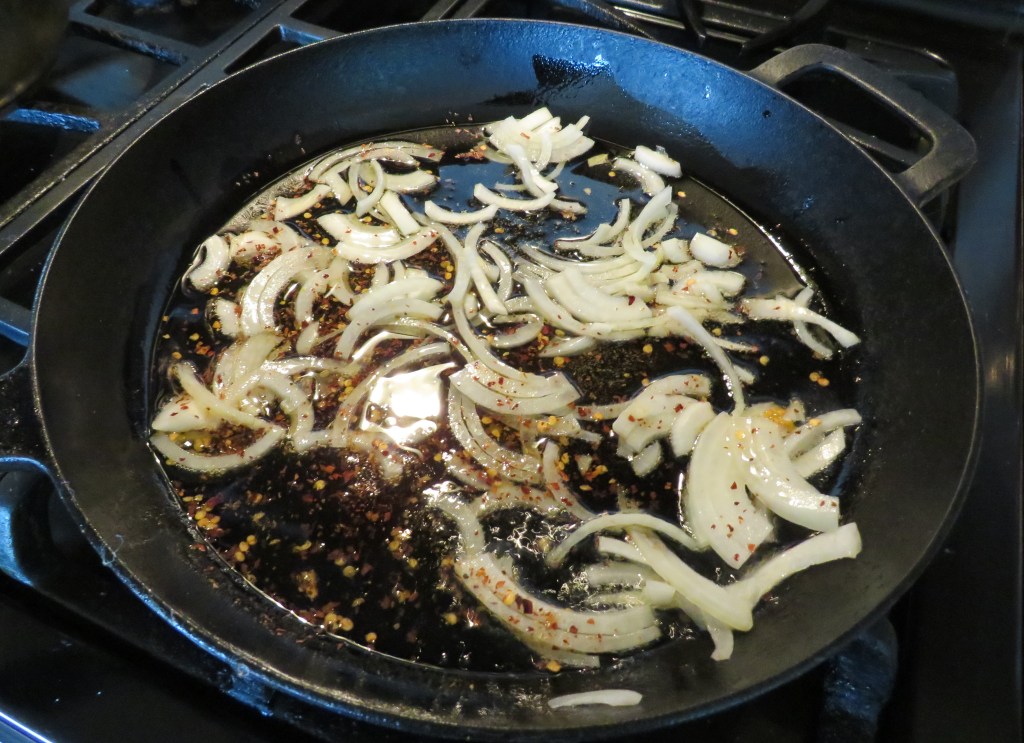
In a large, hot skillet, add the onions, garlic and red pepper flakes, and cook for about 3-5 minutes.
Add the mushrooms and cook for an additional minute or two.
Add the tomatoes and seasonings, if using dried seasonings. If you are using fresh herbs, put them in towards the end of the cooking process to maintain their freshness.
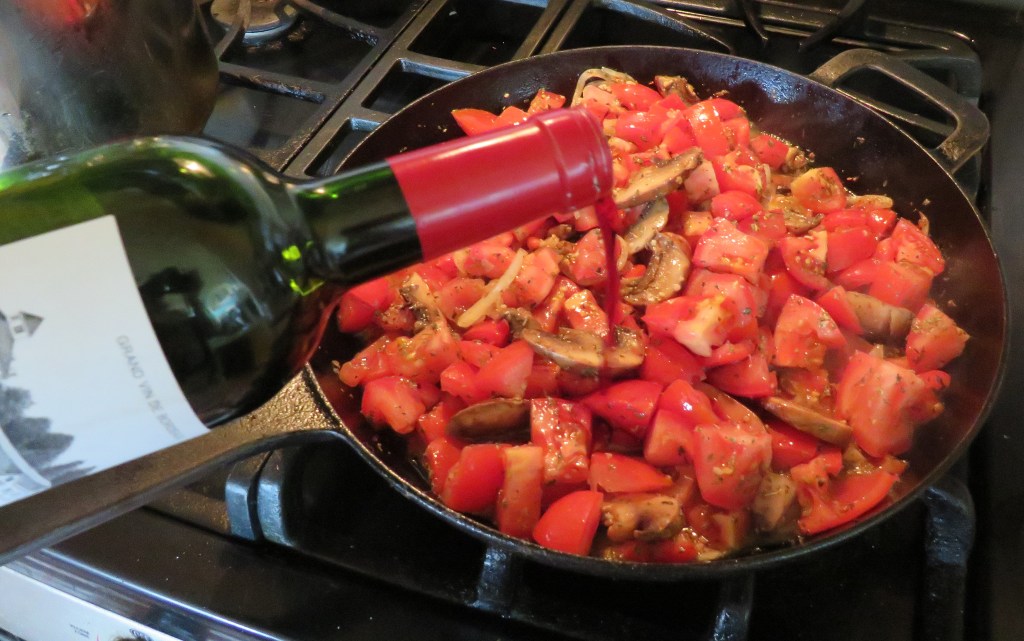
Mix everything together well, and add the wine. Bring to a boil, then reduce the heat to a simmer, and continue to cook for about 20-30 minutes, or until most of the tomatoes have broken down. I like my sauces chunky, so I like to keep some tomato chunks in the sauce. But this is just my own preference. If you like it more smooth, cook it a little longer or you can puree it. Stir, frequently.
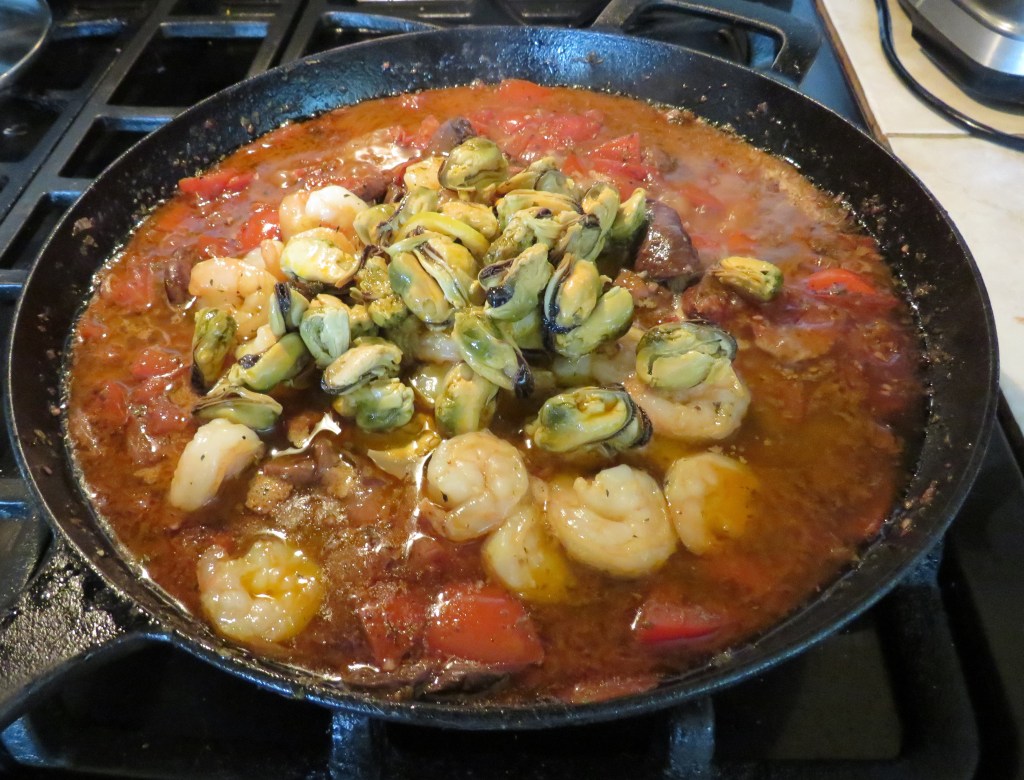
Add the cooked shrimp and the smoked mussels and mix together thoroughly.
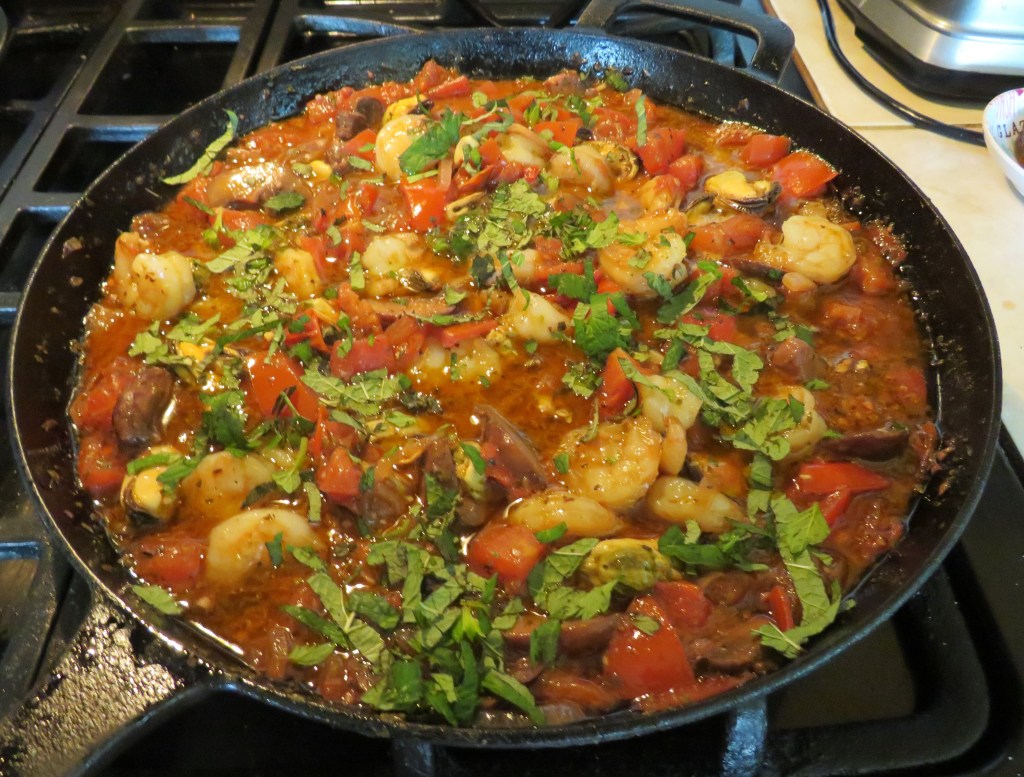
If using fresh herbs, add at this point, along with about 1-2 TBSP lemon juice. Mix in thoroughly and serve over cooked angel hair pasta. Top with more fresh herbs and Parmigiana cheese if you like. I added some garlic & herb cheese bread on the side too.
Because this is a seafood dish, and has a light red red sauce, I served it with a delicious, chilled cool, crisp Spanish Albarino on the side, one of my favorites. You can serve it with a red wine too, just make sure it is a light red wine or it will over power the delicacies of the fish and the sauce.
Delicious! I promise you will love these treasures from the sea.
Have a great day and make everyday great. Stay cool, stay safe and stay well. ‘Til next time.
It’s been way too hot to cook, so I am trying to make as many cool things as I can to help beat the heat. We went to our friends Erik and Shannon’s house for dinner, and I brought a cool summer salad. It was a rice and bean salad, filled cool summer vegetables. It was a big hit and everyone enjoyed it, and it went very well with the steaks Erik grilled up too.
Summer Confetti Rice & Bean Salad
This cool and refreshing salad is super easy -peasy to make and tastes great. Plus it won’t heat up the kitchen much either. You can just make it up and let everything marinate together while you are off doing your thing. It will be ready when you are.
I just made this as a side salad, but if you want to make it more of a meal, you can easily do so by serving it on a bed of lettuce, and by adding either chicken or shrimp, or tofu too. You can also add feta cheese if you like.
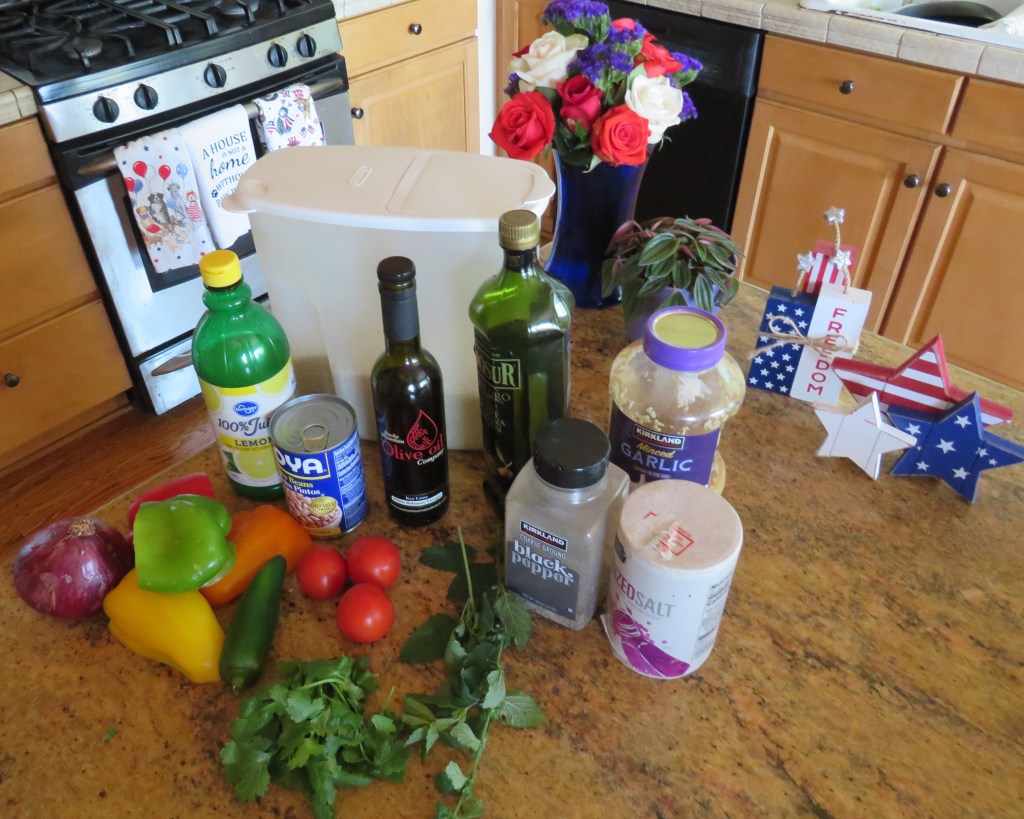
2 cups cooked rice
1 can pinto beans, rinsed and drained
3-4 tomatoes, diced
1/2 each green bell pepper, orange bell pepper, yellow bell pepper and red bell pepper diced
1/4 red onion, diced fine
1/2 zucchini, diced
1/2 yellow crookneck squash, diced
1/4 cup chopped cilantro and/or lemon verbena, optional
1/3 cup olive oil
2 TBSP lime vinegar, optional
3- TBSP lemon juice
1 TBSP garlic
1-2 tsp Dijon mustard
1/4 cup white balsamic vinegar
salt & pepper to taste
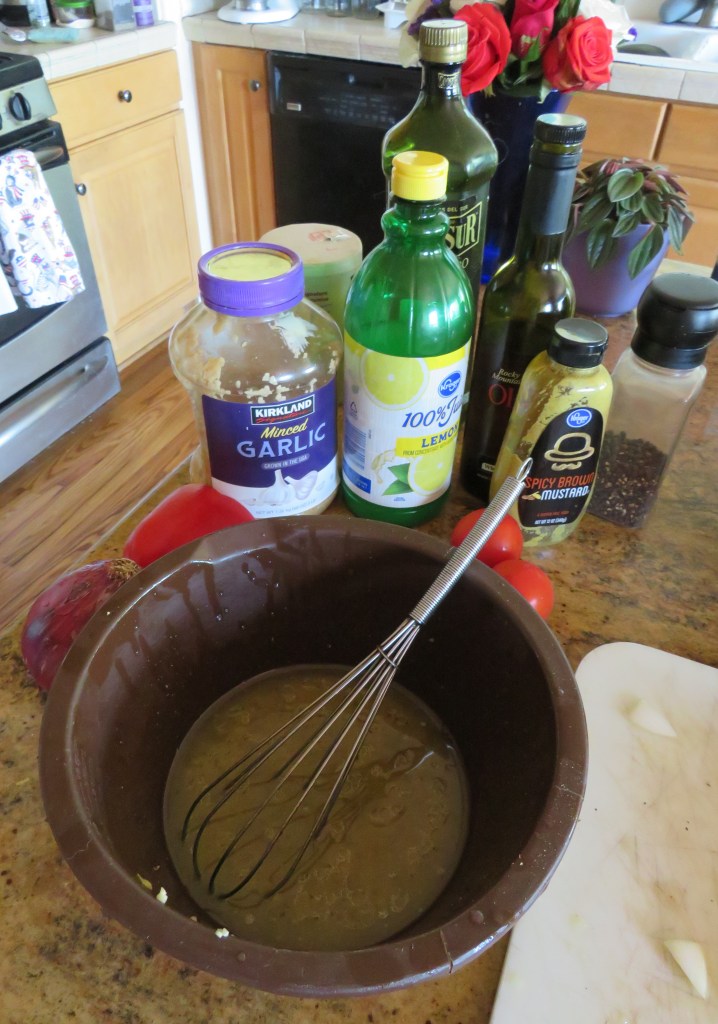
Combine the oil, vinegar(s), lemon juice, garlic, mustard, salt & pepper, cilantro and/or lemon verbena. Mix well and set aside.
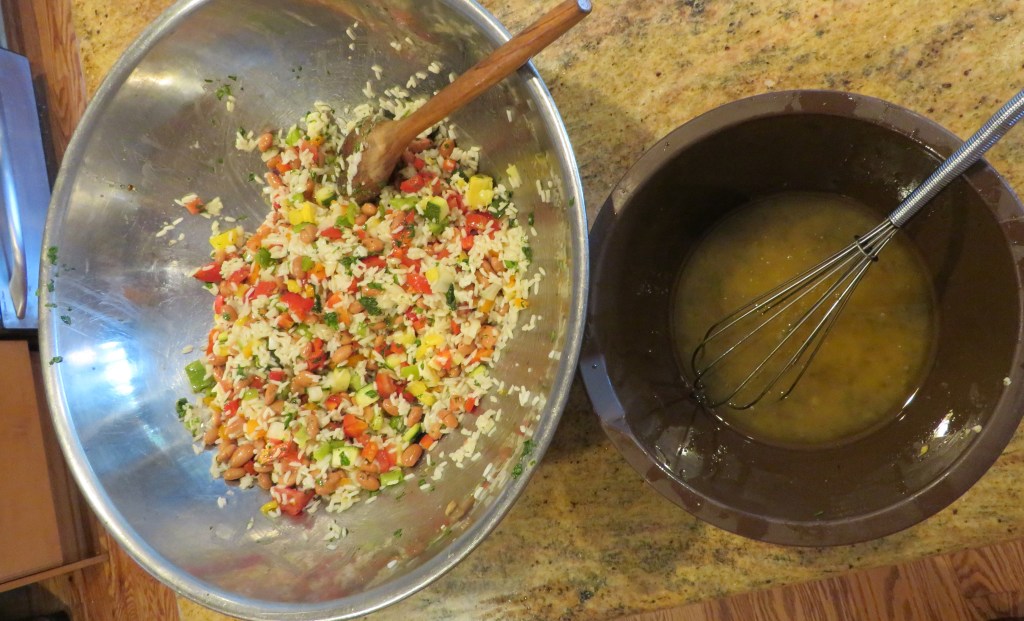
Mix the rice, beans and vegetables together. Add enough dressing to coat everything and give it all good flavor without drowning the salad in dressing. Chill in the refrigerator until ready to serve. Serve cold or at room temperature.
This cool, refreshing salad will go well with anything you want to serve it next to, or it is great on its own too. Either way, I promise you will enjoy it.
Have a great day and make everyday great. Stay cool, stay safe and say well. ‘Til next time.
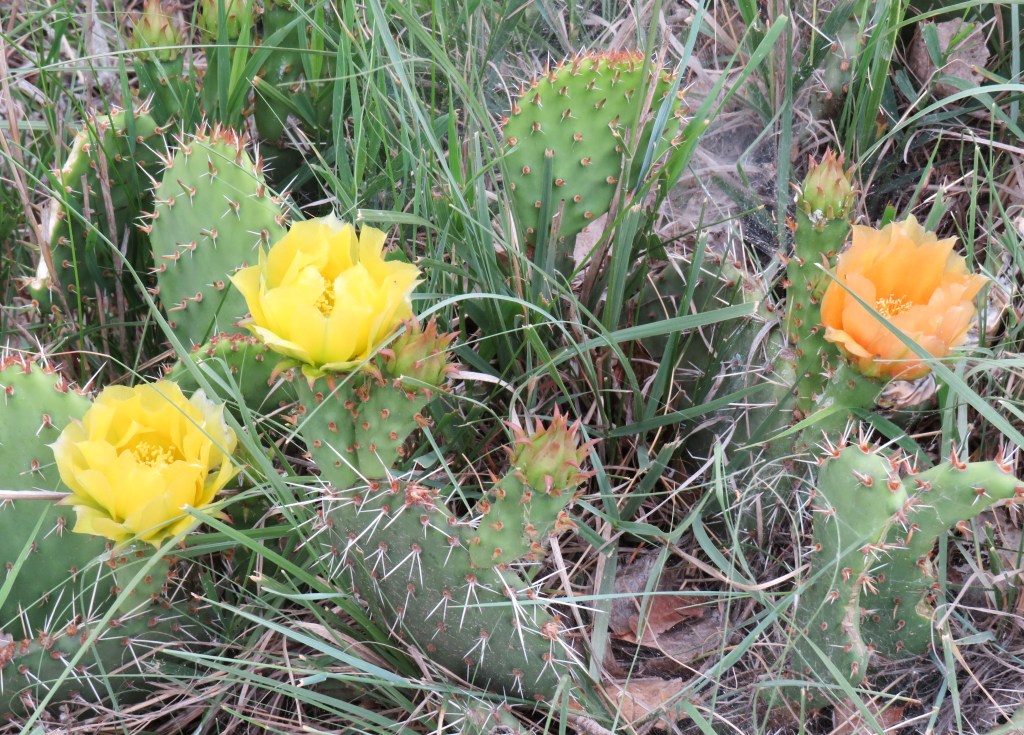
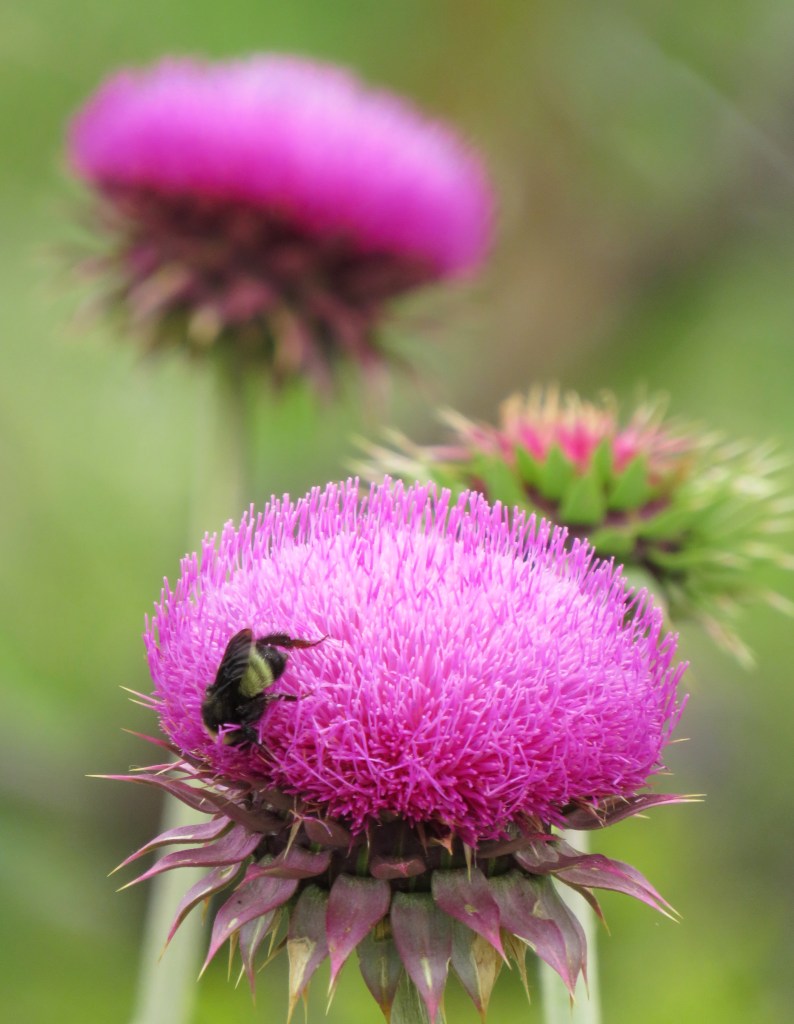
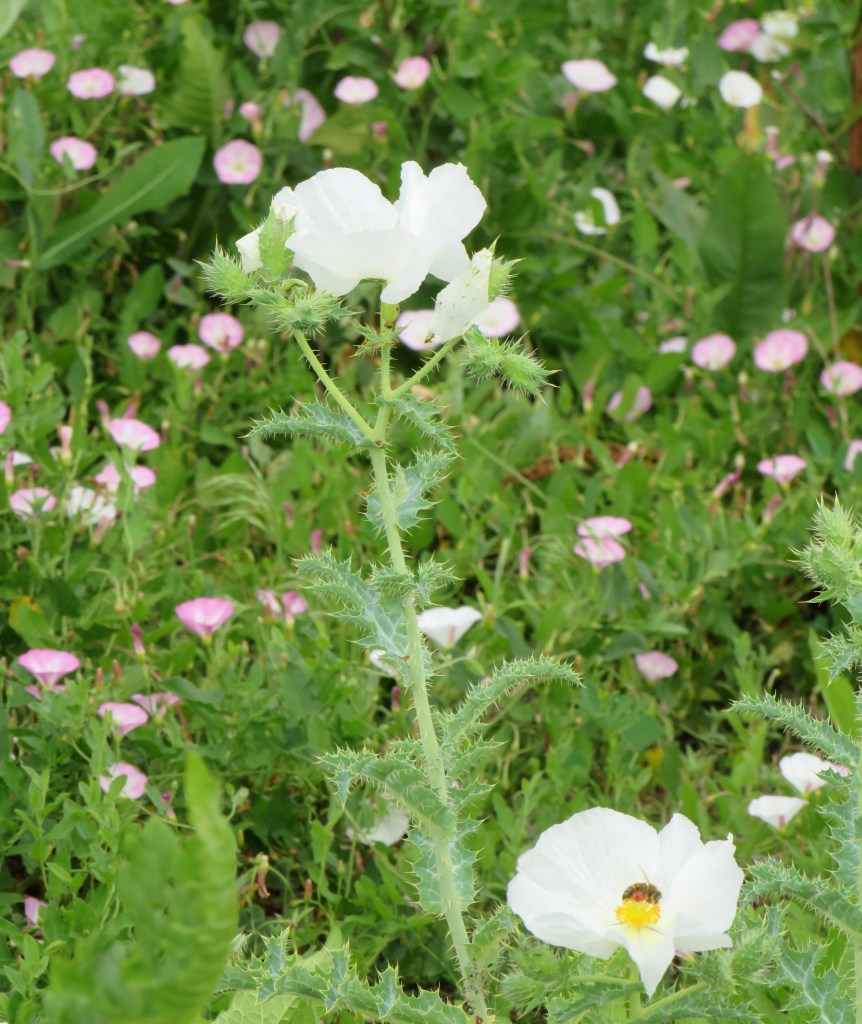
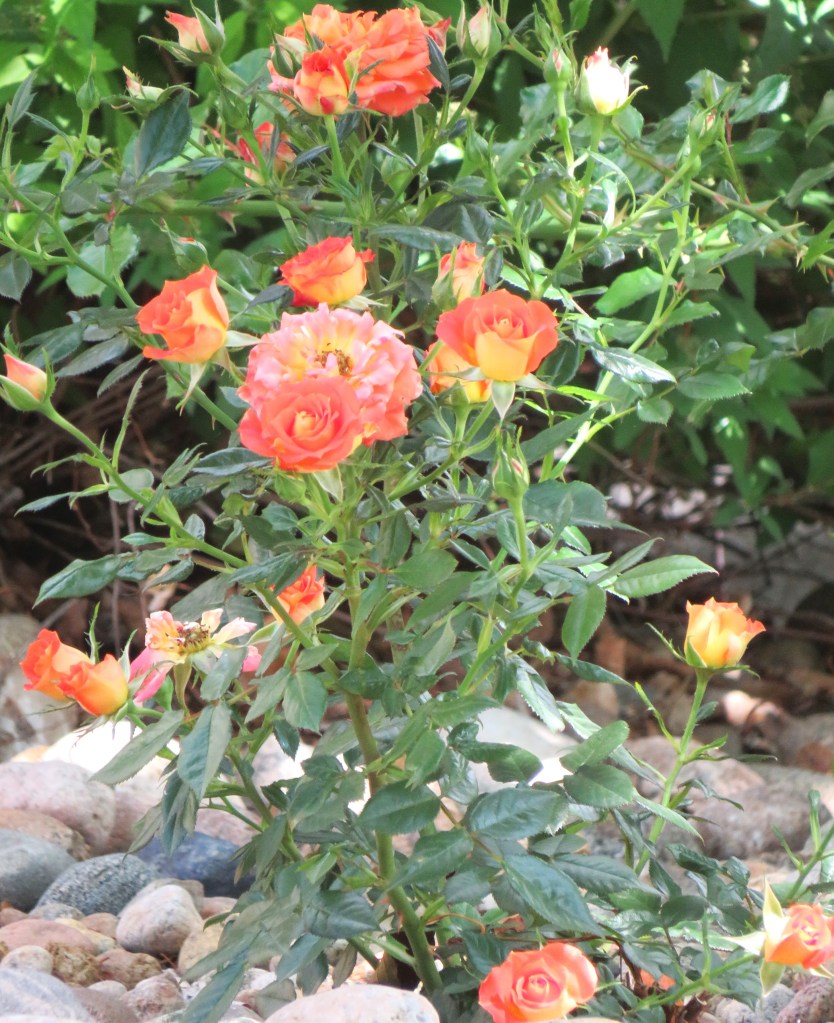
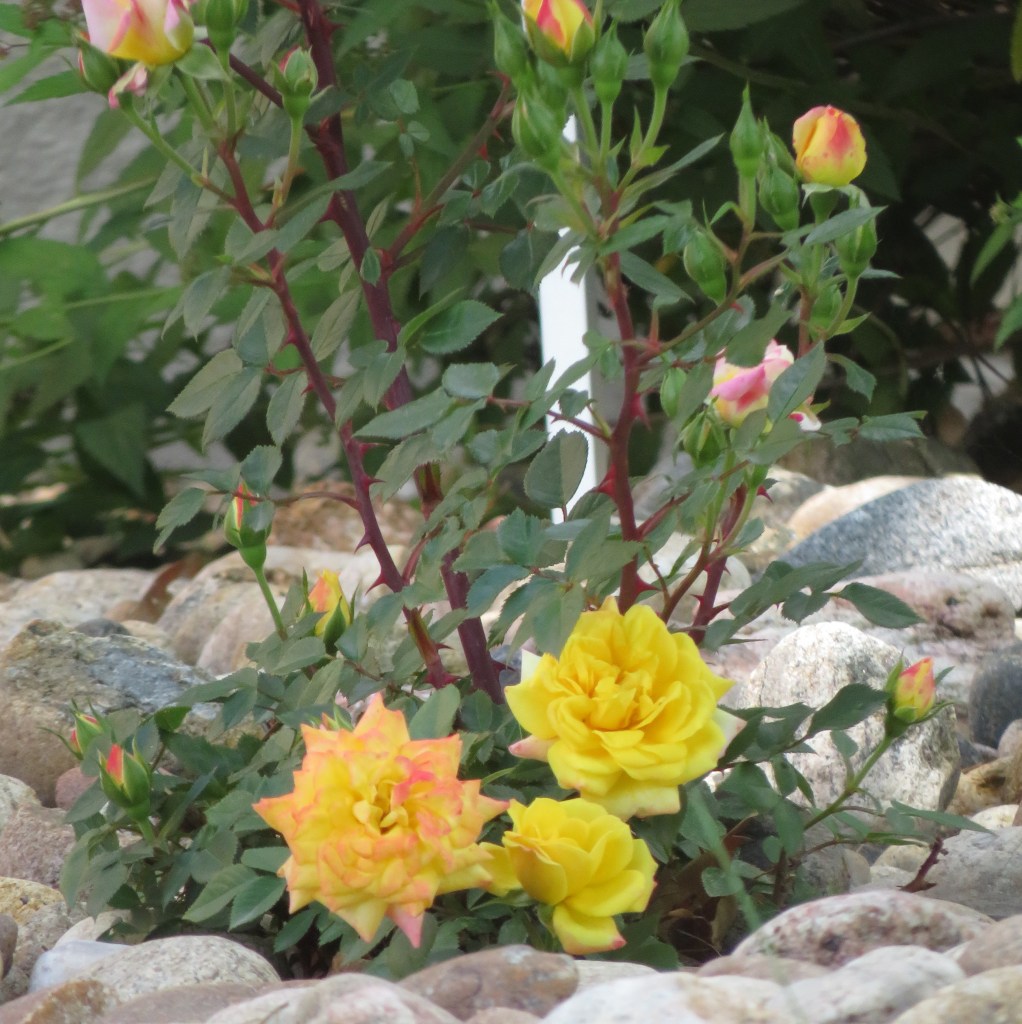
Because it has been so hot lately, I try to go out walk-about early in the mornings. Unfortunately, it doesn’t always work out though. But I have lots of pictures of pretty flowers to brighten your day from previous walks. Enjoy!
Color your world beautiful, today, tomorrow and always. Have a great day.





























































 A Jeanne in the Kitchen