I have created this site to help people have fun in the kitchen. I write about enjoying life both in and out of my kitchen. Life is short! Make the most of it and enjoy!
Author: ajeanneinthekitchen
I have worked in the restaurant and catering industry for over 35 years. I attended 2 culinary schools in Southern California, and have a degree in culinary arts from the Southern California School of Culinary Arts, as well as a few other degrees in other areas. I love to cook and I love to feed people.
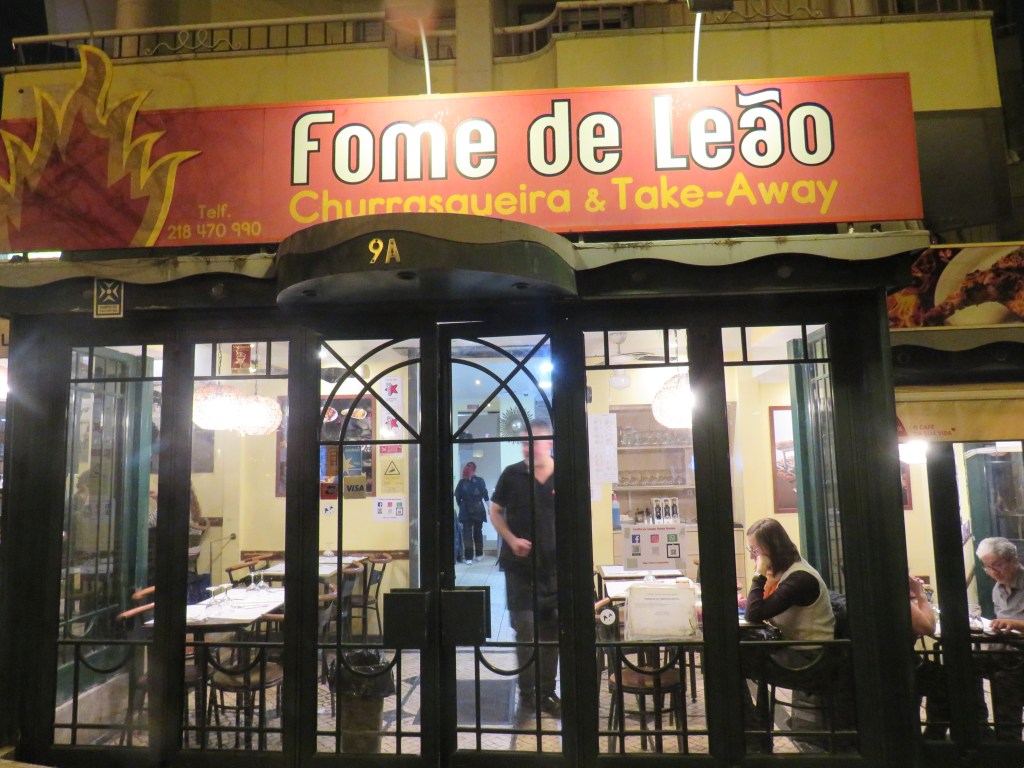
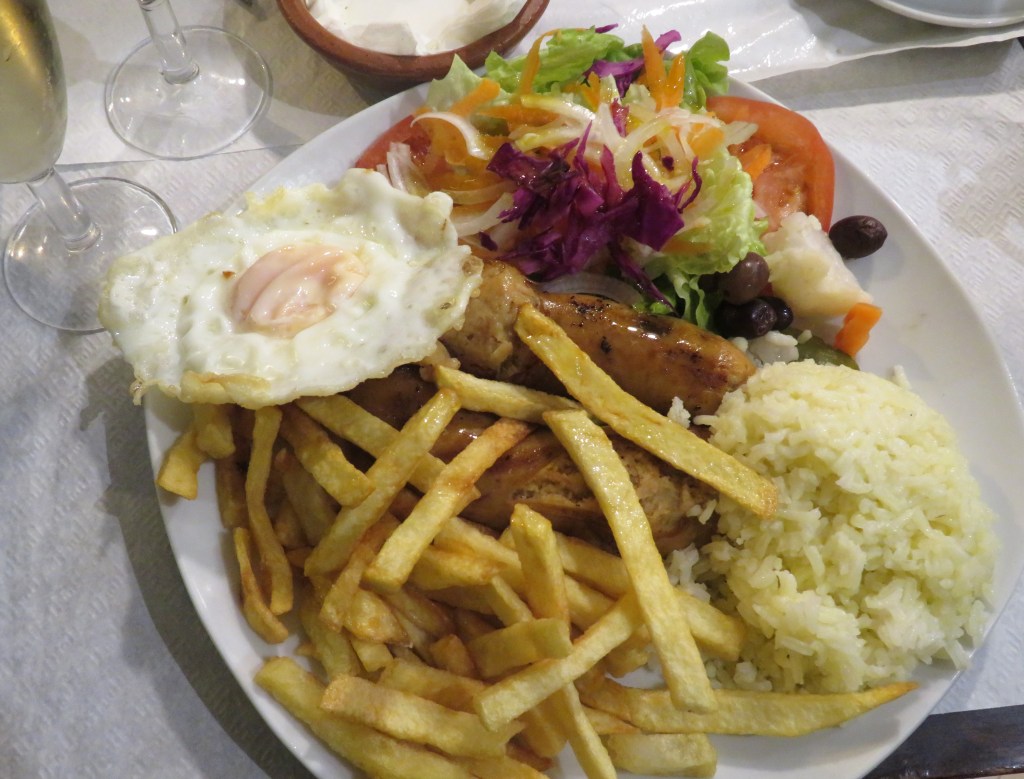
Whenever we travel, we try our best to eat the foods of the locals. Our first night in Portugal, after a very LONG, eventful day, we chose to eat at a little local place close to our hotel. It was a little restaurant called Fome de Leao.
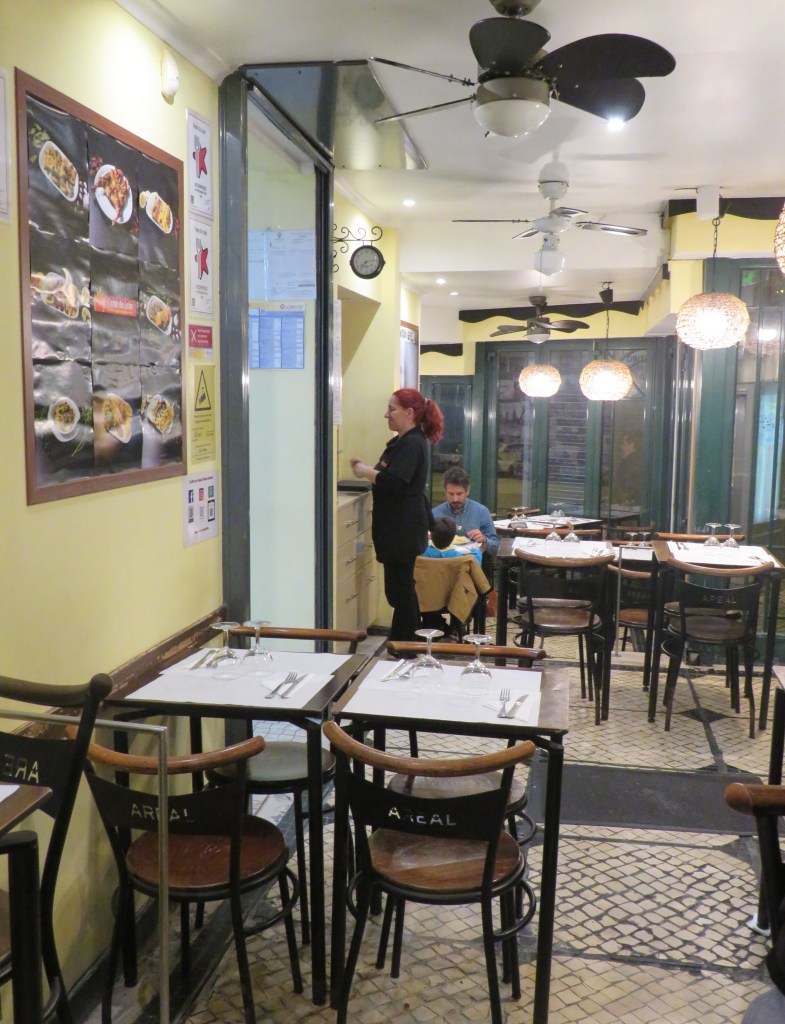
It was a tiny little restaurant, as many of the small family owned restaurants are. But it was full of personality and the food was delicious.
The Portuguese are big meat eaters. In fact, they consume more meat than all other Europeans, with the exception of Spain. Meat consumption in Portugal is among the highest in Europe, reaching approximately 119.6 kg per person in 2023, with pork being the most consumed meat, followed by poultry, with high consumption of processed meats and sausages as well. They also eat a lot of fish. Cod is one of their favorite types of fish, which is really ironic considering cod is NOT found in the Portuguese waters. They have to import cod from the colder waters, mostly from the Nordic countries. The Portuguese diet is called the Atlantic Diet rather than the Mediterranean diet because of the amount of meat they consume. Over the past 50 years, the economic situation in Portugal has improved, making meat, which was once a luxury, widely available and affordable, leading to a massive increase in consumption.
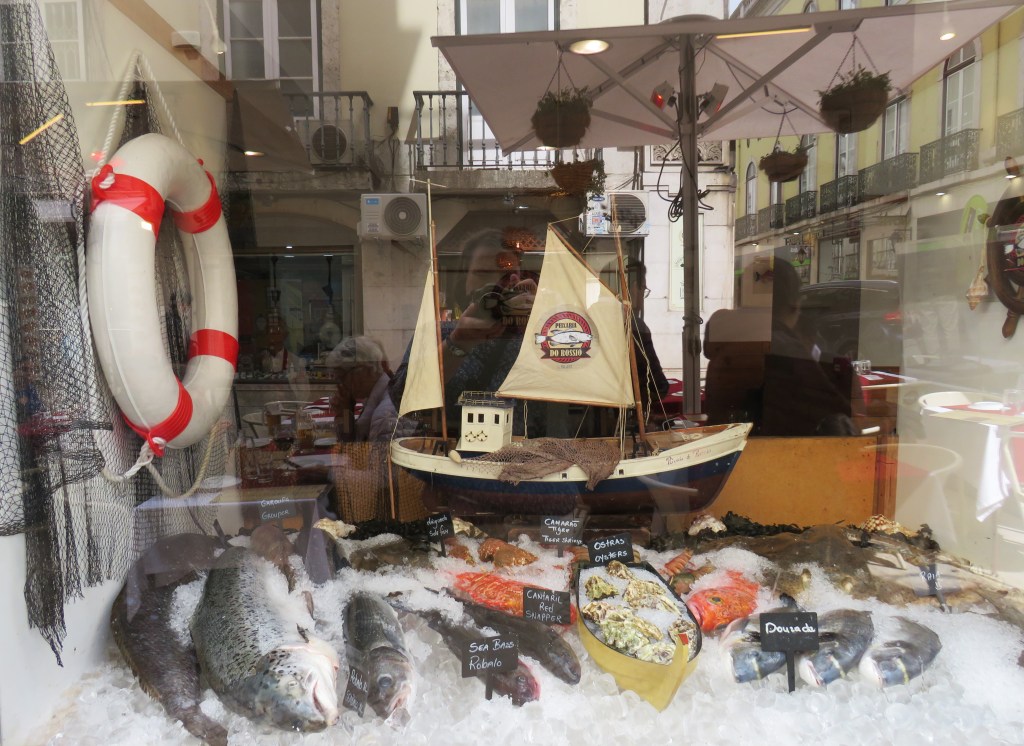
We ate everything Portugal had to offer, fish, meat, pastries and then some. We enjoyed everything we tried. Our first dinner was delicious Portuguese meats cooked in traditional styles.
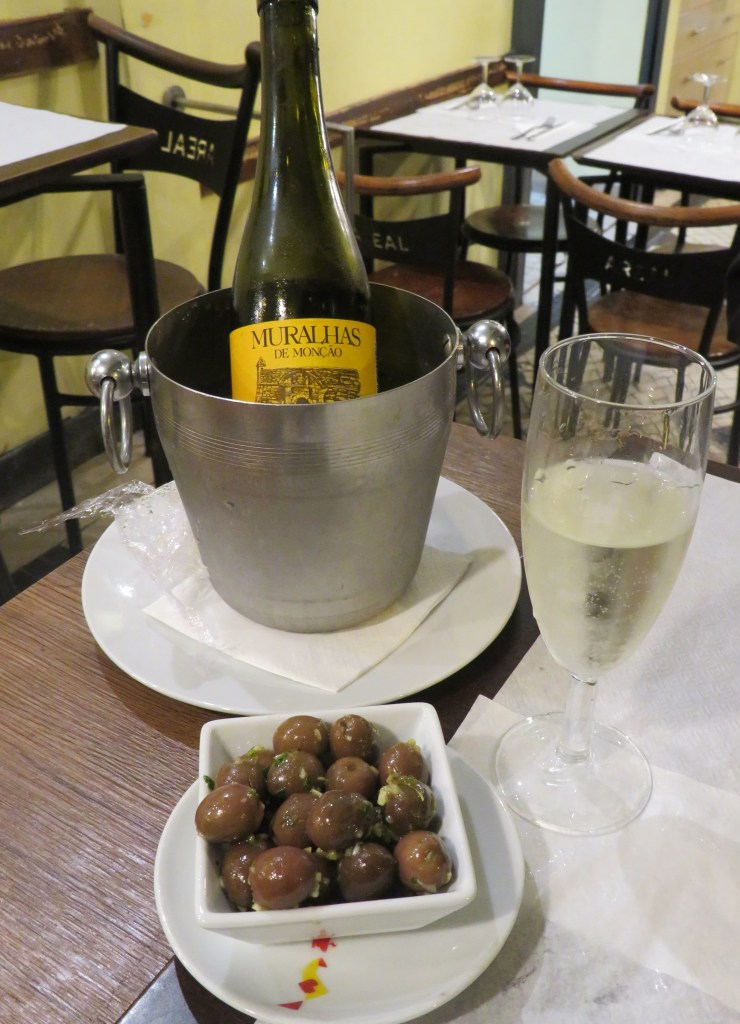
Almost every restaurant we went to started us off with a little bowl of olives. I could definitely get used to this trend. I love olives. And the only wines we drank were, of course, Portuguese wines. 🙂
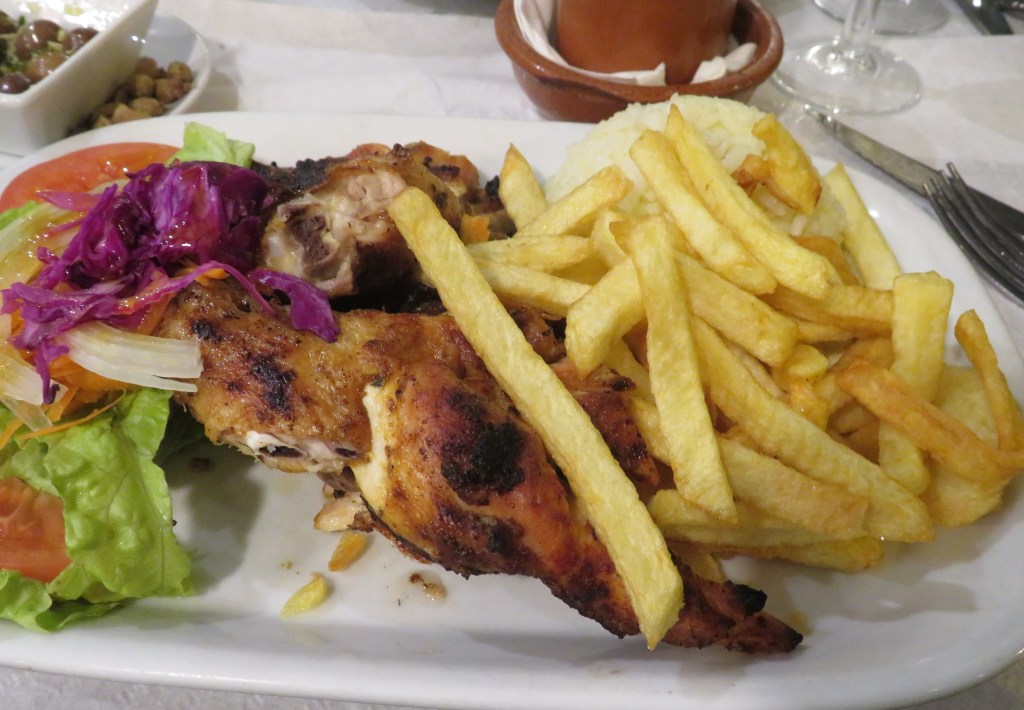
I had roasted chicken.
Larry enjoyed one of the many varieties of Portuguese sausage. A lot of the meals come topped with fried eggs too.
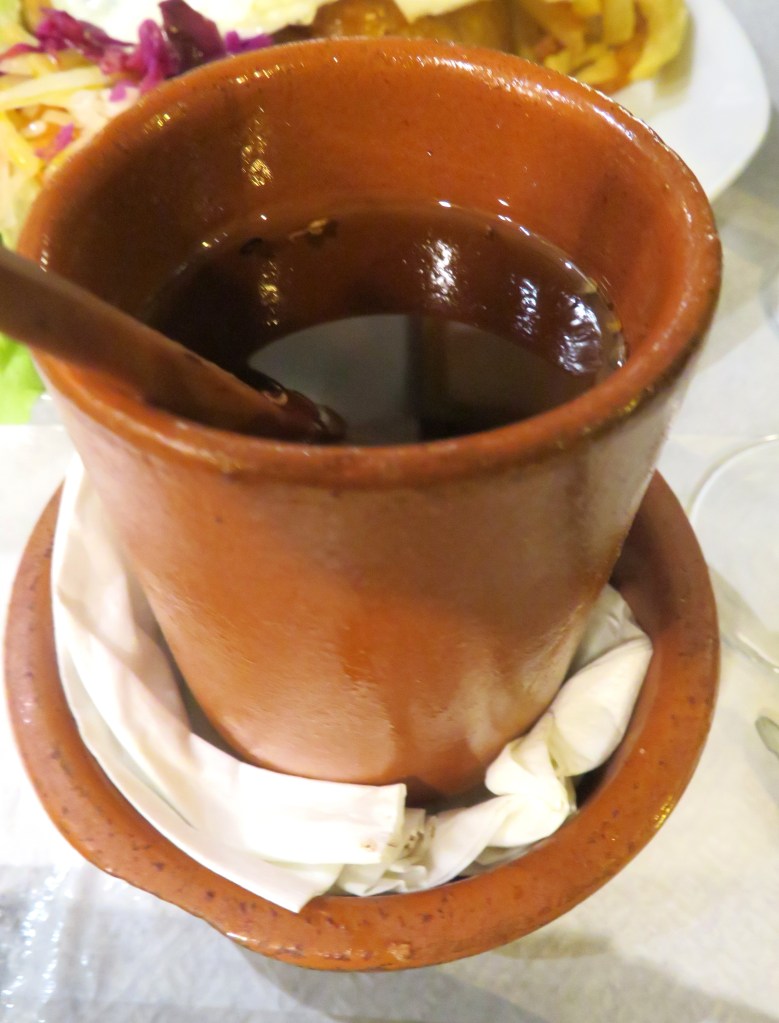
It was all very good, but even better when we added some of the specialty chili oil.
It was a delicious way to end our first day in Portugal.
Stay tuned. There is a lot more still to come. Have a great day and make everyday great. Live life to the fullest. It’s not the destination that matters, but the journey. ‘Til next time.
Our flight left Denver around 4:00 PM on Tuesday afternoon, 3/17. We then flew to Dulles Airport, in Washington D.C., had a layover, then boarded the plane for our flight directly into Lisboa (Lisbon). Our flight to Lisboa was about 7 hours. Yes, we were very tired, and didn’t really sleep on the plane, but that didn’t stop us. No, no. We dropped off our luggage at the hotel, and got checked in as much as they would allow since we were very early, then off we went. We were off to start taking in the sights of Lisboa.
Lisbon is the 2nd oldest European Capitol, founded by the Phoenicians around 1200 B.C. Athens is the oldest European Capitol. Everything in Lisboa, looks very old and antiquated, and by our standards, they are. But don’t be fooled. Most of the city was rebuilt in 1755 after a devastating earthquake and fire that destroyed most of the city. Lisboa is divided up into different districts, each with it’s own unique personality and identity.
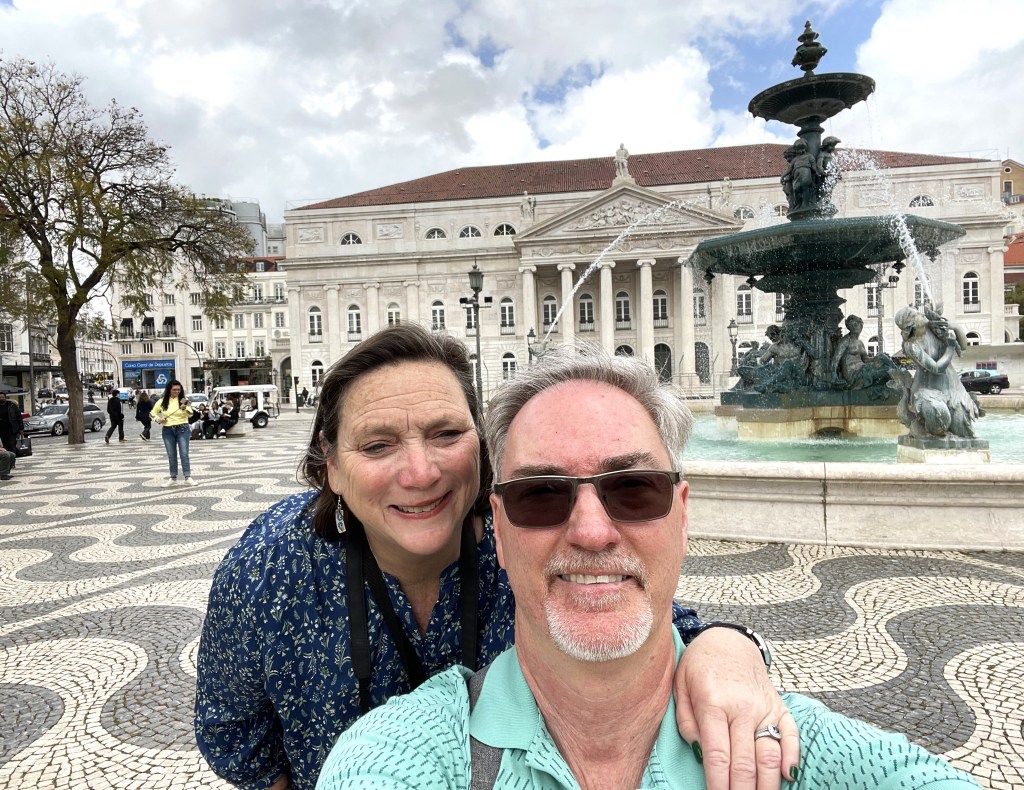
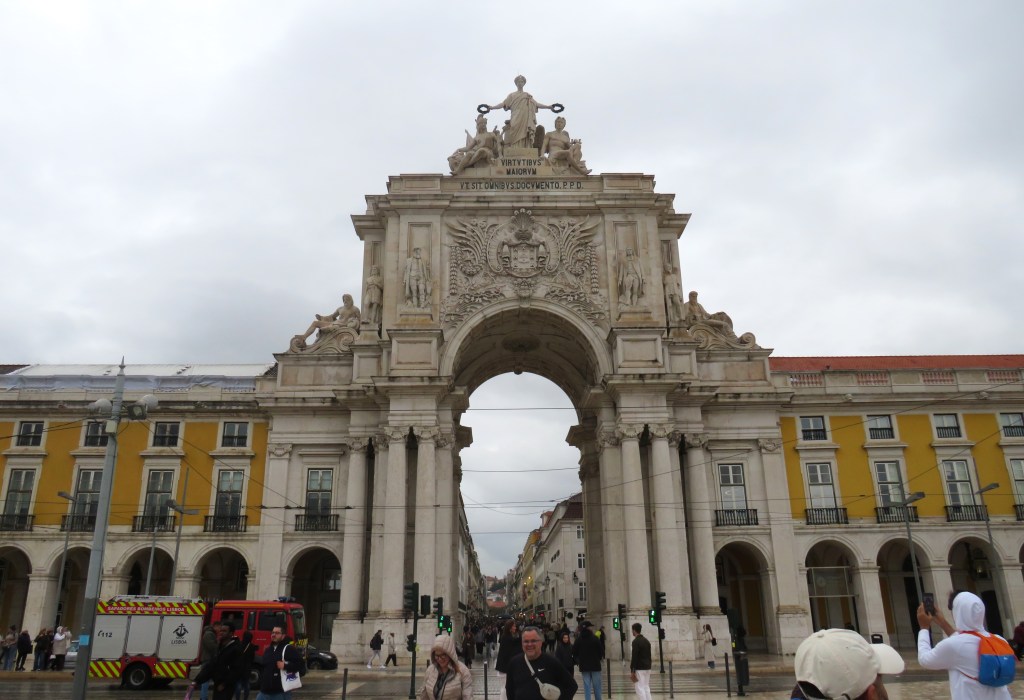
After dropping off our bags, we headed to the Baixa district for our first walking tour of the trip. We explored a little on our own too before meeting up with our tour guide, Bruno.
The Baixa district is the grand, grid-planned heart of Lisbon, meticulously rebuilt after the 1755 earthquake, tsunami, and fire. Located between the Tagus River and Avenida da Liberdade, it is a bustling commercial center featuring neoclassic architecture, vibrant pedestrian streets like Rua Augusta, and monumental squares like Praça do Comércio and Rossio. The Praca do Commercio, or Commerce Square is a massive, arcaded waterfront square that once housed the Royal Palace, now a major tourist spot.
Larry has been planning this trip for months, and we had been watching all kinds of videos of things to do in Portugal long before leaving Denver. So we started doing some of the recommended activities before meeting up with Bruno.
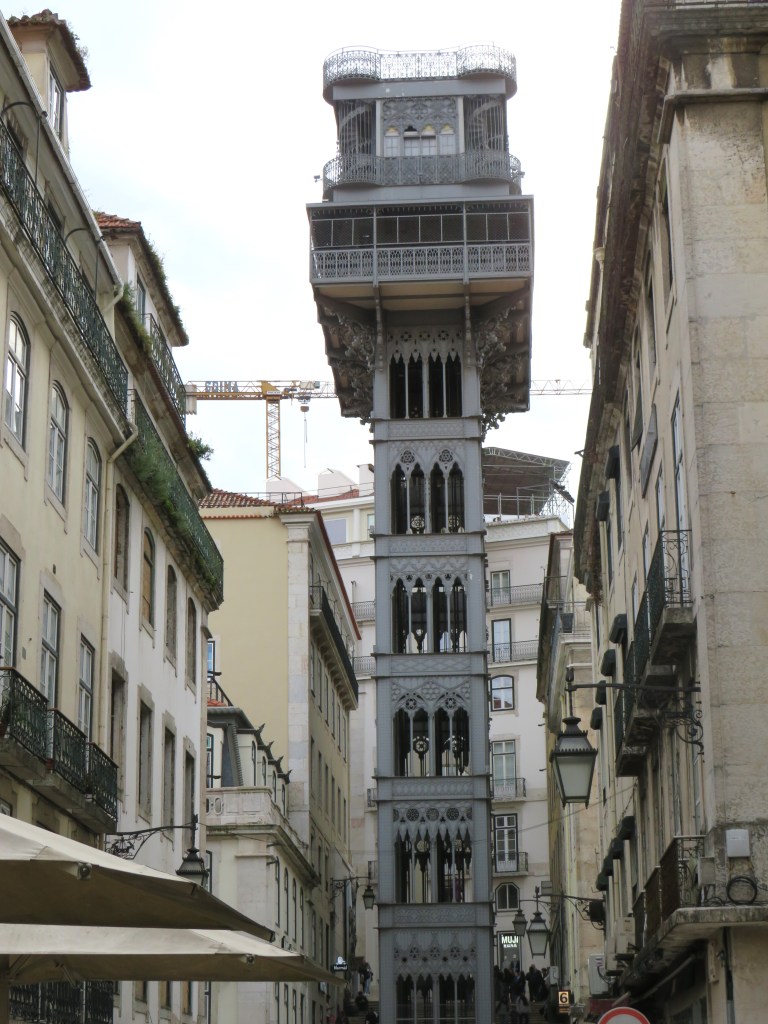
We visited the tower, built by an engineering student who admired the works of Gustave Eiffel (the Eiffel Tower). Unofficially it is known as the Eiffel Tower of Lisbon, but its real name is the the Santa Justa Lift (Elevador de Santa Justa). It was built in 1902. If you can go up to the top of the tower, you will get a commanding view of the city, but it was closed for repair while we were there.
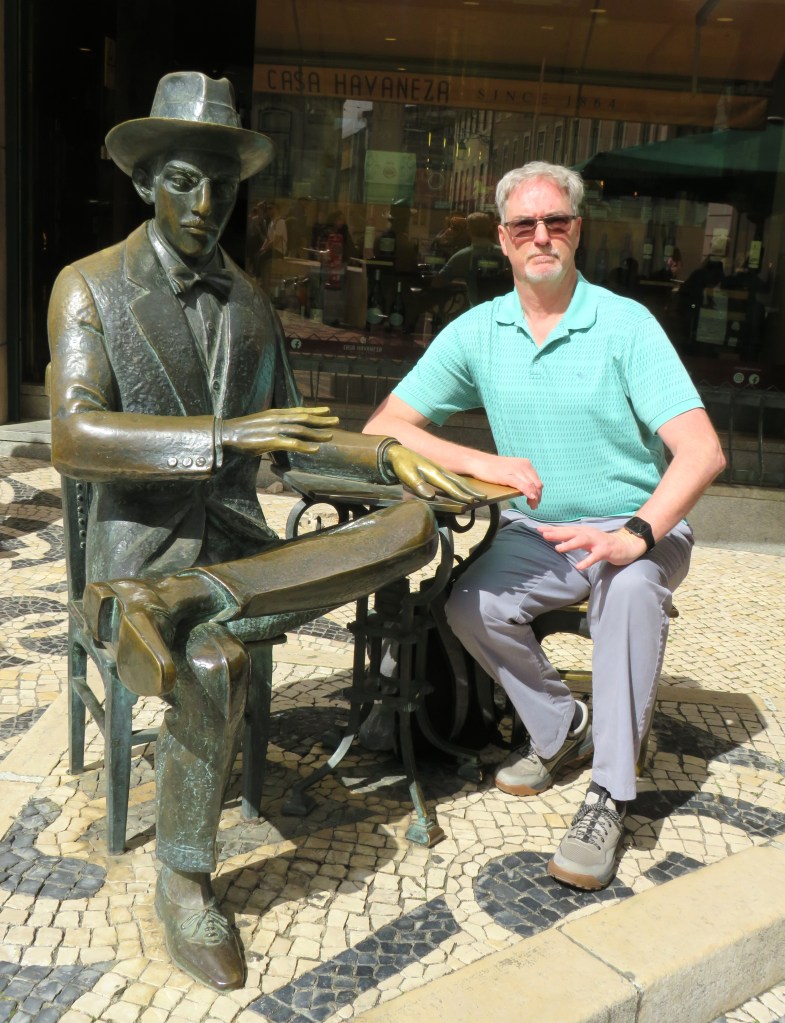
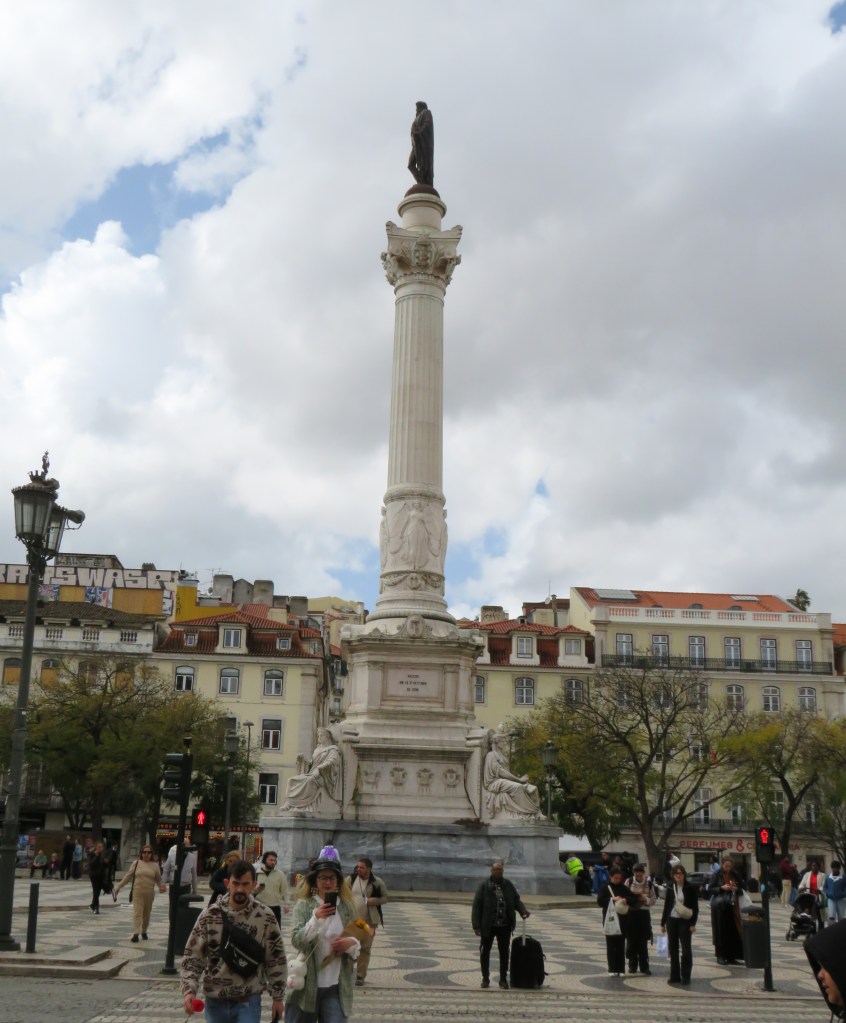
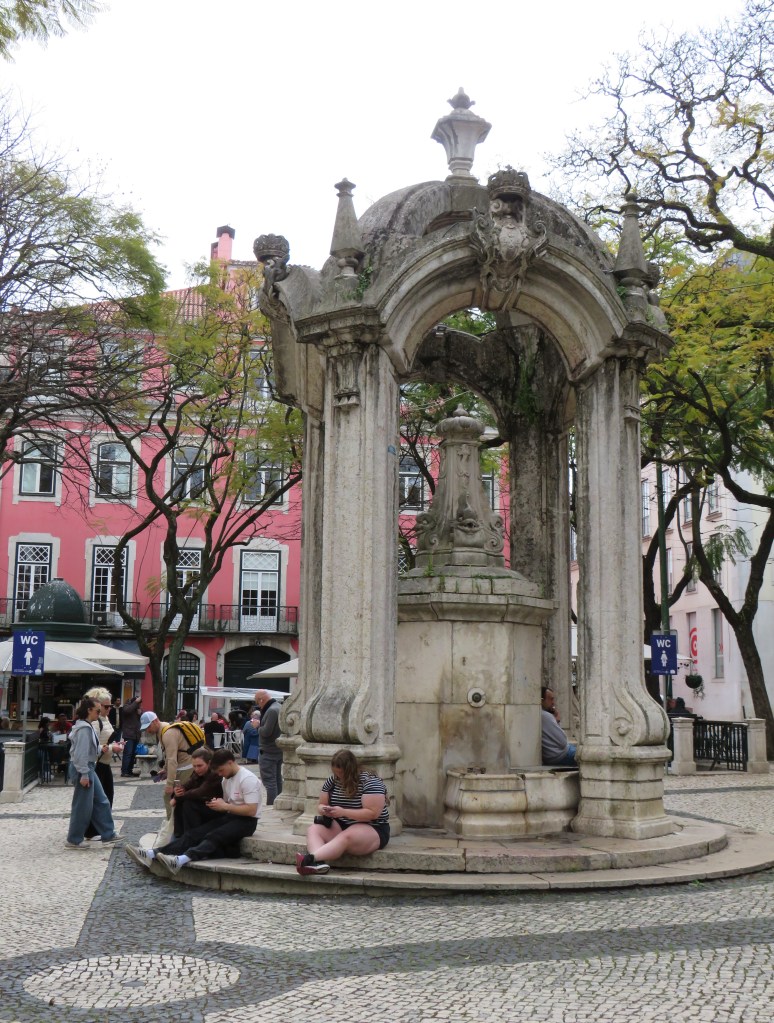
The Portuguese are very proud of their history and there are statues and monuments everywhere you look, honoring many different famous Portuguese people, from religious leaders, to explorers, to poets. This local poet is very famous in both Lisboa and all over Portugal. Fernando Pessoa is the most widely recognized name in Portuguese literature all over the world. Fernando Pessoa was born on 13 June, 1888, in Largo de São Carlos, in Lisbon. He was known as being a great thinker and voice of the city. He wrote a lot of pieces, poems and articles that were widely published. But what a lot of people don’t know about him though, is that he actually wasn’t really interviewing other people. He was “interviewing” and “speaking with” other voices in his own head. It is recorded that he had up to about 136 different personalities, and all of his writings and interviews were with himself, as one of his other personalities.
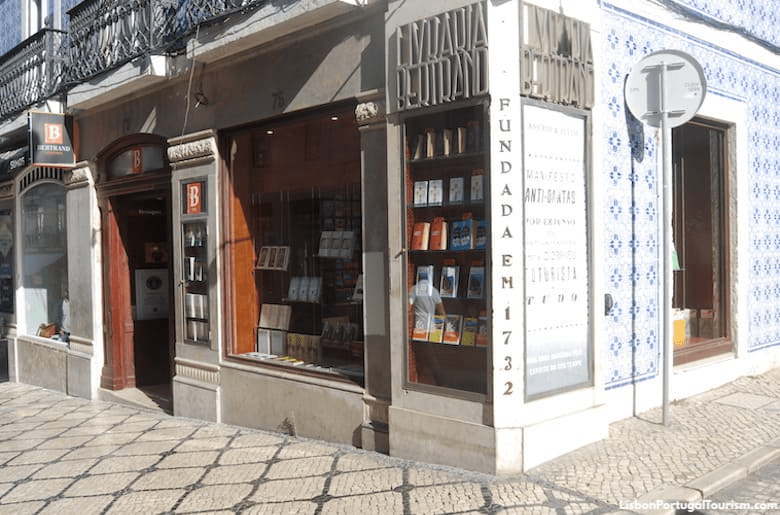
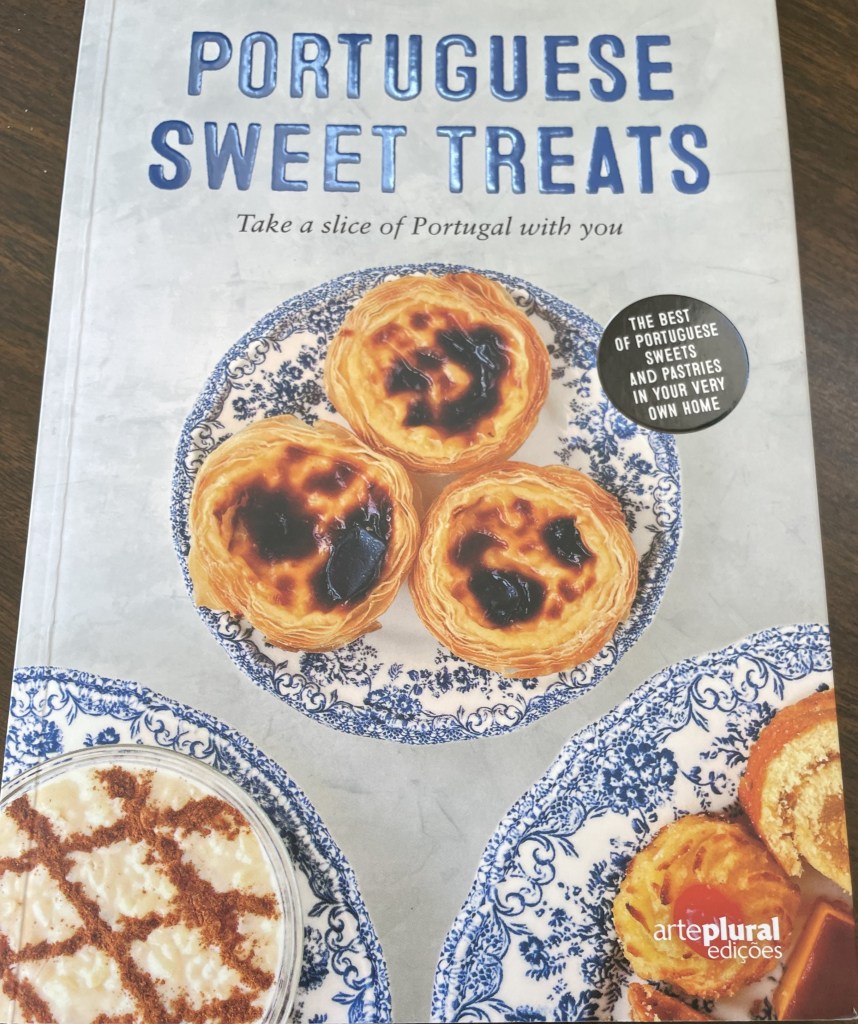
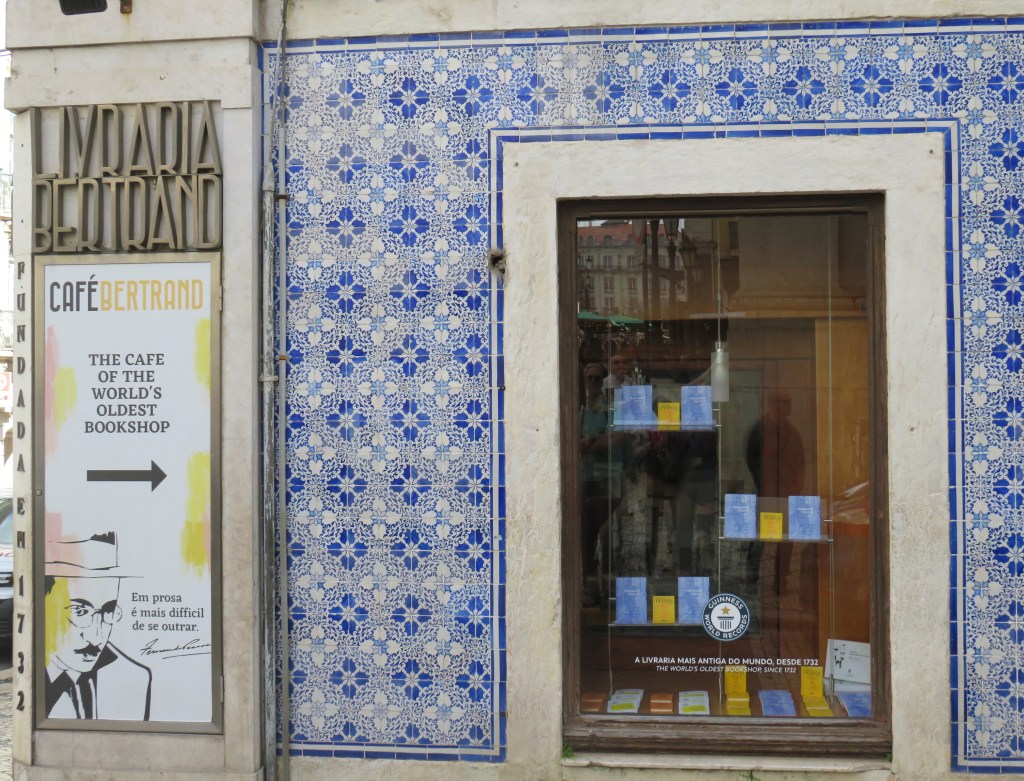
Pessoa’s works are found in the oldest bookstore in the world, located across the street from his statue. The Livraria Bertrand located in the Chiado district of Lisbon, Portugal was built in 1732. Of course, I bought a book from there, and they stamped it for me too, in both English and Portuguese.
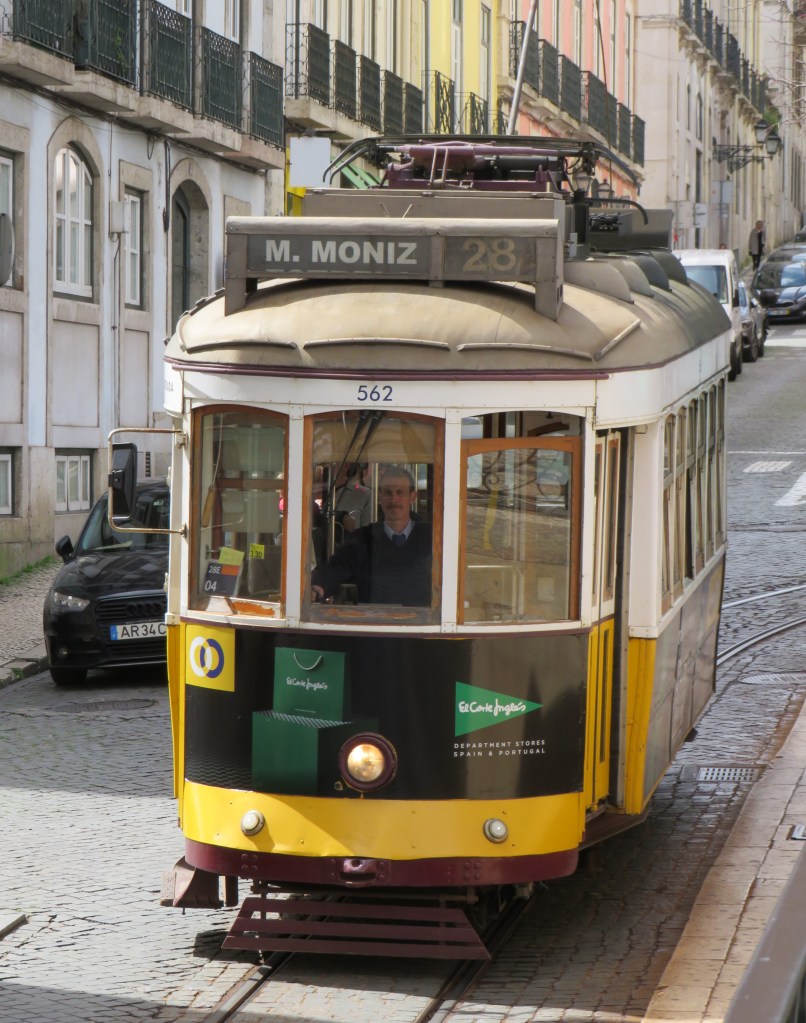
Old fashioned cable cars are all over the place too. We didn’t ride one this day, but we did ride one later.
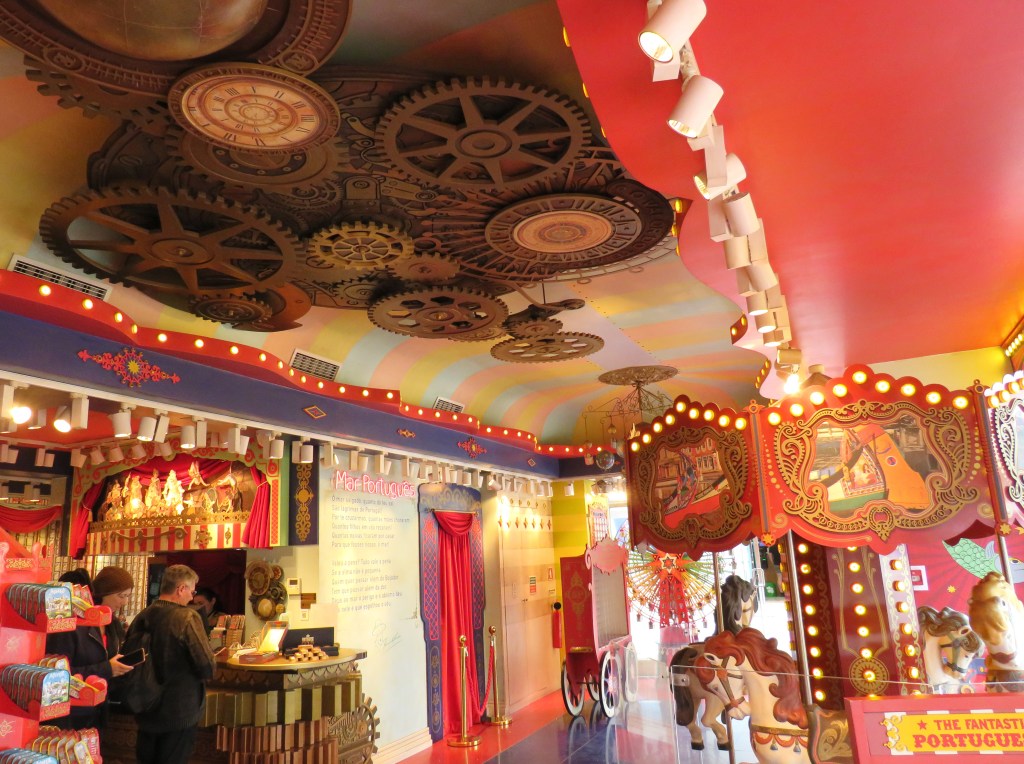
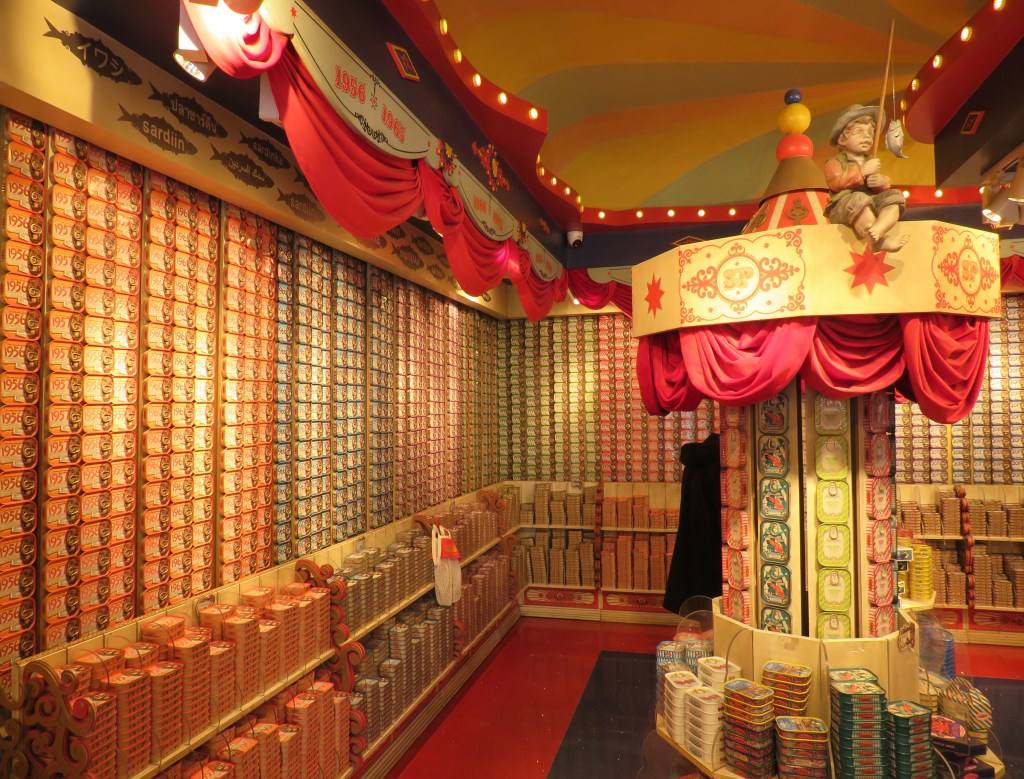
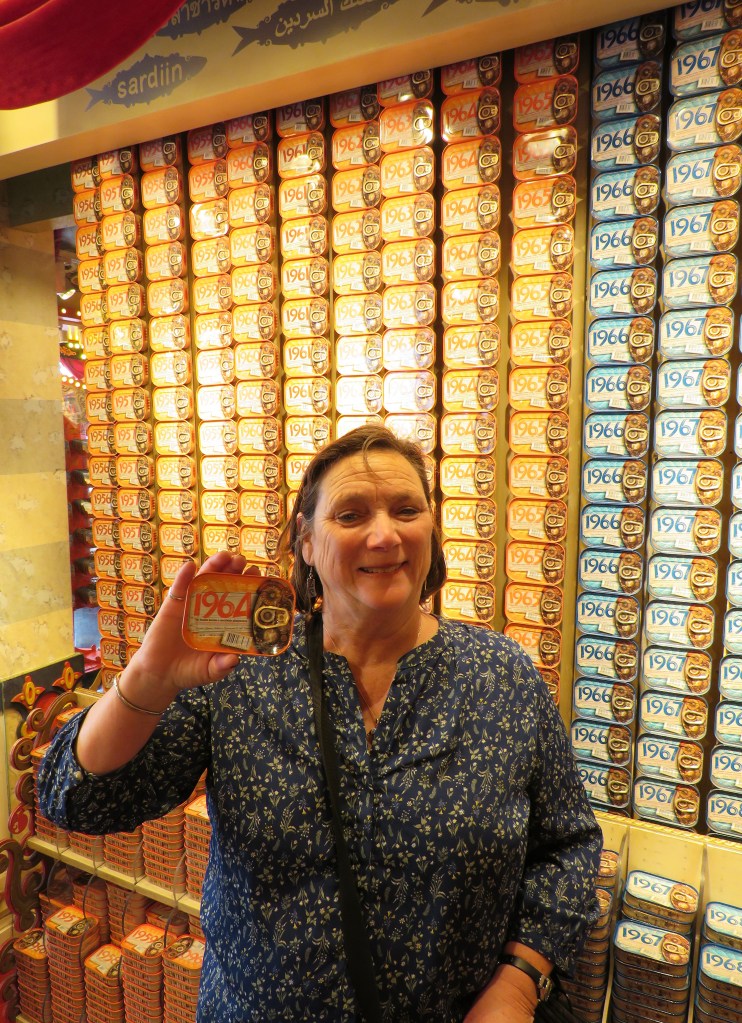
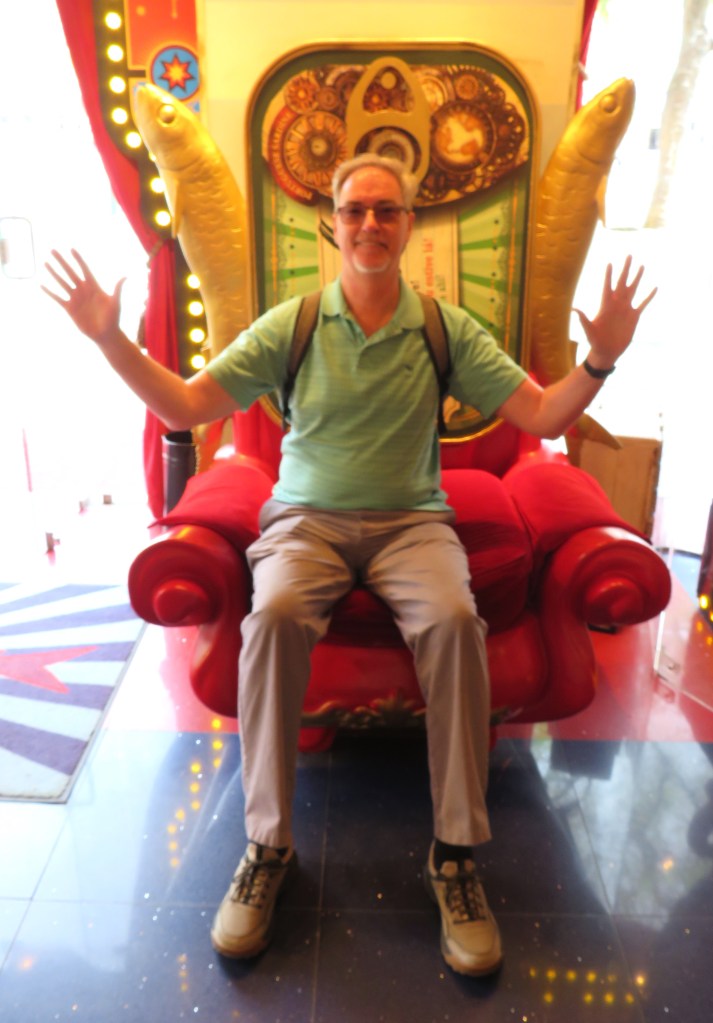
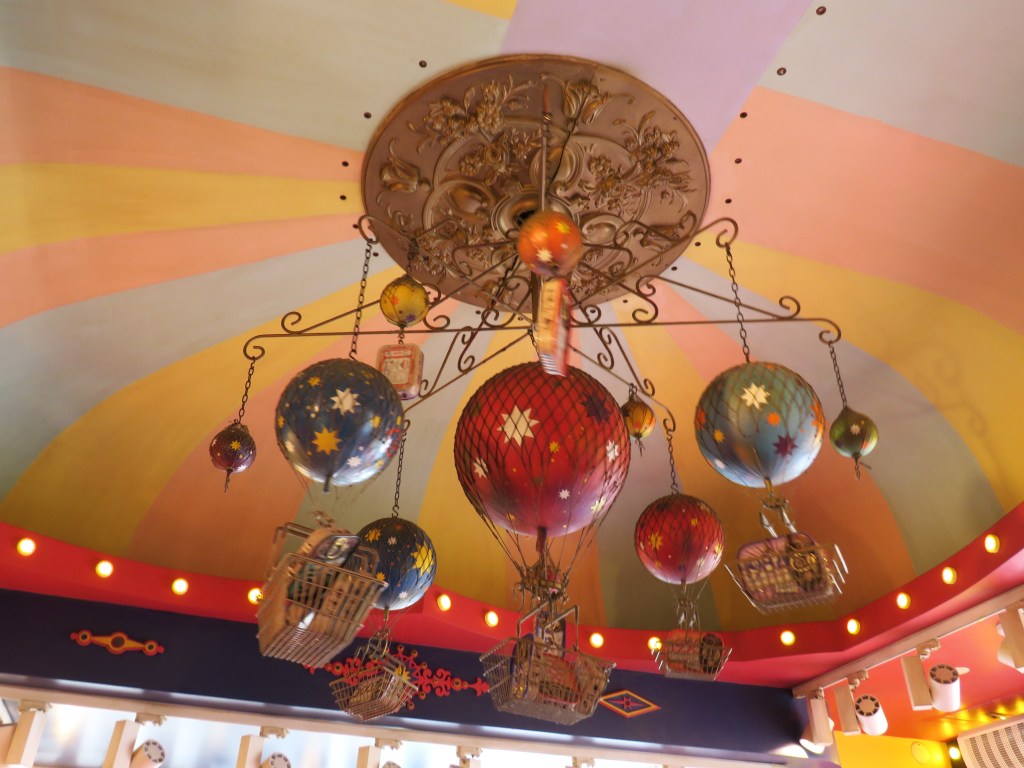
We stopped into check out the Museum of Sardines, where you can get a can of sardines with any year dated on the can. It looks like a circus. Of course it is a tourist trap (as it is told by the tour guides and the videos), where they charge you an arm and a leg for sardines, but it is definitely fun to see.
After getting acquainted with the Baixa a little on our own, it was time to meet up with Bruno, our tour guide for the day. Larry booked a lot of free walking tours before we left. I highly recommend doing this. We did a lot, all over Portugal, and the guides were all very knowledgeable and informative. Bruno was our first tour guide, and probably our favorite one too. He took us all over the place and gave us the history not just of the locations we stopped at, but of the country of Portugal too.
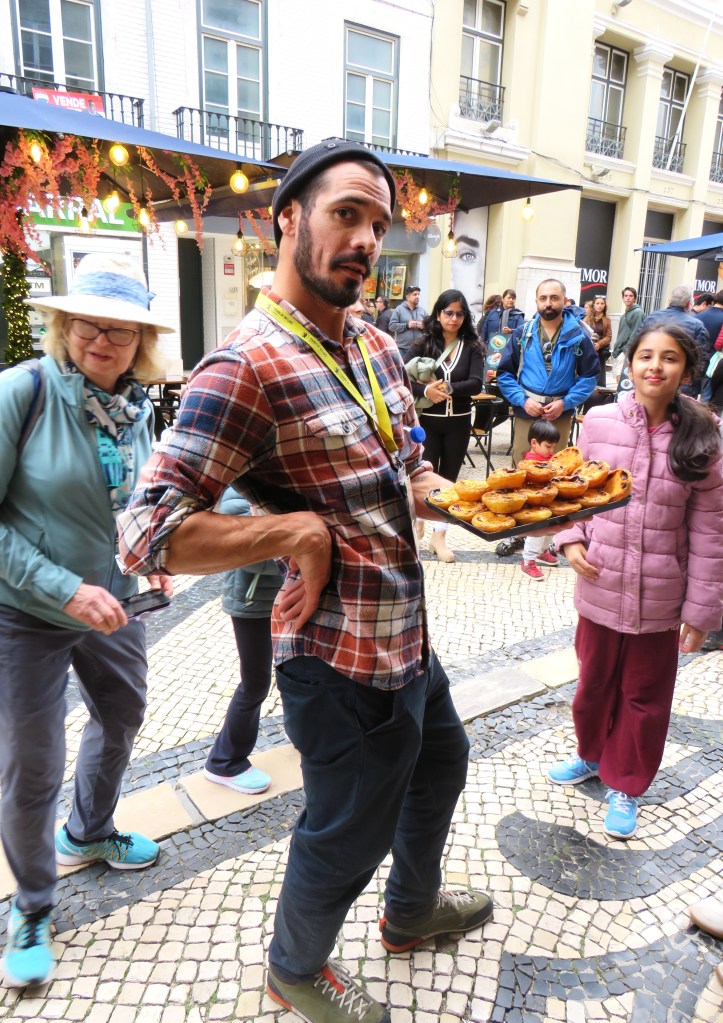
At one of our stops, we tasted the first of many of Portugal’s famous dessert, the pasteis de nata. Bruno is posing for me with our delicious pastries. Bruno said the best way to find your favorite is to eat A LOT of them. 🙂
Fun and interesting sites we saw on the tour.
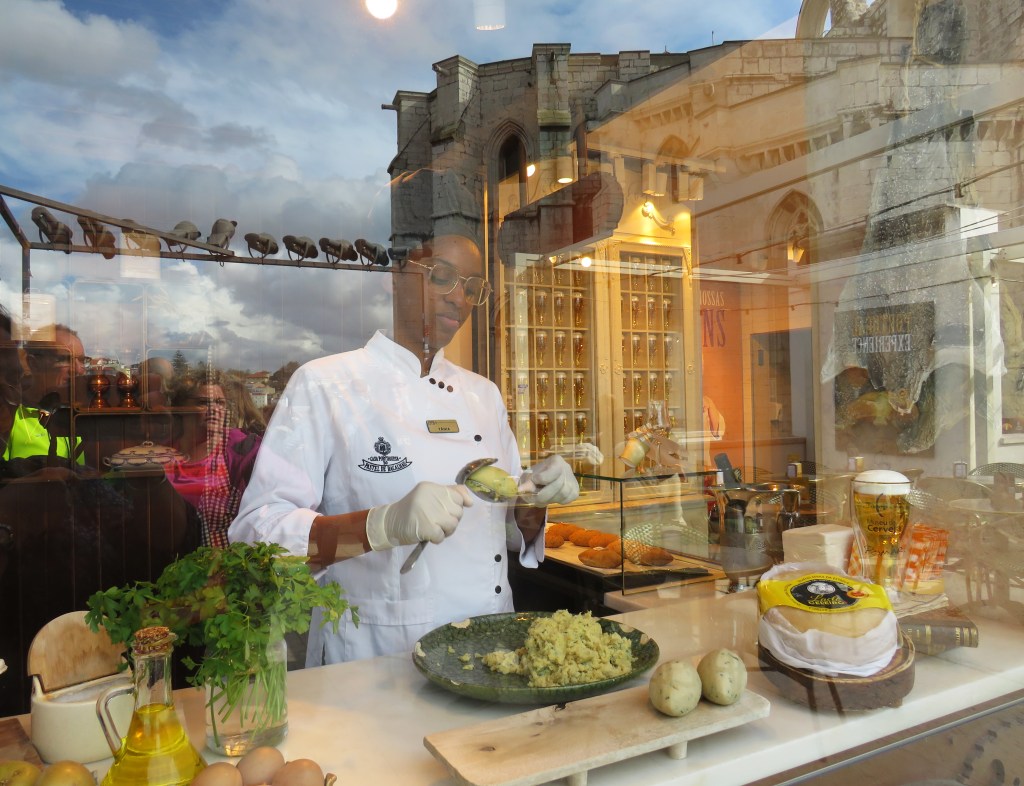
Making the famous fishcakes. We ate and enjoyed them quite a bit too.
Graffiti is a big problem all over Portugal, as it is everywhere, so they are trying to inspire people to create works of art rather than ugly graffiti. I know I love the art. The graffiti, NOT so much.
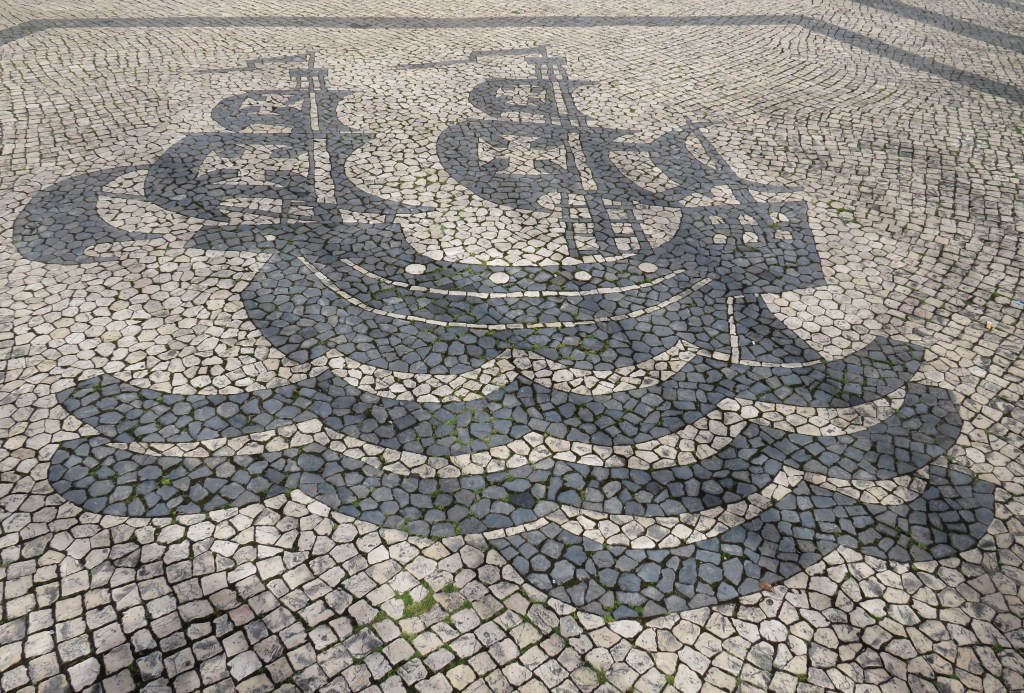
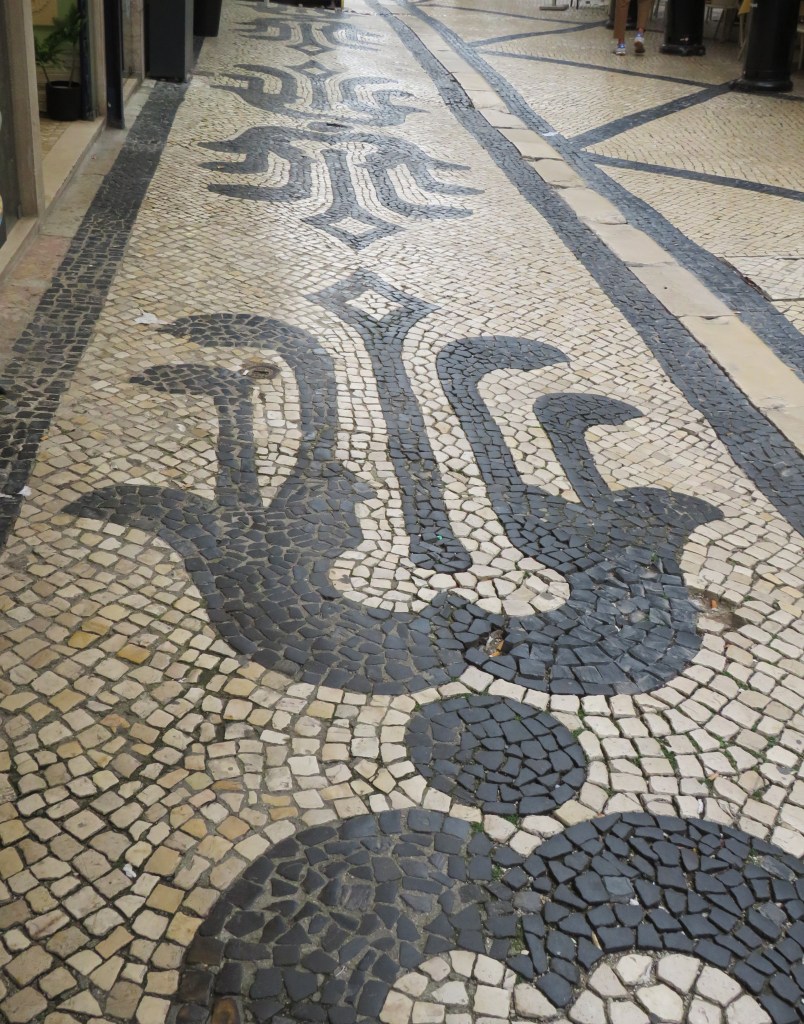
All the streets, everywhere you go in Portugal are cobble stoned, with beautiful artwork laced in. Many tell differnt stories of the times too.
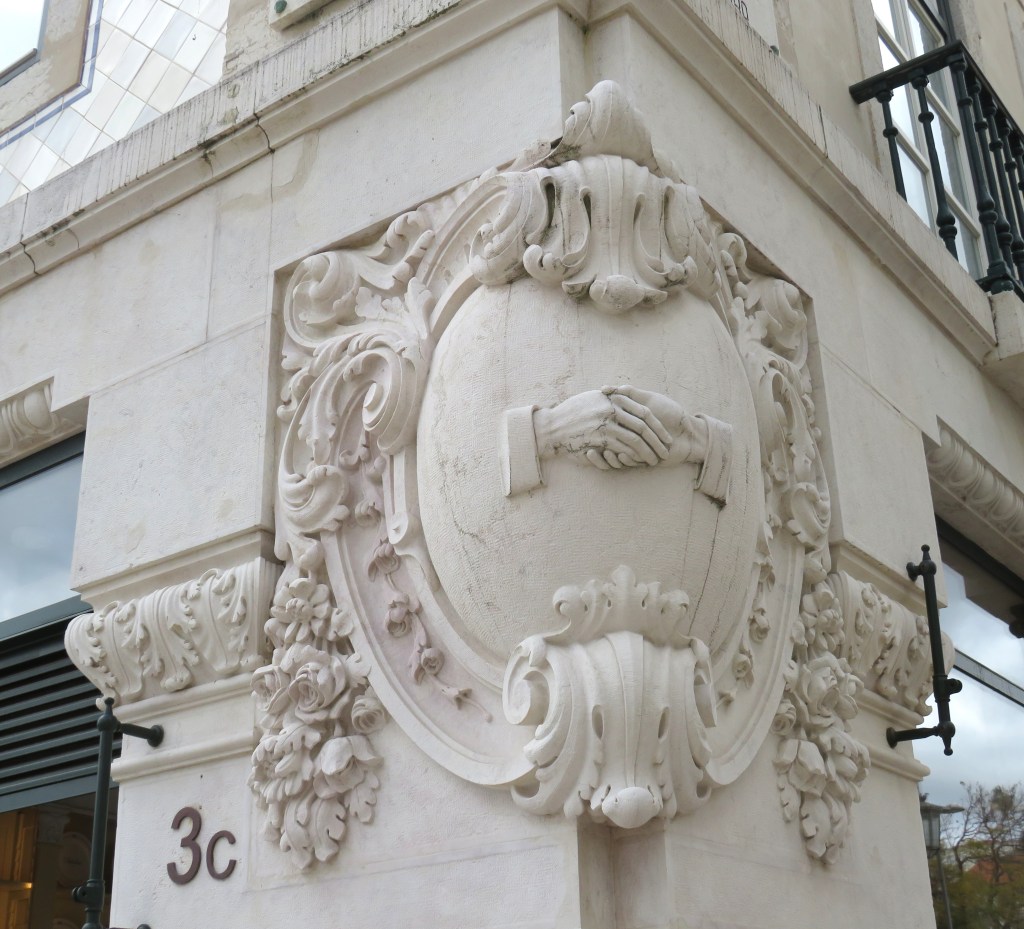
Fabulous artwork is on every corner, on every building.
And beautiful tiles are everywhere. You will see a lot of beautiful tiles in my pictures. They represent many things. They all have different meanings too. These mosaics are from the Moors. The Moors (Muslims) are not allowed to represent any type of animal life in their tiles or mosaics.
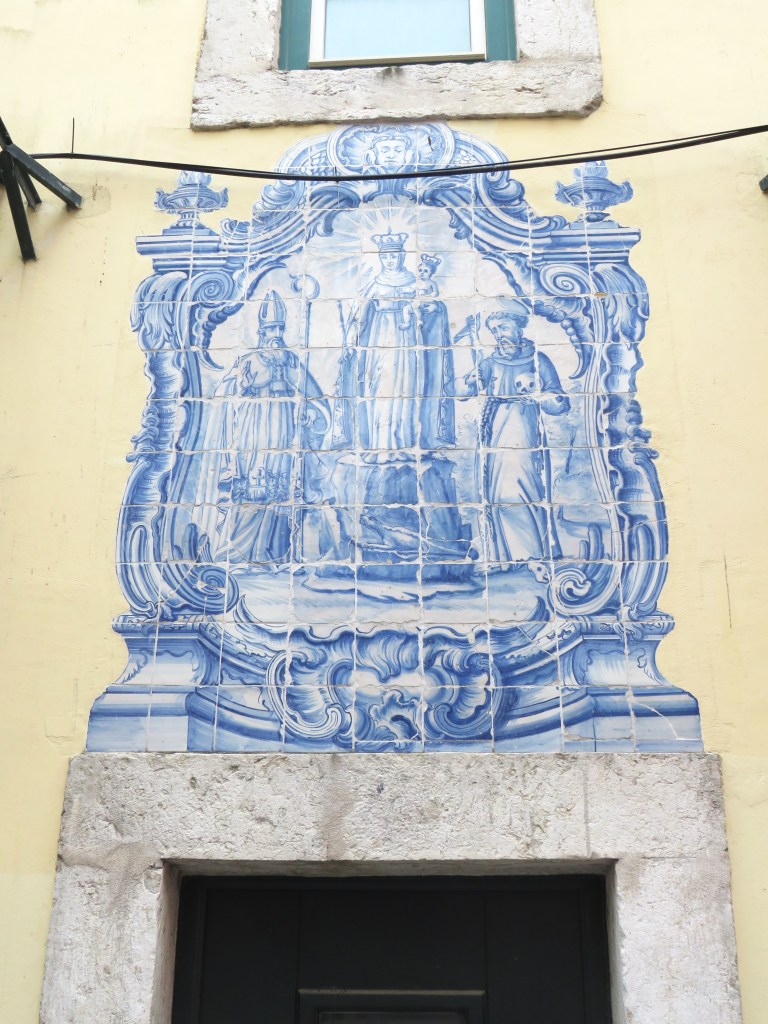
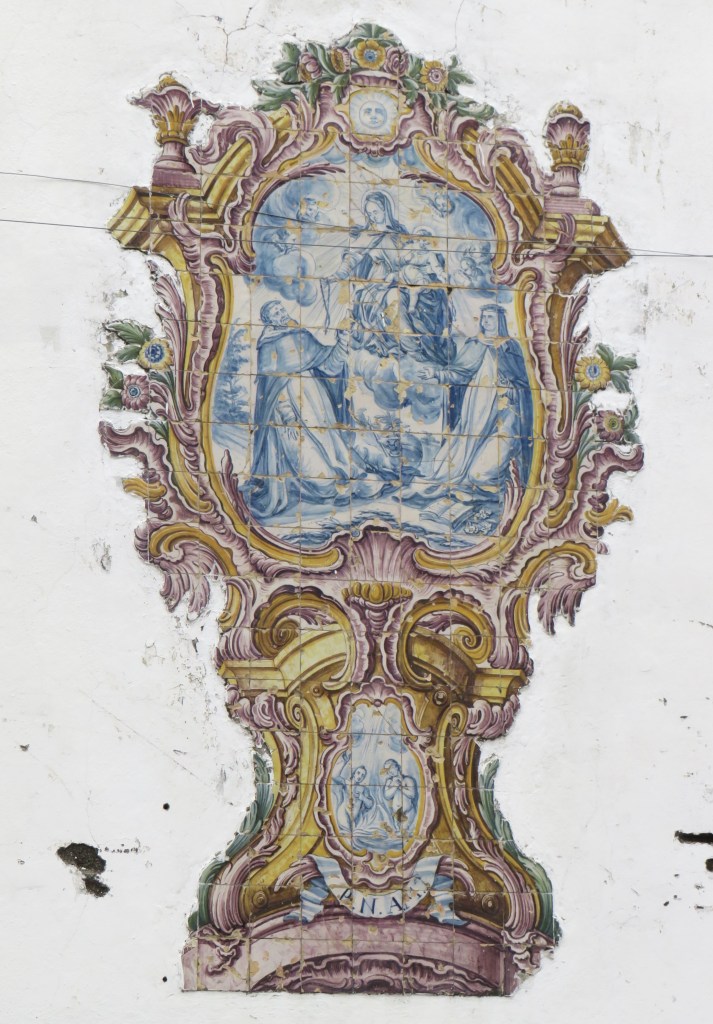
These tiles are the famous Azuljelols. They each tell stories in their pictures, and are in the blue and white. Most people were illiterate, so the pictures on the tiles told them the stories and histories.
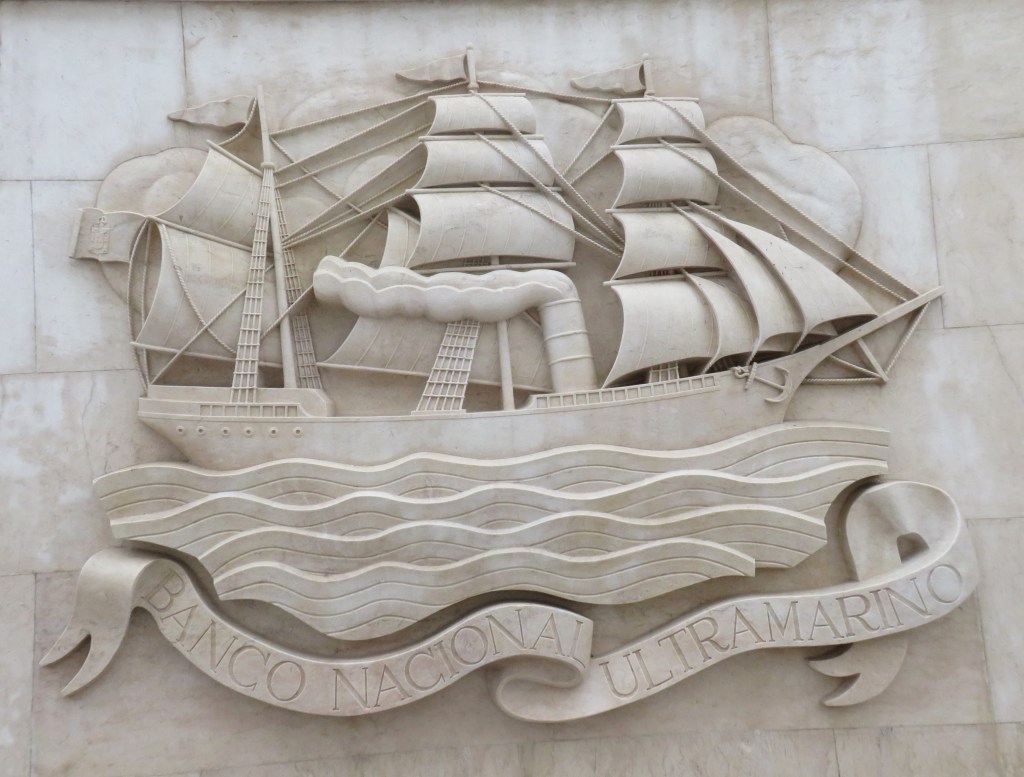
This is a very old tile that represents old family wealth.
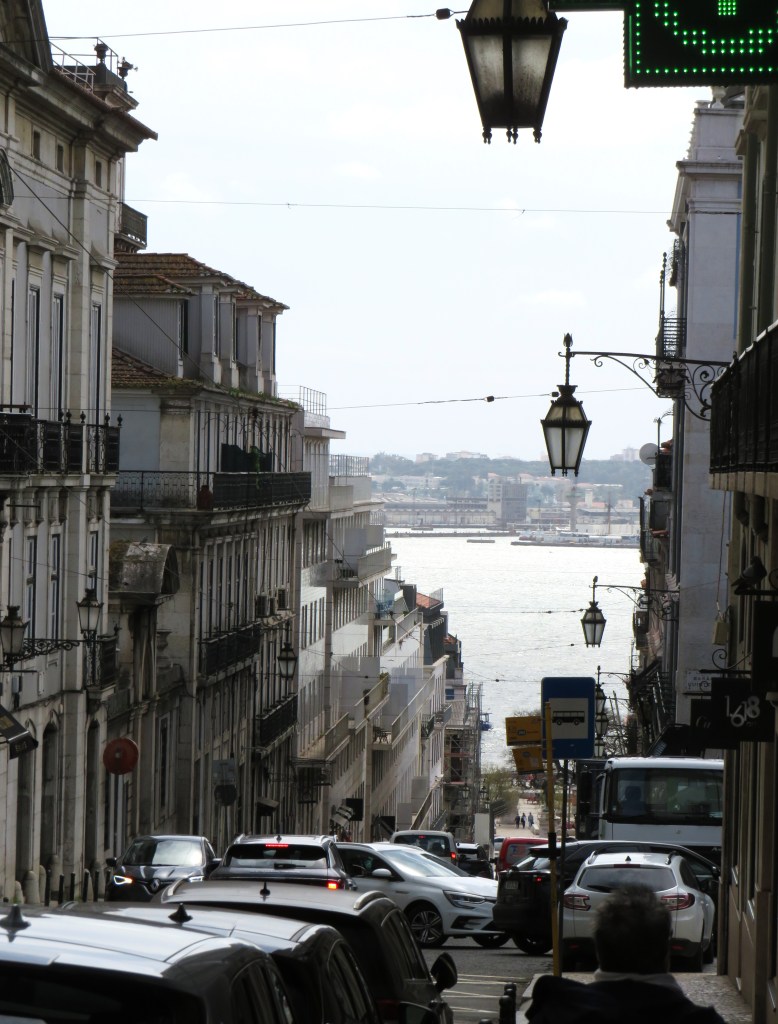
I am SO glad we didn’t rent a car in Lisboa. Traffic was a nightmare.
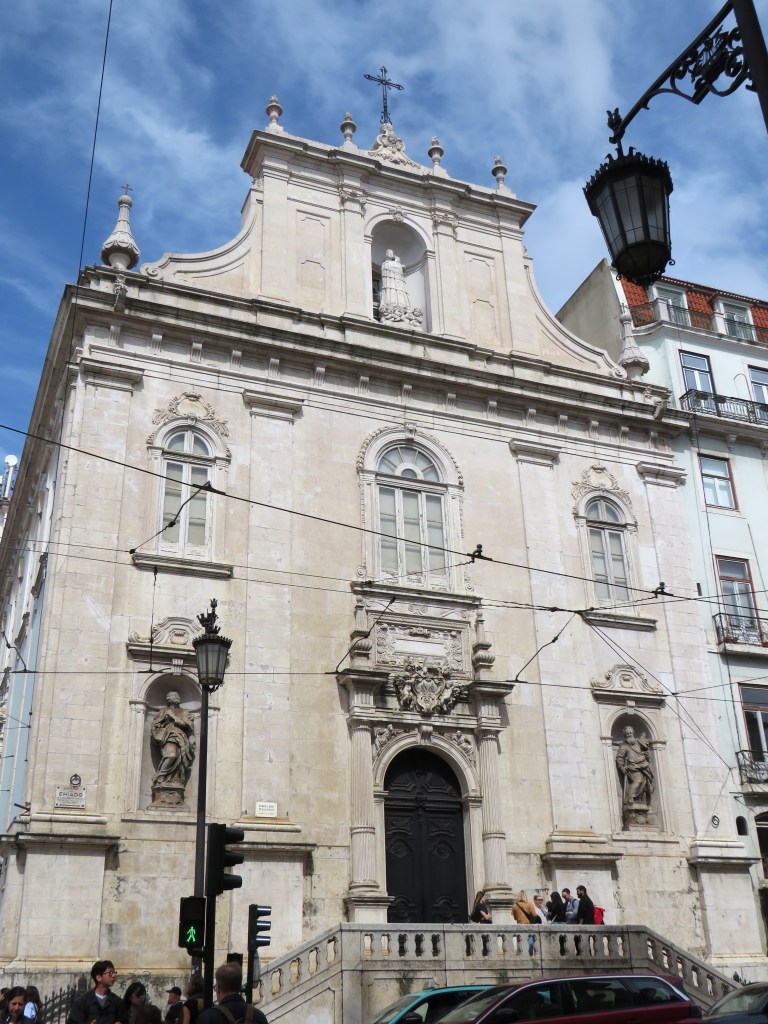
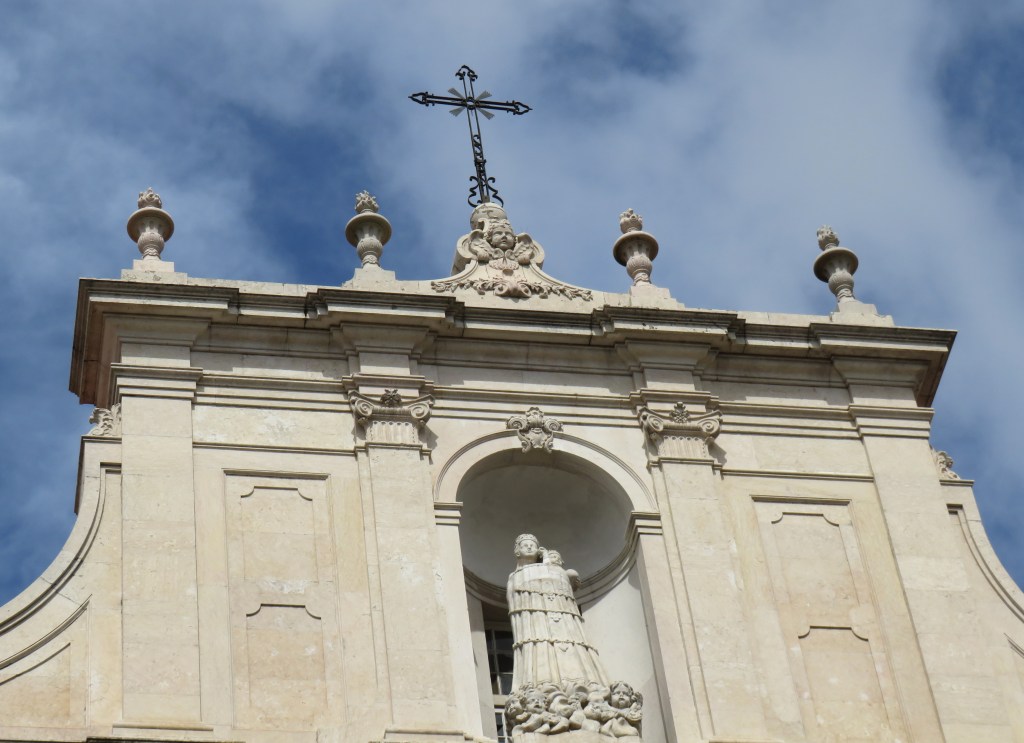
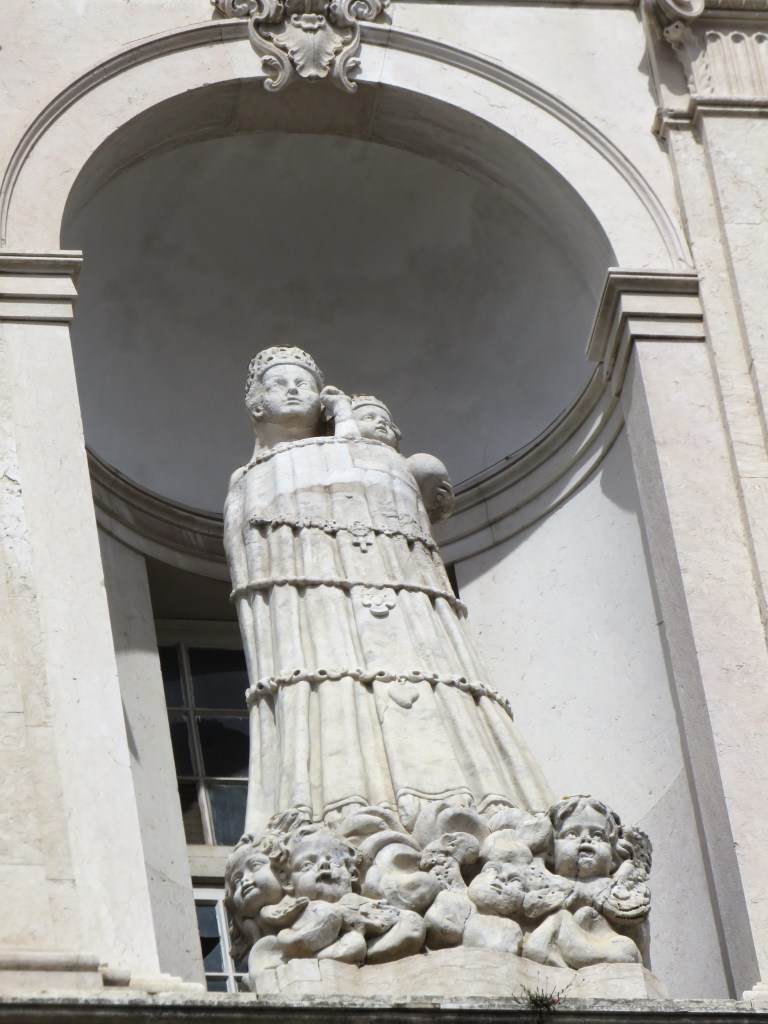
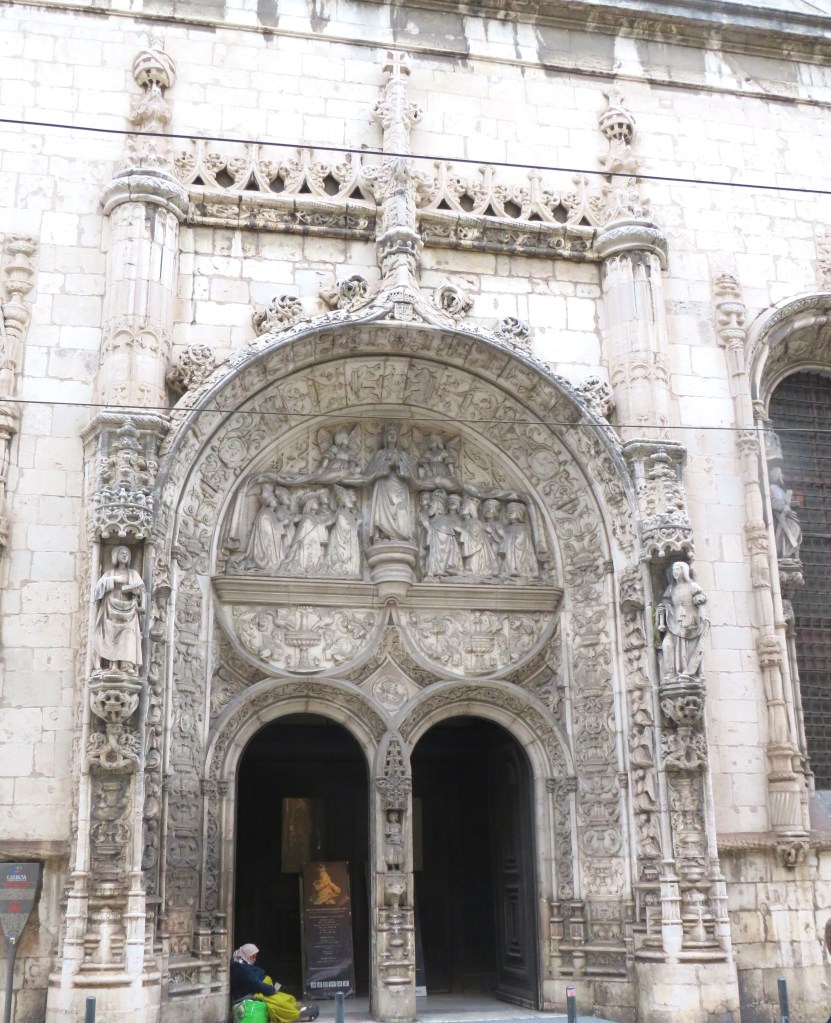
Churches, cathedrals and castles are everywhere, almost on every street corner. Portugal has over 4,300 Catholic parishes and hundreds of evangelical churches, with Roman Catholicism being the dominant religion (84.77% in 2021). The Catholic Church operates 21 dioceses and approximately 4,378–4,380 parishes in Portugal. Most of the churches and cathedrals are gorgeously and ornately decorated too, mostly with tons of gold and silver from Brazil. You will see lots of both churches and castles in my series of pictures and adventures.
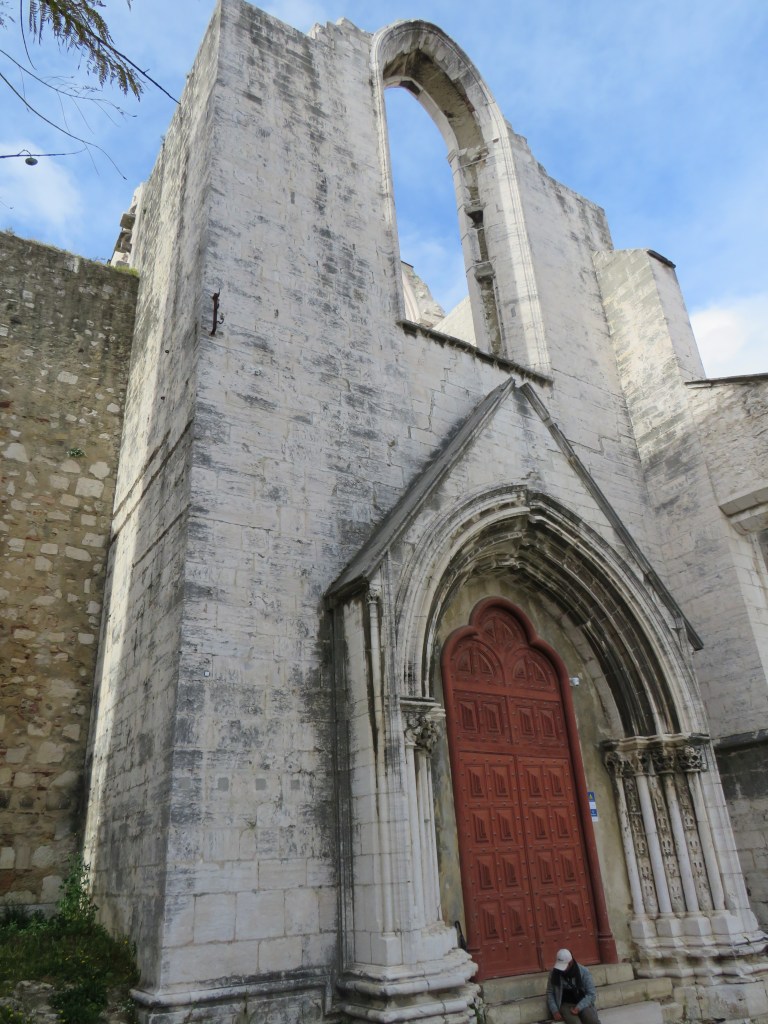
This is one of the oldest churches left after the HUGE earthquake of 1755. They left the roof off as a reminder of just how devastating the earthquake was. This church was built in the 15th or 16th century.
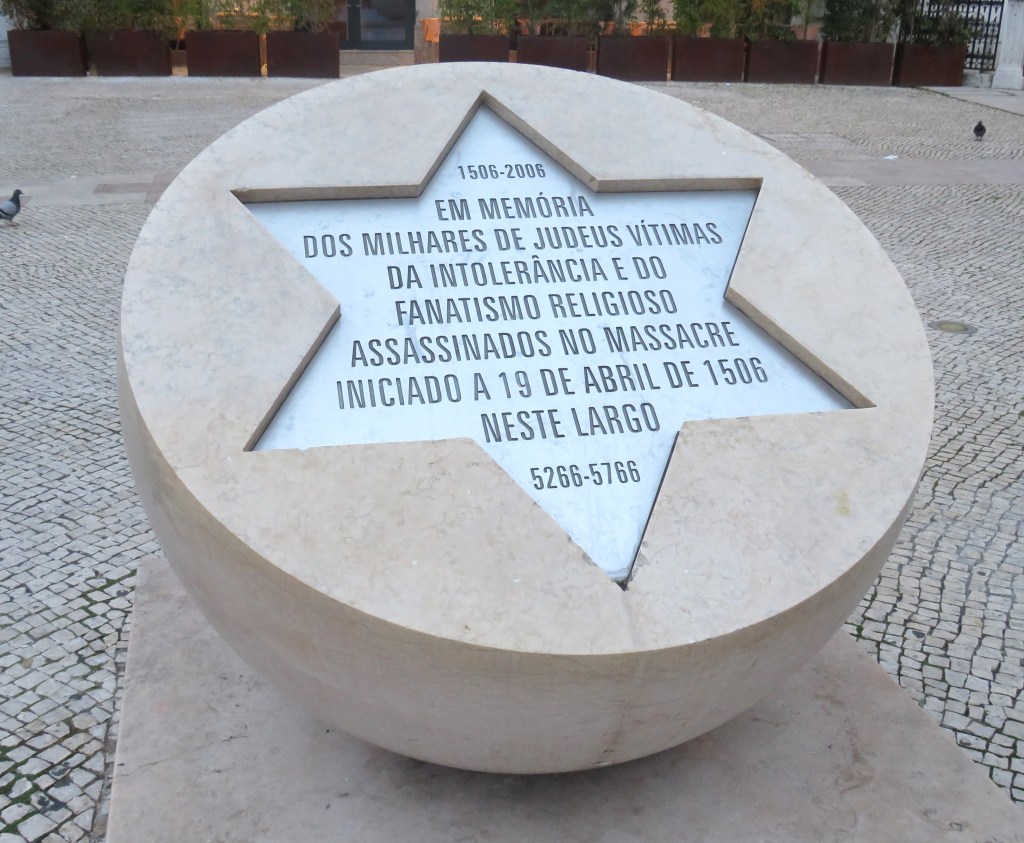
There used to be a fairly large Jewish population in Portugal, but not for centuries. Today, the country is overwhelmingly Catholic.
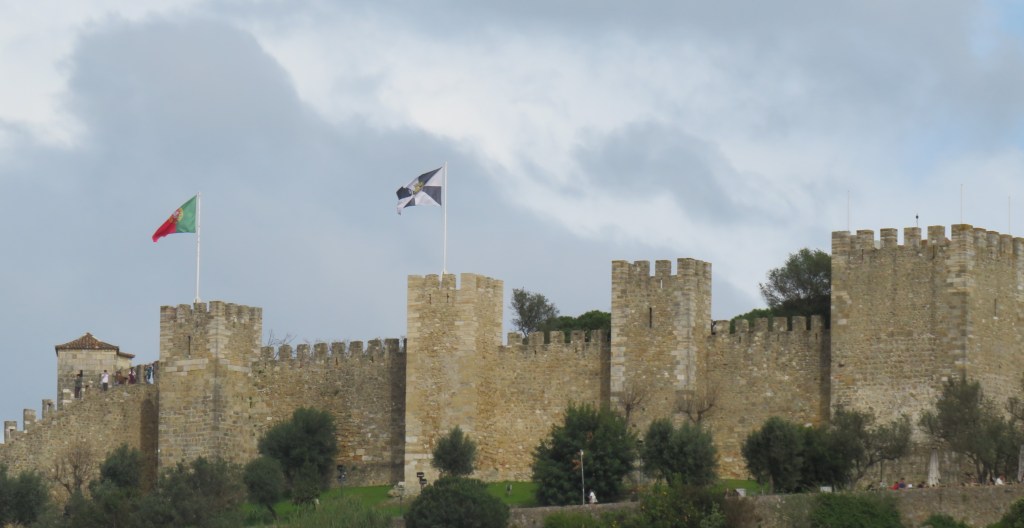
Portugal has a high density of historical fortifications, with estimates ranging from over 150 to nearly 500 castles and fortresses, including ruins and well-preserved structures. The highest concentrations are in the central and northern regions, particularly along the Spanish border (e.g., Beira Interior, Douro) and surrounding Lisbon. This is Costelo Sao Jorge. It looks ancient right? Nope. It was rebuilt in 1935, but it is still very cool. 🙂 (More on Costelo Sao Jorge later though).
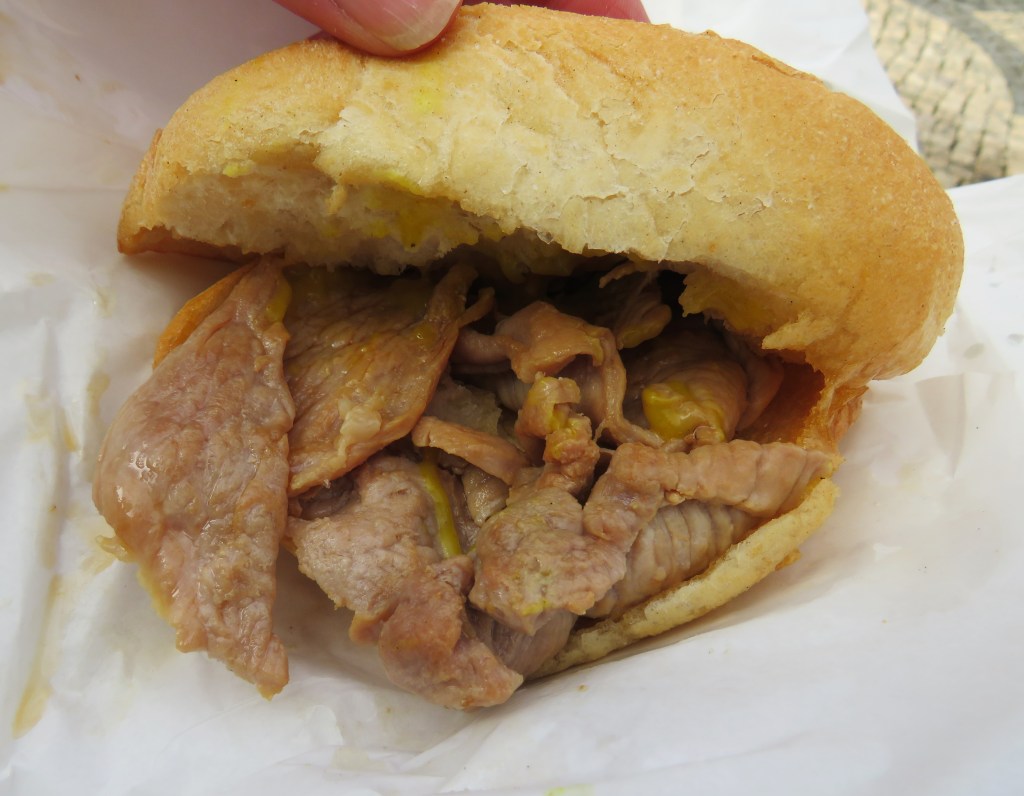
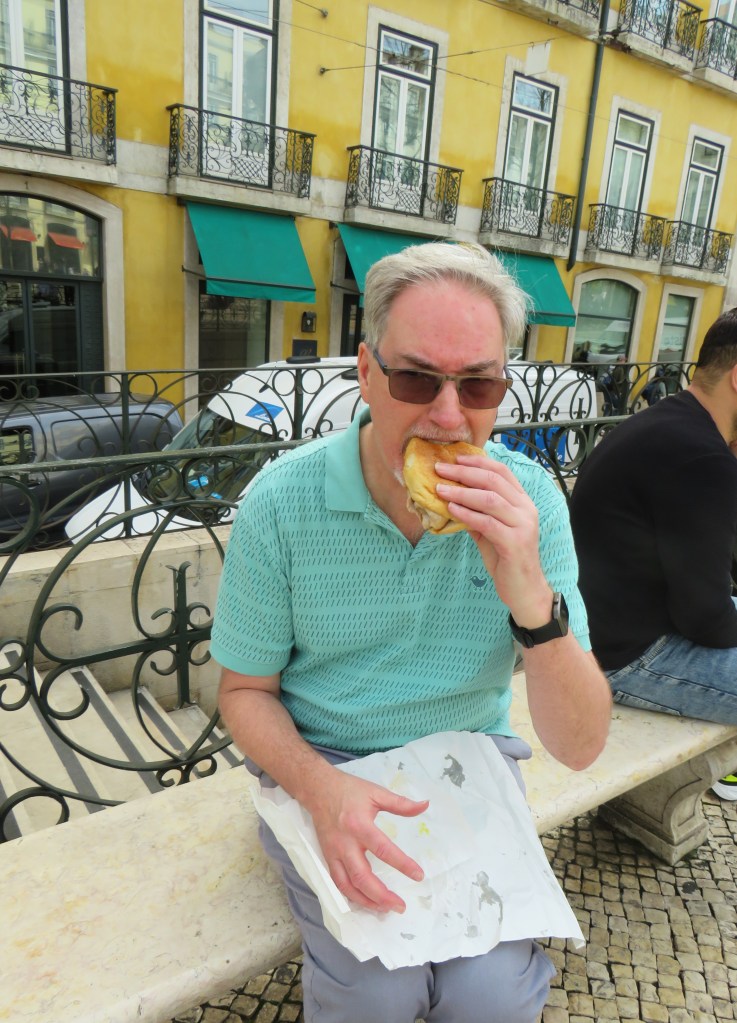
Another famous food we had to try was the famous bifana, or roasted pork sandwich, with the hot mustard and chili oil.
I have so much more to share, but all in good time. This is a perfect place to stop from our first day’s adventures. Sit back and relax. We’re just getting started. Enjoy the tour.
Have a great day and make everyday great. Live life to the fullest and enjoy the ride. It’s not about the destination, but the journey you take. ‘Til next time.
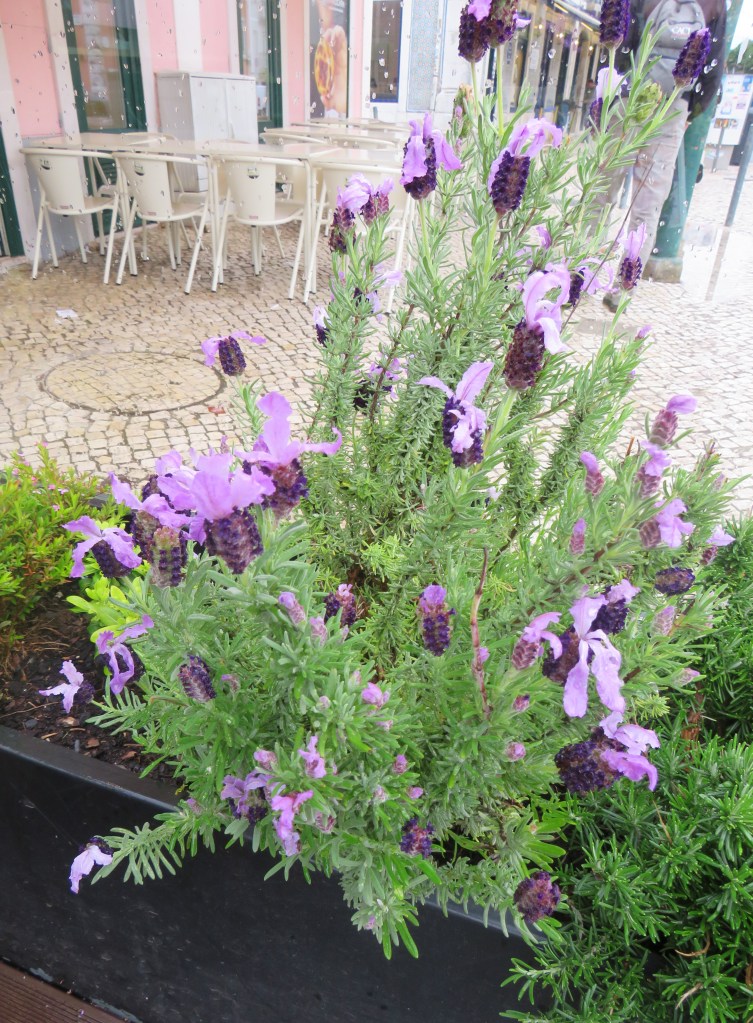
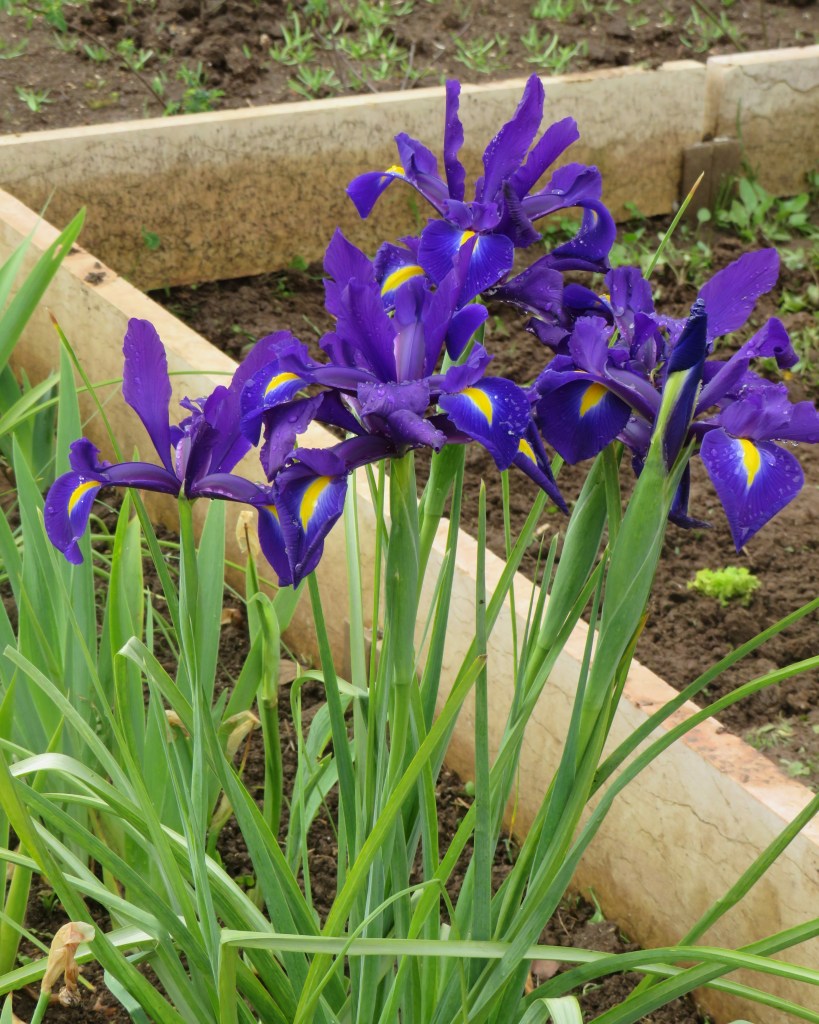
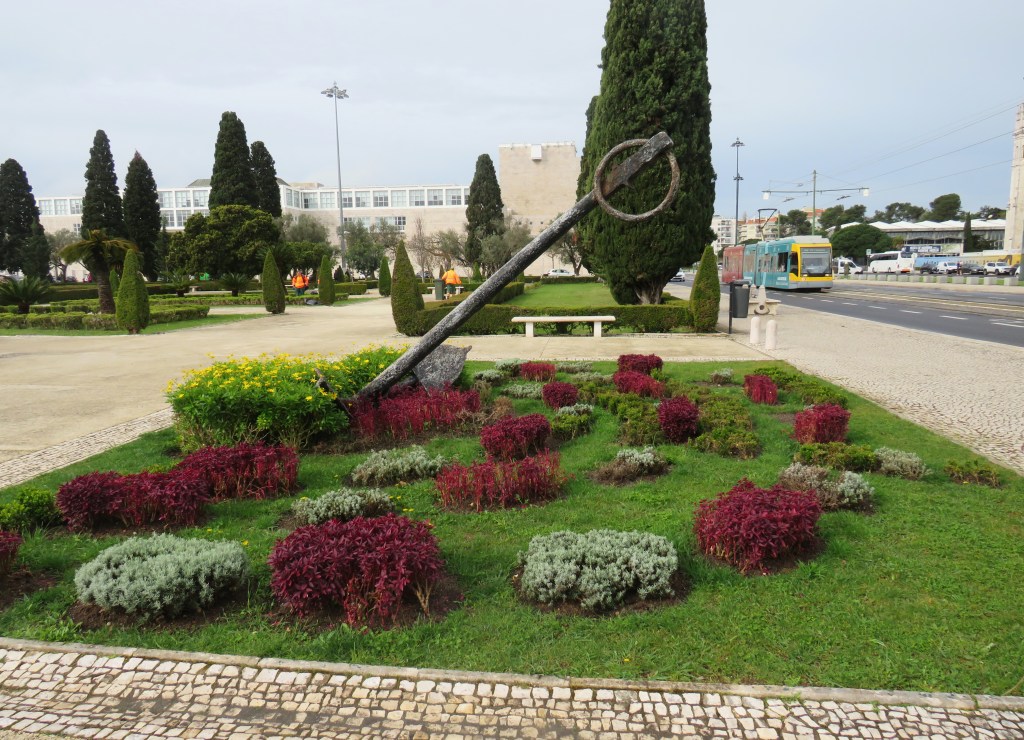
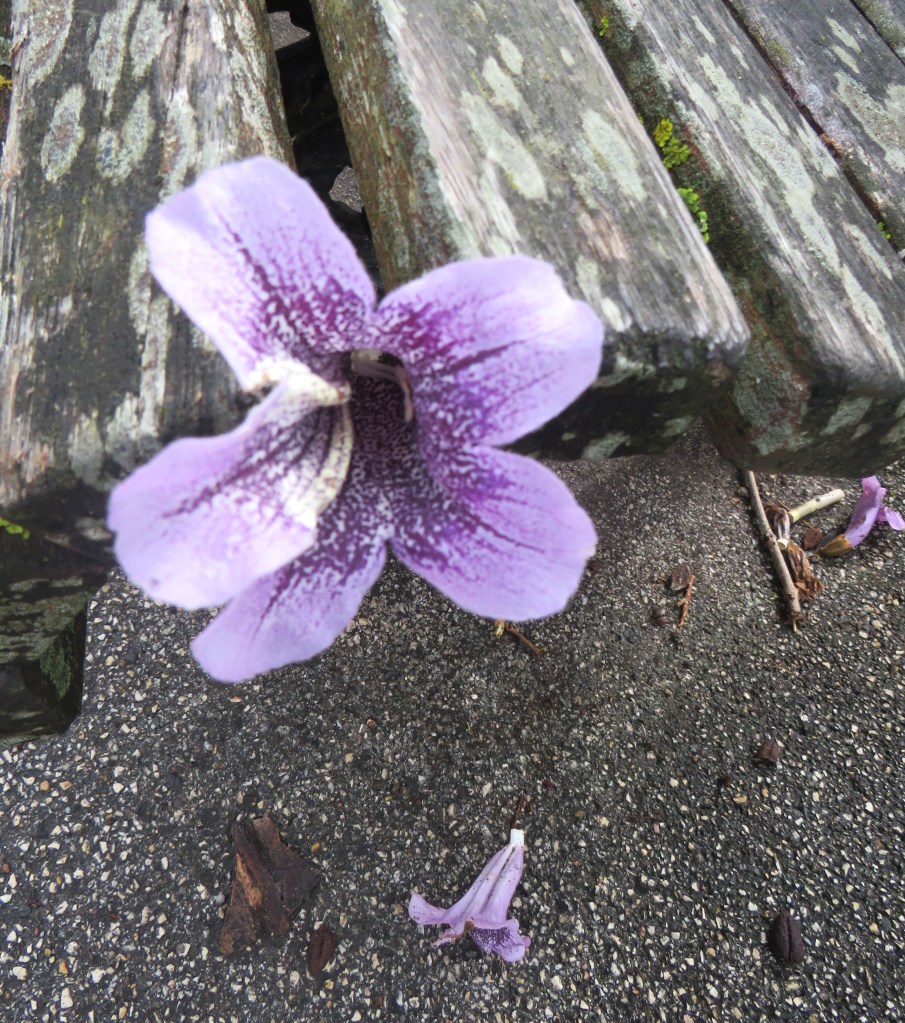
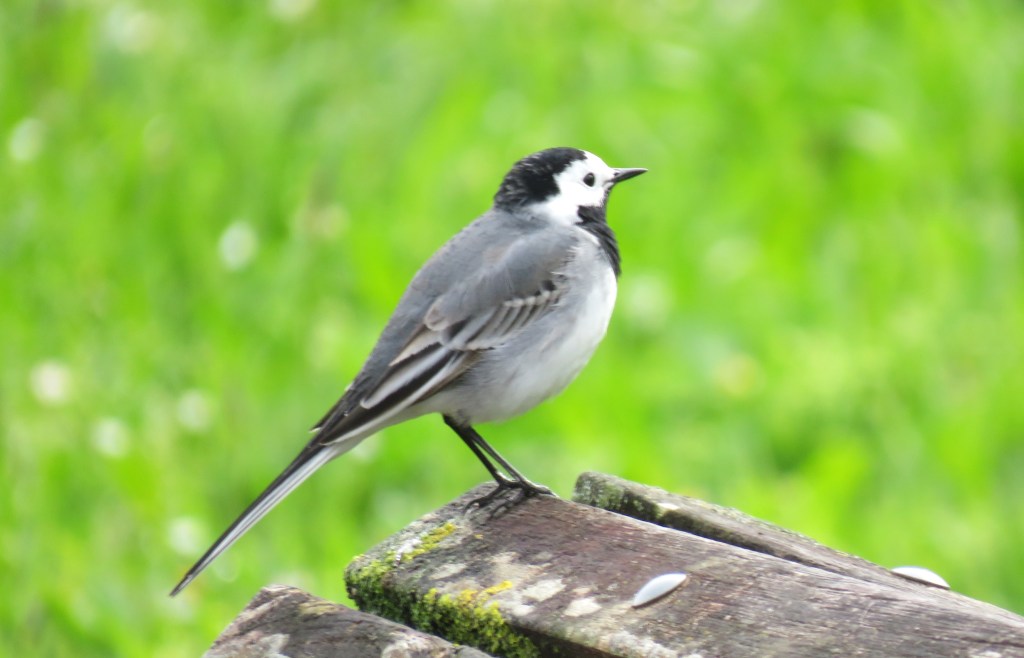
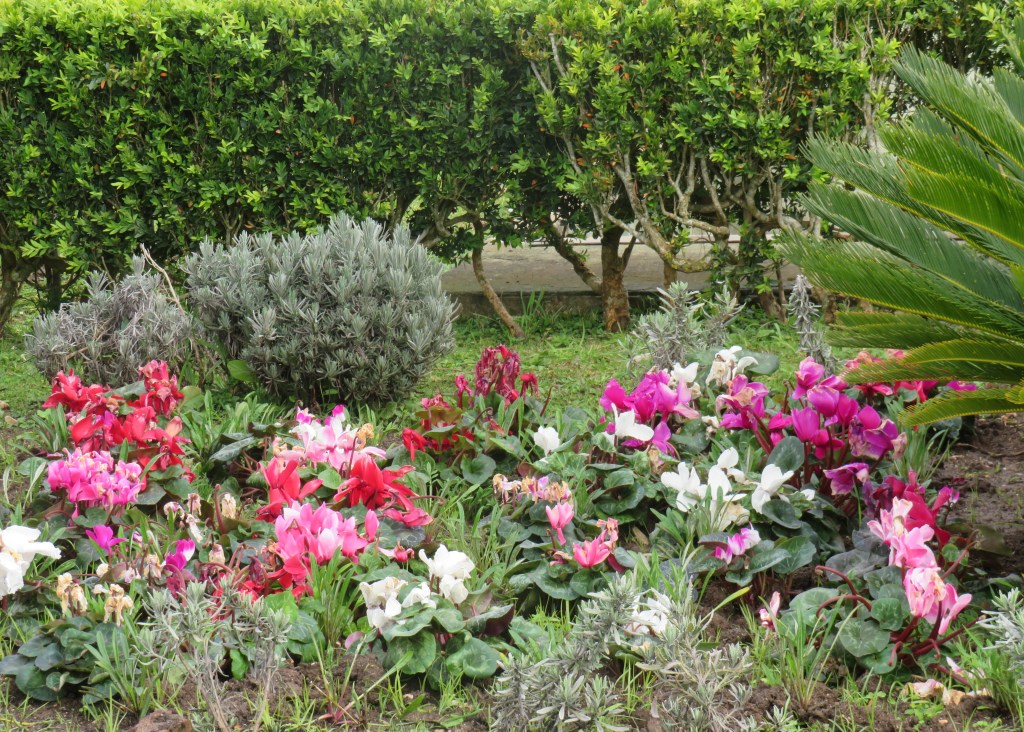
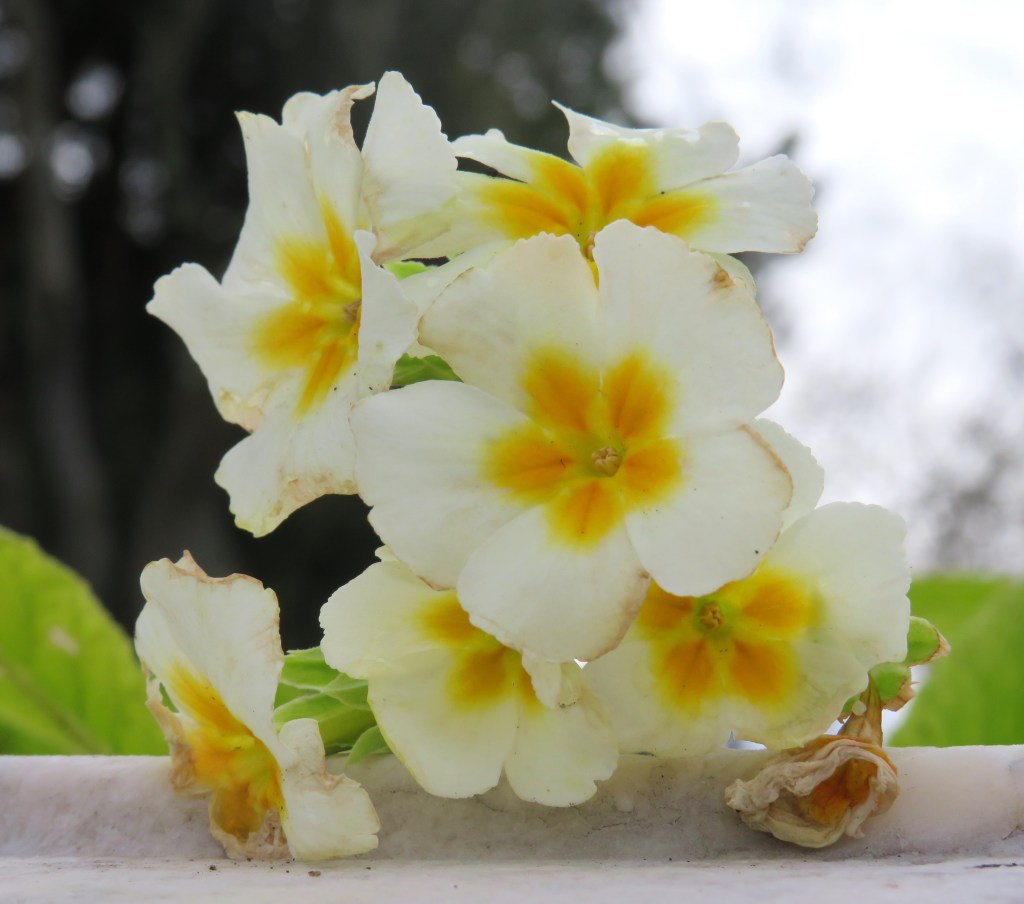
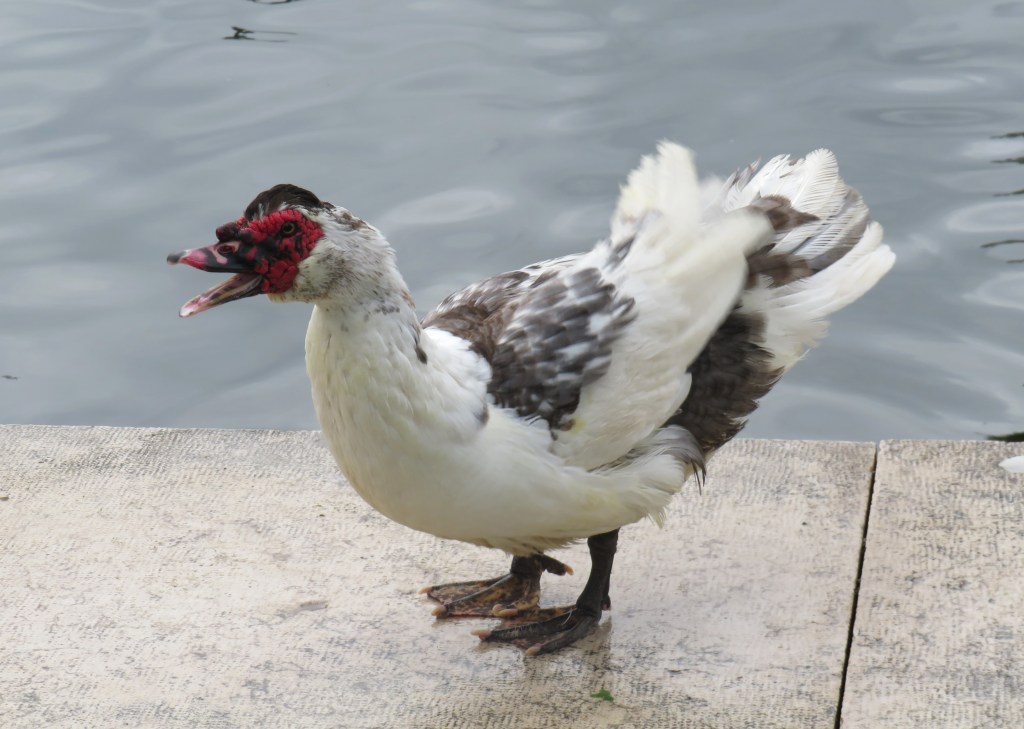
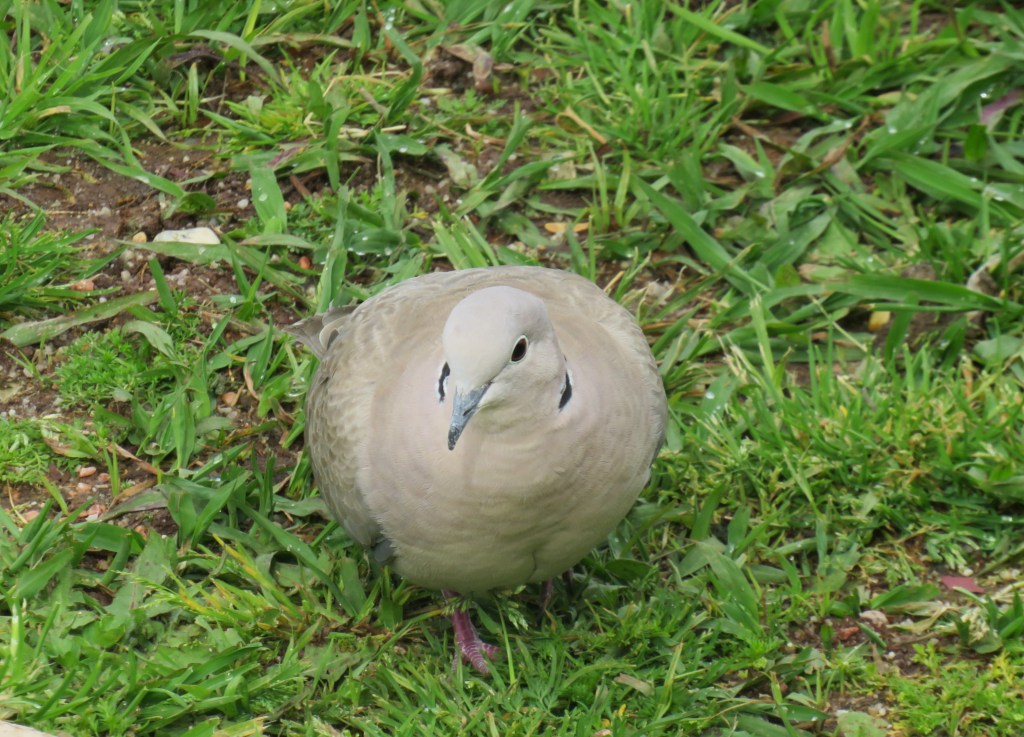
I love participating in all the fun little challenges that pop up. This one is from Frank Hubeny at http://frankhubeny.blog/ and by Dale Cooper at https://cosmicphotochallenge.photo.blog/ for pictures of the first day of spring. We were in Portugal on the first day of spring, so I will provide some spring photos from Portugal. 🙂
Have a great day and make everyday great. Add some spring to your life everyday.
We had a great time in Portugal. We did and saw so much. We divided our trip into three main portions – Lisbon (Lisboa), the Algarve (the southern region) and Porto and the northern region. We spent about 5 days in each section. There is so much to share. Where do I even begin?
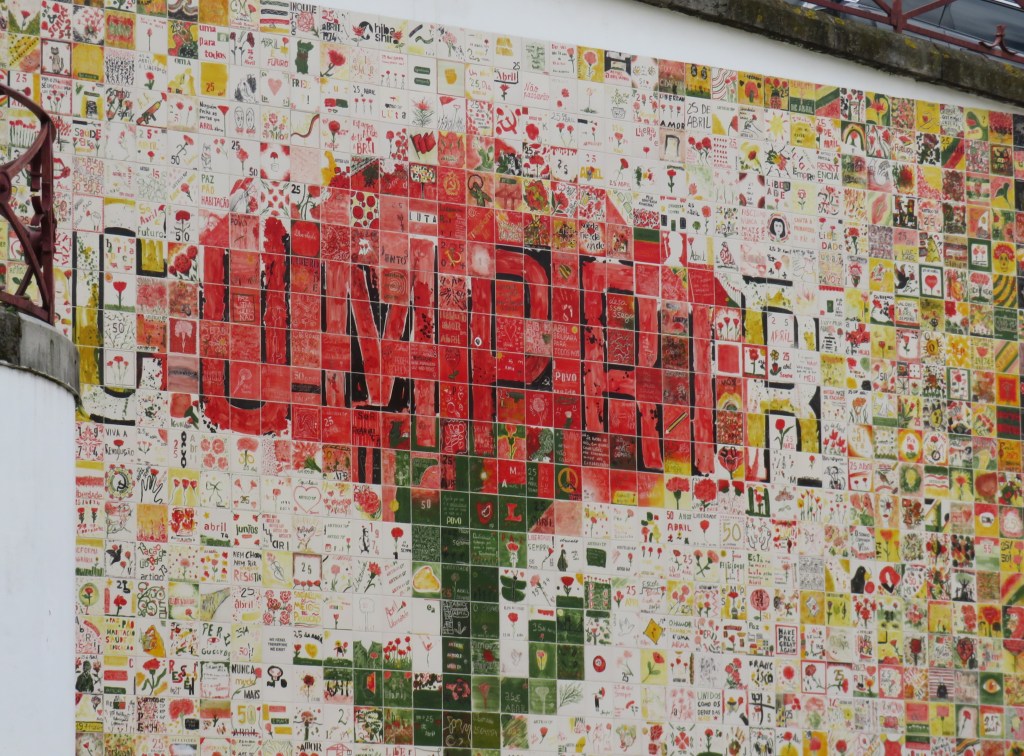
Let’s start with the history. Portugal is a very old, very proud nation, dating back roughly 3000+ years, with it being formed as an individual nation in 1143. The Phoenicians were the first to arrive in Portugal. The Celts, Phoenicians, and Carthaginians established settlements before the Roman conquest, which began in 219 BC. Then the Romans came. Rome ruled for 600 years (roughly 2nd century BC to 5th century AD), establishing cities like Lisbon (Olissipo) and Porto, and introducing Latin and Christianity (Portugal is even more religious and Catholic than Spain or Italy, if you can believe that). Following Rome’s fall, Germanic tribes (Suebi and Visigoths) controlled the area. In 711, the Moors came and ruled for 700 years. The Christian monarchies conquered the Moors after, and in 1128 Alfonso Henriques became the first king of Portugal. Portugal was ruled by it’s own monarchs until 1580, then the monarch who was in power died with no heir to the throne, which allowed the Spanish to invade and take over. The Spanish ruled Portugal until 1640, when the Portuguese regained their independence from Spain. (To this day, there is still a HUGE rivalry between Portugal and Spain). It was once again ruled by Portuguese monarchs until 1910, when they were overthrown and ousted, by Portuguese revolutionaries. It was a dictatorship from 1910-1974. In 1974, a bloodless military coup (the Carnation Revolution) ended the dictatorship and sparked the return to democracy. It grew from a feudal county into a global superpower during the Age of Discoveries, building a vast empire before transitioning into a modern democratic republic in 1974, following centuries of monarchy, a Spanish union, and dictatorship. Today, Portugal is a Republic, with elected officials. So, it has had a very colorful past, rich with history and influenced by many different people and cultures.
We learned all of this, and so much more, through our many tours of each region we visited. We took walking tours everywhere. We visited castles, churches, monasteries, museums, wineries, cruised the along Douro River (a couple of times) and explored on our own. We were very busy and active the whole trip. And we WALKED, WALKED and WALKED. We averaged between 6-7 miles of walking, up and down steep hills, but one day we actually walked 14 miles. Needless to say, we did a lot of walking. When we weren’t walking, we were taking busses and trains all around. We had to come home just to relax. 🙂
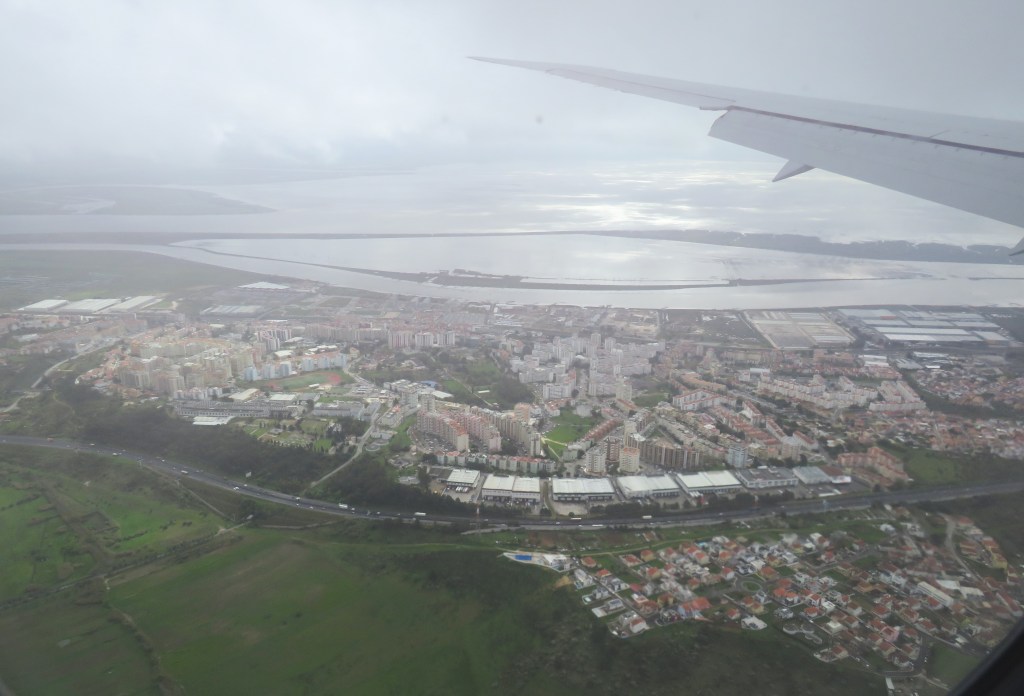
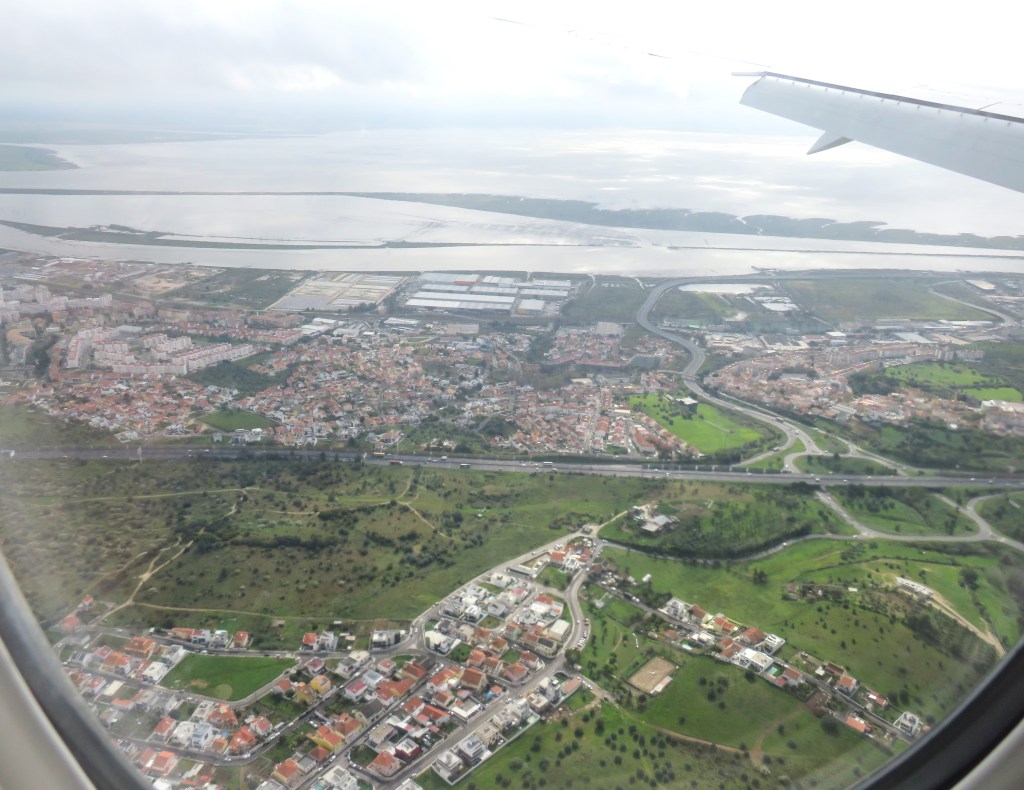
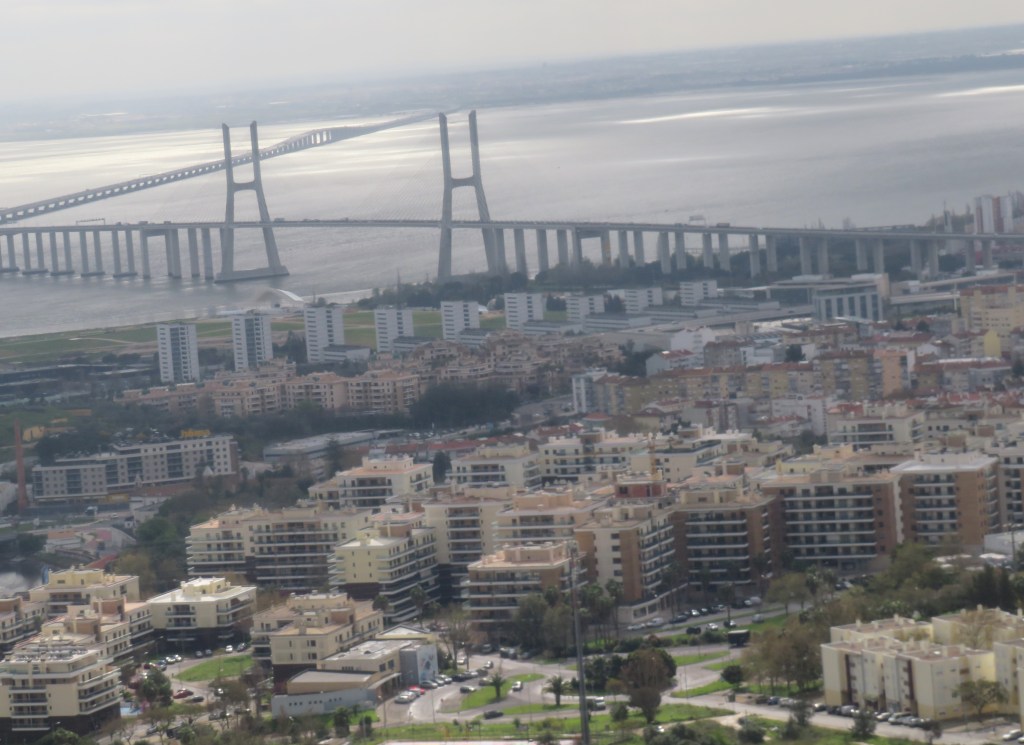
Flying into Lisbon, or Lisboa as it is called by the Portuguese.
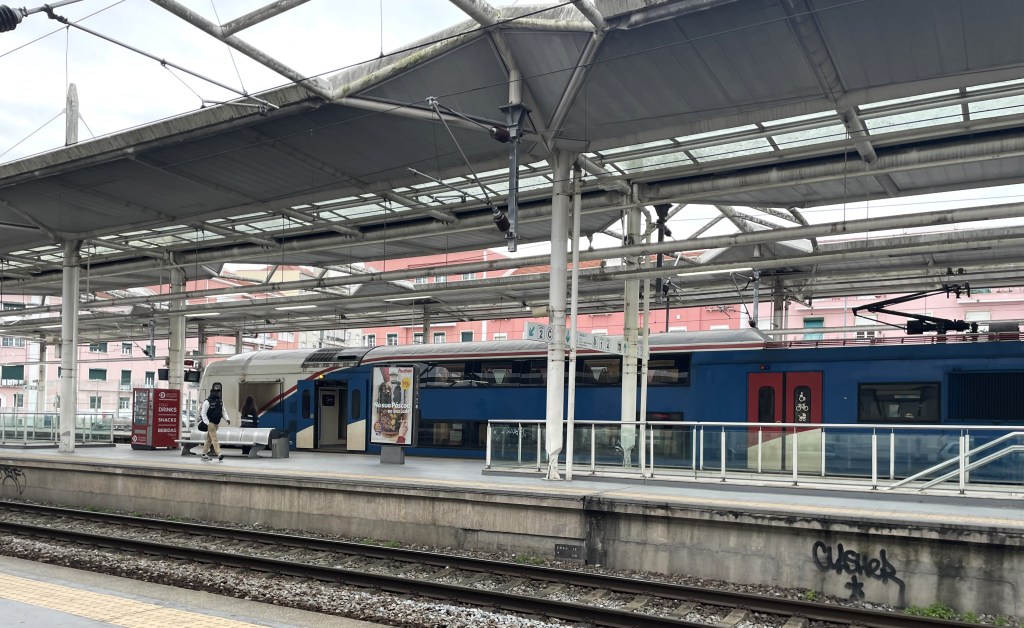
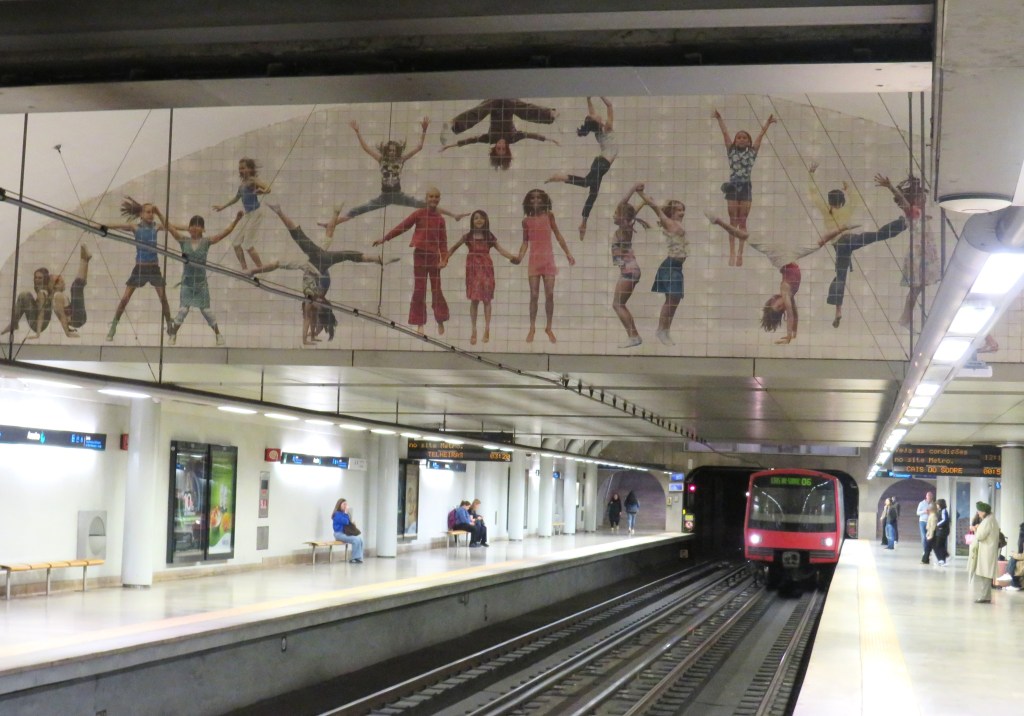
We got around like the locals do.
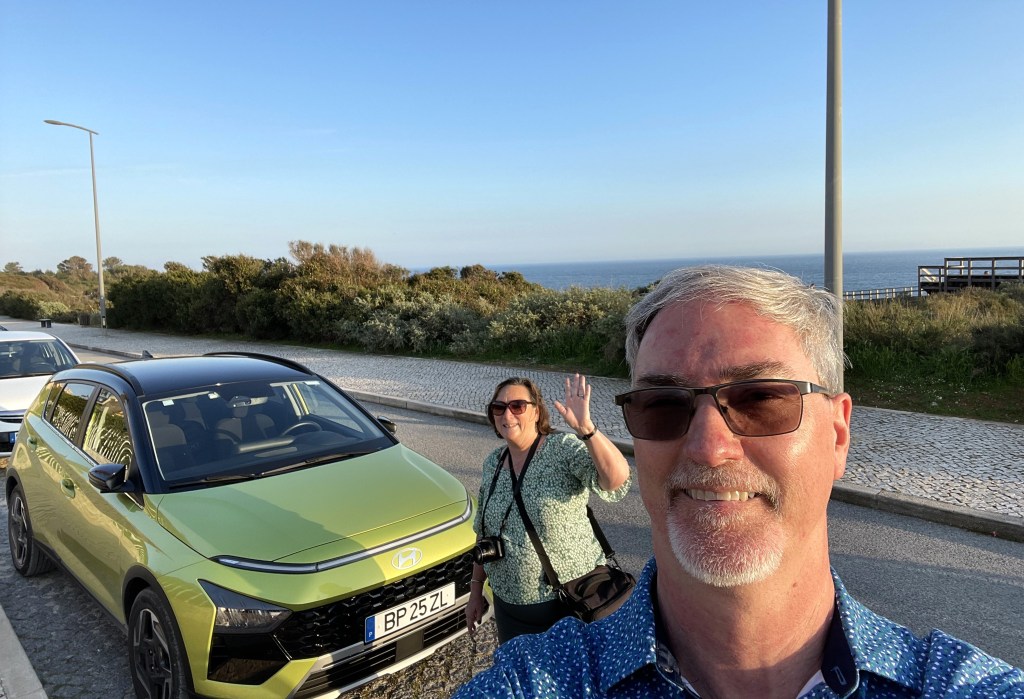
The only time we had a car was when we were visiting the Algarve. We got a bright green little car we named o sapo, or the frog. And from there, our little frog then became known as Freddy (I had a frog when I was a little girl that we named Freddy the Frog).
We didn’t see everything Portugal has to offer, but we did see a lot. That’s a good thing though. It means we have more to see and explore for another trip or two. 🙂
I am still going through pictures and editing them, and still have MANY, MANY more to go through. So sit back, relax, and get comfortable. I have so many great things to share. 🙂
Have a great day and make everyday great. Live life to the fullest and enjoy the ride. It’s not about the destination, but about the journey. 🙂 ‘Til next time.
We’re back. 🙂 🙂 🙂 We got home late Tuesday night. We had a great time in Portugal and saw and did so much. We were all over the place. Yesterday, we hit the ground running, as usual after a vacation. I am just now starting the editing process of ALL my pictures. As usual, I took a ton of pictures too, so it will take awhile. 🙂 I am also going through all my bazillion emails. But soon enough, I will be back in business once again. I have so much to share with you. 🙂
Whether you are Irish everyday or just for today, here is an Irish prayer for you.
I am off to Portugal. You won’t hear from me for the next two weeks. I will be taking in all the sights and tasting all the great foods of Portugal. But have no fear, you know you will hear all about it once I return home.
Have a great day and make every day great. May 2026 be filled with happiness, good health and prosperity for all. ‘Til Next time.
I have officially graduated from silversmithing 101. I finished all three of my assigned projects – all three pieces, my pendant, my bracelet and my ring, and I am the only one in my class who completed them so far, and in less time too. The class was a 10-week class. I missed the first week because I didn’t know about the class, and I am missing the last class (tomorrow) because we will be on a plane en route to Portugal.
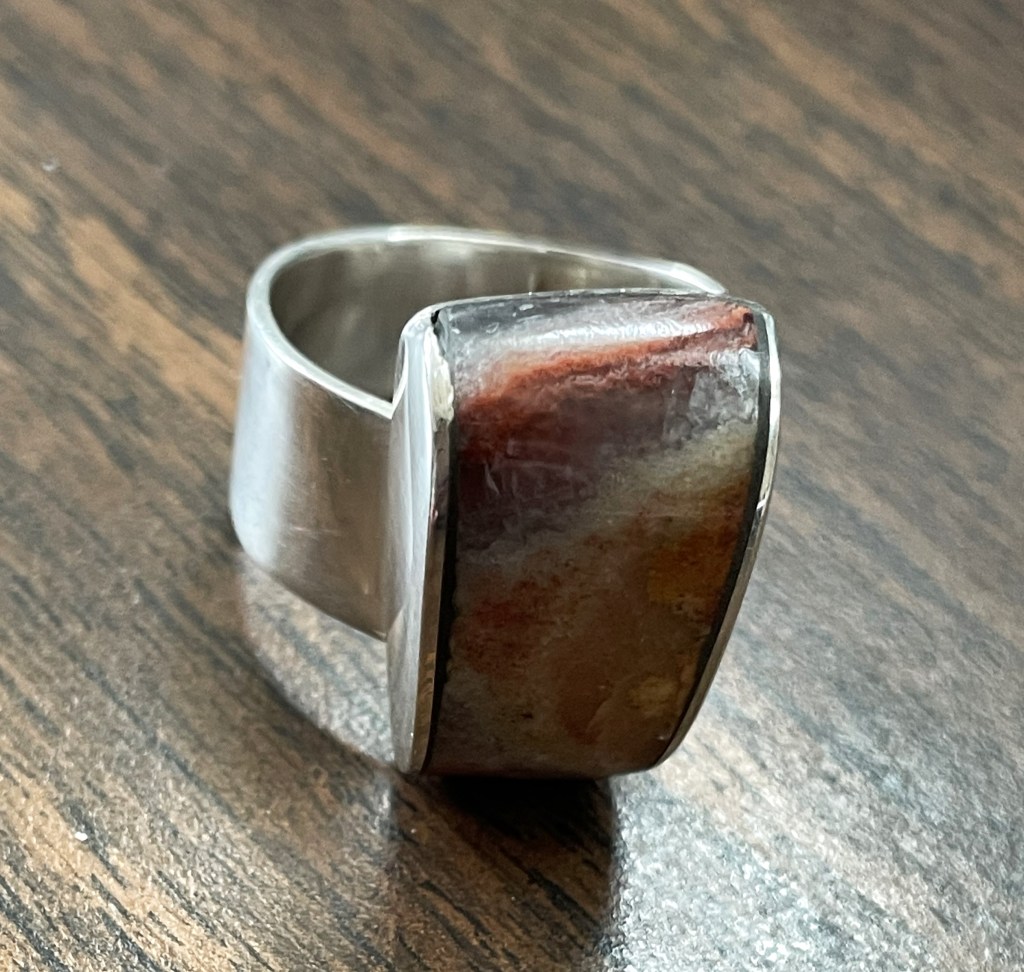
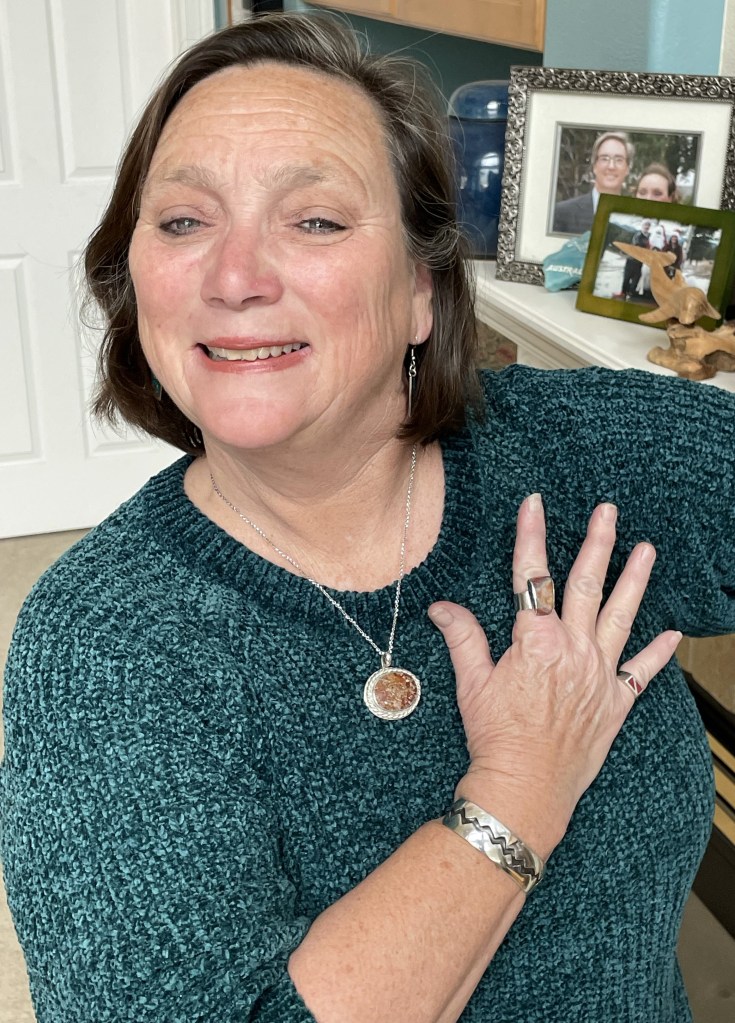
I just finished my ring yesterday. Both my ring and my pendant are made with red jasper stones. I wanted them to somewhat match and to be a set.
Each piece had their own specific set of challenges, but I met them all, and made all my pieces. And personally, I think they came out pretty nice too. They are flawed and have plenty of mistakes, but then, so do I. 🙂
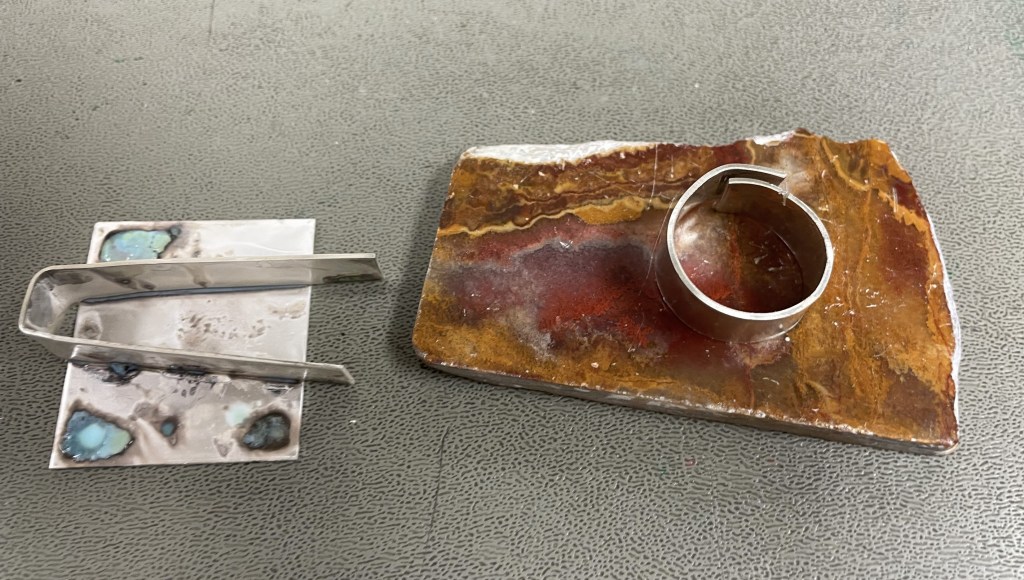
I had to shape the silver to make my ring and solder the bezel together. Then I had to file and solder and cut my stone.
Once everything was soldered together, it was file, file, file and sand, sand, sand, using different sized files and different grades of sandpaper.
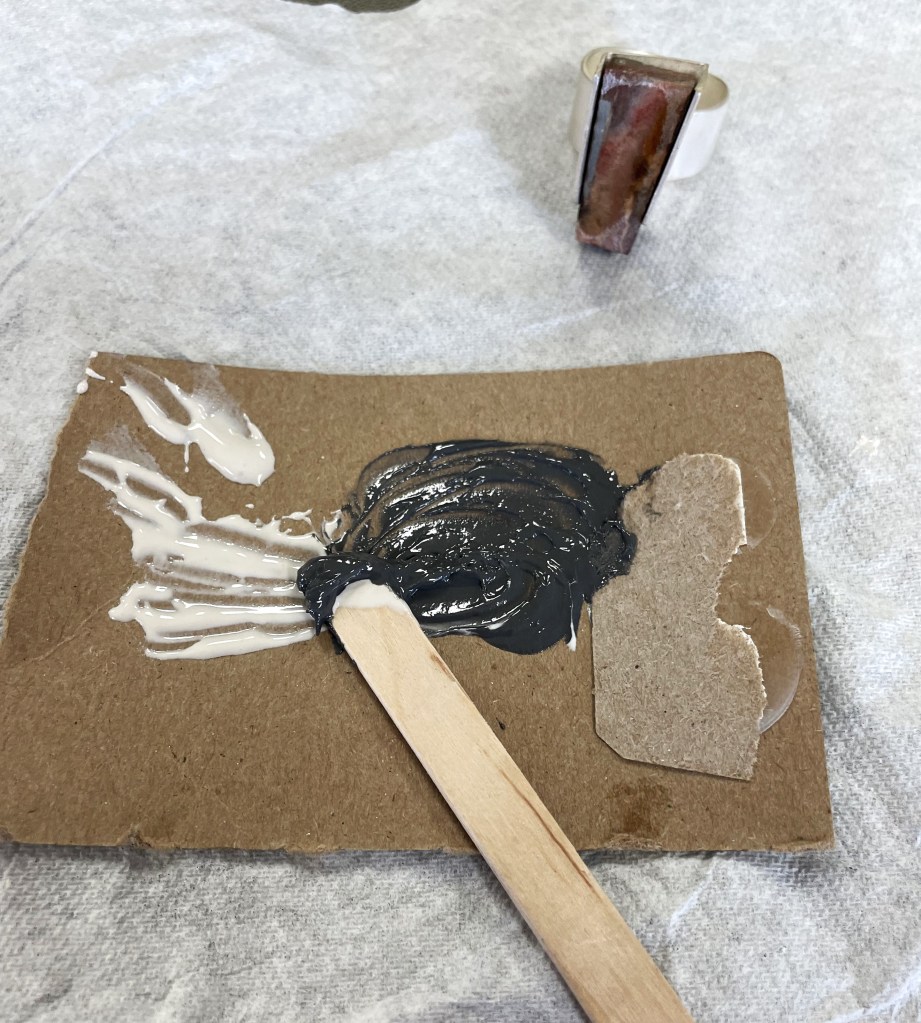
I made my epoxy and set my stone. To set the stone, I needed to make sure the stone was set in place and had to let it dry for 24 hours before I was able to cut it down and shape it. This was definitely a process, and I had to reset it after the initial 24 hour wait because I had gaps between my silver and my stone. So I had to redo this whole step. Needless to say, I wasn’t too happy about that. We mix two different parts of the epoxy together in equal parts then generously spread it all over the bezel.
I had to hold it together like this in between each waiting period, waiting for the epoxy to completely dry and set.
After the second try, it was finally ready to cut the stone and shape it on the stone drill.
Once this was done, I had to shape the silver on the metal cutter. Then sand and polish again and again, before finally being able to finish it up on the polishing machines.
And Voila! Les pieces de resistance!
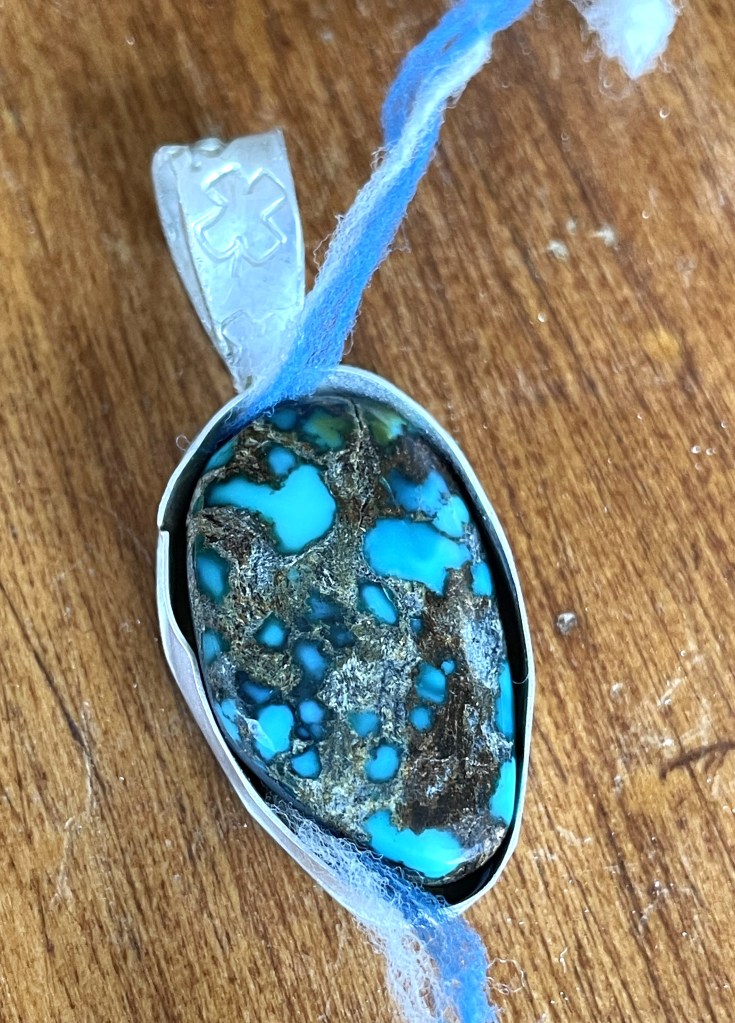
And not to brag or anything, but NOT only did I finish all three of the assigned pieces, I also started working on a fourth piece as well. I had the time and I had the silver and stones, so why not, right?! I am actually almost finished with that piece too. I will finish that up in my next class, after we return home. I started another pendant, this time using a Chinese turquoise. I wear mostly blues and greens anyway, so this is more me. I am about 2/3 finished with this piece.
I made some mistakes on my bezel that I am correcting, and I am once again in the sand and polish phase. I have already done two or three polishes, and have at least one more to go before finally setting the stone and completing my pendant. We use dental floss when working with the stones before finally setting them. The dental floss makes it easier to remove them while we are still working on everything else. But this piece will be completed literally on my first class of the second session. I am that close to finishing it. I almost finished yesterday, but I still have more tweaking to do first. Don’t worry, I have cleaned the piece up a lot since taking this picture of it. 🙂
The second session, silversmithing 201, gives us a lot more freedom and interpretation to use own own ideas for our pieces. I will make another bracelet, but very different from the first one, and a barrette that will also use the Chinese turquoise. I am also thinking of some earrings to match. I already purchased what I need for these. Then, who knows what I will make. 🙂 I made my bale out of some of my scrap pieces, and I was playing with a stamp I bought, so it has a floral design to it too.
Ten weeks ago, I had no idea I would be making jewelry, and look at me now. I am now officially a jewelry maker, and loving it. 🙂 You are never too old to learn new things. Keep growing and keep challenging yourself, and just keep on getting better and better. You just never know what is out there waiting for you. Never give up, and never give up on yourself. I think, this is the mystical fountain of youth we have all heard about. 🙂
Have a great day and make everyday great. Til next time.
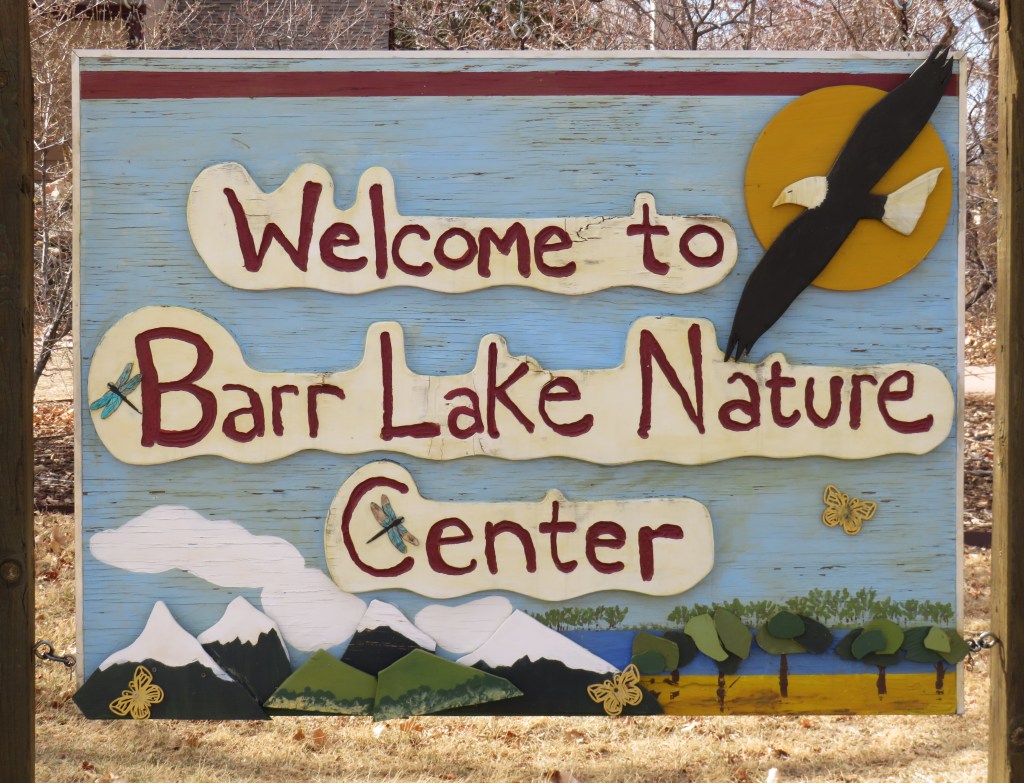
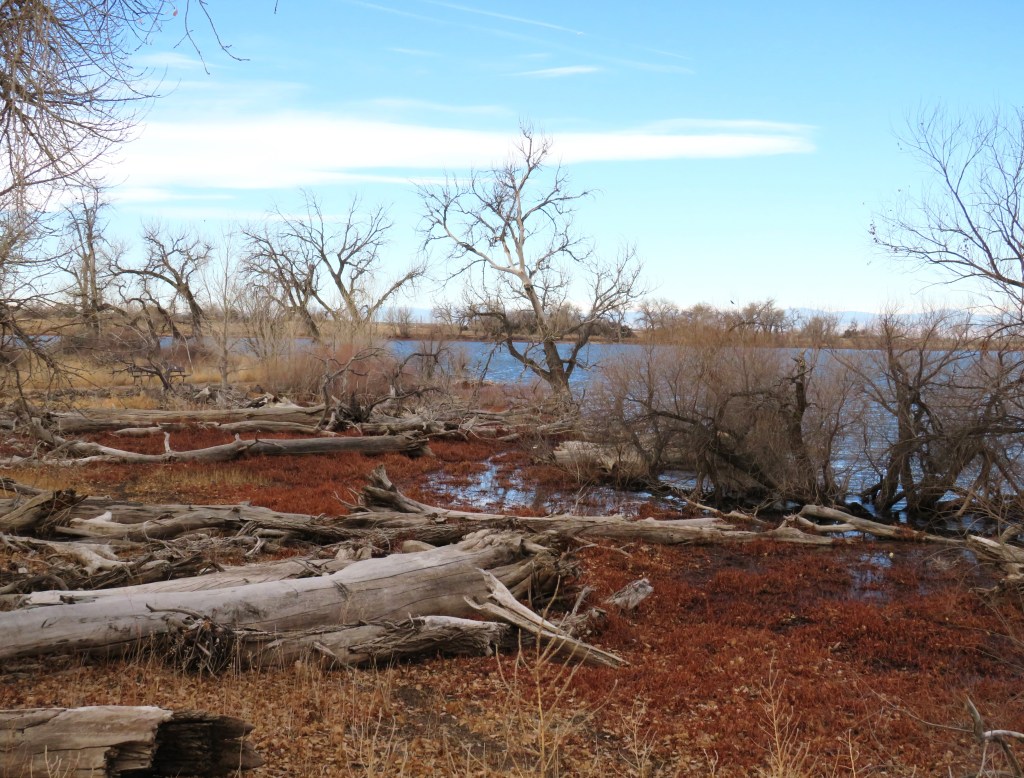
Yesterday morning, Mike, Lauren, Larry and I all went on a bird watching walk at nearby Barr Lake. It was a beautiful day, but we were all a little disappointed with the bird watching experience, for different reasons. I can’t speak for anyone else, but I see the same exact birds the ornithologists were talking about in my very own backyard, all the time, and I see more of them too. I know my birds every bit as much they do, and maybe even better. I caught “the experts” making false statements a couple of times, and Larry and I pointed out different birds to them, that they would have missed otherwise, like the wild turkey and the Northern Harrier. I don’t think they believed me when I said I see the same birds and much more around my own lakes until I showed them some pictures of the birds I have taken. That being said, though, it was still a beautiful day to commune with nature, and we did still have a good time.
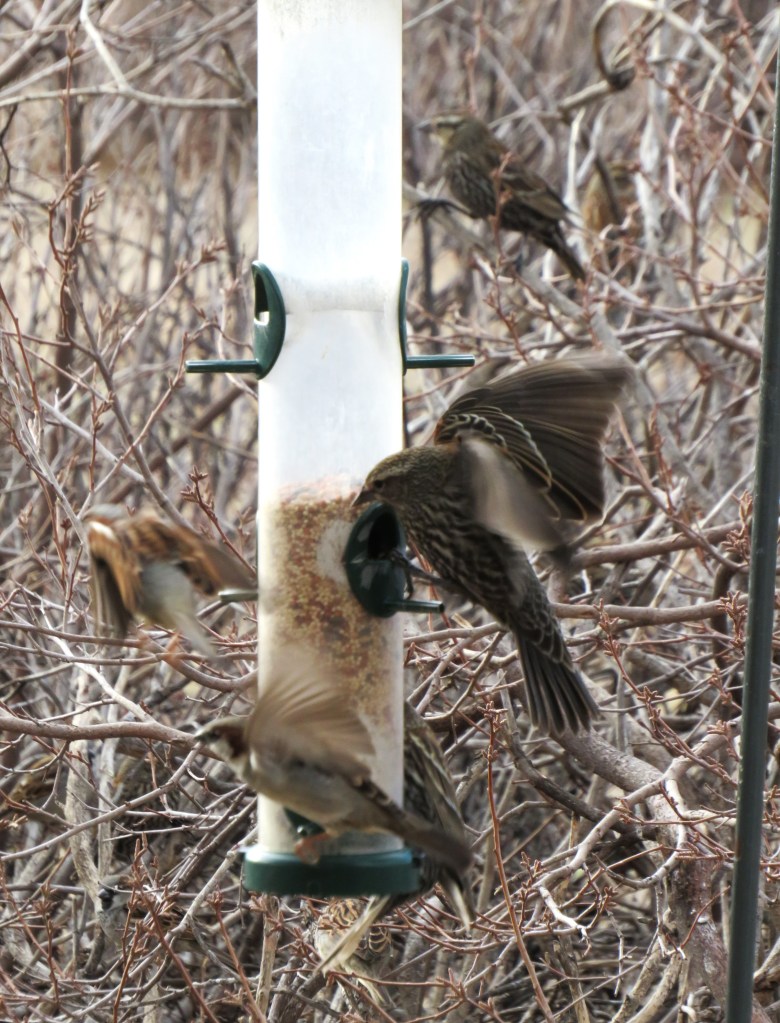
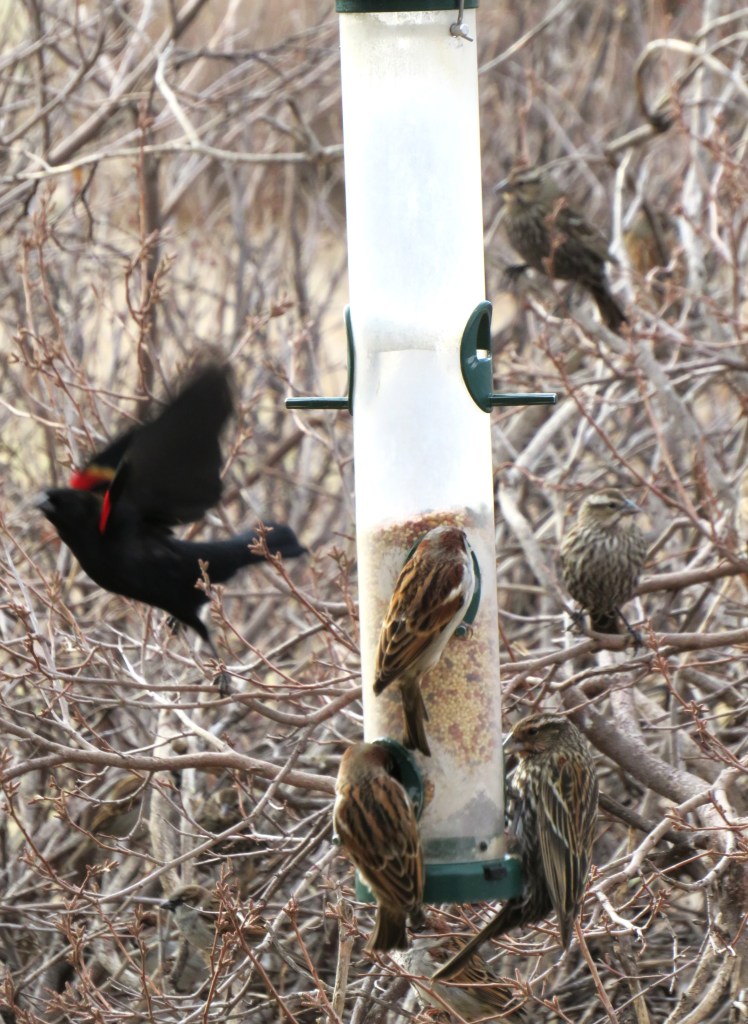
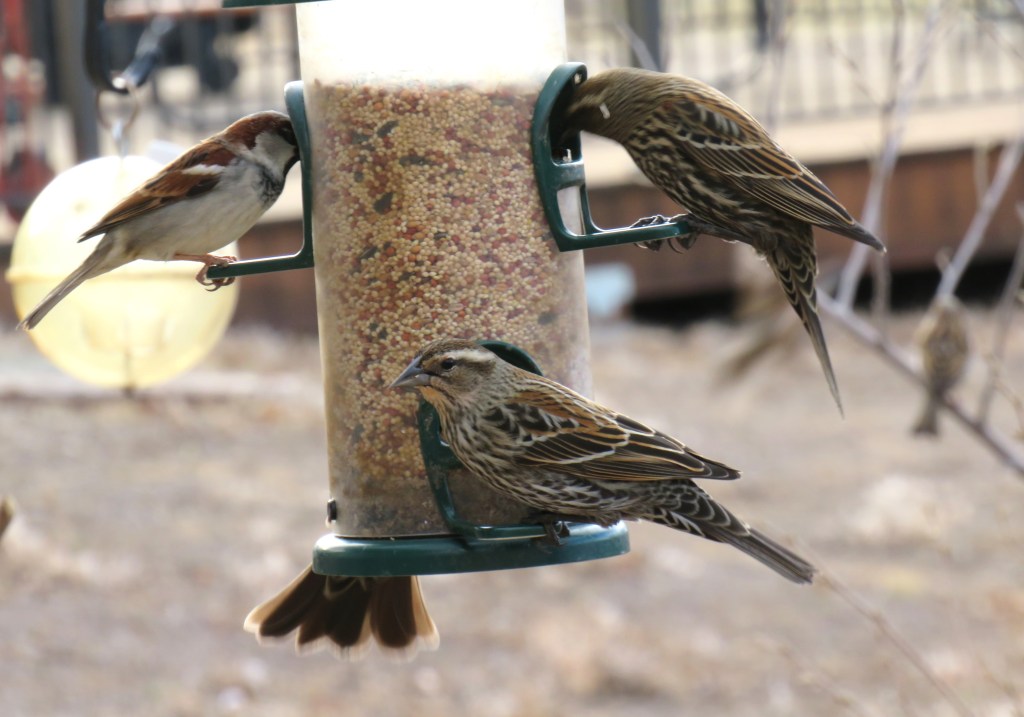
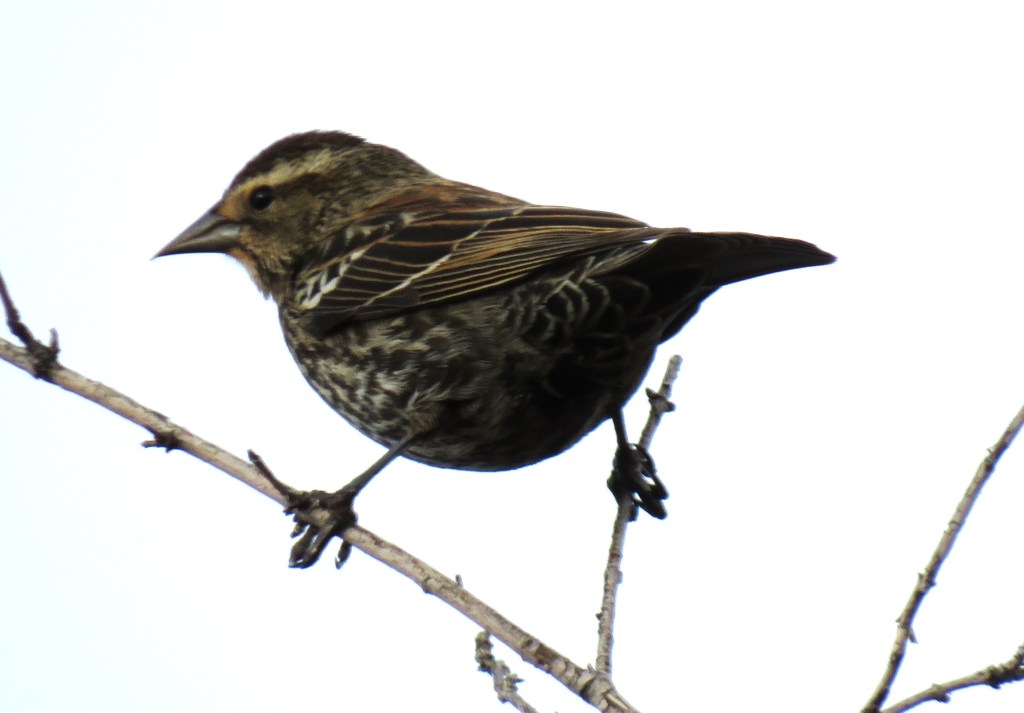
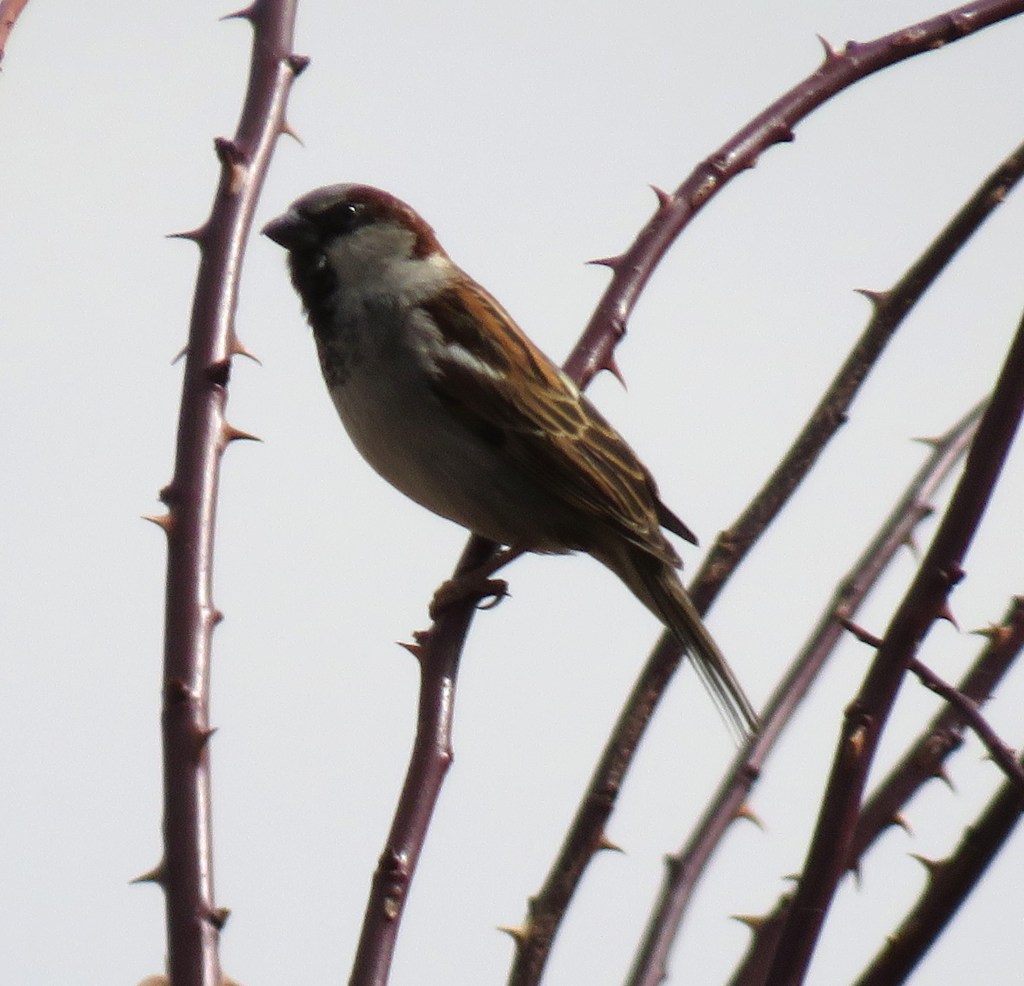
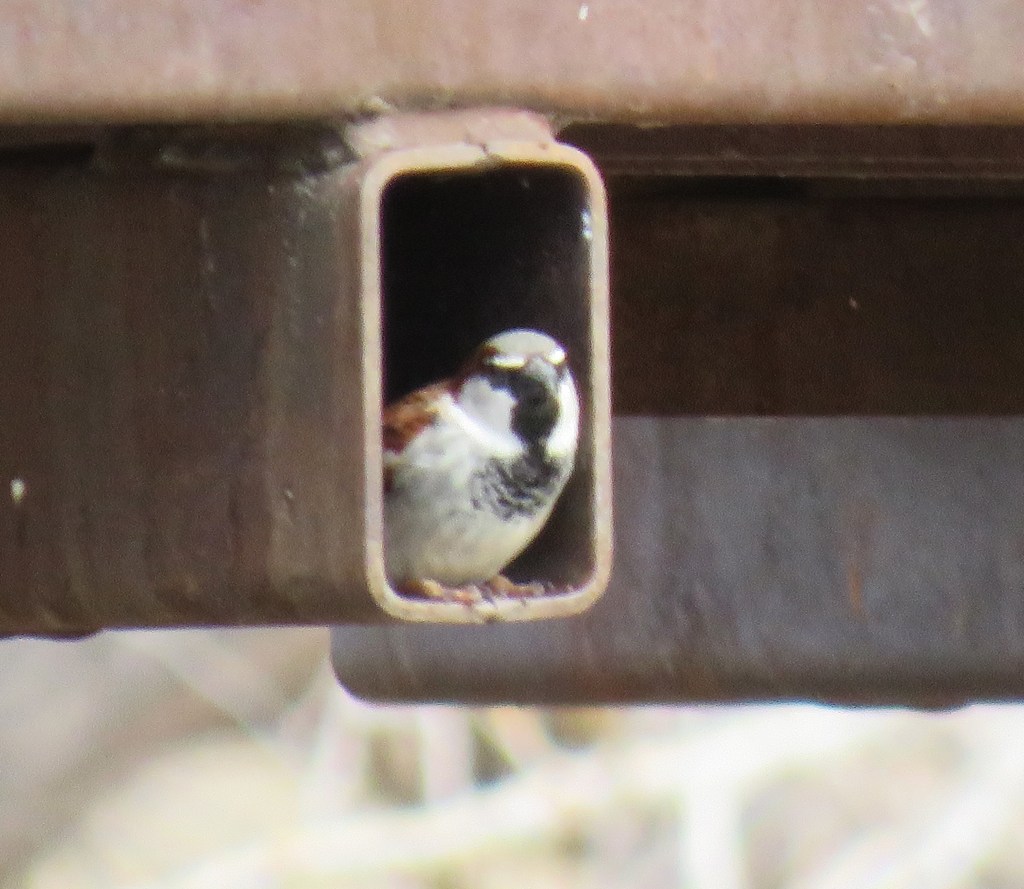
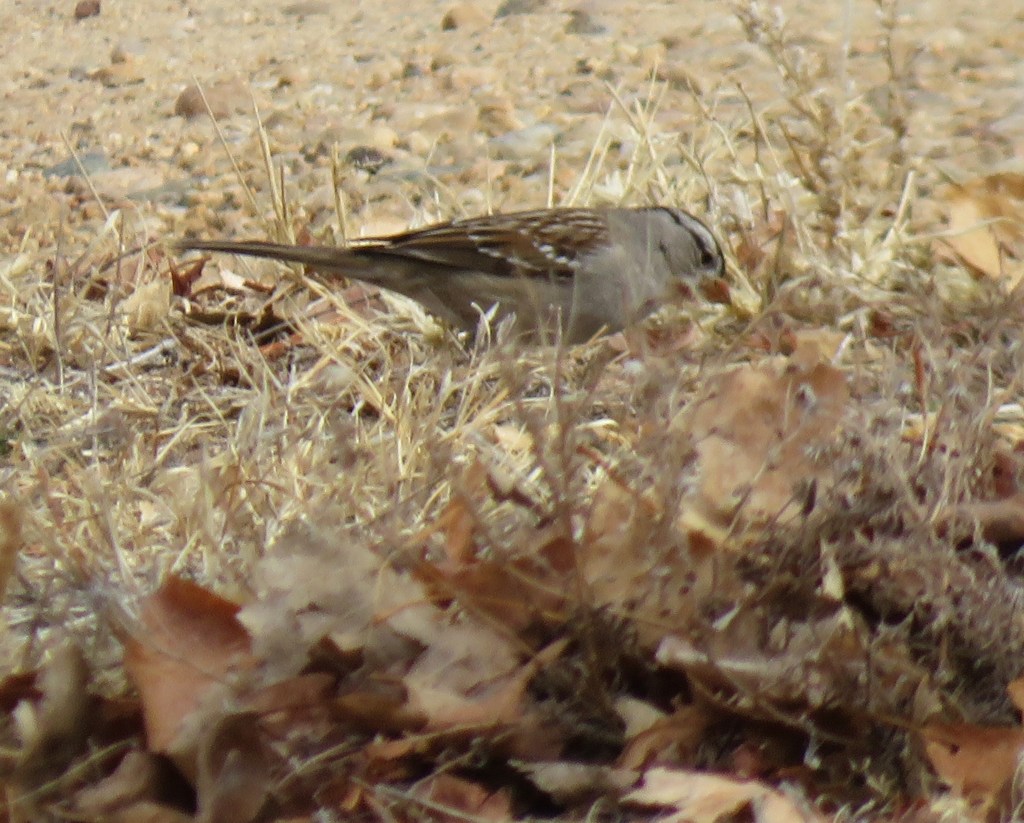
We saw more birds eating at the bird feeders behind the Nature Center than we did out on our walk. There were mainly various sparrows and red-winged black birds.
We saw and heard a few other various birds as well, perched in the trees.
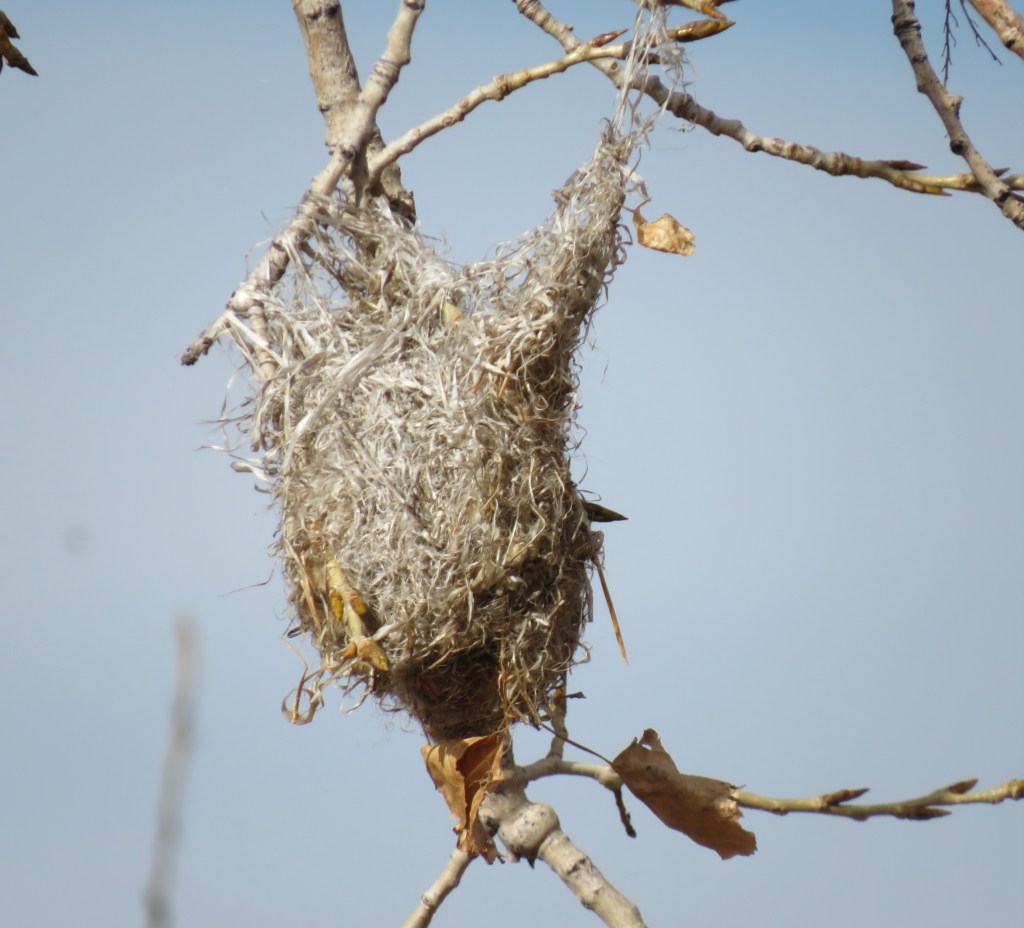
We saw lots of birds nests, mostly bullet oriole nests all throughout the trees.
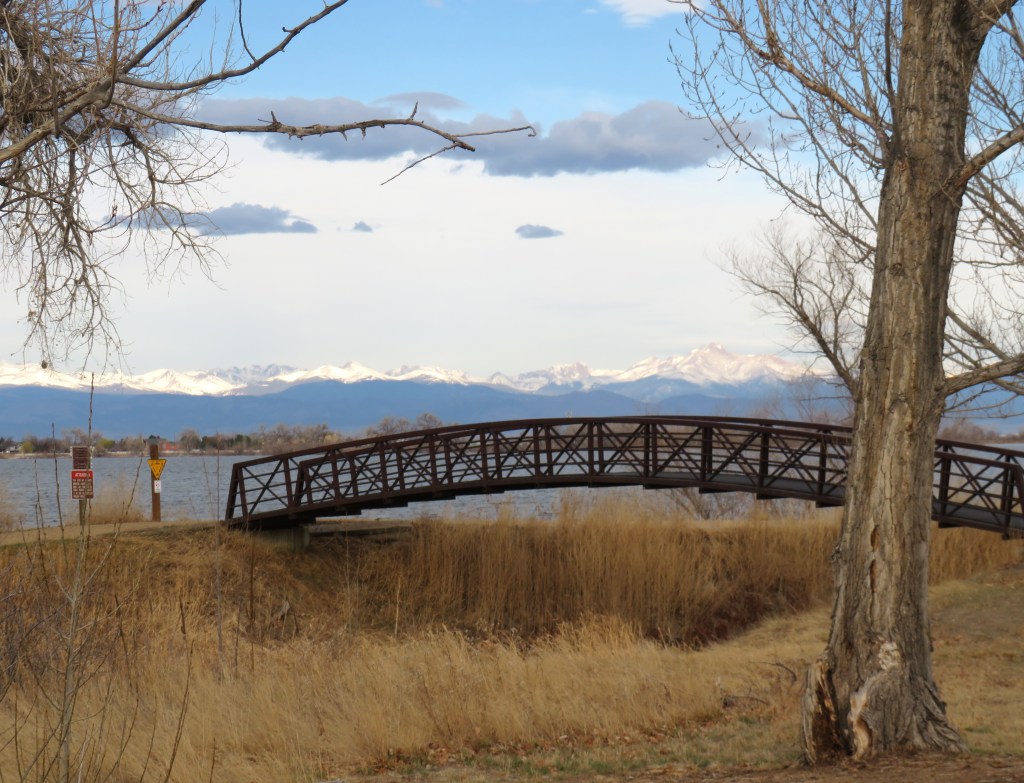
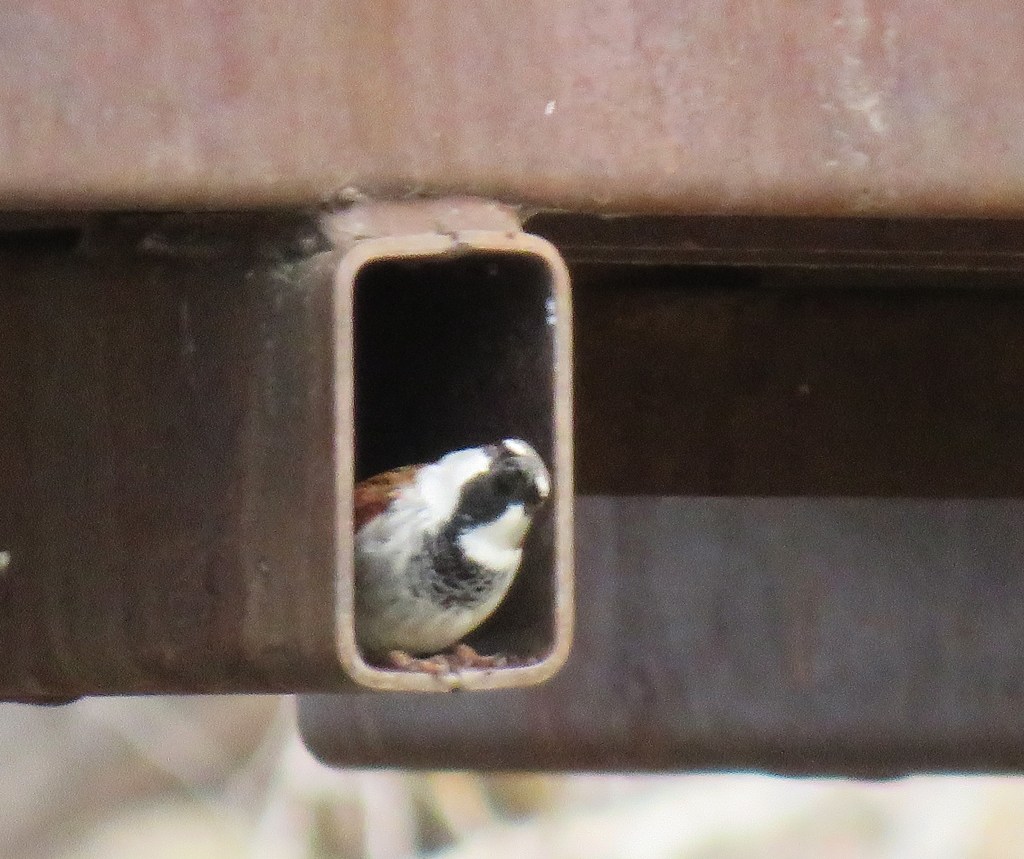
Ironically, I did not get any shots while out walking with the “experts”, but got all these shots either before or after we had finished the tour. I love these little sparrows underneath the bridge.
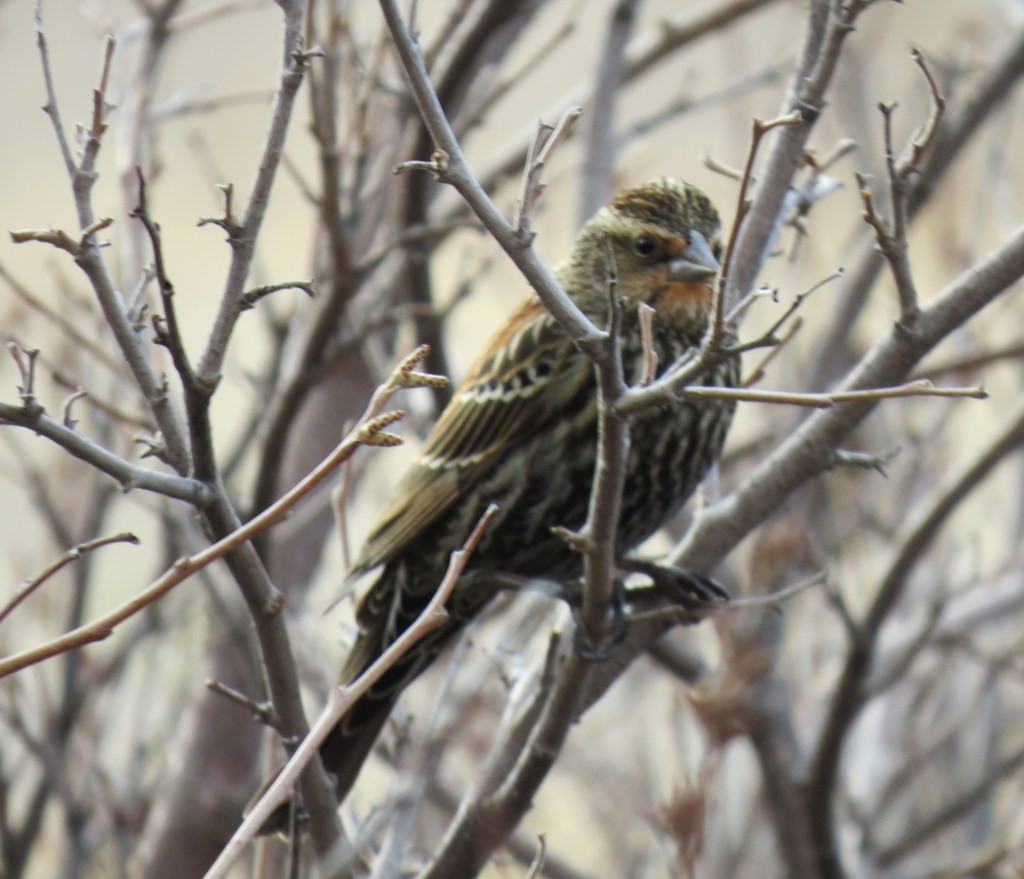
This little guy was looking for food by the bushes back at the Nature Center.
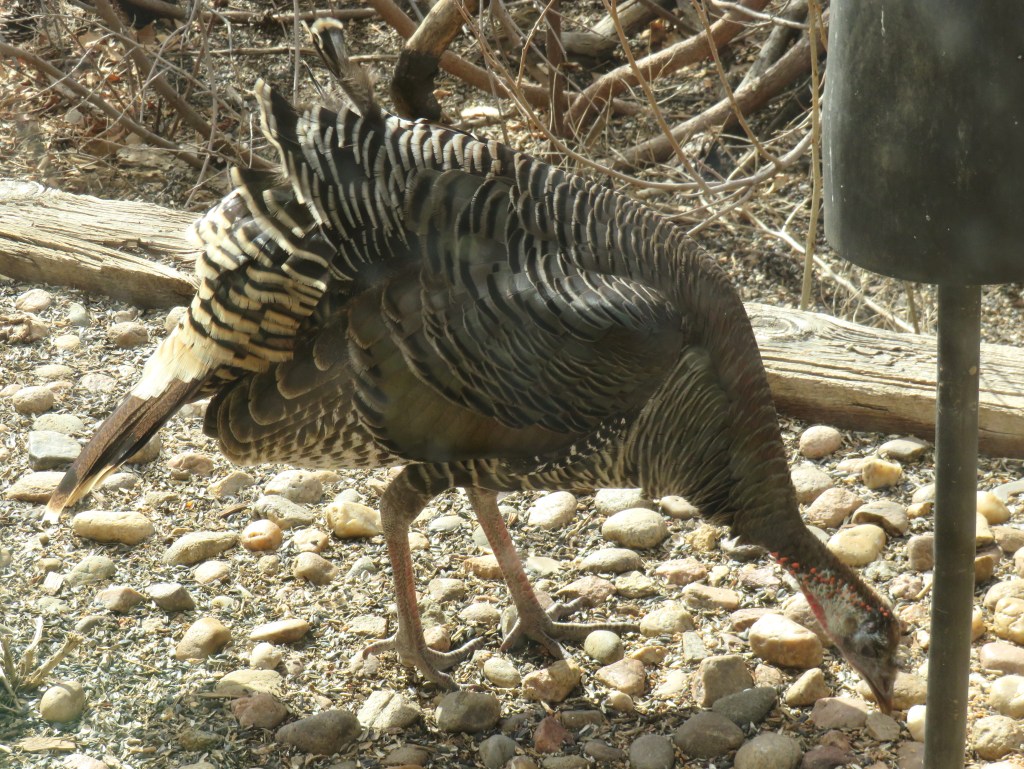
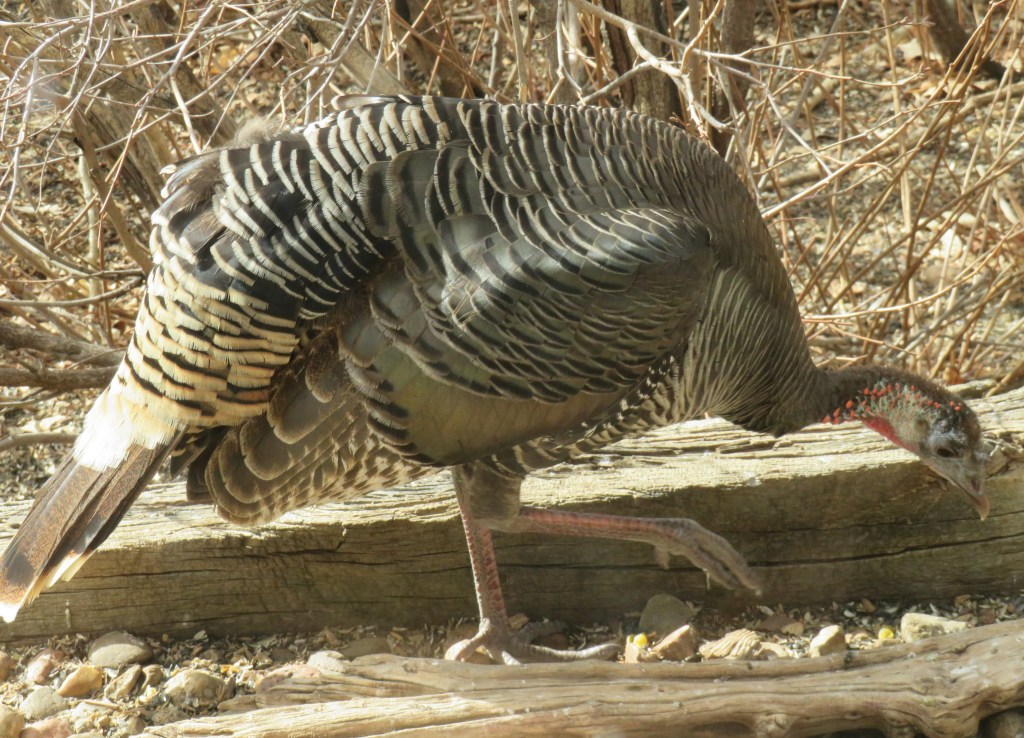
We saw a wild turkey out on the walk too, Larry is the one that pointed it out to the “experts”. On first glance, the “experts” thought is was a Canadian goose, but to their credit, we were quite a bit a way, though they had their big scope and should have been able to tell right away. But again, once we got back to the bird feeders, at the back of the Nature Center, sure enough, the turkey was there too, eating with the rest of the birds.
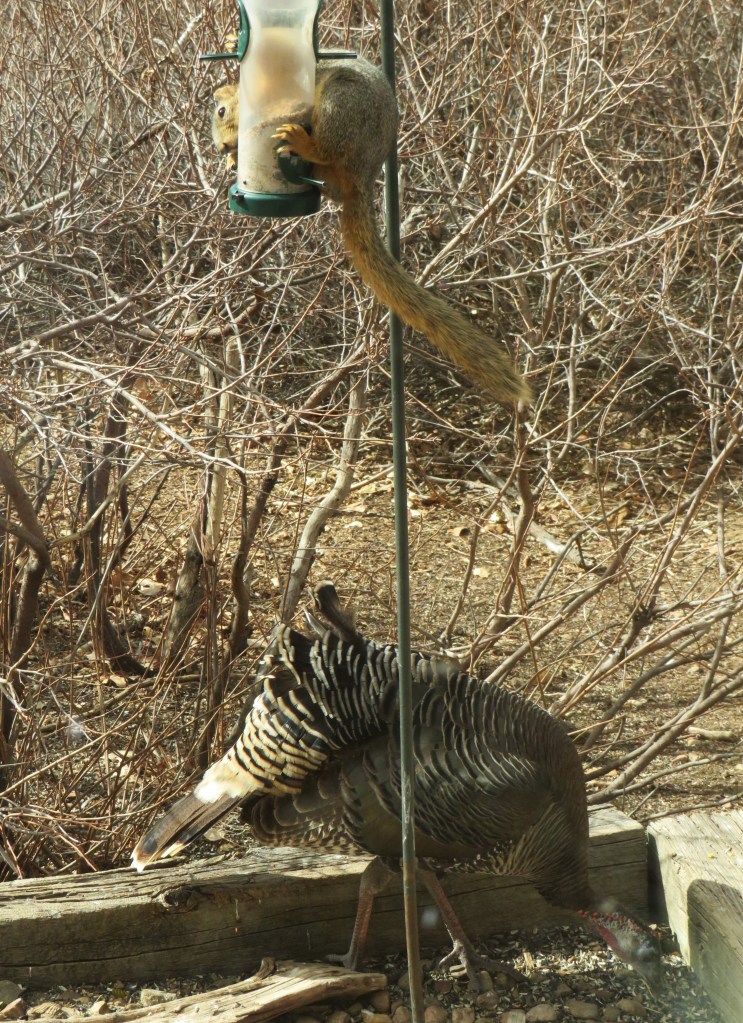
I like this shot of the turkey and the squirrel.
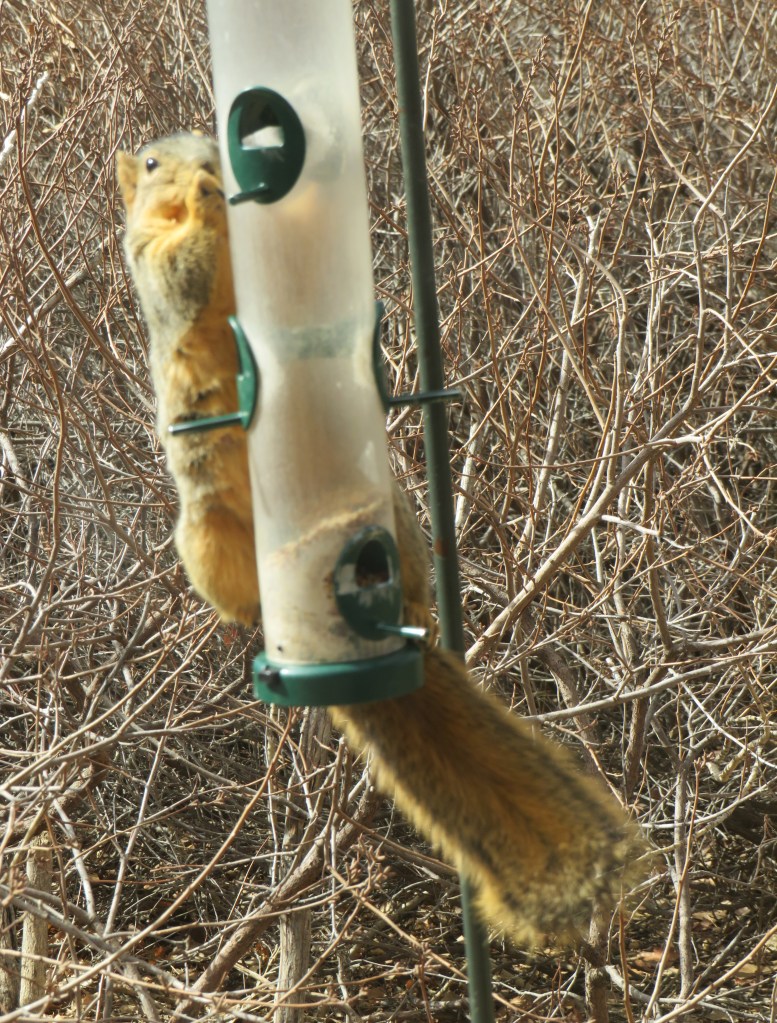
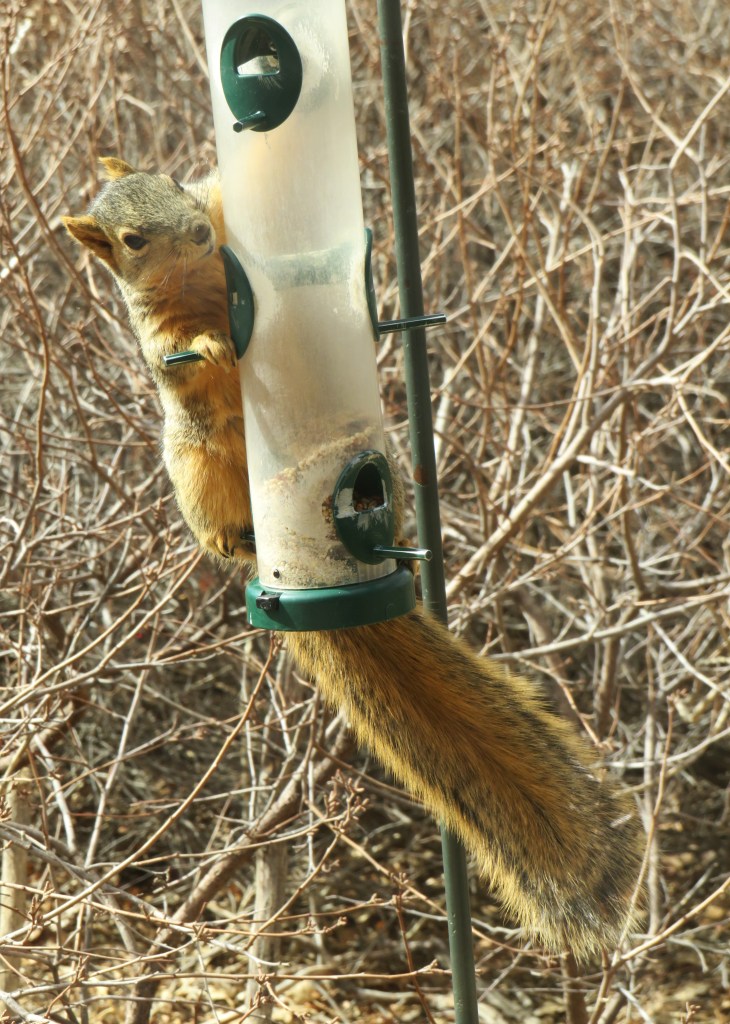
I really like these photos of the squirrel though. He got caught and he is 100% guilty, and he knows it!
After our bird walk, we took Mike & Lauren out to Rosa Cantina for lunch Rosa Cantina. We even embarrassed Mike and had the servers sing him Happy Birthday. They really enjoyed that a lot. We all did. 🙂 After lunch, we took a little break, then Mike & Lauren came back over for game night. Mike said he enjoyed his birthday festivities. 🙂
We had a good time, and as I said, it was a beautiful day, but we all decided we got more out of it from walking around on our own than we did from the event itself. But it was free, which is good. Ironically, once we got back home, I was sitting at our dinning room table, looking out our big window that faces our lake, and just in my own trees, in my own backyard, I saw blue jays, gray-headed juncos, and a beautiful Cooper’s Hawk all within minutes of each other. Much more than we saw on the bird walk. 🙂
No matter what you do, make the most out of every situation. have a great day and make everyday great. May 2026 be filled with happiness, good health and prosperity for all. ‘Til next time.
Can you believe “A Jeanne in the Kitchen” has been around for 8 years now? My 8th bloggoversary was on March 13th. WOW!! Time flies when you’re having fun. Let’s hope for at least 8 more. 🙂
Happy Anniversary with WordPress.com! You registered on WordPress.com 8 years ago. Thanks for flying with us. Keep up the good blogging.
A big thank you to all of you. None of this would have been possible without you. We make a great team. 🙂
Once again, we are getting ready to pack our bags and take a trip. In a few days we will be off to Portugal. This is our first time in Portugal. Larry has been busy planning this trip for months now, and now it is finally here. Because we will be traveling once again, that also means it is time to clear our the fridge, making it as empty as we can before we leave. We are eating all kinds of odds and ends and using up all of our leftovers.
Soups, chilis and salads are always good ways to use up leftovers. We had some steak fajitas leftovers, but not enough for a full meal on their own. So I turned them into a salad and made a chili lime vinaigrette to top them. I also used 3 of my Alliums too, garlic, red onions and green onions All In The Family. 🙂
Chili Lime Vinaigrette
I just threw everything into the food processor and processed until it was all smooth and creamy. I also added some “secret” ingredients too. 🙂 I just had some tiny bits of other vinaigrettes that I added as well, just to give more flavor and to use them up mainly.
2/3 cup olive oil
2 TBSP lime vinegar
2 TBSP lime olive oil
1/3 cup cilantro
1/4 cup lime juice
1 TBSP garlic
1 jalapeno, seeded
2 tsp Dijon mustard
1 tsp cumin
1 tsp dried oregano
1 tsp dried thyme
Process in the food processor and save until you are ready to use.
I built my salads starting with a bed of Romaine lettuce, cheese for Larry, red onions and tomatoes. Then I added the steak fajita mix, which was sliced steak, mushrooms, onions, garlic and bell peppers.
I cut up some tortillas and pan fried them until they were crispy and added those on top, along with a sprinkling of sliced green onions. And Voila, salad is served. Juneau is trying her best to sneak some of the tortilla strips. 🙂
We leave Tuesday, so I probably won’t be doing too much cooking between now and then, though I will still have fun things (hopefully) to share. Between now and the time we leave, I will be very busy trying to do last minute things before taking off. I am working hard at finishing my ring, my last piece of jewelry for this class session. I will be working on it again today and Sunday too if need be, in order to get that finished. Then of course, I need to do all the last minute laundry and house cleaning before we go too. Tomorrow we will have a full day celebrating Mike’s birthday as well. So, as you see, I will be a busy beaver between now and the time we catch our flight. But that’s OK. I like to stay busy and to be useful. 🙂
Have a great day and make everyday great. Life is what you make it, so make it fantastic. May 2026 be filled with happiness, good health and prosperity for all. ‘Til next time.