I have created this site to help people have fun in the kitchen. I write about enjoying life both in and out of my kitchen. Life is short! Make the most of it and enjoy!
Author: ajeanneinthekitchen
I have worked in the restaurant and catering industry for over 35 years. I attended 2 culinary schools in Southern California, and have a degree in culinary arts from the Southern California School of Culinary Arts, as well as a few other degrees in other areas. I love to cook and I love to feed people.
I am going through the fridge, using up what I can before we leave. I am not buying anymore groceries, especially not vegetables until we get back. I was thinking, what do I have that needs to be used up. HMMMMM! Plus, I was making a Greek casserole and wanted a Mediterranean/Greek vegetable to serve along side of it.
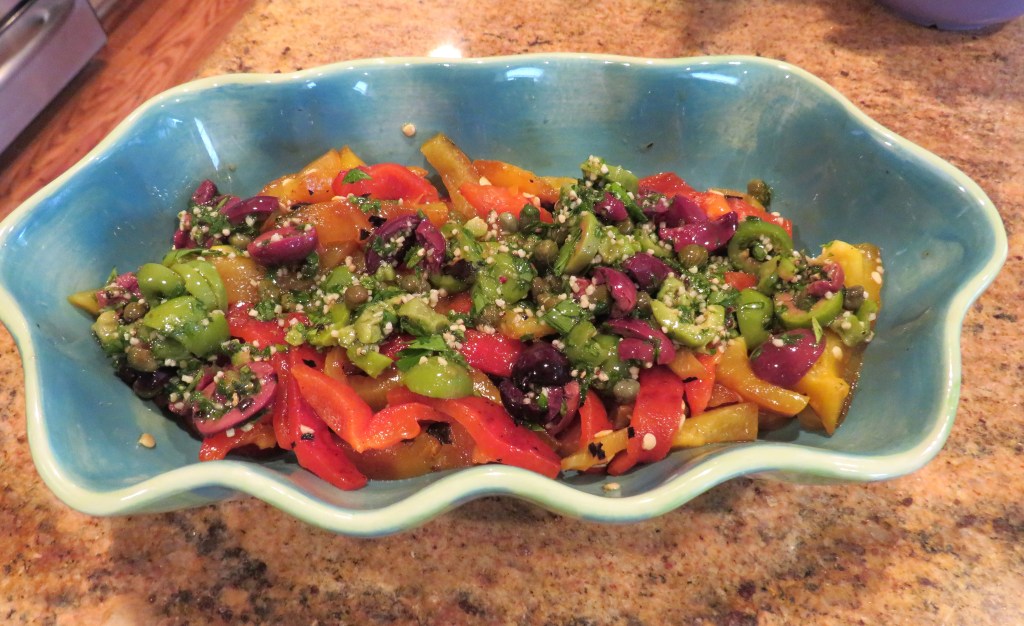
Olives have been a part of the Mediterranean region since the beginning of time. Peppers were brought over to the area in the 16th century, after the Spanish settled the New World. Peppers have been a part of the Mediterranean diet ever since. This salad originally comes from Naples, Italy, where it is known as peperoni in padella con capperi e olive, or peppers with capers and olives. I found what I wanted to make. I found what I was looking for. 🙂
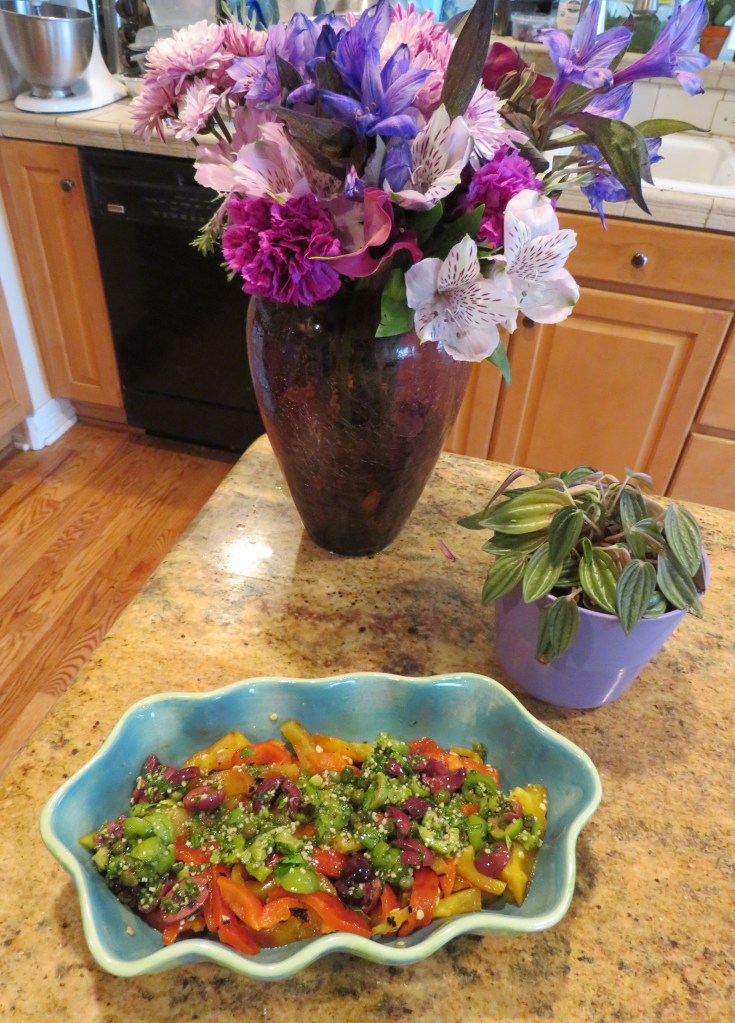
Roasted Pepper & Olive Salad
This salad is best when served warm or room temperature. Of course I did what I normally do. I had a recipe, but changed it and made it my own. I think my version was much better too. 🙂 The original salad cooks the peppers in a pan. I roasted mine instead. It also only called for red bell peppers. I had a variety of peppers, so as always, I mixed and matched. I made other changes too. That’s just what I do.
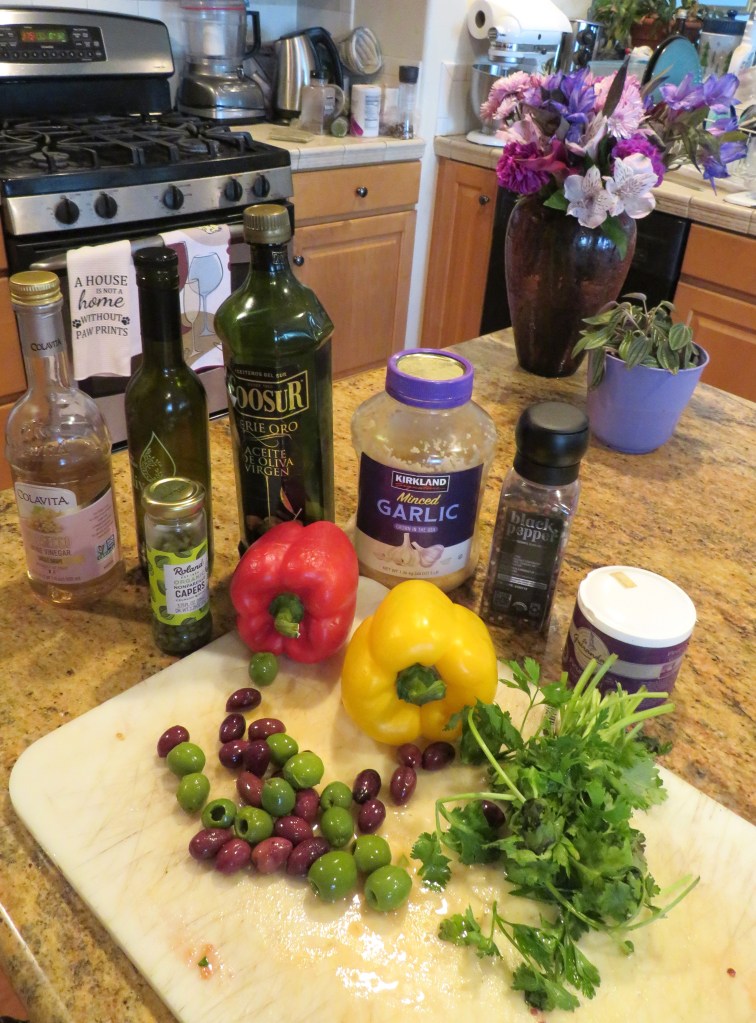
1 red bell pepper, roasted and sliced into thin strips
1 yellow bell pepper, roasted and sliced into thin strips
1 TBSP garlic
1 TBSP capers
1/2 cup mixed olives, sliced
2 TBSP parsley, chopped
1/4 cup olive oil
1-2 TBSP lemon olive oil, optional
1-2 TBSP white balsamic or Prosecco vinegar
salt & fresh ground pepper to taste
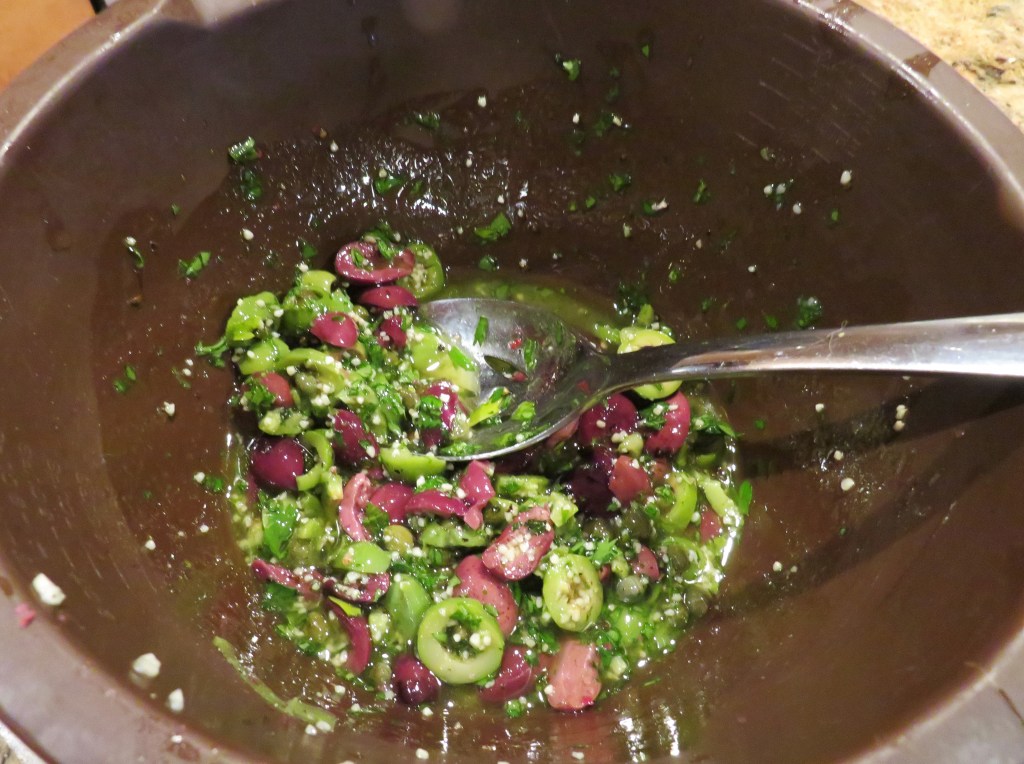
Combine the garlic, oil(s), vinegar, capers, olives, salt, pepper and parsley together and mix well, then set aside.
Roast the peppers until completely charred on the outside. Let them sweat in a plastic bag for about 30 minutes, then peel away the skin and rinse. Remove the seeds and slice into thin strips.
Toss the peppers together then spread the olive mixture on top and serve.
This colorful salad is so tasty and versatile. You can use it next to anything you want to serve it with. It is an easy-peasy Mediterranean classic.
Have a great day and make everyday great. Stay safe and stay well. ‘Til next time.
Yesterday I gave you all a little teaser, OK, maybe a BIG teaser, about a surprise I was working on for you. It is all done now, and it was a big success. What is it? What is this big surprise I have in store?
Well ….. I have just been a guest on the Podcast Fell Into Food, with Chef Jeff Fell. This was my first podcast.
The Fell Into Food Podcast,https://www.youtube.com/@FellIntoFood, is a media project focused on food trends and kitchen innovations. The Fell Into Food podcast features conversations with culinary experts, covering topics like food trends, new kitchen technologies, innovative cooking techniques, and industrial food systems. Welcome to the deliciously informative world of the Fell Into Food Podcast! Each week, we serve up piping-hot conversations with industry experts, shedding light on the latest food trends and … much more. Perfect for home cooks and food enthusiasts alike, this content is an invitation to bring excitement back into the kitchen. You can find episodes on platforms like Apple Podcasts and YouTube.
Chef Jeff says he “grew up in the middle of a corn field outside of Chicago. He went to the Windy City of Chicago, where his crazy culinary journey and crazy ride began, and then took it back to the corn field”. He has been doing his podcast, Fell Into Food, about everything food related for about 2 years now, and he is already making quite the name for himself. He is definitely in the know, and everyone who is anyone knows of Chef Jeff. And now I do too. 🙂
I was scared about all the technical stuff, because unfortunately, I am NOT very technical or tech savvy, but everything went off without a hitch. It was a lot of fun. Jeff and I got along very well and have a lot in common.
My podcast interview will be available for everyone to see and hear on Monday, October 6. As soon as it goes live, I will send everyone the link(s) so you can click on it and see it for yourselves. Chef Jeff and I spoke for about 45 minutes, about all kinds of good stuff. So ….. STAY TUNED! There is a lot of fun stuff coming your way very soon. 🙂
Have a great day and make everyday great. Stay safe and stay well. ‘Til next time.
Once again, we are gearing down, getting ready to go on another trip, so not much new cooking right now. We are using up all of our leftovers, so we have an empty fridge before we go. We will be heading up for another Canadian road trip. We will be covering Eastern Canada this time.
But, I have something in the works that if everything goes right, should be ready for you tomorrow. You’ll just have to be patient a little longer though. If it doesn’t work out, I will still let you know all about it. But hopefully I will have a nice surprise for all of you. 🙂
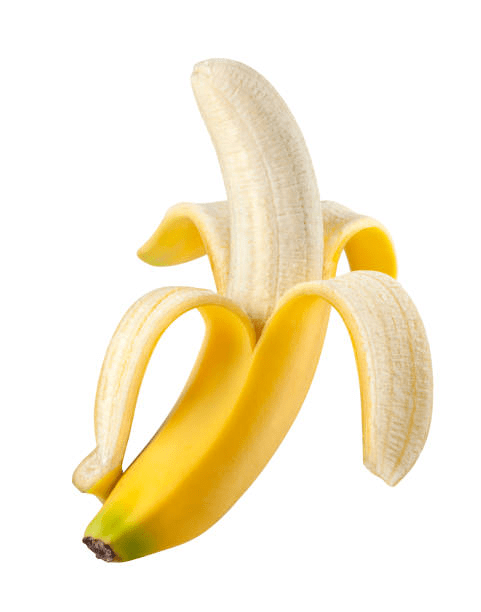
Bananas are some of the most popular “fruits” in the whole world. They are also some of the oldest and healthiest foods on the planet as well. Everyone loves bananas. I know I sure do.
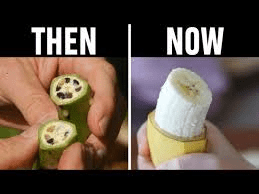
Bananas originated in Southeast Asia, likely New Guinea, around 10,000 years ago, with early domestication focusing on wild, seedy fruits. Wild bananas were small, seedy, and not very palatable. Wild bananas from their native tropical regions of Southeast Asia, Australia and parts of Africa, are quite different from the cultivated varieties we buy at the store today. They are small, have hard peels, and are full of large, hard seeds. Modern edible bananas have been selectively bred by humans to have larger, seedless fruits with thin, easy-to-peel skins.
Starting around 7,000 years ago in places like Papua New Guinea, humans began domesticating bananas through a process of selective breeding. Through genetic accidents and human cultivation, seedless, fleshy varieties emerged. Early farmers encountered “happy genetic accidents,” such as spontaneous mutations that produced plants with fewer, or no seeds. They crossbred these wild species, combining genes to produce more desirable traits. Through this selective process, humans developed seedless, fleshy bananas that could be propagated by replanting suckers (offshoots) from the parent plant. This was a crucial step in the domestication of bananas.
Today bananas are grown in about 100 countries all over the world and come in many different varieties, from large to small, from red to blue to green to yellow. Today, there are over 1000 types of bananas, but we mostly eat just one type. The most popular banana variety is called the Cavendish, named after the Duke of Devonshire, William Cavendish. In the 19th century, Cavendish successfully grew bananas that were imported from Mauritius, in his hothouse. The edible Cavendish is a sterile triploid (three sets of genes) that does not produce viable seeds. Instead, new plants are created as clones from the stems of existing plants, making the Cavendish population genetically uniform. The Cavendish banana is the only type commonly sold in supermarkets today, but before the 1960s, a different variety called the Gros Michel was popular. The Gros Michel was wiped out by a disease known as Panama disease. Bananas are the 4th largest staple food crop in the world today, following wheat, rice and maize (corn).
We all think bananas are fruit. I even just referenced them as fruit above. But bananas are actually a type of berry instead. Bananas are classified as berries because their flesh contains seeds (though they are very small and sterile in cultivated bananas), not on the outside. The seeds are on the inside. “They are formed in big bunches from a large, purple or red teardrop-shaped flower” (p. 12 -The Story of Food) from the banana plant. The edible parts of the banana plants are not grown on the trunk but on the root structure. What looks like a banana tree is actually a giant herb with a trunk made of tightly wrapped leafstalks, not wood. Because the edible parts are grown on the root structure, that makes them technically and biologically an herb.
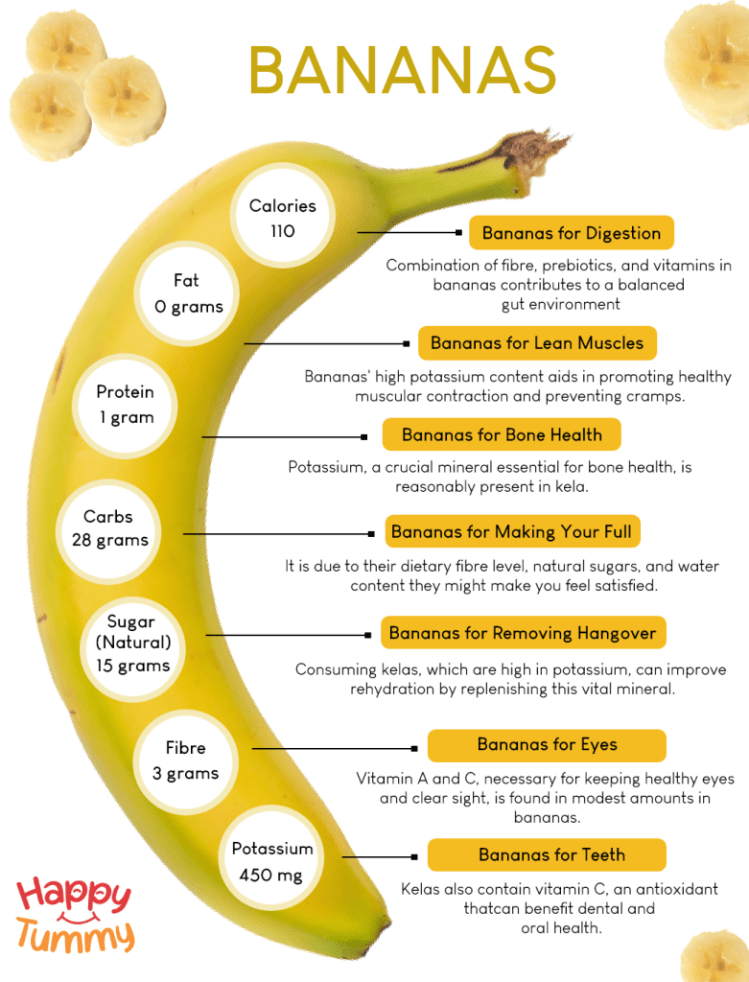
Bananas are very healthy for both humans ands animals too. In fact, they are some of the healthiest foods around. They are loaded with all kinds of nutrients and are low in calories. Eating a banana will cure just about whatever ails you. If you are not feeling well, for any reason, just peel a banana.
Some more fun facts about bananas.
Bananas are radioactive.
Bananas contain small amounts of the radioactive isotope potassium-40, but the levels are so low and natural that they pose no health risk.
Bananas float.
Bananas are less dense than water, which is why they float when placed in a liquid.
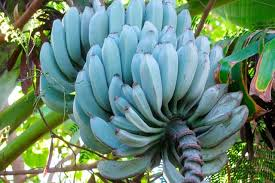
Bananas can be black, red and blue!
Red and blue, long and thin, fat and short, round or softly squared, there are more than 1000 varieties of the Banana, which is in the Musa family. The classic yellow banana found in supermarkets is called the Cavendish, after a British duke found a way to grow them in greenhouses in England, making it possible for Iceland to be one of the biggest exporters of bananas. Mostly people who leave Rancho Mastatal and who live outside of the tropics, stop eating bananas because the supermarket ones (grown in monocultures far away or in greenhouses) are just not worth eating anymore.
You can eat the flower.
Like so many wonders of the world, it is both beautiful and edible! A popular choice is when it is cooked into a picadillo: chopped fine and cooked down with a bit of oil, salt and farm to table pepper. It is delicious. Especially if you’re a lover of the consistency of artichoke or mushroom!
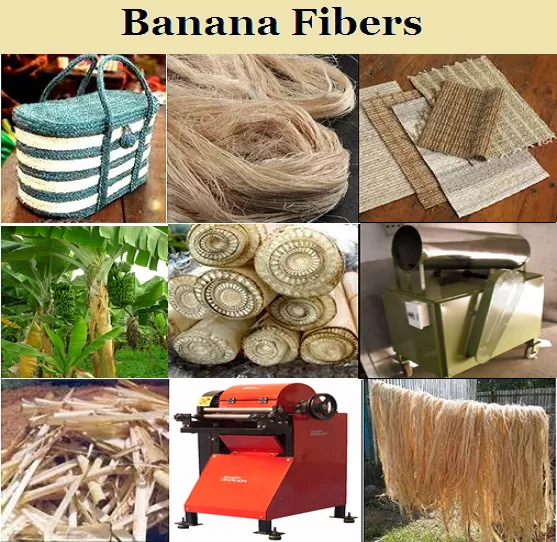
The “trunk” can be turned into weaving material.
Peel the skin of the “trunk” from top to bottom, dry the strips in the sun and you’ll have very strong fiber material to make baskets, mats or belts out of. Banana fibers can be woven into an attractive silk like fabric, which in Japan and Indochina are used for clothes and hats. In Tahiti the leaves and “trunk” of the fe’i variety is used as weaving material and turned into thongs, lashings and fans!
You can eat the trunk.
If you are actively managing your bananas you probably cut away younger ones in the clump, only keeping the three generations (grandmother, mother and daughter) growing. In south East Asia they eat the young “trunks” as commonly as lettuce! Very thinly sliced, and then soaked in water and vinegar for a while, they add it as a fresh garnish in their soups, or turn it into a salad adding herbs, fish-sauce and toasted peanuts.
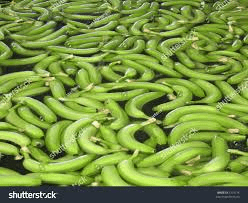
Green bananas are a perennial staple.
They can be used in cooking like we use the potato, simply boil them in water – the whole thing with its skin – and do as you please! You can also cut them into smaller pieces to add to a delicious stew, blend them with herbs and fry them into fritters, grate them and make a green banana hash, slice them thin and dehydrate to make banana flour. We enjoy all these creative ways to use a local food as a staple in our diets.
Plantains are similar to the green bananas and are used in similar ways. Plantains are used in many different tropical cultures and recipes. A plantain to the untrained eye could easily be mistaken for a banana. In fact, it belongs to Musaceae, the banana family of plants, and it’s closely related to the common banana. Believed to be native to Southeast Asia, plantains are grown in tropical regions around the world and in a variety of cuisines. Unripe plantains are green to yellow, difficult to peel, and the fruit is hard with a starchy flavor—this is the perfect stage for boiling and frying them. They are technically fruits, but much like the tomato and unlike the banana, they are eaten and cooked as if they were a vegetable. When fully ripe, plantains are black, with a flavor that some people describe as similar to a banana but not as sweet. Most people prefer them cooked even at this stage.
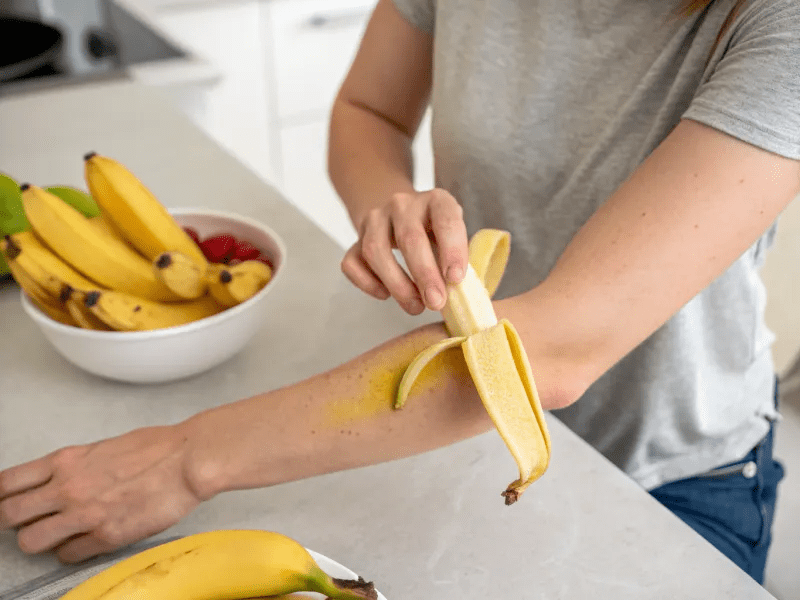
Banana skin helps reduce itching.
The plant itself flourishes in tropical, hot and damp environments, mostly filled with mosquitoes – fortunately the banana skin eases the itch.
Bananas are also very good to eat when you have an upset stomach. They help to stabilize the stomach and digestive problems and help with quelling the nauseous feelings, as well as so many other diseases and disorders. Bananas and their peels are effective in curing and alleviating all kinds of simple health issues.
Dirt or ash helps remove its sticky juice.
Harvesting bananas gives off all kinds of juices, especially when you process the green banana and flower. You can clean the machete, knifes or cutting boards by rubbing dirt or ash on it. It may sound crazy but it works.
When harvesting, rub the stem in dirt; when processing/cooking them green, use as much banana leaves/paper to protect table and other material from the juice. But once you have it on a knife or cutting board, it helps to rub any kind of dirt or ash and then wash.
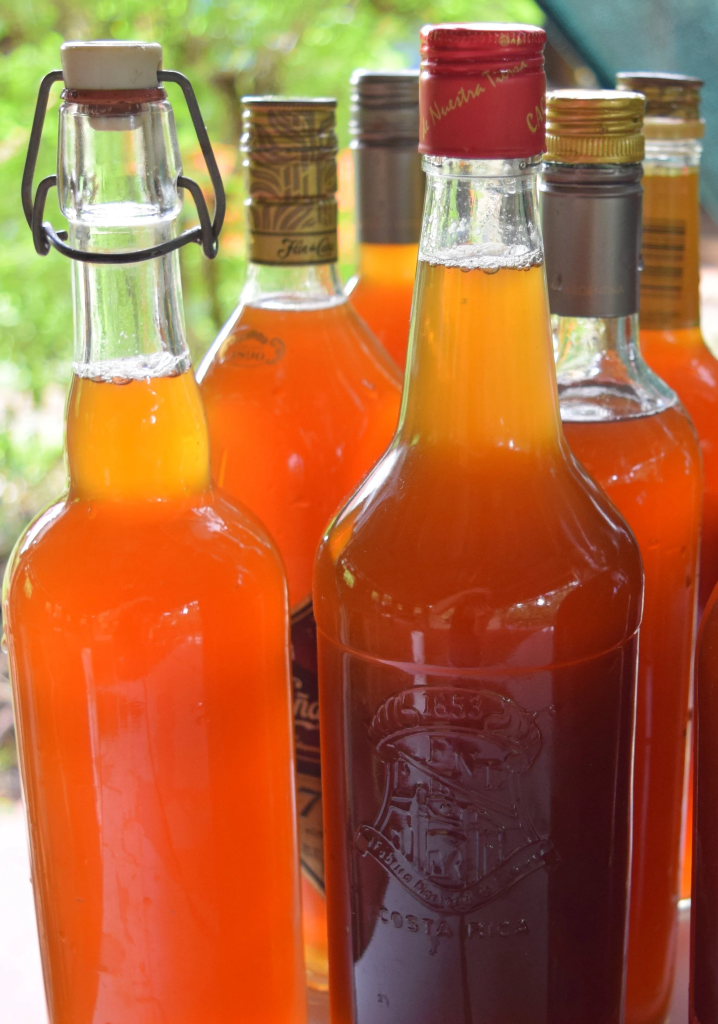
Once they are too ripe, you can turn them into wine or vinegar!
You can never have too many bananas. Well maybe you can have too many to eat out of hand, which happens to use often. That’s when we make homemade banana vinegar! The super ripe, falling off the bunch-juicy-black-kinda ripe, means loads of sugar, which is an opportunity for yeast to have a big feast, eating the sugars and making alcohol! Permaculture principle– produce no waste.
PACKED with potassium that reduces muscle spasms very efficiently.
The average daily banana intake is about 3 to 5 bananas, which for many, they find that their muscle spasms has completely disappeared. Bananas also contain the neurotransmitters, dopamine and serotonin that lifts up the mood.
The stages of the banana. They are edible in all stages, and every stage has a different flavor and texture. I like them and eat and use them in most stages. The only stages I am not overly fond of are the immature and barely ripe stages. I use the very ripe and over ripe bananas for baking. They are perfect for baking purposes when they are really soft.
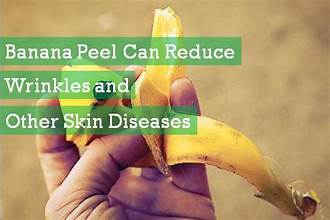
Here are some other uses for banana peels too that you might not have known about.
So peel a banana and kick back. It will help keep you healthy and well, and you can use them for many other things too. Have a great day and make everyday great. ‘Til next time.
There is a lot of strange stuff going on right now, both personally and globally. I thought we could all use a few laughs right now. Humor and laughter after all, are the best forms of medicine. 🙂
Ain’t this the truth?!!!!!
I hope these all brought a smile and some laughs. have a great day and make everyday great. Stay safe and stay well. ‘Til next time.
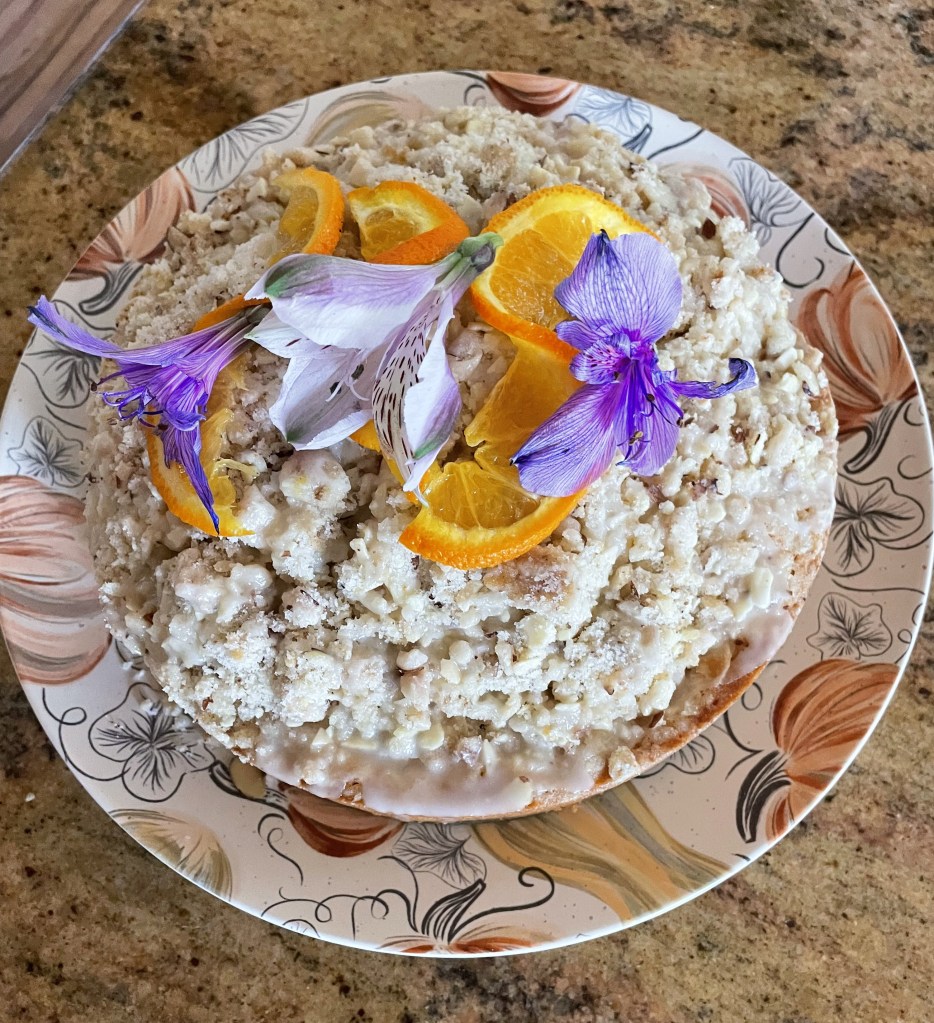
I haven’t been baking for quite some time, and I miss it. I miss it a lot. I used to bake all the time when I was running the church coffee cart, but now that I no longer do that, I really don’t bake that much anymore. Neither Larry nor I need the calories and we are really trying to cut back on our sweets. That being said, I did bake a delicious orange almond coffee cake to take to Mike & Lauren’s for game night.
I was inspired by a recipe I found on Cook’N With Mrs. G at https://cooknwithmrsg.com/ and My Meals Are On Wheels at https://beatcancer2010.wordpress.com/. Thank you both for this delicious inspiration. I say inspired by, because you all know I changed the recipe and made it my own, though this time it was only because I ran out of lemon zest and substituted orange zest and orange flavorings for everything lemon. 🙂
Orange Almond Coffee Cake
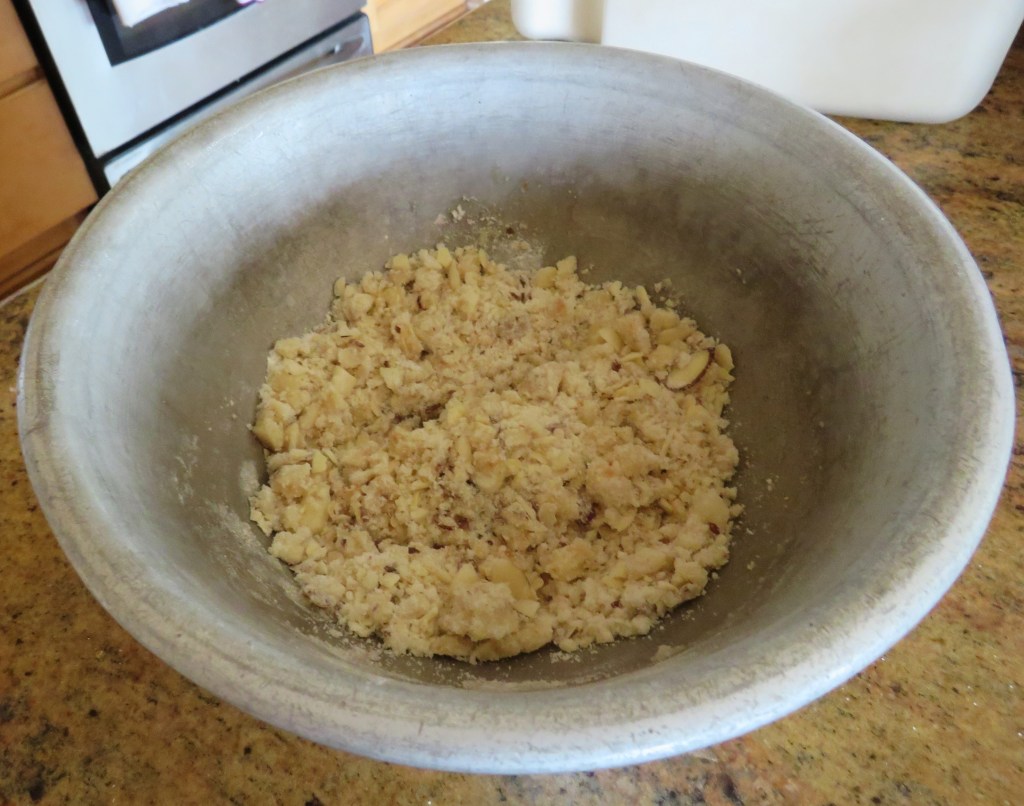
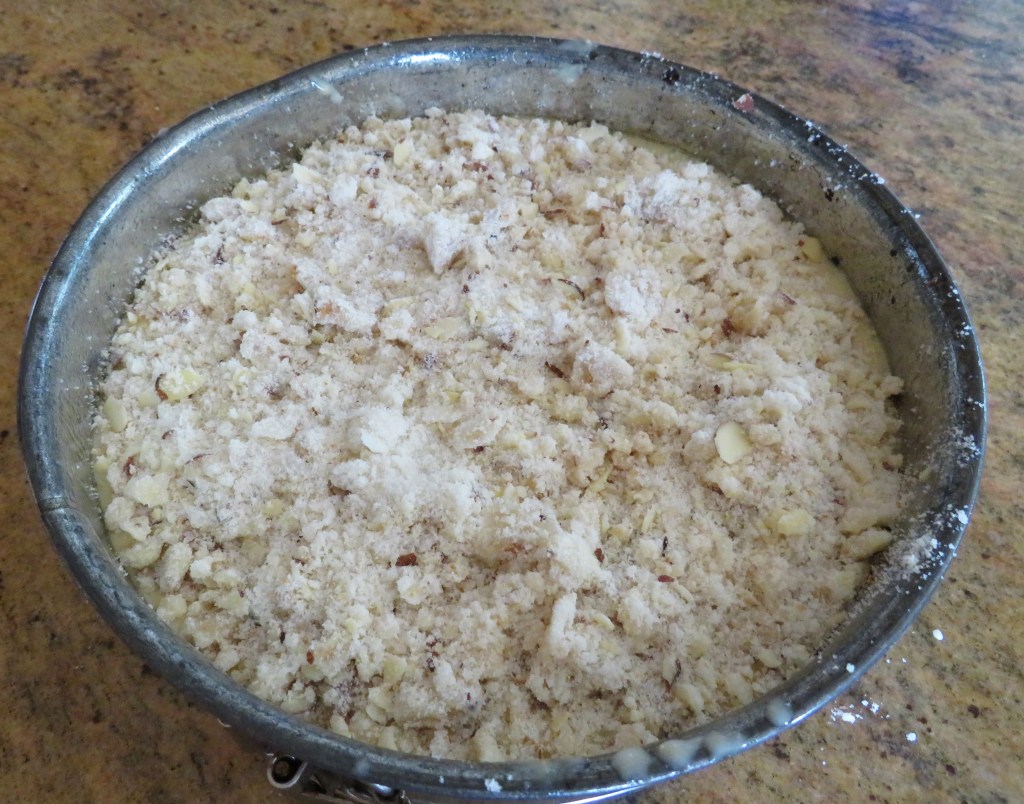
I made the streusel topping first.
Streusel
Preheat the oven to 350* F or 180*C.
Spray either an 8″ round cake pan or an 8″ square baking pan with cooking spray.
1/4 cup flour
1/2 cup sugar
1/2 cup almonds, chopped fine
3 TBSP melted butter
1 tsp orange zest
Mix everything together and set aside.
The Cake
*Note to self: As much as I liked the cake, I will be adding a bit more sugar to the mix next time, since it needs a bit more sweetness. I have already made this adjustment in the recipe.
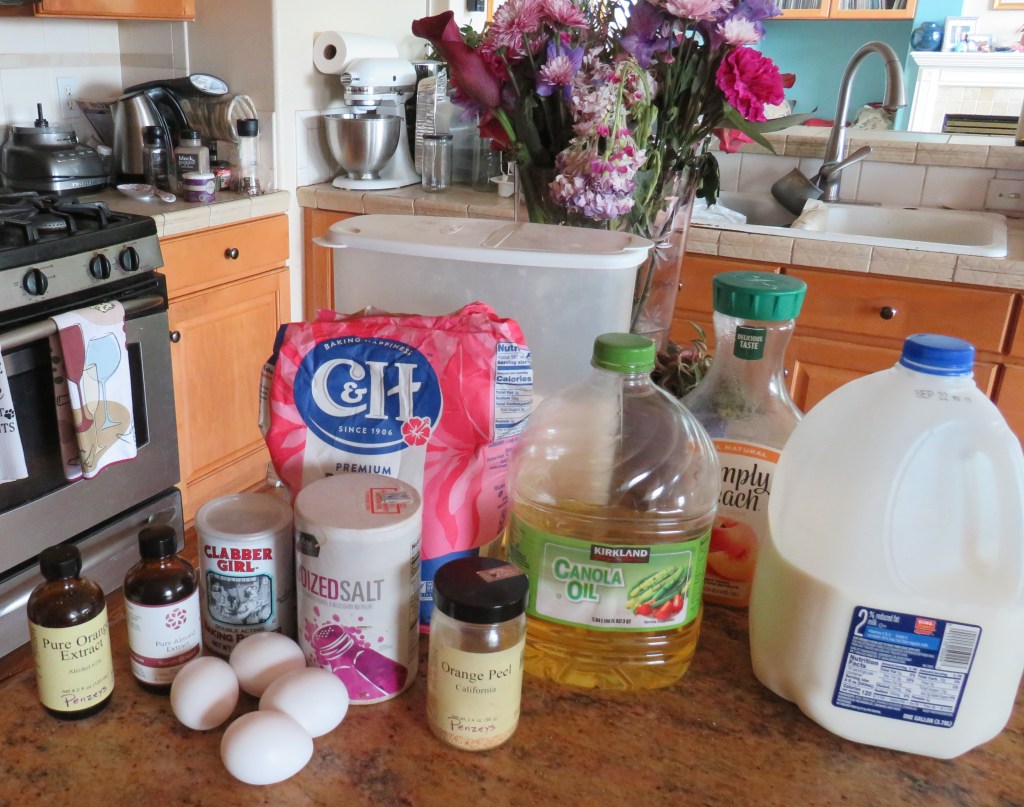
2 cups flour
1 cup sugar
1 tsp baking powder
1 tsp salt
4 eggs
1 cup canola or vegetable oil
2/3 cup +2 TBSP milk
2 TBSP orange zest
1 tsp orange extract or vanilla
6 TBSP either orange or peach juice
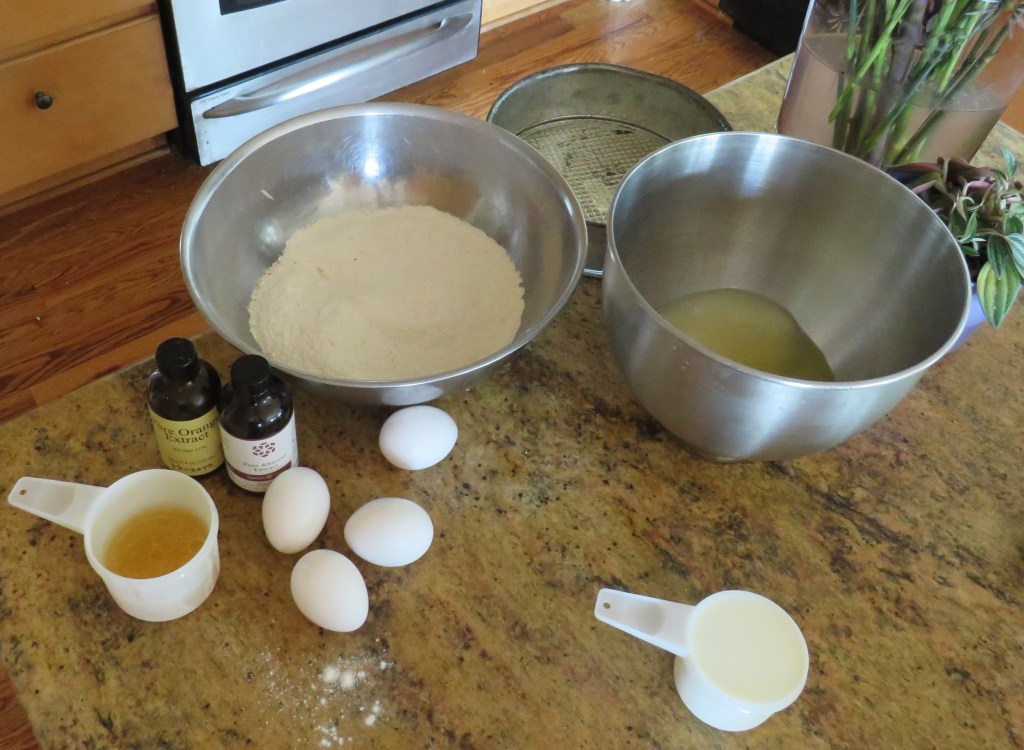
Combine all the dry ingredients together and set adside.
Mix the sugar and oil together, then add the eggs one at a time, mixing in between each addition. Add the juice and the orange extract or vanilla and mix again.
Add 1/2 of the flour mixture and 1/2 of the milk and mix again. Repeat.
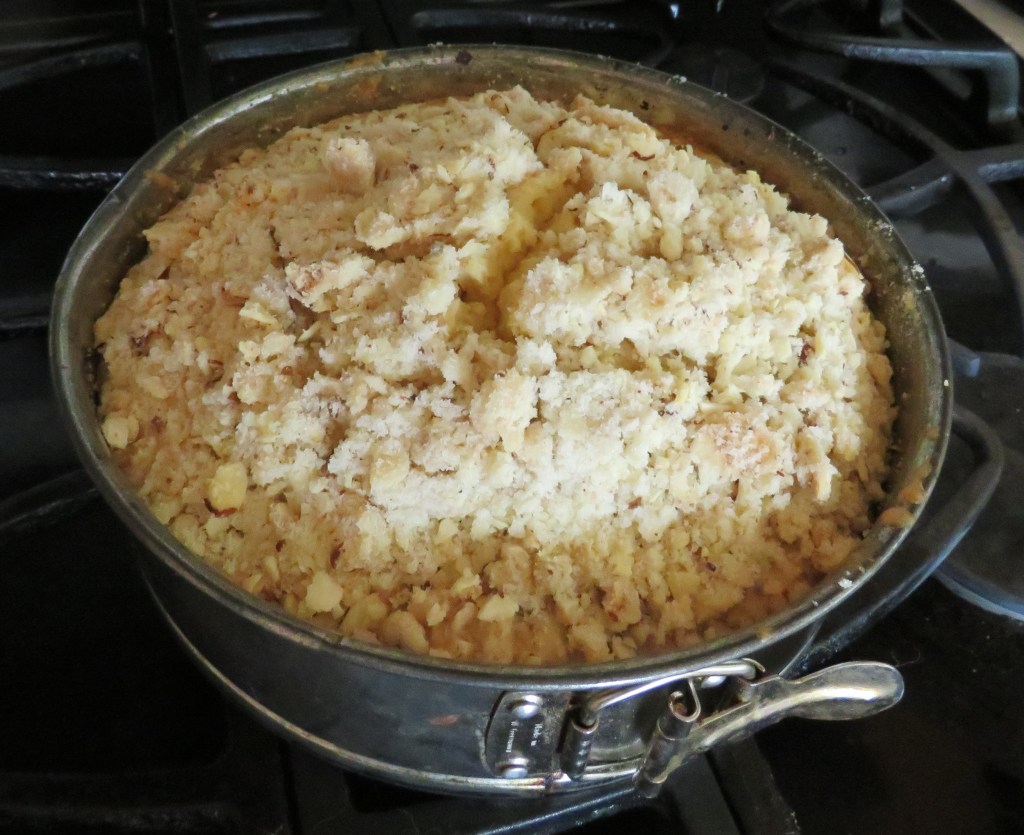
Pour into the prepared baking pan and spread out evenly. Add the streusel topping.
Bake for 1 hour and 15 minutes, or until the streusel topping is lightly golden brown and a toothpick inserted in the middle comes out clean. Allow the cake to cool completely before removing from the pan and adding the glaze.
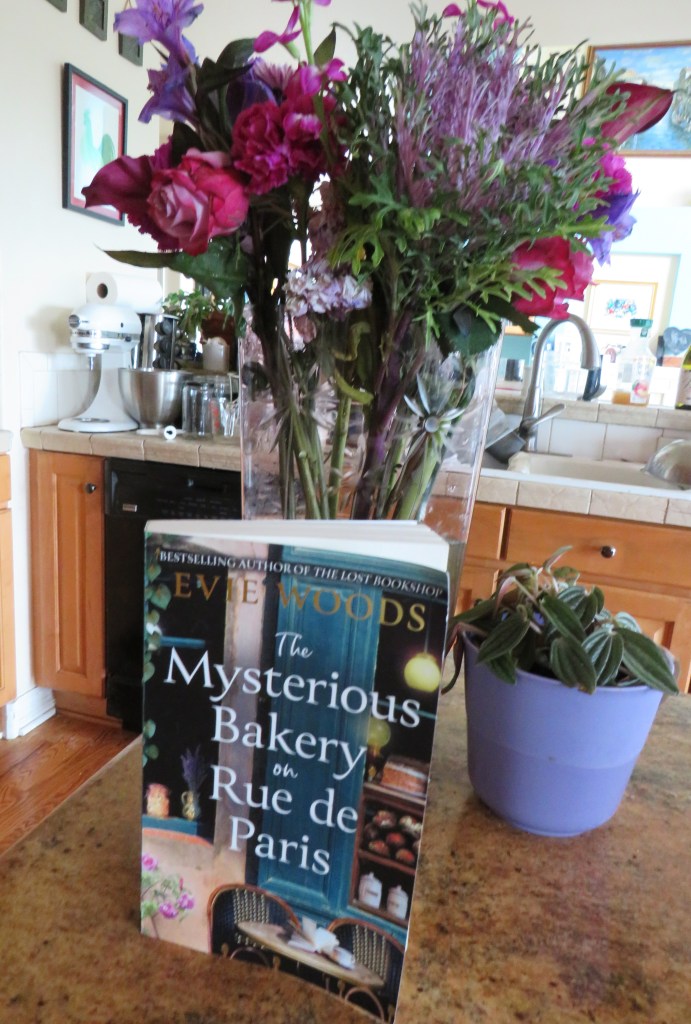
While my cake was baking I finished a cute book about a mysterious bakery in France. Baking a cake and reading a book about a mysterious bakery in France; I thought it was a good fit. 🙂
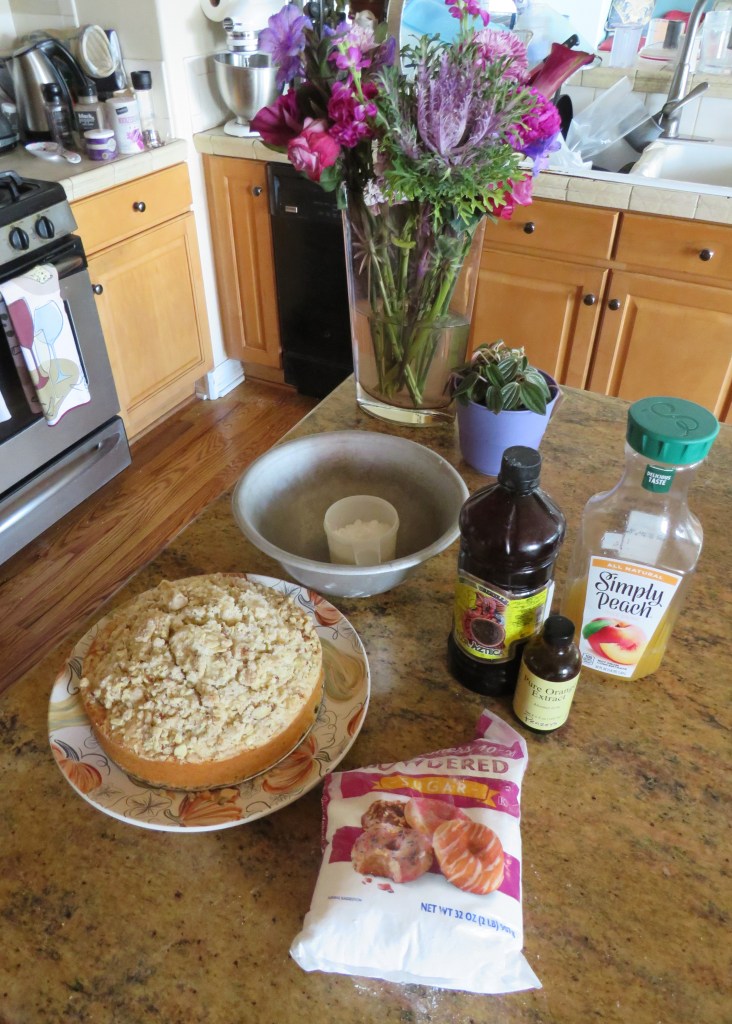
The Glaze
1/2 cup powdered sugar
1 TBSP orange extract or vanilla
1 TBSP orange or peach juice
Mix everything together and drizzle over the cooled cake. Slice and serve and enjoy with friends.
Life is always sweeter when shared with friends. Haver a great day and make everyday great. Stay safe ands stay well. ‘Til next time.
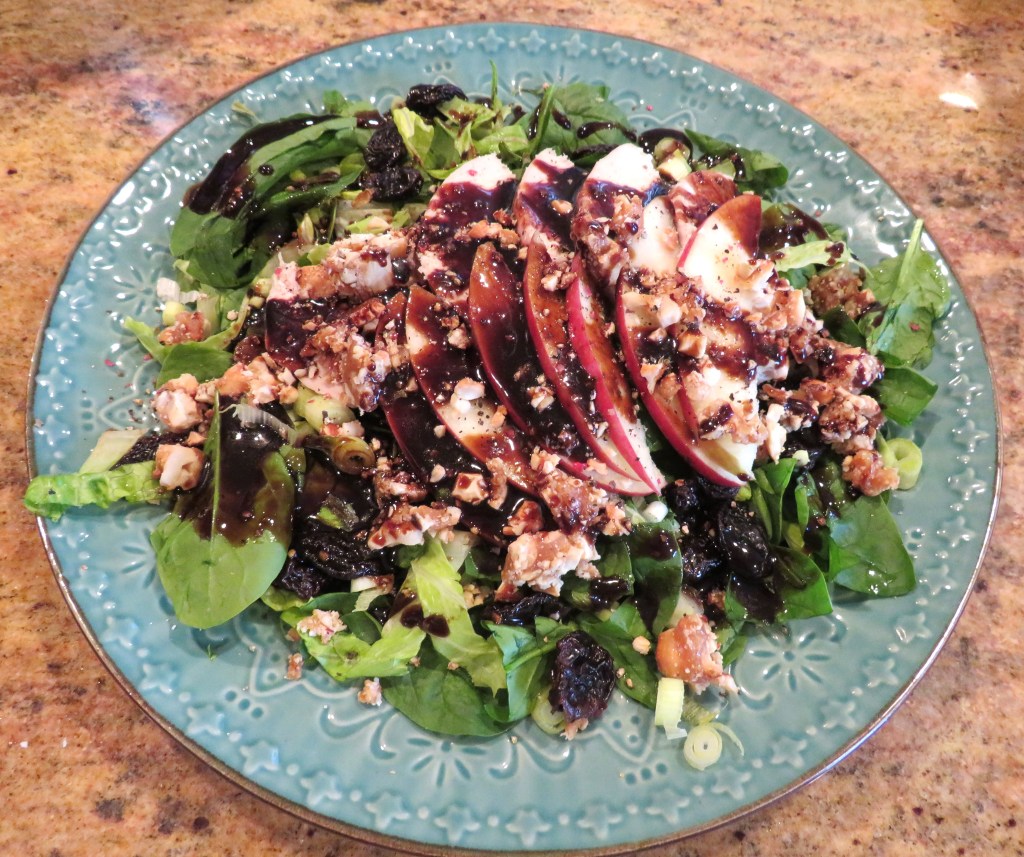
We are definitely experiencing an Indian summer right now. Warm to hot days and cooler nights. I’m OK with that. When the sun is shining hot, we tend to eat more salads than we do when the mercury is lowered. And like with anything we enjoy a lot, I am always on the lookout for new and tasty ideas. This time I made a chicken, apple and spinach salad with a honey balsamic dressing. DELICIOUS!
Chicken, Apple & Spinach Salad
This salad is quick and easy-peasy and perfect for summer. It is also a very colorful and pretty salad. It’s almost too pretty to eat. 🙂 I love the crispness the apple slices bring to the salad too.
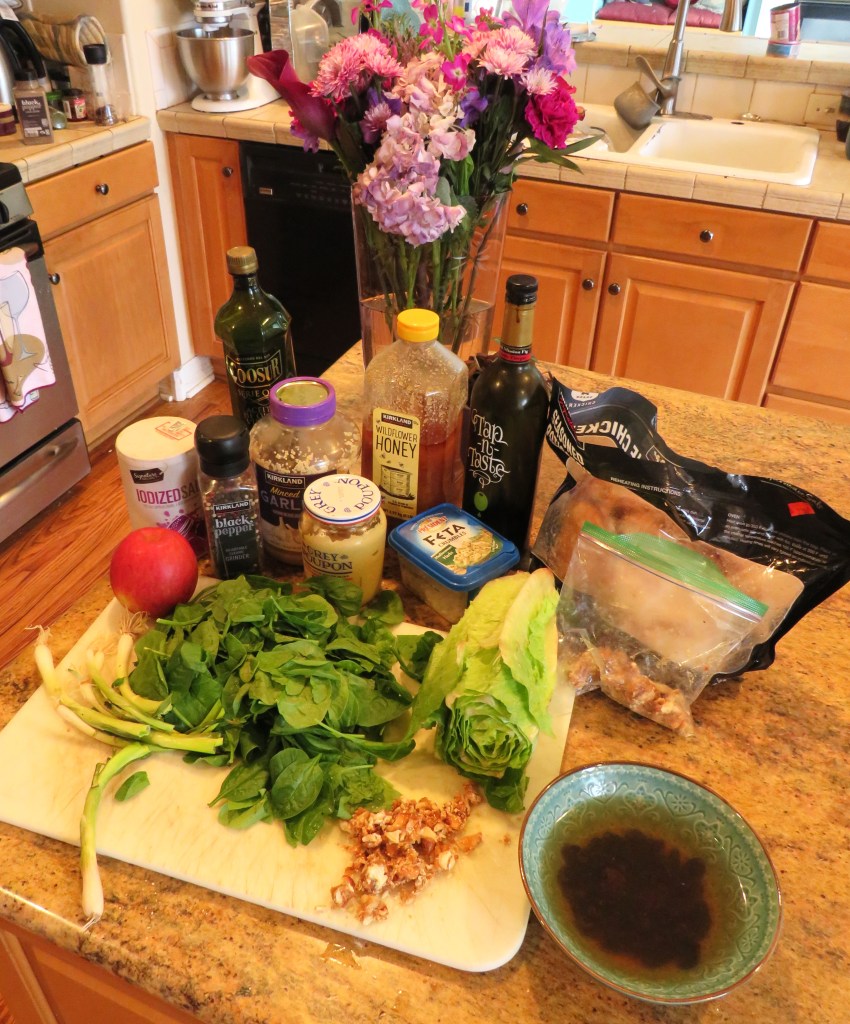
4 cups spinach, stems removed
2 cups either arugula or lettuce, chopped
1 apple, sliced very thin
4-5 green onions, sliced
1-1 1/2 lbs cooked chicken breast, sliced
1/2 cup dried cherries, reconstituted
1/2 cup either toasted or candied walnuts, pecans or cashews – I used candied cashews this time
fresh ground black pepper to taste
feta or bleu cheese, optional
3/4 cup olive oil
1/2 cup balsamic vinegar
1 TBSP either maple syrup or honey- I used honey this time
2 tsp Dijon mustard
1 tsp garlic
salt & pepper to taste
Whisk together the last 6-7 ingredients to make the balsamic vinaigrette and set aside.
Toss the spinach and lettuce or arugula together. Then start layering everything together in a decorative pattern. Drizzle with dressing right before serving.
I added feta cheese to Larry’s salad. And Voila. The salad is complete.
This cool, refreshing salad is loaded with all kinds of goodness, with different colors and textures to boot. It is a perfect salad for summertime, or anytime. Enjoy. 🙂
Have a great day and make everyday great. Stay safe and stay well. ‘Til next time.
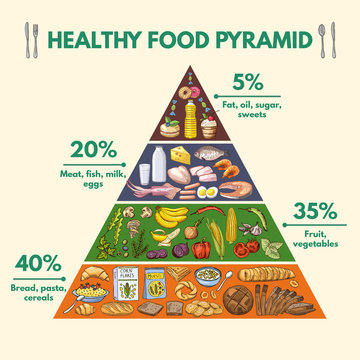
Who doesn’t remember the food pyramid? It was created in 1992, based on information we gathered from the 1980’s, by the U.S. Department of Agriculture or the USDA. It was touted as the guideline to follow for the best nutritional health. At the top of the pyramid, were fats, oils and sugars. They were supposed to be about 5% of our daily food intake. The next level was for meats, eggs, milk and proteins, all lumped together, coming in at 20%. The third level was fruits and vegetables, coming in at 35%. And the bottom tier, recommend that 40% of our daily diet should come from carbs and grains. We followed these guidelines for years. We listened to the so called “experts”, and instead of people getting healthier, we were getting sicker and sicker and more and more obese.
We were told that eating things like proteins, eggs, milk, dairy and meats were wrong and they were what was making us sick. These are the foods people have been eating since the beginning of time, and now all of a sudden they are wrong? We were told we needed more carbs in our diets, and highly processed carbs at that. The experts decided that after millions of years of feeding us and providing food for us, Mother Nature was all of a sudden wrong, and foods produced by man, in laboratories, were what we really needed. The world didn’t need nature any more. We needed science. HMMMM! It makes you scratch your hear in wonder.
What is wrong about the nutritional pyramid?
For years, we trusted the experts, and we trusted “the science”. Science by definition means to question everything. Science is the systematic study of the structure and behavior of the physical and natural world through observation, experimentation, and the testing of theories against the evidence obtained. The ultimate aim of science is to build a coherent body of knowledge that explains the natural world. Science is a dynamic process where new evidence can lead to the revision or rejection of existing ideas. So after living with the nutritional pyramid, and its daily recommended food allowances for over 30 years, we are finally realizing it wasn’t really working the way it was supposed to and never did. The “trusted” science was wrong. It was time once again to reevaluate what and how much we eat. It was time to try something different again.
We need carbs, don’t get me wrong. Carbs are very important in our diets. Carbs, complex carbs, are food for the brain, since they turn food into glucose and glucose is the food for the brain. Without sufficient carbs, our bodies may turn to other sources of energy, such as fat and protein, which can lead to fatigue, weakness, and other health issues, as well as keto acidosis, where the body starts to feed off of itself to get the energy it needs to survive. Carbs provide the necessary energy for cognitive function, memory, and mood regulation. There are five primary functions of carbohydrates in the human body. They are energy production, energy storage, building macromolecules, sparing protein, and assisting in lipid metabolism. So yes, we definitely do NEED carbs in our diets, but we do not need to make carbs the main part of our diets. We have been overindulging in carbs, and that is making us fat, which in turn is making us sick. All kinds of chronic diseases are caused by obesity. We definitely need carbs, but we need to be more selective on the types of carbs, or carbohydrates, we ingest, as well as mindful of how many we ingest. There are a lot of foods that contain healthy carbohydrates. Everything in moderation, even the healthy foods.
The pyramid also recommended that our fat intake be kept low. Not necessarily a bad thing to monitor our fats, but, we do need to keep fats in our diets. We need the good kinds of fats, like omega-3 fatty acids, or unsaturated fats, found in fish and nuts, that are essential for good health. Healthy fats help lower bad (LDL) cholesterol and increase good (HDL) cholesterol, reducing the risk of heart disease. They support brain health and cognitive function. Healthy fats help you feel satiated and full longer, promoting healthy weight management. And they play a role in hormone production and balance. Again, we most definitely need fats in our diets, but we need healthy fats, and of course, again, we need to watch how many fats we consume. Even eating things that are healthy for us in large quantities is not a good thing. Healthy fats can be found in plant-based foods such as nuts, flax seeds, chia seeds, soybeans, avocados and olives. They are present in vegetable oils, as well as in many types of “fatty” or oily fish, such as tuna, salmon, mackerel, whitefish, herring and sardines, oysters, mussels and some types of fish roe. They are also in lean meats and low fat milks and cheeses too. Low fat does not mean no fat.
The original Food Guide Pyramid (also referred to as the “Eating Right Pyramid”) is a triangle-shaped guide that organizes food into six major food groups. It was intended to be a visual representation of the most recent Dietary Guidelines for Americans in 1990. The idea itself is pretty simple. Eat more of the foods listed at the widest part of the Pyramid and fewer of the foods at the top. The guidance was for Americans to eat 6–11 servings per day of starchy items like bread, pasta, cereal, potatoes, whole grains, and rice at the “base,” depending on the individual. Three to five servings of vegetables and two to four servings of fruit sit above carbs. Then comes two to three servings of milk, cheese, and dairy products, and two to three servings of meat, nuts, and beans. And finally, fats, oils, and sweets are listed at the top of the Pyramid, to be used “sparingly.” This includes everything from cooking oil to soda. The Pyramid reportedly spent another year in revisions—at a cost of about $900,000 to taxpayers—and when the updated version was released to the public in 1992, the nutrition experts who developed the guide were surprised by several of the changes that had been made during the production. The suggested servings of grains were higher than their original recommendation, and the recommended number of servings of fruits and vegetables had shrunk. These food-choice changes put the USDA’s own nutritionists at odds with the influential food industry.
Back in the early ’90s, about 15% of the typical American diet came from protein with the rest split between fat and carbs, according to Meir Stampfer and Walter Willett, both of whom are MDs and professors at the Harvard T.H. Chan School of Public Health. In the 1970’s, very high-protein formula diets resulted in kidney failure, so nutritionists did not want to recommend that Americans eat more protein. Furthermore, sources like red meat are high in saturated fat. The American Heart Association at that time recommended no more than 30% of calories come from fat, in order to help prevent heart disease. What resulted was a simplified message to limit fat intake that didn’t quite stack up with the science. “The ‘fat is bad’ mantra led to the reciprocal corollary ‘carbs are good,’” Stampfer and Willett wrote in Scientific American in 2006. “Even when the Pyramid was being developed, though, nutritionists had long known that some types of fat are essential to health and can reduce the risk of cardiovascular disease. Furthermore, scientists had found little evidence that a high intake of carbohydrates is beneficial.” Nuts, beans, and red meat were lumped in the protein category, while all fats and sweets were considered the same. Sugar was also considered a carbohydrate, whether it came from fruit or from soda. Bottom line, the food pyramid was full of contradictions from the very beginning, yet we followed it for many years. And the more we followed it, the fatter and sicker we became. Changes were definitely needed.
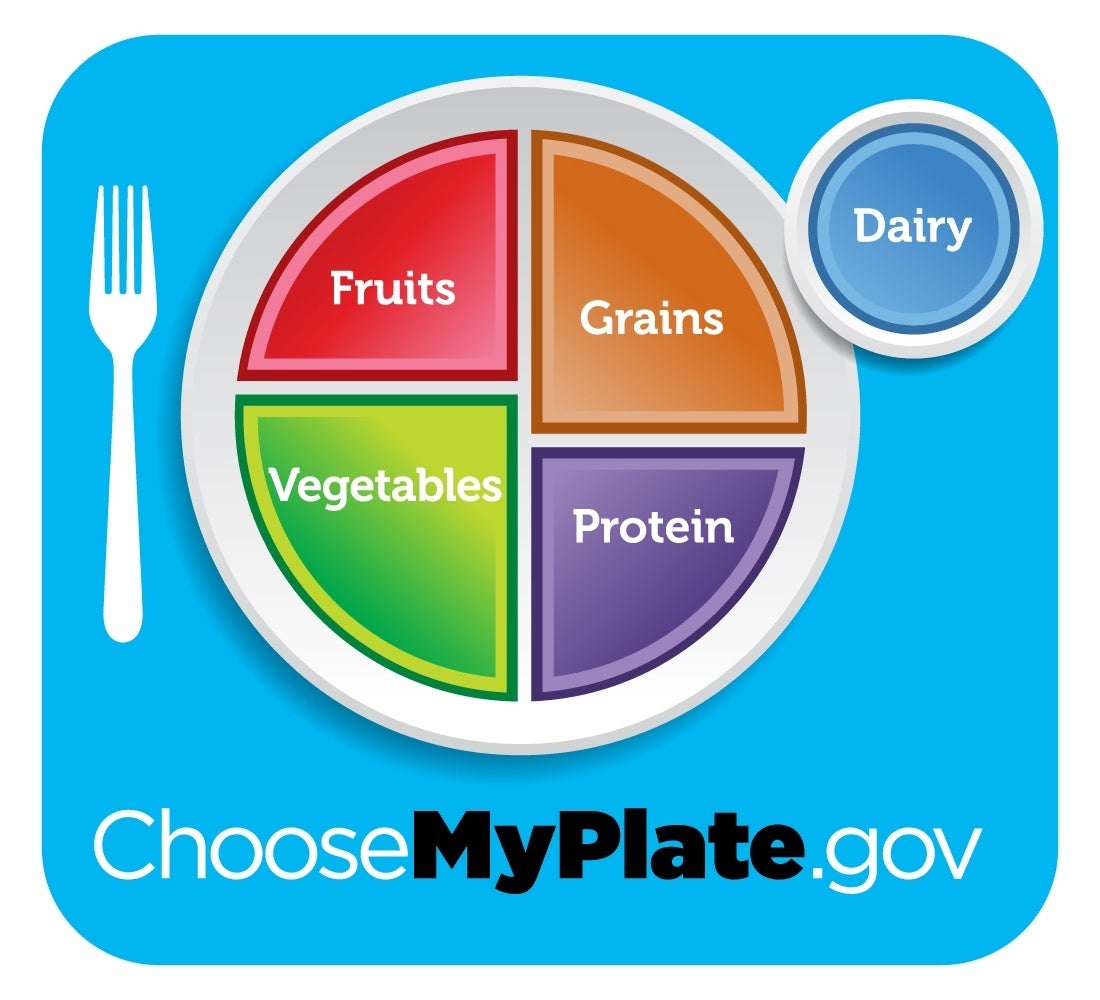
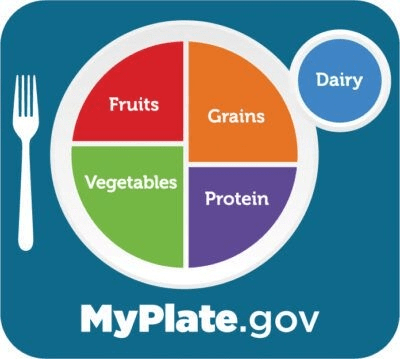
The food pyramid evolved into MyPlate. This theory recommends equal portions of all nutrients. The new design didn’t include any details; instead, it assigned a color to each food category—green for vegetables, orange for grains—and promoted MyPyramid.gov, a website that had dietary recommendations while also suggesting people manage total calories and get physical exercise. It was the first federal food guide to have an interactive online component. Well, it turns out, this isn’t what our bodies needed either.
The changes were applauded by some, but by then, there were already concerns that the original Pyramid didn’t do enough to encourage Americans to limit their consumption of refined carbs, and was a driving factor in the growing obesity crisis. A study in The Journal of Nutrition in 2006 that analyzed dietary habits for about 4,300 adults found that people who followed the MyPlate recommendations were more likely to get their nutritional needs met than those who adhered to the original Pyramid. However, the researchers also said that following the newer recommendations could still lead to excessive energy intake, a contributing factor to obesity, chronic diseases, and metabolic disorders. “MyPlate mixes science with the influence of powerful agricultural interests, which is not the recipe for healthy eating,” Harvard’s Willett said in 2011. “To its credit, at least MyPlate didn’t tout refined carbohydrates; however, its low-fat imperative continues to miss the point and it somehow still categorizes fruit juice and fruit and veggie straws as a vegetable,” Lustig wrote in Metabolical. MyPlate is silent on fat, which could steer consumers toward the type of low-fat, high-carbohydrate diet that makes it harder to control weight and worsens blood cholesterol profiles. “The evidence base for any and all of these classification systems is spotty at least and nonexistent at worst.”
Criticisms of MyPlate include its vague guidance on portion sizes and food quality, failing to distinguish between healthy and unhealthy options within food groups (like refined vs. whole grains), not incorporating physical activity, potentially overemphasizing dairy, a lack of cultural or economic sensitivity, and insufficient public education and awareness. Critics also suggest the model may be influenced by industry pressures, making it less objective than some other dietary guides, such as the Healthy Eating Plate from Harvard Health. MyPlate doesn’t differentiate between high-quality and low-quality foods within the same group, such as recommending both whole grains and refined grains equally. It provides little guidance on choosing lean protein sources or healthier options like fish and beans over processed or fatty meats. The guidelines do not emphasize healthy fats, such as unsaturated and omega-3 fats, nor do they advise reducing unhealthy saturated fats. MyPlate leaves portion sizes to individual interpretation, which can be inaccurate for people with different needs or limited understanding of appropriate amounts. Unlike other guides, MyPlate lacks any emphasis on physical activity, which is a key component of overall health and weight management.
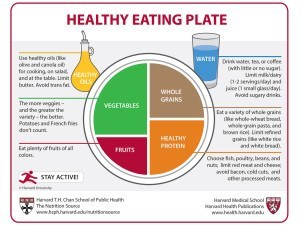
Once again changes were needed, and MyPlate evolved into The Healthy Eating Plate. The Healthy Eating Plate goes into more detail and explanation than MyPlate, and at least recommends healthy versions of foods over random selections. It also recommends ample hydration, plenty of exercise, and healthy portion control. So we are heading in the right direction, but we are not completely there yet. We still have a long way to go.
Whole Grains
Grains
The Healthy Eating Plate encourages consumers to choose whole grains and limit refined grains, since whole grains are much better for health. In the body, refined grains like white bread and white rice act just like sugar. Over time, eating too much of these refined-grain foods can make it harder to control weight and can raise the risk of heart disease and diabetes. Read more about the health benefits of whole grains.
Although initially MyPlate did not tell consumers that whole grains are better for health, it has since been revised to suggest that consumers make at least half of their grains whole grains – an important update!
Healthy Protein
Protein
The Healthy Eating Plate encourages consumers to choose fish, poultry, beans or nuts, protein sources that contain other healthful nutrients. It encourages them to limit red meat and avoid processed meat, since eating even small quantities of these foods on a regular basis raises the risk of heart disease, diabetes, colon cancer, and weight gain. Read more about the benefits of choosing healthy protein.
MyPlate’s protein section could be filled by a variety of sources, including a hamburger or hot dog. Though the plate has been revised to suggest that adult consumers eat at least 8 ounces of cooked seafood per week, it still offers no indication that red and processed meat are especially harmful to health.
Vegetables
Vegetables
The Healthy Eating Plate encourages an abundant variety of vegetables, since Americans are particularly deficient in their vegetable consumption—except for potatoes and French fries. Potatoes are chock full of rapidly digested starch, and they have the same effect on blood sugar as refined grains and sweets, so limited consumption is recommended. Read more about the benefits of vegetables.
MyPlate does not distinguish between potatoes and other vegetables.
Fruits
Fruits
The Healthy Eating Plate recommends eating a colorful variety of fruits. Read more about the benefits of fruits.
MyPlate also recommends eating fruits.
Healthy Oils
(Not included in MyPlate)
The Healthy Eating Plate depicts a bottle of healthy oil, and it encourages consumers to use olive, canola, and other plant oils in cooking, on salads, and at the table. These healthy fats reduce harmful cholesterol and are good for the heart, and Americans don’t consume enough of them each day. It also recommends limiting butter and avoiding trans fat. Read more about the benefits of healthy fats and oils.
MyPlate is silent on fat, which could steer consumers toward the type of low-fat, high-carbohydrate diet that makes it harder to control weight and worsens blood cholesterol profiles.
Water
Dairy
The Healthy Eating Plate encourages consumers to drink water, since it’s naturally calorie free, or to try coffee and tea (with little or no sugar), which are also great calorie-free alternatives. It advises consumers to avoid sugary drinks, since these are major contributors to the obesity and diabetes epidemics. It recommends limiting milk and dairy to one to two servings per day, since high intakes are associated with increased risk of prostate cancer and possibly ovarian cancer; it recommends limiting juice, even 100% fruit juice, to just a small glass a day, because juice contains as much sugar and as many calories as sugary soda. Read more about water and other healthy drinks, and learn about calcium, milk and health.
MyPlate recommends dairy at every meal, even though there is little if any evidence that high dairy intakes protect against osteoporosis, and there is considerable evidence that too-high intakes can be harmful. As for sugary drinks, MyPlate says 100% fruit juice counts as part of the Fruit Group.
I don’t know about you, but I will take NATURE and common sense over science all the time. The science is still trying to figure out what Mother Nature and common sense has taught us for millions of years; get your nutrition from a wide range of sources and everything in moderation. That is the best, healthiest diet we can follow. Everything in moderation.
I hope you have all learned a little more about a healthy diet today. That was definitely my plan. I want everyone to stay healthy and to stay well. Have a great day and make everyday great. ‘Til next time.
Fall is just around the corner. I can feel it in the air. The temperatures are cooler, especially at night. The fall colors are coming in and all the plants are transforming themselves into their new seasonal versions of themselves. The animals sense it too. All my spring and summer birds are flying off, leaving way for their fall and winter friends to come stay with us. I love fall. The fall colors are already coming in and they are already pretty and vibrant. I can’t wait for them fully arrive. 🙂
Every season has its own charm and beauty. They bloom and blossom in their own due time too.
We love ceviche, of all kinds. When we are in tropical or island settings, we eat it all the time. We can’t seem to get enough of it. And there are so many different variations too. We have to try them all, right?! 🙂
It turns out that ceviche has its roots in many different cultures. Today, it is a staple in any of the Latin American cultures, as well as Spain, and tropical islands everywhere. Ceviche originated more than 2,000 years ago with pre-Hispanic coastal cultures in Peru, the Moche People, who marinated raw fish with fermented fruit juices. When ceviche was first created, it was marinated in local papaya, banana or passionfruit juices. When the Spanish came to Peru, they introduced citrus fruits, and other ingredients, like red onions, cilantro, and chilies, which further enriched the flavors. When the Asian, and especially the Japanese immigrants came to Peru, they brought their refined marinating processes with them. The Japanese immigrants were accustomed to handling raw fish and introduced techniques that reduced the marinating time, helping to preserve the fish’s fresh texture. With the introductions from all of these influences, ceviche has evolved into the modern versions we enjoy worldwide today.
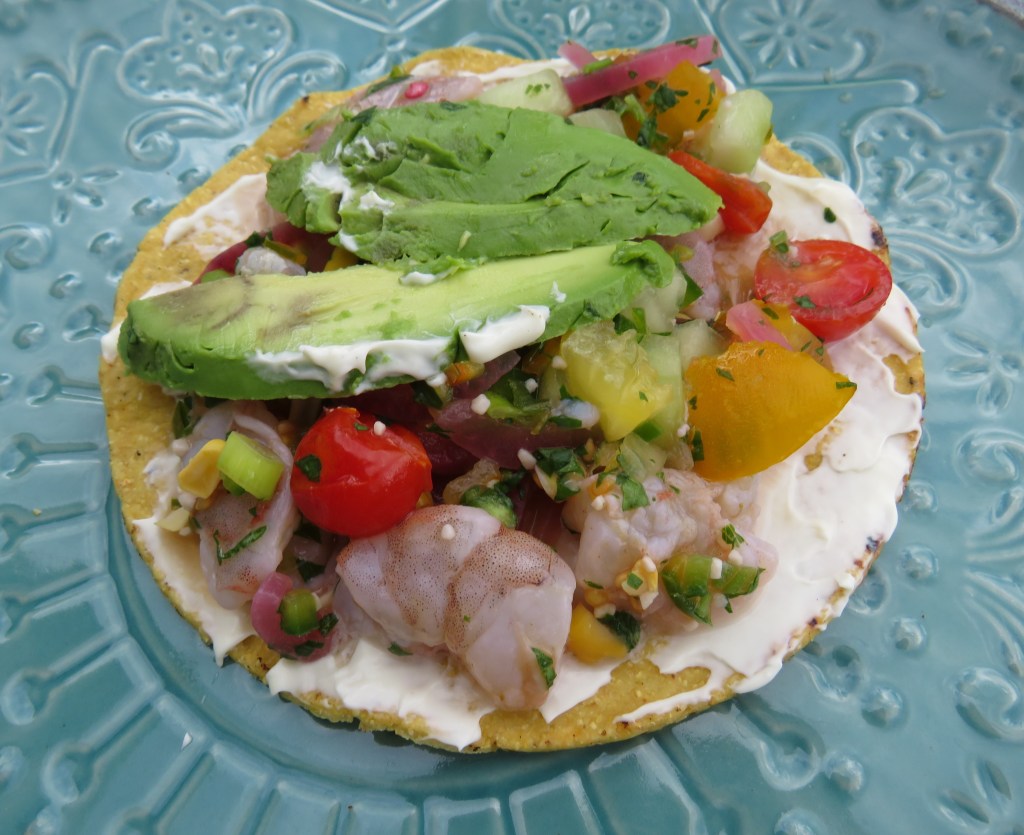
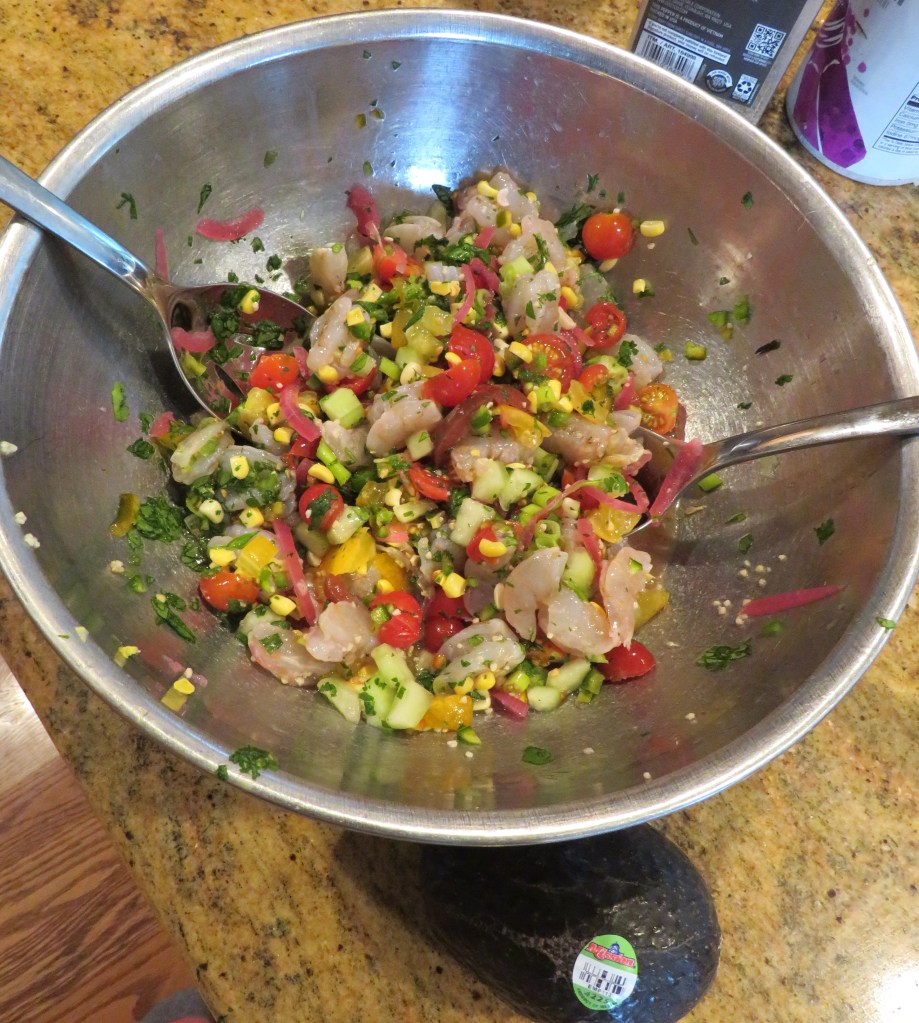
I made another shrimp version of ceviche, loaded with all kinds of fresh goodness. Most of the ceviches we’ve enjoyed are eaten with chips. We learned to eat it on tostadas with a thin spread of mayonnaise while visiting La Paz a couple of years ago. Obviously, we like it this way too. 🙂
I am still creatively using all my tomatoes, and I added both the sweet 100’s and some more sunny boy tomatoes to this version of ceviche.
Shrimp and Vegetable Ceviche
1/2-3/4 lb shrimp, peeled, deveined and cut into small pieces
1/2 cucumber, peeled, seeded and diced
1/3 cup corn
1 small yellow tomato
1/2 cup small grape of sweet 100 tomatoes, cut in 1/2
Mix everything together well, cover and chill in the refrigerator for at least 30 minutes, or until the shrimp is “cooked”.
Serve on either chips or tostadas, and disfrutar! Enjoy! I added avocado slices to mine. Larry is not an avocado fan, so I added it separately to mine. You can enjoy it all by itself like this, or on the side with other things. We enjoyed it as part of a tapas type meal, with my Italian fried wontons and my golden marinara sauce. http://Italian Fried Wontons
Have a great day and make everyday great. Stay safe and stay well. ‘Til next time.





























 A Jeanne in the Kitchen