Beans, beans, good for your heart. The more you eat, the more you ______. Most of us who have been around for awhile know how to fill in the blank. We’ve all heard the saying. But jokes aside, beans are really very nutritious, in many ways. They provide essential protein, fiber and nutrients, and have been a staple food in many cultures for 1000’s of years. They come in all shapes, sizes and colors.
Beans are members of the Leguminosae or legume family. They were one of the first cultivated crops, and have been around for many 1000’s of years. Some type of bean or legume has been found in many places around the world and are eaten by almost every culture. The first cultivated beans appeared over 9,000 years ago in the Aegean, Iberia, and transalpine Europe and they were large-seeded broad beans. Beans have been found in Guitarrero Cave, an archaeological site in Peru, over 4,000+years ago too, proving that beans appeared practically everywhere and where one of the staple foods of the early peoples.

In Mesoamerica, beans were known as part of the three sisters, which included beans, corn and squash. Part of the reason they were called the three sisters by the Native Americans is because the legumes, when planted in conjunction with other crops, helped support the other crops, helping them all to survive through nitrogen fixation. Mexico is known for their cultivation of smaller beans, while Peru and the Andes are known for growing larger beans. The indigenous people of the Americas relied on the common bean as a dietary staple, particularly in the Andes and Mesoamerica. This vining plant, characterized by small seeds and twisted pods, serves as the progenitor of nearly all modern bean varieties, including dry, soup, shell, and snap beans. Most of the kinds of beans commonly eaten today are part of the genus Phaseolus, which originated in the Americas.


In Ancient Egypt, Asia and Europe, what we now call “beans” evolved from wild plants into diverse varieties like black, kidney, and pinto beans, essential for nutrition, sustainable farming, and global cuisine. Wild variants of broad beans (fava beans) were gathered in Afghanistan and the Himalayan foothills. Beans were also found in the tombs of the kings of the Ancient Egypt where they were left as the food for the departed and their souls in the afterlife. For thousands of years, the common bean has migrated across the world – from the American continent to Europe and then back again with European immigrants and explorers.
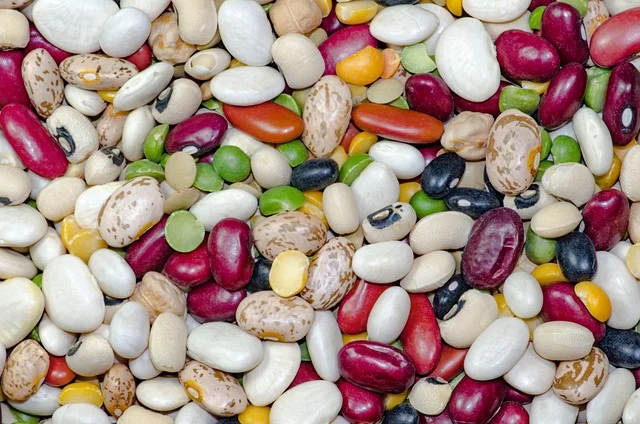
Depending on where they are grown, different beans are grown and harvested for different reasons and uses. Many bean varieties were grown specifically to be dried and stored, then reconstituted later, such as Kidney Beans, Black Beans, Great Northern Beans, and Navy Beans. “Though the basic bean preparation is universal. To be edible, dry beans must be slow-cooked in liquid from anywhere to 45 minutes [for] split peas to four hours [or more for things like] chick peas” p. 184 Dairy Hollow House Soup & Bread, A Country Inn Cookbook, by Cresent Dragonwagon). Different beans lend themselves to different flavorings and different preparations too. But don’t limit yourself just by type. Play around with different beans to create new possibilities. The limitations are with your own imaginations.
Different places prepare beans in a variety of ways. For instance, in China (more precisely in Sichuan), broad beans are mixed with soybeans and chili peppers and fermented into a paste called doubanjiang. In Dalmatia, a part of Croatia, people prepare a traditional dish made of stuffed artichokes with fava beans and peas. Greeks also cook stew of artichokes and fava beans but while they are still green and in their pods. The Southern United States eat a “Hoppin’ John” – a dish made of black-eyed peas and rice. Cuisine called “akara” is traditional in West Africa and the Caribbean. It is prepared by mixing mashed black-eyed peas, salt, onions and peppers and frying the mixture. East Asian adzuki beans are boiled with sugar and made into a sweet paste to be used as an ingredient for many desserts. Mung beans are cooked with coconut milk, sugar and a little ginger and made into a porridge which is a dessert snack called “es kacang hijau”. On the other hand, when the mung bean is made into a fine paste with ginger and salt it is eaten for breakfast. As I said, the possibilities are endless.
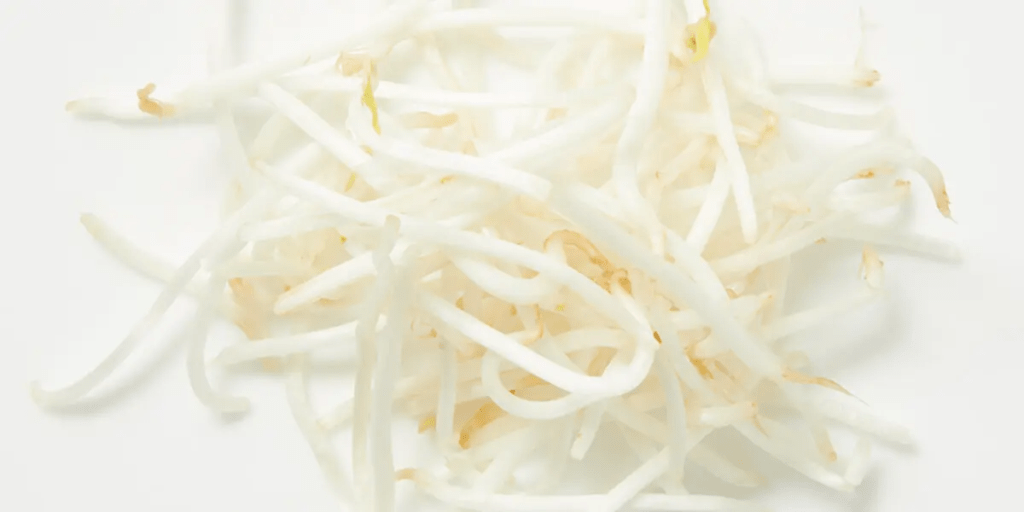
Bean sprouts, or the young small bean “rootlet”, are eaten in many different Asian countries and cultures, and have been for 1000’s of years as well. Bean sprouts, primarily from mung or soy beans, have an ancient history in Asia, used medicinally and as a food source for over 5,000 years, especially by the Chinese to prevent scurvy on long sea voyages. Part of their attraction is because they are easy to grow without soil or sun (though a dark, moist environment is needed) made them ideal for shipboard cultivation and home sprouting.
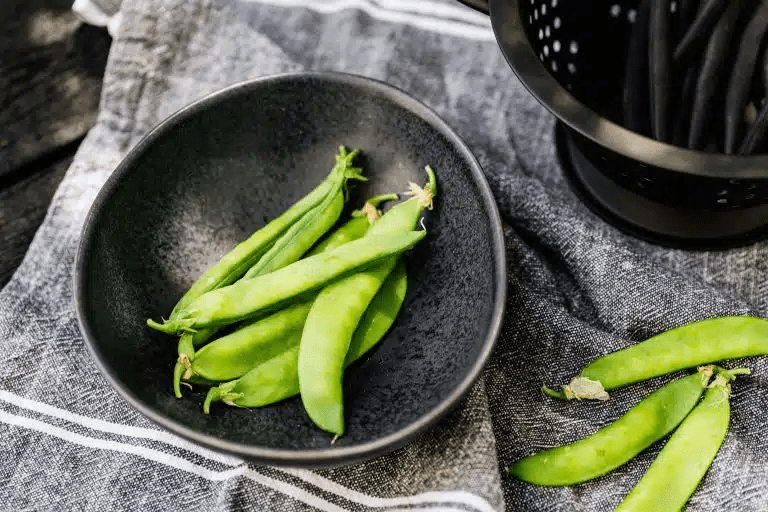
Sometimes, the soft, green pods that are young and under developed are eaten too. The most common type of young bean pods eaten are what we typically call snow peas, or Holland peas, or he lan dou. Peas are one of the oldest cultivated vegetables, with evidence found from 9750 BC in Southeast Asia and 3000 BC in Bronze Age Europe.
As you can see, beans have played an important role in the world’s diet for many 1000’s of years, with many different options and varieties. They are still a healthy choice today too. Don’t skimp on your beans. Add them to your diet in as many different, creative ways as you can.
One tip I learned that helps in the cooking process too, is to add about 1 TBSP of baking soda to the boiling water, during the cooking process. It will help soften the beans and help eliminate some of the natural gases they contain. Adding a small amount of baking soda (sodium bicarbonate) to your bean soaking or cooking water helps them soften faster and cook more quickly by making the water alkaline, which breaks down pectin in the bean’s cell walls, resulting in creamier, more tender beans and potentially reducing gas by breaking down complex sugars. The baking soda or sodium bicarbonate makes the beans easier to digest, and helps eliminate the unpleasantries of eating beans, referring back to my first sentence. 🙂
Eat your beans, be healthy and enjoy. Have a great day and make everyday great. May 2026 be filled with happiness, good health and prosperity for all. ‘Til next time.

 A Jeanne in the Kitchen
I like beans, especially baked beans. X
LikeLiked by 1 person
I love ALL kinds of beans. We eat a lot of different kinds of beans all the time. 🙂
LikeLike
Thanks for sharing. Have a great day. 🙂
LikeLike
I laughed at the saying at the top of your post. I, not being a native English speaker, had never heard it, though it’s absolutely true. 🤣
LikeLiked by 1 person
I think is universally true. 🙂 🙂 🙂
LikeLiked by 1 person
What a fun article and so informative. I had black beans for the first time in Colorado and loved them. I also like the little red beans used in red beans and rice.
LikeLiked by 1 person
Thank you. I like doing these deep dives into things. 🙂
LikeLiked by 1 person
Thank you for educating me, darling.
LikeLiked by 1 person
My Pleasure. Happy New Year. 🙂
LikeLike