Larry teases me all the time for my love of butter. We both say I will eat anything that works as a butter delivery system. Julia Child also shared this love of butter. Julia Child loved butter so much, that she coined many now famous phrases on the uses of butter. Julia Child famously said, “If you’re afraid of butter, use cream,” embodying her philosophy that fat adds flavor, but perhaps her most iconic butter quote is, “With enough butter, anything is good,” promoting fearlessness and richness in cooking. She believed in using quality ingredients and not fearing indulgence, showing that butter, like cream, was a key to delicious, unpretentious food. But Julia Child and myself are not the only butter lovers. In fact, many people all over the world love butter, and have for over 10,000 years, back to the times when people first started keeping livestock.
When farmers first started keeping livestock, particularly animals known for their milk, they also learned that if milk was left to sit for a day or two, it would thicken and a fat-rich layer of cream formed on the top. They also learned that they could skim the cream off the top and churn it continuously, it would turn into butter. The earliest known uses of butter turned up about 4,000 years ago on limestone tablets found in the Sumerian city of Uruk, now known as Warka, Iraq. The first types of butter came from goats, sheep, and yak. Butter wasn’t just used for food either. It was also used as ancient medicines in early Roman times, and was made into ghee in India, which was used for everything from food to healing purposes to ancient rituals.
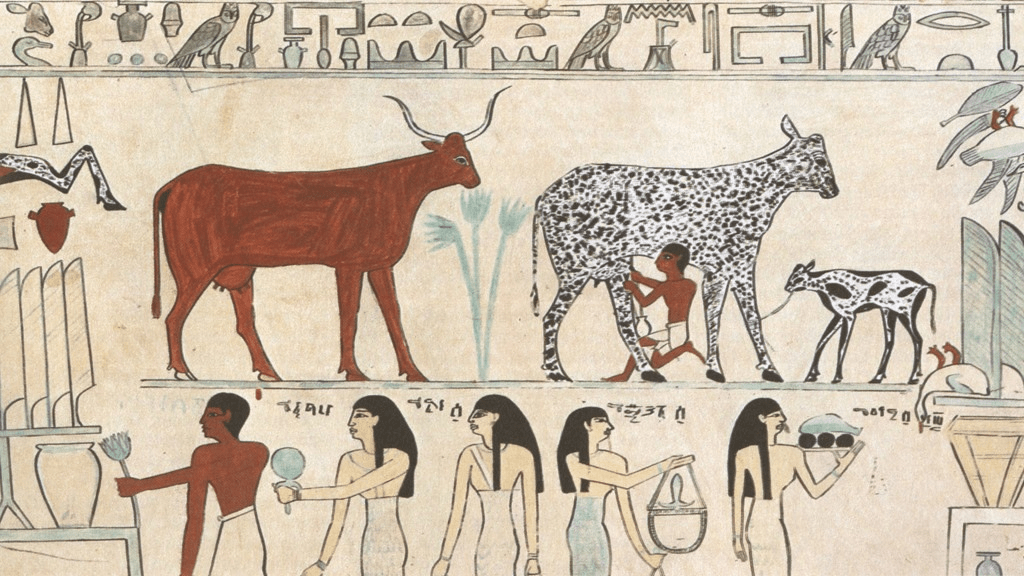
It is believed some of the first butters, particularly the butter from Sumeria, was ghee. Ghee’s history began in ancient India over 3,000 years ago as a solution to preserve butter in a hot climate, evolving from a practical necessity into a sacred substance in Vedic traditions, Ayurveda (where it’s a healing elixir), and Hindu rituals, used in fire sacrifices (yajña) as well as for offerings, becoming “liquid gold” integral to Indian culture and cuisine, spreading globally as a valued dairy product. Ghee is made by clarifying butter through removing the milk proteins and water, leaving pure butter fat. The clarified butter lasts longer in hot climates and has a higher smoke point than non-clarified butter.
As I mentioned above, ghee was used for cooking, but it was also used for ceremonial rituals and healing purposes as well. Ancient Sumerians offered up gifts of butter at temple in honor of the “powerful fertility goddess Inanna, protector of the seasons and harvest. Ghee was an essential offering in fire rituals (yajña) to deities, symbolizing purity and auspiciousness. In Ayurveda, ghee is a rasayana, promoting longevity and vitality, believed to aid digestion, boost immunity, and lubricate joints. It was used for centuries in healing practices and as a tonic for the sick, including convalescent monks. It was also used to fuel their lamps. Ghee was served to guests as a sign of being welcomed by the host. “In the Hindu hierarchy of foods, an inferior food cooked in ghee can become superior” (p. 268 The Story of Food).
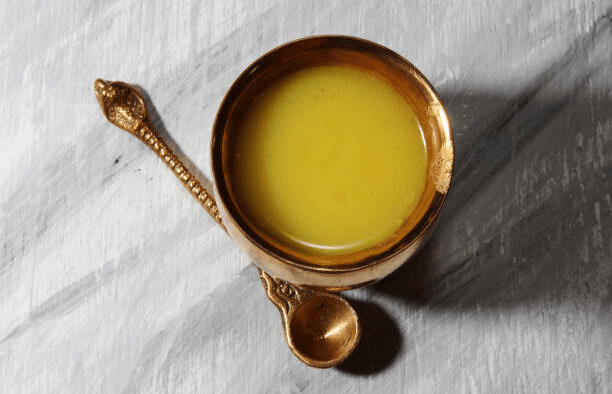

Ghee is used in hot climates, but in cooler/colder climates, the milk solids and water are kept in the mix, making it into a thicker butter. Butter is more nutritious than ghee because it contains the milk solids and additional nutrients found in these milk solids, such as Vitamins A, D, E and K. To make the butter, the milk solids and water were constantly churned.
At first, butter was consumed as a variation of buttermilk, in Turkey, around 6500 BCE. It was added to warmed liquids to provide warmth and necessary fats to the diet. Once the use of butter spread to the Ancient Greeks and Romans, at first, the elites thought it was only food fit for the uncivilized, barbarian tribes, though they did recognize it for it medicinal uses.
Butter was also noted as an important food in the Bible. In the Bible, butter symbolizes divine provision, abundance, blessing, and richness, often appearing with honey in descriptions of the fruitful Promised Land (Exodus 3:8; Deuteronomy 32:14). It also represents spiritual discernment and nourishment, as seen in Isaiah 7:15 where eating butter and honey signifies knowing good from evil, linking it to deeper understanding of God’s Word (like “churned milk”). However, in some contexts, its “smoothness” can metaphorically point to deception or fleeting worldly wealth, contrasting with true spiritual substance. The Hebrew word for butter (“chemah”) often means curdled milk or curds, which were a common dairy product, making it a general term for dairy richness.
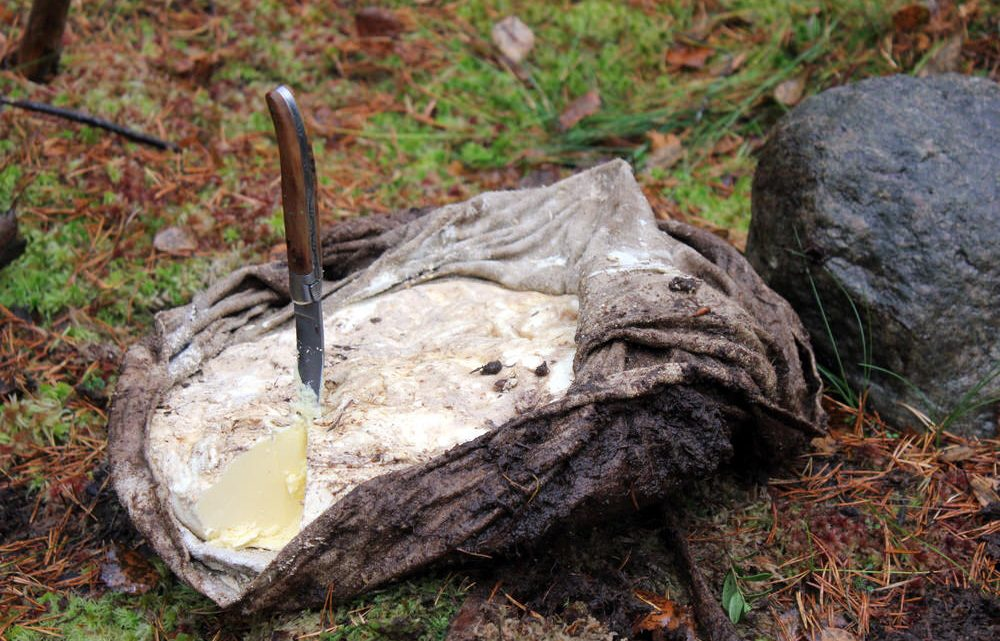
From the Ancient Greeks and Romans, the popularity and uses of butter spread (pun intended. 🙂 ) into the rest of Europe and beyond. Evidence has been found of ancient butter found buried in peat bogs from 5,000 years ago in parts of Ireland.
Butter making was traditionally done by women, since they were responsible for milking the animals. The butter churn helped the butter making process immensely, and was around in Scotland from at least the 6th century. Butter churns evolved from simple shaking bags to rocking barrels, dasher plungers, and eventually mechanized devices, with origins tracing back to ancient nomadic cultures (around 6500-5000 BC in Israel) and spreading to Europe by the 6th century AD, transforming from essential household tools into industrial machines by the 19th/20th centuries as cream separators and electric motors automated the process.
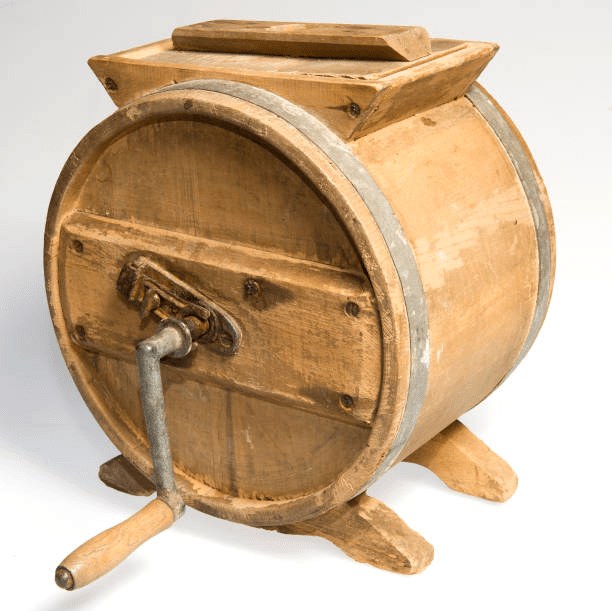
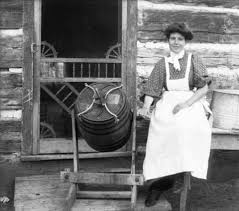
In the beginning, these butter churns were churned by dogs on a treadmill.

The demand for butter peaked in the 19th century. Butter was in such high demand, that Napoleon III called for cheaper alternatives to be provided in order to meet the high demands. In the 15th century, the French consumed large amounts of butter, which was then known as “the poor man’s fat” because it was inexpensive to produce. The wealthier classes, on the other hand, preferred lard (white pork fat, commonly used to make rillettes). In 1869, French chemist Hippolyte Mege-Mouries invented the butter-like alternative known as oleomargarine made from rendered beef fat and milk, which later became known as just margarine. This butter substitute was popular through WWII, and remained popular through the early 1980’s. Doctors and scientists had people convinced this butter alternative was healthier than actual butter. It was around that time though, that it was actually proved that the natural fats in butter were a healthier version after all, and people went back to eating regular butter once again. I for one have NEVER particularly liked margarine. I ALWAYS use butter!
Butter, like so many other things, was invented by accident and had quite the journey to become what it is today. It started out as an accidental food created by nomadic people that evolved into something just for the wealthy, to becoming a culinary staple found and used all over the world. Today, there are many different version of butter. Butter is often used as a base with a wide variety of other ingredients added for flavor enhancement to make compound butters. Butters are made differently from all over the world. They differ in ingredients, the types of cream used, the flavors, the aging, and a whole host of other variations.
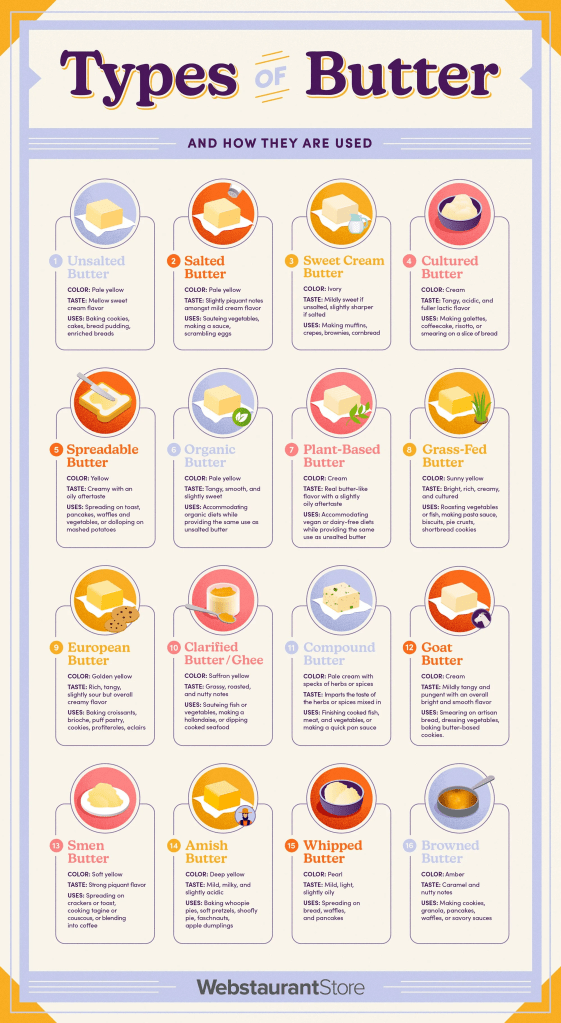
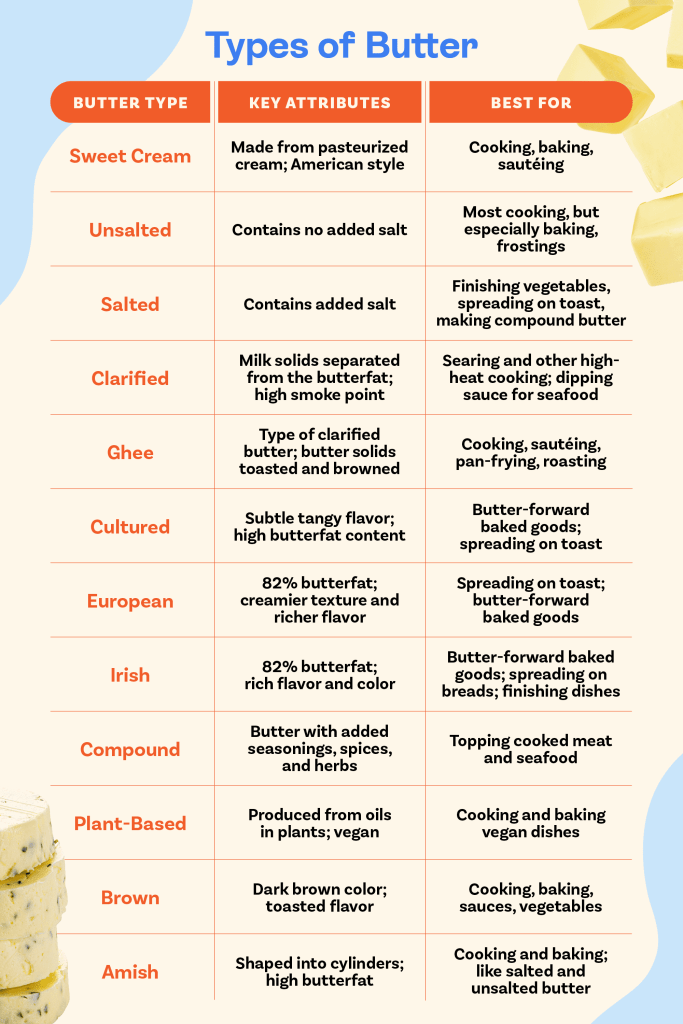
Butter is such a well-loved condiment, that we don’t just eat small portions of it. No, no. We eat it in pounds. I thought I ate and cooked with a lot of butter, but the “Kiwis” or people from New Zealand and the Danes from Denmark have me beat by far. They consume between 3.6 lbs (6.2 kg) and 18.85 lbs (8.55 kg) per person per year. France and Belarus are known for their love of butter too, as is the whole of Europe. I am going out on a limb here, and I have no proof, but I am going to say butter may just be the world’s most loved food. So, spread that butter and enjoy. 🙂
Have a great day and make everyday great. May 2026 be filled with happiness, good health and prosperity for all. ‘Til next time.

 A Jeanne in the Kitchen
I love butter so much! When I used to do catering, I worked with a woman who was pregnant and she craved butter and we always left a stick of butter in the refrigerator when we are working so she could chop off a piece and eat it while we were working.
LikeLiked by 1 person
Everything is definitely better with butter. 🙂
LikeLiked by 1 person
Love (unsalted) butter!
LikeLiked by 1 person
🙂 🙂 🙂
LikeLike
I couldn’t agree more!!! 
Have a delicious day,
Sandy Axelrod
TheTravelingLocavores.com http://thetravelinglocavores.com/ instagram.com/TheTravelingLocavores http://instagram.com/TheTravelingLocavores pinterest.com/TheTravelingLocavores http://pinterest.com/TheTravelingLocavores twitter.com/SandyAxelrod http://twitter.com/SandyAxelrod facebook.com/TheTravelingLocavores http://facebook.com/TheTravelingLocavores
>
LikeLiked by 1 person
🙂 🙂 🙂
LikeLike
I like butter, especially melted on toast, or in mashed potato!
LikeLiked by 1 person
I like butter on EVERYTHING. 🙂 🙂 🙂
LikeLike
Hooray for butter! ☀️✨☀️
LikeLiked by 1 person
Yes indeed! 🙂 🙂 🙂
LikeLike
Hello you look so familiar how are you doing and where are you from ?
LikeLiked by 1 person
Thank you. I have been blogging for almost 8 years. maybe you are just familiar with my blog. Originally I am from Southern California, now I live in the Denver Metro area.
LikeLike
Oh nice I’m from Whistler canada
LikeLike
Do you have Googlechat app or watsapp ?? so we can always talk there
LikeLiked by 1 person
No, sorry. I don’t have either of those. Whistler and Canada in general are beautiful.
LikeLike
Then which of them do you have i mean these app that we can always talk with ?
LikeLiked by 1 person
Other than my blog, I am not on any social media platforms. I really don’t care for them much.
LikeLike
Thank you so much, Jeanne, for the wonderful post! I love butter with a passion and can make it from cream myself.
Joanna
LikeLiked by 1 person
My pleasure. SWEET!!!
LikeLike
Thank you, Jeanne!
Joanna
LikeLiked by 1 person
🙂 🙂 🙂
LikeLike
Can be used basically everywhere so no wonder is so loved around the world ☺️
LikeLiked by 1 person
Exactly! 🙂
LikeLiked by 1 person
Hello you look so familiar how are you doing and where are you from ?
LikeLike
I agree, Jeanne! Everything does taste better with butter. 😊
LikeLiked by 1 person
🙂 🙂 🙂
LikeLiked by 1 person