What type of stove do you use? Gas, electric or induction? We each have our own preferences and our reasons behind why we like what we like. Here is a comparison of all three choices.
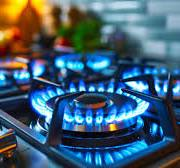
A gas stove is a cooking appliance that uses natural gas or propane as a fuel source. When you turn on the burner, a flame is ignited, providing instant heat that offers precise temperature control and uniform heat distribution.
An electric stove often requires a 240-volt outlet for power and uses electricity to generate heat, with heating elements in the form of exposed metal coils or a glass-ceramic surface. The heating elements transfer heat to the cookware, which then cooks the food.

An induction cooktop is a type of electric stove that uses magnetic fields beneath a glass surface to directly heat the cookware, rather than using traditional heating elements. What’s unique about induction technology is that it isn’t hot to the touch while cooking. Instead, heat is generated in the cookware through the induction process. The common belief is that the induction process makes induction stoves safer, more energy-efficient, and reduces cook time.
All have their pros and cons. Most serious cooks choose to use gas stoves for their temperature precision and immediate heat and heat control. Electric stoves can be consistent with their temperature, but it takes time for the heat level to change. Induction stoves won’t work if you do not have the proper cookware.

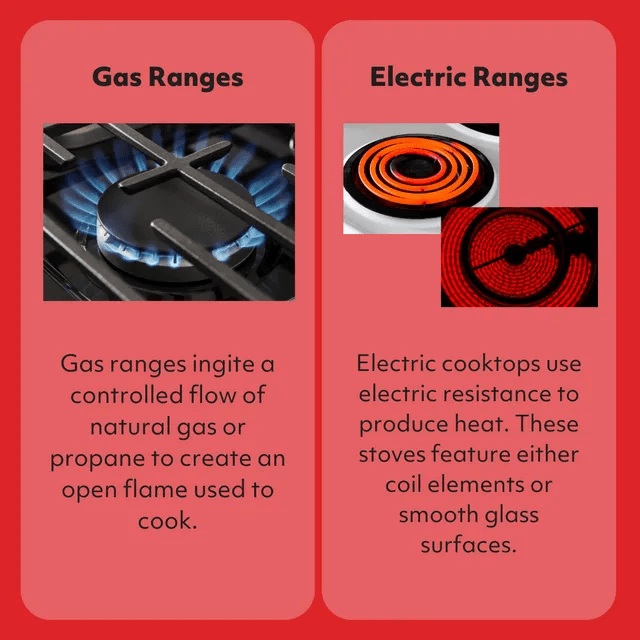
Here are the pros and cons of each type of stove.
Pros of the gas stove:
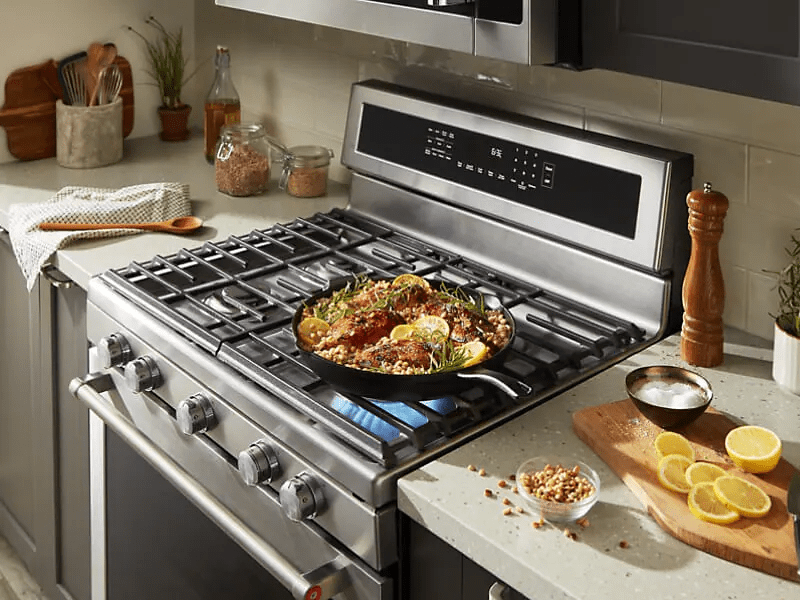
Precise Temperature Control: Gas flames offer immediate heat adjustments, allowing for fine-tuning of cooking temperatures.
Instant Heat: Gas stoves provide instant heat, enabling quick cooking times and rapid adjustments.
Visual Feedback: The visible flame provides a visual cue for gauging heat intensity and cooking progress.
Potential for Lower Operating Costs: In some regions, gas may be cheaper to operate than electricity.
Food often tastes better when cooked over an open flame. Using gas stoves allow for precise and immediate temperature control, which can be beneficial for techniques like searing or flambeing, and some find the open flame imparts a unique flavor profile, especially to foods that are grilled or charred.
Gas ranges tend to last longer than their electric cousins. Yet the difference isn’t all that pronounced. (Looking at lifespans, a gas range will live to about 15 years old. An electric range will last 13 years.)
And yet another added bonus, in times of an electrical blackout, you will still be able to cook your food using gas stoves, whereas in a blackout, with no electricity, you will not be able to do cook on an electric or induction stove. Although, some say you can’t start a gas stove without electricity because gas stoves require electricity to ignite the burners, so they won’t work during power outages. NOT true at all. A good match will do the trick. I learned how to cook on an old gas stove, and matches always worked just fine.
Cons of the gas stove:
Potential for Lower Operating Costs: In some regions, gas may be cheaper to operate than electricity. When we first purchased our house, almost 19 years ago, it was only set up for an electric stove. Before even moving in, we converted it to gas and had gas lines installed. I can’t remember the exact cost, but I don’t think it was all that expensive. Either way though, a gas line was non-negotiable! I was NOT cooking on an electric stove. Period!
Safety Concerns: Gas leaks pose a safety risk, requiring proper ventilation and maintenance.
Less Even Heating (Potentially): Some users report that gas stoves can have hot and cold spots, leading to uneven cooking. I have NEVER found this to be true at all. In fact, just the opposite.
Pros of the electric of electric or induction stoves:

Even Heating: Electric stoves, especially induction models, can provide very even and consistent heat distribution.
Easy Installation: Electric stoves typically require a simple electrical outlet connection, making installation easier and less expensive.
Safer (Generally): Electric stoves don’t involve open flames, reducing the risk of burns and gas leaks.
May be Cheaper to Purchase: Electric stoves can sometimes be more affordable to purchase than gas models.
Induction Stoves: Induction stoves offer fast heating, precise temperature control, and are highly energy-efficient.
Cons of the electric or induction stoves:
Potentially Higher Operating Costs: Electricity can be more expensive than gas in some areas. An electric stove is generally cheaper to buy and easier to install than a gas burner. However, electric ranges can be more expensive to run once installed.
They use more energy: Electric stoves aren’t as good for the environment. Electric stoves use about 3x more energy than a gas stove.
Less Precise Temperature Control (Some Models): Older electric coil models may have slower response times and less precise temperature control compared to gas.
Cooks food slower. Electric stoves don’t cook food as quickly as gas stoves.
Can’t Use During Power Outages: Electric stoves won’t work during power outages.
Glass Cooktops Can Be Difficult to Clean: Some electric cooktops have glass surfaces that can be prone to scratching and require special cleaning.
While electric stoves are cleaner when it comes to indoor pollution, the truth is that they do consume more energy than gas stoves. An electric stove will increase your electricity bill—but exactly how much depends on how often and how long you cook. A standard electric stove typically uses 2,000 to 5,000 watts per hour. If you cook every day, those energy costs can add up over time.
Induction Cooking

I am not all that familiar with induction cooking, so I do not have personal information to share on it. However, this is what I’ve learned. To the best of my understanding, induction cooking is similar to cooking on an electric stove, with similar pros. But here are some of the cons I learned.
Induction cooking has a higher initial cost, the need for specific cookware, and potential grid stress during peak hours, which contribute to its lower popularity compared to gas and electric stoves.
Induction cooking requires magnetic cookware, meaning some existing pots and pans may not be usable without an induction adapter.
Induction cooking also places higher demand on energy, and can place a significant demand on the electrical grid, especially during peak hours, potentially leading to concerns about grid stability and energy consumption.
Induction cooktops can produce a buzzing or humming sound, and some models have cooling fans that can be noisy.
The glass surface of an induction cooktop can be prone to scratches or breakage if heavy objects are dropped on it.
Non-compatible cookware won’t hurt your induction cooktop, but it also won’t heat up. Ultimately, non-magnetic cookware like ceramic, glass, non-magnetic copper, aluminum and non-magnetic stainless steel cookware won’t work.
Health concerns of all three types of stoves:
Some research has shown that gas stoves have a negative effect on indoor air quality—producing a range of emissions and pollutants within your home—and thus, your health. For example, some studies have found that gas stoves can emit tiny amounts of methane, nitrogen oxides, and other harmful gases into the home even when not in use. Exposure to such pollutants can lead to various health conditions, especially in those with pre-existing respiratory issues, like asthma. Concerns over gas stoves have been around since the early 1900s, and the federal government has considered introducing regulations as far back as the 1980s. However, this has now been debunked.
“A review of the data from 116 separate studies that was recently published in The Lancet and funded by the World Health Organization shows that heating and cooking with natural gas stoves is not associated with asthma in children or adults. The study conducted an extensive meta-analysis and examined the health risks of cooking or heating with natural gas compared to other fuels and electricity. It found no significant association between natural gas and asthma, wheeze, cough or breathlessness, and a lower risk of bronchitis when compared to electricity. When compared to other household fuels including kerosene and solid fuels, natural gas was associated with a lower risk of several health conditions. The study’s conclusion that there is no association between the use of natural gas and asthma contradicts prior claims of population incidence of asthma attributable to gas, which are only valid where a causal relationship exists.
In fact, the Lancet study (Estimated health effects from domestic use of gaseous fuels for cooking and heating in high-income, middle-income, and low-income countries: a systematic review and meta-analyses) shows that the use of gas stoves has a very positive effect on human health, as follows:
- Pneumonia: 46% risk reduction.
- Wheeze: 58% risk reduction.
- Cough: 56% risk reduction.
- Breathlessness, COPD, Other Adverse Respiratory Impacts: Substantial risk reductions.
- Preterm Birth and Low Birth Weight: Significant reduction in risk.
The risk of asthma associated with gas cooking was often inflated in prior studies that failed to adjust adequately for other factors (e.g., smoking, area air pollution). The Lancet meta-analysis showed that with proper adjustment for possible contributing factors, any association between gas use and child asthma was not statistically meaningful. Thanks to Watts Up With That at https://wattsupwiththat.com/ and this very informative article Meta-Analysis of Over 100 Studies Shows Gas Stoves Pose No Increased Risks of Asthma, by Leslie Eastman, for this information.
As for electric stoves, specifically induction cooktops, concerns have been raised about the emission of electromagnetic waves. But according to Time, “While some early studies have raised questions about whether these electromagnetic fields may be harmful to children and fetuses, the World Health Organization in 2007 found no compelling evidence of medium-frequency magnetic fields having long-term effects on human health.”
Safety
Gas stoves pose the risk of potential gas leaks and the fire risks associated with the use of open flames in the home. On the other hand, according to a 2020 report from the National Fire Protection Association (NFPA), “Although 60 percent of households cook with electricity, four out of five (80 percent) ranges or cooktops involved in reported cooking fires were powered by electricity”—with “unattended cooking” being the leading cause. The moral of this story is that fire safety precautions should be taken with both types—ie. don’t leave them unattended, turn them off when you’re done cooking, and don’t leave anything on top of them.
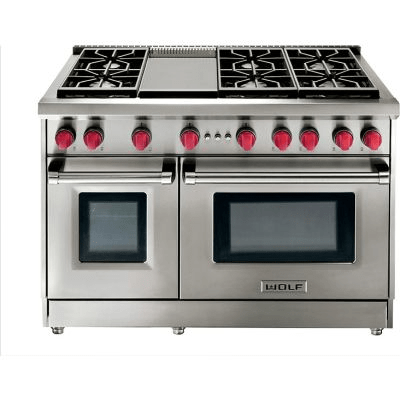
You have to make your own choice and determine what is best for you. For me, it is gas all the way. I will NOT cook on an electric stove. Most chefs agree. Most chefs and most restaurants use gas stoves. Roughly 95% of restaurants use gas stoves. I would LOVE a 6 or 8 -burner WOLF stove, but they are really expensive and take up a lot of space. But, it is still on my one-day wish list. You just never know. I just may get lucky. 🙂
Once again, I hope you learned something new and informative. I like to share what I learn and what I know. Have a great day and make everyday great. Stay safe and stay well. ‘Til next time.

 A Jeanne in the Kitchen
Thank you for all this interesting information. We have an electric stove and that works for us but we aren’t professional cooks. About the environmental concern, we get our electricity from windpower so I don’t think that is a big concern, and our bill is not high. However, we have a barbeque outside, which uses natural gas (propane).
LikeLiked by 1 person
My pleasure. thanks for the feedback. We live in snow country, and wind and/or solar power are not reliable energy sources.
LikeLiked by 1 person
Yes it all depends on the fuel mix of the grid. I’ve read that typically electrical stoves cause less emissions than gas stoves but that is not true if the grid depends on a lot of coal. In Sweden (my native country) the grid is carbon emissions free because it is a mix of nuclear, renewables, and hydro and no fossil fuels. The Texas grid (for average/typical customers) is a depends because the fuel mix changes during the day.
LikeLiked by 1 person
Good to know. thanks. I had no idea. 🙂
LikeLiked by 1 person
We’ve switched to induction a few years ago and updated our kitchen equipment 2 years ago. Induction is really great, it’s fast and precise and the surface is easy to clean.
LikeLiked by 2 people
Thanks for letting me know. I appreciate the feedback. 🙂
LikeLiked by 1 person
Pleasure!
LikeLiked by 1 person
I started cooking on gas stove 25 years ago and wouldn’t go back, especially since I can still cook when the power is out. That means we still have coffee to start the day. 🙂
LikeLiked by 1 person
I’m with you. Besides, what so many people don’t realize, is with all this heavy dependence on electric, our grids can’t handle the demands. A lot more blackouts are in the future if we go more and more electric.
LikeLiked by 1 person
Thanks for sharing. Have a great day. 🙂
LikeLike
Electric oven with induction hob.
LikeLiked by 1 person
Cool Beans. Thanks for the feedback. 🙂
LikeLiked by 1 person
This is totally fascinating! I am glad I am a “serious cook,” according to you, darling. However, I have a gas stove because it is easier to keep Kosher at all times.
LikeLiked by 1 person
You are a serious cook. I never knew that. That’s another reason for gas stoves. How so? I am just curious.
LikeLiked by 1 person
There is no way to make Kosher ceramic or electric coils, so if something dairy spills on a burner which is used to cook meat (or vice versa), you’d have to get a new stove. A gas stove will simply burn the spill with live fire – a standard kashering procedure.
LikeLiked by 1 person
I wondered about that. Thanks for the info. I always learn something new with you. 🙂
LikeLiked by 1 person
And I with you, darling.
LikeLiked by 1 person
AWWWW!!! Thank you. 🙂
LikeLiked by 1 person
But of course, darling!
LikeLiked by 1 person
Luv ya Dolly. 🙂 🙂 🙂
LikeLiked by 1 person
Luv ya right back! 😻
LikeLiked by 1 person
🙂 🙂 🙂
LikeLiked by 1 person
I have an electric cooker, because it is safer, I don’t want to mess with flames, or gas, when I am blind. Xx
LikeLiked by 1 person
I can’t say that I blame you on that. 🙂
LikeLike