Peanuts, goobers, monkey nuts and ground nuts. What do they all have in common? They are all different names for the same thing – “nuts” that are actually part of the pea and legume family, that grow in the ground rather than on trees.
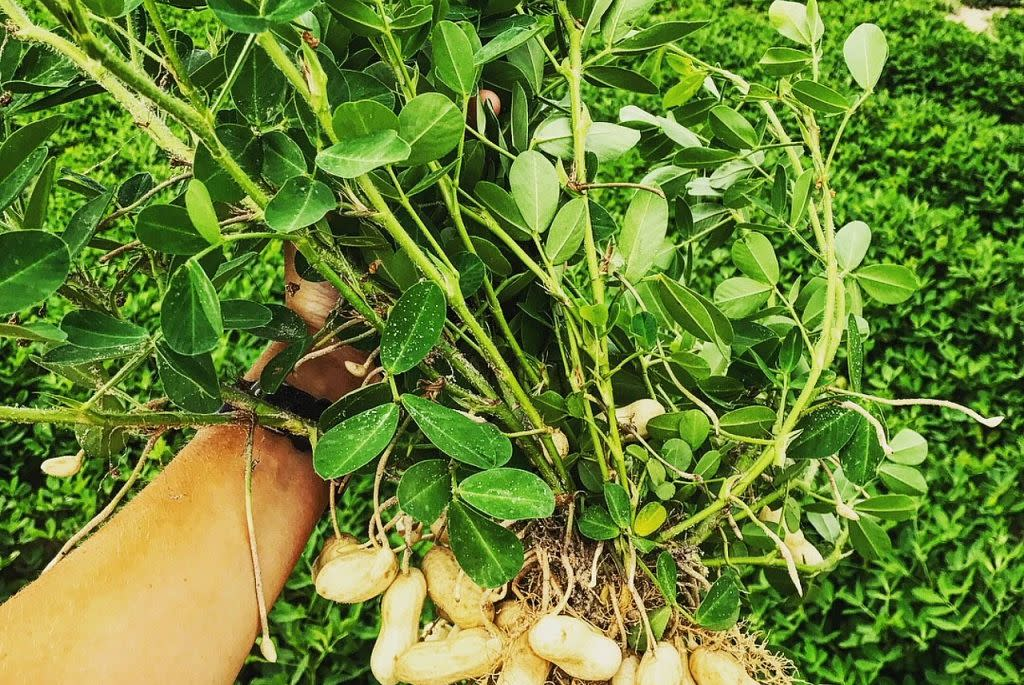
Peanuts are very old “nuts”, having been around for at least 7,000 years. They originated in South America, and it is believed Bolivia was where they first originated. The peanuts we know today are an ancient hybrid from two different wild varieties that grew naturally in Bolivia. From Bolivia, the peanuts spread to Peru, and then to the rest of the world with the help of the Spanish Conquistadors and the early Dutch explorers. Peanuts were first brought to the United States in the 18th century, through the slave traders. They were stored on the ships because they were cheap food sources and traveled well.
Virginia was the first place peanuts were grown in North America. Today, China, India and the United States are the largest peanut producers in the world. It’s kind of strange since the peanut was not native to any of these countries, and now they are the largest peanut producers in the world.
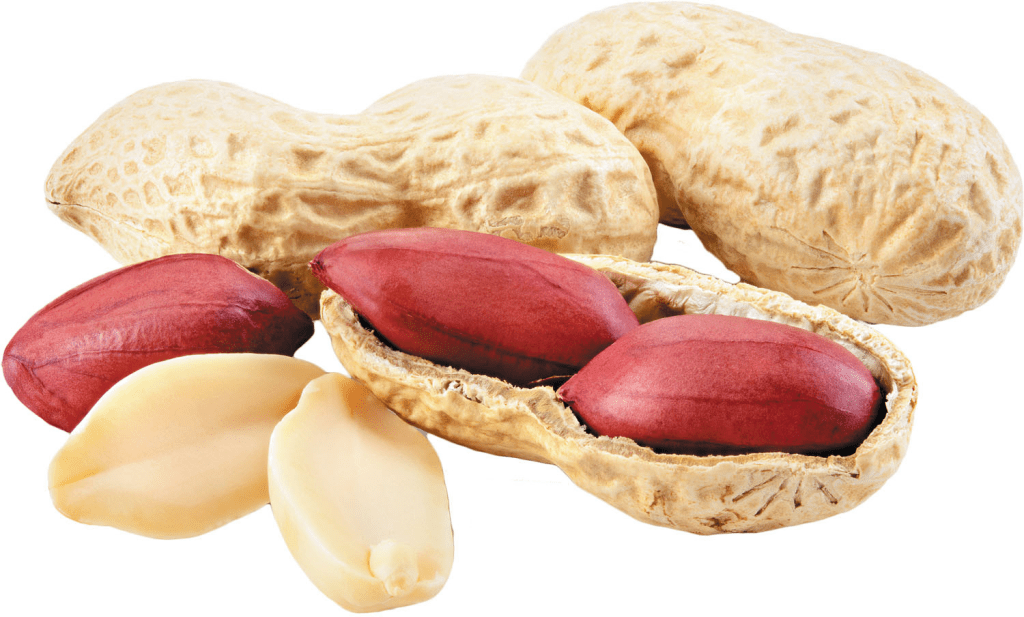
When peanuts were first introduced to the United States, they were only used as animal food. But during the Civil War, that quickly changed, when the soldiers started eating both the “nuts” themselves and the “butter” they produced, that we call peanut butter, because other food sources were scarce and hard to come by. They instantly took a liking to peanuts and discovered that peanuts are a great source of protein as well as many other nutrients and are also very healthy and satisfying. Today, peanut butter is an American staple, eaten and loved by all.

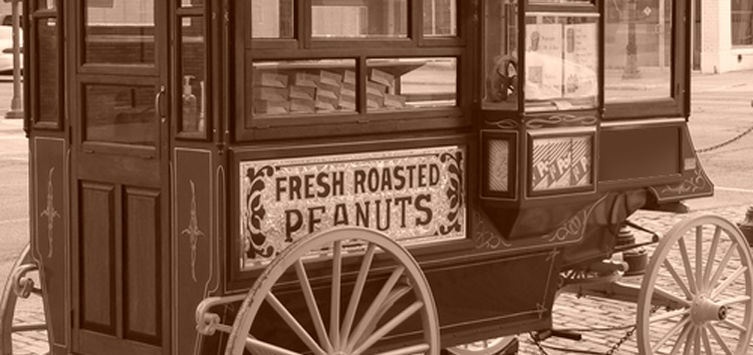
There are four main types of peanuts produced and eaten in the united States. They are the Virginia peanut, runner peanuts, Spanish peanuts and Valencia peanuts. The Virginia Peanuts stands out from the other peanut varieties in both size and taste; they are the largest peanut, are more flavorful than the three other varieties, and have a characteristic crunch when eaten. Virginia Peanuts are commonly called the “Ballpark Peanut” because they are the peanut variety sold at baseball games across the country. Out of the total peanut production in the United States, Virginia Peanuts make up about 15% annually, and while the majority of the 26,000 acres of peanuts grown in the Commonwealth are Virginia Peanuts, about 1,000 acres of the state’s peanut farmland grow Runner Peanuts. Virginia peanuts are also grown in Texas, and both North and South Carolina.

George Washington Carver, a renowned biologist and former slave, is responsible for most of the growth and popularity of peanuts in the United States. Carver was known by his neighbors as “the plant doctor” because he developed a lot pesticides that enabled plants of all kinds to grow bigger and healthier plants that produced more food. Carver was also known as the grandfather of the peanut industry because of all his contributions to not only the farming industry in general, but specifically to the peanut farming industry. George Washington Carver contributed much to the study of agriculture, including introducing the now-widespread practice of crop rotation, but his biggest contributions would be to the farming and culinary uses of peanuts. During his lifetime, he came up with over 300 food, commercial, and industrial uses for peanuts, including cooking oils, paper, soaps, and cosmetics. He even experimented with using peanuts in medicinal treatments, creating ointments, antiseptics, and other peanut-infused medicines that would have varying results in their effectiveness. His published works detailing the wide array of uses for peanuts lead to their rise as a valuable crop planted in Southeast Virginia and throughout the country, transforming the agricultural economy in the United States.

Another reason peanuts became so popular in the United States is because P.T. Barnum, famous for his traveling circuses, used to sell peanuts at a cheap price to all the visitors that would go to his shows.
Here are some other fun facts about peanuts and peanut butter I bet you didn’t know.
- It takes about 540 peanuts to make a 12-ounce jar of peanut butter.
- It takes 3.2 gallons of water to produce 1 ounce of peanuts. (Bonus fact: 1 ounce of almonds takes 28.7 gallons)
- The average American will eat almost 3,000 PB&Js in their lifetime, according to a 2016 survey by Peter Pan Simply Ground Peanut Butter.
- Two peanut farmers have been elected president of the USA – Virginia’s Thomas Jefferson and Georgia’s Jimmy Carter.
- People living on the East Coast prefer creamy peanut butter, while those on the West Coast prefer the crunchy style.
- There are six cities in the U.S. named Peanut: Peanut, California; Lower Peanut, Pennsylvania; Upper Peanut, Pennsylvania; Peanut, Pennsylvania, Peanut, Tennessee; and Peanut West Virginia.
- The average European eats less than 1 tbsp of peanut butter a year.
- There are enough peanuts in one acre to make 35,000 peanut butter and jelly sandwiches. (Source: USDA NASS data)
- In a high-pressure environment, peanut butter can be turned into diamonds.
- Astronaut Alan Shepard brought a peanut with him to the moon. Read about making a PB&J on the International Space Station.
So now you all know a lot more about peanuts and their history. Probably way more than you wanted to know, but now you do. 🙂

Have a great day and make everyday great. Stay safe and stay well. ‘Til next time.

 A Jeanne in the Kitchen
As usual, very fascinating! Thank you for this.
Hey, aren’t we supposed to be getting together soon?
LikeLiked by 1 person
Thank you. You know how much I love to learn new things and to share what I learn. 🙂
We are. it’s up to you and Tam. I know she is busy with school right now. 🙂
LikeLike
I’ll check with Tam. I know if it’s not local, she will pass until after August 16th, her final day of class. Y’all came donw here last time, so we may need to wait till August? Or, I can meet y’all closer to Denver sooner?
LikeLiked by 1 person
We are open to anything. We can easily go down your way too. Larry is gone for this whole weekend, but other than that we are open and free. Have a great weekend. 🙂
LikeLike
I’m flying out to San Diego in the morning. I’m speaking at an event tomorrow for an HOA at a building in San Diego that I’ve done about 17 or 18 Kitchens for already. I am not good at speaking in public, but I’m hoping since I know so many of the condo owners, that I’ll be a little more at ease. Coming back Sunday in time to join Tamura and Barbara at the Castle Rock Auto Show tomorrow afternoon. What about June 26th or 27th? We could meet in Denver?
LikeLiked by 1 person
Best of luck! You’ve got this! I will have to check with Larry and get back to you. He is in Hays, KS for his mom’s 96th birthday.
LikeLike
96?!? That’s incredible!
LikeLiked by 1 person
I know, right?!!!!!
LikeLike
Love these informative posts
LikeLiked by 2 people
SWEET! I like doing them too. I learn so much when I do these kinds of posts. 🙂
LikeLiked by 1 person
Nice post. Thanks for sharing
LikeLiked by 1 person
Wow, so many interesting peanut butter and peanut facts here! Ty for sharing them!
LikeLiked by 1 person
My pleasure. Glad you enjoyed them. 🙂
LikeLike