Anyone who bakes knows about both baking soda and baking powder. We use them all the time when baking. But what’s the difference between the two? Both are leavening agents that make things rise. Are they the same? Are they interchangeable? No, they are not the same and no they are not interchangeable.
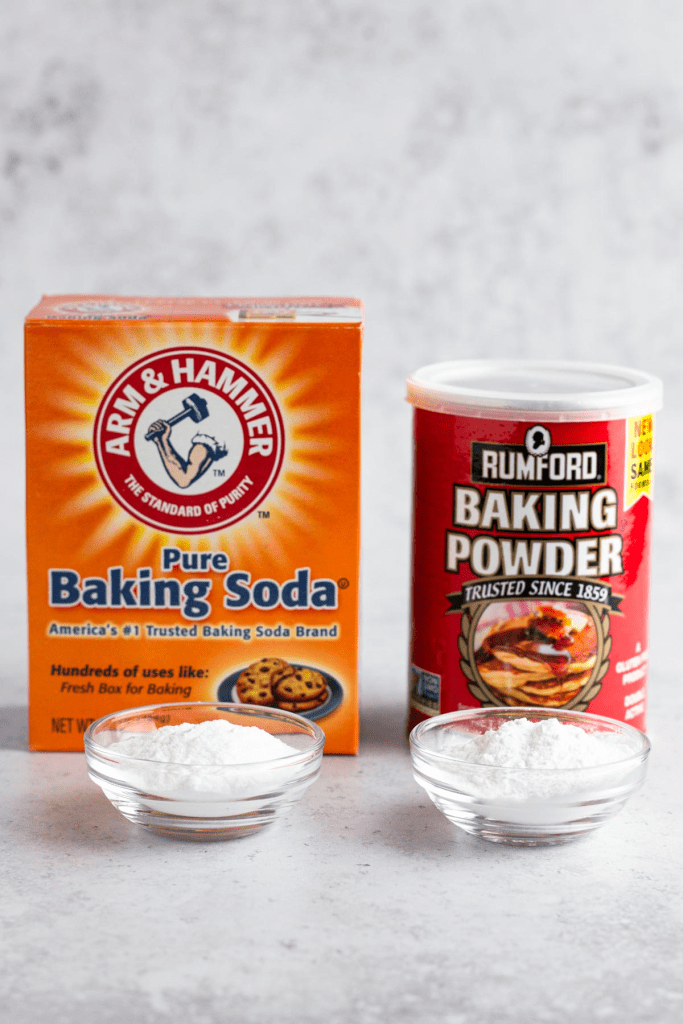
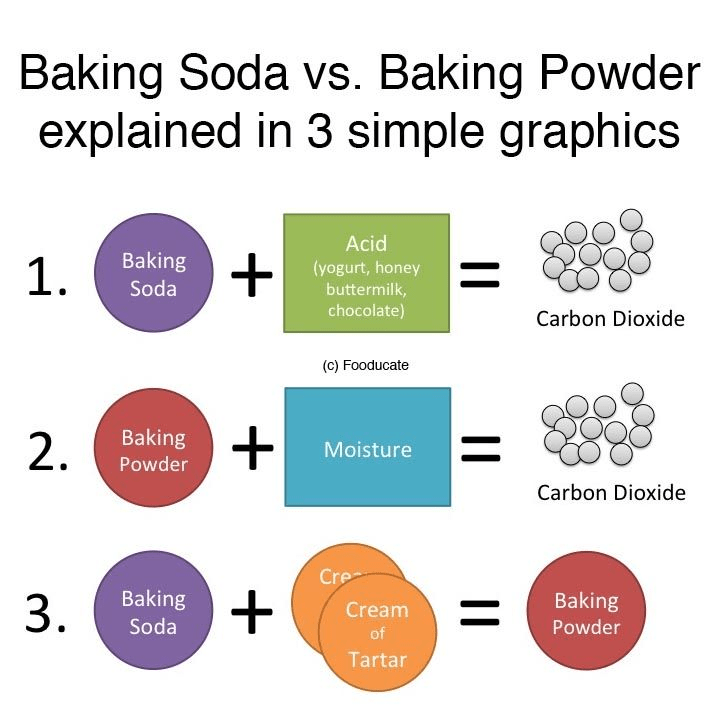
Baking soda is simply sodium bicarbonate and requires an acidic ingredient to activate. The carbon dioxide gas creates bubbles, which help doughs and batters rise. Baking soda is commonly used in recipes containing acidic ingredients like buttermilk, brown sugar, yogurt, lemon juice, vinegar, cream of tartar, applesauce, natural cocoa powder, honey or molasses. Baking soda helps the finished product to rise and have a crisper texture.
Can you tell which one is which just by looking at them? The first one on the left is baking powder. How do I know? Look at the texture. You can see it is more of a “velvety” texture than the baking soda on the right. This “velvety” texture comes from the addition of cornstarch. The baking soda looks more like salt, because it is a salt or sodium base.
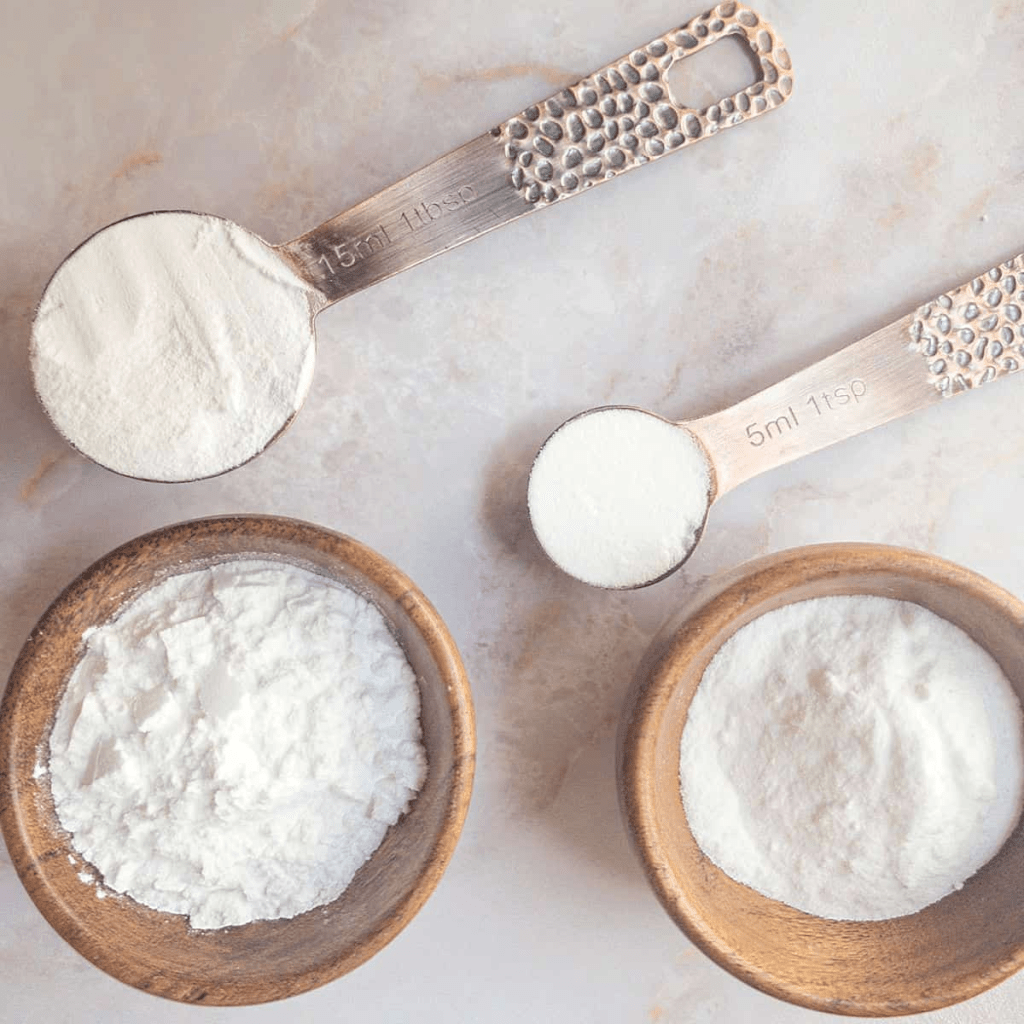
Baking powder is a mixture of baking soda and cream of tartar, a dry acid. An inactive ingredient, often cornstarch, keeps the two from reacting until liquid is added. The addition of cream of tartar adds acidity to recipes that don’t call for acidic ingredients. Also worth noting: Since baking powder is a mixture of ingredients, it’s slightly less potent, teaspoon by teaspoon, than baking soda. Most baking powders sold today are double-acting, meaning that they work once as they are added to wet ingredients and then leaven (make dough rise) again when popped in the oven and exposed to heat. Single-acting baking powders are also available but aren’t used as frequently. They activate when exposed to moisture and that’s it. You can substitute double-acting for single-acting baking powder.

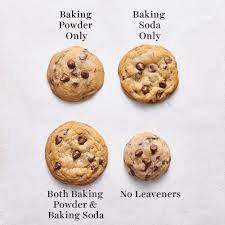
Baking soda’s reaction is done all at once in your baked goods, while baking powder has a slower reaction and releases gas bubbles into your baked goods over a longer period of time, allowing for a more gradual rise and resulting in a lighter, more airy texture. You can really see the difference between the two leavening agents when baking cookies. Making cookies is about individual preferences. I personally like my cookies bigger and crispier, so I use both baking powder and baking soda. Some people prefer them, fluffier and softer.
Cooking is not an exact science, but baking, however is, because baking causes the chemical reactions in food more so than cooking, especially when exposed to the higher heat of the oven. When cooking, it’s not going to matter too much if the amounts are altered. In baking, the amounts DO matter. For instance, if you use too much baking powder in a recipe, it will cause your baked goods to rise too quickly and taste bitter. They will also be dried out and crumbly. The excess gas created by too much baking powder can cause baked goods to expand and then deflate after baking. If you use too much baking soda it will cause your baked goods to rise uncontrollably and taste terrible, giving them a salty, metallic taste. If you don’t use enough of either baking soda or baking powder your cookies will fall flat and your cake layers will be too dense.
Is there a shelf life for baking soda and baking powder. Yes, there is. It’s not going to hurt you if you if use either baking powder or baking soda that has expired, but they may not have the same leavening powers they had when in their effective time frames. You can test your baking powder by adding a small amount to hot water to see if it bubbles, indicating it’s still active; if unsure, it’s recommended to replace it with fresh baking powder. You can also substitute vinegar for baking powder when in a pinch. The acidic pH of vinegar is perfect for use as a substitute for baking powder. Vinegar has a leavening effect when paired with baking soda in cakes and cookies. If you accidentally add baking soda when you want baking powder, add about one tablespoon of white or apple cider vinegar for every half teaspoon of baking soda to the liquids before mixing with the dry ingredients and everything should bake up just fine.
So, now you know. Your baked goods should turn out perfect from now on. But practice makes perfect, and even if they don’t turn out perfect, just keep on trying until they do, and then just keep baking on. 🙂
Thank you to The Reluctant poet at https://thereluctantpoetweb.wordpress.com/ for the inspiration for this post. I have to admit, I bake quite often, as you all know, but I learned some new things today too.
Have a great day and make everyday great. And bake something great too. Stay safe and stay well. ‘Til next time.

 A Jeanne in the Kitchen
Interesting, even though I bake a lot, I didn’t know that baking powder is baking soda plus cream of tartar. Maggie
LikeLiked by 1 person
I didn’t either really. 🙂
LikeLike
So interesting post 🎸🎸
LikeLiked by 1 person
Thank you. 🙂
LikeLike
Great blog 🙂
LikeLiked by 1 person
Thank you. 🙂
LikeLike
Interesting and informative
LikeLiked by 1 person
De rien. Avec plaisir. 🙂
LikeLiked by 1 person
Thank you for the information – an excellent refresher course.
LikeLiked by 2 people
My pleasure. I didn’t know all that either. 🙂
LikeLiked by 1 person
I actually researched when I came to the US and discover baking powder. we did not have it in the old country; we used to cut baking soda with vinegar.
LikeLiked by 1 person
So you already knew about this. 🙂 🙂 🙂
LikeLiked by 1 person
Yes, that’s why I called it a refresher course.
LikeLiked by 1 person
🙂 🙂 🙂
LikeLiked by 1 person
thanks for the lesson on baking soda versus baking powder. Now I know the differences between them!
LikeLiked by 1 person
My pleasure. 🙂
LikeLike