While visiting the Museo de la Isla de Cozumel, we learned about the importance of the Mayan bees and the Mayan Melipona Bee Sanctuary. We decided to pay it a visit as one of our post diving activities. It was really informative and very interesting.
The Mayan Bee Sanctuary is place where you will learn about the importance of stingless bees as well as learn about all the benefits of Melipona honey. You will also learn about the importance of honey in the Mayan world.
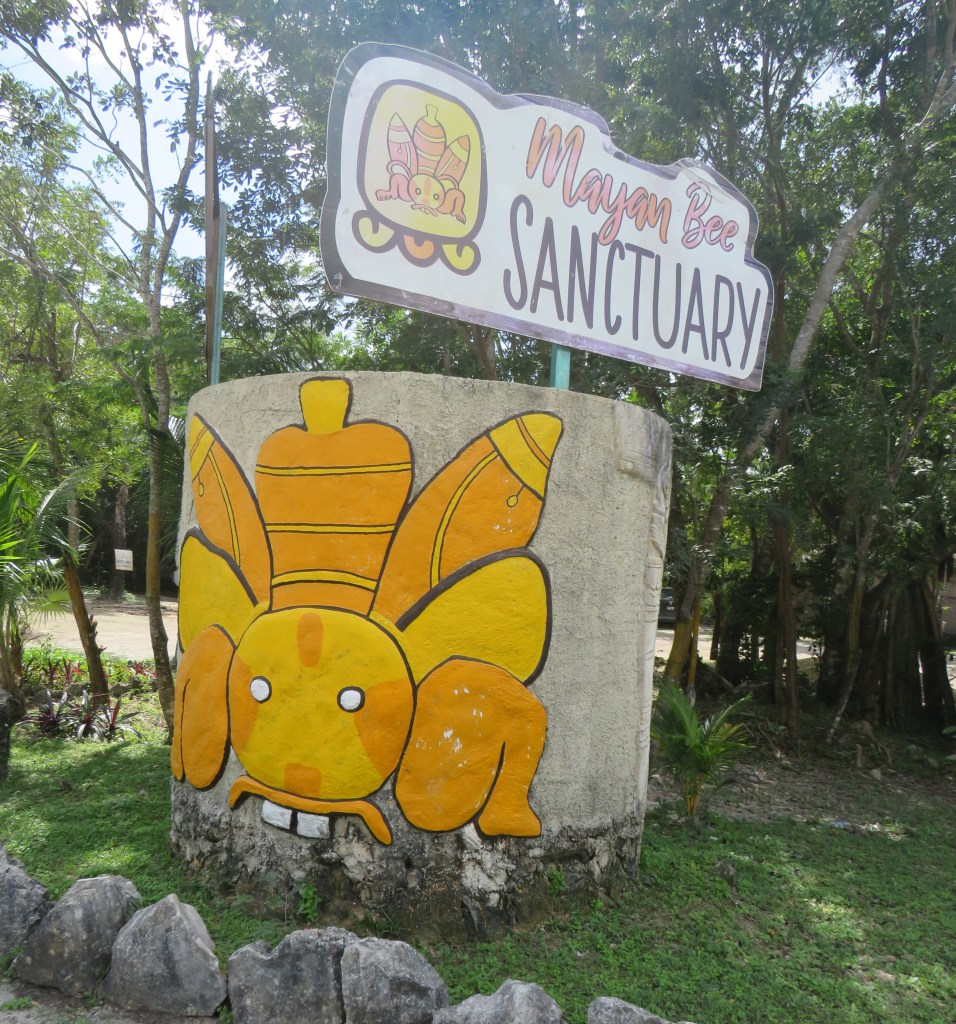
Beekeeping with stingless bees (meliponiculture) in Mexico is an ancient tradition. Ah-Mucen-kab, the honey god of Mayan mythology. As far back as 3,000 years ago, the ancient Maya practiced beekeeping. Their cultivation of sacred stingless bees—still emulated in the Yucatán Peninsula today—provided both pollination for their crops and honey to use in food, rituals and medicine.
Larry and I got very lucky and had a private tour. Our tour guide and bee expert Jocelyn, was very knowledgeable and knew all about her beloved bees.
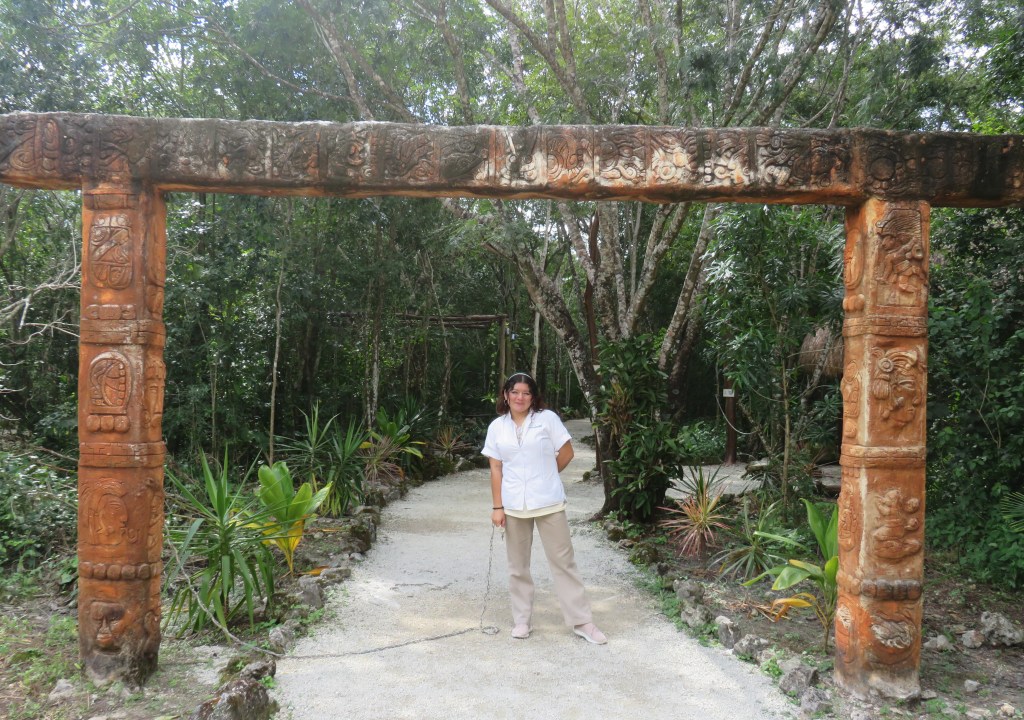
Before we started the actual tour, however, there was a Mayan prayer ceremony that took place, with a Mayan Shaman blessing the bees.
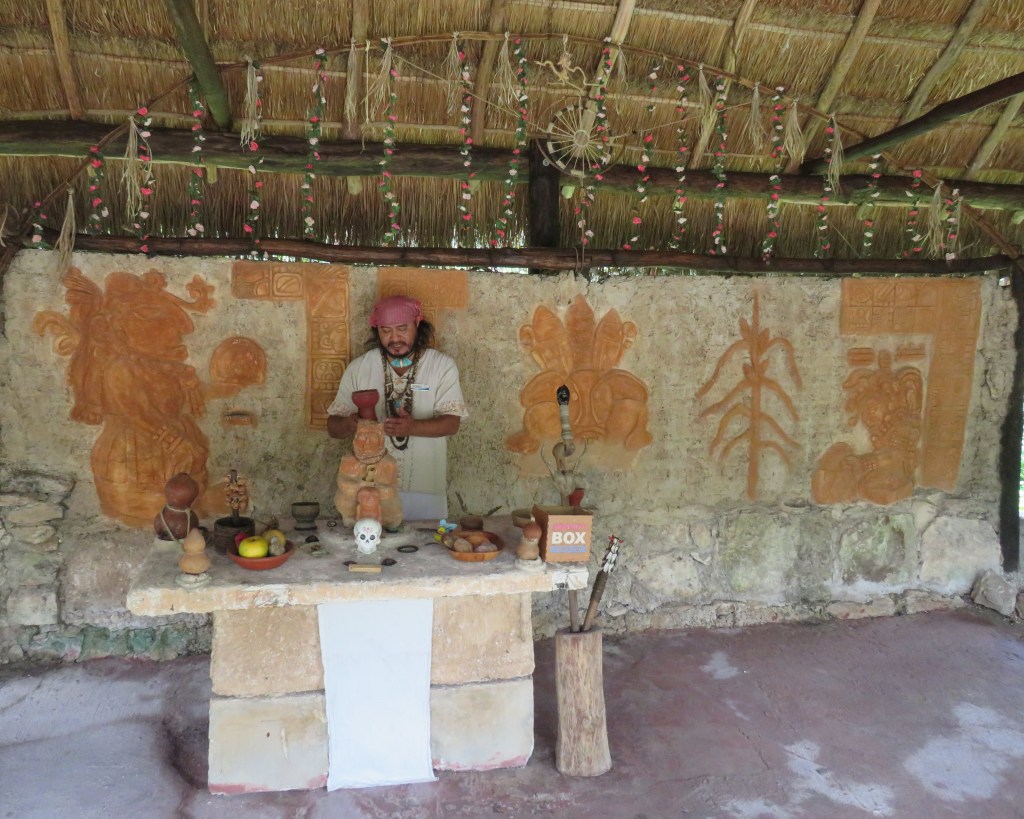
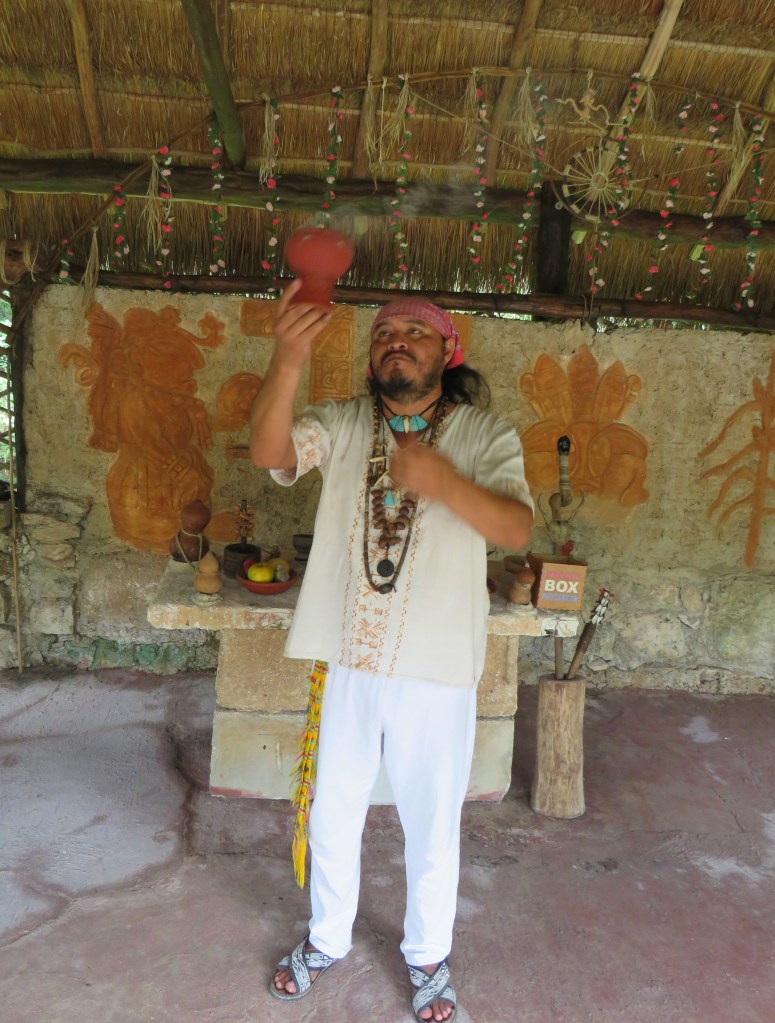
After the prayer ceremony, our tour started.
There are over 600 types of stingless bees in the world, with 46 different types found all throughout Mexico, and 16 different species found specifically in the Yucatan region of Mexico. The Yucatan bees are known as Melipona bees, and are significantly smaller than the European bees. Small and unassuming, this stingless apidae is a native to Central America and has been cultivated by the Mayan people for centuries. They can be found in the Yucatan regions of Mexico, Belize, Guatamala, El Salvador and Columbia.

The Melipona Bee Sanctuary focused on three types of bees that are specific to Cozumel – The Beechi, the Nannotrigona and the Scaptotrigona. They all have very distinct personalities and differences.

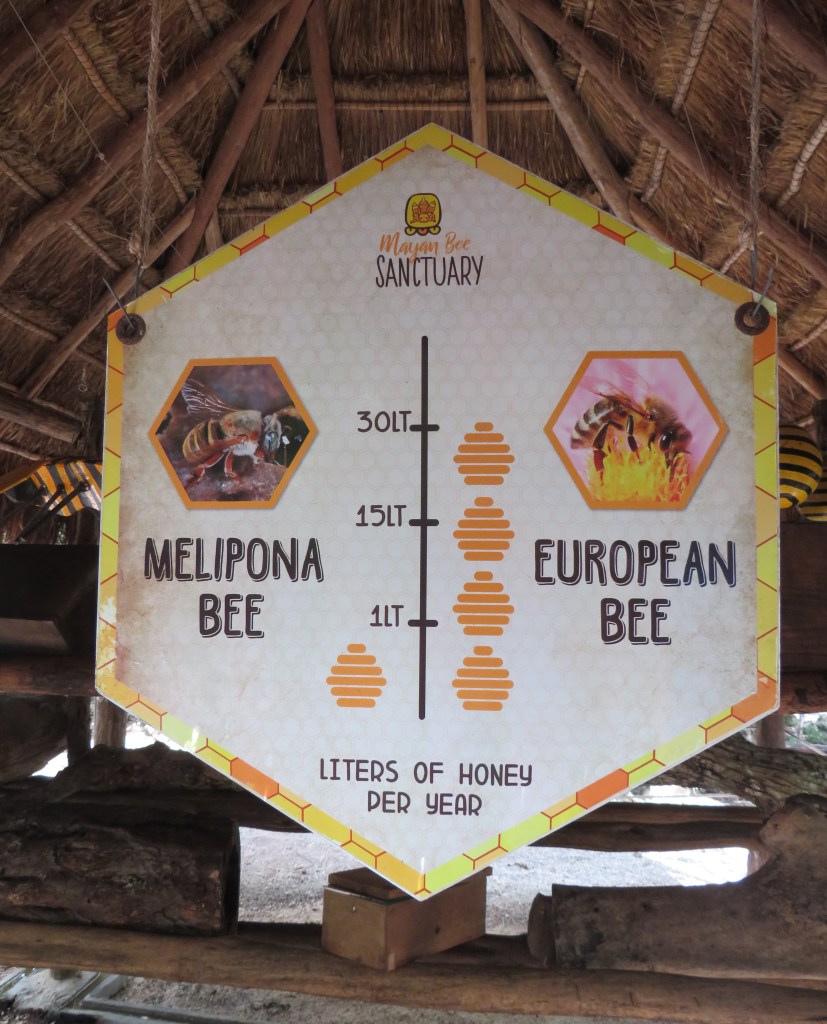
The Beechi are the largest of the three bees, and their main job is to act as the guardian of the hives. The Nannotrigona are very shy and are not often seen. Their close cousins, the Scaptotrigona are very gregarious and can be more aggressive, though they cannot hurt us, because none of them have stingers. All three of these bees are tiny, and are only a fraction of the size of the European bees. Because the Melipona bees are so much smaller than the European bees, their honey production is considerably less as well. Europeans bees can produce up to about 30 liters of honey per hive per year, whereas the Melipona bees only produce about 1 liter of honey per hive per year.
They make their hives inside of trees, in their honey pots.

There are Scaptotrigona bees on the outside of this log.

I got lucky and got to see some of the shy Nannotrigona bees before they retreated back into the safety of the tree.
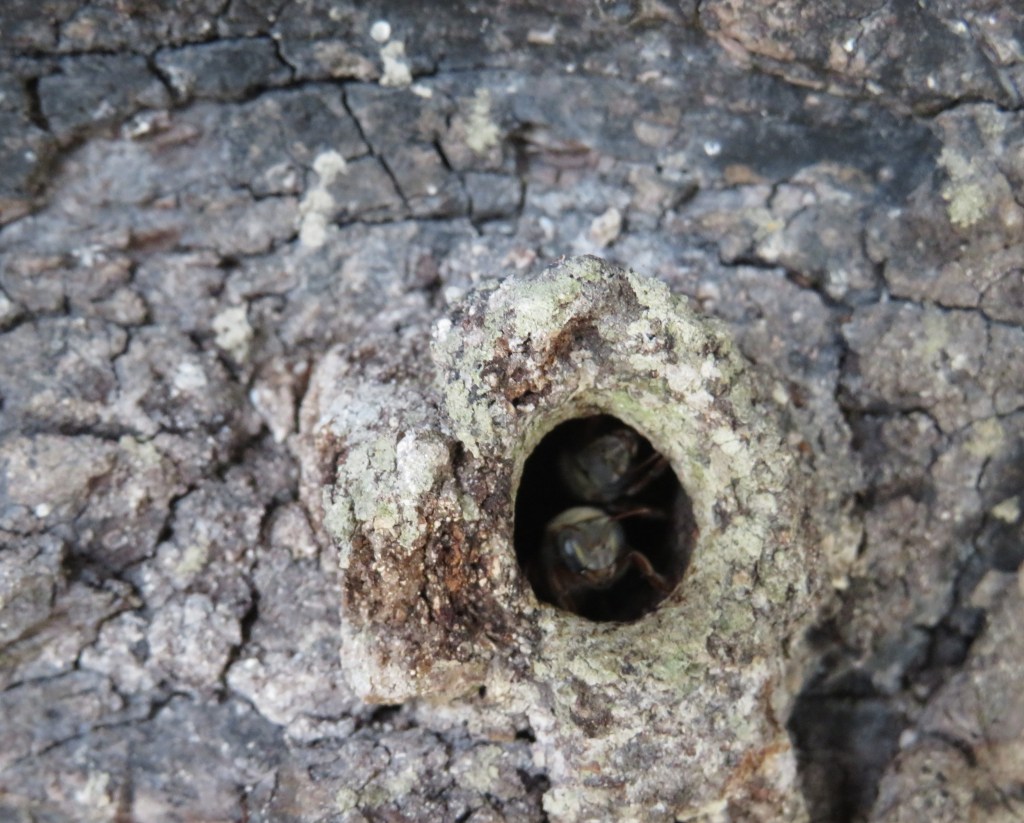
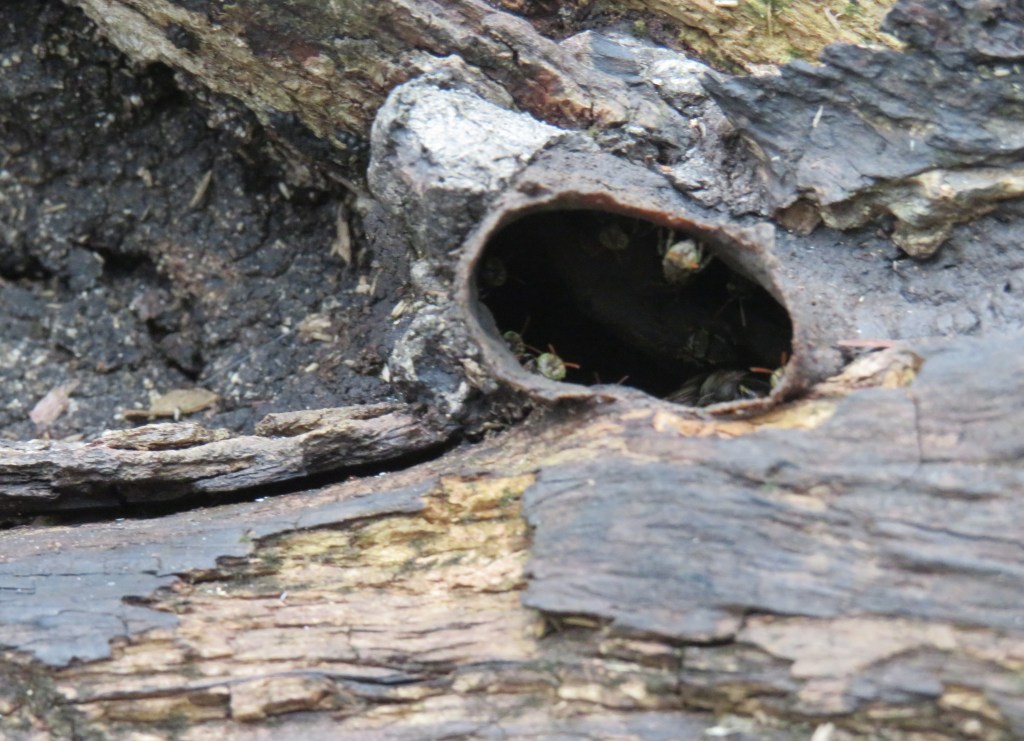
At the Bee Sanctuary, the hives are all protected by “moats”, though this isn’t always the case in the wild. One of the worst predators for the Melipona bees is the termite.

These are actual honey pots after the honey had been removed. The honey is usually removed from the honey pots with a syringe.


The inside of the hive is called a Jobon, and just like all bees, all the bees have their specific jobs and duties to perform, and yes, they too have a bee hierarchy, with a queen bee who is the ruler.

The Melipona Bee Sanctuary is located in jungle territory, with many other jungle inhabitants. The only other critter we saw, besides the bees, was a hooded lizard. We actually got to see him run , with his hood up, running on his hind legs. He looked so funny running like that. I tried to get a picture of him running, but surprisingly, he ran pretty fast and I was unable to get him running. I was able to capture him at rest though.

At the conclusion of the tour, we got to sample and compare the honey from European bees and the Melipona bees. They are completely different. Because the Melipona bees produce much less honey, the honey collected from them is very expensive and tends to be used more for medicinal uses rather than eating, though you can definitely eat it too. It is very good.


Jocelyn was a wealth of information. We learned so much from her. She asked if I was going to make her famous. I am doing my best. 🙂 We had a great time and learned a lot about The Melipona bees and the honey making process. If you are in Cozumel, looking for something a little different, I recommend this very interesting tour. Not only will you learn something new, but you will also be helping the local bee farmers and the preservation of the bees.

Have a great day and make everyday great. Stay safe and stay well. ‘Til next time.

 A Jeanne in the Kitchen
Anything that helps the bees, gets my vote
LikeLiked by 2 people
What a cool and interesting place to visit.
LikeLiked by 1 person
It was. I’m very glad we did it. 🙂
LikeLiked by 1 person
🙂🙂🙂
LikeLiked by 1 person
Thanks for sharing the love. Have a great day. 🙂
LikeLike
Fascinating.
LikeLiked by 1 person
It really was too. I learned a lot. 🙂
LikeLike
how interesting! I didn’t even know these bees existed! I’m glad you got to see the bee sanctuary!
LikeLiked by 1 person
it was really cool. We learned so much. 🙂
LikeLike