After a couple of days in Cabo, we took a little break and headed to the city of La Paz for some snorkeling with the whale sharks and the sea lions. It was about a 2 hour drive through the dessert from Cabo San Lucas to La Paz. La Paz is the capital of Baja California Sur.

The route from Cabo to La Paz goes through the desert that is surrounded by the rugged coastline. Cacti line the road as far as the eyes can see. On one side, you have nothing but the lush desert region. On the other side, you still have the desert characteristics, but they are highlighted by the rugged coastline and waters of the Sea of Cortez.
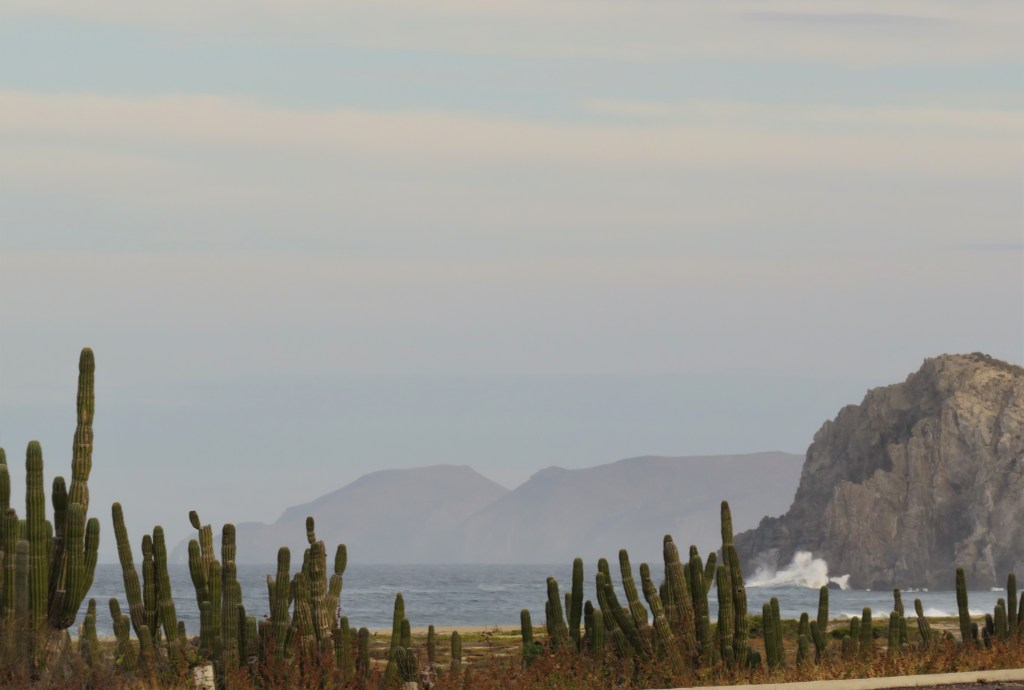
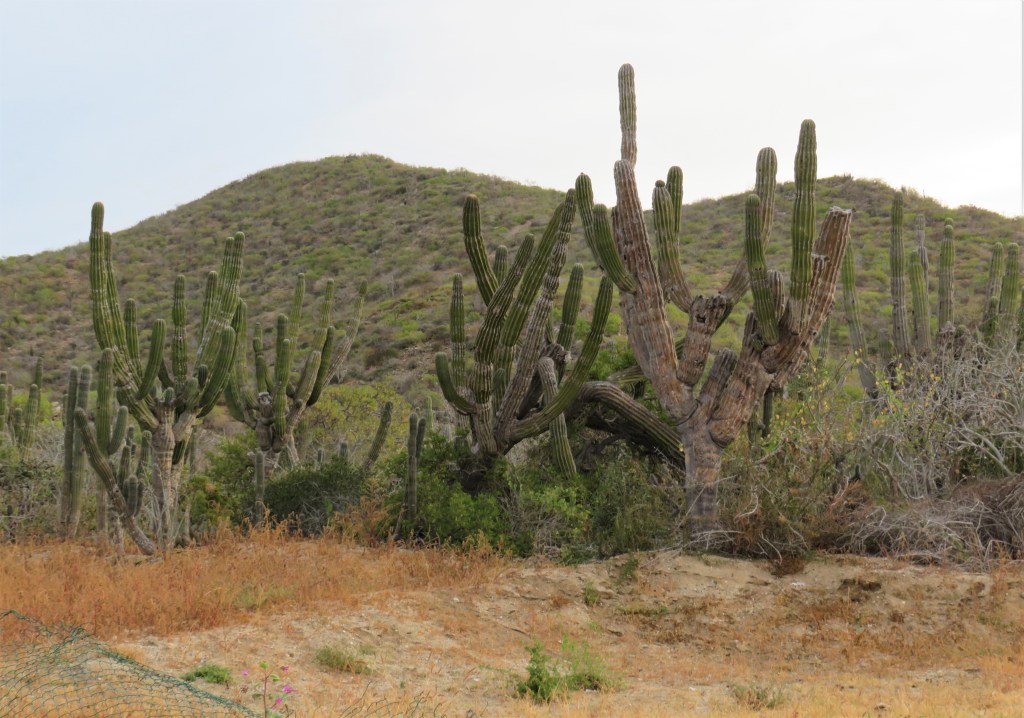
It is also a very agricultural region, known for it’s cattle and bulls. We saw “bull crossing” signs all along the route. Those just cracked me up.

We left Cabo early in the morning to get to La Paz in time for our first whale shark experience. We could only snorkel with them, not dive, so we left all our dive gear back in Cabo, and only took our fins, booties and masks with us.
The whale sharks are beautiful, magnificent creatures. They are gentle giants. Whale sharks are found in warm, temperate and tropical waters all over the world. Oftentimes they live in the open ocean, generally near the water’s surface since that’s where the plankton they eat live. They are sharks, not whales, and are the largest fish in the world. They are plankton eaters. Whale sharks are one of only three species of filter feeding sharks, which means they spend much of their time swimming with an open mouth, sifting tiny plankton, fish, and sometimes an unlucky squid through their gills to get the energy and nutrients they need. These gentle giants have approximately 3,000 small teeth that line their mouths, but they don’t use them. Their backs are blue-gray in color with unique distributions of white spots and stripes all over their bodies while their bellies are bright white. In the marine environment, having a darker back and a lighter belly is an adaptation called countershading, which helps animals blend into the environment and allow them to avoid predation or sneak up on their prey.

The whale sharks in La Paz are adolescent males, about 9-13 years old. Most of them are about 13 or so feet long. Juvenile whale sharks are often preyed upon by blue sharks, basking sharks, and killer whales but adults aren’t likely to be hunted by anything other than humans, so the juveniles like the protected bays of La Paz where they are left at peace and are not threatened. Once they mature, at about 30 years old, they can exceed lengths of more than 40 feet long and can weigh up to 50,000 lbs. It is estimated they can live between 70-100 years. They are still very mysterious though, and not much is really known about them. The young juvenile males are what are seen most often, since no one really knows where they birth their young or where the females live.
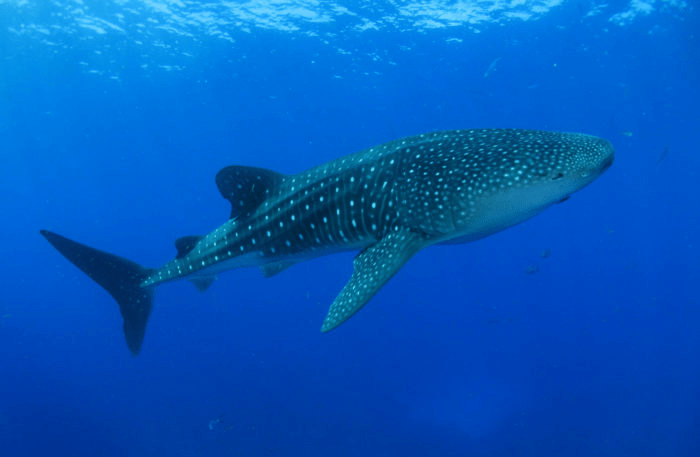
This is the way to experience these beautiful, mysterious creatures in La Paz. They are endangered, so contact with them is very limited and can only be done with special permits.
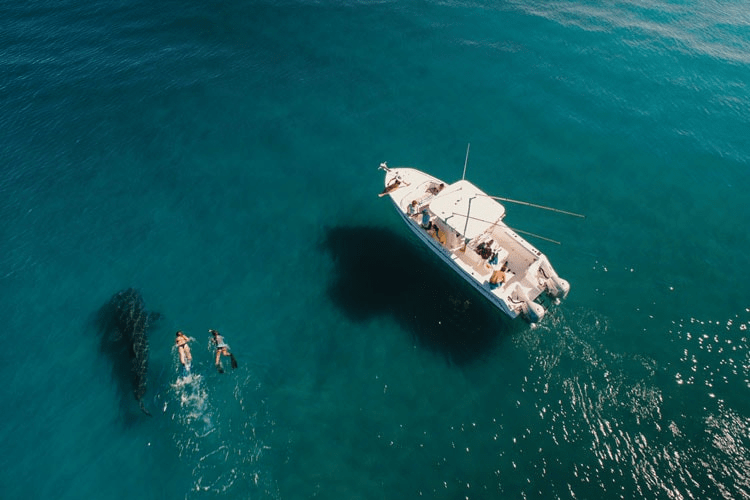
As with any wild animal, we are NEVER allowed to touch them or get to close. This is NOT either one of us, as these are all stock photos, and the visibility we had was not great. The waters were very murky. I was right above his huge tail. But you get the idea.

And I have a major confession to all of you. Yes, swimming with the whale sharks has always been a big bucket list item for me, and I am so glad I had the experience with them that I did, however, out of principal, I just couldn’t do it, at least not the way it is done, more than once. I encounter wildlife all the time, both in and out of the water. I love the wild and beautiful creatures, and I love seeing them in their own environment. But I have always been taught to respect them and NOT to chase them or approach them, and to let them have their space. I felt like we were chasing these big beautiful creatures, especially on the first day. We would slip out of the boat, then swim to the shark. The sharks got spooked and would swim away, and they swim VERY FAST too, then we would get back on the boat and do it all over again. We did this about 5 or 6 times. I only did it the one time though, then I watched from above. They are just as beautiful from above the water as they are beneath the water’s surface too. Larry swam with them the whole time, but I just couldn’t do it. I just didn’t feel it was right. I would absolutely LOVE to swim with them again, but I want to it in a natural way, and have them come to me, as with all other wild creatures and sea life we encounter. I know this is an almost impossible scenario, but that seems like the best, most humane way to see them in their own environment and habitat, at least to me.
We spent the night in La Paz because we had another full day of sea life adventures planned for the next day. So we got cleaned up, then went exploring the sights of La Paz.
This was where we stayed for the night. We were in the heart of the city.

Stay tuned. I have more fun and wild adventures yet to share.
Have a great day and make everyday great. Stay safe and stay well. ’Til next time.

 A Jeanne in the Kitchen
I guess that was an amazing experience
LikeLiked by 1 person
Yes, indeed. 🙂
LikeLiked by 1 person
So fascinating about the sharks!
I learned a lot from reading your post!
Glad you got to swim with them, even if you only did it once!
LikeLiked by 1 person
Thank you. I love to learn new things and I love to share what I learn with everyone too. 🙂
LikeLike
I love that you respect them!
LikeLiked by 1 person
Absolutely! 100%
LikeLiked by 1 person
It’s fascinating to read about sharks being called “gentle giants.”
LikeLiked by 1 person
That they are. 🙂
LikeLiked by 1 person