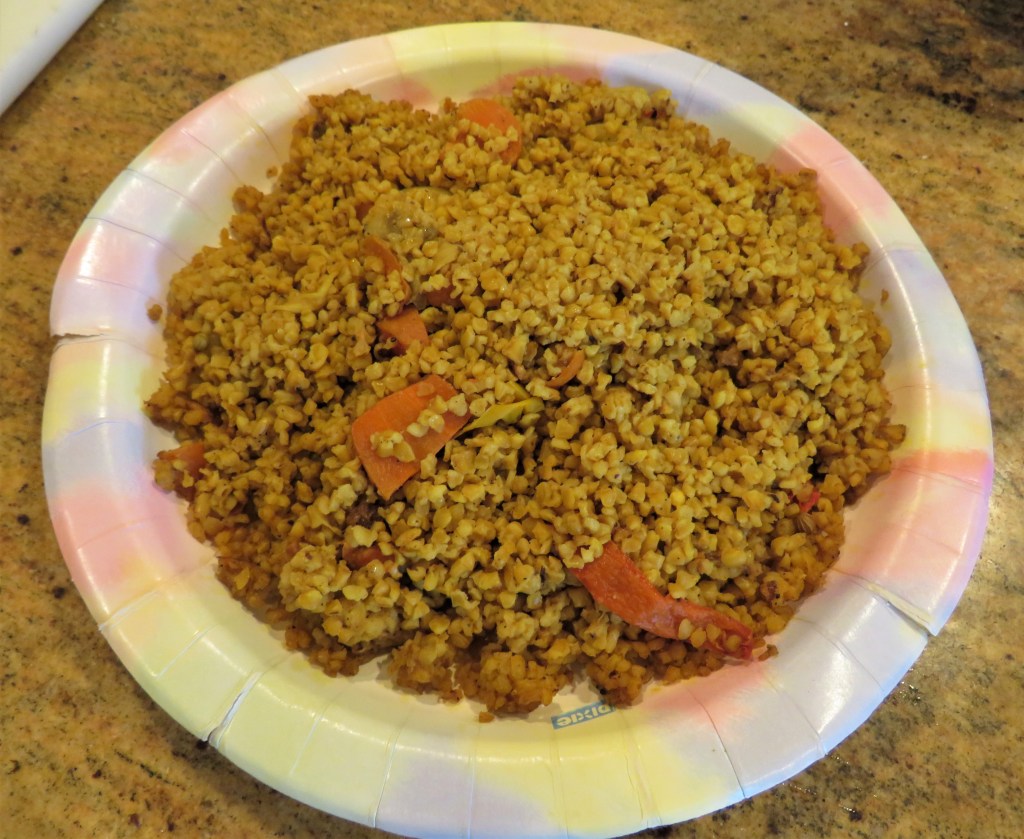
The other day our neighbors Hanaa and Aziz brought over some Lebanese farro. I wanted something delicious and Middle Eastern to go with it and we had lamb out, so I made a lamb and vegetable tagine to go with the farro. I also sent some back to Hanaa and Aziz as a way of saying thank you for their generosity and thoughtfulness.

The history of the tagine. Due to its ancient nomadic origins, the tagine dish is from Berber cuisine. However, over the centuries, the dish was influenced by different civilizations including Arab, Moorish and Ottoman and became one of the most emblematic dishes of Moroccan cuisine. In general terms, the dish tagine contains a choice of protein, vegetables, fresh herbs, spices, dried fruits, and nuts. There is nothing unidimensional about tagine, either — sweet and savory flavors often mingle with rich, earthy aromas in this appetizing stew.
A tagine is an important part of Moroccan cuisine and has been a part of the culture for hundreds of years. The word tagine actually has two meanings. First, it refers to a type of North African cookware traditionally made of clay or ceramic. The bottom is a wide, shallow circular dish used for both cooking and serving, while the top of the tagine is distinctively shaped into a rounded dome or cone.
Second, the word tagine also refers to the succulent, stew-like dish which is slow-cooked in the traditional cookware. Typically, a tagine is a rich mixture of meat, poultry, or fish, and most often includes vegetables or fruit. Vegetables may also be cooked alone in the tagine.
Most people agree that the tagine’s origin dates back to the late 18th century when Harun al Rashid ruled the Islamic Empire. However, there is another school of thought that the use of ceramics in Moroccan cooking is probably of Roman influence; Romans were known for their ceramics and likely brought that tradition to their rule of Roman Africa. Either way, the first appearance of recipes cooked tagine-style appeared in the 9th century in the publication The Thousand and One Nights.
This is the farro that Hanaa made, or at least I think she called it farro. It certainly looks like farro too, but I am not as up-to-date on all my Middle Eastern grain varieties as I should be.
Lamb and Vegetable Tagine

3 TBSP olive oil
2 TBSP lemon olive oil, optional
1 1/2-2 lbs lamb, cubed
1 onion, diced medium
1-2 TBSP garlic
1 tsp cumin
1-2 tsp turmeric
1 TBSP ginger
1 zucchini, sliced
1 red bell pepper, diced medium
2-3 large tomatoes, diced
2 TBSP lemon juice
salt & pepper to taste
red pepper flakes to taste, optional
lemon verbena and/or mint
I have never actually cooked in a tagine, so I am not even going to try to give cooking directions for that. But I do use a skillet everyday, so I will tell you how to cook it all in a skillet.
Get a large skillet very hot and add the oil(s) then add the onions and cook for about 2-3 minutes, or until they start to soften.

Add the lamb and cook for about 5-7 minutes, or until the lamb browns lightly, stirring frequently.
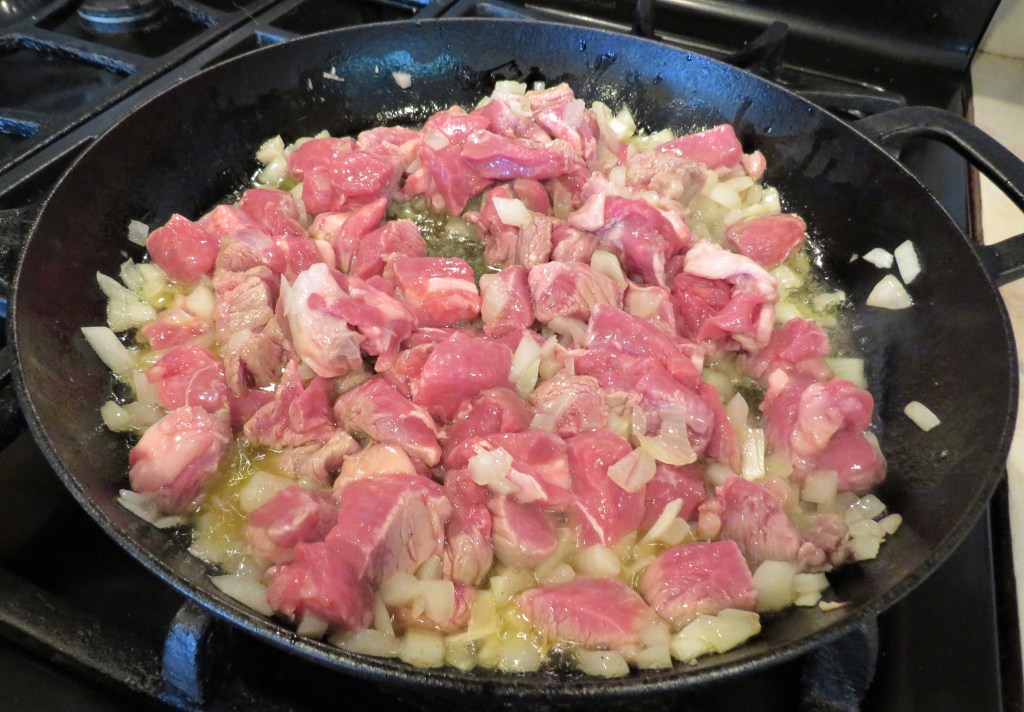
Add enough water to cover the lamb and onions, bring to a boil, then cover and reduce the heat to a simmer and continue to cook for about 1 1/2 hours, stirring occasionally.
When the lamb has cooked and is tender, add the vegetables and spices, and more water if needed.
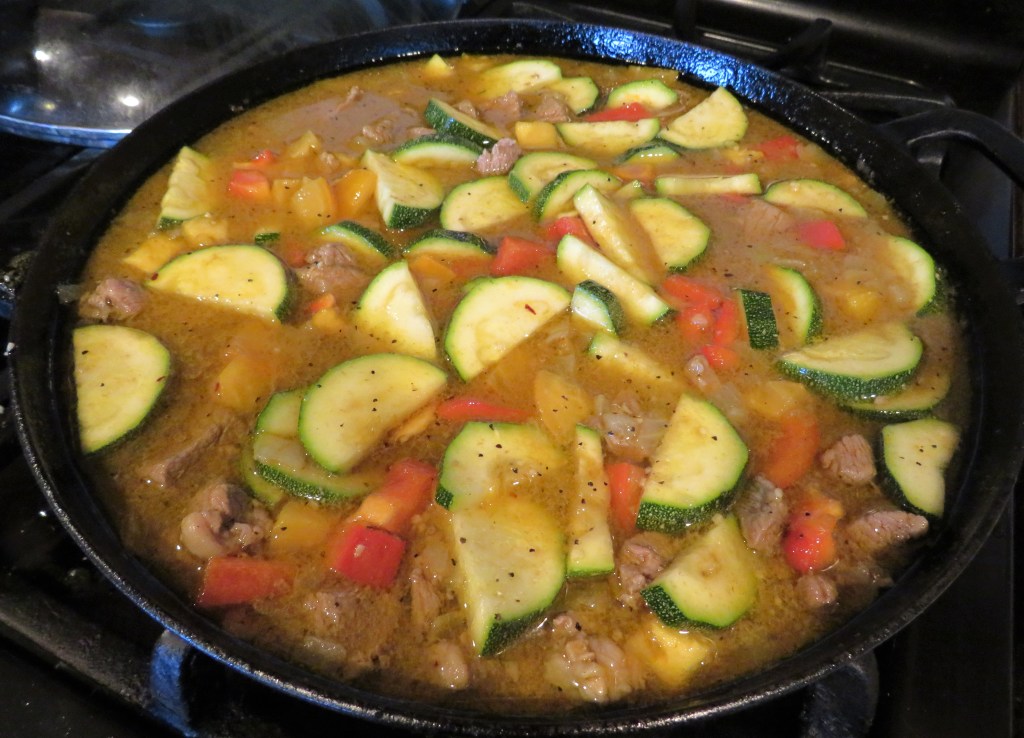
Let everything for about 15 minutes, at a slightly higher temperature. Add the mint and/or lemon verbena right at the very end of the cooking process. Drizzle lemon juice over the top and stir in right before serving.

You can serve it as is, like a stew, or you can serve it over rice, farro or other Middle Eastern grains, or potatoes. Either way, this is a delicious one-dish meal that you’re going to love. You can change the vegetables around too. I was going to add eggplant, but my eggplant wasn’t looking so good, so it got tossed, into the bin and NOT my dish.
Have a great day and make everyday great. Stay safe and stay well. ‘Til next time.

 A Jeanne in the Kitchen
Wow! That does look delicious! I like both even when the neighbors gave the dish to you which is nice but I don’t know what faro is! But both dish do look quite appetizing!
LikeLiked by 1 person
Thank you. Farro is an ancient variety of wheat found in the Middle East.
LikeLike
Wow! No wonder that I’ve never heard of that! It’s quite appetizing! They could add meat to it or something that makes the dish more wow!
LikeLiked by 1 person
Definitely! You could add any kind of meat or chicken and make it a meal in and of itself. 🙂
LikeLike
Sounds really good! That will be in my bucket list!
LikeLiked by 1 person
🙂 🙂 🙂 I know.
LikeLike
Great choice Jeanne
LikeLiked by 1 person
Merci beaucoup. 🙂
LikeLiked by 1 person
Would this work with a different kind of meat — or no meat at all? it looks yummy and I want to try to cook it
LikeLiked by 1 person
Thank you, and the answer is yes to both. You could use beef, chicken or pork for this dish, or just add more vegetables and/or tofu and this dish would work out just fine and still be very tasty. 🙂
LikeLike
My grandmother always made a Shepherd’s pie 🥧 with lamb – your recipe looks delicious as well 👍🏼😋🍻🍻
LikeLiked by 1 person
Thank you. I love shepherd’s pie. 🙂
LikeLiked by 1 person